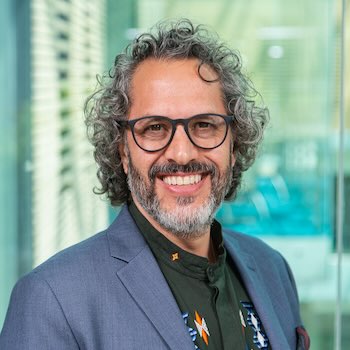
Ignacio Castillo is a Professor and Associate Dean of Business (Graduate Academic Programs) at the Lazaridis School of Business and Economics, Wilfrid Laurier University. His expertise spans facility location optimization, supply chain management, and sustainable operations. He holds a leadership role in graduate academic programming and teaches courses in operations and statistics. Research focuses on optimizing facility layouts, material handling systems, and closed-loop supply chains. He has developed frameworks for multi-objective facility design and advanced packing optimization algorithms. His work bridges theoretical models with real-world applications in manufacturing and retail sectors. Publications emphasize nonlinear optimization techniques, packing problems, and supply chain coordination strategies. Recent work explores irregular object configurations and retail category space optimization. His textbooks include Business Statistics for Contemporary Decision Making and Operations Management , emphasizing practical decision-making tools. Office: LH4001M | Languages: English, Spanish
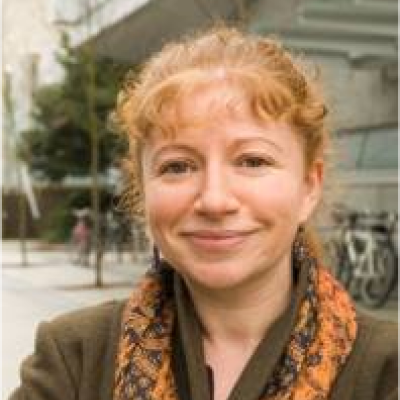
Alla Sheffer is a Professor and Associate Head of Faculty Affairs in the Department of Computer Science at the University of British Columbia, Faculty of Science. She is affiliated with multiple research centers including CAIDA (Centre for Artificial Intelligence Decision-making and Action), the Institute of Applied Mathematics, and ICICS (Institute for Computing, Information and Cognitive Systems). B.Sc., Hebrew University, Jerusalem (1991) M.Sc., Hebrew University, Jerusalem (1995) Ph.D., Hebrew University, Jerusalem (1999) Postdoctoral Research Associate, University of Illinois, Urbana-Champaign (1999-2001) Assistant Professor, Technion, Israel (2001-2003) Assistant Professor, University of British Columbia (2003-2008) Associate Professor, University of British Columbia (2008-present) Professor Sheffer's research focuses on geometry processing, addressing algorithmic challenges in digital shape modeling and manipulation. Her work primarily deals with discrete geometry representations, specifically meshes (polygonal model representations), with applications in computer graphics and computer-aided engineering. She utilizes tools from computational and differential geometry, discrete mathematics, and graph theory to generate, manipulate, and edit discrete geometric models. Her research spans virtual and augmented reality, visual computing, and 3D modeling, with significant contributions to sketch-based modeling, mesh processing, and cloth simulation. The 15 most recent publications reveal a consistent research trajectory in geometry processing, with recent work focusing on vector sketch processing, VR drawing tools, and advanced mesh manipulation techniques. Her work demonstrates a strong connection between human perception and computational methods, particularly in the interpretation of freehand sketches and the generation of perceptually-accurate geometric representations. The recurring themes across her publications include flowlines, curve networks, mesh parameterization, and the application of perceptual studies to improve algorithmic outputs. Eurographics Fellow ACM Fellow IEEE Fellow Royal Society of Canada Fellow SIGGRAPH Academy Member UBC Killam Research Prize NSERC Discovery Accelerator Supplement IBM Faculty Award Professor Sheffer has supervised numerous doctoral and master's students, with recent theses focusing on geometric mesh processing, vector sketch interpretation, VR drawing tools, and garment modeling. Her research group maintains strong connections with industry through various partnerships and has received substantial grant funding to support their innovative work in geometry processing and computer graphics. She teaches courses in computer graphics, geometric modeling, and video game programming, contributing significantly to both undergraduate and graduate education in computer science.
Sharon Rose is a Professor in the Department of Linguistics at the University of California, San Diego. She holds a BA (Honors) from the University of Toronto, an MA from Université du Québec à Montréal, and a PhD from McGill University. Her research specializes in phonological analysis and descriptive fieldwork on African languages, particularly Semitic languages of Ethiopia/Eritrea and Kordofanian languages of Sudan. Her research examines phonological phenomena including: Long-distance consonant/vowel harmony Featural affixation and dissimilation Tone-intonation interfaces Grammatical tone in Heiban languages Musical pitch processing in tone language speakers She leads several research groups including the Field Research Lab, Phonetics-Phonology Research Community (PhonCo), and UCSD Phonetics Lab. Professor Rose is currently a Fellow at the Netherlands Institute for Advanced Study (2025) and an affiliated faculty member with African Studies Minor and Center for Research in Language.
Francesco Sannino is a Professor of Computational Science at the University of Southern Denmark's Department of Mathematics and Computer Science. He is affiliated with the Danish Institute for Advanced Study (DIAS) and holds a Ph.D. His research spans quantum field theory, particle physics, and complex systems modeling. Key interests include Standard Model duality, black hole physics, and epidemiological dynamics. Education: Ph.D. in Physics (not explicitly stated in provided text, inferred from title). Research focuses on theoretical physics, including conformal field theories, gauge dynamics, and applications of quantum chromodynamics (QCD). Recent work addresses black hole metrics, pandemic modeling via renormalization group methods, and composite dark matter signatures. His studies often bridge high-energy physics and complex systems. Main Research Trends: Over 15 years, Sannino has produced 333+ publications, emphasizing: Black hole physics and effective metrics Standard Model extensions and dualities Quantum field theory at conformal windows Epidemiological modeling of pandemics Awards: Elected Member of the Finnish Academy of Science and Letters (2015) EU Excellence Grant in Theoretical Physics (2005) International Referee for Austrian Science Fund Grants & Projects: Leader of the DG Center for Particle Physics Phenomenology (2014–2019) Carlsberg Foundation Semper Ardens grant (2023–2029) Coordinator for Danish CERN Instrument Center (2017–2019) Labs/Teams: Active in CP³ - Center for Particle Physics Phenomenology and DIAS, collaborating globally on projects like gravitational wave detection and pandemic modeling.
François Le Maître is a Professor of Mathematics at the Burgundy Institute of Mathematics (IMB) within the GADT team. He teaches at Polytech Dijon (formerly ESIREM) and was previously a Lecturer at IMJ-PRG in the AO team. His research spans ergodic theory, topological dynamics, group theory, and operator algebras. Research Interests : Orbit equivalence, full groups, Polish groups, measure-preserving actions, geometric group theory, and descriptive set theory. His recent publications focus on L1 full groups, high transitivity in tree actions, quantitative measure equivalence, and topological properties of Polish groups. He has supervised M2 internships and co-supervises ongoing PhD theses, including work on orbit equivalence, Boolean actions, and commensurating symmetric groups. Notable Events : Co-organizer of the 2025 CIRM conference on orbit equivalence, IMJ-PRG Summer School on groupoids, and past workshops on operator algebras and Polish groups.
Thomas Brunold is a Professor of Chemistry at the University of Wisconsin–Madison, focusing on the geometric and electronic properties of metal centers in proteins and cofactors . His work integrates spectroscopic techniques (electronic absorption, circular dichroism, magnetic circular dichroism, resonance Raman, electron paramagnetic resonance) with density functional theory (DFT) and quantum mechanics/molecular mechanics (QM/MM) calculations to validate bonding descriptions and explore catalytic intermediates. Bio-organometallic cofactors (adenosylcobalamin, methylcobalamin, NiF430) Metal-dependent superoxide dismutases (Ni-, Fe-, Mn-SODs) Polynuclear NiFeS enzymes (ACS, CODH) His research spans vitamin B12 chemistry , metalloenzyme specificity , and redox-active clusters , with a focus on resolving substrate-bound intermediates and mechanistic debates in catalytic cycles. Recent publications emphasize ligand dynamics , second-sphere residue effects , and metal-cofactor interactions . Scientific awards include the Taylor Teaching Award (2024) , Kellett Mid-Career Award (2020) , and NSF-CAREER Award (2003) . He mentors students in the Brunold Lab, including Ryan Hall , Laura Elmendorf , and Maddy Rodemeier (co-advised with Andrew Buller), with multiple Outstanding TA Awards to lab members.
Leopoldo Pando Zayas is a Professor of Physics at the University of Michigan, specializing in Theoretical Elementary Particle Physics within the High Energy Theory group. His work is affiliated with the Michigan Center for Theoretical Physics (MCTP), where he conducts cutting-edge research at the intersection of quantum gravity, string theory, and black hole physics. Professor Pando Zayas' research focuses on quantum aspects of black holes, particularly examining how quantum corrections affect black hole entropy beyond the classical Bekenstein-Hawking formula. His work demonstrates how logarithmic corrections to black hole entropy can be matched to microscopic descriptions using the AdS/CFT correspondence. Additional research interests include quantum mechanical descriptions of gravity, quantum chaos, irreversibility theorems in renormalization group (RG) flows, gravitational collapse in Anti-de Sitter (AdS) space, Wilson loops in gauge theories, and implementing disorder within the AdS/CFT framework. His recent publications reveal a strong focus on precision calculations in holography, with particular attention to black hole thermodynamics across various dimensions, quantum corrections to Hawking radiation, and the application of quantum information concepts like complexity to gravitational systems. His work often bridges high-energy theory with mathematical physics, exploring connections between gauge theories and gravitational phenomena. Scientific Awards: UROP's Outstanding Research Mentor Award recognizing exceptional guidance of undergraduate researchers Honorable Mention in the Gravity Research Foundation Essay Competition (2014) for work connecting quantum chaos to the black hole information paradox Honorable Mention in the Gravity Research Foundation Essay Competition (2012) addressing AdS stability and gravitational collapse Professor Pando Zayas has actively mentored undergraduate research projects and advised diploma students at ICTP in Italy, demonstrating commitment to training the next generation of theoretical physicists. His teaching portfolio includes advanced courses in quantum mechanics, general relativity, string theory, and statistical physics. He has organized theoretical physics seminars and participated in numerous international collaborations with institutions including IAS Princeton, KITP Santa Barbara, and ICTP Italy.
Mark Bo Jensen is an Assistant Professor (Tenure track) at the Department of Engineering Technology and Didactics, Energy Technology and Computer Science at the Technical University of Denmark (DTU). His work bridges engineering and cognitive sciences through the emerging field of Perception Engineering. His research focuses on Extended Reality (XR) and Virtual Reality (VR) technologies to model and understand human perception and cognition. With over 10 years of expertise in real-time computer graphics, he develops immersive systems for applications in data visualization, medical testing, and geometric morphometrics. His recent publications highlight a strong trend in leveraging VR for precise human interaction tasks, such as anatomical landmark annotation and visual field testing, as well as advancing rendering techniques using diffusion models and mesh optimization. This reflects a multidisciplinary approach combining computer science, perception, and real-world applications. He has contributed to multiple research projects, including AL-EYE: The Visual Aid and Virtual Reality-Based Visualization of Geometric Data, where he served both as a PhD student and a project participant. These projects emphasize VR-based tools for data understanding and visualization. Assistant Professor (Tenure track), DTU PhD in Virtual Reality-Based Visualization of Geometric Data, completed June 2023 Project participant in AL-EYE: The Visual Aid (2025) While no formal advisees are listed, his role as a faculty member suggests future student supervision. He has collaborated extensively with researchers such as Jeppe R. Frisvad, Jakob Andreas Bærentzen, and Vedrana A. Dahl.
Konstantinos Gryllias is a Professor in the Department of Mechanical Engineering at KU Leuven's Faculty of Engineering Sciences. He leads research in the Mechatronic System Dynamics (LMSD) unit at the Arenberg campus. His academic affiliations extend across multiple KU Leuven institutes including Leuven.AI, Leuven.AM (Additive Manufacturing), and the Gravitation Institute. He serves on important governance bodies as a member of the Faculty Council of Engineering Sciences, Faculty Doctoral Committee of Engineering Sciences, and Departmental Council of Mechanical Engineering. Dr. Gryllias specializes in signal processing, fault detection and diagnosis of rotating machinery, condition monitoring, and machine learning applications in structural health monitoring. His research spans linear and nonlinear vibrations, anomaly detection, rotordynamics, and pattern recognition. His work bridges theoretical signal processing with practical engineering applications in wind turbines, marine propulsion systems, and industrial machinery. His recent publications demonstrate strong focus on deep learning approaches for wind turbine anomaly detection, bearing diagnostics, stern bearing lubrication optimization, and structural health monitoring using advanced signal processing techniques. The research shows increasing integration of explainable AI methods with traditional vibration analysis. Dr. Gryllias teaches advanced courses including Monitoring & Prognostics, Structural Dynamics, Smart Sensing Technologies, and Applied AI perspectives. His teaching portfolio reflects the interdisciplinary nature of his research, connecting mechanical engineering fundamentals with cutting-edge AI methodologies. He currently leads multiple research projects through 2025-2029, primarily as Promotor, focusing on fault detection in gears using fiber optic sensors, multi-sensor monitoring of drivelines, physics-inspired machine learning for condition monitoring, and digital twin applications for wind turbine efficiency improvement.
F. Duncan M. Haldane is the Sherman Fairchild University Professor and Eugene Higgins Professor of Physics at Princeton University. He joined Princeton in 1990 and has held previous positions at institutions including the Institut Laue-Langevin in France and the University of California, San Diego. Ph.D. in Physics from Cambridge University (1978) B.A. from Cambridge University (1973) Haldane’s research focuses on strongly-interacting quantum many-body systems , particularly condensed-matter systems studied through non-perturbative methods. His work spans the fractional quantum Hall effect (FQHE) , quantum geometry, topological insulators, and Chern insulators. He has pioneered the study of entanglement spectra as a tool for identifying topological order and developed geometric descriptions of FQHE states using metric-tensor fields. His recent publications highlight advancements in understanding topological phases of matter , including implications for photonic crystals and flat-band systems. Key themes include quantum geometry, topological order, and collective modes in incompressible quantum fluids. Nobel Prize in Physics (2016) ICTP Dirac Medal (2012) Oliver E. Buckley Prize (1993) Alfred P. Sloan Fellowship (1984-1988) Simons Fellow in Theoretical Physics (2013-2014) Haldane has mentored notable researchers such as Hui Li and S. Raghu. His work has been supported by grants including those from the Simons Foundation. He has contributed to the development of the Moore Foundation-funded Emergent Phenomena in Quantum Systems (EPiQS) theory center at Princeton.
James F. Peters is a faculty member in the Department of Electrical and Computer Engineering at the University of Manitoba, Winnipeg, Canada. His research lies at the intersection of computational topology, proximity theory, rough sets, and digital image analysis, with applications in computer vision, pattern recognition, and biologically-inspired computing. He has made foundational contributions to the theory of near sets and computational proximity, publishing extensively in journals and book series by Springer. His research interests include computational proximity, near sets, rough sets, digital image analysis, pattern recognition, and topological models of perception. These are evident from his numerous publications in theoretical and applied computer science, often in collaboration with researchers such as Andrzej Skowron, Sheela Ramanna, and Arturo Tozzi. His work spans mathematical foundations, computational models, and real-world applications in biomedical imaging and rehabilitation systems. The recent articles (2017–2025) show a strong trend toward integrating topology, physics, and neuroscience in the analysis of digital images and brain activity. Topics include proximal nerves, optical vortices, thermodynamics of emotions, and entropy in cosmology, indicating a broad interdisciplinary approach. His publications frequently appear in journals such as Entropy , Information Sciences , and Transactions on Rough Sets , as well as in Springer’s Lecture Notes in Computer Science and Intelligent Systems Reference Library series. He has authored or co-authored several books and special issues, notably in the Transactions on Rough Sets series, and has contributed to encyclopedic works on rough sets and computational intelligence. His editorial and collaborative roles highlight his leadership in the rough and near sets research community. Dr. Peters has advised or collaborated with several researchers, though specific student names are not listed in the provided text. He has been involved in projects related to adaptive learning, telerehabilitation gaming systems, and image classification using tolerance near sets. His work often involves grants and interdisciplinary teams, especially in computational intelligence and biomedical applications. He is associated with research groups and labs focused on computational intelligence, rough sets, and digital image analysis, often in collaboration with the University of Warsaw and other international institutions. His ongoing work continues to explore the mathematical foundations of perception and proximity in both artificial and biological systems.
Maria Csernoch is an Associate Professor at the Faculty of Informatics, University of Debrecen, Hungary. Education: Teacher degree in mathematics, descriptive geometry, informatics and English Bachelor of Science in software engineering and lean management Doctor of Philosophy in mathematics and computer sciences Dr. habil. degree in applied linguistics Research Interests: Dr. Csernoch specializes in the didactics of Informatics, focusing on developing computational thinking skills through innovative pedagogical approaches. Her work emphasizes knowledge-transfer mechanisms, cross-disciplinary digital subject integration, sustainable digital practices, and lean methodologies in computing education to optimize resource efficiency while maintaining pedagogical rigor. Professional Service: She serves as an Editorial Board Member for PeerJ Computer Science.
Dr. Zhen Li is an Assistant Professor in the Department of Mechanical Engineering at Clemson University's College of Engineering, Computing and Applied Sciences. He joined Clemson in August 2019 after serving as a research associate professor at Brown University and a postdoctoral research associate at University of California, Merced. Education: Ph.D. in Fluid Mechanics, Shanghai University, 2012 MS in Fluid Mechanics, Shanghai University, 2008 BS in Engineering Mechanics, Wuhan University, 2005 Dr. Li's research focuses on multiscale modeling of soft matter, complex fluids, biophysics, and collective dynamics using both bottom-up (coarse-grained molecular modeling) and top-down (from continuum descriptions to fluctuating hydrodynamics) approaches, along with high-performance computing. His work spans mathematical theory for coarse-graining and model reduction, statistical methods and machine-learning approaches applied to multiscale modeling, memory effects in complex fluids, and concurrent coupling of heterogeneous solvers for scale-bridging. Analysis of Dr. Li's recent publications reveals a strong trend toward integrating machine learning with traditional computational methods, particularly neural operators for multiscale problems. His work spans diverse applications from bubble dynamics and blood flow to materials science and bioprinting, demonstrating the versatility of his computational approaches across multiple disciplines in engineering and physics. Awards and Recognition: CECAS Dean's Professor Award (2024) Award of Excellence - Junior Faculty (2021-2022) Best Research Poster Award at SC19 (2019) 2nd Place Award of Best Poster Presentation at DOE/EFRC AIM for Composites meeting (2024) Dr. Li actively mentors PhD students including Miles Lu, Ryan Wan, Haizhou Wen, and Ali Mohammadi, who have published significant research in computational mechanics. His research is supported by multiple grants including an NSF Elements grant as PI for 'SciMem: Enabling High Performance Multi-Scale Simulation on Big Memory Platforms', an NSF CDS&E grant as co-PI for 'HAM3R: Heterogeneous Automated Management of Multiscale Methods and Resources', a DOE/EFRC grant as Thrust lead co-PI for 'AIM for Composites', and a NASA EPSCoR grant as Science-PI. Dr. Li leads the MuthComp (Multiscale theory and Computation) research group, which focuses on developing interfaces between Engineering, Applied Mathematics, Physics-based Machine Learning, and High Performance Scientific Computing. The group has active collaborations with institutions including Idaho National Laboratory, University of Tokyo, and Brown University, and has developed open-source software including USERMESO for GPU-accelerated DPD simulations.
Vladimir Podolskii serves as an Associate Professor in the Department of Computer Science at Tufts University's School of Engineering and holds a concurrent appointment in the Department of Mathematics within the School of Arts and Sciences. His academic work bridges theoretical computer science and mathematical foundations, with a focus on computational boundaries and algebraic structures. He completed his doctoral studies at Lomonosov Moscow State University in Moscow, Russia, receiving his PhD in 2009. Podolskii's research program centers on computational complexity theory, examining the inherent difficulty of computational problems through decision trees and threshold functions. His investigations extend to the logical underpinnings of computation and the application of tropical geometry in optimization contexts. This interdisciplinary approach connects discrete mathematics with theoretical computer science frameworks. His 2022 publications reveal concentrated exploration of decision tree efficiency for threshold functions and classification systems for ontology-mediated queries, demonstrating methodological rigor in analyzing computational limits and knowledge representation structures. Podolskii actively mentors graduate researchers through Dissertation Research courses while teaching core curriculum including Algorithms and specialized seminars on computational complexity toolkits, shaping the next generation of theoretical computer scientists.
Matthew Gifford is a Professor in the Department of Biology at the University of Central Arkansas. He earned his PhD from Washington University in St. Louis in 2008 and completed postdoctoral research at the University of Minnesota (2008-2009) before joining UCA in 2014. His research examines physiological and ecological adaptations in reptiles and amphibians, with emphasis on thermal biology, life-history evolution, and anthropogenic impacts. Research focuses on: Thermoregulatory strategies in changing environments Life-history responses to human disturbances Nutritional ecology of insectivorous predators Innovative methods for thermal environment quantification His publications demonstrate consistent investigation of ectotherm responses to environmental challenges, with recent work emphasizing climate change impacts, methodological innovations in thermal ecology, and conservation physiology. Courses taught include Animal Physiology, Animal Ecological Physiology, and Structure and Function of the Human Body.