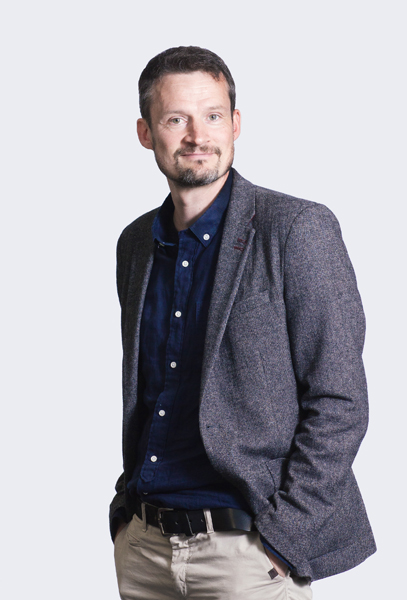
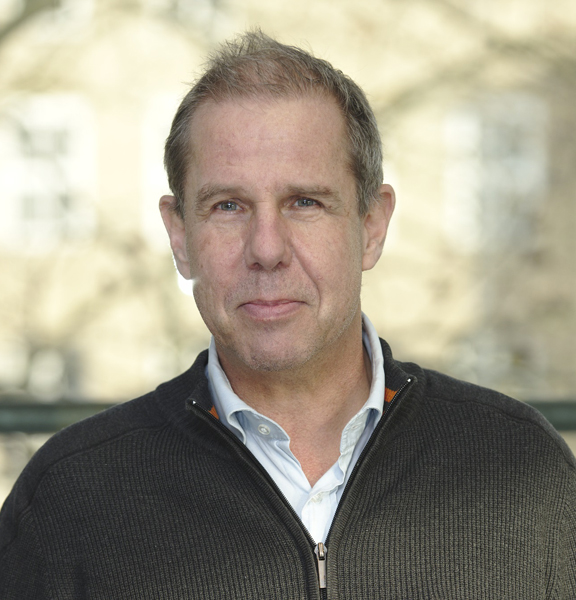
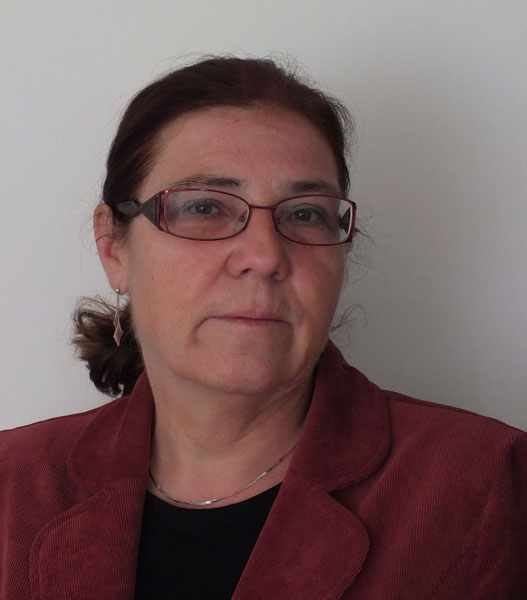
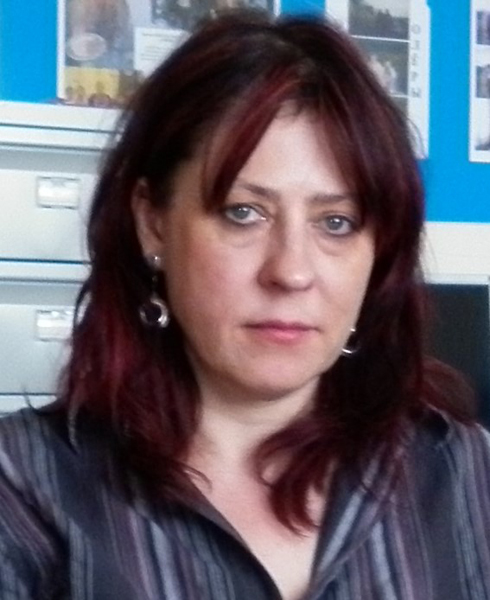
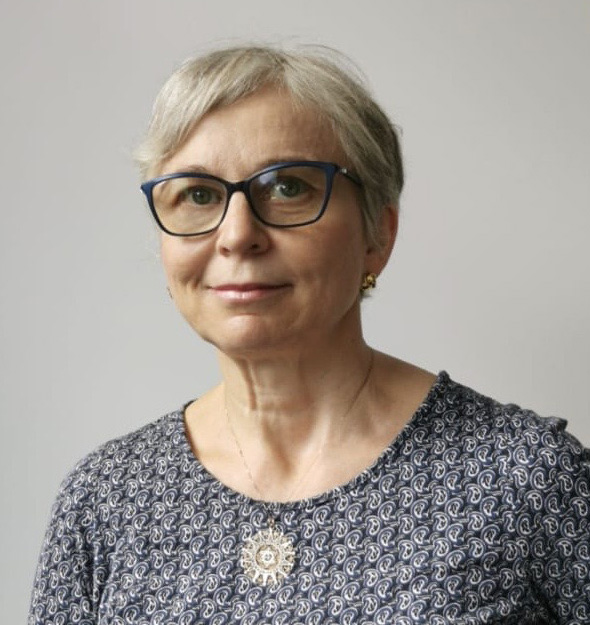
Matti Miestamo is a Professor of General Linguistics at the University of Helsinki, affiliated with the Department of General Linguistics within the Faculty of Arts. He previously held a professorship at Stockholm University (2011–2018) and has held research positions at institutions including the Helsinki Collegium for Advanced Studies (2006–2011) and the University of Antwerp (2005–2006). His expertise spans language typology, documentation, and theoretical linguistics with a focus on negation, interrogatives, and language complexity. He has supervised 4 completed, 2 submitted, and 8 ongoing PhD students at the University of Helsinki. Education: PhD in General Linguistics from the University of Helsinki (2003). Awards include membership in the Academia Europaea (2019), Finnish Academy of Sciences and Letters (2019), and Societas Scientiarum Fennica (2017). Notable honors include the Joseph Greenberg Award (2005) and Burgen Scholar Award (2004). Research Interests: Language typology and documentation Negation structures across languages Uralic languages, particularly Skolt Saami Grammatical complexity theories Methodological approaches to linguistic sampling Professional Roles: Editor of the Nordic Journal of Linguistics (2012–present) Director of the Finnish doctoral training network Langnet (2016–2019) Vice Dean for Academic Affairs, Faculty of Arts, University of Helsinki (2017) Teaching and Outreach: Extensive teaching experience in linguistics at multiple institutions, including summer schools in Tartu and Saari Manor. Active in academic assessment roles, including professorship and docent evaluations in universities across Europe.
Anne Abeillé is a Professor of Linguistics at Université de Paris since 2000, previously holding academic positions at Université Paris 7 (1994-2000) and Université Paris 8 Saint Denis (1991-1994). She is an Ordinary Member of the Academy of Europe (elected 2008) in Linguistic Studies with her primary research base at Laboratoire de Linguistique Formelle (LLF/CNRS). Her research specializes in Natural Language Syntax and Syntactic Theories , with significant contributions to Descriptive Linguistics across multiple languages and Linguistic Resource Development for computational processing. She integrates formal linguistic frameworks with practical syntactic analysis methodologies. Major recognitions include: 1988: Grant J-W Zellidja from the French Academy 1992: Price Pierre Larousse for Language Sciences 1995 & 2007: CNRS Bronze and Silver Medals She maintains active research leadership at LLF but no student advisement or grant details are publicly documented in available sources.
Louise McNally is a Professor of Linguistics at Universitat Pompeu Fabra (UPF) in Barcelona, Spain. She holds a Ph.D. in Linguistics from the University of California, Santa Cruz (1992) and a Postgraduate Diploma in Computational Linguistics from UPF (2002). Her research focuses on semantic/pragmatic theory, morphosyntax-semantics-pragmatics interfaces, and computational semantics, with recent explorations into vector-based and information-theoretic models of meaning. McNally has held senior administrative roles at UPF, including Vice Rector for the Organization and Academic Project (2015–2017), Vice Rector for Faculty Affairs (2011–2015), and Vice Rector for Research (2009–2011). She is co-Editor-in-Chief of Semantics and Pragmatics and affiliated with the Grammar and Cognition Lab and Computational Linguistics and Linguistic Theory groups. Her work bridges formal semantics with experimental perspectives, addressing issues like nominalization, scalar implicatures, and idiomatic expressions. Key honors include the Alexander von Humboldt Research Prize (2017) and multiple ICREA Academia Awards (2008, 2013, 2018). Her publications span theoretical linguistics, computational semantics, and experimental studies, emphasizing cross-disciplinary collaboration.
Katharina Gerhalter is a Lecturer at the Department of Romance Linguistics within the Institute of Romance Studies at the University of Graz. Her academic work focuses on the intersections of syntax , semantics , and pragmatics , particularly in the diachronic development of discourse functions in Romance languages. Education: Mag. Dr.phil. Bakk.phil. (equivalent to MA and BA in philosophy/philology) Her research includes the adjective-adverb interface in Spanish (dissertation, 2018) and a current habilitation thesis on topicalized infinitives in Spanish, French, and Portuguese. She contributes to the creation of annotated corpora for comparative studies in Romance languages. Recent publications analyze quantifiers in Spanish/Portuguese , NLP processing of infinitive structures , and historical pragmatics . Her work bridges theoretical linguistics with digital corpus methodologies, emphasizing cross-linguistic variation.
Nikolaus Himmelmann is a Full Professor (W3) in General Linguistics at the University of Cologne since 2010. Previously, he held professorial positions at Westfälische Wilhelms University Münster (2007-2010), Ruhr-University Bochum (1999-2007), and has been actively involved in linguistic research through funded projects like the DoBeS framework (2004-2005) and SFB 1252 projects (2017-2020). He is a founding member and past president of the German Society for Endangered Languages, and serves on multiple editorial boards including Language Documentation & Conservation and Studies in Language . 2018 Honorary Member, Linguistic Society of America 2017 Leo Spitzer-Preis, University of Cologne 2014 Best Paper in Language Award His research spans typology, grammaticalization, language documentation, and prosody-syntax interfaces. He has secured significant grants from DFG, VW Foundation, and BMBF for collaborative projects on language documentation, articulation speed variation, and prosodic prominence. His administrative roles include chairing linguistics institutes at Münster and Cologne universities.
Attila Németh is a Professor of German Linguistics and Language Didactics at the University of Teacher Education Upper Austria, affiliated with the Department of Languages, Literatures, and Cultures (German Studies). His academic trajectory includes extensive research in language variation, dialectology, and cross-cultural communication, with a geographical focus on Hungarian-German linguistic communities. Education: PhD in German Linguistics (Sociolinguistics/Dialectology) from the University of Szeged (2009) Doctoral studies in German Linguistics at the University of Szeged (2001–2004) Interpreter and Translator training at the University of Szeged (2000–2001) MA in Hungarian and German Studies at the University of Szeged (1995–2001) Research Focus: Németh's work investigates the interplay between language contact, sociolinguistic attitudes, and educational applications. Key areas include dialect preservation in minority communities, morphosyntactic complexity in bilingual contexts, and pedagogical strategies for grammar instruction. His research consistently addresses the dynamics of German dialects in Hungary, emphasizing textbook design and language policy implications. Publication Trends: His articles predominantly explore sociolinguistic and contact-linguistic phenomena, with recurring themes of language simplification, bilingual normativity, and dialect erosion. Methodologically, they blend empirical fieldwork with theoretical frameworks, often focusing on Hungarian-German communities to analyze broader patterns of language change and identity. Professional Activities: He co-edited the Zeitschrift für Mitteleuropäische Germanistik (2011–2016) and contributed to DAAD-supported projects like Intercultural Relations within and beyond Borders (2008–2009). Earlier roles include editorial work for academic journals and research coordination at the Pannonian University.
Anne Storch is a Full Professor for African Linguistics at the Institute of African Studies, University of Cologne, Germany. She previously held positions as Senior Lecturer at the University of Frankfurt and conducted research at the German Research Society's interdisciplinary project on West African Savanna culture and language history. Her research focuses on linguistic description, language creativity, African and colonial linguistics, and linguistic anthropology. Storch earned her PhD in African Studies from Johann Wolfgang Goethe University of Frankfurt (1999). Her academic honors include the prestigious Gottfried Wilhelm Leibniz Prize (2017) and a fellowship from the Nordrhein-Westfälische Akademie (2018). Her work bridges linguistic theory with anthropological perspectives, emphasizing the interplay between language structure and cultural context. Her publications span monographs and peer-reviewed articles on topics like Luwo grammar, evidential systems in African languages, and the sociolinguistics of secret languages. Despite her extensive output, no advising relationships or email contacts are explicitly listed in available texts.
Sigrid Beck serves as Professor of Theoretical and Descriptive English Linguistics at the University of Tübingen's Faculty of Philosophy since 2005, with prior appointments including Associate Professor at University of Connecticut and Junior Professor at Universität Potsdam. Her international engagements include Visiting Professorships at MIT and University of Canterbury. Educational background: PhD in Linguistics, Universität Tübingen (1997), "summa cum laude" (Dissertation: "Wh-constructions and transparent Logical Form") Habilitation, Johann-Wolfgang-Goethe-Universität Frankfurt (2003) (Thesis: "Pluralities and Comparisons") Masters in Linguistics with distinction, Eberhard-Karls-Universität Tübingen (1993) Beck's research pioneers formal approaches to meaning construction across languages, with signature contributions to: Theoretical frameworks for semantics-pragmatics interactions Diachronic evolution of semantic structures Crosslinguistic analysis of focus and presupposition Syntactic constraints on semantic interpretation Her methodology integrates formal theory with empirical cross-linguistic data to resolve foundational questions in meaning representation. Major recognitions: Academy of Europe membership (2022) Heinz-Maier-Leibnitz-Preis for doctoral work (1997) Oxford Visiting Fellowship at Magdalen College (2022) As principal investigator, Beck secured substantial DFG funding including the 12-year Collaborative Research Center SFB 833 'Construction of Meaning' (2009-2021) where she directed projects on crosslinguistic semantics and context reconstruction, plus XPRAG network leadership for experimental pragmatics research (2014-2020). Her grant portfolio demonstrates sustained leadership in coordinating large-scale interdisciplinary teams. She directs the 'Construction of Meaning' research consortium within the English Linguistics section, fostering collaboration between theoretical linguists, experimental researchers, and computational modelers to advance semantic theory through empirical validation.
Dagmar Muchnová is an Associate Professor at the Institute of Greek and Latin Studies, Faculty of Arts, Charles University in Prague. She has held leadership roles as Head (2010–2016) and Vice-Head of the Institute, and currently serves as Deputy Head of the Office of the Chief Administrative Officer. Her academic career spans over three decades, with key contributions to Ancient Greek linguistics. Education: Master's degrees in Latin/French (1976) and Ancient Greek (1980), CSc (1990), and Habilitation (2011) from Charles University. Research focuses on Ancient Greek syntax, semantics, and pragmatics , particularly negation, subordination, and discourse construction. Her work integrates classical philology with modern linguistic theories, including typology and discourse analysis. Recent publications emphasize negative concord , particle usage (epei, hoti, oun), and conditional clauses in Classical Greek. These align with her broader interests in grammatical thought in antiquity and textual organization. Scientific Awards: 2013 Charles University Prize for monograph quality Teaching and editorial roles include: Introductory and advanced Greek courses Editorial leadership for AUC Philologica and Auriga journals Supervision of doctoral, master’s, and bachelor’s theses She collaborates internationally, including with the Prague Linguistic Circle and Societas Linguistica Europaea , and contributes to projects like the Ministry of Education’s MSM 0021620825 (2005–2011).
Irina Nikolaeva is a Professor of Linguistics at the University of London's School of Oriental and African Studies (SOAS), where she joined in 2007 as Lecturer in Endangered Languages and was promoted to professor in 2011. She served as Head of the Linguistics Department from 2012 to 2017. Her academic journey includes positions at the University of Oxford (Research Fellow and Tutor in Linguistics, 2004–2007), University of Konstanz (Research Fellow, 2000–2004), Central European University (Tutor in Linguistics, 1993–1995), and the Institute of Linguistics at the Russian Academy of Sciences (Research Fellow, 1990–1993). Education: BA and MA from Moscow, Candidate degree (equivalent to PhD) from Moscow, ABD from San Diego, PhD from Leiden. Nikolaeva's research focuses on linguistic typology, theoretical morphosyntax, and the documentation of endangered Siberian languages. She has produced reference grammars, dictionaries, text collections, and teaching materials for minority communities in the Russian North. Her publications span topics like finiteness, TAM marking on nouns, and information structure across languages. Scientific Awards : Women of Discovery Award (2008) Fellow of the British Academy (2019) Her work emphasizes empirical data from understudied languages to inform universal linguistic theories. She has collaborated with institutions in Hungary, Germany, and the UK, contributing to both academic scholarship and public-facing linguistic resources.
Anna Maria Thornton is a Professor of Linguistics at the Department of Human Sciences, University of L'Aquila, Italy, where she has held positions since 1992. She earned her Laurea in Lettere (1983) from Sapienza University of Rome and a PhD in Linguistics (1989) from the University of Pisa. Research Focus Structure of Italian Morphology Language and Gender Her work spans morphological theory, overabundance in verb paradigms, literacy acquisition in Italian, and gender-related linguistic norms. Recent publications analyze canonical typology, flexeme challenges, and participial stem evolution. Scientific Affiliations and Honors: President of Società di Linguistica Italiana (2016-2019) Corresponding Member of Accademia della Crusca (2022-2024) Ordinary Member of Accademia della Crusca (since 2024) Thornton contributes to linguistic education and standardization as a member of Accademia della Crusca's Advice Centre since 2001. She has held visiting positions at the University of Surrey (2010-present) and University of Paris Diderot (2018).
Peter Ernst is an Associate Professor at the Institute of German Studies, Faculty of Philology and Cultural Studies, University of Vienna. He serves as Honorary Professor at Pannonian University of Veszprém and has held visiting professorships at Leipzig and Graz universities. His research spans language history, dialectology, onomastics, phraseology, grammar, pragmatics, and discourse analysis. Education: Master's (1984), Doctorate (1987), Habilitation (1995) in German and History at University of Vienna Research Trends: Focuses on historical linguistics, German dialects, toponymic studies, and pragmatic evolution of language. Scientific Awards: Hugo-Moser-Preis (1993) Förderungspreis der Stadt Wien (2000) Theodor-Frings-Preis (2003) Teaching Award Nomination (2015) Key Teaching Roles: Offers courses on language history, linguistics, and German grammar. Has coordinated bachelor and master seminars, including topics on internet language usage and language discrimination. Projects: Led initiatives like the Wörterbuch zur österreichischen Phraseologie and contributed to international linguistic conferences. Served on the Rat für Deutsche Rechtschreibung (2016-2023).
Alexandra Aikhenvald is a Distinguished Professor at James Cook University (JCU), where she serves as Director of the Language and Culture Research Centre and Research Leader for People and Societies of the Tropics at the Cairns Institute. Previously, she held professorial positions at La Trobe University and the Australian National University, establishing herself as a leading authority in linguistic typology with extensive fieldwork on understudied language families across multiple continents. Professor Aikhenvald's research spans multiple dimensions of linguistic diversity with particular expertise in Papuan languages and Amazonian languages . Her work integrates linguistic anthropology and cultural anthropology perspectives to examine how grammatical structures encode cultural knowledge and social organization. Key areas of investigation include evidentiality , grammatical gender , serial verb constructions , and the relationship between language structure and cultural practices, with growing attention to gender-based linguistic phenomena in indigenous societies. Analysis of Professor Aikhenvald's recent publications reveals consistent methodological rigor across diverse linguistic domains, with increasing focus on interdisciplinary connections between linguistic structure, cognition, and cultural practices. Her work demonstrates exceptional breadth across language families while maintaining deep engagement with individual languages, particularly in Amazonia. The publications show progression from detailed language documentation toward broader theoretical synthesis in linguistic typology, with growing emphasis on how linguistic structures shape and reflect cultural worldviews. Professor Aikhenvald's contributions to linguistics have been recognized with numerous prestigious awards: Elected Fellow of the Australian Academy of the Humanities (1999) Elected Fellow of the Queensland Academy of Arts and Sciences (2015) Award for excellence in research and leadership, James Cook University (2013) Alexander von Humboldt Research Award (2010) Award of a competitive Fellowship at the Centre for Advanced Studies in Behavioral Sciences, Palo Alto (2010) Honorary Member of the Linguistic Society of America (2008) Centenary Medal for service to Australian society and the humanities (2003) As Director of the Language and Culture Research Centre, Professor Aikhenvald has secured significant research funding including an ARC Australian Laureate Fellowship 'How gender shapes the world: a linguistic perspective' (2012-2017) and multiple ARC Discovery grants on language diversity and contact phenomena. She serves on editorial boards for major linguistics journals and as first-named editor of the book series 'Brill's studies in language, cognition and culture', significantly influencing the direction of contemporary linguistic research. Professor Aikhenvald directs the Language and Culture Research Centre at James Cook University, which maintains active research programs documenting linguistic diversity with particular emphasis on languages of the tropics. The Centre supports interdisciplinary research connecting linguistic structure with cultural practices, social organization, and historical development, with fieldwork sites across Amazonia, New Guinea, and other linguistically diverse regions.
Professor Geoffrey Khan is the Regius Professor of Hebrew at the University of Cambridge , affiliated with the Faculty of Asian and Middle Eastern Studies . He holds a Ph.D. in Semitic Languages from the School of Oriental and African Studies (SOAS), University of London , and has dedicated his career to philology, Semitic linguistics, and manuscript studies. Education: B.A. and Ph.D. in Semitic Languages (SOAS, University of London) Academic Leadership: Editor-in-Chief of Encyclopedia of Hebrew Language and Linguistics , Chairman of British Academy's Oriental and African Studies Section His research spans Hebrew, Aramaic, and Arabic linguistics , focusing on: Biblical Hebrew syntax and Tiberian pronunciation traditions (e.g., 2020 monograph on Masoretic vocalization) Neo-Aramaic dialectology , particularly endangered North-Eastern Neo-Aramaic dialects (2008-2016 fieldwork publications) Medieval Arabic documents (Fatimid period Nubia, Khurasan texts) Recent publications (2020-2024) emphasize comparative Semitic phonology , language contact in Western Asia , and manuscript-based historical analysis . His work combines empirical field research with critical text editions . 1998 : Elected Fellow of the British Academy at age 40 2004 : Lidzbarski Gold Medal for Semitic philology 2011 : Honorary Fellow of the Academy of the Hebrew Language 2014 : Fellow of Academia Europea 2017-2018 : Honorary doctorates from Hebrew University of Jerusalem and Uppsala University Supervises Lina Brüssel on Medieval Karaite Transcriptions of Hebrew into Arabic Script . Current projects include Grammar of Biblical Hebrew updates for Oxford University Press and documenting Fatimid Nubia Arabic texts .
Jacques Guillaume is a **Professor** at the École pratique des hautes études (EPHE) since 2021, concurrently serving as a **Senior researcher** at CNRS (Centre de recherches linguistiques sur l’Asie Orientale) since 2015. He holds a **By-fellowship** at Churchill College, University of Cambridge (2023–present). His academic journey includes roles as **Associate Professor** at Université Paris Descartes (2005–2009) and visiting scholar at LaTrobe University (2010). **Research Focus:** His work spans archaeolinguistics, linguistic typology, historical linguistics (especially Sino-Tibetan and Algonquian), and language documentation of endangered languages like Rgyalrongic and Kiranti. He emphasizes methodological innovations in phylogenetic analysis and computational linguistics. **Awards & Roles:** Recipient of the **CNRS bronze medal (2015)**, he currently serves on the Board of the Li Fang-Kuei Society and the ILAS advisory committee (Academia Sinica). His research integrates multidisciplinary approaches, combining linguistic data with archaeological and genetic evidence. **Publications:** His recent work includes monographs on Japhug grammar and influential articles on simulative derivations, estimative constructions, and Sino-Tibetan phylogenetics. He advocates for rigorous tree-based models in linguistic reconstruction, challenging network models through comparative studies.