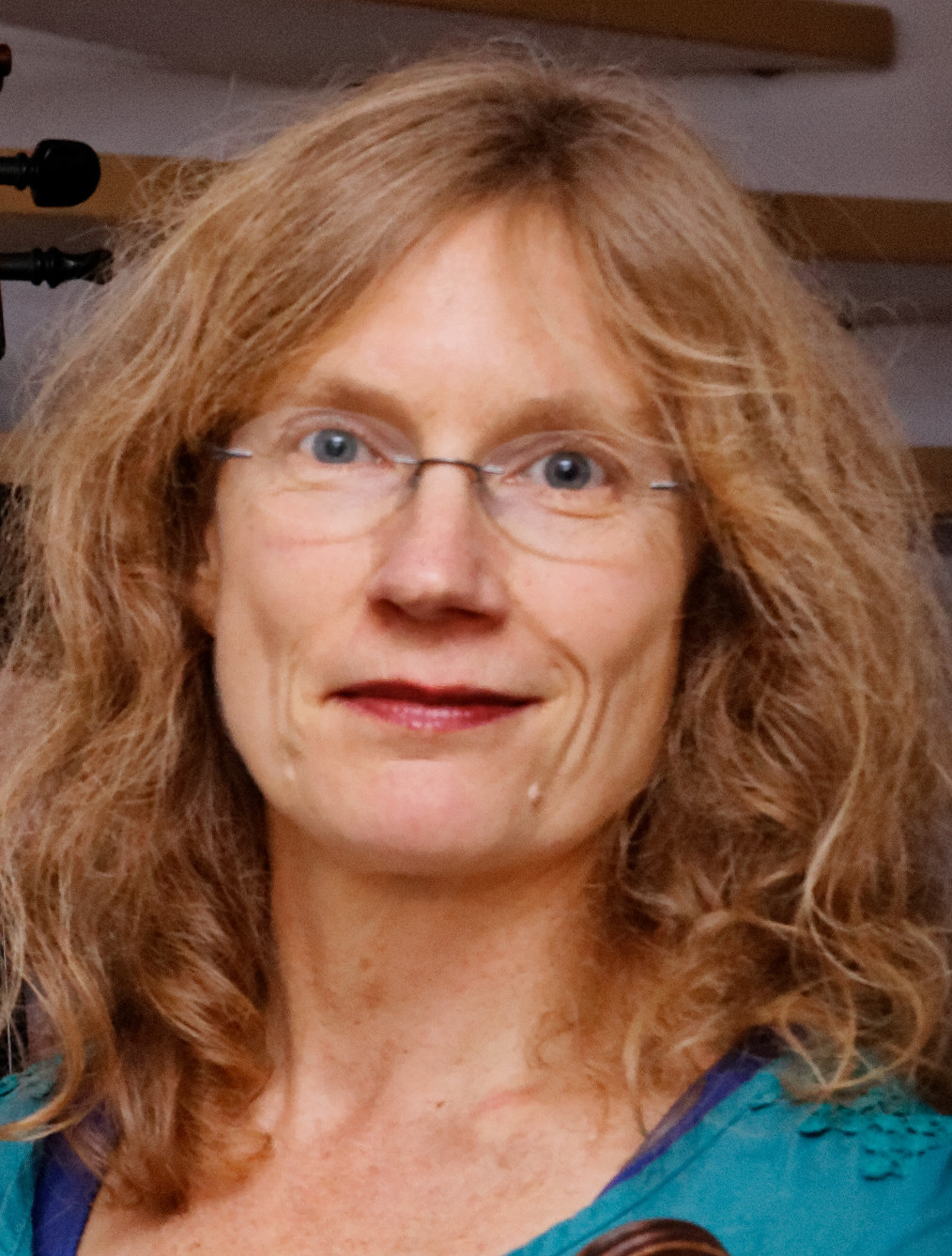
Nicholas Evans is Distinguished Professor of Linguistics and Director of the ARC Centre of Excellence for the Dynamics of Language (CoEDL) at the Australian National University’s School of Culture, History & Language. His work bridges fieldwork-based language documentation with theoretical questions in typology, cultural evolution, and social cognition. Focus on endangered Australian and Papuan languages Director of ARC Laureate Project on 'The Wellsprings of Linguistic Diversity' Co-leader of SCOPIC (Social Cognition Parallax Corpus) study Collaborator in global linguistic diversity initiatives His research explores how micro-level community multilingualism shapes macro-level linguistic diversity, with fieldwork spanning seven years in remote Indigenous communities. Recent projects include PARABANK (paradigm syncretism analysis) and Southern New Guinea language studies, particularly Nen and Yam family languages. Scientific recognition includes the Ken Hale Award (Linguistic Society of America), Anneliese Maier Forschungspreis, and fellowships in the Australian Academy of Humanities, Australian Social Sciences Academy, and the British Academy.
Anush Tserunyan is a Professor of Mathematics at McGill University, Canada, and a Visiting Professor at the Unit of Pure and Applied Mathematics (UMPA) at École normale supérieure de Lyon from December 1, 2024, to January 31, 2025. She holds a bachelor's and master's in computer science and applied mathematics from Yerevan State University (2005–2007) and a Ph.D. in Mathematics from UCLA (2013), focusing on finite generators for group actions, equivalence relations, and recursive program complexity. Research Interests: Anush Tserunyan specializes in Ergodic Theory , Combinatorics , and Group Actions , with notable contributions to graph theory, hypergraphs, and Ramsey theory. Her work bridges combinatorial structures with analytic methods, particularly in dynamical systems and descriptive set theory. Collaborations: During her visit to UMPA, she collaborates with teams in Geometry, Groups and Dynamics , and Number Theory , alongside researchers like Benjamin Schraen and Sophie Morel. Her stay includes seminars on GGD, Number Theory, and the 'Actions!' working group. Publications: Her research spans topics like ergodic theorems, disjoint matchings in graphs, and algebraic hypergraphs, reflecting a focus on foundational mathematical structures and their applications.
Jan Dreier is a Research Fellow at the Institute of Logic and Computation at Vienna University of Technology. His research centers on structural graph theory and algorithmic meta-theorems, particularly exploring the boundaries of tractability for model checking problems. Dreier's work bridges theoretical computer science and discrete mathematics, focusing on graph decompositions, parameterized complexity, and logical expressiveness. Key research themes include monadic stability in graph classes, applications of model theory to computer science, and efficient algorithms for logical queries on structured graphs. His publication record shows consistent focus on graph sparsity concepts and algorithmic applications of logic, with recent work expanding into approximation methods for counting queries. Research demonstrates sophisticated applications of combinatorial methods to fundamental problems in computational complexity.
Paul Larson is a Professor of Mathematics at Miami University. His research focuses on set theory, topology, and model theory, with particular expertise in forcing axioms, descriptive set theory, and infinitary logic. He holds a Ph.D. in Mathematics from the University of California, Berkeley. His work bridges foundational mathematical logic with applications in topology and combinatorics. Key contributions include studies on canonical models under fragments of the Axiom of Choice, polar forcings, and cardinal characteristics. Larson has collaborated extensively with leading researchers such as Saharon Shelah and Jindřich Zapletal. His publications span prestigious journals like the Annals of Pure and Applied Logic and Transactions of the American Mathematical Society. Beyond research, he contributes to the academic community through editorial work and expository writings on historical developments in determinacy theory. Education: Ph.D., Mathematics, University of California, Berkeley Research interests emphasize foundational questions in set theory with applications to topology and model theory. His recent work explores advanced forcing techniques, square principles in Pmax extensions, and combinatorial properties of cardinal invariants. Publications reflect interdisciplinary engagement, including crystal structure prediction in high-pressure chemistry and operator theory in functional analysis. Despite an extensive publication record, no specific scientific awards are documented here. His advising and grant activities remain unspecified in the provided texts. Collaborations span international institutions, reflecting his role as a central figure in contemporary set theory research.
Raquel Fernández is Full Professor of Computational Linguistics and Dialogue Systems at the University of Amsterdam, where she leads the Dialogue Modelling Group at the Institute for Logic, Language & Computation (ILLC). As Vice-Director for Research at ILLC and a Fellow of the ELLIS Society, she bridges computational linguistics, cognitive science, and artificial intelligence through her research on language use in multimodal and conversational contexts. PhD in Computational Linguistics from King's College London Prior research positions at University of Potsdam and Stanford University's CSLI Her work explores how cognitive constraints, social interaction, and perception shape language use, with a focus on: Visually-grounded language processing Multimodal dialogue modeling Model uncertainty and calibration Language grounding in multimodal data Language learning and semantic change Dialogue reference resolution Recent publications analyze multimodal reasoning limitations, cross-lingual knowledge consistency, and uncertainty modeling in dialogue systems. She has received multiple accolades including an ERC Consolidator Grant , NWO VENI/VIDI/Aspasia fellowships , and EMNLP/GenBench awards . Outstanding Paper Award (EMNLP 2023) Best Data Award (GenBench Workshop 2023) ELLIS Society Fellow ERC Consolidator Grant #819455 recipient NWO VENI/VIDI/Aspasia awardee As a leader in academic service, she serves on the SIGDAT Executive Committee and chairs multiple conference committees. Her lab develops models for multimodal dialogue, visual storytelling, and grounded language understanding.
Brandon Seward is an Associate Professor of Mathematics at the University of California San Diego (UC San Diego), where they conduct research and teach in the Department of Mathematics. They use the pronouns they/them or he/him . Education Ph.D. in Mathematics, University of Michigan , 2015 Research Interests Their work lies at the intersection of ergodic theory, topological dynamics, descriptive set theory, and group theory . They investigate geometric, combinatorial, and entropic properties of actions of countable groups, with special emphasis on the divide between amenable and non-amenable groups. Publications & Research Impact Across 27 refereed papers (2014-2024), Seward has advanced entropy theory for non-amenable groups, Borel combinatorics of group actions, and structure theorems for measure-preserving actions. Their work has appeared in top journals such as Inventiones Mathematicae , Journal of the American Mathematical Society , and Duke Mathematical Journal . Scientific Awards Michael Brin Dynamical Systems Prize for Young Mathematicians (2018) – awarded for outstanding contributions to dynamical systems. Teaching & Mentorship Seward regularly teaches core undergraduate courses (e.g., Math 142A Introduction to Analysis) and organizes the UC San Diego Group Actions Seminar , a weekly research forum featuring international speakers. They serve as a faculty mentor and are actively involved in graduate student supervision and seminar coordination. Contact & Office Email: bseward@ucsd.edu Office: AP&M 5739, 9500 Gilman Drive, La Jolla, CA 92093-0112
Prof. Dr. Ralf Schindler is a Professor at the Institute for Mathematical Logic and Fundamental Research within the Department of Mathematics and Computer Science at the University of Münster. His primary research focuses on foundational aspects of mathematical logic, particularly in set theory and model theory. Schindler's research explores core areas including inner model theory, forcing techniques, large cardinals, determinacy axioms, and descriptive set theory. His investigations address fundamental questions about the structure of mathematical universes, consistency proofs, and connections between set theory and other mathematical disciplines. Recent work emphasizes applications of determinacy hypotheses and extensions of Martin's Maximum. Schindler's publications demonstrate consistent focus on advanced set theory concepts from 2000 to 2021. Key trends include deep investigations into inner models (especially core models and mouse constructions), forcing axioms and their consequences, determinacy hypotheses, and the interplay between large cardinals and descriptive set theory. His collaborative works frequently appear in premier logic journals. Schindler has received significant recognition for his contributions: Hausdorff Medal (2022) Dov Gabbay Prize (2024) He leads the research project EXC 2044 - A2: Groups, model theory and sets , which investigates applications of model theory to arithmetic geometry, topological dynamics, and group theory, while addressing fundamental questions in geometric group theory and set theory foundations.
Vera Fischer is an Associate Professor and Privatdozent in the Department of Mathematics at the Faculty of Mathematics, University of Vienna. She has been an active researcher since 2008, with a strong publication record in mathematical logic and set theory. Her research centers on set-theoretic combinatorics , focusing on cardinal characteristics of the continuum, forcing, definability, and structures such as maximal almost disjoint families, cofinitary groups, and independent families. She investigates foundational questions in independence, spectra of combinatorial objects, and the interplay between definability and generic extensions. Her work often involves constructing models to separate cardinal invariants or to realize specific spectra under forcing. The recent publications show a consistent trend in combinatorial set theory , with a focus on tower spectra, tight families, mad families, and their behavior under various forcing notions like Cohen and Sacks forcing. Her research frequently explores the definability and destructibility of combinatorial families, often in collaboration with leading researchers such as Corey B. Switzer, Stefan Geschke, and Saharon Shelah. FWF START Prize, 2017 Förderungspreis der ÖMG, 2018 Förderungspreis, 2018 She leads and participates in research projects such as Comparing the Real Line to Combinatorics of the Uncountable and A Sacks-like model with large continuum , indicating active grant funding and supervision of research activities. She also organizes academic events like Colloquium Logicum and engages in public outreach on topics like infinity. Her research is conducted within the Set Theory Group at the University of Vienna, where she collaborates with other logicians and contributes to the academic community through publications, conferences, and mentorship.
Hannah Hoganson is an NSF Postdoctoral Fellow in the Department of Mathematics at the University of Maryland, mentored by Christian Rosendal after previously holding a Brin Postdoctoral Fellowship under Lei Chen. Her research bridges geometric group theory, low-dimensional topology, and descriptive set theory, with a focus on mapping class groups of infinite-type surfaces and topological groups. Her educational background includes a PhD from the University of Utah (2022) advised by Ken Bromberg, and prior graduate studies at Miami University where she investigated Thompson's groups. She has taught multiple calculus courses at UMD and the University of Utah, receiving exceptional student evaluations for her clarity and supportive teaching style. Hoganson's research explores the coarse geometry of mapping class groups, connections between topological groups and descriptive set theory, and geometric structures on infinite-type surfaces. Her work often combines algebraic, geometric, and topological methods to address fundamental questions about group actions and classification problems in low-dimensional topology. Her recent publications demonstrate a strong trend toward interdisciplinary approaches, integrating geometric group theory with descriptive set theory to analyze infinite-type mapping class groups and Polish groups. Key themes include geometric finiteness, coarse boundedness, and the interplay between algebraic structures and topological dynamics in infinite settings. NSF Postdoctoral Fellowship (DMS-2303365) Brin Postdoctoral Fellowship Hoganson has advised an undergraduate reading course in geometric group theory (Spring 2024) and served as a mentor for REU students at SUMSRI. Her current research is supported by NSF grant DMS-2303365, which funds her postdoctoral work on geometric and topological aspects of infinite-type surfaces and groups. She actively collaborates with researchers including George Domat, Sanghoon Kwak, and Robbie Lyman across multiple projects. She co-organizes the University of Maryland Geometry and Topology Seminar and has co-led specialized workshops including the Big Mapping Class Groups log cabin workshop in Young, AZ (2024) and the AWM special session on Women in Groups, Geometry and Dynamics (2023), fostering collaborative research environments in geometric topology.
Prof Lars Olsen is a Professor in the School of Mathematics and Statistics at the University of St Andrews, based in the Mathematical Institute. His research focuses on fractal geometry, dynamical systems, and analysis, with particular emphasis on multifractal theory and metric number theory. He has supervised PhD student Luke Derry and has published extensively in peer-reviewed journals such as Monatshefte für Mathematik , Mathematische Zeitschrift , and Acta Mathematica Hungarica . His work explores intricate mathematical structures such as fractal dimensions, measure-theoretic properties of metric spaces, and applications to number theory. Recent studies include analyses of digit frequencies in infinite iterated function systems, exponential densities of integer subsets, and average distances in self-similar fractals. These contributions bridge pure mathematics with applications in understanding complex natural phenomena through geometric and analytic frameworks. Prof Olsen’s research portfolio demonstrates a strong focus on advanced mathematical analysis, with over 30 peer-reviewed publications since 2017 alone. His investigations into Hewitt-Stromberg measures and Gromov-Hausdorff-Prohoroff spaces exemplify his commitment to advancing foundational theories in fractal geometry and measure theory. Collaboration with international researchers has yielded multidisciplinary insights into topics like Lq-dimension analysis and topological dynamics of continuous functions.
Floris van Doorn is a Professor at the Mathematical Institute of the University of Bonn where he leads the Formalized Mathematics group. His research focuses on making it viable to formalize research mathematics in proof assistants that can check the correctness of such proofs. He primarily works with the Lean Theorem Prover and is a maintainer of its mathematical library (mathlib). University of Bonn: Professor (2023-present) University of Paris-Saclay: Postdoc with Patrick Massot (2021-2023) University of Pittsburgh: Postdoc with Tom Hales (2018-2021) Carnegie Mellon University: PhD under Jeremy Avigad and Steve Awodey (2013-2018) Van Doorn's research interests center on formalized mathematics, tools and automation for formalization, and homotopy type theory. He has made significant contributions to several major formalization projects including the Carleson project (proving Carleson's theorem), the sphere eversion project (formalizing Gromov's h-principle), the Flypitch project (formalizing the independence of the continuum hypothesis), and the Spectral sequences project. His work demonstrates that proof assistants can handle complex areas of mathematics beyond algebra, including differential topology and analysis. His recent publications show a consistent focus on advancing formalized mathematics, with his most recent work formalizing the Gagliardo-Nirenberg-Sobolev inequality and continuing the Carleson project. His publications span theoretical foundations of type theory, practical applications of formalization, and educational resources for learning proof assistants. Skolem award (2025) for the paper 'The Lean Theorem Prover (System Description)' Van Doorn actively mentors students and collaborators, with Maria, Michael, and Arend recently joining his formalization group in Bonn. He has taught various courses on formalized mathematics and proof assistants at the University of Bonn, University of Pittsburgh, and Carnegie Mellon University. His educational efforts include developing learning resources such as the Natural Number Game and the online book 'Mathematics in Lean.' He also maintains an active presence in the Lean community through the Formalized Mathematics group and collaborative projects like the Carleson project, which invites participation from those familiar with Lean.
Professor Katrin Tent is a distinguished mathematician specializing in mathematical logic at the University of Münster, where she holds a professorship in the Faculty of Mathematics and Computer Science within the Institute for Mathematical Logic and Foundations Research. She is an active researcher in Mathematics Münster, an investigator in CRC 1442 Geometry: Deformations and Rigidity, and contributes to multiple research projects including Topics in Mathematics Münster T3: Models and universes, T4: Groups and actions, and T8: Random discrete structures and their limits. PhD in Linguistics, Christian-Albrechts-Universität zu Kiel (1988) Diplom in Mathematics, Christian-Albrechts-Universität zu Kiel (1989) PhD in Mathematics, University of Notre Dame (1994) Habilitation, "Model theory of groups and BN-pairs" (2000) Professor Tent's research bridges model theory, group theory, and geometry, with particular focus on finite Morley rank structures, BN-pairs, and sharply multiply transitive groups. Her work often combines methods from these areas to prove unexpected results, either constructing groups or incidence geometries with surprising model theoretic properties or using model theory to construct new and interesting geometries or groups. Her recent publications reveal a consistent trajectory connecting model theory with group-theoretic structures. She has made significant contributions to understanding sharply 2- and 3-transitive groups, finite Morley rank geometries, and the model theory of generalized polygons. Her work demonstrates how model-theoretic techniques can solve deep problems in group theory and geometry, particularly through the study of BN-pairs and incidence structures. DFG Research Fellowship (1996-1998) Bayerischer Habilitationsförderpreis (1998-2001) Heisenberg-Stipendium (2001-2004) ERC Consolidator Grants expert panel (2016, 2018) Elected to DFG Senate (2019) Professor Tent leads an active research group with current members including Marco Amelio, Dr. Benjamin Brück, Anna Cascioli, Lukas Jonuska, Silke Meissner, Zahra Mohammadi Khangheshlaghi, and Dr. Sam Shepherd. Her former research group members include Dr. Simon Andre, Dr. Isabel Müller, and Dr. Tim Clausen, among others. Her supervisory work spans both theoretical foundations and specific applications in geometric group theory and model theory. Her research group operates within the Institute for Mathematical Logic and Foundations Research at the University of Münster, collaborating closely with other researchers in the Mathematics Münster cluster. The group participates in various projects including CRC 1442 - C04: Group theoretic aspects of negative curvature, contributing to the vibrant mathematical research environment at one of Germany's leading mathematics institutions.
Bo Xiong is a researcher at the University of Stuttgart in the Analytic Computing group. His research focuses on machine learning and knowledge graphs , with a particular emphasis on geometric embeddings and hyperbolic neural networks. His research interests include: Knowledge graph embeddings Hyperbolic and pseudo-Riemannian geometry in AI Temporal knowledge graph reasoning Structured multi-label prediction Recent publications highlight his work on geometric relational embeddings, complex query answering, and temporal fact reasoning using advanced manifold-based techniques.
Patrick Shin is a Professor of Law and Vice Dean at Suffolk University Law School , where he teaches Torts, Employment Discrimination, and Jurisprudence. His scholarship bridges philosophy and legal studies, focusing on antidiscrimination law, diversity, and equal treatment. Education: A.B. from Dartmouth College (summa cum laude), J.D. from Harvard Law School (cum laude), Ph.D. in Philosophy from Harvard University Key research areas: Antidiscrimination Law, Legal Philosophy, Employment Discrimination, Jurisprudence, and Equality Theory His recent publications examine normative questions in judicial studies, gender segregation in sports, and workplace diversity dynamics. Shin received the Cornelius J. Moynihan Teaching Award in 2011. Collaborative works include co-authorship with Devon W. Carbado and Mitu Gulati on diversity feedback mechanisms and inclusion strategies. For contact: pshin@suffolk.edu | Tel: 617-573-8182
Jindrich Zapletal is a Professor in the Department of Mathematics at the University of Florida, affiliated with the College of Liberal Arts and Sciences. He holds a Ph.D. from The Pennsylvania State University (1995), advised by Thomas Jech. His research focuses on set theory, mathematical logic, and their applications, with specializations in descriptive set theory, combinatorial set theory, and forcing techniques. He is a core member of the UF Logic and Set Theory Group, which organizes the annual South Eastern Logic Symposium (SEALS), funded by the NSF. He teaches advanced courses like Invariant Descriptive Set Theory and has advised numerous graduate students. His work frequently explores consistency results under ZF set theory, chromatic numbers of hypergraphs, and interactions between forcing and topology. He actively contributes to conferences and has co-authored influential textbooks and monographs in set theory and logic. Education: Ph.D., Mathematics, The Pennsylvania State University, 1995 Research Interests: Choiceless set theory, descriptive set theory, forcing with ideals, and combinatorial structures in set theory Professional Roles: Organizer of SEALS conferences, instructor for graduate-level logic courses Grants: NSF Award 1945890 and multiple University of Florida grants Zapletal’s research emphasizes foundational questions in set theory, particularly under weaker axioms like ZF+DC, and their implications for algebra, topology, and combinatorics. His recent work includes studies on chromatic numbers of geometric hypergraphs and the structure of sigma-ideals in Polish spaces. Collaborations span topics like permutation models, game determinacy, and measure-theoretic forcing.