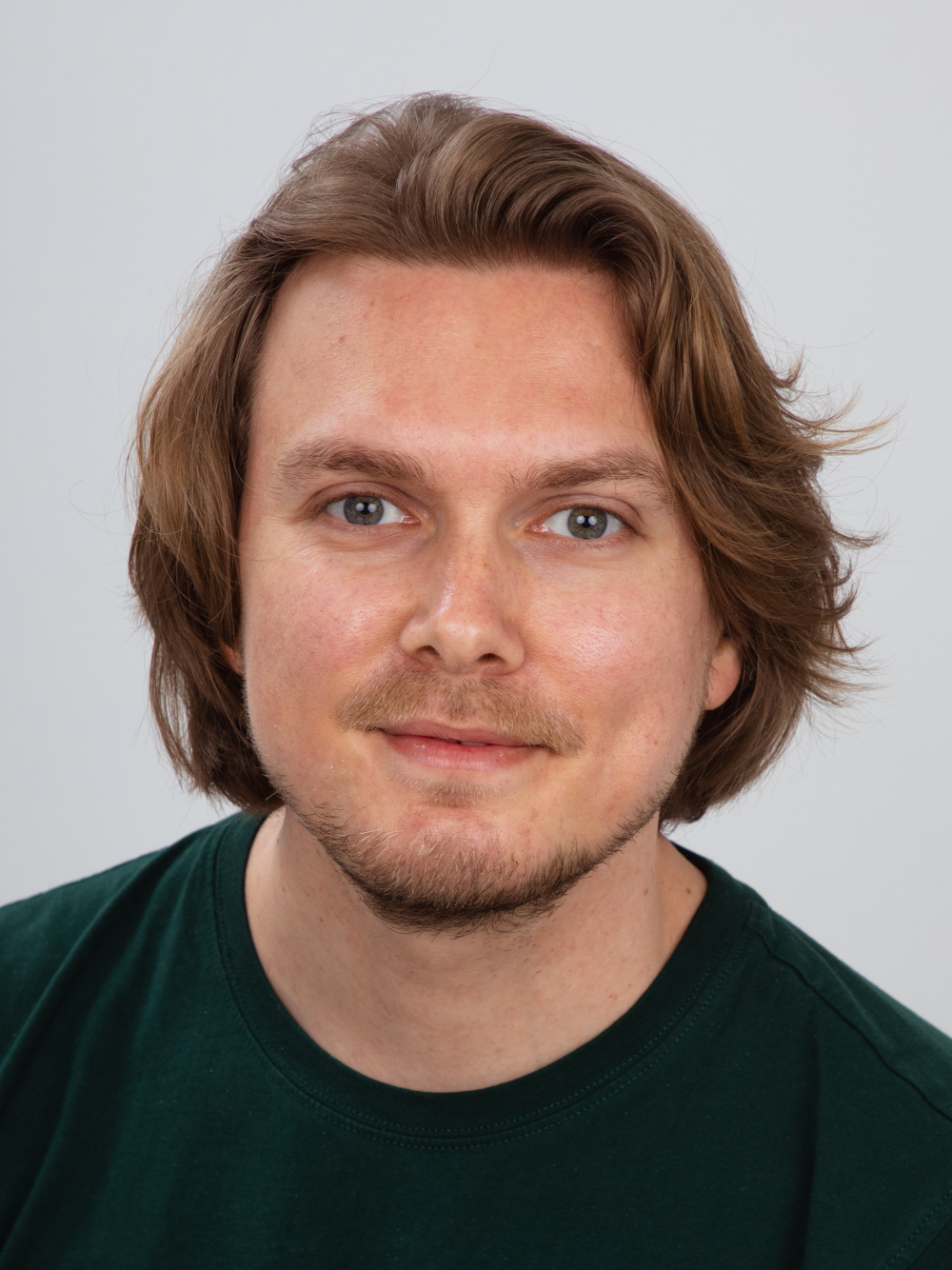
Jan Dreier is a Research Fellow at the Institute of Logic and Computation at Vienna University of Technology. His research centers on structural graph theory and algorithmic meta-theorems, particularly exploring the boundaries of tractability for model checking problems. Dreier's work bridges theoretical computer science and discrete mathematics, focusing on graph decompositions, parameterized complexity, and logical expressiveness. Key research themes include monadic stability in graph classes, applications of model theory to computer science, and efficient algorithms for logical queries on structured graphs. His publication record shows consistent focus on graph sparsity concepts and algorithmic applications of logic, with recent work expanding into approximation methods for counting queries. Research demonstrates sophisticated applications of combinatorial methods to fundamental problems in computational complexity.
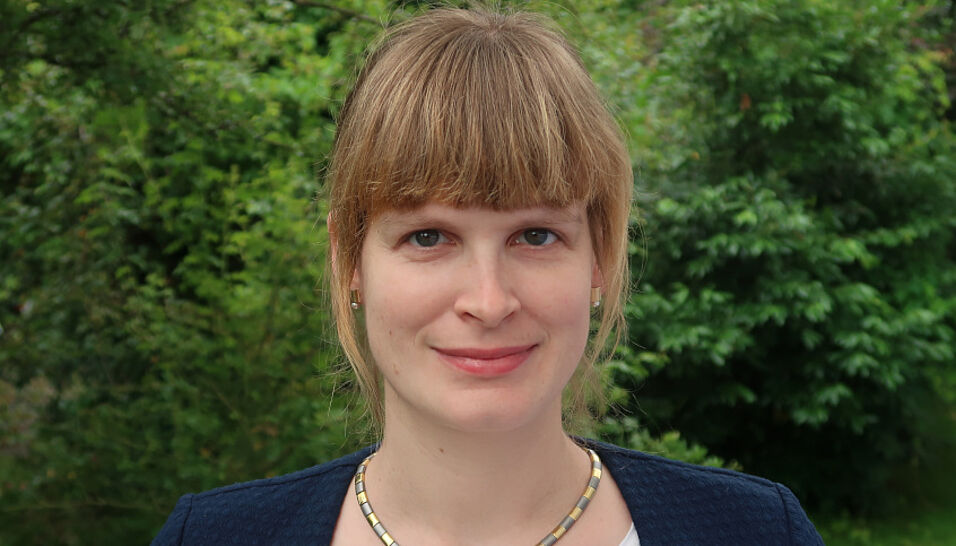
Vera Fischer is an Associate Professor and Privatdozent in the Department of Mathematics at the Faculty of Mathematics, University of Vienna. She has been an active researcher since 2008, with a strong publication record in mathematical logic and set theory. Her research centers on set-theoretic combinatorics , focusing on cardinal characteristics of the continuum, forcing, definability, and structures such as maximal almost disjoint families, cofinitary groups, and independent families. She investigates foundational questions in independence, spectra of combinatorial objects, and the interplay between definability and generic extensions. Her work often involves constructing models to separate cardinal invariants or to realize specific spectra under forcing. The recent publications show a consistent trend in combinatorial set theory , with a focus on tower spectra, tight families, mad families, and their behavior under various forcing notions like Cohen and Sacks forcing. Her research frequently explores the definability and destructibility of combinatorial families, often in collaboration with leading researchers such as Corey B. Switzer, Stefan Geschke, and Saharon Shelah. FWF START Prize, 2017 Förderungspreis der ÖMG, 2018 Förderungspreis, 2018 She leads and participates in research projects such as Comparing the Real Line to Combinatorics of the Uncountable and A Sacks-like model with large continuum , indicating active grant funding and supervision of research activities. She also organizes academic events like Colloquium Logicum and engages in public outreach on topics like infinity. Her research is conducted within the Set Theory Group at the University of Vienna, where she collaborates with other logicians and contributes to the academic community through publications, conferences, and mentorship.
Juan P. Aguilera is a researcher at the Institute of Discrete Mathematics and Geometry at TU Wien, Austria. His research focuses on mathematical logic, particularly in proof theory, set theory, reverse mathematics, and infinitary logics. He actively participates in academic events, including organizing workshops and giving invited talks globally. His research interests span foundational questions in logic, including Gödel logics, determinacy axioms, and structural reflection principles. He contributes to interdisciplinary areas such as the model theory of non-classical logics and applications of infinitary proof systems. Aguilera has been involved in major logic events like the Logic Colloquium 2025 (TU Wien) and co-organized the Philosophical Transactions of the Royal Society special issue on proof theory (2023). He has given talks at institutions like Ghent University, the University of Hamburg, and ITAM (Mexico City). No scientific awards are explicitly listed, but his prolific engagement in academic conferences and editorial work highlights his contributions to the field. He has secured grants and leads collaborative projects, though specific grant details are not provided. He is affiliated with TU Wien's discrete mathematics group and collaborates internationally on logic and set theory research.
Sandra Müller is an Associate Professor at the Institute for Discrete Mathematics and Geometry at TU Wien. She leads the research group on set theory and serves as Principal Investigator for the FWF START project Y1498 and the FWF international project I6087. She is also a member of the Young Academy of the Austrian Academy of Sciences (ÖAW) and Editor for Thesis Abstracts at the Bulletin of Symbolic Logic. Her research specializes in set theory with focus areas including: Inner model theory and large cardinal hierarchies Determinacy axioms and descriptive set theory Connections between determinacy and large cardinals Generic absoluteness and consistency strength proofs Wadge hierarchies and topological applications Her recent publications demonstrate a consistent focus on determinacy axioms, inner model constructions, and their implications for foundational mathematics. Work frequently involves collaboration and addresses open problems in consistency strength, universally Baire sets, and combinatorial set theory. Awards and Honors: L’Oréal Austria Fellowship (2020) Membership in the Young Academy of the Austrian Academy of Sciences Research Supervision and Grants: Current PhD students: Lukas Koschat (since 2022), Lena Wallner (since 2023) Active grants: FWF START project Y1498, FWF international project I6087 Completed projects: FWF Elise Richter Project V844 (2021-2023) She leads the Inner Model Theory research group at TU Wien, comprising postdoctoral researchers and PhD students focused on advanced set theory and mathematical logic.
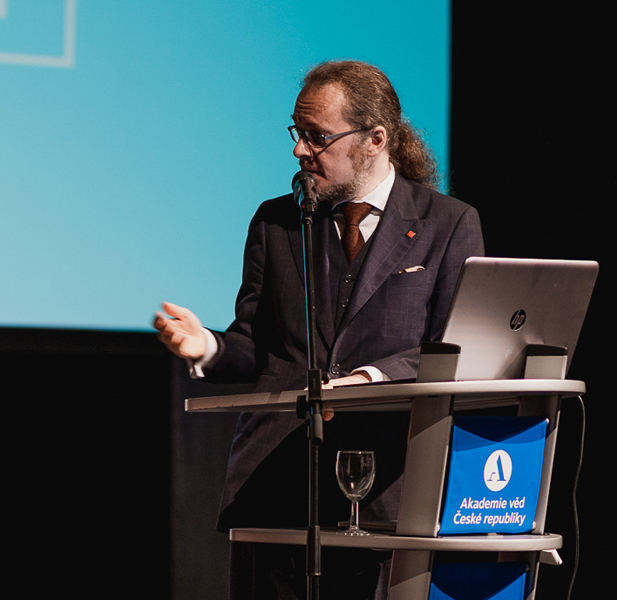
Dr. Benedikt Löwe is a Professor at the University of Hamburg since 2009, holding the CIPSH Chair 'Diversity of Mathematical Research Cultures & Practices'. He maintains affiliations with the Universiteit van Amsterdam (2003–2023) and the University of Cambridge (since 2012). His roles include research group leadership at Hamburg, editorial leadership at 'Mathematical Logic Quarterly', and governance positions in international academic organizations. Education : Master's in Mathematics (Tübingen, 1996), PhD in Mathematics (Berlin, 2001), Habilitation (Bonn, 2004), M.A. and Sc.D. from Cambridge His research bridges mathematical logic with philosophy, narratology, AI, and social sciences, with a focus on foundational questions and interdisciplinary modeling. His work has pioneered algebra-valued set theory, modal logic of forcing, and empirical approaches to modeling mathematical practices. Key contributions include the concept of 'quasigenerics' in set theory, the development of paraconsistent algebra-valued models, and the application of logic to folktale morphology. He has edited multiple journals and served on editorial boards, including as Managing Editor of 'Mathematical Logic Quarterly' (2011–2022). Scientific Awards : Fellow of the International Science Council (2023) Ordinary member of the Hamburg Academy of Sciences (2023) Simons Foundation Research Fellowship (2015) Felix-Hausdorff-Gedächtnispreis (2001) As a leader in academic governance, he has chaired the Deutsche Vereinigung für Mathematische Logik (DVMLG) and served as Secretary General of the International Union of History and Philosophy of Science and Technology's logic division (DLMPST/IUHPST).
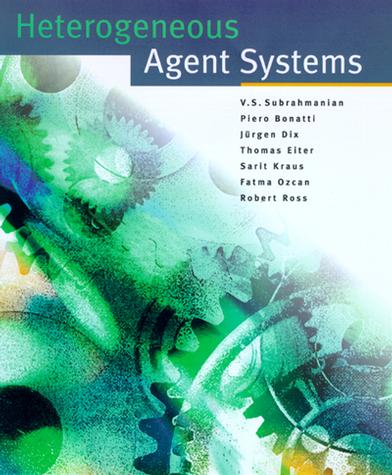
Thomas Eiter is a Full Professor at the Institute of Logic and Computation, Technical University of Vienna (TU Wien), where he serves as Head of Research Unit. He is a Full Member of the Division of Mathematics and Natural Sciences since 2022 and holds leadership roles within the university. His research focuses on knowledge representation and reasoning, computational logic, algorithms and complexity in AI, declarative problem solving, nonmonotonic logic programming and databases, and reasoning about actions and change. His work bridges theoretical foundations with practical applications in artificial intelligence, particularly in logic programming and knowledge-based systems. He has made significant contributions to Answer Set Programming (ASP), developing frameworks like DLV and HEX programs that enable sophisticated reasoning capabilities. His recent publications demonstrate a strong focus on stream reasoning (LARS framework), knowledge forgetting, modular reasoning systems, and the integration of logic programming with ontologies. His research shows consistent contributions to both theoretical foundations and practical implementations of AI systems over several decades. ACM Fellow (2020) Fellow of the European Association for AI (2006) Distinguished Paper Award of the 17th International Joint Conference on Artificial Intelligence (IJCAI, 2001) Prominent Paper Award of the Artificial Intelligence Journal (2013) Test of Time Award (10 years) of the International Conference on Logic Programming (2013) Eiter has led and participated in numerous research projects, both internationally funded (such as LogiCS@TUWien, Humane AI, AI4EU) and nationally funded (including projects like BILAI, TAIGER, and several FWF-funded initiatives). His research unit has received substantial support from European Commission programs (H2020) and Austrian funding agencies (FWF, FFG, WWTF). He is actively involved in the academic community as a member of the Austrian Academy of Sciences (ÖAW), Academia Europaea, and has served on the Executive Council of AAAI. His research unit maintains strong connections with international collaborators and has developed influential systems like the DLV answer set programming system.
Prof. Franz Baader is a Full Professor for Automata Theory and Director of the Institute of Theoretical Computer Science at TU Dresden, Germany. He has held academic leadership roles including Dean of the Faculty of Computer Science (2012–2015). His research focuses on Logic in Computer Science, Knowledge Representation, and Description Logics. He has published extensively in top venues and received prestigious awards like the Herbrand Award (2020). His contributions include foundational work on automated deduction and term rewriting. Education: Dr.-Ing. in Computer Science (1989, FAU Erlangen-Nürnberg). Professional experience includes roles at DFKI, RWTH Aachen as Associate Professor, and visiting scholarships at NICTA (Australia). He is a Fellow of EurAI (2004). Research Interests: His work bridges theoretical computer science and practical knowledge representation systems. Key areas include description logics, automated reasoning, and formal methods. He has pioneered techniques for ontology repair and explanation generation in DL systems. Recognition: Over 250+ publications, H-index 69 (Google Scholar). Member of editorial boards for 6 journals, former President of CADE Inc., and active in international conferences like IJCAR and RTA.
Shqiponja Ahmetaj is an Assistant Professor in the Department of Knowledge-Based Systems at the Faculty of Informatics, TU Wien. She specializes in semantic web technologies, knowledge representation, and graph data management. Her research focuses on SHACL validation, ontology integration, and formal methods for constraint satisfaction in graph databases. Education: PhD in Computer Science, TU Wien (2019): 'Rewriting approaches for ontology-mediated query answering.' MSc in Computer Science, TU Wien (2013): 'Planning in graph databases under description logic constraints.' Roles: Course instructor for 'Introduction to Artificial Intelligence,' 'Knowledge-based Systems,' and 'Semantic Technologies.' Principal investigator in projects like FRESH (2021–2026) and SEE (2012–2016). Research Interests: Her work addresses challenges in semantic web validation, ontology semantics, and graph data evolution. She develops formal methods for SHACL constraint validation, explanation generation for non-validation, and repair algorithms. Her contributions bridge the gap between semantic web standards and practical database systems. Her recent publications focus on SHACL validation of evolving graphs , ontology-ontology interoperability , and consistent query answering under constraints . Projects like FRESH emphasize theoretical and applied aspects of SHACL in knowledge graphs. Grants & Projects: FRESH (FWF, 2021–2026): 'Shapes in Graph Data: Theory and Implementation.' SEE (WWTF, 2012–2016): 'SPARQL Evaluation and Extensions.' Advising: Supervised theses such as 'SHACL validation of evolving RDF graphs' (2023) and 'A metaheuristic approach to crowdsourced package delivery' (2023). Labs/Teams: Active in TU Wien's research groups on semantic technologies and knowledge representation, collaborating with international institutions on projects like OMEGA and KtoAPP.
Michael Pinsker is a full professor and head of the Research Unit Algebra at the Vienna University of Technology. He is a leading researcher in universal algebra, model theory, and theoretical computer science, with a strong focus on constraint satisfaction problems (CSPs), particularly over infinite domains. He is deeply involved in the Vienna School of Mathematics and serves on the steering committees of the Workshop on General Algebra and the CSP World Congress (CWC), which he regularly co-organizes. Principal Investigator, ERC Synergy Grant POCOCOP (2023–2029) Principal Investigator, FWF-NCN Project on Constraint Satisfaction (2022–2026) Associate Editor, Algebra Universalis (Springer) Member, Executive Board, Vienna School of Mathematics His research lies at the intersection of algebra, logic, and computation, emphasizing the algebraic and model-theoretic analysis of infinite structures to understand the complexity of CSPs. He investigates how symmetry, topology, and polymorphisms govern tractability and hardness. His work often connects Ramsey theory and homogeneous structures with computational problems. His recent publications reveal a sustained focus on infinite-domain CSPs, particularly through algebraic methods like polymorphisms, smooth approximations, and topological clones. Trends include collapsing width hierarchies, establishing hardness criteria for infinite digraphs, and developing new algorithms based on symmetry and consistency. His work bridges finite and infinite model theory, aiming to unify complexity classification frameworks. ERC Synergy Grant POCOCOP (2023) Distinguished Paper Award, LICS 2023 Pinsker actively mentors PhD students and postdoctoral researchers, including current advisees like Johanna Brunar, Moritz Schöbi, Roman Feller, and Christoph Spiess. He has advised former PhD students Clemens Schindler, Tomas Nagy, and Michael Kompatscher. He leads major research projects funded by the European Research Council and national science foundations, indicating significant grant leadership. His collaborative network includes Libor Barto, Manuel Bodirsky, and Marcin Kozik. He leads the Research Unit Algebra at TU Wien, which includes faculty, postdocs, PhD students, and project managers working on universal algebra and CSPs. He co-organizes major annual events like the CSP World Congress and the Early Student Award meetings of the Austrian Mathematical Society, fostering community and collaboration.
Jin-Yi Cai is a distinguished Professor of Computer Science and Steenbock Professor of Mathematical Sciences at the University of Wisconsin at Madison, where he has been a faculty member since 2000. Previously, he held academic positions at State University of New York at Buffalo (Professor 1996-2000, Associate Professor 1993-1996), Princeton University (Assistant Professor 1989-1993), and Yale University (Assistant Professor 1986-1989). He has also been a Radcliffe Institute Fellow at Harvard University (2007-2008) and a Guggenheim Fellow and Visiting Professor at the University of Toronto (1999-2000). Dr. Cai earned his Ph.D. in Computer Science from Cornell University in 1986, an M.A. in Mathematics from Temple University in 1983, and a Certificate in Mathematics from Fudan University in 1981. His academic journey spans prestigious institutions across the United States and demonstrates a consistent trajectory of scholarly excellence. Professor Cai's research focuses on theoretical computer science, particularly computational complexity theory, with significant contributions to holographic algorithms, counting constraint satisfaction problems, and graph homomorphisms. His work bridges computer science and mathematics, developing sophisticated algorithms and proving fundamental complexity results. His research has evolved from foundational work in structural complexity and oracle separations to specialized work in holographic algorithms and counting problems, demonstrating both depth and breadth in theoretical computer science. His publication record shows a consistent output of high-impact research, with major contributions spanning over three decades. His work on holographic algorithms represents a particularly innovative strand of research that has opened new avenues in computational complexity. The progression of his research demonstrates increasing specialization in counting problems while maintaining connections to broader theoretical frameworks in computer science and mathematics. 2022 Simons Fellowship 2022 CCF Award for Overseas Outstanding Contribution 2022 Fellow, American Mathematical Society (AMS) 2021 Fulkerson Prize in Discrete Mathematics 2021 Gödel Prize in Theoretical Computer Science 2014 Steenbock Professorship, UW Madison 2001 ACM Fellow 1998 John Simon Guggenheim Fellowship 1994 Sloan Fellowship Professor Cai has served as Editor of the Journal of Computer and System Sciences and Associate Editor of the Journal of Computational Complexity. His work has been recognized with numerous prestigious fellowships including the Guggenheim Fellowship, Sloan Fellowship, and Humboldt Research Award. His research has had significant impact in theoretical computer science, earning him the Gödel Prize and Fulkerson Prize, two of the most prestigious awards in theoretical computer science and discrete mathematics respectively.
Magdalena Ortiz is a Full Professor and Head of the Knowledge-Based Systems Research Unit at TU Wien, specializing in Knowledge Representation and Reasoning with a focus on Description Logics (DLs). Her work emphasizes integrating DLs with database systems, particularly in query languages and reasoning algorithms. She leads research in semantic technologies, ontology-mediated query answering, and formal methods for data validation (e.g., SHACL). Research interests include expressive query languages, computational complexity of DL reasoning, and applications in graph databases and cloud security. She has extensive experience in EU-funded projects (e.g., FRESH, KtoAPP) and serves editorial roles in AI conferences/journals. Her teaching includes advanced courses on Description Logics, Logic, and Ontology Engineering. Notable contributions include advancements in SHACL validation, Datalog rewritings for ontology-mediated queries, and reasoning with closed predicates. She advises multiple PhD students and collaborates internationally on topics like temporal equilibrium logic and OBDA systems.
Wolfgang Faber is a researcher at Vienna University of Technology (TU Wien) specializing in Knowledge-Based Systems within the Faculty of Informatics. Holding the position of Privatdozent, he has completed his habilitation and is qualified to teach at the university level. His academic work centers on Answer Set Programming (ASP), Logic Programming, and Knowledge Representation, with significant contributions to theoretical foundations in these fields. Dr. Faber's research spans multiple areas of computational logic: Answer Set Programming and its theoretical underpinnings Epistemic logic programs and equivalence properties Knowledge representation and reasoning systems Nonmonotonic reasoning formalisms Integration of logic programming with external data sources His publication history reveals a sustained focus on theoretical aspects of ASP, with particular emphasis on program equivalence concepts (strong equivalence, uniform equivalence), computational complexity analysis, and applications to knowledge representation. Over two decades, his research has evolved from foundational work in disjunctive logic programming to specialized topics in epistemic reasoning within ASP frameworks. Dr. Faber has led and participated in numerous research projects including START (2014-2022) on Uniform Equivalence of Epistemic Logic Programs, SemDat (2012-2016), and multiple projects related to hybrid knowledge bases and Answer Set Programming from 2005-2015. His collaborative research extends across European institutions, evident through extensive co-authorship with researchers like Thomas Eiter and Stefan Woltran. While specific awards aren't documented in the available information, his sustained research output and leadership in multiple projects indicate significant recognition within his field. Dr. Faber has made substantial contributions to major systems in the field, most notably the DLV system for knowledge representation and reasoning, which has influenced both academic research and practical applications of Answer Set Programming.
Dino Rossegger is a mathematician working at the Institute of Discrete Mathematics at Technische Universität Wien. He serves as Principal Investigator for the international project "Structural Complexity Measures for Foundational Theories" funded by the Austrian Science Fund. Previously, he completed a Marie Skłodowska Curie fellowship called ACOSE (Algorithmic Complexity of Structural Equivalence Relations) which involved a two-year research phase at UC Berkeley under Antonio Montalbán's supervision followed by a return phase at TU Wien under Ekaterina Fokina's supervision. His research focuses on computability theory and its interactions with descriptive set theory and model theory. Rossegger investigates fundamental questions about the algorithmic complexity of mathematical structures, particularly examining degrees of categoricity, bi-embeddability spectra, and the relationship between computational and descriptive complexity measures. His work often bridges the gap between pure computability theory and broader mathematical contexts, as evidenced by his publications on linear orderings, models of arithmetic, and equivalence relations. Rossegger's publication record shows consistent output in top-tier logic journals including the Journal of Symbolic Logic, Proceedings of the American Mathematical Society, and Journal of Mathematical Logic. His recent work demonstrates growing influence in the field of computable structure theory, with particular attention to the interplay between Turing degrees and structural complexity measures. The pattern of his publications reveals a deepening exploration of how computational constraints affect the classification of mathematical structures. Marie Skłodowska Curie Global Fellowship recipient Principal Investigator for Austrian Science Fund project Extensive publication record in mathematical logic journals Rossegger has taught courses at multiple institutions including Technische Universität Wien, University of California Berkeley, and University of Waterloo. His teaching spans advanced mathematical logic topics, recursion theory, and calculus for honors mathematics students. He has developed comprehensive course materials including detailed notes for computability theory and mathematical logic courses. At TU Wien, he has also taught exercise sessions for first-year mathematics courses for computer scientists. His involvement in the local research seminar at TU Wien and organization of the "Computable Structure Theory and Interactions" conference demonstrates his active engagement with the research community.
Daria Stepanova is a researcher at the Institute of Information Systems , Technische Universität Wien. Her work focuses on Answer-Set Programming (ASP), inconsistency resolution in hybrid knowledge bases, and optimization algorithms for scheduling and scene generation. Education: PhD (Dr.techn.) in Technical Sciences, MSc in Computer Science. Research Interests: Answer-Set Programming for scheduling and optimization Inconsistency handling in Description Logic Programs Hybrid reasoning systems combining logic and semantic methods Applications of automated reasoning in manufacturing and gaming Publications highlight trends in ASP-driven scheduling, inconsistency repair techniques, and semantic scene generation using contextual reasoning and algebraic measures. Labs & Teams: Active member of the Network Lab at TU Wien Collaborator on projects like ALASPO and Angry-HEX
Kurt Hahn is a Professor of Romance Literature and Cultural Studies at the Institute of Romance Studies, University of Graz, since March 2021. He studied at the Universities of Munich, Lyon, and obtained his doctorate and habilitation there. His research focuses on Hispanic-American narrative literature , transatlantic cultural contacts , (post-)modern French and Spanish poetry , and media, economic, and ethical aspects of literature . He has published extensively on topics like urban design in French word-image art , narrative politics of the imaginary , and postmodern figures of thought , often collaborating with scholars like Matthias Hausmann and Christian Wehr. He has co-edited volumes on financial narratives as crisis narratives and infinities in postmodern texts . His articles span themes such as transatlantic biopolitics , paratextual authority , and intermediality in contemporary literature .