Marc Erich Latoschik is a Professor in the Department of Human-Computer Interaction at the University of Würzburg, Germany. He previously held roles at Bayreuth University, Bielefeld University, and FHTW Berlin. His research focuses on virtual and augmented reality, embodiment, human-computer interaction, and applications in health, education, and social systems. Education: Completed his PhD in 2001 at Bielefeld University with a thesis on multimodal interaction in virtual reality. Research Interests: Embodied interaction, virtual embodiment, presence and plausibility in VR/AR, avatar design, social virtual reality, health applications (e.g., VR therapy for body image issues), and XR security/privacy. Active in developing frameworks like Reality Stack I/O and MAIL for VR/AR research. Key Projects: ViTraS study on body image exercises in VR, avatars for mass use via smartphone reconstruction, and motion-based biometrics in XR. Collaborates with medical teams on cybersickness detection and emergency training simulations. Labs/Teams: Leads research groups on immersive technologies and social VR applications. Involved in interdisciplinary projects combining HCI, AI, and healthcare.
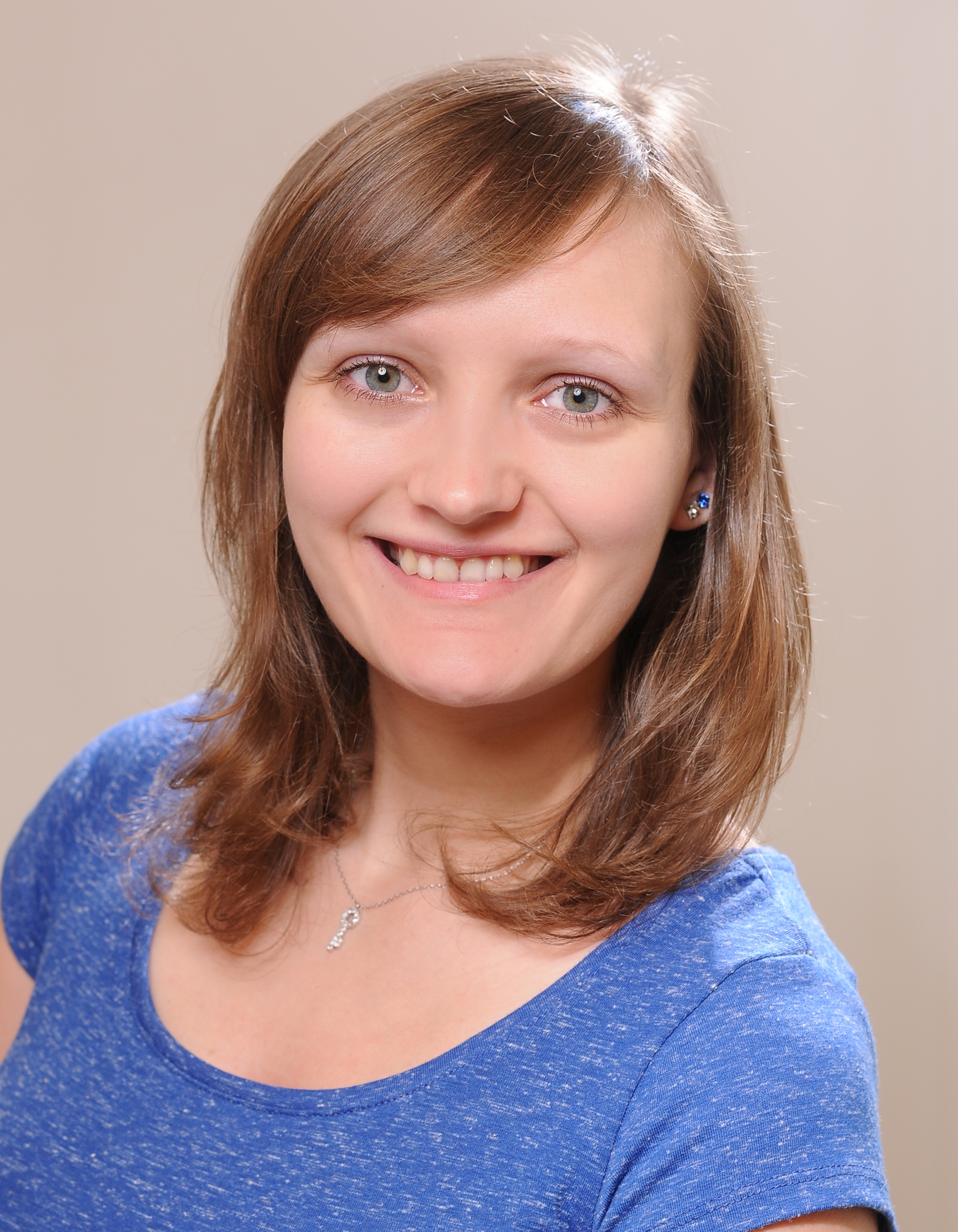
Franziska Mueller is a Research Scientist at Google Zurich , specializing in Augmented Perception . Prior to joining Google, she earned her Ph.D. in Computer Science at Saarland University under the supervision of Prof. Dr. Christian Theobalt, focusing on real-time hand reconstruction from RGB and depth images. Ph.D. in Computer Science (2016-2020) at Saarland University Master’s and Bachelor’s in Computer Science at Saarland University Research visits at Stanford University (2018) and Reality Labs Research (2019) Her research emphasizes the integration of model-based techniques and machine learning components for real-time 3D hand pose estimation, occlusion handling, and hand-object interaction tracking. Key contributions include methods for single-camera reconstruction and datasets like HandSeg. Scientific Awards : Dr. Eduard Martin Award (2021) Google PhD Fellowship (2017) Günter-Hotz-Medal (2016) Bachelor Award (2015) Völklinger Abiturpreis (2012)
Dr. Benjamin Busam is a Senior Research Scientist at the Technical University of Munich , affiliated with the Chair for Computer Science Applications in Medicine under Prof. Nassir Navab. Starting September 2025, he will hold the Professorship for Photogrammetry and Remote Sensing at TUM. His career includes leadership roles at FRAMOS Imaging Systems and Huawei Research in London. Education: Mathematics (TUM), Mathematics and Physics (ParisTech, University of Melbourne), PhD in Mathematics (TUM, 2014) His research focuses on 3D computer vision , multi-modal sensor fusion , and their applications in collaborative robotics and augmented reality . He specializes in projective geometry , 6D pose estimation , and neural radiance fields , with a particular emphasis on photometrically challenging environments. Recent publications highlight advancements in 3D scene understanding , neural rendering , and medical imaging , often leveraging machine learning and vision-language models . His work has been recognized through awards like the EMVA Young Professional Award (2015) and Innovation Pioneer of the Year (2019) , along with multiple Outstanding Reviewer distinctions at leading conferences. Dr. Busam has supervised numerous PhD and MSc students on topics including 6D pose estimation , medical augmented reality , and robotic ultrasound , collaborating with institutions like MIT , École Polytechnique , and University of Padova .
Ana Serrano is an Associate Professor at Universidad de Zaragoza, Spain, where she is affiliated with the Graphics & Imaging Lab in the EINA (Edificio Ada Byron) school. She earned her PhD at the same institution under the supervision of Prof. Diego Gutierrez and Prof. Belen Masia, and completed a postdoctoral fellowship at the Max-Planck-Institute for Informatics under Prof. Karol Myszkowski. Her research focuses on visual computing , particularly in computational imaging , material appearance perception and editing , and virtual reality . She is especially interested in developing perceptually-driven methods that leverage knowledge of the human perceptual system to enhance user experiences and assist content creation in immersive environments. Her recent publications (2023–2025) span top-tier venues such as SIGGRAPH, CVPR, IEEE TVCG, and Eurographics. These works explore topics like saliency prediction in 3D and 360° video, crossmodal perception in VR, gloss modeling, radiance fields, and perceptual evaluation of immersive content. The research demonstrates a strong integration of machine learning, human perception, and computer graphics to solve real-world problems in visual computing. She has received several prestigious awards, including: Eurographics 2023 Young Researcher Award VGTC VR 2024 Significant New Researcher Award Eurographics 2020 PhD Award Adobe Research Fellowship (honorable mention, 2017) NVIDIA Graduate Fellowship (2018) Ana Serrano actively supervises PhD and Master’s students and has taught courses such as Virtual Reality, Computational Imaging, and Deep Learning applications. She serves as an Associate Editor for Computer Graphics Forum , ACM Transactions on Applied Perception , and Computers and Graphics , and has held leadership roles in major conferences including Eurographics (Tutorials co-chair, 2023), ACM SAP (Program co-chair, 2022), and CEIG (Program co-chair, 2022). Her professional service includes extensive program committee and reviewer roles for SIGGRAPH, IEEE VR, ISMAR, and others. She leads a vibrant research group focused on human perception in virtual environments, with current projects on computational models of attention and perception, integrated with physiological signals. Her lab, the Graphics & Imaging Lab, fosters interdisciplinary collaboration and innovation in visual computing.
Diogo Carbonera Luvizon is a Researcher at the Max-Planck-Institut für Informatik (MPI-INF) in Saarbrücken, Germany, and a member of the Visual Computing and Artificial Intelligence (VIA) Research Center. He holds a PhD in Computer Vision and Machine Learning from CY Cergy Paris University (2019), and Bachelor's and Master's degrees in Engineering and Applied Computing from UTFPR, Brazil. His research focuses on solving complex problems in Computer Vision, Computer Graphics, and Deep Learning, particularly in human modeling and real-time systems. Education: PhD (2019) - CY Cergy Paris University; M.Sc. (2015) - UTFPR; B.Sc. (2011) - UTFPR. Research interests include 3D human pose estimation, action recognition, multitask learning, and novel view synthesis. He has contributed to patents on multiplane image generation (Samsung) and vehicle speed measurement systems. His work has been recognized with awards like the Best Paper Honorable Mention at GCPR-VMV 2022 and Best Presentation Award at ETIS Lab (2018). He has developed open-source tools, including the deephar repository for human action recognition and pose estimation. His current affiliations include MPI-INF and the VIA Research Center, a partnership between MPI-INF and Google.
Tasos Dagiuklas is a Professor in the Department of Computer Science and Technology within the School of Engineering and Technology at the University of Bedfordshire. With over 168 publications spanning from 1995 to 2025, he has established himself as a leading researcher in telecommunications and network systems. His extensive publication record demonstrates continuous scholarly contribution across multiple decades in the field. Professor Dagiuklas' research focuses on wireless communications, edge computing, 5G/6G networks, quality of experience (QoE), and federated learning . His work bridges theoretical networking concepts with practical applications, particularly in multimedia delivery and security. He has developed significant expertise in video streaming optimization, network security mechanisms, and resource management in emerging network architectures. His research consistently addresses the evolving challenges of modern communication systems, with recent work increasingly focusing on AI integration in networking. Analysis of his recent publications (2023-2025) reveals a strong trend toward edge computing, federated learning, and security applications in next-generation networks. His work demonstrates a strategic shift from traditional networking concerns to more complex systems involving AI integration, energy efficiency, and heterogeneous environments. The publications show consistent collaboration with researchers across multiple institutions, with particularly strong partnerships with Muddesar Iqbal, Ilias Politis, and Stavros Kotsopoulos. Professor Dagiuklas has made substantial contributions to the academic community through his extensive publication record in high-impact venues including IEEE journals and conferences. His work has evolved from foundational networking research to cutting-edge investigations of AI-enhanced communication systems, reflecting the broader trajectory of the field itself. His research demonstrates both technical depth in specific networking challenges and breadth across multiple application domains.
Dr. Michael Otto is affiliated with the University of Ulm, Department of Computer Science, within the Faculty of Engineering. His research focuses on virtual technologies for production planning, immersive virtual assembly assessments, and markerless motion capture systems. He has contributed to projects like ARVIDA (Cost-efficient motion capture systems) and INTERACT (Human-centered workplaces). His work bridges computer science, manufacturing systems, and human factors. Key contributions include developing frameworks for motion capture, virtual reality benchmarking, and augmented reality applications in industrial contexts. Notable achievements include receiving the Best Industrial Paper award (2015) for his work on ubiquitous tracking using depth cameras. His research addresses challenges in assembly planning, ergonomic assessments, and spatial interaction in manufacturing environments. Education/Background: Former External PhD Candidate at University of Ulm. Research Interests: Dr. Otto’s work emphasizes practical applications of virtual and augmented reality in manufacturing. He explores how technologies like markerless motion capture and immersive environments can optimize assembly processes, enhance worker ergonomics, and improve production verification workflows. His projects often involve interdisciplinary collaboration with industry partners. Articles Overview: His publications (2014–2025) span topics such as augmented reality visualization, motion tracking algorithms, and VR-based simulation tools. These contributions highlight advancements in scalable systems, sensor fusion, and human-motion analysis within industrial contexts.
Federico Tombari is a Director of Research at Google Zurich and a Lecturer (Privatdozent) at the Chair of Computer Aided Medical Procedures (CAMP) at TUM. He leads applied research in Computer Vision and Machine Learning, focusing on 3D vision, robotics, augmented reality, autonomous driving, and healthcare applications. His work emphasizes unsupervised learning, large multimodal models, neural radiance fields, and scene graphs. Education & Professional Background: As PD Dr. Ing. Habil., he holds a habilitation in engineering and has been active in academic and industrial research for over a decade. His roles include Area Chair for top conferences like CVPR and ECCV, and Associate Editorships for journals like IJRR. Research Interests: Federico’s research spans 3D scene understanding, object recognition, SLAM, and novel view synthesis. He explores applications in surgical robotics, autonomous systems, and medical imaging. Recent trends in his work include generative models for scene generation and semantic scene graphs for holistic modeling. Grants & Industry Collaborations: He has led projects with Toyota, BMW, Audi, Zeiss, and others, focusing on 3D perception, autonomous driving, and medical vision. His work bridges academia and industry, emphasizing practical applications. Labs & Teams: He contributes to labs like DHM (Deutsches Herzzentrum München), NARVIS Lab, and RobUSt (Robotics and Ultrasound), advancing interdisciplinary research in healthcare and robotics.
Guillermo Gallego is a Professor of Robotic Interactive Perception at the Faculty of Electrical Engineering and Computer Science , Technische Universität Berlin , holding the Einstein Center Digital Future (ECDF) Professorship since 2019. His research bridges robotics , computer vision , and applied mathematics , focusing on optimization methods for interdisciplinary imaging and control problems. Education : PhD in Electrical and Computer Engineering (Georgia Tech, 2011), MS in Mathematics (Georgia Tech, 2009), MS in Electrical Engineering (Georgia Tech, 2007), MS in Mathematical Engineering (Universidad Complutense de Madrid, 2005). Gallego's work explores event-based vision to enhance robot perception through low-latency sensing and real-time 3D reconstruction . He previously held postdoctoral positions at the Institute of Neuroinformatics (University of Zurich/ETH Zurich) and Technical University of Madrid (Marie Curie Experienced Researcher). His interdisciplinary projects span applications in ocean remote sensing , autonomous driving , and space exploration . Key scientific awards include the Fulbright Fellowship (2005-2010) and Marie Curie Experienced Researcher (2011-2014). His recent publications focus on event camera algorithms for optical flow , SLAM , and noise estimation , reflecting his leadership in event-based vision research. Collaborations include institutions like University of Zurich , Georgia Tech , and University of Pennsylvania . Research Grants : Funded through ECDF and Marie Curie programs. Labs : Affiliated with the Einstein Center Digital Future and Institute of Neuroinformatics (Zurich/ETH Zurich).
Prof. Dr.-Ing. Philipp Lensing serves as a Professor in the Faculty of Engineering and Computer Science at Osnabrück University of Applied Sciences. His academic work focuses on cutting-edge developments in virtual and augmented reality systems, computer graphics, and game programming. His research interests span Virtual Reality , Augmented Reality , Mixed Reality , Game Programming , Computer Graphics , and Natural User Interfaces . Prof. Lensing has pioneered work in real-time global illumination techniques, avatar calibration systems, and the integration of virtual content with real environments. His research has been applied across diverse domains including landscape planning, physics education, medical rehabilitation, and industrial engineering. Prof. Lensing's recent publications reveal a strong trend toward practical applications of VR/AR technologies in scientific, educational, and industrial contexts. His work increasingly focuses on multimodal interaction, haptic feedback systems, and the integration of VR with complex scientific instrumentation like scanning probe microscopy. He has supervised numerous student projects focused on VR/AR applications, game development, and 3D modeling. His teaching includes courses on Computer Graphics, 3D Game Programming, Virtual and Augmented Realities, and 3D Modeling and Animation. Prof. Lensing leads several research projects including GROWTH (funded by BMBF), VRnano (BMBF), VRFlow Suite, VR-Physio-BOX, and MoDal-MR, all exploring innovative applications of immersive technologies in various practical contexts.
Prof. Dr. Renato Negra is a faculty member at RWTH Aachen University, serving as the Chair of High Frequency Electronics within the Faculty of Electrical Engineering and Information Technology. His research is centered on advanced electronic systems with a focus on reconfigurable and low-power architectures for real-time applications. Research Interests: His work spans high frequency electronics, neuromorphic computing, embedded systems, and cyber-physical systems. He develops FPGA-based and edge-computing solutions for computer vision, robotics, and smart infrastructure, particularly in elderly monitoring and autonomous navigation. His research integrates deep learning with hardware optimization for energy efficiency and real-time performance. The recent publications highlight a strong trend toward event-based vision , neuromorphic sensors , and low-power embedded AI , applied in domains such as smart cities, healthcare, and robotics. There is a consistent emphasis on real-time processing, reconfigurable systems, and the deployment of neural networks on constrained hardware platforms. Scientific Awards: No awards or honors were mentioned in the provided text. Advising and Grants: While no specific students or advising roles are listed, the volume and depth of publications suggest active supervision or collaboration within research projects. Although no grants are explicitly named, involvement in EU-level initiatives (e.g., FitOptiVis ECSEL Project) and national R&D programs (e.g., BIO-PERCEPTION) can be inferred from the research topics and publication contexts. Labs and Teams: Prof. Negra leads the research activities in High Frequency Electronics at RWTH Aachen. While not directly linked to the Computer Vision and Robotics Lab (CVR-Lab) mentioned in the text, his work aligns closely with neuromorphic and CPS research themes, suggesting potential interdisciplinary collaboration.
Prof. Dr. Carolin Wienrich is a Professor of Psychology of Intelligent Interactive Systems at Julius-Maximilians-University Würzburg, Faculty of Human Sciences, and Co-director of XR HUB Würzburg since 2020. Her work bridges psychology, virtual reality, and human-computer interaction to understand human experiences in digital environments. Her educational background includes: 2010: Psychology Degree from Martin Luther University Halle/Wittenberg 2015: Interdisciplinary PhD from TU Berlin | Faculty of Traffic and Machine Systems Prof. Wienrich's research explores psychological aspects of presence, embodiment, and social interaction in XR systems. She investigates how device characteristics affect user experience, with applications ranging from workplace collaboration to therapeutic interventions. Her systematic review on psychological ownership of virtual objects has provided foundational insights into how users form emotional connections with digital assets. She has made significant contributions to understanding avatar embodiment effects on body image and self-esteem, as well as the impact of immersion levels on social presence and task performance. Analysis of her recent publications reveals several key research trends: Investigating cross-device collaboration and asymmetric interaction in virtual environments Exploring psychological ownership of virtual objects and environments Developing VR applications for therapeutic interventions in mental health Studying human-AI interaction dynamics in spatial computing environments Examining privacy, safety, and harassment issues in social VR Developing training approaches to improve user competence with intelligent systems Her notable awards include: 2020 Research Prize of the Faculty of Human Sciences (JMU Würzburg) 2019 Prize for Good Teaching Bavaria (Free State of Bavaria) 2018 Best Impact German Institute for Virtual Reality Best Poster award at IEEE VRW 2025 IDEATExR Best Paper award at IEEE VRW 2025 Prof. Wienrich actively engages with policy makers and the public, having presented to the Federal Commissioner for Data Protection and Information Security, participated in discussions at the German Ethics Council, and demonstrated her research to members of the German parliament. Her presentations cover critical topics such as the psychological consequences of the metaverse and human-centered AI interaction in virtual environments. As Co-director of XR HUB Würzburg, she leads an interdisciplinary initiative that connects researchers across psychology, computer science, and medicine to advance XR technologies and applications. The hub serves as a central platform for academic research, industry collaboration, and public engagement with extended reality technologies.
Dr. Antonio Ortiz is a Researcher at the University of Bonn, affiliated with the Life and Medical Sciences Institute (LIMES) and the IRU Mathematics and Life Sciences group. He works under the supervision of Professors Alexander Effland and Jan Hasenauer. His research focuses on Computer Vision in Medical Imaging and Machine Learning applications. He holds a Ph.D. in Electric and Electronics Engineering from Cinvestav, Mexico (2023), a Master's in Computer Science from Cicese, Mexico (2019), and a Bachelor's in Mechatronic Engineering (2017). His research integrates Bayesian methods, deep learning, and optical flow techniques for cardiac MRI segmentation, visual-inertial SLAM systems, and 3D shape measurement. Recent work emphasizes adaptive algorithms for medical imaging and robotics applications. Publications span medical imaging, robotics, and materials science, with a focus on algorithmic innovation and interdisciplinary applications. No scientific awards are explicitly mentioned, but his work demonstrates strong academic contributions. His advising activities and grants are not detailed in the provided text. He collaborates within the Effland Lab and IRT Mathematics and Life Sciences team.
Ayush Tewari is an Assistant Professor at the University of Cambridge. Previously, he was a postdoctoral researcher at MIT CSAIL under Bill Freeman, Josh Tenenbaum, and Vincent Sitzmann, and completed his Ph.D. at the Max Planck Institute for Informatics under Christian Theobalt. His research focuses on visual perception, developing methods to infer 3D structured representations from images and videos, aiming to bridge the gap between human perceptual capabilities and machine learning systems. Key research interests include neural rendering, inverse rendering, 3D reconstruction, and generative models. Notable contributions include advancements in Neural Radiance Fields (NeRF), diffusion models for inverse problems, and human-centric perception studies. His work has been published in top venues such as SIGGRAPH, CVPR, ICCV, and NeurIPS. Recent research trends emphasize ambiguity-aware inverse rendering, stochastic inverse problem solving using diffusion models, and integrating forward models for 3D scene inference. His work on Diffusion with Forward Models (NeurIPS 2023) proposes a novel framework for solving inverse problems without direct supervision. Awards: Best Paper Honorable Mention at BMVC 2022 (VoRF: Volumetric Relightable Faces). Labs/Projects: Core contributor to the DFM (Diffusion with Forward Models) project, advancing 3D scene understanding via probabilistic methods.
James Tompkin is a visual computing researcher focusing on computer vision, computer graphics, and human-computer interaction. His lab develops techniques for image and video creation, editing, analysis, and interaction, emphasizing image and scene reconstruction from multi-camera systems and complex dynamic scenes. Applications span 2D, multi-view, and VR/AR displays. His research interests include scene reconstruction, neural rendering, light fields, time-of-flight sensors, and perceptual design for augmented reality. He works on algorithms for depth estimation, view synthesis, and interactive systems. His publications demonstrate expertise in neural fields, Gaussian splatting, and light field processing for VR/AR applications. Key themes include machine learning for scene flow estimation, efficient rendering of large-scale environments, and improving generative model stability.