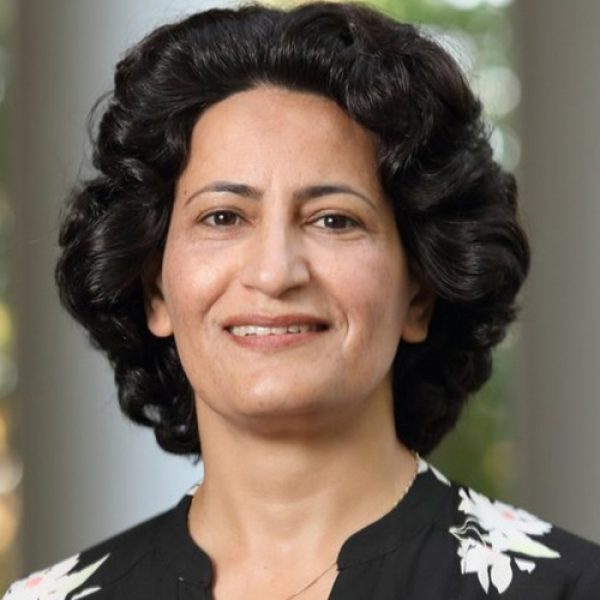
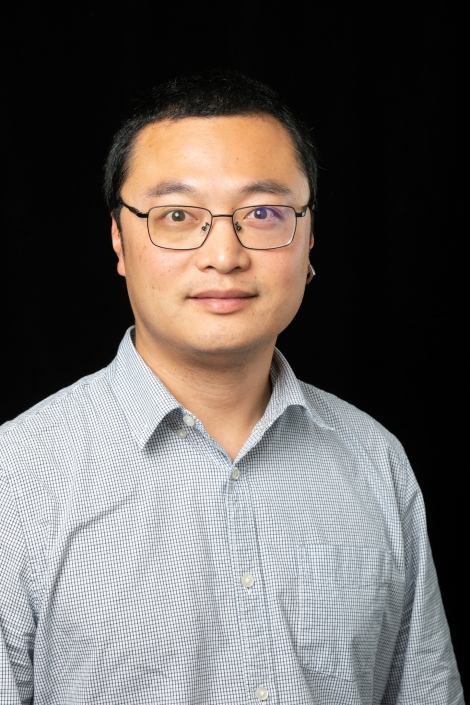
Rafael Lalive is a Professor at the University of Lausanne's Faculty of Business and Economics and a core member of the LIVES Centre, a Swiss National Centre of Competence in Research. Based at the Internef Building in Lausanne, he leads interdisciplinary research on labor market dynamics and social policy evaluation. His research spans Labor Economics, Gender Economics, and Public Policy, with specialized focus on job search behavior, unemployment insurance systems, gender diversity in workplaces, and family policy impacts. He employs causal inference methods using natural experiments like the Swiss language border to isolate cultural effects on economic decisions, and analyzes policy interventions through quasi-experimental designs. Recent publications reveal strong trends in gender economics (examining vacancy preferences and workplace diversity) and family economics (assessing maternity leave mandates and fertility outcomes). His work increasingly integrates crisis response analysis, including pandemic effects on youth mental health and consumption patterns, while maintaining methodological rigor through randomized trials and large-scale data. As part of the LIVES Centre's leadership team, Professor Lalive coordinates a multidisciplinary network studying life course inequalities, collaborating with researchers across the University of Lausanne and University of Geneva to translate empirical findings into evidence-based social policies.
Jamie Lynn Todd is an Associate Professor of Medicine at Duke University School of Medicine and a member of the Duke Clinical Research Institute, specializing in lung transplantation and advanced lung disease with a focus on idiopathic pulmonary fibrosis (IPF). Her work bridges clinical practice and translational research to address critical challenges in pulmonary medicine. Education: Fellow in Pulmonary Medicine, Duke University (2008-2009) Resident, Duke University, Medicine (2005-2008) M.D., University of Colorado, School of Medicine (2005) Research Focus: Dr. Todd investigates clinical and genetic risk factors for lung fibrosis in transplant rejection and IPF, and examines how airway epithelial injury responses influence repair, fibrosis, and immunity. Her approach integrates molecular biology with clinical data to develop predictive models and biomarkers for disease progression. Publication Trends: Her 2025 publications emphasize biomarker discovery (prostasin, hyaluronan), risk stratification in lung transplantation, and environmental impacts on IPF. Utilizing large registries like IPF-PRO and ILD-PRO, her work prioritizes practical applications for early detection and intervention in fibrotic lung diseases. Grants & Collaboration: As PI on 10 active grants (2019-2029), including NIH K23 and Cystic Fibrosis Foundation awards, she leads the Lung Transplant Clinical Trial Network and Duke PROSPER training program. Her extensive grant portfolio supports translational research and mentorship in pulmonary academia. Research Ecosystem: Embedded in Duke's Department of Medicine and Clinical Research Institute, she collaborates with the Lung Transplant Outcomes Group and IPF-PRO Registry teams, driving multicenter studies that shape clinical guidelines for transplant complications and fibrotic lung diseases.
Litao Yu is a Part-Time Lecturer and Visiting Scholar at the Faculty of Engineering and Information Technology, University of Technology Sydney. Concurrently, he serves as a Senior Data Analyst at Australia's Department of Agriculture, Fishery and Forestry. His academic appointments include Research Fellow at UTS (2019-2024) and post-doctoral positions at Griffith University and Queensland University of Technology. Education: PhD from The University of Queensland (2013-2016) MPhil from Dalian University of Technology (2009-2012) BSc from Dalian Maritime University (2003-2007) Dr. Yu's research focuses on computer vision and machine learning with applications in agriculture, multimedia systems, and multimodal learning. His work spans few-shot learning, semantic segmentation, fine-grained recognition, and multimodal fusion techniques. Key application domains include animal welfare monitoring, aquaculture quality control, and travel information enhancement. His publications demonstrate strong thematic convergence around efficient visual recognition systems , with recurring focus on few-shot learning paradigms and attention mechanisms. Recent work shows increasing emphasis on agricultural applications of computer vision, including poultry monitoring, fish processing automation, and sheep tracking. Blockchain integration for supply chain transparency represents another emerging theme. No scientific awards are mentioned in available records. Teaching responsibilities at UTS include courses on Real-time Operating Systems and Shell Programming . No information is available regarding research grants, supervised students, or laboratory affiliations.
Paolo G. Giarrusso is a researcher at the Institute for Programming Languages and Software Engineering within the Faculty of Informatics at the University of Tübingen . Previously, he was a Ph.D. student at the University of Marburg , where he defended his thesis Optimizing and Incrementalizing Collection Queries by AST Transformation in January 2018.
Daron Acemoglu is a Professor at the Massachusetts Institute of Technology (MIT) , where he conducts research on political economy, economic development, technological change, and inequality . As a leading scholar in institutional economics, he explores how inclusive vs extractive institutions shape national prosperity and stability. His 2023 book Power and Progress examines AI's societal implications, while Why Nations Fail (2012) revolutionized development theory through historical institutional analysis. Research Focus : Macroeconomics, Labor Economics, Technological Displacement Key Theories : Institutional persistence, Directed technical change, Creative destruction dynamics Awarded with the Sveriges Riksbank Prize in Economic Sciences (2024) A.SK Social Science Award (2023) John Bates Clark Medal (2005) His empirical work spans historical and contemporary analyses , connecting medieval institutional development to modern economic outcomes. Recent publications examine AI regulation, automation's labor market impacts , and creative destruction forces . He serves as Faculty Co-Director at MIT's Stone Center on Inequality and contributes to Blueprint Labs .
Afsaneh Doryab is an Assistant Professor of Data Science (by Courtesy), Systems Engineering, and Computer Science at the University of Virginia . She is affiliated with the School of Data Science, Department of Systems and Information Engineering, and Department of Computer Science. Her research bridges machine learning, data mining, and human-computer interaction to model human behavior using passively collected sensor data from mobile and wearable devices. Education : Ph.D. and M.Sc. in Computer Science from the IT University of Copenhagen . Her work focuses on computational modeling of biobehavioral rhythms to detect mental health changes (e.g., depression, bipolar disorder), predict physical symptoms (e.g., surgical recovery, cancer treatment), and enhance wellbeing through context-aware systems. She develops AI-driven tools for circadian-aware scheduling, emotion-aware music, and multimodal sensor analysis. Her recent publications highlight advancements in reinforcement learning, sonification, and smartphone-based nutritional assessment. Her research aligns with interdisciplinary efforts at the University of Virginia Environmental Institute , connecting data science, health informatics, and social good initiatives. Key methodologies include longitudinal data analysis, temporal modeling, and personalized machine learning frameworks. Grants like CHS: Small and HCC: Travel support her work in computational health solutions and academic collaboration. As an active contributor to ubiquitous computing and health informatics, she leads projects on victim tagging optimization, circadian-aware systems, and community-driven peer-to-peer economic exchange. Her lab’s outputs range from wearable sensor applications (e.g., BeWell+) to clinical activity recognition tools for operating rooms and hospitals.
Xiang Gao is a Pre-tenure Associate Professor in the School of Software at Beihang University, China. His research focuses on applying program analysis, test generation, and formal methods to improve software quality through automated bug fixing and program synthesis. He has established significant collaborations with Fujitsu Laboratories of America, Microsoft Research, and other leading institutions in the software engineering field, demonstrating strong industry-academia connections. Dr. Gao received his Bachelor's degree in Computer Science (Elite Class) from Shandong University in 2016, followed by a Ph.D. from the School of Computing at the National University of Singapore, where he also served as a Postdoctoral Fellow until December 2021. His educational background spans both Chinese and Singaporean academic institutions, providing him with a global perspective on software engineering research. His primary research interests span multiple cutting-edge areas of software engineering: Program Analysis techniques for detecting and fixing software bugs with formal methods Software Security vulnerabilities with focus on automated repair methods Automated Program Repair systems that generate high-quality patches without overfitting Program Synthesis for creating transformation rules from examples Software Engineering for Artificial Intelligence (SE4AI) to improve AI model reliability and security Mobile Software Engineering with particular attention to UI testing and automation Deep Learning Security including model protection and obfuscation techniques Dr. Gao's recent publication trajectory shows a strategic evolution toward integrating large language models with traditional software engineering approaches, particularly in test generation and program repair. His work on DNN modularization (NeMo, CNNSpliter, SeaM) represents an innovative approach to enhancing model reusability and security in resource-constrained mobile environments, addressing critical challenges in deploying AI on edge devices. His scientific contributions have been recognized with multiple prestigious awards: ACM SIGSOFT Distinguished Paper Award for "ProveNFix: Temporal Property guided Program Repair" at FSE'24 IEEE TCSE Distinguished Paper Award for "Investigating and Detecting Silent Bugs in PyTorch Programs" at SANER'24 ACM SIGSOFT Distinguished Paper Award for "Modularizing while Training: A New Paradigm for Modularizing DNN Models" at ICSE'24 Distinguished Artifact Award for "Automated Patch Backporting in Linux (Experience Paper)" at ISSTA'21 Dr. Gao actively mentors students at various levels, seeking "self-motivated Ph.D, master, undergraduate students and interns with strong programming skills" for his research projects. He serves on numerous program committees for top software engineering conferences including ICSE, ASE, ISSTA, and FSE, demonstrating his growing influence in the academic community. His research has been supported through collaborations with industry partners including Microsoft Research and Fujitsu Laboratories of America, translating theoretical advances into practical applications. His laboratory focuses on several key research projects including Automated Software Vulnerability Repair (with techniques like Fix2Fit, VulnFix, and ExtractFix that address the overfitting problem in program repair), Program Synthesis for Program Transformation (including Semi-supervised synthesis and FixMorph for automated patch backporting in Linux), and Software Engineering for Artificial Intelligence (with projects like CNNSpliter, SeaM, and Sensei that apply software engineering principles to improve AI model usability and robustness). These projects represent cutting-edge work at the intersection of traditional software engineering and modern AI techniques, addressing critical challenges in software reliability and security.
Apostolos Ampatzoglou serves as Associate Professor in the Department of Applied Informatics at the University of Macedonia, where he leads research in software engineering with particular emphasis on technical debt management and software quality. Previously, he held an Assistant Professor position at the University of Groningen (2013-2016) and maintains active collaborations across European research initiatives. His academic credentials include a PhD in Software Engineering from Aristotle University of Thessaloniki (2013), MSc in Computer Systems from the University of Macedonia (2005), and BSc in Informatics from the Technological Education Institute of Thessaloniki (2003). Dr. Ampatzoglou's research program centers on technical debt quantification, reverse engineering, and software maintainability. He pioneered financial models for technical debt management and developed metrics for assessing ripple effects in software systems. His work bridges theoretical foundations with industrial applications through projects like SDK4ED and SmartCLIDE, focusing on energy-efficient development and cloud service engineering. Current investigations explore machine learning applications for vulnerability prediction and technical debt prioritization. His extensive publication record reveals strong trends in applying AI to software quality assurance, with recent work emphasizing transformer models for vulnerability detection and explainable AI for technical debt identification. He actively investigates energy-aware development practices and service-oriented architecture patterns in cloud environments. Notable recognitions include: Top-7 reviewer for Journal of Systems and Software (2022) Best paper awards at IGSCC'21, ICSR'18, and EASE'17 18th most active Consolidated Researcher in Software Engineering (2013-2020) 3rd most active Early Stage Researcher (2010-2017) Multiple personal research grants from National Scholarships Association He has successfully supervised PhD candidates including Dr. Areti Ampatzoglou (Best PhD Thesis Award, University of Groningen) and Dr. Elvira-Maria Arvanitou (VERSEN Institute award). His research is funded through major European projects such as SDK4ED, SmartCLIDE, and SKILLAB, with recent grants exceeding €2M in total funding. Current work focuses on FAIR data implementation and skills gap analysis in European labor markets. As leader of the Software Engineering Lab at the University of Macedonia, he directs a 15+ member team working on technical debt management tools, cloud development environments, and XR applications for warehouse management. The lab maintains strong industry partnerships with technology clusters in Thessaloniki and participates in the Eclipse Foundation ecosystem.
Brice Chardin is an Associate Professor in Data Engineering at ISAE-ENSMA since 2013, affiliated with the LIAS (Laboratoire d'Ingénierie des Applications de la Connaissance et des Systèmes) Data and Model Engineering team. His work bridges academic research and industrial applications, focusing on data management solutions for critical systems. His research spans clustering algorithms under dissimilarity constraints , RDF query relaxation for explaining empty/overabundant results, pattern mining through the RQL language, and energy data management . Key projects include Chronos (a NoSQL system for industrial sensor data) and collaborations with energy companies SRD and Nexeya for predictive consumption analysis. Recent publications (2021-2024) emphasize constrained clustering techniques and cooperative query processing for RDF knowledge bases, revealing a strong trend toward practical solutions for industrial data challenges. His work integrates machine learning with database theory to address real-world data imperfections. PhD in Computer Science from INSA Lyon (2011) Postdoctoral position at LIRIS (2012-2013) on ANR DAG project Specialized in industrial data management since 2011 EDF collaboration Chardin actively supervises academic projects including drone simulation with Ardupilot and Smart Data mining initiatives. His industrial partnerships focus on energy sector applications, particularly predictive analysis for electricity distribution and storage systems. Current work involves developing clustering algorithms with error bounds and query relaxation frameworks for semantic web technologies.
Tinghao Feng serves as an Assistant Professor at Appalachian State University, specializing in time-oriented data analysis and visualization systems. His research develops comprehensive tools for exploring temporal patterns across environmental science, healthcare, and finance domains through innovative data mining algorithms and user-friendly software applications. His primary research interests focus on Time Series Analysis and Data Visualization, with significant contributions to Machine Learning applications. He investigates methods for visualizing complex temporal data, developing pattern recognition algorithms, and creating interactive analysis frameworks applicable to environmental monitoring, clinical informatics, and financial forecasting systems. Recent publications reveal a strong emphasis on visual analytics for temporal data, spanning environmental applications (honey bee monitoring, landslide prediction), healthcare informatics (patient messaging systems, pandemic modeling), and remote sensing. Key developments include the TimePool system for univariate time series querying and EVis for environmentally driven event analysis, demonstrating cross-disciplinary impact. Dr. Feng maintains active demonstration systems including TimePool for temporal query visualization and Polynomial Similarity Dependency Trees for linguistic structure analysis, reflecting his commitment to translating research into practical analytical tools for complex data exploration.
Kijung Shin is an Associate Professor at KAIST (Korea Advanced Institute of Science and Technology), holding dual appointments in the Kim Jaechul Graduate School of AI and the School of Electrical Engineering (Computer Division). He leads the Data Mining Lab and teaches multiple courses including Graph Mining and Social Network Analysis, Data Mining and Search, and other foundational courses in electrical engineering and AI. Education Ph.D. in Computer Science, Carnegie Mellon University (February 2019) M.S. in Computer Science, Carnegie Mellon University (December 2017) B.S. in Computer Science and Engineering, Seoul National University (August 2015) B.A. in Economics (Double Major), Seoul National University (August 2015) Research Interests Professor Shin's research primarily focuses on data mining, graph algorithms, and network science, with particular expertise in hypergraph analysis, tensor decomposition, and graph neural networks. His work bridges theoretical foundations with practical applications, developing algorithms that can efficiently analyze complex real-world networks. His recent research has expanded into multimodal learning, integration of large language models with graph neural networks, and applications in recommendation systems, satellite imagery analysis, and biological data analysis. His approach combines rigorous mathematical analysis with practical implementation, resulting in numerous open-source software tools that have been widely adopted in both academia and industry. His research has significant implications for social network analysis, fraud detection, recommendation systems, and scientific discovery in various domains. Research Trends Professor Shin's recent publications show a clear trajectory toward more complex network structures, particularly hypergraphs that capture higher-order interactions beyond simple pairwise relationships. His work increasingly integrates traditional graph algorithms with deep learning approaches, especially focusing on how graph neural networks can be improved and made more interpretable. There's also a growing emphasis on practical applications in areas like satellite imagery analysis, medical data, and recommendation systems that address real-world challenges. Scientific Awards Received the PAKDD Best Survey Paper Award for 'Multi-Behavior Recommender Systems: A Survey' (2025) Selected as one of the best short paper candidates of ACM RecSys 2024 (top 7) for 'Revisiting LightGCN' (2024) Selected for oral presentation (2.6% of accepted papers) at AAAI 2024 for 'VITA: 'Carefully Chosen and Weighted Less' Is Better in Medication Recommendation' (2024) Received the IEEE ICDM Best Student Paper Runner-up Award for 'TensorCodec: Compact Lossy Compression of Tensors without Strong Data Assumptions' (2023) Received the SIGKDD Best Research Paper Award and CogX Award for Best Student Paper in AI for 'FRAUDAR: Bounding Graph Fraud in the Face of Camouflage' (2016) Received the Best Senior Thesis Award from Seoul National University (2015) Received the Samsung Humantech Paper Award (1st in Computer Science) (2015) Teaching and Mentoring Professor Shin has taught multiple graduate and undergraduate courses at KAIST since 2019, including Graph Mining and Social Network Analysis, Data Mining and Search, and foundational courses in electrical engineering. He has also co-organized tutorials at major conferences including AAAI, KDD, ICDM, and CIKM on advanced topics in hypergraph neural networks and real-world hypergraph analysis. As the leader of the Data Mining Lab, he mentors numerous graduate students and postdoctoral researchers, fostering a collaborative research environment that has produced significant contributions to the field of data mining and network analysis. Research Leadership Professor Shin leads the Data Mining Lab at KAIST, which focuses on developing novel algorithms for analyzing complex networks and high-dimensional data. The lab has produced numerous influential software tools including D-Cube, M-Zoom, CoreScope, and DenseAlert, which are widely used in both academic research and industry applications. His research group maintains active collaborations with institutions worldwide and has received funding from various sources to support their innovative work in data mining and network analysis.