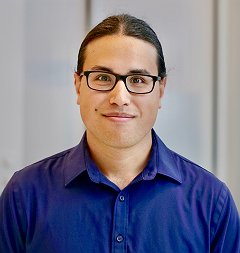
Dr. Tyll Robin Lemke is a researcher at Saarland University in the Department of Modern German Linguistics (Neuere deutsche Sprachwissenschaft). He serves as a scientific staff member in Project B3 of the Collaborative Research Center SFB 1102. His academic focus includes experimental linguistics, syntax, and psycholinguistics, with specialized expertise in ellipsis phenomena and fragment analysis. Lemke's research explores the cognitive underpinnings of language production and comprehension, particularly investigating how predictability, context, and information theory shape linguistic structures. His work employs diverse methodologies including corpus analysis, psycholinguistic experiments, computational modeling, and gamified experimental paradigms to examine ellipsis, fragments, and syntactic phenomena in German. Analysis of Lemke's recent publications reveals consistent themes: the role of predictability in language production, constraints on ellipsis resolution, information-theoretic approaches to language efficiency, and experimental validation of syntactic theories. His research bridges theoretical linguistics with cognitive science through innovative experimental designs. In the upcoming 2025/26 winter semester, Lemke is teaching courses on Experimental Linguistics and Ellipsis in Theory and Experiment. He maintains an active research program within the SFB 1102 collaborative framework and regularly presents at international linguistics conferences.
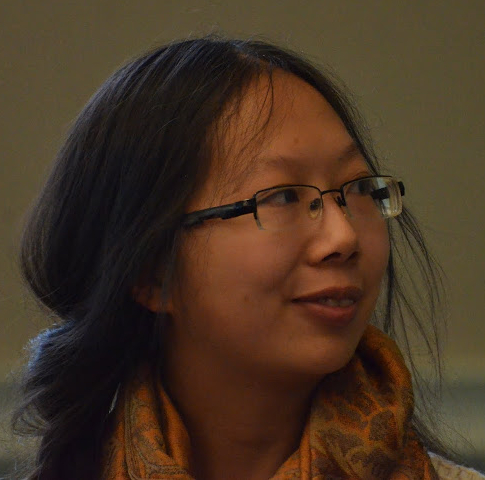
Mai Ha Vu is an Assistant Professor at the University of Toronto Mississauga , split between the Department of Language Studies and the Department of Mathematics, Computer Science, and Statistics . Her work bridges theoretical linguistics, computational methods, and biological data modeling. Ph.D. in Linguistics, University of Delaware (2020) M.A. in Linguistics, University of Delaware (2014) B.A. in Psychology and Linguistics, Grinnell College (2013) Research focuses on applying formal language theory to understand human language patterns and train biologically reliable language models . Recent work includes antibody language modeling (Nature Computational Sciences 2022) and syntax-prosody mapping via logical transductions (SIGMORPHON 2022). Key research trends in publications: interdisciplinary applications of computational linguistics to immunology, psycholinguistic modeling of neural language models, and formal syntactic analysis of negation and wh-questions across languages.
Prof. dr. Norbert Corver is a Professor of Dutch Linguistics at Utrecht University , affiliated with the Department of Languages, Literature and Communication and the Institute for Language Sciences . He chairs the Dutch Linguistics division and leads the Mind your Manner Adverbials! (MiMA) project funded by an NWO Open Competition grant (2021-2025). He was a Visiting Professor at the University of Connecticut (2019) and serves as editor of Studies in Generative Grammar . Education: PhD in Linguistics (1990, Tilburg University) Research Interests: Syntax, generative grammar, language variation, syntactic interfaces, and affective language structures Key Projects: MiMA (syntax of adverbials), AThEME (multilingualism in Europe), Syntax of Idioms (NWO-FWO collaboration), DiDDD (Dutch noun phrase diversity) Scientific Recognition: Member of Academia Europaea Current Work focuses on the syntax of adverbials through comparative Germanic studies, while his broader research explores curse expressions, numerical expressions, and dialectal variation. He maintains active collaborations across Europe and contributes to digital resources like the Taalportaal (Dutch/Frisian grammar portal).
Yoshiko Matsumoto is the Yamato Ichihashi Professor in Japanese History and Civilization and Professor of East Asian Languages and Cultures at Stanford University, with a courtesy appointment in Linguistics. She has been a faculty member at Stanford since 1992, progressing from Assistant Professor to her current distinguished position. Matsumoto also serves as coordinator of the Japanese Language Program and has held significant administrative roles including Chair of the Department of Asian Languages (2003-2005) and Interim Chair of the Department of East Asian Languages and Cultures (2016). Matsumoto earned her Ph.D. in Linguistics from the University of California, Berkeley (1989), following M.A. degrees in Linguistics from UC Berkeley and General and Applied Linguistics from the University of Tsukuba, an M.I.A. in American Studies from the University of Tsukuba, and a B.A. in English Language & Literature from Japan Women's University. Professor Matsumoto's research focuses on linguistic pragmatics from cross-linguistic perspectives, with particular expertise in Japanese language. Her work spans structural and sociocultural aspects of language in use, including noun-modifying clause constructions, honorifics, discourse markers, and the intersection of language with gender and aging. She has pioneered research on conversational narratives of older adults, examining how ordinary framing strategies help individuals navigate difficult experiences. Her current projects explore intergenerational communication through haiku, communicative abilities of people with dementia, and noun-modifying constructions across Eurasian languages. Matsumoto's scholarship consistently bridges theoretical linguistics with practical applications for understanding human communication in diverse social contexts. Matsumoto's recent publications reveal a growing focus on practical applications of linguistic research for social benefit, particularly in intergenerational communication and dementia care. Her work increasingly integrates arts-based approaches, especially haiku poetry, to bridge generational divides and enhance communication with elderly populations. The research shows a consistent trajectory from theoretical linguistic frameworks toward applied, human-centered language studies that address real-world challenges in aging societies, with particular attention to how ordinary language practices help individuals navigate life transitions and difficult experiences. Dean's Award for Distinguished Teaching, School of Humanities and Sciences, Stanford University (2000) Richard E. Guggenhime Faculty Scholar, Stanford University (2000-2003) Violet Andrews Whittier Fellow, Stanford Humanities Center (2019-2020) Faculty Research Fellow, Michelle R. Clayman Institute for Gender Research (2014-2015) Research Fellow, Japan Foundation (2002) Internal Fellow, Stanford Humanities Center (2005-2006) Presidential Fund for Innovation in the Humanities, Stanford University (2009-2011) Professor Matsumoto has mentored numerous students through her teaching in Japanese language and linguistics courses, including specialized offerings on language and aging, points in Japanese grammar, and haiku-based communication. Her research has been supported by prestigious grants from the National Endowment for the Humanities, the Japan Foundation, and Stanford's Presidential Fund for Innovation in the Humanities. She has served on multiple editorial boards including the Journal of Pragmatics since 1992, demonstrating long-standing leadership in her field. Matsumoto has also advised students through individual studies and thesis projects in East Asian Languages and Cultures. Matsumoto leads several collaborative research initiatives including the 'Sharing Conversations' project which examines intergenerational communication through haiku, and research on communicative abilities of people with dementia. Her work often involves interdisciplinary teams spanning linguistics, gerontology, and creative arts, with fieldwork conducted in both Japan and the United States. The 'Noun-Modifying Constructions in Languages of Eurasia' project represents a major international collaboration examining linguistic structures across cultural boundaries. She also directs the 'Language, Old Age and Gender in Japan' project supported by the Stanford University/Japan Foundation, and the 'Difficult Conversations Continue: Memories of the 3.11 Disaster and Bereavement Narratives' project focused on post-disaster communication.
Richard Futrell is an Associate Professor at the University of California, Irvine (UCI), affiliated with the Department of Language Science. He leads the Language Processing Group, focusing on computational models of human and machine language processing. His work bridges information theory, Bayesian cognitive modeling, and natural language processing (NLP) interpretability. University of California, Irvine Department of Language Science Language Processing Group leader His research examines how linguistic structures emerge from cognitive and communicative pressures. Key areas include dependency locality, surprisal theory in sentence processing, and efficiency-driven language evolution. He investigates how memory constraints, predictability, and information density shape syntactic and morphological patterns across languages. Recent publications analyze code-switching efficiency, syntactic priming, ERP component modeling, and agent-based language contact simulations. His work frequently employs Bayesian modeling, neural network analysis, and cross-linguistic corpora to uncover universal principles in language processing. ACL Best Paper Award (2024) Best Paper Award for Computational Modeling of Language (2023) Marr Prize for Best Student Paper (2017) He has developed datasets like SPACER for error repair analysis and contributed to phonotactic learning frameworks. His collaborations span cognitive scientists, computational linguists, and neuroscientists, advancing understanding of language production, comprehension, and structural optimization.
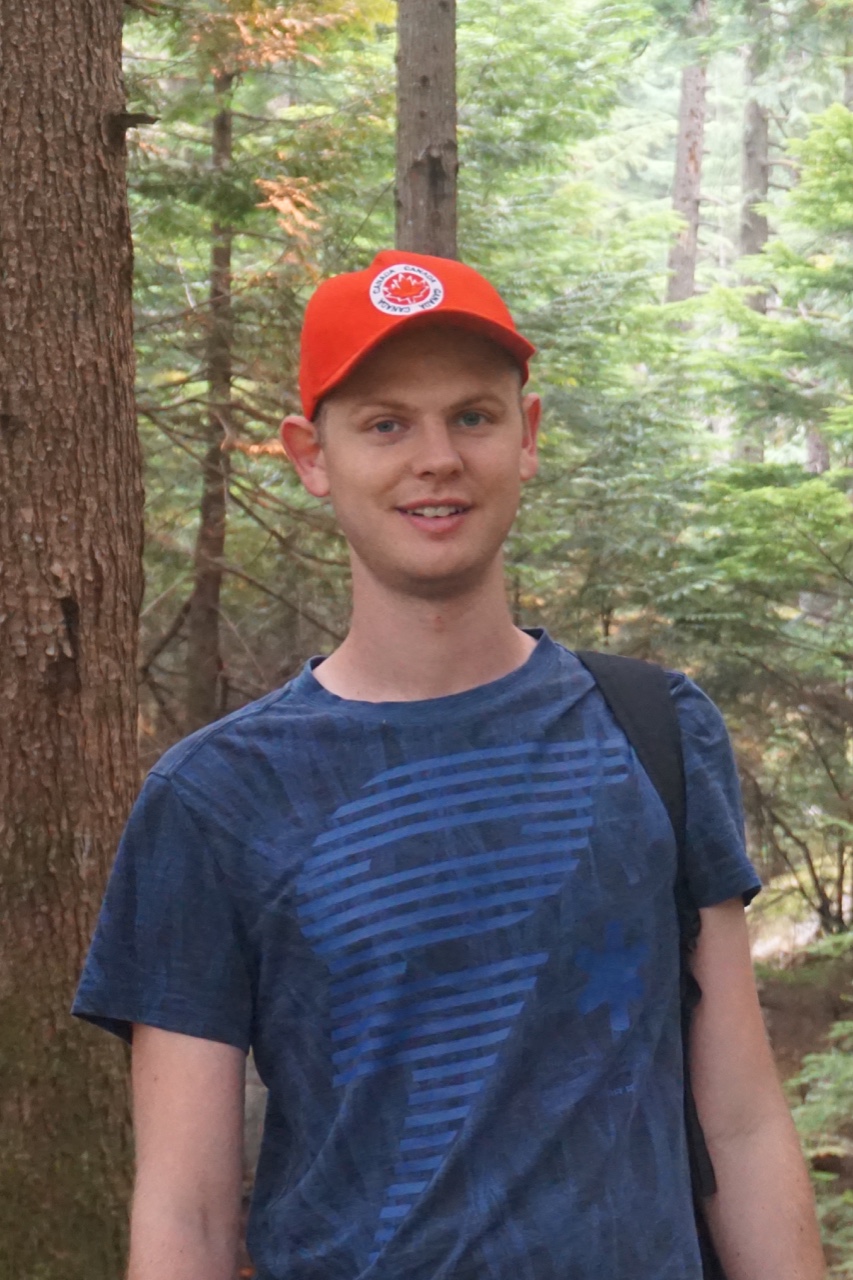
Keunhyun (Keun) Park is an Assistant Professor of Urban Forestry at the University of British Columbia (UBC), affiliated with the Department of Forest Resources Management . He also holds an Adjunct Professor position at Utah State University in the Department of Landscape Architecture and Environmental Planning. Education: BSc and MSc in Landscape Architecture from Seoul National University; PhD in Urban Planning and Design from the University of Utah Research Lab: Faculty lead of the Urban Nature Design Research Lab ( under_lab ) His research focuses on designing healthy, just, and resilient cities through urban nature , with particular emphasis on: Environmental justice and equitable access to urban green spaces Human behavior in public spaces using drone/sensor/VR technology Smart growth urban design impacts on public health and ecological systems Recent publications demonstrate expertise in GIS applications , pedestrian behavior analysis , and urban planning across 20+ studies from 2013-2025. Collaborations include the Vancouver Park Board , Metro Vancouver , and Wasatch Front Regional Council .
María Sol Sansiñena Pascual serves as Assistant Professor (tenure track) at KU Leuven across Leuven, Kortrijk, and Brussels campuses while also holding a guest professorship at Ghent University. Her primary academic affiliation lies within the Faculty of Arts at KU Leuven where she actively contributes to the Functional and Cognitive Linguistics: Grammar and Typology (FunC) research group. Education PhD in Spanish Linguistics, KU Leuven (2015) Research Focus Her scholarly work centers on semantic-pragmatic interpretation mechanisms, with special emphasis on modality and TAM (Tense, Aspect, Mood) categories, discourse phenomena including insubordination, language variation/change dynamics, and translation pattern analysis. She employs interactional-constructional frameworks to examine Spanish grammatical structures across synchronic and diachronic dimensions, particularly investigating evolutionary pathways from Latin to contemporary Spanish varieties. Publication Trends Analysis of her recent scholarly output reveals concentrated research trajectories in diachronic syntax (especially insubordinate clause evolution), modal-evidential semantics in Spanish conditional/future forms, grammaticalization processes of verbal periphrases, and indexicality mechanisms. Her methodological approach consistently integrates functional, cognitive, and construction grammar perspectives to address complex language change phenomena. Research Leadership Current promotor of "Pathways to insubordination: diachronic evolution of non-subordinate structures" (2025-2026) Principal investigator for "Speech-act orientation and intersubjective alignment" project (2020-2025) Academic Contributions She actively participates in the FunC research collective while teaching specialized courses including Spanish Linguistics I/III, Discourse Analysis, and Master's thesis support seminars. Her scholarly service includes editorial contributions such as co-editing the 2024 volume "Indexicality: The Role of Indexing in Language Structure and Language Change".
Milivoj Alanović is a Professor in the Department of Serbian Language and Linguistics at the Faculty of Philosophy, University of Novi Sad. With a Doctorate in Philological Sciences (2010), his career spans syntax, discourse analysis, and contrastive linguistics with a focus on Serbian language structures. Education: Graduated (2000), Master's (2004), Doctorate (2010) from the Faculty of Philosophy, University of Novi Sad Research centers on the interface of lexis and grammar, semantic resources of syntactic units, and connections between language, thought, and context. His work extends to cognitive and constructional grammar, with a strong emphasis on Serbian language analysis. Publications include 8 monographs (e.g., German-Serbian Contrastive Grammar series) and over 90 works, reflecting collaborations across Serbia, Republika Srpska, Austria, Germany, Croatia, Romania, Russia, and Japan. As a mentor, he has guided diploma, master's, and doctoral theses, including supervision of one doctoral thesis. His scholarly output demonstrates sustained contributions to syntax and contrastive grammar research.
Dr. Danfeng Wu is a Research Fellow at Magdalen College, University of Oxford, conducting interdisciplinary research in syntax-semantics and syntax-prosody mappings. Her work focuses on ellipsis, focus in coordination, and the empirical interplay between syntactic structure and prosody, employing experimental phonetic methods. She investigates languages like English and Mandarin Chinese to explore the cognitive and computational aspects of linguistic structure. Her research themes include phonetics, prosody, semantics, and syntax, with a particular emphasis on how syntactic configurations interact with prosodic phrasing and stress patterns. She has contributed to studies on corrective constructions, clitic climbing in Wolof, and vowel lengthening in Zulu, demonstrating a broad methodological approach combining theoretical linguistics with experimental and computational methods. Dr. Wu is affiliated with the Phonetics Lab and Language & Brain Lab within the Faculty of Linguistics, Philology & Phonetics. She has organized interdisciplinary events such as the Oxford workshop on AI language models and developed linguistics courses for computer scientists and cognitive scientists at MIT. Her work bridges formal linguistics with cognitive science and computational linguistics, emphasizing realistic models of language acquisition and evolution.
Andreas Abel is a Senior Lecturer in the Division of Computing Science at the Department of Computer Science and Engineering, Chalmers University of Technology and the University of Gothenburg. He has previously served as an Assistant Professor at Ludwig-Maximilians-Universität (LMU) Munich and has been a visiting researcher at INRIA in Paris. His primary affiliations are with Chalmers and the University of Gothenburg, where he conducts research and teaches in programming languages and type theory. Chalmers University of Technology, Department of Computer Science and Engineering, Senior Lecturer University of Gothenburg, Division of Computing Science LMU Munich, Assistant Professor (former) INRIA Paris, Visiting Researcher Abel’s research lies at the intersection of type theory, functional programming, and formal verification. He is particularly known for his work on dependent types, normalization by evaluation, and the development of the Agda proof assistant. His interests include constructive logic, logical frameworks, modal and linear typing, program verification, and compiler construction. He leads the Modal Dependent Type Theory project funded by the Swedish Research Council (Vetenskapsrådet) and has contributed to several other major research initiatives in programming language theory. His recent publications reflect a strong focus on foundational aspects of type systems, including cubical type theory, decidability of conversion, and formalization of algebraic completeness. These works appear in top-tier venues such as ICFP, LICS, POPL, and TYPES, showcasing both theoretical depth and practical implementation in Agda. Distinguished Paper Award, ICFP 2019 Editor, Theoretical Pearls column, Journal of Functional Programming Member, IFIP WG 1.3 on Foundations of System Specification Abel actively supervises students and contributes to the research community through program committee memberships for major conferences including LICS, ICFP, and CPP. He is a senior developer of Agda and the maintainer of the BNFC (Backus-Naur Form Compiler) tool. His work bridges theoretical computer science with practical software development for formal methods. He is involved in several research groups and projects, including the Programming Logic Group at Chalmers and the international EUTYPES network. His role as principal investigator and core contributor in multiple funded projects highlights his leadership in the field of programming language foundations.
Carlo Angiuli is an Assistant Professor of Computer Science at the Department of Computer Science in the Luddy School of Informatics, Computing, and Engineering at Indiana University. His research focuses on programming languages and logic through the lens of type theory, particularly dependent types, proof assistants, and homotopy type theory. He is currently coauthoring a book on dependent type theory with Daniel Gratzer. Ph.D. in Computer Science from Carnegie Mellon University (CMU) Develops programming language foundations and computational interpretations of type theory Active in the HoTTEST Summer School organization and PL Wonks seminar group Recipient of multiple prestigious awards for type theory research His recent publications explore universe polymorphism, cubical type theory, and the intersection of category theory with programming language design. As a community builder, he organizes international research seminars and maintains experimental proof assistants like RedPRL. His teaching includes advanced courses on modern dependent types and foundational computer science topics. Scientific Awards : Best Paper Award (FSCD 2019) CMU School of Computer Science Distinguished Dissertation Award He contributes to proof assistant development and hosts the PL Wonks research group at Indiana University.
Susagna Tubau Muntaña is an Associate Professor at the Autonomous University of Barcelona (UAB), Department of English Philology and German Studies. She is part of the Center for Theoretical Linguistics and the Theoretical Linguistics Research Group funded by the Generalitat de Catalunya. Her academic roles include tenures as Associate Professor (2020–2023), Interim Associate Professor (2015–2020), and various teaching/research positions at UAB and other institutions since 2001. Education: PhD in English Philology (UAB, 2008) MA in Linguistics (University College London, 2004) MA in English Philology (UAB, 2003) Bachelor's in English Philology (UAB, 2001) Research Focus: Main interest: Theoretical linguistics, syntax, and negation phenomena (simple/double negation, negative agreement, negative quantifiers) Secondary areas: First/second language acquisition, the that-trace effect in English, gender expression in translated texts Key contributions: Studies on Catalan and English negative concord, experimental syntax, and language typology Grants & Projects: Principal Investigator (IP) of a funded project, plus member of 6 other projects and 2 thematic networks Active in projects like La interpretación de las categorías funcionales (2018–2021) and EXPLETIVITAD Y SIGNIFICADO EXPRESIVO (2024–2027) Awards & Recognition: Positive evaluations from CNEAI (National Commission for Research Activity) and AQU (Catalonia's Quality Agency) Speaker at 40+ linguistics conferences Reviewer for journals, La Caixa-British Council grants, and U.S. National Research Foundation projects Lab/Team Affiliation: Member of the consolidated Theoretical Linguistics Group funded by the Catalan government
Rob van der Goot is an Associate Professor at the IT University of Copenhagen , specializing in robustness in natural language processing (NLP). His work focuses on non-standard language varieties, low-resource languages, and scenarios with limited training data, particularly in syntactic tasks. He is involved in projects like MaChAmp and MoNoise , which address multi-task learning and lexical normalization. Supervises PhD student Arzu Burcu Güven and mentors postdoc Elisa Bassignana Member of the HPC committee at ITU and the AI Pioneer Center Active in research collaborations including the COST Action Multi3Generation His research has earned accolades, including a Best Paper Award at WNUT 2022, an Outstanding Paper Award at EACL2021, and the Most Reviews Award at NAACL 2019. He frequently presents at international venues, such as LMU, DeiC Konference, and the University of Helsinki. His recent publications explore cross-domain dialogue act classification, code-switched lexical normalization, and multi-task learning frameworks. His work has been featured in media outlets like Omrop Fryslan and Linear Digressions. 2022 : Best Paper Award for Increasing Robustness for Cross-domain Dialogue Act Classification on Social Media Data (WNUT) 2021 : Outstanding Paper Award for MaChAmp (EACL) 2019 : Most Reviews Award (NAACL) As part of the HPC committee and DeIC Science Forum, he contributes to computational infrastructure and data management initiatives. His supervision history includes advising Anders Giovanni Møller (shared first place in WNUT 2021 shared task) and collaborations with researchers like Barbara Plank and Malvina Nissim.
Giorgio Satta is a Full Professor at the Department of Information Engineering , University of Padua, Italy. He received his Ph.D. in Computer Science from the University of Padua in 1990. His career includes research positions at Fondazione Bruno Kessler (Trento) and the University of Pennsylvania (IRCS). Research Focus : His work centers on computational linguistics and formal language theory , with emphasis on: Parsing algorithms (CCG, TAG, LCFRS) Computational complexity of grammar formalisms Probabilistic language modeling Dependency parsing and synchronization techniques Professional Service : He chaired the European Chapter of the ACL (2009-10), served on editorial boards for Computational Linguistics , Transactions of the ACL , and co-chaired ACL-2001/IWPT-2001. Teaching : Current courses include Automata, Languages, and Computation and Natural Language Processing (2024-25).
András Bárány is a Lecturer in Linguistics and English Language at the University of Edinburgh's School of Philosophy, Psychology and Language Sciences. His research focuses on cross-linguistic variation in morphosyntactic phenomena, particularly case and agreement systems. He explores theoretical syntax and linguistic typology to understand universal linguistic principles and the limits of variation. Bárány collaborates with institutions like Bielefeld University’s CRC 1646 ‘Linguistic Creativity in Communication’ and the DFG Scientific Network ‘Applicative Alternations Across Languages.’ His academic journey includes postdoctoral roles at Leiden University (Marie Skłodowska-Curie COFUND fellowship), SOAS (AHRC-funded prominent possessors project), and the Research Institute for Linguistics of the Hungarian Academy of Sciences. He earned his PhD from the University of Cambridge, focusing on differential object marking in Hungarian. Research interests span case alignment, ditransitive constructions, morphosyntactic alignment, and the interplay between syntax and information structure. Recent work emphasizes typological gaps in argument structure and the role of analogy in syntactic creativity. His monograph Person, Case, and Agreement (Oxford, 2017) analyzes Hungarian syntax and global case splits. Bárány actively supervises PhD students and maintains an open-door policy via scheduled meetings.