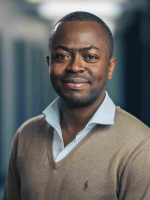
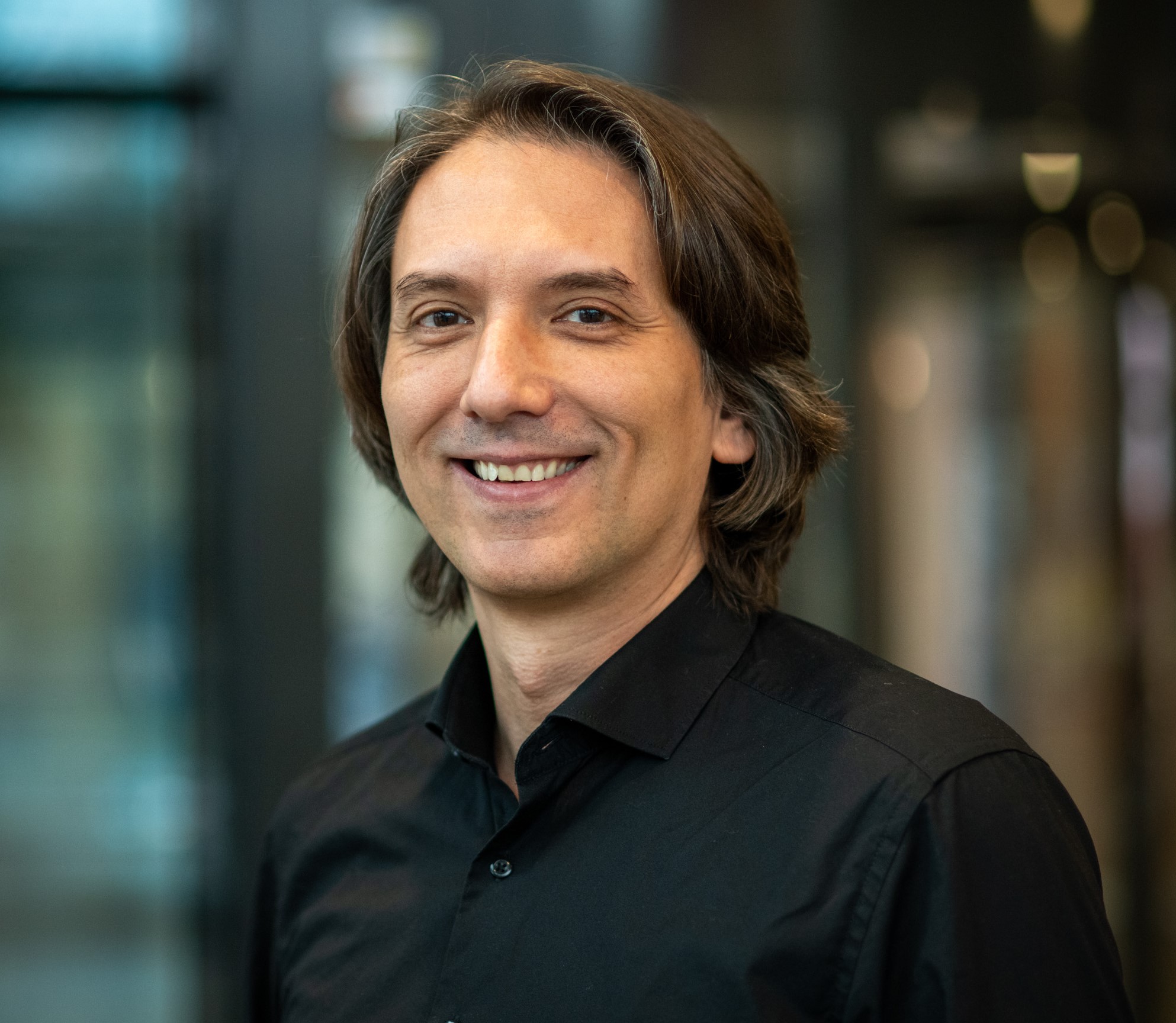
Sakari Kuikka is a Professor at the University of Helsinki, affiliated with the Faculty of Biological and Environmental Sciences and the Ecosystems and Environment Research Programme. He is a core member of the Helsinki Institute of Sustainability Science (HELSUS) and leads the Fisheries and Environmental Management Group. His contact details include the email sakari.kuikka@helsinki.fi and the address P.O. Box 65 (Viikinkaari 1), 00014 University of Helsinki, Finland. His research focuses on environmental sciences , particularly fisheries management , marine policy , and Bayesian risk assessment . He has pioneered the use of Bayesian networks in environmental decision-making, including oil spill risk management and seabed mining impact assessments. His work bridges ecological modeling and policy analysis , with applications to high-latitude ecosystems and sustainability governance. Recent publications highlight his expertise in toxicology data standardization for oil spill impacts on fish, economic integration in fisheries science , and Arctic shipping safety . He actively supervises doctoral students in Wildlife Biology and Interdisciplinary Environmental Sciences. Current projects (2023–2027) include WATERWAYS (marine sustainability) and GYROSCOPE (digital marine logistics).
Dr. Mawuli Kouami Segnon is a researcher at the Chair of Empirical Economics, School of Business and Economics, University of Münster. His work focuses on econometric modeling, financial time series analysis, and volatility forecasting across various domains including cryptocurrencies, energy markets, and macroeconomic indicators. Research interests include: Development of advanced volatility models (GARCH, multifractal, regime-switching) Applications to financial markets, energy economics, and macroeconomic policy High-frequency data analysis and mixed-frequency forecasting Count data modeling with conditional heteroscedasticity Portfolio risk management using copula and multifractal approaches Recent publications demonstrate expertise in: Geopolitical risk impacts on stock volatility Comparative analysis of realized variance measures Inflation uncertainty modeling in G7 countries Electricity price volatility in Australian markets Bitcoin market forecasting Historical economic data analysis Current projects (since 2020) involve: Innovative economic/financial time series forecasting Financial market volatility modeling Applications of multifractal structures in econometrics
Gee Lee is an Associate Professor in the Department of Statistics & Probability and the Department of Mathematics at Michigan State University. His work bridges actuarial science with advanced statistical and machine learning methodologies, focusing on practical applications for insurance risk modeling. PhD, University of Wisconsin-Madison Associate (ASA), Society of Actuaries His research centers on insurance loss modeling for rate-making and loss reserving, multivariate insurance coverage optimization, dependence structure analysis, and integrating machine learning into actuarial frameworks. Current projects include deep neural networks for claim prediction, unstructured data analysis, and multivariate coverage optimization. Recent publications highlight trends in crop insurance modeling (2025), regularization techniques (2024), multivariate risk retention strategies (2023), textual data analysis (2022), copula regression (2022), and reinsurance game theory (2022). Earlier works explore shrinkage methods, word embeddings, longitudinal claims, healthcare data, and deductible ratemaking. Gee Lee supervises MS and PhD students in actuarial science. Former advisees include Leonard Korreshi (2024), Qiaozhen Qian (2023), and Scott Manski (2020, co-advised). He also supports undergraduate research through MSU’s REU program and directed study courses.
Dimitris Karlis is a Professor in the Department of Statistics at the Athens University of Economics and Business (AUEB), within the School of Information Sciences and Technology. He has been a key academic figure since earning his BSc and PhD in Statistics from AUEB in 1992 and 1999, respectively, and was promoted to Associate Professor in 2012 before advancing to full Professor. Education: BSc in Statistics, AUEB (1992) PhD in Applied Statistics, AUEB (1999) His research spans computational statistics, mixture models, EM algorithms, copulas, multivariate discrete data, and applications in sports, insurance, and seismicity. He has published extensively in top-tier statistical journals such as the Journal of the Royal Statistical Society and Statistics in Medicine . The 15 most recent publications reveal a strong focus on multivariate count data, integer-valued time series, model-based clustering using copulas, and applications in actuarial science and health. His work frequently involves mixture models, Bayesian inference, and innovative extensions of Poisson-based frameworks. Scientific Service and Recognition: Associate Editor: Metron, Communications in Statistics, IMA Journal of Management Mathematics, Stochastic Environmental Research and Risk Assessment Editor: Biometrics Bulletin of IBS Member: American Statistical Society, International Statistical Institute, International Association of Statistical Computing, Hellenic Statistical Institute Publicity Officer: Eastern Mediterranean Region, International Biometric Society Advising and Grants: He has supervised 4 completed PhDs and 18 Master’s theses, with several more in progress. He has led and participated in research projects funded by the European Union and EUROSTAT, particularly in official statistics. His advising spans methodological and applied topics in statistics. Labs and Teams: While no formal lab is named, he collaborates extensively with researchers in actuarial science, transportation, biostatistics, and environmental risk, often through joint projects and publications.
Anirban Chakraborti is a Professor at the School of Computational and Integrative Sciences, Jawaharlal Nehru University (JNU), New Delhi, India, where he has been a faculty member since 2014. He previously held academic positions at École Centrale Paris (France) as Chercheur Senior (Associate Professor) and Chargé de Recherche (Assistant Professor), and earlier roles at Banaras Hindu University, Brookhaven National Laboratory (USA), and Helsinki University of Technology (Finland). He is a leading figure in the interdisciplinary field of econophysics and complex systems. Education: Diplôme d’Habilitation à Diriger des Recherches (2013), Université Pierre et Marie Curie – Paris VI, France (Physics) Ph.D. in Physics (2003), Saha Institute of Nuclear Physics, Jadavpur University, India Post-M.Sc. in Physics (1999), Saha Institute of Nuclear Physics, Jadavpur University, India (Ranked First) M.Sc. in Physics (1998), University of Calcutta, India (Ranked First) B.Sc. in Physics (1996), Scottish Church College, University of Calcutta, India His research interests lie at the intersection of physics, economics, and data science. He is particularly known for pioneering work in econophysics , including the statistical mechanics of money, wealth distribution, agent-based market models, and network-based analysis of financial and social systems. He also works on complex systems , computational finance , statistical physics , and nanosciences , with applications in sensing and imaging. His work often involves modeling socio-economic phenomena using tools from statistical physics. His recent publications span topics such as financial fluctuations, wealth inequality, network analysis of conflicts, order book dynamics, and nanomaterial characterization. These works reflect a strong trend toward interdisciplinary research combining physics, economics, and data analytics, with a focus on real-world applications in finance, inequality, and social systems. Scientific Awards: Indian National Science Academy Young Scientist Medal (2009) He has advised Ph.D. students such as Kiran Sharma and leads the ETC (Experimental-Theoretical-Computational) Lab at JNU, which brings together physicists, computer scientists, and mathematicians. The lab has been involved in international collaborations, including projects funded by the Estonian Ministry of Education and Research and consultancies with TCS Innovation Labs and DONO Consulting. His research has been supported through grants and collaborative projects, reflecting strong industry and global academic engagement.
Prof. Dr. Antonis Chatzinotas is a leading figure in Microbial Interaction Ecology at the Helmholtz Centre for Environmental Research (UFZ) and holds a Professorship at the University of Leipzig since 2020. His research focuses on understanding microbial and viral interactions in terrestrial and aquatic ecosystems, particularly how environmental changes affect community composition, genetic landscapes, and biogeochemical cycles. Head of Microbial Interaction Ecology group at UFZ Professor at University of Leipzig Key research areas include: Microbial and viral diversity in pristine/aquifer systems Predatory interactions between protists/bacteria/viruses Applications in agroecosystems and environmental biotechnology Functional redundancy in microbial communities Impact of environmental variability on coexistence Recent publications highlight interdisciplinary approaches combining DNA stable isotope probing , metagenomics , and ecological modeling to study bioaugmentation, pesticide-microbe interactions, and viral transport mechanisms. His work bridges theoretical ecology with practical environmental solutions. Collaborations span institutions like EPFL, ETH Zurich, and University of Otago. Current projects explore low-risk biopesticides, virome-land use relationships, and microbial stability-vegetation links. The group actively supports open science principles and participates in transformative publishing agreements.
Martial Longla is an Associate Professor of Mathematics in the Department of Mathematics at the University of Mississippi, affiliated with the College of Liberal Arts. He has been a faculty member since August 2013 and was promoted to Associate Professor in 2018. His research is centered on probability, statistics, and dependence modeling, with applications across disciplines. His research interests include: Probability theory and limit theorems for dependent data Dependence modelling using copulas Bayesian analysis Statistical distributions and applications Dr. Longla has been supported by prestigious grants and fellowships including funding from the NSF (via Dr. Magda Peligrad), the Laws Fellowship, the University Research Council, and the Taft Center at the University of Cincinnati. He has received 4 summer research grants during his first five years at OleMiss. His recent scholarly focus includes collaborative work with institutions in Cameroon, particularly the University of Yaounde I and the University of Maroua, initiated during his 2019–2020 sabbatical. He is actively involved in mentoring, currently advising four PhD students across institutions. He founded and runs Hope Bamboutos , a charity dedicated to increasing access to STEM education for underrepresented youth in rural Africa. His public engagement includes contributions to political analysis in Cameroon via KMD Radio and the newspaper Quotidien Le Jour . His scientific awards include: Outstanding Beginning Doctoral Student Best Graduate Student Poster Presenter University and city awards for leadership in student rights advocacy Recognition for promoting African culture in Russia Dr. Longla maintains an active research profile and has delivered lecture series in Cameroon during his sabbatical. He is open to interdisciplinary collaborations and continues to publish on copula-based Markov chains, dependence coefficients, and central limit theorems.
Alexandra Bugalho De Moura is an Associate Professor of Statistics and Actuarial Sciences at the Department of Mathematics, ISEG-University of Lisbon. She coordinates curricular units in Actuarial Sciences, Statistics, and Data Analysis, and leads the Master's in Actuarial Sciences program. Her academic journey includes a PhD in Mathematical Engineering from Politecnico di Milano (2007), a BSc in Applied Mathematics and Computing from IST, University of Lisbon (2001), and a Master’s in Actuarial Sciences from ISEG (2018). Her research focuses on actuarial sciences, particularly optimal reinsurance with dependencies, and climate risk analysis using climate and insurance loss data. Previously, she contributed to computational hemodynamics modeling cerebral aneurysms and blood flow dynamics. She has led an FCT-funded project on optimal reinsurance and supervised over 30 master’s theses in actuarial risk theory and data science applications. Professional experience includes roles as Post-Doctoral Fellow at CEMAT (2007–2014) and teaching positions since 2000. She has published extensively in top journals like European Actuarial Journal and Computer Methods in Biomechanics and Biomedical Engineering , with over 20 peer-reviewed articles and book chapters. Her work bridges mathematical rigor with practical applications in insurance risk modeling, climate-related financial risks, and biomedical engineering. Current research explores dependencies in reinsurance treaties and climate-driven insurance loss patterns.
Fan Yang is an Associate Professor in the Department of Statistics and Actuarial Science at the University of Waterloo. His research focuses on quantitative risk management and actuarial science, with emphasis on extreme value theory, asymptotic analysis of rare events, and heavy-tailed distributions. He holds a PhD in Applied Mathematical and Computational Sciences from the University of Iowa (2013), and BS degrees in Computational Mathematics and International Economics & Trade from Xi’an Jiaotong University (2008). Education: PhD, Applied Mathematical and Computational Sciences, University of Iowa, 2008–2013 MS, Mathematics, University of Iowa, 2008–2010 BS, Computational Mathematics, Xi’an Jiaotong University, 2004–2008 BS (minor), International Economics and Trade, Xi’an Jiaotong University, 2004–2008 Research Interests: Yang’s work addresses theoretical and applied aspects of risk modeling in insurance and finance. Key areas include extreme value theory for financial and insurance risks, asymptotic analysis of rare events, risk aggregation under dependence structures, and heavy-tailed distribution modeling. His research bridges mathematical rigor with practical applications in risk management, including catastrophe insurance and portfolio diversification. Publications: His recent work examines topics like asymptotic portfolio diversification, CAT bond premium prediction, and extreme risk estimation using copula models. These studies highlight trends in quantifying and managing extreme risks through advanced statistical methods. Awards: No specific prizes or fellowships are noted in the provided texts. Teaching & Service: Yang teaches courses on advanced actuarial topics including extreme value theory, quantitative risk management, and financial mathematics. He actively contributes to the academic community through peer-reviewed publications and graduate supervision.
Anas Abdallah is an Associate Professor in the Department of Mathematics and Statistics at McMaster University. His research focuses on actuarial science, particularly in loss reserving, stochastic modeling, and the application of machine learning techniques such as recurrent neural networks (RNNs) to insurance risk analysis. He specializes in dependence modeling using copulas and Sarmanov distributions to address multivariate insurance claims and risk capital analysis. Education: PhD in Actuarial Science, Université Laval (2016) MSc in Mathematical Engineering and Modeling, Institut National des Sciences Appliquées (2009) Research Interests: Develops methods for multivariate loss reserving and risk capital estimation Applies hierarchical Archimedean copulas and RNNs to model dependencies between loss triangles Explores stochastic reserving techniques and alternative actuarial provisioning strategies Teaching: Instructor for courses such as Actuarial Models in Non-Life Insurance, Financial Markets and Derivatives, and Statistics of Financial Data Has taught across multiple levels including undergraduate (MATH 2FM3), graduate (STATS 4G03), and professional programs (MFM 704) Grants and Labs: No specific grants or lab affiliations explicitly listed, though his research indicates involvement in collaborative projects in actuarial science and financial mathematics.
Thomas Nagler is a Professor at the Department of Statistics, Faculty of Mathematics, Computer Science and Statistics at Ludwig Maximilian University of Munich (LMU Munich). He also serves as a principal investigator at the Munich Center for Machine Learning (MCML), where he leads research at the intersection of mathematical statistics and machine learning. Nagler received his academic training at Technical University of Munich (TU Munich), earning a BSc in Mathematics (2009-2012), followed by an MSc in Mathematical Finance (2012-2014), and ultimately a PhD in Mathematical Statistics (2014-2018). Prior to his current position at LMU Munich, he held assistant professor positions at TU Delft (2021-2022) and Leiden University (2019-2021). Professor Nagler's research focuses on developing novel statistical methods with theoretical guarantees and scalable algorithms. His work spans high-dimensional dependence modeling, particularly using vine copulas, statistical machine learning, time series and functional data analysis, and statistical computing. He emphasizes creating methods that can be practically implemented and applied to solve real-world problems across diverse domains. An analysis of Nagler's recent publications reveals a strong emphasis on vine copula methodology, uncertainty quantification in machine learning, and applications to climate science and epidemiology. His work bridges theoretical statistics with practical implementation, often resulting in open-source software tools that make advanced statistical methods accessible to practitioners. The interdisciplinary nature of his research is evident in collaborations spanning climate modeling, healthcare, and finance. While specific awards are not detailed in the available information, Nagler's research impact is evident through his significant contributions to statistical methodology and his active engagement with the research community through open-source software development. As a principal investigator at MCML and Professor at LMU Munich, Nagler leads a research group focused on advancing statistical methodology for complex data analysis. His GitHub profile indicates active collaboration with students and researchers, with several followers from LMU Munich and other institutions. His research program appears to be well-funded through the MCML and university resources, supporting both methodological development and application-focused projects. Nagler maintains strong ties with the computational statistics community through his leadership of the VineCopula and pyvinecopulib projects, which provide essential tools for dependence modeling. His work with the Munich Center for Machine Learning positions him at the forefront of interdisciplinary research combining statistical theory with practical machine learning applications.
Anaïs Couasnon is a PhD researcher at the Department of Water and Climate Risk, Institute for Environmental Studies (IVM), Vrije Universiteit Amsterdam, part of the Faculty of Science. Her research focuses on compound flood risk modeling, probabilistic methods, and global hazard assessment under climate change. She is supervised by Dr. Philip Ward and Dr. Hessel Winsemius as part of a VIDI project. Education: MSc in Hydraulic Engineering (TU Delft, 2017); BSc in Civil Engineering (McGill University, 2010). Research interests include probabilistic modeling, multivariate dependence analysis, flood risk management, and climate impacts on coastal-riverine interactions. She contributes to global datasets like COAST-RP and socio-hydrological benchmarking. Key activities include: Developing frameworks for compound flood risk assessment Modeling extreme sea-level events and storm surges Collaborating on global hazard frameworks and disaster risk reduction strategies Contributions to datasets include: COAST-RP dataset Panta Rhei socio-hydrological benchmark dataset
Prof. Dr. Göran Kauermann is a Full Professor of Statistics at the Ludwig-Maximilians-University Munich , holding the Chair of Applied Statistics in Social Sciences, Economics and Business . His research spans nonparametric models, generalized linear models, and network data analysis, with applications in economics, epidemiology, and data science. Education: Diplom in Economic Mathematics (1991, TU Berlin), PhD in Statistics (1994), Habilitation (Venia Legendi) in Statistics (2000) Kauermann’s research interests focus on penalized regression , network analysis , and statistical modeling in economics, social sciences, and public health. Recent work explores label uncertainty in machine learning , spatio-temporal conflict diffusion , and dynamic network models for economic and social data. Scientific trends in his publications include penalized splines for nonlinear modeling, network flow estimation in social and economic contexts, and label variation analysis in machine learning. His collaborations span climate zone classification , Covid-19 mortality modeling , and smart city parking analytics . Scientific Awards: Bruce Russett Award (2020) for political network research Leadership Roles: He served as Dean of the Faculty of Mathematics, Informatics and Statistics (2019–2021), Speaker of the Elite Master Program in Data Science (2016–2026), and Chair of the German Statistical Society (2005–2013). He also held editorial roles in journals like AStA Advances in Statistical Analysis and Statistical Modelling .
Yildiz Yilmaz serves as Associate Professor of Statistics and Deputy Head of Statistics at Memorial University of Newfoundland's Department of Mathematics and Statistics within the Faculty of Science. Holding a PhD from the University of Waterloo, she maintains an active research program at the intersection of statistical methodology and biomedical applications. Education PhD in Statistics, University of Waterloo (2009) MSc in Statistics, Middle East Technical University (2004) MSc in Computer Engineering, Middle East Technical University (2004) BSc in Statistics with minor in Computer Engineering, Middle East Technical University (2002) Her research focuses on developing advanced statistical methods for survival analysis, genetic epidemiology, and causal inference. Key programs include: (1) novel methods for genome-wide prognosis studies of time-to-event phenotypes, (2) genetic association methods using joint/directional models of multiple phenotypes, (3) evaluation of response-dependent sampling designs, and (4) models for multivariate survival times. Her work addresses critical challenges in biomedical research through innovative statistical theory. Recent publications demonstrate consistent focus on colorectal cancer genomics, statistical genetics methodology, and survival analysis applications. Trends show increasing emphasis on multi-phenotype analysis, SNP interaction networks, and time-varying effects in genetic association studies, with significant contributions to copula-based joint modeling approaches. Research Support Natural Sciences and Engineering Research Council (NSERC) Canadian Statistical Sciences Institute (CANSSI) Faculty of Medicine, Memorial University Research and Development Corporation (RDC) of Newfoundland and Labrador Dr. Yilmaz actively mentors students across multiple programs including PhD, MSc, MAS, and undergraduate levels. Her current research group comprises seven students working on statistical genetics and survival analysis projects, building on a track record of successfully supervising numerous graduate students and post-doctoral fellows since 2013.
Arnold Polanski is an Associate Professor in Economics at the School of Economics, University of East Anglia (UEA), where he is an active member of the Applied Econometrics and Finance, Economic Theory, and Statistics research groups. He is currently accepting PhD students and supervising research in socio-economic networks, game theory, financial economics, and financial tail risk. His academic journey includes a PhD from the University of Alicante, postdoctoral research at the University of Minnesota, and prior teaching at Queen’s University Belfast. PhD in Economics, University of Alicante (2004) Postdoctoral Studies, University of Minnesota (2005) Postgraduate Certificate in Higher Education Teaching, Queen’s University Belfast (2007) Arnold Polanski's research focuses on socio-economic networks , game theory , information economics , and financial tail risk , with a growing emphasis on integrating machine learning into economic modeling. His work explores how network structures influence cooperation, information diffusion, and financial interdependencies, particularly during extreme market events. He investigates the role of homophily, influence, and strategic behavior in shaping economic outcomes. His recent publications (2019–2025) reveal a consistent trend toward analyzing tail risk interdependence , network stability , and information flows using advanced econometric and computational methods. Many of his articles apply machine learning and axiomatic frameworks to bargaining and financial risk, published in journals like Journal of Economic Theory , Journal of Applied Econometrics , and Computational Economics . His work bridges theoretical economics with empirical and computational approaches. Arnold Polanski has received research funding from prestigious institutions including the British Academy and the Institut Europlace de Finance Louis Bachelier . He leads the Economic Theory Group at UEA and serves in key administrative roles such as Plagiarism Officer and Chair of the Faculty Appeals and Complaints Panel. He actively contributes to the academic community as co-organizer of an annual international workshop on the economics of networks. His research supervision includes PhD projects on socio-economic networks, game theory, and financial tail risk. He collaborates with scholars such as E. Stoja, F. Vega-Redondo, and J. Sikora, and his work often involves interdisciplinary methods combining economics, statistics, and computer science. Arnold Polanski is involved in the Economic Theory Group and contributes to collaborative research within UEA’s School of Economics. His projects emphasize network-based modeling, financial risk analysis, and the application of machine learning in economic contexts. He fosters academic exchange through organizing international workshops and leading research initiatives focused on the intersection of networks and economic behavior.