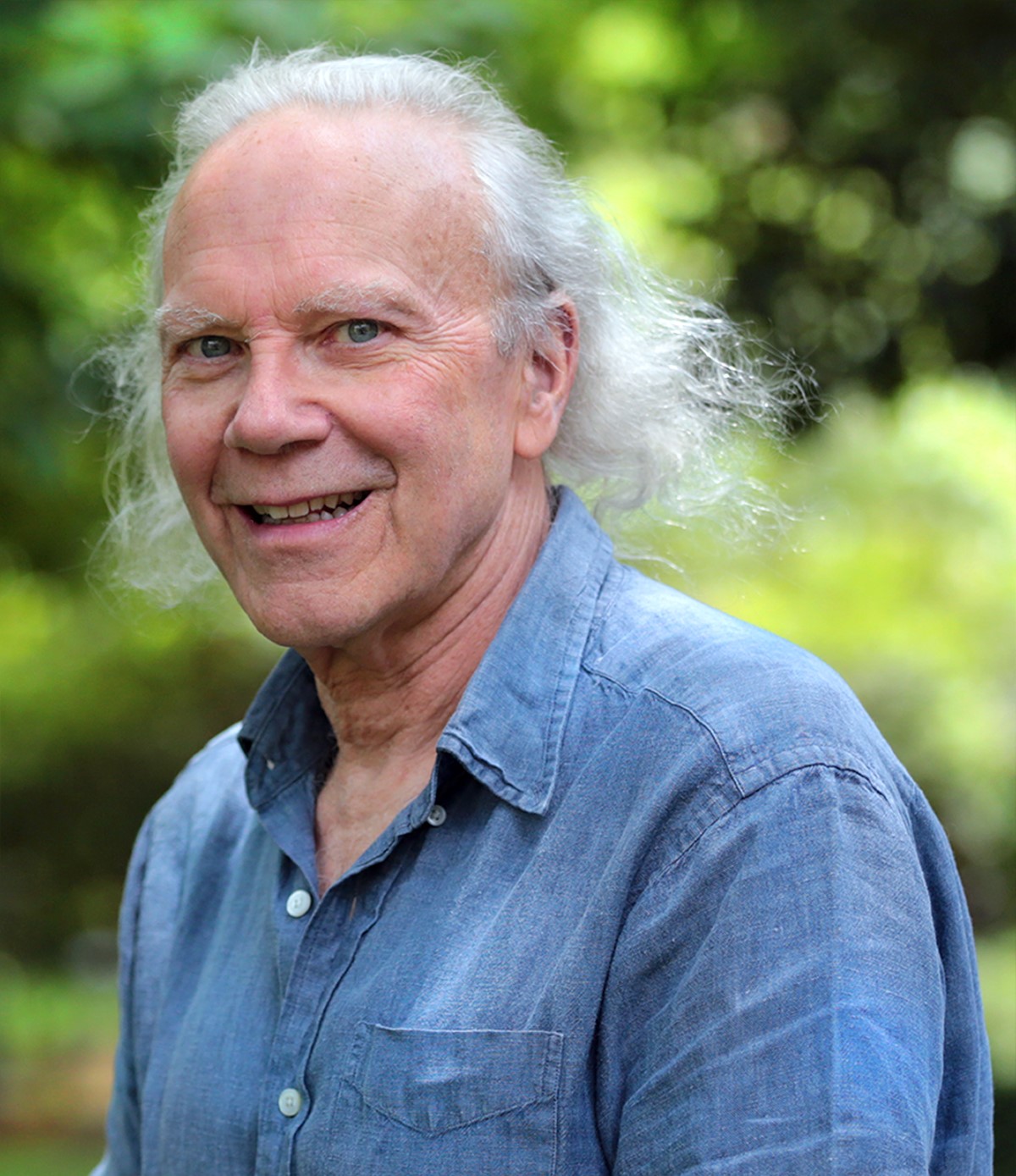
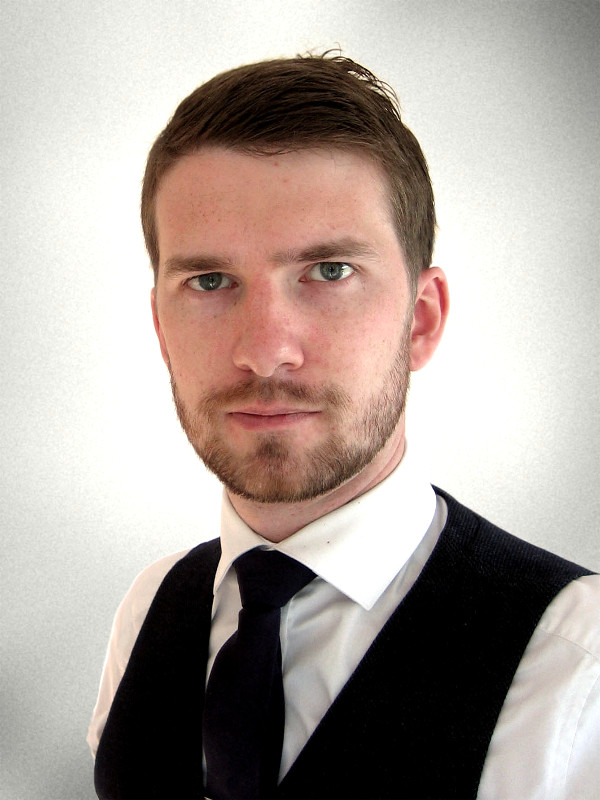
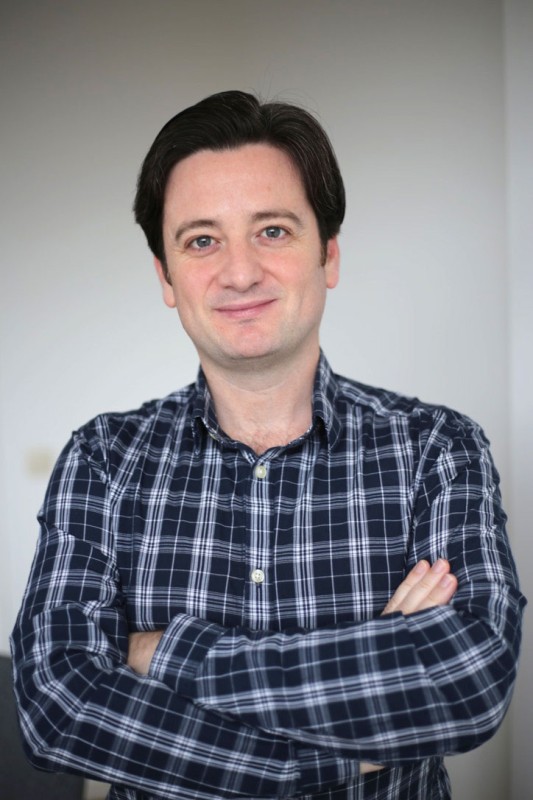
Dr. Olle Järv is an Academy Research Fellow at the University of Helsinki's Department of Geosciences and Geography. As Docent in Human Geography and holder of a joint PhD from University of Tartu and Ghent University, his research focuses on leveraging big data sources like mobile phone records and social media for analyzing human mobility patterns across European cross-border regions. Key research areas: Spatial segregation, urban diversity, transnationalism, and pandemic-induced mobility changes Current projects: BORDERSPACE (2020-2025) – Mapping transnational spaces through mobility data MOBI-TWIN (2023-2026) – Regional mobility patterns in twin transitions WinWin4WorkLife (2024-2027) – Sustainable cross-border remote work His methodological innovations include developing tools for analyzing social media data and mobile phone records to study urban dynamics. Recent recognitions include the 2024 Research Council of Finland Award and 2021 Best Paper Award from Journal of Location Based Services.
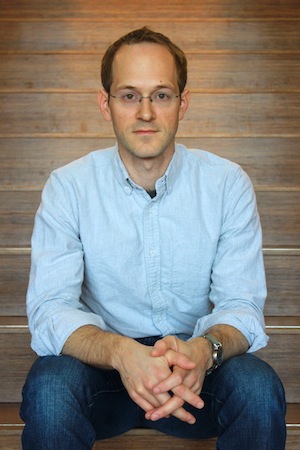
Dr Henry Moss is a Researcher at the Department of Applied Mathematics and Theoretical Physics within the School of Physical Sciences at the University of Cambridge. His work focuses on machine learning applications in climate modeling, Bayesian optimization, and Gaussian processes, bridging computational mathematics with environmental science and chemistry. His research interests include: Bayesian optimization for environmental and chemical systems Reinforcement learning in climate modeling Gaussian processes for molecular property prediction High-throughput machine learning in scientific domains Interpretable AI for coastal flooding prediction Hybrid ML-physics modeling Dr Moss's publications highlight his contributions to federated learning for climate models, sparse Gaussian process techniques, and multi-objective optimization frameworks. These works span applications in weather prediction, chemical engineering, and oceanography. Email: hwm26@cam.ac.uk
Gerard A. Ateshian is the Andrew Walz Professor of Mechanical Engineering and Professor of Biomedical Engineering at Columbia University, where he has been a faculty member since 1991. He also served as Chair of the Department of Mechanical Engineering from 2011 to 2014 and is the founding director of the Musculoskeletal Biomechanics Laboratory (MBL), established in 1996. Education: BS (1986), MS (1987), MPhil (1990), and PhD (1991) in Mechanical Engineering from Columbia University. Research Interests: Professor Ateshian's research focuses on the mechanics of soft biological tissues , particularly articular cartilage . His work integrates theoretical, experimental, and computational approaches to understand cartilage lubrication, tissue engineering, and growth and remodeling in living tissues. He has extended continuum mechanics frameworks to model complex biological phenomena such as mass transport, osmotic effects, and reactive mechanics in tissue mixtures. His recent efforts include developing open-source computational tools (FEBio) and translating research into clinical treatments for osteoarthritis . Scientific Awards: H.R. Lissner Medal, ASME (2017) OARSI Basic Science Award (2013) Columbia Engineering Alumni Association Distinguished Faculty Teaching Award (2012) Great Teacher Award, Society of Columbia Graduates (2002) YC Fung Young Investigator Award, ASME (1997) Fellow: ASME, BMES, AIMBE Advising and Mentorship: Professor Ateshian has advised numerous PhD students, including recent graduates Vince Sise and Katherine Spack , who completed their dissertations on cartilage fatigue and osteochondral allografts, respectively. His lab actively mentors students from both Mechanical and Biomedical Engineering programs. Laboratory and Collaborations: He directs the Musculoskeletal Biomechanics Laboratory (MBL) , which collaborates closely with the Cellular Engineering Laboratory of Prof. Clark Hung and with Dr. Jeffrey Weiss at the University of Utah on computational modeling (FEBio). He also collaborates with Columbia University Medical Center faculty on clinical translation of cartilage research.
Gary Pielak is a Kenan Distinguished Professor of Chemistry, Biochemistry, and Biophysics at the University of North Carolina at Chapel Hill, with a joint appointment in the School of Medicine. His research focuses on high-resolution protein NMR studies in living cells and the biophysics of tardigrade desiccation-tolerance proteins, bridging structural biology and molecular biophysics. Education: BS in Chemistry from Bradley University (1977), PhD in Biochemistry from Washington State University (1983), Postdoc at the University of British Columbia (1983-1986), Postdoc at Oxford University (1986-1988). Research Interests center on understanding protein structure, stability, and function in physiologically relevant environments. Key areas include: In-Cell NMR: Quantifying protein behavior in living cells using advanced NMR techniques. Macromolecular Crowding: Studying synthetic polymers and proteins as crowding agents to mimic cellular environments. Tardigrade Biology: Exploring desiccation-tolerance mechanisms in intrinsically disordered proteins from water bears. Recent Publications highlight interdisciplinary trends, combining AI-driven stability prediction, solid-state NMR for dry protein analysis, and molecular glass/gel applications for preservation. His Scientific Awards include: NIH Pioneer Award DuPont and Morrow Young Faculty Awards Multiple UNC Mentorship Awards Mentorship is a cornerstone, with a focus on training graduate students and advancing NMR methodologies. His group employs Research Methods : 19F, 1H, 15N, and 13C NMR Circular Dichroism and Calorimetry Protein Expression in E. coli
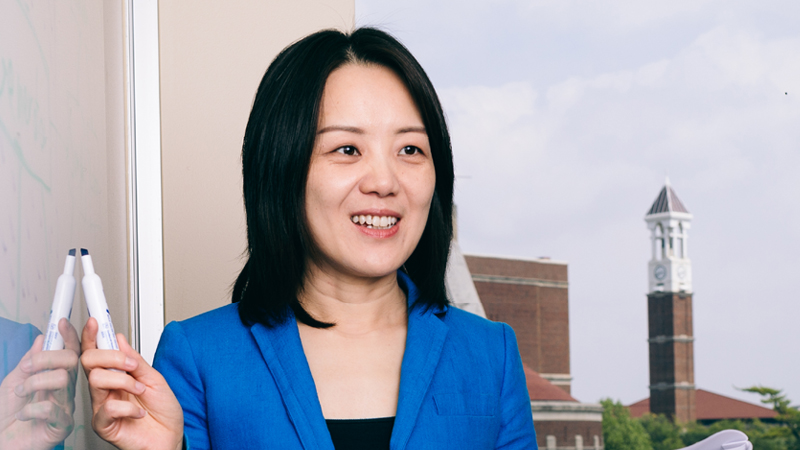
Lin Tan is a Professor of Computer Science at Purdue University , holding the Mary J. Elmore New Frontiers Professorship . She joined Purdue in 2019 after serving as a Canada Research Chair and associate professor at the University of Waterloo. She is an ACM Distinguished Member and IEEE Senior Member . Education: PhD in Computer Science, University of Illinois Urbana-Champaign BS in Computer Science and Technology, Zhejiang University Research Interests: Professor Tan’s research lies at the intersection of software engineering , artificial intelligence , and security . Her work focuses on software-AI synergy , software dependability , defect detection & repair , and software text analytics . She leverages machine learning and natural language processing to enhance software reliability, and conversely uses software techniques to improve the dependability of AI systems. Her recent projects include building binary foundation models (Nova), evaluating large language models for code generation and repair, and developing interactive debugging tools that reduce debugging time by one-third. She also explores robot task planning with LLMs and automated front-end development . Awards & Honors: Best Paper Award Finalist, ICRA 2025 ELATES Fellow, 2024-2025 ACM SIGSAC Distinguished Paper Award, CCS 2024 J.P.Morgan AI Faculty Research Awards (2020, 2021, 2022) ACM SIGSOFT Distinguished Paper Awards (ASE 2020, MSR 2018, FSE 2016) Canada Research Chair (2017) Ontario Early Researcher Award (2015) NSERC Discovery Accelerator Supplements Award (2015) Google Faculty Research Awards (2010, 2014) IEEE Micro Top Picks (2006) Advising & Funding: Professor Tan currently advises eight PhD students and has graduated 20+ PhD and Master’s students now thriving in academia (York University, Concordia University, University of Alberta) and industry (Microsoft, Meta, Amazon, Google). Her group is generously supported by NSF , Meta/Facebook Research Awards , J.P.Morgan AI Faculty Awards , and NSF REU programs. Labs & Teams: She leads the Software Reliability & AI Lab at Purdue, recruiting postdocs, PhD, MS, and undergraduate researchers year-round. Lab interests span binary recovery , LLM-based program repair , testing deep-learning libraries , and data-free model extraction .
Andrew Childs is a Professor at the University of Maryland, affiliated with the Department of Computer Science and the Institute for Advanced Computer Studies (UMIACS). He serves as Director of the NSF Quantum Leap Challenge Institute for Robust Quantum Simulation (RQS) and is a Fellow at the Joint Center for Quantum Information and Computer Science (QuICS). His research focuses on quantum algorithms for simulating physical systems, algebraic problems, and quantum walk protocols, with applications in quantum computing and computational complexity. University of Maryland Institute for Advanced Computer Studies (UMIACS) Joint Center for Quantum Information and Computer Science (QuICS) NSF Quantum Leap Challenge Institute for Robust Quantum Simulation Childs' research spans quantum simulation, quantum Fourier transform, phase estimation, and Hamiltonian dynamics. He has developed techniques to reduce quantum computational resources for simulating quantum systems and explored limitations of quantum computers through hidden subgroup problems and non-unitary dynamics. His publications cover diverse areas including quantum walk optimization, Hamiltonian simulation methods, and applications to cryptography and condensed matter physics. Recent works address spatial search algorithms, product formulas for commutators, and quantum routing protocols. As an educator, Childs has taught courses on quantum algorithms and information processing at both the University of Maryland and University of Waterloo, with lecture notes and materials spanning multiple years. Contact: amchilds@umd.edu | Office: ATL 3359 | Affiliated with University of Maryland's quantum research institutes.
Dr. Arno Solin is a tenured Associate Professor in Machine Learning at Aalto University's Department of Computer Science and an Academy of Finland Research Fellow . He leads the Aalto machine learning research group and serves as Director of the Finnish Doctoral Program Network in AI (AI-DOC) . His work bridges probabilistic modeling with practical applications in sensor fusion and real-time inference. ELLIS Scholar (European Laboratory for Learning and Intelligent Systems) Adjunct Professor at Tampere University Member of Young Academy Finland (2021–2025) Research Interests focus on data-efficient machine learning with probabilistic methods for real-time inference and sensor fusion. Key areas include Gaussian processes, diffusion models, stochastic differential equations, and uncertainty quantification in deep learning. His group develops methods that combine structural constraints with adaptive learning for deployment on resource-limited hardware. Publication Trends show consistent output in top venues (NeurIPS, ICML, ICLR, AISTATS) with emphasis on diffusion models , 3D scene reconstruction , and real-time probabilistic modeling . Recent works explore physics-informed learning, heterophily-aware graph models, and compressed representations for world models in reinforcement learning. Scientific Recognition : Awarded AI Researcher of the Year 2024 by AI Finland Teacher of the Year 2023 at Aalto CS ISIF Jean-Pierre Le Cadre Best Paper Award (2018) MLSP Schizophrenia Classification Challenge Winner (2014) NeurIPS/ICML Reviewer Awards Research Leadership includes coordinating Finland's AI Center of Excellence program and directing the Finnish Doctoral Program Network in AI (AI-DOC). He supervises 15+ doctoral/postdoctoral researchers and has spun off Spectacular AI , a company commercializing sensor fusion technology.
Mark Crowley is an Associate Professor in the Department of Electrical and Computer Engineering at the University of Waterloo, with a cross-appointment in the Cheriton School of Computer Science. He is a member of the Waterloo Artificial Intelligence Institute (WAII) and the Waterloo Institute for Complexity and Innovation (WICI), and serves as National Secretary of the Canadian Artificial Intelligence Association (CAIAC). His educational background includes a Ph.D. and M.Sc. in Computer Science from the University of British Columbia, where he worked in the Laboratory for Computational Intelligence, and a B.A. in Computer Science from York University. He completed a postdoctoral fellowship at Oregon State University working with Tom Dietterich's machine learning group. Crowley's research focuses on developing dependable and transparent algorithms to augment human decision-making in complex domains with multiple agents, spatial structure, or uncertainty. His work spans Reinforcement Learning , Deep Learning , Ensemble Methods , and Manifold Learning . He frequently collaborates with researchers in applied fields including Computational Sustainability, Sustainable Forest Management, Autonomous Driving, Medical Imaging, and Material Design. His research is motivated by both theoretical opportunities and real-world challenges such as forest fire management, automotive applications, and medical imaging. His recent publications demonstrate a strong focus on addressing challenges in reinforcement learning, particularly around observation costs, multi-agent systems, and causal representation learning. His work on ChemGymRL provides a significant contribution to digital chemistry and material design through reinforcement learning frameworks. The textbook Elements of Dimensionality Reduction and Manifold Learning represents a major contribution to the theoretical foundations of machine learning. Crowley actively supervises graduate students, with recent thesis completions including Shayan Shirahmadi Gale Bagi (PhD, Feb 2025) and Oleksandra Nahorna (MASc, Dec 2024). His lab, UWECEML (Waterloo ECE Machine Learning Lab), focuses on developing new algorithms at the intersection of Machine Learning, Optimization, and Probabilistic Modeling. He teaches courses including ECE 457C (Reinforcement Learning), ECE 657A (Data & Knowledge Modelling & Analysis), and ECE 457B (Fundamentals of Computational Intelligence). His blog Computationally Thinking explores AI, machine learning, and the societal impact of these technologies.
Bradley D. Olsen is a full professor in the Department of Chemical Engineering at the Massachusetts Institute of Technology (MIT), where he leads research at the intersection of polymer science, soft matter physics, and bioengineering. His work focuses on designing materials for critical applications in biotechnology, hemostasis, and sustainable polymer development while advancing fundamental understanding of polymer network mechanics and self-assembly. Education: Ph.D. in Chemical Engineering, University of California Berkeley (2007) S.B. in Chemical Engineering, Massachusetts Institute of Technology (2003) Olsen's research spans protein-based materials, block copolymer phase behavior, and mechanochemical hydrogels. He has pioneered methods for quantifying polymer network topology, developing hemostatic nanoparticles, and creating bio-inspired materials for selective biomolecular transport and medical applications. His recent publications emphasize data-driven approaches to polymer characterization and educational outreach in materials science. Scientific Awards: American Physical Society (APS) Fellow (2023) Fulbright Amazonia Scholar (2023) Alexander and I. Michael Kasser Chair in Chemical Engineering (2021) ACS Macro Letters Young Investigator Award (2021) MIT Committed to Caring Honor (2019) AIChE Owens Corning Early Career Award (2019) APS Dillon Medal (2018) Kavli Emerging Leader in Chemistry (2017) ACS Polymer Division Fellow (2016) Camille Dreyfus-Teacher Scholar (2015) Alfred P. Sloan Research Fellow (2014) NSF Career Grant (2013) NIH Postdoctoral Fellowship (2008-2009) Hertz Fellow (2003-2007) Barry M. Goldwater Scholarship (2002) Olsen has received significant grant support including NSF Career (2013) and AFOSR (2012) awards. His teaching activities include innovative international outreach like the 2025 soccer-themed science camp in Brazil. The Olsen Group at MIT explores advanced materials with applications ranging from trauma care to sustainable polymers.
Tim Conley is Professor and Chair at the Department of Economics, University of Western Ontario. He holds a Ph.D. from the University of Chicago (1996). His research focuses on applied econometrics with emphasis on spatial dependence, cross-sectional analysis, and empirical industrial organization. His primary research interests include methodological development in econometrics, particularly around dependence modeling in cross-sectional data and spatial analysis techniques. He has made significant contributions to understanding technology adoption in developing economies and detection of collusion in market mechanisms. Professor Conley's publications demonstrate consistent focus on developing robust statistical methods for economic applications, with recent work emphasizing practical applications in policy evaluation and market analysis. His methodological innovations have been implemented in statistical software packages used by researchers worldwide.
Muhannad S. Bakir is the Dan Fielder Professor in the School of Electrical and Computer Engineering at Georgia Institute of Technology and serves as the Director of the 3D Systems Packaging Research Center. His research focuses on heterogeneous integration of microsystems, including 2.5D and 3D ICs and packaging technologies, with significant contributions to advanced cooling systems, electrical and photonic interconnects, and biosensor integration with CMOS. Dr. Bakir's research interests span heterogeneous microsystem design and integration, advanced cooling and power delivery for emerging architectures, electrical and photonic interconnect technologies, biosensor technologies, and nanofabrication. His work addresses critical challenges in next-generation electronics, enabling polylithic integration that concatenates heterogeneous ICs of various functionalities while mimicking monolithic-like densities. His research particularly focuses on co-design of thermal technologies, power delivery networks, and signaling networks for silicon nanoelectronic systems. His recent publications demonstrate strong trends in fused-silica stitch-chip technology for heterogeneous integration, with particular emphasis on RF and mm-wave applications, power delivery for AI accelerators, and thermal management solutions. His work bridges electrical engineering, materials science, and thermal management to solve critical bottlenecks in computing performance and efficiency. 2013 Intel Early Career Faculty Honor Award 2012 DARPA Young Faculty Award 2011 IEEE CPMT Society Outstanding Young Engineer Award 2012 National Academy of Engineering Frontiers of Engineering Symposium Invited Participant 2015 IEEE CPMT Society Distinguished Lecturer 2014 Best Paper of the IEEE Transactions on Components Packaging and Manufacturing Technology More than 25 conference and student paper awards Twelve issued US Patents Dr. Bakir leads the Integrated 3D Systems Lab (I3DS) at Georgia Tech, which is actively researching advanced packaging, interconnects, electrical and thermal design, and system integration. His team has received significant recognition for their work, including multiple best paper awards from major conferences like ECTC, IITC, and CICC. The lab is currently seeking postdoctoral researchers and research faculty to advance next-generation electronics through collaborative research. His lab focuses on enabling the next phase of Moore's Law through polylithic integration, which concatenates heterogeneous ICs of various functionalities (digital, analog, photonic, and mm-wave) using advanced off-chip '2.5D' and '3D' heterogeneous interconnects and packaging. This work impacts applications in high-performance computing, machine learning, edge intelligence, autonomous vehicles, augmented/virtual reality, and healthcare.
Prof. Dr. Gülşen Eryiğit is a Professor at Istanbul Technical University within the Faculty of Computer and Informatics , Department of Artificial Intelligence and Data Engineering . She founded and directs the ITU Natural Language Processing Group , Turkey's leading team in Turkish-language NLP, and serves as Senior Action Editor for ACL RR , Director of ITU TÖMER (Turkish Language Teaching Center), and Co-Chair of the EU UniDive Cost Action WG3. Education: PhD in Computer Engineering from ITU (2007), MSc and BSc from ITU and Marmara University Research: Focuses on Natural Language Processing for Turkish, including dependency parsing , coreference resolution , multiword expressions , and language education technology Her recent work involves multilingual transfer learning , LLM applications for Turkish text simplification, and gamification for morphology education. She has received prestigious awards like the Siemens Excellence Award and TÜBİTAK's Above Threshold Award . Her research has produced 65+ publications and 29+ projects funded by EU, TÜBİTAK, and industry partners. Scientific Awards: Siemens Excellence Award (2007) Above Threshold Award (TÜBİTAK, 2015) Certificate of Appreciation (EU 7th Framework, 2012) Thank You Plaque (ITU, 2017) The ITU NLP Group under her leadership has developed Turkey's first licensed NLP software exported internationally. She collaborates with European institutions through COST actions and participates in ACL, CoNLL, and LREC conferences. Her lab focuses on language technology for Turkish , including sign language processing and social media normalization.
Zhi Da is the Howard J. and Geraldine F. Korth Chair in Finance and Professor of Finance at the University of Notre Dame , Mendoza College of Business, Department of Finance. He completed his Ph.D. in Finance at Northwestern University’s Kellogg School of Management (2006), preceded by an M.Sc. in Financial Engineering from the National University of Singapore (2001) and a B.B.A. with First-Class Honors (1999) from the same institution. Holding editorial roles at Journal of Finance , Management Science , Review of Financial Studies and several other top journals, he is a leading voice in empirical finance research. Education Ph.D. in Finance, 2006 – Kellogg School of Management, Northwestern University M.Sc. in Financial Engineering, 2001 – National University of Singapore B.B.A. (1st Class Honors), 1999 – National University of Singapore Research Interests Zhi Da’s scholarship sits at the intersection of asset pricing , behavioral finance , and market microstructure . He investigates how investor attention, institutional trading, liquidity frictions, and information flows jointly determine the cross-section of expected returns. His work delves into retail margin trading, the role of pension-fund flows in exchange-rate dynamics, the informational content of SEC filings, and the efficiency of short-selling mechanisms. By combining large-scale data analytics, textual analysis, and structural modeling, he uncovers novel predictors of returns ranging from presidential approval ratings to real-time attention measures. Recent projects explore fractional trading ’s impact on price efficiency, hedging demand as a driver of intraday momentum, and the hidden effort problem in delegated portfolio management. These themes collectively advance our understanding of limits to arbitrage and the formation of extrapolative beliefs. Publication Landscape Spanning 2025 back to 2009, his 15 most recent articles in Journal of Finance , Review of Financial Studies , Management Science , Journal of Financial Economics , and Journal of Financial and Quantitative Analysis converge on three broad motifs: (1) micro-level trading frictions—liquidity costs, margin requirements, and short-selling constraints; (2) macro-finance linkages—exchange rates, fiscal policy, and global capital flows; and (3) information economics—attention allocation, media analytics, and regulatory disclosures. The collective evidence demonstrates that seemingly small trading or informational frictions aggregate into large, persistent cross-sectional return predictability. Honors and Awards 2017 William F. Sharpe Award for Best Paper, Journal of Financial and Quantitative Analysis Lead-article distinctions in Journal of Finance , Review of Financial Studies , and Management Science Featured coverage in SmartMoney and CNBC Teaching & Mentorship At Notre Dame’s Mendoza College, Professor Da teaches Investments (undergraduate and MBA) and Fixed Income Securities , integrating cutting-edge research insights into the curriculum. While specific advisees are not listed, his extensive co-author network (22+ recurring collaborators) attests to a vibrant mentoring environment. Laboratory & Data Resources He publicly distributes the NAT (Net Arbitrage Trading) dataset, a stock-quarter panel of arbitrage positions used in Chen, Da & Huang (2019). This resource has become a standard tool for researchers studying arbitrage capital movements.
Bai Gao is a Professor of Sociology at Duke University. His research focuses on political economy, globalization trends, and industrial policy, particularly in the context of China and East Asia. He holds a Ph.D. from Princeton University (1994). Research Interests : Impact of state industrial policy on emerging technologies (e.g., electric vehicles in China) Globalization dynamics and post-neoliberal policy paradigms Comparative analysis of developmental models (China, Japan, Germany) Geopolitical implications of China's Belt and Road Initiative Key Contributions : Author of Japan’s Economic Dilemma (2001) and High-Speed Rail: An Analysis of the Chinese Innovation System (2021) Edited volumes on China-Pakistan Economic Corridor and global political economy Grants & Funding : "FDI and the Chinese Model of Economic Development" (2005-2007) "Institutional Analysis of Global Production Networks" (2003-2004) Courses Taught : SOCIOL 541: The United States and the Asian Pacific Region SOCIOL 344: Technology and Organizational Environments
Prof. Dr. Gonzalo Guillén Gosálbez is a Full Professor at the Department of Chemistry and Applied Biosciences , ETH Zürich. He holds a PhD in Process Systems Engineering (UPC, 2005) and has held academic positions at Imperial College London (Reader), University of Manchester (Senior Lecturer), and Universitat Rovira i Virgili (Assistant/Associate Professor). His research focuses on Sustainable Chemical Processes , integrating life cycle assessment, optimization techniques, and planetary boundary analysis to evaluate and design low-carbon technologies. Current position: Full Professor, ETH Zürich (2019–present) Prior roles: Imperial College London (2016–2019), University of Manchester (2014–2016), URV Spain (2008–2014) Education: PhD (UPC, 2005), MEng/BEng (University of Murcia) His research explores CO2 valorization , green methanol synthesis , circular marine fuels , and planetary boundary compliance in energy and chemical systems. Recent work emphasizes machine learning for process modeling, single-atom catalysis , and decentralized ammonia production . Scientific contributions include 15+ peer-reviewed articles (2023–2025) in journals like Nature Chemical Engineering , ACS Sustainable Chemistry & Engineering , and Energy & Environmental Science . Key themes: Optimization of hybrid fossil/renewable carbon systems Environmental impacts of energy transitions Catalyst design for sustainable chemistry Life cycle assessment of emerging technologies Awarded UPC Top Doctoral Student Award and Top National Student Award , he combines process systems engineering with sustainability metrics to address global challenges in chemical and energy systems.