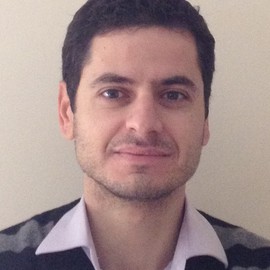
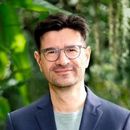
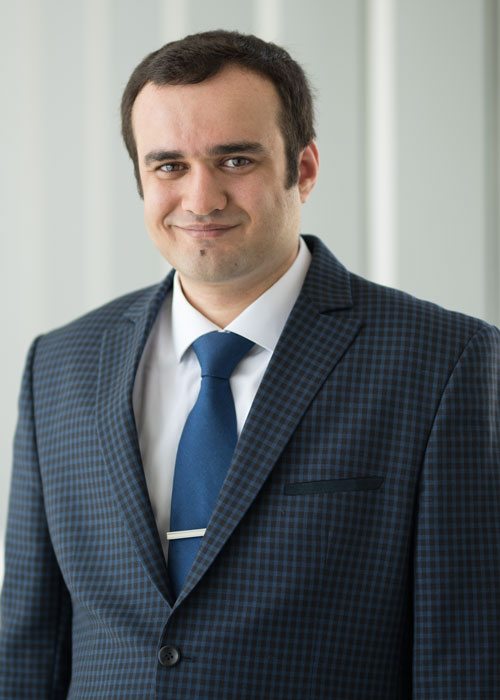
Dr. Alexander Artikis is an Associate Professor of Artificial Intelligence at the University of Piraeus and a Research Associate at the National Centre for Scientific Research (NCSR) "Demokritos". He leads the Complex Event Recognition (CER) group , focusing on symbolic and probabilistic approaches to event recognition and forecasting. University of Piraeus (2025–present) NCSR Demokritos (2017–present) Complex Event Recognition Group (2017–present) His research spans Artificial Intelligence and Distributed Systems , with a focus on: Complex Event Recognition (CER) : Developing logic-based systems for detecting events in real-time data streams Event Calculus : Creating probabilistic and incremental versions for runtime reasoning Multi-Agent Systems : Modeling norm-governed interactions Maritime Informatics : Applying CER to vessel trajectory analysis and fleet management Key publications reveal trends in: Neuro-symbolic forecasting models combining deep learning and logic-based reasoning Symbolic automata with memory for pattern detection Online learning techniques for dynamic event rule generation Tensor-based formalizations for efficient temporal reasoning Handling uncertainty in real-time maritime data streams Optimizing memory usage for scalable stream processing He contributes to open-source tools like RTEC (Run-Time Event Calculus) and holds a European patent on complex event forecasting. His work addresses challenges in: Proactive decision-making systems Knowledge Graph consistency Hybrid human-machine discovery of movement patterns Big Data analytics for time-critical applications
Dr. Magdalena Schreter-Fleischhacker works at the Technical University of Munich within the Professorship of Simulation for Additive Manufacturing . Her research focuses on physics-based computational modeling of coupled liquid-powder-gas dynamics in metal additive manufacturing, including melt pool dynamics and powder-gas interactions . She specializes in multi-phase flow modeling using cut-element and diffuse interface methods with continuous/discontinuous Galerkin schemes . She also develops constitutive models for quasi-brittle materials like 3D printed concrete and rock, incorporating anisotropy , gradient-enhanced damage mechanics , and micropolar continua . Her computational work leverages matrix-free algorithms and parallel computing , with significant contributions to the deal.II finite element library . Research Interests Physics-based computational modeling of coupled liquid-powder-gas dynamics in additive manufacturing Multi-phase flow simulation using sharp/diffuse interface methods Advanced constitutive modeling for quasi-brittle materials (rock, soils, 3D printed concrete) High-performance computing and matrix-free algorithms Notable Contributions Development of consistent diffuse-interface models for melt-vapor dynamics Improvements to continuum surface flux models in additive manufacturing Formulation of gradient-enhanced damage-plasticity models for geological materials Principal contributor to the deal.II library (version 9.6) Supervised Student Projects Johannes Resch (2024): DG-based thermo-hydrodynamic melt pool simulations Julian Brotz (2024): DEM-FEM coupling for fluid-powder interaction Andreas Ritthaler (2024): Matrix-free cutDG formulation for complex flows Tinh Vo (2023): Laser modeling for melt pool simulations Scientific Awards ERC Starting Grant recipient
Miguel Mahecha is Professor of Environmental Data Science and Remote Sensing at the University of Leipzig, where he serves as Institute Head of the Institute for Earth System Science and Remote Sensing. He is also affiliated with the Remote Sensing Centre for Earth System Research, a collaboration between Leipzig University and the Helmholtz Centre for Environmental Research (UFZ). Mahecha is a member of the German Centre for Integrative Biodiversity Research (iDiv) and serves as Principal Investigator in the Centre for Scalable Data Analytics and Artificial Intelligence. Additionally, he is a Fellow of the European Laboratory for Learning and Intelligent Systems and co-spokesperson for the National Research Data Infrastructure for Earth System Sciences (NFDI4Earth). Full Professor for Modelling Approaches in Remote Sensing, University of Leipzig (since 03/2020) Research Group Leader: Empirical Inference in the Earth System, Max Planck Institute for Biogeochemistry, Jena (12/2012 - 03/2020) PostDoc, Max Planck Institute for Biogeochemistry, Jena (10/2009 - 11/2012) PhD in Environmental Sciences, ETH Zürich (06/2006 - 09/2009) Diploma in Geoecology, Bayreuth University (10/2000 - 04/2006) Mahecha's research focuses on understanding ecosystem responses to climate extremes and human-environment relationships during these events. He investigates macro-ecological dynamics and ecosystem functioning using data-driven methods and high-dimensional Earth observations. A key contribution is his co-development of the Earth System Data Cube concept, which integrates empirical methods with theoretical understanding to analyze complex Earth system interactions. His work spans biogeography, ecosystem functioning, and advanced data science methodologies for environmental monitoring. His recent publications demonstrate a strong emphasis on analyzing compound climate extremes, particularly heatwaves and droughts, and their impacts on ecosystems. Mahecha has pioneered methods using Earth System Data Cubes to integrate diverse environmental datasets, enabling novel insights into biosphere-atmosphere interactions. His research increasingly incorporates artificial intelligence and machine learning approaches to understand spatiotemporal patterns in ecological systems, with applications in real-time forest monitoring and biodiversity assessment. Fellow of the European Laboratory for Learning and Intelligent Systems Co-spokesperson for NFDI4Earth (National Research Data Infrastructure for Earth System Sciences) Mahecha leads multiple significant research projects including Digital Forest (real-time forest monitoring), NFDI4BioDiversity, and XAIDA (extreme events: AI for Detection and Attribution). His work receives funding from diverse sources including EU, DFG, and Stiftungen Inland. He collaborates extensively with the German Centre for Integrative Biodiversity Research (iDiv) and the Centre for Scalable Data Analytics and Artificial Intelligence. His research group, Earth System Data Science (ESDS), focuses on developing methods to extract valuable information from long-term environmental observations to understand coupled Earth system dynamics. At the Remote Sensing Centre for Earth System Research, Mahecha's ESDS group investigates how ecosystem functions respond to climate extremes, societal vulnerability to environmental hazards, and nonlinear interactions in coupled Earth systems. The group leverages citizen science data, remote sensing observations, and advanced computational methods to address pressing environmental questions.
Dr. Yves Boubenec is an Associate Professor at École Normale Supérieure (ENS)-PSL University, Paris, France. He serves as Head of the LSP Neuro Platform and Director of Studies at the Department of Cognitive Studies. Academic Rank: Associate Professor Institution: ENS-PSL Departments: Cognitive Studies (ENS), LSP Neuro Platform Email: yves.boubenec@ens.psl.eu Research Focus: Boubenec investigates neural mechanisms of auditory perception and cognition using integrated methodologies spanning single-neuron electrophysiology to large-scale neuroimaging. His work reveals how context, learning, and multisensory interactions shape sound encoding in mammalian neocortex. Primary Research Themes Context-dependent auditory encoding Perceptual attention mechanisms Task-driven neural plasticity Self-supervised learning models Population-level cortical dynamics Human/ferret auditory comparisons Publication Trends: Recent work (2024-2025) examines speech production networks, premotor auditory categorization, and algebraic structures in sound learning. Earlier studies (2018-2022) focus on population gating, hierarchical auditory coding, and self-voice mechanisms. 2025 Self-voice frequency analysis Hierarchical ferret auditory cortex mapping Temporal window constraints 2024 Premotor category hemodynamics Self-supervised sound structures Human speech cortical encoding Methodological Expertise: Combines awake ferret functional UltraSound, Neuropixels recordings, and computational modeling to analyze neural representations across spatial scales. Specializes in translating animal model findings to human auditory processes.
Alfio Grillo is a Full Professor at the Department of Mathematical Sciences (DISMA) of Politecnico di Torino, with research interests in biomechanics, continuum mechanics, and mathematical physics. His expertise spans classical mechanics and multiscale modeling of biological tissues. Research Focus: Grillo's work integrates analytical mechanics with nonholonomic constraints, fractional calculus applications, and multiscale modeling of growth/remodeling phenomena in biological systems. Recent articles emphasize poroelasticity, viscoelastic composites, and bi-phasic material behavior. Scientific Contributions: Editorial roles in leading journals since 2014 Member of INdAM-GNFM since 2009 Recipient of National Scientific Qualification in 2017 €128,609 PRIN grant for multiscale biological modeling Academic Leadership: Supervises PhD students in Civil Engineering, Mathematics, and Mathematical Engineering. Teaches advanced courses in Differential Varieties, Variational Methods, and Porous Media Mechanics.
Amir Ardestani-Jaafari is an Associate Professor at the Faculty of Management , University of British Columbia Okanagan, with affiliations to the Institute for the Sustainability (IGS) . His office is located at EME 4111, and he can be reached at amir.ardestani@ubc.ca or 250.807.8108. Postdoctoral Fellow in Operations Management, McGill University Ph.D. in Management Science, HEC Montreal M.Sc. and B.Sc. in Industrial Engineering, Tehran Polytechnic Dr. Ardestani-Jaafari’s research focuses on Healthcare Operations , Supply Chain Management , and Business Analytics , with particular emphasis on robust optimization techniques for facility location, demand uncertainty, and network design. His work integrates mathematical modeling with real-world healthcare and logistics challenges. Recent publications demonstrate expertise in Two-stage Robust Optimization for equity-driven facility location, Text Mining in telemedicine appointment systems, and Decision-dependent Uncertainty in network interdiction. He has explored applications in Home Healthcare , Cancer Screening Networks , and Global Sourcing Compliance using advanced optimization frameworks. Dr. Ardestani-Jaafari is affiliated with key research centers including the UBC Optimization Center (COCANA) , Materials and Manufacturing Research Institute (MMRI) , and GERAD Research Center . While student advising information isn't explicitly stated, his technical contributions span algorithm development for inventory problems, network design methodologies, and computational solutions for complex operations management challenges.
Dr. Marcell K. Peters is a Senior Academic Councillor at the Chair of Animal Ecology and Tropical Biology (Zoology III) at the University of Bremen. His research focuses on biodiversity patterns, ecosystem functioning, and climate-land use interactions in tropical and montane environments, with extensive fieldwork in East Africa and the Amazon. He leads projects under DFG and EU funding, including the UPSCALE initiative. Habilitation in Zoology (University of Würzburg, 2018) PhD in Biology (University of Bonn, 2008) Diploma in Biology (RWTH Aachen & University of Bonn, 2003) Research spans multi-taxa community ecology, army ants and ant-following birds, DNA barcoding applications, and climate change impacts on pollination networks. Google Scholar highlights recent work on climate-agriculture interactions in sub-Saharan Africa, trait-based community assembly, and network resilience in biodiversity hotspots. His publications emphasize elevational gradients, disturbance ecology, and functional diversity across Mount Kilimanjaro studies. Current affiliations include the DFG Research Unit Kilimanjaro and EU-funded UPSCALE project. He employs advanced methods like airborne LiDAR for biodiversity prediction and investigates nutrient use by ant communities across continents.
Kevin Chetty is a Professor of Wireless Sensing at University College London (UCL), leading the Urban Wireless Sensing Lab within the Department of Security and Crime Science. His work bridges radar technology, machine learning, and healthcare applications, with a focus on passive sensing systems. Education: PhD in Medical Ultrasound Physics (Imperial College London, 2004-2007), MRes in Image and X-Ray Physics (King's College London, 2003), BSc in Physics (King's College London, 1999) Research spans radar micro-Doppler signature analysis for human behavior classification, software-defined radar development, and integrated communication-sensing systems, with applications in security, healthcare, and smart environments. Recent work emphasizes privacy-preserving technologies and edge processing for real-time operations. Scientific awards include the 2022 IET Radar Systems Best Paper Runner-Up, 2022 IEEE Radar Conference 2nd Place, and 2015 National Instruments Engineering Impact Award. He has received funding from government and industry sectors in telecommunications, IoT, security, and healthcare. Teaching roles: Programme Convener for MSc Crime Science and IEP Minor in Crime and Security Engineering; Module Convener for Security Technologies and Crime Mapping & Spatial Analysis Consultancy: Huawei Technologies (2020-2022), Metropolitan Police Service (2019)
Aaron Young is an Associate Professor in the Woodruff School of Mechanical Engineering at Georgia Institute of Technology and a program faculty member in the Biomedical Engineering School. He serves as Director of the Exoskeleton and Prosthetic Intelligent Controls (EPIC) Lab, focusing on robotic human augmentation through advanced control systems for prosthetics and exoskeletons. Education: Postdoctoral Fellow, University of Michigan (2014-2016) Ph.D., Northwestern University (2014) M.S., Northwestern University (2011) B.S., Purdue University (2009) Dr. Young's research addresses clinically viable control systems for wearable robotic devices, emphasizing intent recognition , EMG signal processing , and machine learning integration. His work targets mobility impairments from stroke, amputation, cerebral palsy, and neurological injuries, aiming to reduce metabolic costs, restore natural biomechanics, and enhance community ambulation. Key innovations include data-driven control frameworks , biomechanical terrain adaptation , and anthropometry-based personalization . His recent publications highlight advancements in deep learning for real-time biomechanics , EMG-informed joint estimation , and adaptive assistance systems . The EPIC Lab's facilities feature a terrain park with force plates , motion capture systems , and HumoTech simulation platforms for device testing. Scientific Awards: New Faces of Engineering (IEEE USA, 2017) Military Health System Team Award (2015) NSF Graduate Fellowship (2010) NDSEG Fellowship (2010) IEEE EMBC 3rd Place (2013) Projects include NSF-funded hip exoskeletons for stroke survivors, DoD-powered prostheses for amputees, and Pediatric knee exoskeletons for cerebral palsy. The lab cultivates interdisciplinary expertise in robotics , biomedical engineering , and human-machine interaction .
Fedor Dokshin is an Assistant Professor in the Department of Sociology at the University of Toronto, Downtown Toronto (St. George) campus. His research bridges computational social science with environmental and political sociology, focusing on energy transitions, partisan dynamics, and social network structures. Key research areas include racial and income disparities in solar photovoltaic adoption, policy feedback mechanisms in renewable energy programs, and partisan influences on environmental decision-making. Fields of Study: Computational and Quantitative Methods, Environmental Sociology, Political Sociology, Social Networks Areas of Interest: Computational social science, Energy and the environment, Political polarization Research Trends: Dokshin's publications reveal a focus on energy justice, behavioral diffusion models, and political polarization. His work combines computational methods with environmental policy analysis, examining how socioeconomic factors and partisan identities shape renewable energy adoption. Articles demonstrate geographic heterogeneity in opposition to extraction projects, digital discourse analysis techniques, and institutional dynamics affecting scholarly knowledge production. Methodological Emphasis: Utilizes large-scale data analysis, spatial modeling, and automated textual analysis to explore energy-environment-society intersections. Research highlights the tension between technical solutions and social equity in energy transitions, with recurring themes of policy design, public engagement, and networked political behavior.
Tobias Neckel is an Associate Professor at the Institute for Informatics at the Technical University of Munich (TUM), where he leads research projects and coordinates academic programs. He has been the project team leader of the IGGSE Project ExaNIML since 2018, main coordinator of the Ferienakademie since 2014, and Program Coordinator of the Bavarian Graduate School of Computational Engineering (BGCE) since 2009. Diploma in Technomathematik from TU München (2005) Dr. rer. nat. in Informatics from TU München (2009) Neckel's research focuses on Uncertainty Quantification, Random Differential Equations, and High Performance Computing. His work develops efficient numerical algorithms using hierarchic and adaptive methods such as octrees/spacetrees and sparse grids, with applications in fluid-structure interactions and incompressible fluid flow simulation. His research bridges theoretical mathematics with practical computational science, emphasizing robust and efficient implementations. His recent publications demonstrate a strong trajectory in multi-fidelity modeling, uncertainty quantification, and high-performance computing. Neckel has made significant contributions to scalable hierarchical approximation methods, dynamic resource management in HPC, and the application of machine learning techniques to computational science problems. His work spans diverse application domains including plasma physics, hydrology, and computational engineering. Lehrfonds prize of the TUM (2014) Ernst Otto Fischer prize of the TUM (2011) Promotionspreis des Bunds der Freunde der TU München (2009) Neckel has supervised numerous graduate students and has been actively involved in curriculum development and teaching innovation. His book "Bits and Bugs: A Scientific and Historical Review of Software Failures in Computational Science" (2019) represents a significant contribution to understanding software reliability in scientific computing. He has organized minisymposia at major conferences including SIAM CSE and SIAM UQ, and serves on program committees for various computational science conferences. As coordinator of the Ferienakademie and the BGCE, Neckel plays a central role in advanced computational engineering education in Bavaria. His research group develops software for exascale computing and contributes to the Transregional Collaborative Research Centre 89 on Invasive Computing. Neckel also maintains international collaborations, with research stays at institutions including the Australian National University and Tokyo Institute of Technology.
Professor Oliver Johnson is a faculty member at the School of Mathematics, University of Bristol, UK, where he serves as Head of School and holds the Professor of Information Theory position. His research bridges information theory, probability, and statistics, focusing on entropy convergence, group testing, and fundamental limits in data analysis. Current PhD students: Kieran Morris, Conor Crilly Ex-PhD students: Matt Aldridge, Leonardo Baldassini, Dan Cowley, Vaia Kalokidou, Tom Kealy, Jennifer Chakravarty, Zichen Gui, Chrys Paschou Ex-postdoc: Erwan Hillion His work includes ORCiD profile and collaborations across information theory, cybersecurity, and ecological modeling.
Jason Hartline is a Professor of Computer Science at the McCormick School of Engineering, Northwestern University, with a courtesy appointment in Managerial Economics & Decision Sciences. His research bridges computer science and economics, focusing on mechanism design, auction theory, and approximation algorithms. Ph.D. in Computer Science from the University of Washington (2003) Postdoctoral Fellow at Carnegie Mellon University (2003-2004) Researcher at Microsoft Research (2004-2007) His work develops methodologies to analyze and design economic systems using computational theory, particularly in auction mechanisms and non-truthful settings. Key contributions include the textbook Mechanism Design and Approximation and frameworks for Bayesian and prior-independent mechanism design. Recent publications (2018-2023) span topics like non-truthful mechanism learning, multi-dimensional agent modeling, and computational law. Collaborations include researchers from Harvard, Microsoft, and institutions across economics and theoretical computer science. Grants include multiple NSF awards (CCF, ECCS, HDR TRIPODS) for projects in data economics, machine learning integration, and peer grading systems. Former advisees hold academic positions at Stanford, Yale, and Penn State.
David F. Anderson is the Vilas Distinguished Achievement Professor of Mathematics at the Department of Mathematics, University of Wisconsin-Madison. He has maintained an active research and teaching career spanning over two decades with significant contributions to mathematical biology and stochastic modeling. Dr. Anderson's research focuses on the interface of mathematics and biology, specifically in mathematical systems biology and algorithm design for stochastic models in biological systems. His work has fundamentally advanced chemical reaction network theory, stochastic processes in biochemical systems, and computational methods for analyzing complex biological phenomena. He has developed numerous numerical techniques for simulating and analyzing reaction networks with applications across systems biology. An analysis of his recent publications reveals a sustained focus on mathematical properties of stochastic reaction networks, with increasing emphasis on connections between chemical systems and computational frameworks. His later work explores reaction networks as computing devices, implementing arithmetic operations and neural network functionalities through biochemical processes, while maintaining rigorous mathematical analysis of network properties like ergodicity, mixing times, and solution structures. Simons Fellow (2022) Vilas Associates Award (2016) IMA Prize in Mathematics (2014) Dr. Anderson has successfully guided nine PhD students to completion, with recent graduates including Aidan Howells (2024), Tung Nguyen (2021), Chaojie Yuan (2020), Kurt Ehlert (2019), and Jinsu Kim (2018). His current graduate student is Jingyi Ma. His research has been supported by prestigious fellowships including the Simons Fellowship, indicating substantial research funding, though specific grant details aren't provided in the source material. While specific laboratory facilities aren't described in the text, Dr. Anderson maintains an active research group evidenced by continuous publications, regular PhD student completions, and collaborations with numerous researchers including Daniele Cappelletti, Jinsu Kim, and Tung Nguyen. His research program demonstrates sustained productivity with publications spanning from 2005 to the present.
Mikael Rinne serves as Associate Professor in Rock Mechanics within the Department of Civil Engineering at Aalto University, Finland. Holding a Doctor of Science in Technology (D.Sc. Tech.), he brings extensive industry experience from Finnish and Swedish consulting firms (1988-2008) where he specialized in rock engineering and project management for tunneling and geological disposal of radioactive waste. His research focuses on rock and fracture mechanics with direct applications to rock engineering, mining, and tunneling. Current investigations center on digital characterization methods including photogrammetry, videogrammetry, and virtual reality systems for both practical engineering solutions and educational advancement. His work addresses critical challenges in fracture hydro-mechanics, rock mass characterization, and sustainable mining practices. Analysis of his 15 most recent publications (2023-2025) reveals a strong emphasis on digital transformation in rock mechanics. Key trends include non-contact surveying techniques for rock mass characterization, scale effects in fracture properties, and virtual learning environments for engineering education. His research bridges theoretical modeling with field applications in tunneling, mining, and radioactive waste disposal, demonstrating consistent innovation in measurement technologies and computational methods. No scientific awards were mentioned in the source materials. While specific advising details and grant information were not provided, his leadership of the Mineral-based materials and mechanics research group indicates active supervision of graduate students and management of research projects. His industry background suggests strong connections with tunneling and mining sectors for applied research collaboration. He directs the Mineral-based materials and mechanics research group at Aalto University, which develops advanced methodologies for rock characterization and engineering applications. Current initiatives integrate digital tools like smartphone LiDAR, 360-degree cameras, and virtual reality systems to enhance both field practices and educational outcomes in rock engineering.