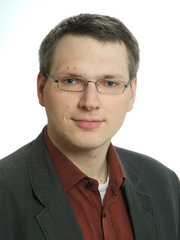
Jelle Hellings is an Assistant Professor in the Department of Computing and Software at McMaster University , Canada. His research focuses on high-performance large-scale data management systems with a strong theoretical and algorithmic component, including resilient systems (blockchains) , graph databases , and external-memory algorithms . He previously worked as a Postdoc Scholar at the University of California, Davis and earned his PhD from Hasselt University in Belgium. Education: Doctor of Sciences in Computer Science (2018), Hasselt University Master of Science in Computer Science and Engineering (2011), Eindhoven University of Technology His research interests include scalable resilient systems with Byzantine fault tolerance, database theory, graph query languages, constraints on graph data, and external-memory algorithms for large graph datasets. He has authored numerous high-impact publications on blockchain-based resilient systems, query optimization in graph databases, and theoretical advancements in relation algebra expressiveness. Hellings actively contributes to academic service through program committee memberships and tutorial organization, and he currently teaches courses on future resilient databases and foundational computer science topics.
Anil Madhavapeddy serves as Professor of Planetary Computing at the University of Cambridge's Department of Computer Science and Technology and directs the Cambridge Centre for Carbon Credits (4C). A Fellow of Pembroke College, he integrates systems research with environmental conservation through the Computer Laboratory's Environment and Energy Group. His career spans industry leadership (NetApp, Citrix, Intel), academic appointments (Cambridge, Imperial, UCLA), and entrepreneurial ventures (XenSource, Unikernel Systems, Docker). Madhavapeddy earned his PhD at Cambridge's Computer Laboratory in 2006. His research bridges computational systems and planetary-scale environmental challenges, with deep expertise in open-source development (OCaml, Xen, Docker, OpenBSD) and technology strategy advising for organizations including Zededa, Tezos Foundation, and Tarides. His work centers on environmental computing and climate informatics, leveraging distributed systems and functional programming to develop sensing infrastructure for conservation. Recent projects focus on carbon credit systems, AI-driven biodiversity monitoring, and sustainable computing architectures that minimize ecological footprints while maximizing analytical capability. Analysis of his 2025 publications reveals a concentrated effort on AI-integrated conservation tools, privacy-preserving carbon accounting, and energy-efficient computing. Key themes include spatial networking for ecological data, LLM-enhanced evidence retrieval in conservation science, and novel metrics for extinction risk assessment—demonstrating computational innovation applied to urgent planetary boundaries. No scientific awards were documented in the source material. Madhavapeddy advises multiple technology firms on strategic development while leading the Cambridge Centre for Carbon Credits, though specific grant funding details remain unreported. He actively contributes to the Environment and Energy Group at Cambridge's Computer Laboratory and directs the interdisciplinary Cambridge Centre for Carbon Credits (4C). His open-source leadership spans critical infrastructure projects including OCaml, Xen, and Docker, fostering collaborative development communities that underpin modern cloud and container technologies.
Rogério de Lemos is a Senior Lecturer in Computing Science and Director of Postgraduate Research (PGR) at the School of Computing, University of Kent. He previously served as an invited assistant professor at the University of Coimbra, Portugal, and as a Senior Research Associate at the Centre for Software Reliability (CSR) at the University of Newcastle upon Tyne, UK. Dr. de Lemos' research focuses on architecting resilient systems, particularly in resilient AI, self-adaptive software systems, and authorization infrastructures. He belongs to both the Programming Languages and Systems Group and the Cyber Security Group at the University of Kent. His specific research interests include: Software engineering for self-adaptive systems assurances and resilience evaluation Dynamic generation of processes Handling insider threats using self-adaptive authorization Architectural abstractions for fault tolerance Verification and validation of dependable software architectures Software development for safety-critical systems Dependability and bioinspired computing His publication trends show increasing emphasis on practical applications of self-adaptive systems in cyber security contexts, with recent work spanning network traffic analysis, cryptographic function detection, and cloud-edge security architectures. His research bridges theoretical foundations with practical implementations, particularly in cyber security and resilient systems architecture. Dr. de Lemos currently leads the "Collaborative and Confidential Information Sharing and Analysis for Cyber Protection" project funded by the European Union's Horizon 2020 Programme. His past projects include "ADAAS: Assuring Dependability in Architecture-based Adaptive Systems" and multiple collaborations with NCR on sensor fusion and fault tolerance. As Director of Postgraduate Research, he oversees the School of Computing's research degree programs and likely supervises PhD students in resilient systems and cyber security, though specific student names are not listed in the available information.
Haryadi S. Gunawi is a Professor in the Department of Computer Science at the University of Chicago where he leads the UCARE research group (UChicago systems research on Availability, Reliability, and Efficiency). His work focuses on improving the dependability of storage and cloud computing systems, with a particular emphasis on addressing performance stability, reliability, and scalability challenges in modern computing environments. Dr. Gunawi received his Ph.D. in Computer Science from the University of Wisconsin, Madison in 2009. Following his doctoral studies, he was a postdoctoral fellow at the University of California, Berkeley from 2010 to 2012 before joining the University of Chicago faculty. His research focuses on three main areas: (1) performance stability, where he builds storage and distributed systems robust to latency tails and "limping" hardware; (2) reliability and scalability, where he addresses concurrency and scalability bugs in cloud-scale distributed systems; and (3) the intersection of machine learning and systems, exploring how machine learning techniques can solve operating and storage system problems. His work often combines theoretical insights with practical system implementations that address real-world challenges in cloud and storage infrastructure. Dr. Gunawi's publication record shows a consistent focus on storage and cloud system reliability, with recent work increasingly incorporating machine learning techniques to address traditional systems challenges. His research spans the full stack from hardware interfaces to distributed system design, with a strong emphasis on practical solutions that can be deployed in production environments. His work often involves close collaboration with industry partners to ensure real-world relevance and impact. Dr. Gunawi has received numerous prestigious awards including the NSF CAREER award, NSF Computing Innovation Fellowship, Google Faculty Research Award, multiple NetApp Faculty Fellowships, and an Honorable Mention for the 2009 ACM Doctoral Dissertation Award. He has also received the Provost's Global Faculty Award and Facebook Faculty Research Award, highlighting the broad recognition of his contributions to the field. As an advisor, Dr. Gunawi has mentored several PhD students including Ruidan Li, Ray Andrew, Rani Ayu Putri, and William Nixon. His research has been supported by major grants from NSF, Google, Facebook, and NetApp, enabling his team to pursue ambitious research projects at the intersection of systems, storage, and machine learning. Dr. Gunawi leads the UCARE research group at UChicago, which focuses on improving the dependability of storage and cloud-scale distributed systems. He is also involved with the Chameleon cloud research infrastructure project and the broader Systems Group at UChicago, contributing to a vibrant research community focused on systems, programming languages, and software engineering.
Prof. Alexander Pretschner is a Professor of Software & Systems Engineering at the Technical University of Munich (TUM) and Founding Director of the Bavarian Research Institute for Digital Transformation (bidt). He also serves as Scientific Director of fortiss, a Bavarian research institute for software-intensive systems. His research focuses on software engineering, testing, information security, and ethical software development. Pretschner holds a PhD from TUM and has held academic positions at Karlsruhe Institute of Technology (KIT) and TU Kaiserslautern. He is a co-editor of several prestigious journals, including IEEE Transactions on Reliability and the Journal of Software Testing, Verification and Reliability. Education: PhD in Computer Science, Technical University of Munich MSc in Computer Science, University of Kansas (on Fulbright Scholarship) Diplom in Computer Science, RWTH Aachen University Research Interests: His work spans testing methodologies, secure software design, and ethical considerations in agile development. Notable contributions include frameworks for metamorphic testing, distributed data usage control, and accountability mechanisms for cyber-physical systems. Awards: IBM Faculty Award (2012, 2013) Google Focused Research Award (2011, 2012) EARTO Innovation Prize (2014) 2nd Platz Supervisory Award (2020) Advising & Grants: Pretschner has supervised numerous PhD and Master’s students, contributing to over 200 publications. He leads projects like EDAP (Ethical Deliberation in Agile Processes) and collaborates with industry partners on cybersecurity and AI ethics initiatives. Labs & Teams: His work is anchored in bidt, fortiss, and TUM’s Chair of Software & Systems Engineering, focusing on societal impacts of digitalization and trustworthy AI systems.
Dr. Steven H. H. Ding is an Assistant Professor at McGill University's School of Information Studies, specializing in cybersecurity, machine learning, and data mining. His research focuses on AI-driven solutions for malware detection, software vulnerability analysis, and reverse engineering. He holds a PhD from McGill University and has been supported by BlackBerry Cylance and DRDC. His work bridges theoretical advancements with practical applications in military systems and avionics cybersecurity. Dr. Ding earned his PhD in 2019 with notable awards including the FRQNT Doctoral Research Scholarship and McGill's Dean’s Graduate Award. His educational background includes degrees from McGill, Concordia University, and the University of Shanghai for Science and Technology. His research interests span cybersecurity domains such as zero-day malware identification, code obfuscation countermeasures, authorship verification for digital forensics, and AI applications in avionics anomaly detection. He actively contributes to open-source tools like the Kam1n0 MapReduce-based assembly clone search system. Recent work emphasizes adversarial machine learning for evasive malware generation, transformer-based anomaly detection in avionics, and automated SBOM generation for firmware analysis. His publications reflect a focus on real-world cybersecurity challenges in both civilian and defense sectors. Dr. Ding leads the L1NNA Lab and collaborates with industry partners on cutting-edge projects. His contributions include novel techniques for phishing detection leveraging large language models and innovative approaches to reverse engineering software composition in JavaScript applications.
Philip Thomas is an Associate Professor and Doctoral Program Director at the Manning College of Information and Computer Sciences, University of Massachusetts Amherst. He leads the Autonomous Learning Lab (ALL) and co-founded the Reinforcement Learning Conference (RLC). His research focuses on reinforcement learning, AI safety, and algorithms that ensure safety guarantees for high-risk applications like healthcare and digital marketing. Education: PhD in Computer Science, University of Massachusetts Amherst (2015) MSc in Computer Science, Case Western Reserve University (2009) BSc in Computer Science, Case Western Reserve University (2008) Research Interests: Thomas specializes in designing biologically plausible reinforcement learning algorithms and ensuring safety through frameworks like Qualia Optimization and Seldonian Algorithms . His work emphasizes off-policy evaluation, fairness guarantees, and ethical AI. Recent projects include developing benchmarks for medical decision-making (e.g., ICU-Sepsis) and analyzing adversarial robustness in speech denoising models. Articles Trends: His recent work spans high-confidence policy evaluation, fairness metrics, and algorithmic safety. Key themes include improving benchmarking practices, rethinking eligibility traces, and leveraging state abstraction for consistent off-policy evaluation. Awards & Grants: Armstrong Award Co-PI on Army Research Grant (IoBT), NSF grant (FMitF) Significant funding from Adobe Research Advising & Grants: Thomas has overseen grants totaling millions and mentored students in reinforcement learning and AI safety. His current focus includes exploring qualia optimization for doctoral applications (2026-2027). Labs & Teams: He directs the Autonomous Learning Lab and collaborates on interdisciplinary projects at the Center for Data Science, emphasizing ethical AI and safe machine learning systems.
Björn Brandenburg is a researcher at the Max Planck Institute for Software Systems (MPI-SWS) in Kaiserslautern, Germany. His work focuses on real-time systems, scheduling algorithms, and operating system design, with a particular emphasis on predictable resource allocation and performance guarantees in multiprocessor and cyber-physical environments. His research interests include real-time response-time analysis (e.g., PROSA ), locking protocols for multiprocessor systems, side-channel mitigation in cloud environments, and the verification of real-time scheduling policies. He has contributed to foundational studies on deadline failure probabilities, self-suspending tasks, and predictable real-time Linux implementations. Scientific awards include recognition for outstanding papers on TimerShield (2017) Offline Equivalence (2017) . His work intersects with practical systems like LITMUSRT and ROS 2, aiming to bridge theoretical guarantees with real-world applications in safety-critical and distributed real-time systems.
Xugui Zhou is an Assistant Professor jointly appointed in the Department of Electrical and Computer Engineering and the Department of Computer Science at Louisiana State University (LSU). He holds a Ph.D. in Electrical and Computer Engineering from the University of Virginia (2024), where he worked under Prof. Homa Alemzadeh. Prior to his Ph.D., he earned an M.Eng in Control Science and Engineering and a B.Eng in Automation from Shandong University. Before joining UVA, he was a Senior Engineer at NR Research Institute, State Grid of China. His research focuses on the intersection of system dependability, security, and control theory, with applications in autonomous systems and healthcare. Key interests include engineering resilient autonomous vehicles, mitigating adversarial attacks on cyber-physical systems (CPS), and enhancing safety through formal methods and machine learning. He leads a research lab with openings for Ph.D. students and interns. Zhou is actively involved in academic service, serving on program committees for DSN'26, AsiaCCS'26, and ICCPS'25, among others. He also chairs workshops like DSML'25 and organizes conferences such as ICCPS'24. His recent awards include the UVA Engineering Endowed Graduate Fellowship (2023) and selection as a Rising Star in Cyber-Physical Systems (2023). His teaching includes courses like AI-Driven Autonomous Driving Systems and ML for CPS Security at LSU. He has extensive experience in teaching and research supervision, emphasizing hands-on projects and interdisciplinary collaboration.
Paolo Tonella is a Full Professor and Director of the Software Institute at the Faculty of Informatics, Università della Svizzera italiana (USI) in Lugano, Switzerland. He also holds an Honorary Professorship at University College London (UK) and previously led the Software Engineering group at Fondazione Bruno Kessler (Italy). His research focuses on software testing, analysis, and AI-driven systems. He has authored over 200 peer-reviewed papers and 100 journal articles, with an H-index of 72. He teaches courses in Data and Software Engineering and Informatics, including Information Modeling, Probability & Statistics, and Knowledge Search. Key contributions include foundational work on web application testing (ICSE MIP award), evolutionary testing techniques (eToc/EvoSuite tools), and reverse engineering of object-oriented systems. He led the ERC-funded PRECRIME project on anticipatory testing. His recent work addresses AI dependability, autonomous systems testing, and deep learning fault analysis. Scientific awards include the ICSE MIP Award (2001) and ERC Advanced Grant (2018). He has served on editorial boards for major journals like IEEE Transactions on Software Engineering and ACM TOSEM. Current roles include leadership in the Software Institute and organizing the SIESTA summer school.
Ashley M R Montanaro is a Professor of Quantum Computation at the School of Mathematics, University of Bristol . Active in quantum computing research since at least 2014, they lead projects at the intersection of quantum algorithms , computational complexity , and quantum information theory , affiliated with the Bristol Quantum Information Institute. Research interests focus on quantum algorithm design , computational complexity analysis , and quantum simulation . Key work includes developing variational quantum algorithms for phase transition detection, Hamiltonian simulation techniques, and quantum-classical hybrid methods for solving complex problems in physics and optimization. Recent publications demonstrate expertise in: Quantum phase diagram simulation with low-depth circuits Quantum speedups for constraint satisfaction problems Quantum communication complexity of machine learning tasks Quantum-enhanced optimization heuristics Hamiltonian simulation with time-dependent product formulas Quantum algorithm complexity analysis Scientific awards include: EPSRC Fellowship (2014-2019) - "New insights in quantum algorithms and complexity" Active in quantum software development through projects like: "Quantum Algorithms from Foundations to Applications" (ERC-2018-COG) "Quantum Computing and Simulation Hub" (2019-2024) "Prosperity Partnership in Quantum Software" (2019-2023)
Debdeep Pati is a Professor in the Department of Statistics at the University of Wisconsin-Madison, affiliated with the School of Computer, Data & Information Sciences. His research focuses on Bayesian methods, high-dimensional data analysis, machine learning, and computational statistics, with applications in health data and network analysis. He has contributed to approximate Bayesian computation, graphical models, and fair algorithms. Key research interests include Bayes theory in high dimensions, hierarchical modeling, efficient Bayesian computation, and real-time tracking algorithms. His work bridges theoretical advancements with practical applications in areas like electronic health records and nuclear physics constraints. Recent work emphasizes Wasserstein-guided nonparametric Bayes, fair clustering algorithms, and variational inference in singular models. He has developed software for covariate-dependent Gaussian graphical modeling, published in ACM Transactions on Mathematical Software . Grants: NSF proposal on Wasserstein-guided nonparametric Bayes, NIH R01/R21 grants on periodontal disease and diabetes comorbidity. Advising: No named advisees listed but actively supervising research in Bayesian computation and high-dimensional statistics. Awards: 2024 JASA reproducibility award for 'Covariate-Assisted Bayesian Graph Learning.' He is an Associate Editor for Journal of Computational and Graphical Statistics and has organized workshops at Banff International Research Station (BIRS) and the Institute for Mathematics and its Applications (IMSI).
About Marin Litoiu is a Professor at York University, holding dual affiliations in the Department of Electrical Engineering and Computer Science at the Lassonde School of Engineering and the School of Information Technology in the Faculty of Liberal Arts and Professional Studies. He is a Fellow of the Canadian Academy of Engineering and a recipient of the 2020 IBM Faculty of the Year Award. His research focuses on cloud computing, self-adaptive systems, DevOps, IoT, and machine learning-driven performance engineering. Research & Awards Litoiu leads the Dependable Internet-of-Things Applications (DITA) program, funded by NSERC, and co-founded Bitnobi Inc., acquired by Myant. His notable awards include the CASCON 2019 Most Influential Paper Award and Best Paper Awards at multiple conferences. His work emphasizes practical applications of adaptive systems, cybersecurity, and smart infrastructure integration. Grants & Projects NSERC CREATE Program: $1.65M for the DITA program (2018) York Innovation, TIAP, NSERC, and OCI-funded Bitnobi incubation Leadership in multiple CASCON workshops on cloud computing and AIOps Labs & Teams Litoiu’s lab has produced impactful startups like Bitnobi and pioneered research in self-driving systems, edge computing, and AI-driven operations. His team collaborates with industry partners like IBM and explores cutting-edge topics such as LLMs in performance optimization and fault detection.
Ana Damjanovic is an Assistant Research Professor in the Thomas C. Jenkins Department of Biophysics at Johns Hopkins University (JHU), affiliated with the Zanvyl Krieger School of Arts & Sciences. Her research focuses on ion channels, protein and membrane electrostatics, and computational biophysics. She holds a Ph.D. in Physics from the University of Illinois at Urbana-Champaign, where she studied quantum physics of photosynthetic light harvesting under Prof. Klaus Schulten. Subsequent postdoctoral research included work on photosynthesis with Prof. Graham Fleming at UC Berkeley, and molecular dynamics studies of protein ionization at JHU. Her current lab investigates ion channel mechanisms, protonation dynamics, and electrostatic effects in biological systems using advanced computational tools. Group members include graduate student Nauman Sultan (co-supervised with NIH's Bernard Brooks) and undergraduates Marianne Ri and Vivek Booshan. Past advisees include Ada Chen (now a NIH postdoc) and Maggie Li. Key research contributions include developing pH replica exchange methods, protein pKa prediction using machine learning, and structural-functional studies of voltage-gated sodium channels. Her work has been published in high-impact journals like Proceedings of the National Academy of Sciences and Biophysical Journal . Lab affiliations include the Computational Biophysics Group at JHU, with access to cutting-edge simulation techniques and experimental validation platforms. Ongoing projects explore ion channel selectivity, membrane protein dynamics, and computational modeling of protonation-dependent phenomena.
Shantanu Dutt is a full Professor in the Department of Electrical and Computer Engineering at the University of Illinois at Chicago , located in Chicago, IL. His office is in 930 SEO at 851 S. Morgan St, and he can be reached at dutt@uic.edu . Education Ph.D. in Computer Science and Engineering, University of Michigan, Ann Arbor (1990) M.Tech. in Computer Engineering, Indian Institute of Technology Kharagpur (1984) B.E. in Electronics and Communication Engineering, Maharaja Sayajirao University of Baroda (1983) Research Interests Professor Dutt’s research agenda centers on VLSI Computer-Aided Design (CAD) , with particular emphasis on physical design and incremental synthesis targeting both ASICs and FPGAs. He explores discrete optimization techniques to solve placement, routing, and partitioning problems. Another major thrust is FPGA built-in self-test (BIST) and trusted design , ensuring provable diagnosability and security against hardware Trojans. He also investigates fault-tolerant computing at both chip and system levels, and develops parallel and distributed computing algorithms for scalable performance. Scientific Awards 1996 Best Paper Award , ACM/IEEE Design Automation Conference, for “A probability-based approach to VLSI circuit partitioning” 1995 Most Influential Paper Award , Fault-Tolerant Computing Symposium, for “Design and reconfiguration strategies for near-optimal k-fault-tolerant tree architectures” Research Impact and Funding Professor Dutt has published extensively in top-tier journals (IEEE TVLSI, ACM TRETS, IEEE TCAD) and premier conferences (ICCAD, DAC, DATE, FTCS). His work has shaped incremental placement, timing-driven routing, FPGA security, and fault-tolerant multiprocessor architectures. While specific grant numbers are not listed, the breadth and longevity of his publication record indicate sustained funding from NSF, industry, and other agencies. Laboratory and Collaborations Although no formal laboratory name is provided, Professor Dutt’s research is conducted within the ECE department’s VLSI CAD and Fault-Tolerance groups, collaborating with graduate students and colleagues across the US and internationally.