Arne Grauer is a researcher in probability theory at the Department of Mathematics, University of Cologne. His work focuses on geometric random graphs, percolation, and stochastic processes in random environments. He completed his PhD in 2022 under Prof. Peter Mörters, exploring ultrasmallness and chemical distance in scale-free geometric random graphs. Education: PhD in Mathematics (2022, University of Cologne), Master’s in Mathematics (2017, University of Münster), Bachelor’s in Mathematics (2015, University of Münster). Research interests include understanding network structures and dynamics, particularly in scale-free and spatially embedded networks. His studies analyze ultrasmall graph distances, infection spread via contact processes, and preferential attachment models. Publications focus on mathematical physics and network science, with contributions to Communications in Mathematical Physics and Journal of Statistical Physics . He co-organized workshops on random geometric graphs and spatial networks.
Dr. Abir Sakly is a researcher at the School of Engineering, University of Limerick, specializing in thermodynamics, heat transfer, and energy systems. His research focuses on entropy generation analysis in various thermal systems, examining combined convection and radiation phenomena. His primary research interests include entropy generation optimization, forced/natural convection systems, radiative heat transfer modeling, computational fluid dynamics applications in energy systems, and thermodynamic analysis of heat-mass transfer coupling. Dr. Sakly's publications consistently explore thermal transport phenomena through advanced computational methods, with recurring themes in entropy minimization strategies, geometric optimization for thermal systems, and experimental validation of heat-mass transfer models under various boundary conditions.
Professor Martin Schroder is a leading materials chemist currently serving as Vice President and Dean of the Faculty of Science and Engineering at the University of Manchester. He previously held executive and academic roles at the University of Nottingham (1995-2015) and the University of Edinburgh (1982-1995), culminating in his appointment as Professor of Chemistry at Manchester (2015-present). His career spans over four decades with significant contributions to porous metal-organic frameworks (MOFs) for energy and environmental applications. PhD in Chemistry from Imperial College London (1978) BSc in Chemistry from the University of Sheffield (1975) Professor Schroder's research focuses on materials chemistry , particularly metal-organic frameworks (MOFs) for gas separation and capture. His work addresses CO2 reduction , toxic gas removal , and proton conductivity through innovative framework design and functionalization. Recent publications highlight MOF applications for hydrogen storage , SO2 capture , and NO2 conversion . His 15 most recent publications (2016-2020) demonstrate sustained expertise in porous materials engineering , showing consistent focus on gas adsorption mechanisms , supramolecular interactions , and environmental remediation through MOF technology. Key trends include CO2 selectivity , dynamic framework behavior , and electrochemical sensor development . Awarded numerous honors including: Royal Society of Chemistry Nyholm Prize (2020) Tilden Lectureship & Medal (2001/02) Multiple RSC awards (2003, 2008) Honorary Doctorates (2005, 2017) Fellowships (FRSE, FRSC) He has organized major international conferences like the 1st International Conference on Metal-Organic Frameworks (2008) and led the Royal Society Discussion Meeting on 'The New Chemistry of the Elements' (2014). His work bridges fundamental inorganic chemistry with practical solutions for clean air technologies and carbon capture .
Walter G.J. van der Meer is a full Professor at the Department of Water Management, Faculty of Civil Engineering and Geosciences, Delft University of Technology. He is a leading researcher in membrane technologies, water treatment, and sustainable water systems, with over 100 research outputs and an h-index of 36. His work focuses on reverse osmosis, filtration, PFAS removal, and micropollutant management in potable and wastewater systems. His research interests lie at the intersection of environmental and chemical engineering, particularly in advancing membrane-based separation processes. Key areas include reverse osmosis modeling, adsorption mechanisms, brine management, and the removal of emerging contaminants such as perfluoroalkyl substances (PFAS). His work integrates experimental studies with theoretical modeling to improve efficiency and sustainability in water treatment. Recent publications (2020–2025) reveal a strong trend toward sustainable water solutions, with emphasis on PFAS remediation, bio-based adsorbents, energy-efficient desalination, and wastewater reuse. His research combines material science, process engineering, and environmental chemistry, contributing to both fundamental understanding and practical applications in water infrastructure. Walter van der Meer has secured significant research impact through extensive collaboration, particularly within the Dutch 4TU federation. He has co-supervised at least 10 student projects and contributes to open science through public data repositories. His work is frequently published in high-impact journals such as Desalination , Water Research , and ACS ES&T Water .
Quentin Stiévenart is a researcher at Université du Québec à Montréal, focusing on abstract interpretation, concurrency, and static analysis. His work spans programming language design, software verification, and tool development for WebAssembly and functional languages like Racket and Scheme. Active in organizing and reviewing for conferences including SPLASH, ICFP, ECOOP, and SAS Developed tools such as Wassail for WebAssembly static analysis and RacketLogger for educational purposes Contributions include theoretical work on effect-driven flow analysis and practical advancements in concolic execution abstraction His research addresses challenges in concurrency verification, cyclic reinforcement in incremental analysis, and security-focused taint tracking across multiple language paradigms.
Prof. Dr. Peter Sollich is a Professor of Theoretical Physics at Georg-August-Universität Göttingen, affiliated with the Institute for Theoretical Physics. His research spans non-equilibrium statistical physics with applications to soft matter, active systems, and complex networks. He maintains a small part-time appointment at King's College London. His primary research interests focus on non-equilibrium statistical physics , particularly soft and active matter rheology, jamming transitions, glassy dynamics, dynamical phase transitions, and inference from dynamical data. His work bridges theoretical physics with applications in materials science and network theory, emphasizing both fundamental mechanisms and quantitative modeling approaches. Analysis of his recent publications reveals strong thematic consistency in studying glassy dynamics and active matter systems , with increasing integration of machine learning techniques for network analysis. Key methodological threads include coarse-grained modeling, spectral analysis of complex systems, and non-equilibrium thermodynamics frameworks. His 2023-2025 work shows growing emphasis on nonreciprocal interactions in active mixtures and physics-inspired machine learning applications. Prof. Sollich actively supervises Bachelor's, Master's, and PhD students, welcoming thesis inquiries in theoretical physics. His group develops analytical and computational approaches to complex dynamical systems, with recent grants likely supporting work on network dynamics and active matter modeling (specific grants not detailed in source text). His research group operates within the Institute for Theoretical Physics at Göttingen, focusing on computational and analytical modeling of disordered systems. Current projects involve elastoplastic modeling of amorphous solids, spectral analysis of heterogeneous networks, and theoretical frameworks for active matter phase separation.
Jan Peleska is a Professor at the Department of Computer Science, Faculty of Mathematics and Computer Science, University of Bremen. He is a member of the Bremen Institute of Safe Systems (BISS) and co-editor of the BISS Monographs series. His research focuses on the application of formal methods and model-based testing to safety-critical embedded systems in domains such as avionics, railways, and automotive engineering. Affiliation: University of Bremen, TZI (Center for Computing Technology), BISS (Bremen Institute of Safe Systems) Academic Role: Professor of Computer Science Research Interests Peleska’s work emphasizes formal methods for dependable systems, particularly distributed and reactive real-time systems. Key areas include: Formal methods (safety, reliability, availability, security) Development of fault-tolerant systems Test automation for reactive systems Tools development for formal methods Integration with software development standards His research is applied to industrial projects involving safety-critical embedded systems, such as avionic systems and railway control systems. A comprehensive overview is provided in his Habilitation Thesis: Formal Methods and the Development of Dependable Systems . Publication Trends Peleska’s recent publications (2012–2022) focus on model-based testing (e.g., symbolic finite state machines, CSP refinement), standardisation of autonomous train control, and tools for automated testing. His work addresses challenges in railway interlocking systems, avionic software verification, and hybrid system validation, often combining formal methods with practical industrial applications. Scientific Awards Best Paper Award at FORMS/FORMAT 2014 Best Paper Award at QA+Test 2007 Other Responsibilities Peleska co-manages the Post Graduate Programme Embedded Systems GESy and serves as a shareholder/consultant for Verified Systems International GmbH. He has delivered invited lectures on industrial verification, model-based testing, and formal methods at institutions like the University of Tunghai (2016) and workshops including CyPhyAssure Spring School (2019).
Eugénia da Conceição-Heldt is Professor and Chair of European and Global Governance at the Technical University of Munich's School of Social Sciences and Technology, a position she has held since July 2016. She previously served as reform rector of the Hochschule für Politik München and founding dean of the TUM School of Governance from 2016 to 2021, and held the chair of International Politics at TU Dresden from 2012 to 2016. Her academic career includes appointments as assistant professor at Humboldt-Universität zu Berlin and guest professor at Freie Universität Berlin, along with prestigious fellowships at Harvard University, the European University Institute, the Social Science Research Center Berlin, and Princeton University. Her educational background includes: PhD in Political Science from Freie Universität Berlin Habilitation at Humboldt-Universität zu Berlin Professor da Conceição-Heldt's research focuses on the delegation of power to international organizations, European integration processes, global economic governance structures, two-level games in international negotiations, accountability mechanisms in the digital age, and the impact of technological disruptions on political systems. Her work bridges theoretical frameworks with empirical analysis of contemporary governance challenges, particularly examining how institutions adapt to crises and technological change while maintaining democratic legitimacy. Her recent publications demonstrate a consistent focus on institutional adaptation in global governance, with particular attention to the European Union's institutional dynamics, international financial architecture, and the temporal dimensions of political decision-making. Her scholarship reveals how international and European institutions navigate tensions between independence and accountability, effectiveness and legitimacy, particularly during periods of disruption. Her distinguished career has been recognized with numerous prestigious awards: TUM IAS Carl von Linde Fellowship (2022) Visiting Research Scholar at Princeton University (2022) Medal for Outstanding Contributions to the Free State of Bavaria (2019) Fulbright Fellowship at Harvard University (2015) European Research Council Consolidator Grant (2012) Heisenberg Fellowship from the German Science Foundation (2010) As an active researcher and academic leader, Professor da Conceição-Heldt has secured significant research funding including a €1.3 million ERC Consolidator Grant. Her scholarly contributions include over 40 peer-reviewed journal articles published in leading outlets such as the Journal of Common Market Studies, Journal of European Public Policy, and Review of International Political Economy, along with four monographs and multiple edited volumes. Her work bridges theoretical innovation with practical policy relevance in the fields of European and global governance.
Daniel Jimenez Gonzalez is a faculty member at the Universitat Politècnica de Catalunya (UPC), affiliated with the Department of Computer Architecture within the School of Informatics (FIB). He is an active researcher in programming models and high-performance computing, contributing extensively to the field through publications, projects, and academic supervision. Research Interests: His work focuses on Computer Architecture , Programming Models , and Parallel Computing . He investigates task-based programming, runtime systems, compiler optimizations, and performance modeling for multi-core and heterogeneous architectures. His research addresses challenges in scalability, energy efficiency, and resilience in modern computing environments. His recent publications show a consistent trend in task-based programming models , runtime scheduling , and performance optimization across diverse architectures, including NUMA and GPU-accelerated systems. The work spans from theoretical modeling to practical implementation, often targeting real-world HPC applications. Scientific Awards: No awards explicitly mentioned in the provided text. Advising and Grants: While specific students are not listed, his involvement in doctoral theses and R&D projects suggests an active role in mentoring graduate students. He has participated in both competitive and non-competitive R&D+i projects, indicating grant acquisition and project leadership experience in areas related to programming models and computer architecture. Labs and Teams: He is a member of the UPC PM - Programming Models research group, which focuses on the design, analysis, and optimization of modern programming paradigms for high-performance systems.
Zhenxia Liu is an Associate Professor in the Department of Mathematics at Linköping University, Sweden, affiliated with the Division of Applied Mathematics (TIMA). Her work contributes to theoretical and applied probability, with a focus on stochastic processes and statistical modeling. Her research interests lie at the intersection of mathematical statistics and probability theory. Key areas include large deviations , longest runs in Markov chains , and Monte Carlo methods . These topics are central to understanding rare events, sequential dependencies, and numerical estimation techniques in complex systems. The recent publications demonstrate a consistent focus on probabilistic analysis of dependent structures, particularly through Markov models. Her work combines theoretical rigor with applications in computational statistics, showing trends toward improving bounds and simulation efficiency in stochastic modeling. Mathematical Statistics Probability Theory Large Deviations Markov Chains Monte Carlo Methods Computational Mathematics Zhenxia Liu has actively contributed to high-quality journals such as Statistics and Probability Letters , Results in Applied Mathematics , and Probability and Mathematical Statistics . While no formal advising or grant information is available in the provided text, her collaborative publications suggest engagement in research networks within applied mathematics. She is part of the research environment in Applied Mathematics at Linköping University, which focuses on computational mathematics, optimization, and mathematical modeling across science and engineering disciplines.
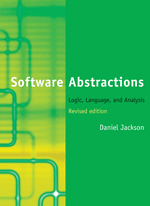
Prof. Daniel N. Jackson is a Professor of Electrical Engineering and Computer Science at MIT, serving as Associate Director of the Computer Science and Artificial Intelligence Laboratory (CSAIL) and Director of the Middle East Education Through Technology (MISTI MIT-MEET) initiative. His research focuses on software dependability, formal methods, and design analysis, particularly through the Alloy framework. Jackson emphasizes lightweight formal methods to reduce development costs and enhance software safety, with applications in cybersecurity, autonomous systems, and safety-critical software. His work includes developing tools like Bluefish for declarative diagram composition and Riffle for reactive systems. He explores ethical software design frameworks to address dark patterns and advocates for concept-centric development. Jackson's contributions span academic publications, educational initiatives, and industrial collaborations, aiming to bridge formal methods with practical software engineering challenges. Recent projects involve certified control systems for autonomous vehicles, end-to-end dependability cases, and model checking for security flaws. His research integrates interdisciplinary approaches, combining programming languages, static analysis, and human-centered design principles.
Catia Trubiani is a faculty member at the Gran Sasso Science Institute in L'Aquila, Italy, specializing in software performance engineering, architectural analysis, and cyber-physical systems. Her work bridges theoretical modeling with practical applications, focusing on performance antipatterns, uncertainty quantification, and DevOps practices. In research , she explores performance modeling of microservices, federated learning systems, and cyber-physical systems, with a strong emphasis on architectural decision-making under uncertainty. Her recent articles analyze performance regression testing, aging detection in networks, and anti-pattern correlation in distributed systems, reflecting her interest in robust, scalable software solutions. She collaborates extensively with researchers like Raffaela Mirandola , Alberto Avritzer , and Riccardo Pinciroli , contributing to tools and frameworks such as PLUS (Performance Learning for Uncertainty of Software) and VisArch (Visualisation of Performance-Based Architectural Refactorings). Her work has been published in journals including IEEE Transactions on Software Engineering and Future Generation Computer Systems , as well as conferences like ICSE, ECSA, and ICPE.
Rob Basten is an Associate Professor in the Department of Industrial Engineering and Innovation Sciences at Eindhoven University of Technology (TU/e). He has been with TU/e since October 2014, initially as an Assistant Professor before being promoted. His work focuses on operations management and behavioral operations management, with particular expertise in maintenance, spare parts supply, and after-sales services for high-tech equipment. Basten's research is highly applied, often conducted in collaboration with industry partners such as ASML, NXP, Canon Production Printing, Marel Poultry, and the Ministry of Defence. Dr. Basten's educational background includes: Master's in Industrial Engineering and Management (2004) from University of Twente Master's in Computer Science (2005) from University of Twente PhD in Operations Management (2010) from University of Twente Rob Basten's research centers on improving after-sales services for high-tech equipment, with a focus on incorporating new technologies such as 3D printing and IoT. His work spans both analytical and empirical approaches, with increasing emphasis on behavioral operations management as human decision-makers interact with AI-based decision support systems. Basten investigates how to design and control after-sales service supply chains when spare parts can be 3D printed, and how to optimize maintenance policies for complex systems. His interdisciplinary research bridges operations management, maintenance engineering, and human behavior. Analysis of Basten's recent publications reveals a strong focus on the application of new technologies in after-sales services. Key trends include the integration of additive manufacturing in spare parts supply chains, condition-based and predictive maintenance driven by Industry 4.0 technologies, and the behavioral aspects of human-AI collaboration in maintenance decision-making. His work frequently addresses challenges in high-tech manufacturing contexts, particularly semiconductor equipment, with a growing emphasis on Industry 5.0 concepts that integrate human-centered approaches with advanced technologies. Dr. Basten has received recognition for his work, including: Finalist for the 2020 Daniel H. Wagner Prize for Excellence in Operations Research Practice ISIR Best Student Paper Award 2018 Rob Basten actively supervises numerous PhD students and has led several major research projects. He currently supervises nine PhD students including Maryam Azani, Ragnar Eggertsson, Bibi de Jong, Zhao Kang, Niccolò Maccarini, Aran Nasiri, Bas van Oudenhoven, İpek Tanıl, and Alireza Yazdani. He has successfully guided six PhD students to completion. Basten has been project leader and work package leader in significant research initiatives including ProSeLoNext (funded by NWO with industry co-funding), PrimaVera, SINTAS, and OCPROM projects. His research is consistently supported by both public funding agencies and industry partnerships, reflecting the practical relevance of his work. Basten is an active member of the Operations, Planning, Accounting & Control group at TU/e and contributes to the EAISI High Tech Systems initiative. He has organized key academic events including the first two editions of the Maintenance Research Day and the Behavioral Operations Conference 2019. His work connects academic research with industry practice through ongoing collaborations with leading high-tech companies, creating a dynamic research environment focused on solving real-world challenges in maintenance and service logistics.
Alejandro Andrade-Rodriguez is an Assistant Professor at the University of Nevada, Reno in the Department of Agriculture, Veterinary & Rangeland Science . His work focuses on optimizing water use in arid and semi-arid agricultural systems through engineering innovations and data-driven approaches. Education: B.S., Universidad Autonoma Chapingo (2007) M.S., University of Arizona (2011) Ph.D., University of Arizona (2013) His research spans: Precision irrigation techniques AI and optimization methods for water management Development of Decision Support Systems (DSS) for farmers Climate resilience in snowmelt-dependent agriculture Wireless sensor networks for irrigation monitoring Machine learning applications in crop stress prediction Recent publications highlight trends in: Integration of climate data into irrigation risk models Machine learning-driven crop yield forecasting Improving cold-weather reliability of solar-powered sensors Soil texture impacts on irrigation efficiency Email: andradea@unr.edu
Dr. Sotirios Koukoulas is an Associate Professor at the Department of Spatial Planning, Urban Planning and Regional Development at the University of Thessaly since 2023. His academic career spans over 20 years, including roles as Lecturer (2002–2023) and Postdoctoral Researcher (2001–2002) at the University of the Aegean. He holds a PhD in Remote Sensing and GIS from King’s College London, an MSc in Statistics from the University of Lancaster, and a Bachelor’s in Environmental Science from the University of the Aegean. Research Interests: Remote Sensing and GIS applications for land use/cover change Coastal erosion modeling and climate change impacts Urban growth analysis and sprawl monitoring Environmental degradation and desertification mapping Spatial metrics in ecological and urban planning Key Academic Contributions: Pioneered GIS models for landfill site selection and coastal resilience Developed integrated coastal simulation tools (SCAPEGIS) Created statistical frameworks for extremal dependence in coastal systems Advanced land cover classification using machine learning (Random Forests) Contributed to EU climate cost assessment projects (ClimateCost, CIRCE) Scientific Recognition: Recipient of Marie Curie Outgoing International Fellowship Member of editorial boards for PLOS One and Remote Sensing journals Active in international conference scientific committees (EARSeL, IGARSS) Collaborated with institutions in the UK, Ireland, Germany, and China Teaching and Leadership: Lectures on Remote Sensing, Statistics, and Land Cover Mapping Coordinator of university research grants and EU-funded projects Advisor for graduate students in environmental and urban studies