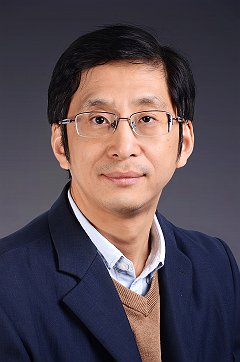
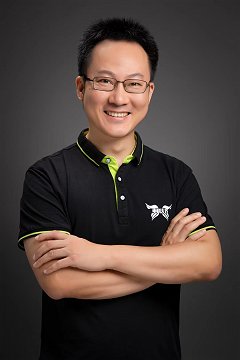
Luciano Baresi is a Full Professor at the Polytechnic University of Milan (Politecnico di Milano), Italy, affiliated with the Department of Electronics, Information and Bioengineering. He earned his laurea (MSc) and PhD in Computer Science from the same institution and has held visiting positions at the University of Oregon (USA), Tongji University (China), and the University of Paderborn (Germany). His research spans software engineering, with current focuses on self-adaptive systems, edge computing, and AI/ML-based software. His work integrates formal methods with practical applications, emphasizing autonomous systems, cloud-edge continuum, and federated learning. Recent publications highlight AI-driven advancements in software testing, resource optimization, and educational tools. Key research themes include: AI/ML for autonomous driving testing and data augmentation Serverless computing at the edge Federated learning system architectures Containerization and cloud resource management Awarded for impactful contributions: RE 2020 Most Influential Paper ICSOC 2020 Best Paper SEAMS 2022 Best Paper He advises 14+ PhD students and leads projects like Ketonet (health app), WHO's Essential Items Estimator, and dynaSpark. As Editor-in-Chief of Proceedings of the ACM on Software Engineering and senior editor for multiple journals, he shapes academic discourse in adaptive systems and software engineering.
Hongyu Zhang is a Professor and Dean of the School of Big Data and Software Engineering at Chongqing University, China, and an Honorary Professor at The University of Newcastle, Australia. Previously, he served as a Lead Researcher at Microsoft Research Asia and an Associate Professor at Tsinghua University, China. He received his PhD from the National University of Singapore in 2003. His academic journey spans prestigious institutions, combining industry research experience with academic leadership. Dr. Zhang's research interests focus on intelligent software engineering, software analytics, data-driven software engineering, software fault management, testing and debugging, and software maintenance and reuse. His work centers on improving software quality and productivity by mining and analyzing vast amounts of software data. Over the years, he has developed innovative methods that apply data mining, machine learning (including deep learning), and information retrieval techniques to extract knowledge from software data and solve complex software engineering problems. His research spans three major areas: intelligent programming (code search, code summarization, code generation), intelligent quality prediction (defect prediction, cloud failure prediction, performance prediction), and intelligent fault detection and diagnosis (log-based fault detection, crash-based fault localization, bug report analytics). His recent publications demonstrate a clear trend toward integrating large language models and deep learning techniques with traditional software engineering practices. The research spans intelligent programming assistance, code security, UI automation, distributed systems optimization, and performance analysis. His work increasingly focuses on practical applications of AI in software engineering, with emphasis on real-world impact in industrial settings, particularly in microservices, cloud systems, and large-scale software development environments. 8 ACM Distinguished Paper Awards Best Paper Award: How Long Will it Take to Mitigate this Incident for Online Service Systems? David Lorge Parnis Fellowship Senior Member of IEEE Distinguished Member of ACM Distinguished Member of CCF Fellow of Engineers Australia (FIEAust) Recognized in The Australian's Top Researchers special edition as leading researcher in Software Systems World's Top 2% Scientists (career-long) Dr. Zhang has successfully advised numerous PhD and Master's students who have gone on to prominent positions at leading technology companies and academic institutions worldwide. His research has been supported by significant grants including Australian Research Council Discovery Projects (as Lead CI) and multiple National Science Foundation of China projects. His work has made tangible impacts in industry, most notably through the Microsoft Developer Assistant project which received over 450K downloads in 2016. He leads research groups focused on intelligent software engineering and software analytics, with strong collaborations between Chongqing University, The University of Newcastle, and Microsoft Research. His teams develop practical tools for code intelligence, log analysis, and fault diagnosis that are deployed in real-world online service systems.
Lian Li is a Professor in the Institute of Computing Technology at the Chinese Academy of Sciences, where he leads the program analysis research group. He holds a PhD from the University of New South Wales, Australia, and a Bachelor's degree from Tsinghua University in Engineering Physics. His research focuses on developing innovative program analysis techniques and tools to enhance software reliability and security. His educational background includes a PhD in Computer Science from the University of New South Wales (2003-2007) with a thesis on "ScratchPad Management for Static Data Aggregates" under Professor Jinling Xue, and a Bachelor's degree in Engineering Physics from Tsinghua University (1993-1998). Lian Li's research primarily centers on program analysis techniques, particularly static analysis methods for software security and reliability. His group developed Wukong, a static analysis and detection system capable of identifying deep security vulnerabilities across functions, components, and complex dependencies in C/C++, Java, and Android applications. This tool has discovered thousands of errors in popular open-source software including Google Chromium, Bash, sed, and Hadoop, with hundreds confirmed by developers and over 50 CVEs assigned. His publication record shows a strong focus on program analysis, particularly context-sensitive pointer analysis, taint analysis, and vulnerability detection. His recent work (2021-2024) demonstrates continued innovation in context-free language reachability, efficient IFDS algorithms, and specialized analysis for generics and authorization vulnerabilities. His research spans cybersecurity, programming languages, and software engineering domains, with emphasis on practical applications for real-world software systems. ASE 2019 Distinguished Paper Award CCS 2022 Best Paper Honorable Mention Lian Li has guided numerous PhD and Master's students in computer system architecture and software theory. His research group maintains active collaborations across various software analysis domains, with funding supporting their work on tools like Wukong. They have developed significant intellectual property including multiple patents related to program analysis techniques. The program analysis research group he leads focuses on developing practical tools for software reliability and security. Their work bridges theoretical program analysis with real-world applications, particularly through the Wukong analysis system which has been successfully applied to major open-source projects.
Zhenbang Chen is a Professor in the College of Computer at National University of Defense Technology (NUDT), China. His academic career spans over a decade with significant contributions to software engineering, particularly in program analysis and formal methods. He has served on program committees for major conferences including ASE, ICSE, and FSE, and has been actively involved in research that bridges theoretical formal methods with practical software engineering applications. Dr. Chen received his Ph.D. and Bachelor degrees in computer science from National University of Defense Technology (NUDT) in June 2009 and July 2002, respectively. His educational background from NUDT has provided a strong foundation for his research in software engineering and formal methods. Ph.D. in Computer Science, National University of Defense Technology (NUDT), 2009 Bachelor's Degree in Computer Science, National University of Defense Technology (NUDT), 2002 Zhenbang Chen's research primarily focuses on program analysis, with special emphasis on symbolic execution techniques. His work extends to formal methods and their practical applications in software engineering. He investigates constraint solving approaches to improve the efficiency of program analysis and explores program synthesis techniques to automate software development tasks. His research bridges theoretical foundations with practical software engineering challenges, particularly in the areas of software verification and testing. His recent work has increasingly focused on optimizing symbolic execution through novel constraint solving techniques and exploring multi-modal approaches to behavior tree synthesis. This demonstrates his commitment to advancing both the theoretical underpinnings and practical applications of software analysis techniques. Professor Chen's publication record shows a consistent focus on symbolic execution and constraint solving, with a clear progression toward more sophisticated optimization techniques. His recent work demonstrates a shift toward multi-objective optimization for floating-point constraints and multi-modal approaches to program synthesis. The research spans both theoretical foundations and practical implementations, with several tools developed from his research participating in international competitions. Dr. Chen's research excellence has been recognized through multiple prestigious awards: ACM SIGSOFT Distinguished Paper Award for FSE 2025 paper "QSF: Multi-Objective Optimization based Efficient Solving for Floating-Point Constraints" ACM SIGSOFT Distinguished Paper Award for ISSTA 2021 paper "Type and interval aware array constraint solving for symbolic execution" ACM SIGSOFT Distinguished Paper Award for ICSE 2018 paper "Towards optimal concolic testing" Bronze Medal (3rd place) in Cover-Branches category at Test-COMP 2025 for the FDSE tool Professor Chen is actively involved in mentoring the next generation of researchers, currently seeking Ph.D. and M.Sc. students to work with him on cutting-edge research in program analysis and formal methods. His research group has developed several tools that have gained recognition in international competitions, including AISE which ranked 1st in SV-COMP 2025's ReachSafety-Loops category and FDSE which won Bronze Medal in Test-COMP 2025. His research has been supported by grants that enable participation in major international conferences and competitions, fostering collaborations with researchers worldwide. Dr. Chen leads a research group focused on program analysis and formal methods at NUDT. His team has developed several notable tools including AISE for program verification and FDSE for software testing, which have achieved top rankings in international competitions like SV-COMP and Test-COMP. The research group maintains active collaborations with other institutions and participates regularly in major software engineering conferences, contributing to both theoretical advancements and practical tool development in the field.
Professor Johannes Steinhaus serves as both Vice-President for Research and Transfer (VP2) and Professor of Materials Science at Bonn-Rhine-Sieg University of Applied Sciences, specializing in hybrid material systems and failure analysis. He is affiliated with the Department of Natural Sciences and maintains offices in both Sankt Augustin and Rheinbach campuses. His research focuses on Microplastic analysis , Failure analysis , Simulation and durability analysis of rubber components , Real-time analysis of the curing behaviour of thermoset systems , Microscopy in the characterisation of plastics , and Thermal analysis methods (DSC, DMA, TGA, TMA and DEA) in polymer development. He is a member of the German Association of Materials Science (DGM). Prof. Steinhaus teaches courses including Additive Manufacturing , Biomedical Materials , Conventional Processing Techniques , Forensic Material Trace and Damage Analysis , Polymer Analytics , Recycling of Plastics and Maritime Waste Problems , and Thermal Analysis of Plastics . His publication record spans from 2005 to 2024, with recent work focusing on microplastic pollution quantification, thermal analysis of polymers, and dental composite curing behavior. His research projects include PAExSiDur (Polymer Ageing in Experiment and Simulation), NaWETec (Sustainability in Materials and Energy Technology), and Denthart. PAExSiDur - Polymer ageing in experiment and simulation for targeted service life extension MOTTSAL - Modeling and Optimization of Transdermal Therapeutic Systems NaWETec - Sustainability in Materials and Energy Technology Denthart - Investigation of curing processes of light-curing dental filling composites Prof. Steinhaus has supervised numerous Bachelor's and Master's theses, both internally and in collaboration with industry partners. His students have worked on topics ranging from microplastic analysis to polymer recycling and dental material characterization. He also organizes professional seminars, including a biennial seminar on damage analysis and component testing of plastics in collaboration with the German Society for Materials Science.