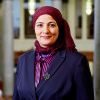
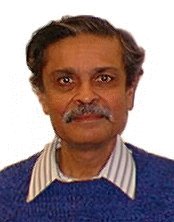
Roles and Affiliations: Professor of Computational Logic at the Department of Computing, Imperial College London. Part of the Faculty of Engineering. Active in research, teaching, and publication in computational logic, artificial intelligence, and formal systems. Research Interests: Focuses on computational logic with applications to knowledge representation, action and agency theories, temporal reasoning, normative systems, legal reasoning, and formal organization models. Recent work also intersects with bioinformatics and proteomics analysis. Publications: Over 50 publications since 1986, including foundational work on the Event Calculus, normative systems, and formal methods in multi-agent systems. Notable contributions span deontic logic, agent coordination, and applications in legal reasoning and bioinformatics. Recent work emphasizes logic-based approaches to activity recognition and proteomic profiling. Teaching: Taught advanced courses on modal and temporal logic (2008–2009) and knowledge representation (2017–2018). Course materials emphasize formal semantics, nonmonotonic reasoning, and logic programming. Labs/Teams: Involved in interdisciplinary projects on computational systems, including collaborations with bioinformatics researchers and multi-agent system developers.
Seth Yalcin is a Professor of Philosophy at the University of California, Berkeley. He holds a PhD from MIT and is affiliated with the Department of Philosophy. His research focuses on philosophy of language, philosophy of mind, metaphysics, formal epistemology, and linguistics. His work explores topics such as epistemic modality, conversational dynamics, and semantic pragmatics through formal and experimental methods. Yalcin’s recent publications (2015–2025) emphasize interdisciplinary approaches, integrating semantics, epistemology, and cognitive science. Key themes include conditional reasoning, contextual common ground, and probabilistic models of belief. While no explicit awards are listed, his contributions reflect significant engagement with foundational questions in analytic philosophy. Advising and grants details are not specified in the provided data. He is based at 138 Moses Hall and maintains an active research website.
Minju Kim is a Professor in the Korean Department within the School of Modern Languages and Literatures. She holds significant academic and editorial roles, including President of the International Circle of Korean Linguistics (ICKL) and Editor-in-Chief of The Korean Language in America . Her expertise spans Pragmatics, Grammaticalization, Discourse Analysis, Language and Gender, and Language Education. She earned her B.A. and M.A. from Yonsei University and her Ph.D. from the University of California, Los Angeles (UCLA). Dr. Kim’s research focuses on Korean linguistic structures, including honorifics, stance markers, and historical grammaticalization processes. Notable contributions include studies on Korean connectives, modal particles, and gendered language use in media. She has received the Korea Foundation Field Research Grant (2025). Her publications reflect interdisciplinary engagement in linguistics and sociolinguistics, with recent work addressing topics like Korean semi-honorific styles and cross-linguistic comparisons. She actively contributes to academic discourse through editorial roles and international collaborations.
Prof. Dr. Wolfgang Freitag is a Professor of Theoretical Philosophy/Philosophy of Language at the University of Mannheim . He previously held positions at the University of Freiburg, Bern, and Heidelberg. His research spans theoretical philosophy (philosophy of language, epistemology, logic, metaphysics) and practical philosophy (metaphysics of norms). Doctorate: University of Konstanz (2005) Habilitation: University of Konstanz (2010) Education: Philosophy, History, Politics, Mathematics at Konstanz, Liverpool, Austin (Texas), and Oxford. Freitag's work focuses on paradoxes, expressivism, and epistemic norms. He explores the intersection of language, logic, and knowledge, with recent publications addressing causal reasoning, skepticism, and self-defeating statements. His publications include I Know: Modal Epistemology and Scepticism (2013) and Form and Philosophy: A Topology of Possibility and Representation (2009). Recent articles examine topics like lying, expressivist logic, and Kantian epistemology, reflecting his commitment to bridging theoretical and practical philosophy.
Professor Darren Bradley holds the position of Professor of Metaphysics and Epistemology at the University of Leeds' School of Philosophy, Religion and History of Science within the Faculty of Arts, Humanities and Cultures. He previously taught at the University of British Columbia and the City College of New York. Bradley earned his PhD from Stanford University, an MA from University College London, and a BSc from the London School of Economics. His research focuses on epistemology, metaphysics, and philosophy of science, with particular emphasis on self-locating evidence, theoretical virtues (e.g., simplicity), and the epistemology of metaphysics. He explores foundational questions like 'What should one believe?' through topics such as higher-order evidence, contextualism, and the role of simplicity in scientific and philosophical reasoning. Bradley has published extensively, including the book *A Critical Introduction to Formal Epistemology* (2015), and contributes to journals such as *Mind*, *Philosophical Studies*, and *Synthese*. He supervises PhD students in epistemology and metaphysics and teaches courses like *Philosophy of Mind* and *Introduction to Metaphysics*. His work bridges formal methods with traditional philosophical inquiry, addressing challenges in rationality, belief revision, and the nature of truth. Bradley is affiliated with the Philosophy Centre and the Centre for Theoretical Philosophy at Leeds. His research has explored topics ranging from confirmation theory in quantum mechanics to the ethics of belief, maintaining a focus on foundational issues in epistemology and metaphysics.
Professor Hanem El-Farahaty is a Professor in Linguistics, Translation and Interpreting at the School of Languages, Cultures and Societies, University of Leeds, UK. She holds a PhD from the University of Leeds and has two BA degrees and an MA from the University of Mansoura, Egypt. Her academic roles focus on Arabic media, translation, and interpreting, with a strong research orientation in legal and political discourse. PhD in Translation Studies, University of Leeds MA in Applied Linguistics, University of Mansoura BA in English Language and Education, University of Mansoura BA in English Language and Literature, University of Mansoura Her research interests span comparative linguistics , Arabic/English legal translation , corpus-based translation , media and political translation , and critical discourse analysis , with a particular focus on political satire and multimodal communication in the Arab world. She investigates gender, modality, and constitutional language using corpus-driven methodologies. The analysis of her recent publications reveals a consistent trend in legal corpora development , deontic modality , and political discourse in Arabic and English contexts. Her work bridges translation theory, legal linguistics, and digital media, often using multimodal and corpus-based approaches to analyze political satire and constitutional texts. Her scientific recognition includes: Senior Fellow of the Higher Education Academy (SFHEA) Fellow of the Chartered Institute of Linguists (FCIL) She supervises PhD students and is actively involved in academic leadership, having organized major conferences and panels on Arabic translation and Middle Eastern studies. She has received no explicit mention of grants, but her extensive publication and conference activity suggest sustained research funding. She is a member of several professional bodies, including BRISMES, IATIS, FLITE, and ILLA. She contributes to academic communities through editorial roles, including membership in the Scientific Committee for the Leeds Language Scholar Journal and the International Journal of Translation, Interpretation, and Applied Linguistics . Her work is deeply embedded in interdisciplinary research, connecting linguistics, law, politics, and digital culture.
Pedro Cabalar is Full Professor at the Department of Computer Science of the University of Corunna, Galicia, Spain, and current coordinator of the inter-university Master in Artificial Intelligence (Universities of A Coruña, Santiago de Compostela and Vigo). He also serves as Area Editor (Theory Foundations) for Theory and Practice of Logic Programming and as Standard Editor for the Artificial Intelligence journal. Education: PhD in Computer Science, University of Corunna, 2001 Master in Computer Science, Politéchnic University of Madrid, 1993 Bachelor in Computer Science (3-year degree), University of Santiago de Compostela / University of Corunna, 1989 Research interests revolve around Knowledge Representation & Reasoning , especially Answer Set Programming , non-monotonic reasoning , temporal and modal logics , and causal reasoning . He investigates theoretical foundations (equilibrium logic, temporal extensions, deontic operators) and practical systems (telingo, eclingo, aspBEEF), with applications ranging from planning and diagnosis to explainable AI and healthcare decision support. His recent articles (2023-2025) exhibit a clear trend toward temporal and metric extensions of ASP , explainability , and hybrid reasoning systems , often combining logic programming with deontic or probabilistic features. Scientific awards & recognition: University of Corunna Dissertation Award, 2003 Best Paper Award at LPNMR 2019 Best Student Paper at ICLP 2020 Best Student Paper at JELIA 2019 Grants & projects: He currently leads or co-leads nationally funded Spanish projects (GEISER 2024-2028, ARLEKIN 2021-2024) and has coordinated EU COST actions (DigForASP) as well as earlier MINECO projects on temporal ASP and medical reasoning (TARDIS, MERLOT, FEAST, etc.). PhD supervision: He has successfully supervised three PhD theses (Martín Diéguez, Jorge Fandiño, Brais Muñiz) and continues to advise students within the Information Retrieval Laboratory (IRLab) and the Spanish node of Potassco Solutions.
Alexandra Stan serves as a Lecturer in the Department of Theoretical and Applied Linguistics at the Faculty of Letters, Transilvania University of Brasov, Romania. Holding a PhD, she actively contributes to linguistics education and research within this institution, focusing on theoretical and practical language analysis. Her research centers on semantics, lexicography, and contrastive linguistics between English and Romanian, with significant emphasis on idiomatic expressions, bilingual dictionaries, and English for Specific Purposes (ESP). Stan's work explores lexical semantics across cultural contexts, examining how concepts like natural phenomena, physical attributes, and digital communication manifest in language structures. She investigates terminology variation, semantic fields, and the impact of technology on language learning. Recent publications (2022-2024) reveal expanding research trajectories into digital discourse, including code-switching in gaming communities and specialized glossary development. Her scholarship consistently employs contrastive methodology to analyze linguistic phenomena across English and Romanian, with growing attention to cultural metaphors, literary language, and technology-enhanced language education. This trajectory demonstrates increasing interdisciplinary connections between computational linguistics, sociolinguistics, and educational technology.
Barbara Meisterernst is an Honorary Professor at the Institute of Linguistics, National Tsing Hua University in Taiwan, specializing in Chinese historical syntax, morpho-syntax, syntax-semantic interfaces, and Buddhist Chinese linguistics. Her academic career spans prestigious institutions including Humboldt-University Berlin and the University of Ghent. Habilitation, University of Hamburg (2012) PhD in Chinese Studies, Münsterische Sinologische Mitteilungen (1998) MA in Chinese Studies, German and Linguistics (1992) Her research focuses on diachronic evolution of Chinese grammar, particularly tense-aspect-modality systems from Classical to Medieval Chinese. Key contributions include analyses of modal expressions, negation cycles, and syntactic changes in Buddhist Chinese texts. She employs formal syntactic frameworks to examine historical developments while integrating semantic and pragmatic dimensions. Her publications reveal strong trends in modality research (25% of output), diachronic syntax (30%), and Buddhist Chinese linguistics (15%). Recent work increasingly examines cross-linguistic comparisons with Vietnamese and Sogdian, reflecting broader typological interests. Methodologically, she combines corpus-based analysis with theoretical syntax to reconstruct historical grammatical systems. Meisterernst has presented at over 50 international conferences including IACL, EACL, and specialized workshops across Asia, Europe, and North America. Her extensive fieldwork includes collaborations with Academia Sinica, Tsing Hua University, and the International Dunhuang Project. She leads major research projects on pre-Tang Chinese verb phrase development and Silk Road linguistic interactions, securing continuous funding for collaborative work between European and Asian institutions since 2010.
Giuseppina Silvestri is a Lecturer in the Department of Linguistics at the University of California, Los Angeles (UCLA). Her academic affiliation is within the College of Letters and Science. She holds a Ph.D. from the University of Pisa (2013). Her primary research focuses on comparative and historical Indo-European linguistics, particularly in the domains of Italo-Romance and Greek varieties in southern Italy. Key areas include morphosyntactic variation, theoretical syntax (parametric approach), glotto-genetics, and interfaces between phonology-syntax and syntax-semantics. Her work explores language contact phenomena, such as the structural convergence between Greek and Romance dialects in regions like Calabria and Salento. She investigates topics like complementizer systems, aspectual morphology, infinitival vs. finite constructions, and grammaticalization processes. Notable studies address the role of contact in shaping morphosyntactic features such as perfective aspect, negative imperatives, and possessive constructions in endangered Italo-Greek varieties. Silvestri’s research also delves into phonology-syntax interactions, such as propagation phenomena and word-final schwa licensing in southern Italian dialects. Her contributions highlight syntactic microvariation and parameter hierarchies in Italo-Romance, with a focus on features like differential object marking, participle agreement, and adverb agreement. Her work bridges empirical dialectology with formal syntactic theory, offering insights into syntactic phylogeny and the historical reality of biolinguistic diversity.
Paul H. Portner is a Professor in the Department of Linguistics at Georgetown University, within the College of Arts and Sciences. His primary research lies at the intersection of semantics, pragmatics, and syntax, with a particular focus on verbal mood, modality, imperatives, and discourse structure. He is actively engaged in both teaching and research, offering courses ranging from introductory linguistics to advanced seminars in semantics and pragmatics. His educational background includes an A.B. in Philosophy from Princeton University and a Ph.D. in Linguistics from the University of Massachusetts at Amherst, where his dissertation was supervised by Barbara Hall Partee. His work has been supported by multiple NSF grants, including projects on clause types and gradable modal expressions. Portner’s research interests center on how grammatical structures encode speaker-addressee relations, politeness, and mood. He explores how meaning is constructed at the syntax-semantics-pragmatics interface, particularly in imperatives, exclamatives, and modal constructions. His theoretical work is deeply formal, drawing on tools from logic and philosophy of language. His recent publications (2020–2024) show a continued focus on modality, mood selection, and discourse meaning, with applications to cross-linguistic data (e.g., Korean) and computational modeling. Key themes include modal adjectives in media discourse, honorifics, indexical restrictions, and the semantics of belief and desire predicates. Notable scientific contributions include his monographs Modality (2009) and Mood (2018), both published by Oxford University Press, and his co-editorship of major reference works such as the Semantics: An International Handbook of Natural Language Meaning . He has been a frequent lecturer at summer schools, including the LSA Institute and CreteLing, helping to train the next generation of semanticists. He advises and collaborates with researchers such as Miok Pak, Raffaella Zanuttini, and Aynat Rubinstein. He has received research funding from the NSF for projects on clause types and gradable modals, and he continues to lead theoretical and empirical investigations into the structure of meaning in natural language. Portner is affiliated with the Georgetown Linguistics Department and maintains an active research profile, with ongoing work on his book Social Relations in Semantics and Pragmatics , under contract with Oxford University Press.
Kees van Berkel is an Assistant Professor in AI Ethics at the Institute of Logic and Computation, TU Wien. His research focuses on logical and formal approaches to normative reasoning, AI ethics, and deontic logics. He holds a PhD in Computer Science from TU Wien (2022) and has held postdoctoral positions at Ruhr Universität Bochum and the University of Amsterdam. He teaches courses on AI Ethics, logical argumentation, and normative reasoning at both bachelor and master levels. Van Berkel's work bridges philosophy, computer science, and artificial intelligence. His research explores formal methods for ethical AI, including deontic explanations, normative systems, and argumentation frameworks. He has published extensively on topics like STIT logics, inconsistency measures in deontic reasoning, and applications of formal logic to Indian philosophical texts. His academic roles include co-coordinator of the AI Ethics Special Interest Group at TU Wien's Center for Artificial Intelligence and Machine Learning (CAIML), and membership in the Cluster of Excellence 'Bilateral AI' (BILAI). He has organized workshops and tutorials on logical argumentation and serves on program committees for major conferences like AAAI and KR. Key projects include the LoDEx initiative (Logical Argumentation for Deontic Explanations) and involvement in interdisciplinary research on normative reasoning in AI systems. His recent work emphasizes ethical auditing of LLM-based chat services and formalizing dialogical approaches to deontic explanations.
Vladimír Marko is an Associate Professor at the Department of Logic and Methodology of Sciences , Faculty of Arts, Comenius University (Bratislava), with a focus on temporal logics and history of logic . He has been affiliated with Comenius University since 1997 and holds a habilitation in systematic philosophy since 2020. Education: Master of Philosophy, University of Belgrade (1986); PhD, Comenius University (1997) Research Interests: Determinism, modal logic, ancient philosophical arguments, semantics of conditionals Projects: 2022–2026 APVV (Semantics of Conditionals), 2023–2025 VEGA (Idealization and Abstraction in Normative and Empirical Disciplines) Teaching: Courses on logic, methodology of research, and philosophy of time He has authored over 20 papers and 3 books, including Štyri antické argumenty o budúcich náhodnostiach (2017). His work intersects classical philosophy and formal logic, addressing issues like the Lazy Argument and Cicero's Fabius Argument.
Rohit Parikh is a Professor in the Department of Computer and Information Science at the School of Natural and Behavioral Sciences, City University of New York (CUNY). He maintains dual appointments at Brooklyn College and the CUNY Graduate Center, where he teaches courses in Belief, Knowledge and Games, Artificial Intelligence, Formal Languages, Theory of Computation, and Modal Logic. His academic career spans institutions including Stanford, NYU, Boston University, SUNY Buffalo, Bristol, and Panjab universities, with research positions at IBM, Bell Labs, Caltech, MIT, and Berkeley. Educated at Harvard University (A.B. in Physics, 1957; A.M. in Mathematics, 1959; Ph.D. in Mathematical Logic, 1962) Former student placements include Brown University, University of Maryland, Haifa, Chennai, Paris, and CUNY Principal organizer of the Seminar in Logic and Games at CUNY Graduate Center Parikh's research centers on the intersection of logic, knowledge, and social systems. His work bridges computer science, mathematics, and philosophy through investigations into epistemic logic, game theory, belief revision, and the philosophy of language. He pioneered the concept of 'social software'—applying logical frameworks to analyze social procedures and algorithms. His research on vagueness connects Wittgensteinian language games with computational models, while his contributions to epistemic game theory examine how knowledge structures influence strategic behavior. Recent work explores the logic of collective action, non-person ontology, and the relationship between Buddhist philosophy and Popperian rationalism. His publication trends reveal deep engagement with knowledge representation (62% of recent works), social interaction modeling (23%), and philosophical logic (15%). Key recurring subfields include epistemic game theory, vagueness semantics, belief dynamics, social ontology, logical omniscience, and language-game formalization. His methodological approach consistently integrates mathematical rigor with philosophical insight across disciplines. Parikh has advised numerous doctoral students whose careers span global institutions. His professional leadership includes organizing the NYCAC-3 conference, serving on program committees for WOLLIC, DEON, LOFT, and other major logic conferences, and co-organizing the Seminar in Logic and Games which attracts speakers from Princeton, Yale, Columbia, and international institutions. His research infrastructure includes the Logic and Games seminar series and collaborations through the CUNY Graduate Center's computer science department. Current projects examine the capability approach, vagueness through social software, and theoretical foundations of collective action.
Erling Strudsholm serves as Associate Professor of Italian Linguistics at the University of Copenhagen's Department of English, Germanic and Romance Studies within the Faculty of Humanities, maintaining active research and teaching responsibilities since 2001 with administrative leadership as head of Italian studies and international coordinator. His academic credentials include: Cand. phil. in Italian, University of Copenhagen (1985) Ph.D. in Italian Language, University of Copenhagen (1997) Adjunct Pedagogicum, University of Copenhagen (1999) Strudsholm's research centers on Italian Linguistics with specialization in language variation (synchronic/diachronic), grammaticalization, corpus linguistics, and perception verb semantics. Current investigations examine pronouns/deixis, diachronic perception verb constructions, numerical/color idioms, and deontic modalities, reflecting deep engagement with both theoretical frameworks and empirical linguistic analysis. Recent publications (2024-2025) reveal concentrated scholarly output in Italian language variation, grammatical structures, and French-Italian contrastive studies. Key themes include diachronic analysis of numerals (e.g., 'dozzina'), lexical semantics of temporal concepts ('tempo'), and pedagogical approaches to verb systems, demonstrating consistent application of corpus linguistics methodologies across historical and synchronic dimensions. No specific scientific awards or major fellowships are documented in the available materials. Strudsholm teaches Italian grammar, sociolinguistics, and language history while supervising PhD candidates; his research collaborations span Italian institutions including Università di Torino and Università di Bologna, focusing on deixis, numerical expressions, and deontic modality. Active conference participation indicates ongoing project development despite unlisted grant details. He contributes to multiple research networks: ENGEROM's Variationslingvistik og sprogforandring group, Ny forskning i grammatik, Società di Linguistica Italiana (SLI), Società Internazionale di Linguistica e Filologia Italiana (SILFI), and Gruppo di Studi di Comunicazione Parlata (GSCP), facilitating cross-institutional linguistic research.