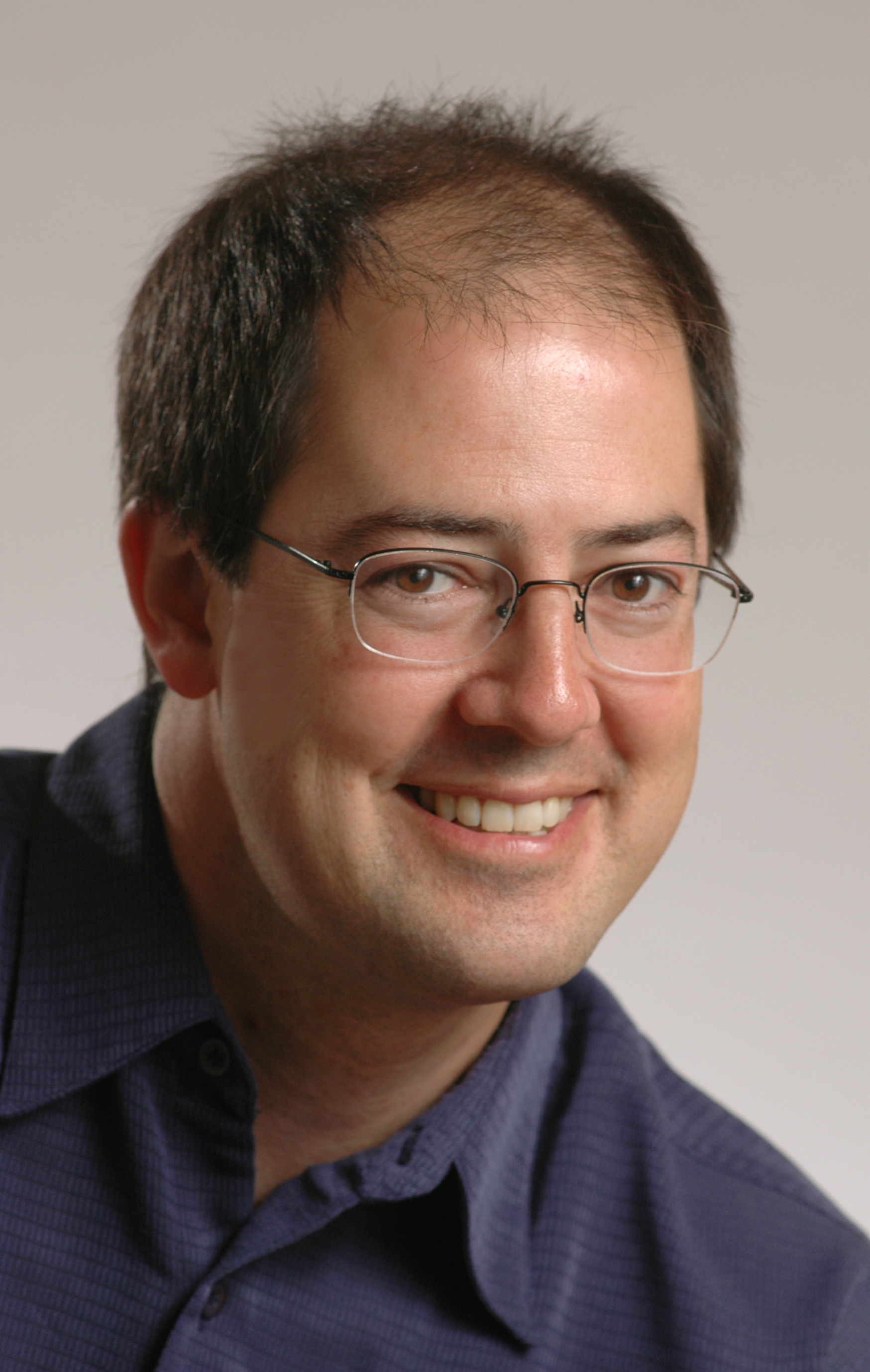
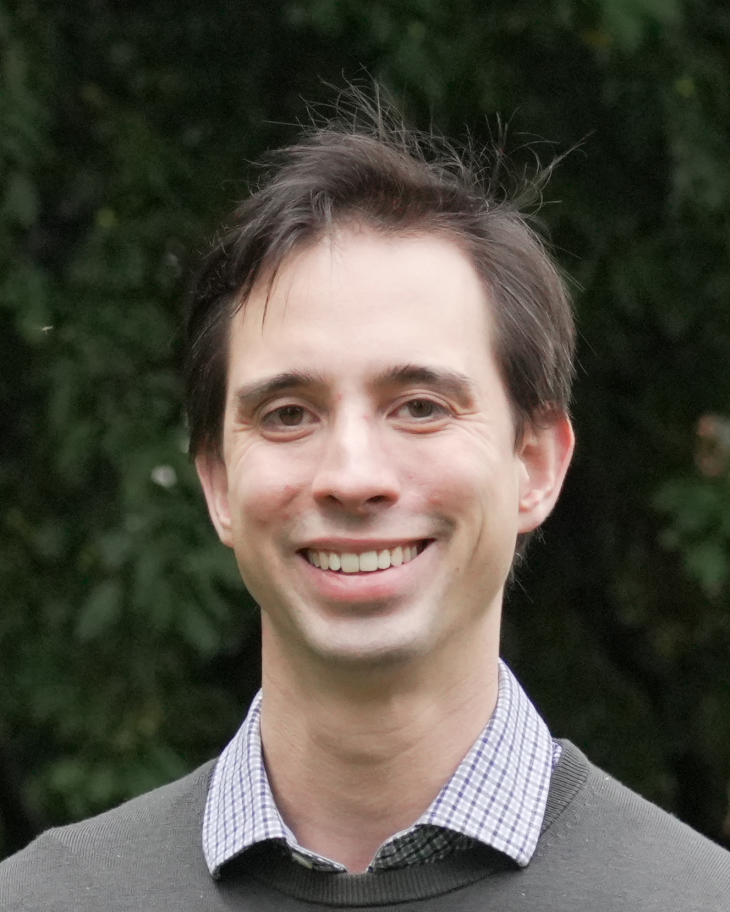
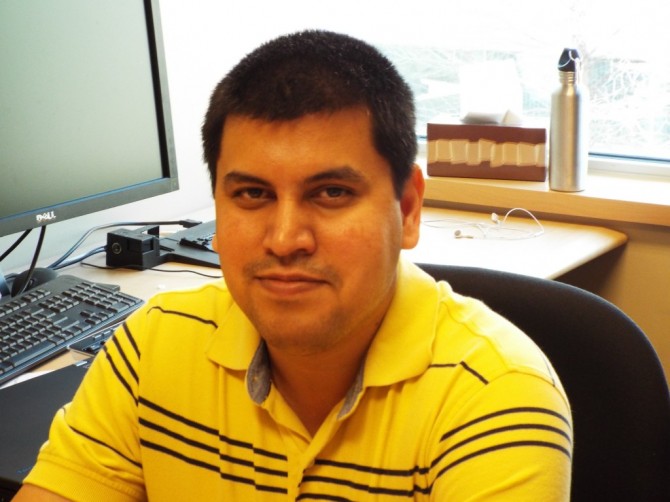
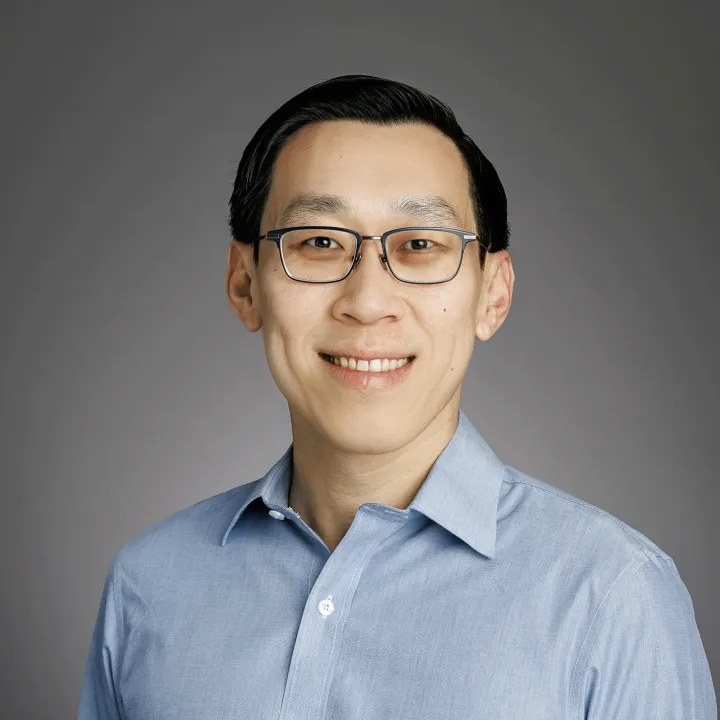
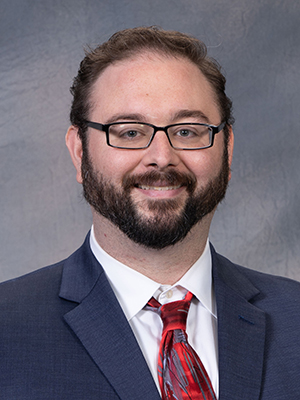
Subhashis Ghoshal is a Goodnight Distinguished Professor in the Department of Statistics at North Carolina State University (NCSU). He holds a Ph.D. in Statistics from the Indian Statistical Institute (1995). His research focuses on Bayesian nonparametrics, high-dimensional models, asymptotic theory, and functional data analysis. He has authored influential books like *Fundamentals of Nonparametric Bayesian Inference* (2017) and contributed to methodologies in image processing and statistical inference. Key awards include the Goodnight Distinguished Professorship (2021), Dr. Cavell Brownie Mentoring Award (2014-15), and the De Groot Prize (2019). He has held editorial roles in journals like *Statistical Science* and *Annals of Statistics*. His work bridges theory and applications, addressing challenges in modern statistical problems such as uncertainty quantification and causal inference. He advises on graduate programs and actively contributes to academic leadership at NCSU.
Swiss Federal Institute of Technology in LausanneSwitzerland
Farhad Rachidi-Haeri is a Titular Professor and Head of the Electromagnetic Compatibility (EMC) Group at EPFL. His expertise spans EMC research, lightning electromagnetics, time reversal techniques, and fault location in power systems. He has led the EMC Group since the 1980s, with funding from the Swiss National Science Foundation, European Union, and private sector collaborations. His work involves international partnerships with institutions like the University of Toronto and KTH. Education: PhD in Electrical Engineering from EPFL (1991), M.S. from EPFL (1986). Roles: President of Swiss National Committee of URSI (2012–2020), Editor-in-Chief of IEEE Transactions on EMC (2013–2015), and member of the Academy of Sciences of Bologna Institute (2019). Research Focus: Lightning interaction with infrastructure, electromagnetic field modeling, time reversal applications for fault detection, and high-frequency transient analysis. His work bridges theoretical physics and engineering, addressing challenges in power systems, lightning protection, and aerospace. Awards: IEEE EMC Technical Achievement Award (2005), Berger Award (2016), and Distinguished Honorary Professor at Tsinghua University (2024). Over 400 peer-reviewed papers and 500 conference contributions reflect his prolific research output. Labs/Teams: Leads the EMC Laboratory at EPFL, focusing on experimental and numerical studies of electromagnetic phenomena. Collaborates with global networks on projects like Laser Lightning Control and structural lightning protection for wind turbines.
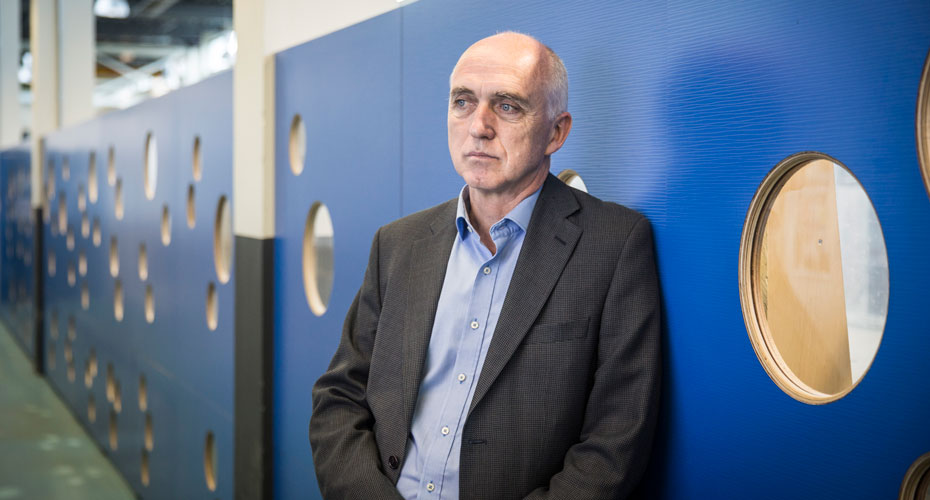
Professor Eugene O'Brien serves as Professor of Civil Engineering within the School of Civil Engineering at University College Dublin's College of Engineering and Architecture. His research focuses on critical structural assessment methodologies for long-span bridges, with particular expertise in traffic load modeling and bridge safety evaluation. His research interests center on structural engineering challenges related to bridge infrastructure, specifically traffic load assessment for long-span bridges , structural health monitoring systems , and sustainable infrastructure management . Professor O'Brien pioneered camera-based monitoring techniques to overcome limitations of traditional Weigh-in-Motion sensors during congested traffic conditions, enabling more accurate safety assessments of aging bridge infrastructure. His work addresses the critical gap in quantifying traffic loading on bridges with spans up to 2 kilometers, where conventional methods fail during stop-and-go traffic scenarios. Analysis of his 15 most recent publications reveals a consistent research trajectory focused on probabilistic modeling of traffic loads, with increasing sophistication in handling extreme events and long-term infrastructure performance. His work spans fundamental statistical methods for load effect prediction, practical applications in real-world bridge assessments, and environmental considerations regarding infrastructure carbon footprints. The research demonstrates strong methodological evolution from basic traffic modeling to comprehensive lifetime assessment frameworks incorporating sustainability metrics. As co-founder and director of Roughan O'Donovan's subsidiary Innovative Solutions (ROD-IS), Professor O'Brien has translated research into practice through significant projects including the Malahide Railway Viaduct assessment (2009), EU-funded bridge lifespan simulation tools (2011), vibration reduction systems for bridge cables, and structural assessments for major international projects including the Ting Kau Bridge in Hong Kong, the Forth Road Bridge in Scotland, and the Chacao Channel Bridge in Chile. His consultancy work demonstrates direct application of academic research to critical infrastructure challenges worldwide. Professor O'Brien's research group operates at the intersection of structural engineering and sustainable infrastructure management, with particular emphasis on extending bridge service life through accurate safety assessment. Their work on the Chacao Channel Bridge demonstrates practical implementation of traffic monitoring systems using toll data to manage truck loads, while their environmental impact analysis shows how accurate safety assessments reduce unnecessary bridge replacements, thereby lowering the carbon footprint of transportation infrastructure through extended service life of carbon-intensive materials like concrete and steel.
Ann B. Lee is a Professor and Co-Director of the PhD Program in Statistics at Carnegie Mellon University , with a joint appointment in the Department of Statistics & Data Science and the Machine Learning Department. Prior to joining CMU, she held positions as a J.W. Gibbs Assistant Professor at Yale University and a visiting research associate at Brown University. PhD in Physics, Brown University MSc/BSc in Engineering Physics, Chalmers University of Technology, Sweden Her research focuses on statistical methodology for complex data in the physical sciences , emphasizing trustworthy inference, uncertainty quantification, and integration of classical statistics with machine learning. Recent work includes likelihood-free inference, calibrated forecasting, and diagnostics for generative models. The STAMPS research group , which she co-founded in 2018, hosts weekly meetings and public webinars. In Fall 2024, STAMPS will transition into a CMU Research Center. Recent publications span likelihood-free inference , climate modeling , and astronomy . Notable collaborations include applications to hurricane intensity guidance , galaxy redshift estimation , and cosmological parameter biases . She mentors PhD students and has advised multiple award-winning researchers, including ASA Best Student Paper Award winners. Her teaching includes advanced courses on probability, regression, and AI for climate sciences.
Kristofer Pister is a Professor in the Department of Electrical Engineering and Computer Sciences at the University of California, Berkeley. He co-directs the Berkeley Sensor and Actuator Center (BSAC) and the Ubiquitous Swarm Lab. His career spans groundbreaking innovations in Micro/Nano Electro Mechanical Systems (MEMS), Control Systems, and Low-Power Circuits, with a focus on Smart Dust and synthetic insects. Education: Ph.D. and M.S. in EECS from UC Berkeley (1992, 1989); B.A. in Applied Physics from UC San Diego (1986). His research areas include MEMS , Control Systems , Robotics , and Integrated Circuits , with recent work on self-powered micro-sensors, crystal-free radios, and interplanetary swarm networks. Key awards include the ISA Albert F. Sperry Founder Award (2009) , Alexander Schwarzkopf Prize (2006) , and the NSF CAREER Award (1996) . He has authored numerous influential publications in wireless sensor networks and microrobotics. His lab, Ubiquitous Swarm Lab , explores distributed robotics and swarm intelligence. Pister emphasizes open collaboration in research, ethical conduct in academia, and efficient resource utilization for graduate students.
Mike Giles is a Professor of Numerical Analysis at the University of Oxford's Mathematical Institute and serves as Head of the Numerical Analysis Group. He is also a Professorial Fellow at Balliol College and a Fellow of the Royal Society (FRS). His academic career spans computational mathematics, scientific computing, and computational finance. Professor Giles' research primarily focuses on Monte Carlo methods, with particular emphasis on the development and numerical analysis of multilevel Monte Carlo methods over the past 15 years. His work has significant applications in computational finance, uncertainty quantification, and solving stochastic differential equations. He has also made substantial contributions to high-performance computing, especially in the exploitation of many-core GPUs for scientific computing applications. His research bridges theoretical numerical analysis with practical computational implementations. Analysis of his publication record reveals a consistent trajectory of innovation in Monte Carlo methodology, evolving from foundational work on path simulation to sophisticated multilevel techniques that dramatically improve computational efficiency. His research spans multiple disciplines including numerical analysis, computational finance, and high-performance computing, with a clear focus on developing practical algorithms that address real-world computational challenges in science and finance. Fellow of the Royal Society (FRS) Professor Giles actively teaches courses in numerical methods for the MSc in Mathematical and Computational Finance and is a leading educator in GPU programming, organizing an annual intensive course on CUDA Programming on NVIDIA GPUs. He has been instrumental in establishing JADE, Oxford's GPU supercomputer facility, which supports research in machine learning and scientific computing. His leadership extends to the Numerical Analysis Group at Oxford and the Mathematical and Computational Finance Group, where he fosters interdisciplinary research connecting mathematics, finance, and computer science. Through his educational initiatives and research leadership, Giles has significantly influenced both academic research and practical applications of advanced computational methods.
Dylan Campbell is a Lecturer in Computing at the Australian National University (ANU), affiliated with the ANU College of Systems & Society. His research focuses on computer vision, optimization, and robotics, particularly in 3D vision and deep learning applications. He has held prior roles as a Research Fellow at the University of Oxford’s Visual Geometry Group and ANU’s Australian Centre for Robotic Vision. Campbell holds a PhD from ANU (2018) and a BE in Mechatronic Engineering from UNSW (2012). Research interests include geometric sensor alignment, neural radiance fields, and differentiable optimization layers. He actively supervises students (7 PhD/DPhil, 3 MEng, 9 honours) and teaches advanced courses in computer vision and robotics. Notable awards include the Marr Prize Honourable Mention (2017) and the IEEE Australia Council Postgraduate Student Paper Competition (2018). He has organized workshops at ECCV and CVPR, served as a reviewer for top conferences like CVPR/ICCV/ECCV, and contributed to datasets like SEED4D and RefRef. His work emphasizes efficient training of neural networks and leveraging symmetries in data for long-range connections.
Vibhav Gogate is a Professor and Associate Head of Research at University of Texas at Dallas, specializing in machine learning and artificial intelligence. His research focuses on probabilistic graphical models, statistical relational learning, and integrating deep learning with graphical models. Professor Gogate has received numerous awards including the NSF CAREER Award (2017), Outstanding Researcher Award (2022, 2017), and Best Paper awards at top AI conferences. His research funding includes projects from NSF and DARPA. Education: PhD, University of California, Irvine MS, University of Maine BS, University of Mumbai Recent Publications: His research spans probabilistic inference, tractable models, and neural network approaches for efficient reasoning, with publications in NeurIPS, AAAI, UAI, and AISTATS. Recent work focuses on scalable inference methods and explainable AI systems for complex domains. Research Funding: Secured over $8M in grants from DARPA and NSF for projects in explainable AI and probabilistic reasoning. Teaching: Regularly teaches graduate and undergraduate courses in Machine Learning, Artificial Intelligence, and Advanced Statistical Methods.
Aapo Hyvärinen is a Professor of Computer Science at the University of Helsinki , affiliated with the Helsinki Institute for Information Technology and the Helsinki Probabilistic Machine Learning Lab . He previously held the position of Professor of Machine Learning at the Gatsby Computational Neuroscience Unit, University College London (2016-2019). Education : Undergraduate Mathematics at University of Helsinki, Vienna, and Paris; Ph.D. in Information Science from Helsinki University of Technology (1997) His research focuses on machine learning and computational neuroscience , particularly: Independent Component Analysis (ICA) Natural Image Statistics Causal Representation Learning Neural Signal Processing Applications to brain imaging (MEG, CryoEM) Recent publications emphasize causal discovery , identifiable machine learning , and nonlinear ICA . Key projects include: VETURI (AI for health) DIGIMIND (AI in mental health) CIFAR grants (2022-2025) Scientific awards : Highly Cited Researcher (2010) He serves as Action Editor for the Journal of Machine Learning Research and Neural Computation , and has held Area Chair roles at NeurIPS, ICML, ICLR, AISTATS, and UAI conferences. His work bridges theoretical machine learning with neuroscience and philosophical implications of artificial intelligence .
Andre Wibisono serves as Assistant Professor in Yale University's Department of Computer Science with a secondary appointment in Statistics & Data Science, joining the faculty in 2021 after postdoctoral research at University of Wisconsin-Madison and Georgia Institute of Technology. His educational background includes: Ph.D. in Computer Science, UC Berkeley M.A. in Statistics, UC Berkeley M.Eng. in Computer Science, MIT S.B. in Mathematics and Computer Science, MIT Wibisono's research focuses on algorithm design for machine learning through optimization, sampling, and game theory , leveraging dynamical systems and information theory to develop accelerated discrete-time algorithms from continuous dynamics. His work provides theoretical foundations for efficient machine learning systems with applications in generative modeling and constrained optimization. Recent publications (2023-2025) demonstrate consistent innovation in Hamiltonian-based optimization , constrained-space sampling , and min-max game convergence , characterized by rigorous mathematical analysis connecting continuous dynamics to discrete algorithms. Key trends include randomized integration for acceleration, phi-divergence convergence guarantees, and symplectic geometry applications to mirror descent. Scientific recognition includes: NSF CAREER Award for developing algorithmic frameworks bridging continuous and discrete dynamics He actively mentors current students (Siddharth Mitra, Kaylee Yang, Jane Lee, Qiang Fu, Peter Wang) and has guided two postdocs to faculty positions. Research is funded through the NSF CAREER award and collaborative CIF grants focused on Hamiltonian dynamics for sampling and optimization. His Yale research group develops theoretical foundations for next-generation machine learning algorithms, emphasizing mathematical rigor in optimization and sampling with applications to generative modeling and constrained inference problems.
Dr. Anthony Filippi is an Associate Professor and Director of Graduate Programs at Texas A&M University. His research focuses on remote sensing, geographic information systems (GIS), and machine learning applied to aquatic and terrestrial environments. He leads the Fluvial-GEOS Lab, studying riverine/floodplain systems using remote sensing and GIS technologies. Educational Background: Ph.D. in Geography, University of South Carolina (2003) M.S. in Geography, University of South Carolina B.A. in Geography, Kansas State University Research Interests: Imaging spectroscopy, hyperspectral remote sensing of rivers and coastal oceans, GIS-based modeling, data fusion, aquatic optics, and machine learning. His work addresses coastal ocean bathymetry estimation, floodplain dynamics, and applications in environmental monitoring, including hazardous waste site tracking and agricultural studies. Recent Research Trends: Recent publications highlight advancements in UAS-based image analysis, LSTM networks for floodplain classification, and environmental policy impacts on forest resources. His work integrates machine learning with remote sensing to improve ecological and geomorphological understanding. Labs/Teams: Director of the Fluvial-GEOS Lab, focusing on remote sensing and GIS applications in riverine environments.
Thomas Gray is an Assistant Professor in the Mechanical Engineering Department at Texas A&M University, affiliated with the Mike J. Walker ’66 Department. His research focuses on Human Strength Amplification, Wearable Robotics, and Control Systems, with a particular emphasis on exoskeleton design and biomechanical interaction. He leads the HERC Lab, aiming to advance direct control paradigms for physically interactive robots. Educational Background : Ph.D., Mechanical Engineering, University of Texas at Austin (2019) B.S., Engineering: Robotics, Olin College of Engineering (2012) Research Interests : Gray’s work centers on enhancing human performance through advanced robotic systems. Key areas include: Development of wearable devices for strength amplification and fatigue mitigation Design of series-elastic actuators and force/torque feedback mechanisms System identification for robust control in dynamic environments Optimization of mechanical impedance rendering for natural human-robot interaction Awards & Recognition : IEEE ICRA Best Manipulation Paper Award (2017) IJHR Best Paper Award (2016) NASA Space Technology Research Fellowship (2015) DARPA Virtual Robotics Challenge Winner (Team IHMC, 2013) Grants & Advising : Gray has secured significant funding for his research, including grants from NASA and DARPA. He advises students in robotics and control systems, though specific student names are not listed. Labs & Teams : He directs the Human-Empowering Robotics and Control (HERC) Lab, which explores next-generation robotics for human augmentation and direct control methodologies.
Professor Ben Goldys is a distinguished academic at The University of Sydney's School of Mathematics and Statistics, where he conducts research at the intersection of pure mathematics and applied sciences. His work spans multiple disciplines including stochastic analysis, partial differential equations, and financial mathematics, with significant contributions to both theoretical frameworks and practical applications in science and finance. Goldys' research interests center on stochastic (ordinary and partial) differential equations and their applications. His specific focus areas include stochastic partial differential equations, stochastic geometric PDEs, stochastic boundary value problems, stochastic fluid dynamics, ergodic theory of infinite-dimensional diffusions, and applications in financial mathematics such as interest rate derivatives, credit risk, and stochastic volatility. His work bridges pure mathematical theory (Functional Analysis, PDEs, Ergodic Theory) with complex real-world problems across multiple domains. His research aligns with the University of Sydney Faculty of Science Research Strengths including Understanding the Universe, Fundamental Laws of Nature, Complex Systems, and Next Generation Materials. Professor Goldys has secured multiple significant research grants from the Australian Research Council, including recent projects such as 'Mathematics for future magnetic devices' (2024), 'Mathematics for breaking limits of speed and density in magnetic memories' (2019), and 'Novel Approaches for Problems with Uncertainties' (2015). His current research projects focus on geometric stochastic partial differential equations and applications in micromagnetism, mean field games in finance, stochastic boundary value problems, and stochastic Navier-Stokes equations on the rotating sphere. He maintains extensive international collaborations with institutions in Germany (University of Tuebingen), Italy (LUISS University), Poland (Institute of Mathematics Polish Academy of Sciences), and the United Kingdom (University of York), working on projects involving optimal control, stochastic systems with memory, and geometric stochastic PDEs. Goldys is an active member of the Applied Mathematics Research Group and The University of Sydney Nano Institute, contributing to interdisciplinary research initiatives that connect mathematical theory with cutting-edge technological applications.
Zhiling Gu is a Research Fellow at Yale School of Public Health, having earned her Ph.D. in Statistics at Iowa State University. Her work integrates statistical theory with applications in public health and medicine. Her research spans Functional Data Analysis Network Analysis Spatiotemporal Modeling Statistical AI Foundations Nonparametric Learning applied to neuroimaging, electronic health records, and environmental health studies. Recent publications focus on Adaptive spatiotemporal models Neuroimaging data processing Pandemic forecasting frameworks Environmental exposure modeling with methodological rigor and practical implementation. Scientific achievements include Runner-up in SMI 2023 Student Paper Competition She has taught STAT 305: Engineering Statistics (ISU) STAT 226: Business Statistics Statistical Computing Statistical Learning and actively engages in academic presentations at conferences like SMI 2024 and CMStatistics 2022.
Assoc Prof Ng Teng Yong is an Associate Professor at the School of Mechanical & Aerospace Engineering (NTU), specializing in numerical modeling and simulation. With a background as Research Manager at A*STAR Institute of High Performance Computing, his work spans materials science, nanotechnology, and aerospace engineering. Current focus on graphene-based desalination membranes Expertise in molecular dynamics simulations Investigates nanoscale fluid mechanics and structural dynamics Recent publications highlight advancements in energy-efficient electrodialysis, smart robotics, and nonlinear vibration analysis. His interdisciplinary approach integrates computational methods with experimental validation in additive manufacturing and soft material mechanics.