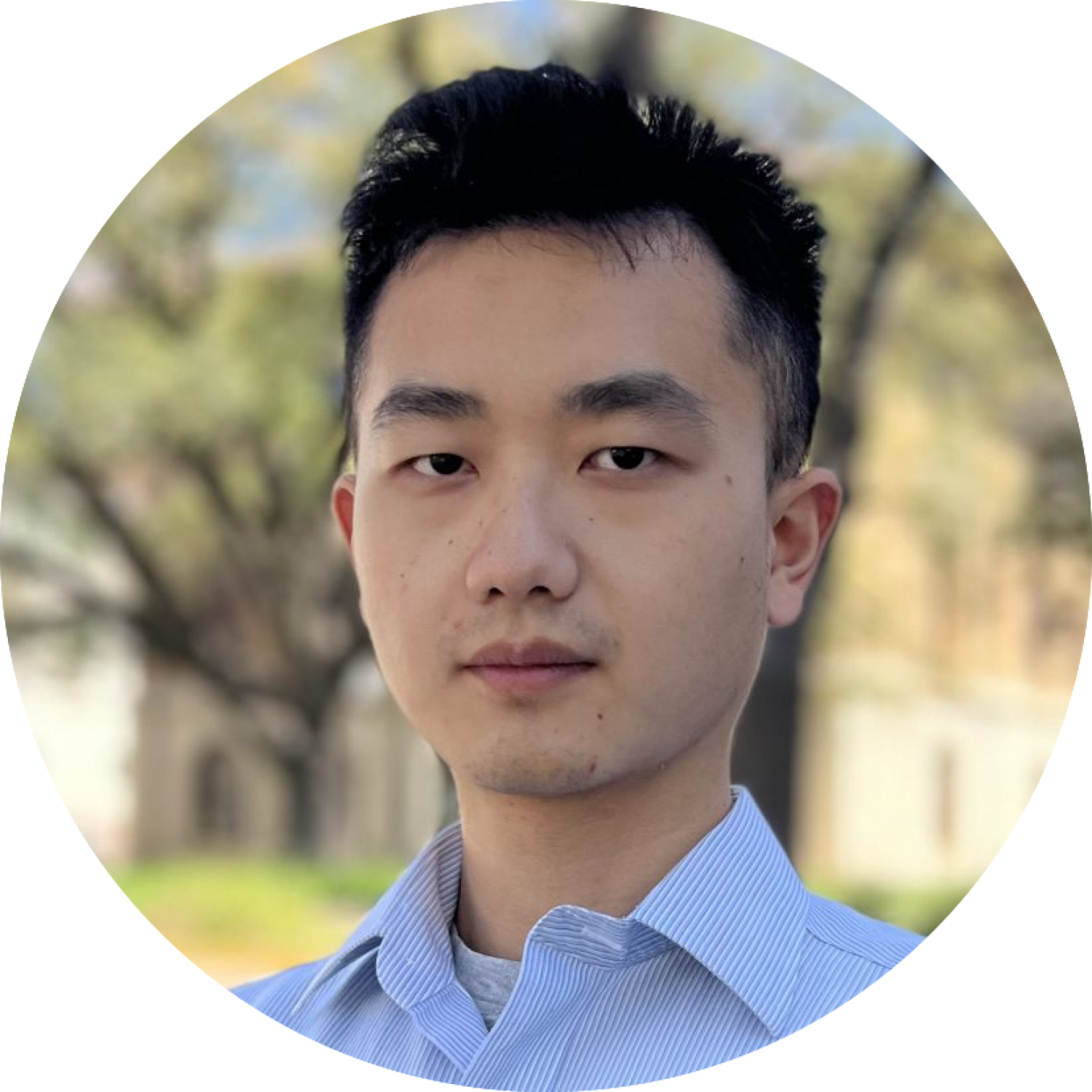
Stephen Jessee is a Professor in the Department of Government at the University of Texas at Austin, affiliated with the College of Liberal Arts. He earned his Ph.D. from Stanford University and holds undergraduate degrees from UT Austin. Education: Ph.D. (Stanford), B.A./B.S. (UT Austin) Research Focus: American politics, statistical methodology, ideology measurement, and judicial-political behavior Key Topics: Congressional voting patterns, Supreme Court dynamics, public opinion, causal inference His recent publications emphasize causal inference methods, public opinion analysis, and quantitative political methodology. Collaborative work spans topics like abortion policy impacts, educational effects on partisanship, and ideological alignment between citizens and elites. Stephen Jessee teaches graduate and undergraduate courses in statistical methodology, causal inference, and American politics. Contact: Office (BAT 4.128), Phone (512-232-7282), Email (sjessee@mail.utexas.edu).
Matt Giani is a Research Associate Professor in the Department of Sociology at The University of Texas at Austin , with additional affiliation at the Texas Behavioral Science Policy Institute (TxBSPI) . His work bridges sociology and educational policy, focusing on equity in postsecondary access, with particular emphasis on low-income students. Education: Ph.D. in Educational Policy and Planning, The University of Texas at Austin Expertise: Quantitative methods, causal inference, longitudinal data analysis Research Themes: Matt’s research explores how educational policies and interventions affect social mobility, particularly in dual enrollment, career and technical education (CTE), and community college transfer pathways. His recent articles highlight credit transfer barriers, CTE policy implementation, and financial certainty interventions for admissions. Methodological Strengths: He leverages national and statewide longitudinal datasets (e.g., Education Research Center at UT Austin) to evaluate the long-term impacts of educational reforms. His funding sources include competitive grants from the National Science Foundation , Spencer Foundation , and Bill & Melinda Gates Foundation .
Zhi Li is an Assistant Professor at the University of Colorado Boulder's College of Engineering and Applied Science, Department of Civil, Environmental and Architectural Engineering. He leads the newly established Flood Lab, focusing on flood prediction and monitoring through remote sensing and coupled hydrologic-hydraulic models. Joined CU Boulder in Fall 2025 Former Dean's Postdoc Fellow at Stanford University PhD in Civil Engineering & Environmental Science from University of Oklahoma (2022) His research spans hydrological modeling , extreme events , and AI4Science applications, particularly in deep learning and intelligent agents for flood risk assessment. Li’s work also connects floods with public health and economic systems , aiming to develop the Flood-Agriculture-Climate-Economics-Disease (FACED) framework. Key Themes: High-resolution flood modeling Climate change impacts on hydro-meteorology Remote sensing integration Flood-agriculture interdependencies Global health implications Scientific Awards: Dean's Postdoc Fellow, Stanford Doerr School of Sustainability (2023) Hoving Fellowship, University of Oklahoma (2019) Li’s recent publications emphasize improved precipitation estimation (IMERG V07), Brown Ocean Effect studies, and Fourier neural operators for rapid flood forecasting. His collaborative work with NOAA and NASA focuses on comparing ground-based and spaceborne radar systems for extreme event analysis.
Professor Jarno Vanhatalo is a Professor of Statistics at the University of Helsinki, serving as vice director of the Research Center for Ecological Change. He is affiliated with both the Faculty of Biological and Environmental Sciences and the Faculty of Science, where he leads the Environmental and Ecological Statistics Group. His work bridges advanced statistical methodology with pressing ecological and environmental challenges. His research focuses on the development and application of statistical models for ecological and environmental data. Key areas include: Bayesian statistics and hierarchical modeling Gaussian processes and spatial statistics Species distribution modeling Ecological risk assessment Climate change impact analysis Biodiversity monitoring and conservation Professor Vanhatalo's publication record shows a consistent focus on integrating sophisticated statistical methods with ecological applications. His recent work demonstrates increasing emphasis on climate change impacts on biodiversity, spatially explicit modeling of ecological processes, and the development of Bayesian methods for uncertainty quantification in environmental predictions. His research spans terrestrial and marine ecosystems, with particular attention to Nordic and Baltic regions. Among his notable contributions are advancements in: Joint species distribution modeling Bayesian calibration of environmental models Spatiotemporal survey design Model-based variance partitioning in ecological studies Statistical approaches to Arctic risk management Professor Vanhatalo has received significant research funding, including an ERC grant for "Predective Understanding of the effects" (2024-2029) and leadership roles in multiple Academy of Finland and EU-funded projects focused on biodiversity, ecological change, and risk management in polar waters. He actively contributes to the academic community through: Supervising doctoral students in Wildlife Biology and Mathematics and Statistics programs Serving on editorial boards for journals including Conservation Biology and Ecology Letters Peer reviewing for numerous statistical and ecological journals Organizing workshops on statistical methods in ecology
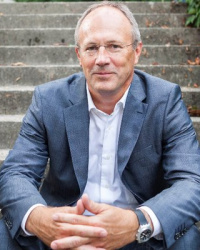
Miklós Szócska is a Professor and Dean of the Faculty of Public Health at Semmelweis University, Budapest. He also serves as the Director of the Healthcare Management Training Center and Head of the Institute of Digital Health Sciences. His career bridges academic leadership with healthcare policy, including roles as Secretary of State for Health (2010–2014), where he focused on evidence-based health policy, public health taxes, and e-health systems. Education: General Practitioner, Semmelweis University (1989) Master of Public Administration, Harvard University's John F. Kennedy School of Government (1998–1999) PhD, Semmelweis University (2008) Research Interests: Szócska's work spans network analysis , leadership and change management , crisis communication , social innovation , and big data/AI applications in healthcare . His recent studies focus on reconstructing 3D histological structures via machine learning, global mortality linked to pathogens, and tobacco control policies. Article Trends: His publications emphasize global health metrics (e.g., mortality decomposition, colorectal cancer risk factors) and digital health innovations (AI, e-health). Systematic analyses from the Global Burden of Disease Study frequently inform his research. Academic Affiliations: He leads the Institute of Digital Health Sciences and chairs the Faculty of Public Health at Semmelweis University. His international roles include Board Membership at the European Health Forum Gastein and Supervisory Board positions at EIT Health.
Chantal Levesque-Bristol serves as the Executive Director of the Center for Instructional Excellence and Professor in the Department of Educational Psychology & Research Methodology at Purdue University. Her work focuses on student-centered pedagogy, course transformation, and self-determination theory in higher education. Role: Executive Director, Center for Instructional Excellence Affiliation: Purdue University, College of Education Research Interests: Levesque-Bristol's research examines motivational dynamics through Self-Determination Theory (SDT) , particularly in: Autonomy-supportive learning environments Faculty development for educational reform International student academic adjustment STEM education outcomes Publication Trends: Her recent work emphasizes: Application of SDT across disciplines (STEM, nursing, teacher education) Structural factors influencing student achievement Scalable course transformation models Intersection of motivation with cultural responsiveness Leadership: As director of Purdue's IMPACT Program , she drives institutional change through faculty-driven course redesign initiatives.
Irene Molina is a Professor of Human Geography at Uppsala University, affiliated with both the Department of Human Geography and the Institute for Housing and Urban Research (IBF). Her academic work focuses on the intersection of urban space, power relations, and social inequality, with particular emphasis on racialization, gender, and class dynamics in the Swedish context and beyond. Professor Molina's educational background spans institutions in both Chile and Sweden: PhD in Human Geography, Uppsala University (1997) with dissertation "Stadens rasifiering. Etnisk boendesegregation i folkhemmet." (Racialization of the City. Ethnic Residential Segregation in the Swedish Folkhem) Licenciate of Philosophy, Catholic University of Chile, Santiago (1986) with thesis "El Programa de Erradication de Campamentos en la Región Metropolitana de Santiago (1979-1984): Implicancias Socioeconómicas y Espaciales." Associate Professor title from Uppsala University (2002) Professor title in Human Geography with focus on settlement and built environment from Uppsala University (2011) Molina's research explores the city as a site of social power relations, with specific focus on racialization and discrimination processes, as well as class, gender and intersectional dynamics. Her work critically examines how urban space is produced through relations of power, particularly how racial hierarchies are constructed and maintained through housing policies, urban planning, and everyday practices. She has made significant contributions to understanding ethnic residential segregation in Sweden, the racialization of suburbs, and the intersection of gender and space in urban environments. Her approach combines critical geography with feminist and postcolonial perspectives to challenge dominant narratives about integration, segregation, and urban development. Her recent publications demonstrate a consistent focus on housing justice, with increasing attention to intersectional approaches that connect housing struggles with broader social justice movements. Molina's work bridges theoretical innovation with practical engagement, often collaborating with housing activists and organizations fighting for the right to housing. Her research spans multiple scales, from local Swedish contexts to comparative studies with South America, revealing global patterns of urban inequality while remaining attentive to specific historical and cultural contexts. Throughout her career, Professor Molina has been actively involved in research collaborations addressing housing discrimination, urban segregation, and gender equality in the built environment. She has contributed to numerous reports on housing policy and discrimination, serving as an expert on issues of ethnic discrimination in housing markets. Her work has influenced both academic discourse and policy discussions on urban development and social justice in Sweden.
Stella Resko is a Professor jointly appointed in the School of Social Work and the Merrill Palmer Skillman Institute for Child and Family Development at Wayne State University. She serves as Director of the social work doctoral program and the graduate certificate in alcohol and drug use studies (CADUS), with research focused on preventing substance use and violence through drug overdose prevention, treatment, and recovery initiatives. Dr. Resko's educational background includes: Post-Doctoral Fellow, University of Michigan Addiction Research Center Ph.D. in Social Work, Ohio State University M.S.W., Ohio State University B.S.S.W., Ohio State University Her research expertise spans substance use treatment and prevention, interpersonal violence, and public perceptions of cannabis and opioids, with emphasis on families affected by substance misuse and cannabis legalization impacts. Methodologically, she specializes in community-based research, advanced quantitative methods (latent variable and multilevel models), and survey design targeting adolescents, emerging adults, women, and families. Analysis of her recent publications reveals dominant themes in the opioid crisis, cannabis policy, and collegiate recovery programs, with consistent examination of stigma, public attitudes, and barriers to treatment across diverse populations including bereaved families and peer recovery specialists. Dr. Resko has received the following scientific recognition: Fellow of the Society for Social Work & Research As Director of the Social Work PhD program and CADUS certificate, she mentors doctoral students while serving as Co-Principal Investigator for Michigan's State Opioid Response grants evaluation, focusing on community-based interventions and policy implementation in substance use treatment. Her work is conducted through the Merrill Palmer Skillman Institute for Child and Family Development, involving collaboration with community treatment programs like Maryhaven and interdisciplinary research teams developing brief interventions for substance use prevention.
Mitchel Langford is a Professor and Co-Director of the Wales Institute of Socio-Economic Research and Data (WISERD). He holds an academic position within the Faculty of Computing, Engineering and Science, focusing on spatial analysis, geoinformatics, and computational geography. His research spans over 35 years, emphasizing geographical accessibility, dasymetric mapping, and software engineering solutions for spatial problems. Langford earned his first degree in Physical Geography and Geology, followed by a PhD in software development for palynology using FORTRAN. He has extensive teaching experience in software engineering (C#, SQL, Python) and geoinformatics (PostgreSQL/PostGIS, web mapping). His key research contributions include pioneering work in dasymetric areal interpolation and multi-modal accessibility modeling, notably the Enhanced Two-Step Floating Catchment Area (E2SFCA) method. He has published over 119 peer-reviewed articles and consulted for international organizations like CIAT. Notable awards include the 2019 Impact Awards for contributions to spatial accessibility research. Current projects include investigating accessibility to public services (transport, healthcare, childcare) using GIS and multi-modal transport networks. Langford is also involved in policy-oriented research, contributing to Welsh Senedd inquiries on banking and healthcare access. His software engineering skills enable bespoke solutions for spatial analysis, emphasizing modern languages like Python and JavaScript.
Sara Benjamin-Neelon is a Professor at the Johns Hopkins Bloomberg School of Public Health, with a primary appointment in the Department of Health, Behavior and Society and a joint affiliation with the Department of International Health. She is also the Director of the Lerner Center. Holding a PhD, JD, and MPH, her interdisciplinary expertise spans child nutrition, public health law, and chronic disease prevention. Educational Background: JD, Mitchell Hamline School of Law, 2017 PhD, University of North Carolina at Chapel Hill, 2006 MPH, University of North Carolina at Chapel Hill, 2002 BS, Ithaca College, 1995 Dr. Benjamin-Neelon’s research centers on early life predictors of obesity and chronic diseases, with a strong emphasis on health equity. Her work explores community-based interventions for children and families, food insecurity, policy evaluation (especially in nutrition and physical activity), epigenetic and environmental influences on child growth, and the social determinants of early life feeding, physical activity, sleep, and stress. She examines both domestic and global contexts, contributing significantly to understanding how policy changes can create healthier environments. Her extensive publication record includes over 196 research outputs, with recent articles focusing on childcare environments, breastfeeding policies, cannabis use during pregnancy, university beverage contracts, and infant feeding regulations. The trends in her recent work highlight a strong focus on policy analysis, health equity, and the evaluation of natural experiments in public health. She frequently investigates how structural and environmental factors shape child health outcomes. She has not received any explicitly mentioned scientific awards in the provided text. Dr. Benjamin-Neelon advises students and leads significant research projects, including evaluations of state nutrition and physical activity policies, the impact of childcare on obesity risk, and initiatives to improve healthy feeding in early childhood. Her work often involves collaboration with interdisciplinary teams and has significant implications for public health grants and policy development. She leads or contributes to key research initiatives such as the evaluation of South Carolina’s nutrition and physical activity policies, studies on licensing laws for infant and toddler care, and the Maryland Collaborative to reduce excessive college drinking. Her research environment is collaborative, involving multiple institutions and public health agencies.
Angelina Hackmann is a Research Associate at the German Institute for Economic Research (DIW Berlin) , specializing in the Department of Macroeconomics . She plays a key role in labor market coverage within the economic analysis team. Education: Bachelor's in Financial and Business Mathematics, Technical University of Braunschweig Master's in Economics, University of Osnabrück Doctorate, University of Bremen Her research focuses on wage inequality , regional real estate markets , and their interactions with monetary policy . She has contributed to high-impact publications analyzing global trade disruptions, fiscal stimulus in Germany, and migration's economic effects. Her recent articles emphasize macroeconomic challenges, including tariff chaos, regional housing dynamics, and structural reforms. The work often bridges policy analysis with empirical economic modeling, particularly in Euro Area contexts. Previously, Hackmann held roles at the Deutsche Bundesbank , European Central Bank , and SAFE (Leibniz Institute for Financial Research) , where she co-directed the Policy Center. She is currently involved in the Forschungsprojekt Gemeinschaftsdiagnose (Herbst 2024 – Frühjahr 2026) , focusing on macroeconomic forecasting and policy analysis.
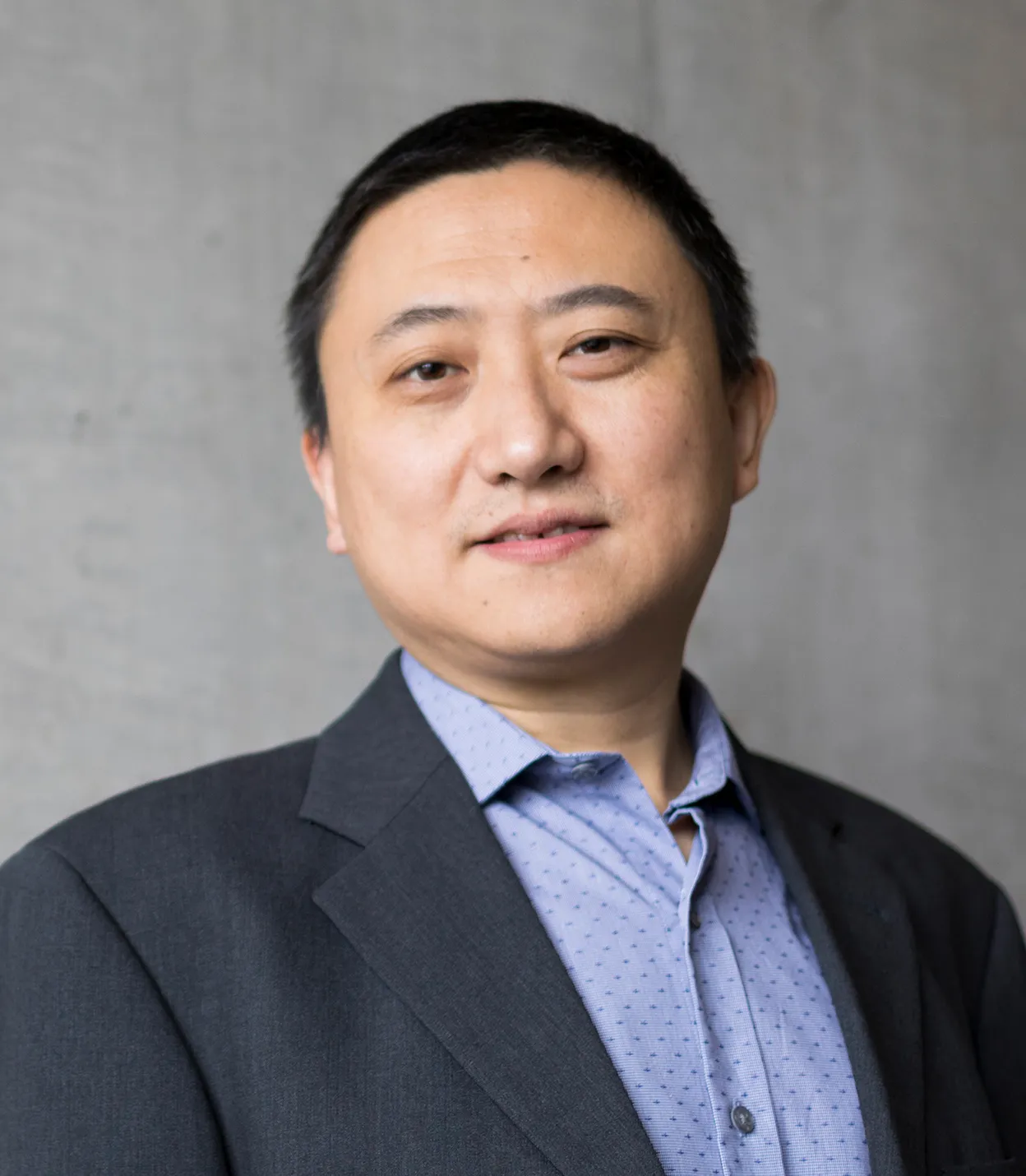
Bing Han is a Professor of Finance and the TMX Chair in Capital Markets at the Joseph L. Rotman School of Management, University of Toronto. He holds a PhD in Finance from UCLA and a PhD in Mathematics from the University of Chicago. Research Interests : Behavioral Finance, Asset Pricing, Investment Strategies, Risk Management, and Real Estate Finance. His work bridges mathematical rigor with empirical finance, focusing on market anomalies, investor sentiment, and liquidity dynamics. Publication Trends : His recent work explores option pricing discrepancies, social transmission of consumption beliefs, and cross-border information flows. Articles highlight applications of behavioral biases, volatility modeling, and macroeconomic forecasting using financial instruments. Scientific Awards & Honors : Lifetime Achievement Award (2021) Outstanding Paper Award (2018) Best Paper Award (2016) Outstanding Paper in Asset Pricing Research (2013) CBA Foundation Research Excellence Award (2010) Advising & Grants : Available for Masters/PhD supervision and industry projects. Secured sponsored research funding on Sentiment Risk and Hedge Fund Returns (2016-2017). Previously taught at University of Chicago, Ohio State, and University of Texas at Austin.
Pamela Rutledge, PhD, is a Professor at Fielding Graduate University’s School of Psychology, Department of Media Psychology, since 2008. She combines 20+ years of media production experience with academic expertise, teaching brand psychology, audience engagement, and narrative meaning. Dr. Rutledge consults with major studios like 20th Century Fox and Warner Bros., while maintaining a Psychology Today blog and media commentator role. Research Interests: Her work focuses on media psychology’s intersection with technology, including: AI’s influence on emotional connection and decision-making Digital habits shaping mental energy and productivity Media-driven resilience and emotional regulation Generational dynamics in digital culture (e.g., granfluencers, youth interactions) Recent Article Trends: 2024-2025 publications highlight AI’s psychological impact (chatbots, social media regulation), stress management during politically charged periods (elections), and media’s role in identity formation (digital reputation, rewatching movies). Themes emphasize practical strategies for navigating technology’s emotional and behavioral effects. Education: She holds a PhD and MBA, though specific institutions and graduation dates are not detailed in the provided text.
Michael T. Dorsch is a Full Professor and Head of the Department of Public Policy at the Central European University (CEU) in Vienna, Austria. He holds concurrent roles as an Associate Professor in the Doctoral School of Political Science, Public Policy, and International Relations, and teaches across undergraduate, master's, and doctoral programs. His academic career includes visiting professorships at institutions such as Université Paris II Panthéon-Assas and Aix-Marseille School of Economics. Dorsch's research focuses on political economics, public economics, and development economics, with an emphasis on policy evaluation, institutional dynamics, and environmental governance. He has held editorial roles at journals like the Journal of Public Finance and Public Choice and contributed to policy debates through reports on topics like investment screening mechanisms and energy transitions. Education: Ph.D. in Economics from the University of Illinois at Urbana-Champaign (2008), M.A. Economics from Miami University (2001), and B.A. Economics, International Studies, and French from Miami University (2000). Research Interests: Political Economy of Development Public Policy and Institutional Design Econometric Analysis of Policy Interventions Environmental and Climate Policy Democratization and Political Regimes Professional Recognition: Awarded the Dudley Seers Memorial Prize (2024) for best paper in the Journal of Development Studies . His work frequently bridges theoretical models and empirical data, addressing themes like pandemic governance, tax compliance, and the energy transition.
Professor Joseph Baker is a faculty member at the School of Kinesiology and Health Science, York University, specializing in optimal human development and athlete expertise. His research examines psychosocial and environmental factors in athletic skill acquisition, talent identification, and aging in sports. Institution: York University School: School of Kinesiology and Health Science Academic Rank: Professor Research Interests His work spans high-performance athlete development , Masters athlete aging studies , relative age effects , and talent wastage . He investigates how environmental constraints and practice structures influence expertise, with applications in para-sport and life-long physical activity . Publication Trends Recent studies focus on early specialization in hockey, talent selection policies , and psychological drivers of athlete longevity. Collaborations include analyses of physical load in handball, self-regulated learning in training, and barriers to sports participation for older adults. Students & Funding He mentors 15+ graduate students and has secured funding from Social Sciences and Humanities Research Council of Canada , Sport Canada , and Canadian Institutes of Health Research . His team explores topics like paralympic pathways , coach decision-making , and genetic/environmental interactions in performance.