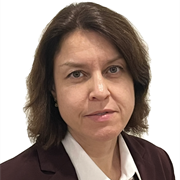
Bunty Avieson is a Senior Lecturer in Journalism and Media at the University of Sydney's Faculty of Arts and Social Sciences. She holds a PhD and MPhil from Macquarie University, specializing in media theory and literary analysis. Her research focuses on Bhutanese media development, Wikipedia's societal impact, and the intersection of journalism with literary practices. PhD Thesis: Media development in Bhutan during its democratic transition MPhil: 'The Poetics of Paranoia' exploring self-construction through Derrida and Nagarjuna Research Interests: Her work spans media policy in Bhutan, Wikipedia's role in knowledge equity, and the ethics of memoir writing. She has published extensively on Bhutan's media evolution and co-edited volumes on memory mediation and trauma narratives. Articles Trends: Recent work examines lifestyle journalism identity, Wikipedia's pandemic-era contributions, and Bhutan's unique digital media strategies. Earlier research explored Bhutan's transition from oral traditions to social media under Gross National Happiness principles. Awards: Vice-Chancellor's PhD Commendation (2013), Ned Kelly Awards for crime fiction (2001-2003) Grants & Projects: Principal Investigator in the Bhutan-Wiki Project (DECRA-funded), co-developed the Australian Colonial Narrative Journalism Database. Received grants for Tamil diaspora storytelling and Bhutan media studies. Professional Roles: Wikimedia Australia Vice President, member of journalism education associations, and former editor of Woman's Day.
Anastasia Semykina is a Professor of Economics and Deputy Dean (Research and Innovation) at RMIT University's School of Economics, Finance & Marketing. She holds a PhD from Michigan State University (2006) and previously served as Charles and Joan Haworth Professor of Economics at Florida State University. Her expertise spans theoretical and applied econometrics, with a focus on panel data models, missing data estimation, and their application in labor economics, education economics, transition economies, and economic psychology. She teaches advanced econometrics and microeconomics courses at both undergraduate and graduate levels. Research Interests: Theoretical and Applied Econometrics Labor Economics Economics of Education Transition Economies Economics and Psychology Health Economics Her recent publications address topics such as panel data methodologies, healthcare cost-effectiveness analysis, and educational policy evaluation. She is actively involved in supervising PhD and Master's research students in econometrics and applied economics.
Matteo Bonotti is an Associate Professor of Politics & International Relations at Monash University, previously teaching at Cardiff University, Queen’s University Belfast, and the University of Edinburgh. His research focuses on democratic theory, political liberalism, linguistic justice, free speech, civility, and food justice, addressing ethical pluralism and cultural diversity in modern societies. He has published in journals like the American Political Science Review and authored/co-authored books including Partisanship and Political Liberalism in Diverse Societies (Oxford UP, 2017) and Healthy Eating Policy and Political Philosophy: A Public Reason Approach (Oxford UP, 2022). Bonotti leads projects on disinformation in Southeast Asia, linguistic justice among Italian-Australians, and civic education. His work contributes to UN Sustainable Development Goals related to justice, peace, and sustainable consumption. Education: Previous academic roles at Cardiff, Queen’s Belfast, and Edinburgh universities. Research Themes: Ethical pluralism, democratic legitimacy, public reason, and policy narratives. Recent Projects: ASEAN Disinformation Index, Language & Political Participation in Australia, and Civic Virtue in Polarized Societies. His articles explore topics like civility in environmental politics, far-right network dynamics, and gastrospaces as ethical spaces. Collaborations span international scholars across political theory, sociology, and philosophy. Bonotti actively engages with public discourse through media commentaries on civility, pandemic narratives, and free speech debates.
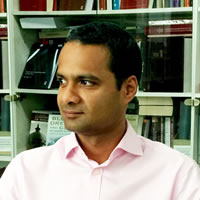
Tarunabh Khaitan is the Professor (Chair) of Public Law at LSE Law School and an Honorary Professorial Fellow at Melbourne Law School. He specializes in legal theory, constitutional studies, discrimination law, and comparative constitutional design. Educated at National Law School (Bangalore) and Oxford (as a Rhodes Scholar), he holds degrees including a DPhil from Exeter College. Previously, he held roles such as Vice Dean at Oxford Law Faculty and Australian Research Council Future Fellow at Melbourne Law School. His research focuses on discrimination law, constitutional design, and judicial accountability. His monograph A Theory of Discrimination Law (OUP 2015) won the 2019 Woodward Medal. He has advised on anti-discrimination legislation in India and contributed to UN anti-discrimination guides. Awards include the 2018 Letten Prize (€200k award) and Excellence in Engagement Award (2020). Key publications include works on constitutional resilience in South Asia, comparative electoral systems, and the role of political parties in constitutional theory. He advises global initiatives like the International Journal of Constitutional Law and the Equal Rights Trust. His Hindi podcast संविधान संवाद explores Indian constitutionalism.
Professor Will Bateman is a distinguished academic at the Australian National University (ANU) College of Law, where he serves as a Professor and recently completed his term as Associate Dean (Research) from 2021 to 2024. He is also a Chief Investigator for the ANU Grand Challenge project "Humanising Machine Intelligence" and a Fellow at the Gradient Institute, a leading ethical AI research organization based in Sydney. Professor Bateman's educational background is impressive, having earned a PhD and LLM (Hons) from the University of Cambridge and a BA/LLB (Hons) from the Australian National University. Prior to his academic career, he worked in appellate litigation, commercial disputes, and banking as a solicitor at Herbert Smith Freehills, and served as an associate to Justice Stephen Gageler AC of the High Court of Australia and Justice Steven Rares of the Federal Court of Australia. Professor Bateman's research spans two major interdisciplinary domains that sit at the intersection of law with finance and technology. His work on financial regulation focuses on the legal aspects of central banking, sovereign debt markets, digital currencies, and sustainable investing. He has provided expert evidence to the UK Parliament's House of Lords Inquiry into Quantitative Easing, and has collaborated with major financial institutions including the Federal Reserve Bank of New York and the Bank of England. His research on artificial intelligence examines regulatory frameworks for AI in the public sector, with collaborations including the Minderoo Foundation and the Gradient Institute. His recent publications demonstrate a remarkable breadth across legal theory, financial regulation, and AI governance. The articles reveal a consistent theme of examining how traditional legal frameworks adapt to new financial technologies and monetary policy challenges. His work bridges theoretical legal scholarship with practical policy implications, as evidenced by his numerous government consultations and collaborations with central banks worldwide. 2020 Yorke Prize by the University of Cambridge for his work on public finance and constitutionalism Top 10 all-time most downloaded SSRN paper on central banking ("Central Bank Money: Liability, Asset, or Equity of the Nation?") Professor Bateman actively supervises research students, currently mentoring Benjamin Ettinger who is pursuing a PhD on "Legal Method, Cartels and Public Monopolies: A View From the High Court 1908 - 1948." He has secured significant research funding, including projects funded by the Economic and Social Research Council (UK), the German Research Foundation (Deutsche Forschungsgemeinschaft), and The Minderoo Foundation. His "Rebuilding Macroeconomics Initiative: Legal and Economic Conceptions of Money" received £245,000, while the "FA Mann" project was funded with €620,000 (approximately A$1,012,500). He leads the "Humanising Machine Intelligence" project, an ambitious interdisciplinary initiative involving computer scientists, mathematicians, philosophers, sociologists, psychologists, and lawyers aimed at developing democratically legitimate machine intelligence. He also co-led a major project with the University of Western Australia to formulate model legal frameworks for AI regulation in the public sector, funded by The Minderoo Foundation.
Professor Keita Takayama is a prominent academic in education studies at the University of South Australia’s UniSA Education Futures. His work focuses on global education policy, comparative education, and teacher education methodology. He actively engages with transnational policy processes, decolonial research frameworks, and critical analyses of international assessments like PISA. As editor of the Asia-Pacific Journal of Teacher Education (APJTE), he emphasizes rethinking teacher subjectivity and pedagogical practices. His research critiques the politics of knowledge production and advocates for methodological innovations like 'Asia as Method.' Recent work addresses contradictions in education export policies, linguistic imperialism in scholarship, and the role of education in resisting authoritarianism. Education Background: Doctorate in Education (focus on comparative policy studies) Advanced training in decolonial methodologies and policy analysis Research Interests: Professor Takayama’s work bridges global and local educational contexts. Key themes include: Policy mobilities & transnational education governance Reimagining comparative education through 'negative' comparative frameworks Ethics of academic publishing and knowledge dissemination Teacher education’s role in shaping democratic societies Labs/Teams: Leads the APJTE editorial collective and co-founded the iTKNe transnational knowledge exchange platform for teacher educators. Active in global academic networks addressing East Asian education stereotypes and postcolonial educational research.
Dr. Farzana Aman Tanima is a Senior Lecturer at the University of Sydney Business School’s Accounting, Governance, and Regulation department. She previously held roles at the University of Wollongong (2017–2023). Her research focuses on critical and dialogic accounting, social justice, and challenging neoliberal frameworks through participatory approaches. Born in Bangladesh, she earned her PhD in 2015 from Victoria University of Wellington, New Zealand, with a thesis on dialogic accounting practices for marginalized women. Education: PhD in Accounting, Victoria University of Wellington, 2015 Undergraduate Honours Degree, Victoria University of Wellington Research Interests: Dr. Tanima’s work centers on dialogic accounting to democratize accounting practices, with focus on NGOs, microfinance, Indigenous education, and race. She employs participatory action research and autoethnography to address systemic inequalities. Key areas include: Accounting’s role in empowerment and development Decolonizing accounting education through Jindaola Critical race theory and counter-accounting Awards: 2024 Mary Parker Follet Award (AAAJ Journal) 2020 VC OCTAL Teaching Award 2015 AFAANZ Best PhD Award Teaching & Mentorship: She leads pedagogical initiatives embedding Indigenous perspectives into curricula and fosters dialogic learning. Supervised two completed PhDs, with co-authored publications. Active in mentoring early-career researchers through invited talks and workshops. Labs/Teams: Part of the Alternative Accounting Research Network and editorial boards for CPA Journal and Financial Accountability & Management . Co-leads special issues on critical dialogics and publicness in accounting.
Jakob Madsen is a Professor of Economics at the UWA Business School, The University of Western Australia, since January 2019. He previously held the Xiaokai Yang Distinguished Professorship at Monash University (2011–2019) and has held professorial roles at institutions including the University of Copenhagen and Brunel University. Madsen is a Fellow of the Australian Academy of Social Sciences and was an ARC Professorial Fellow (2011–2015). His research focuses on macroeconomics, economic growth, inequality, and applied econometrics, with over 140 publications in top journals. Education: PhD in Economics from the Australian National University (1992), Cand. Oecon (MEc) from Aarhus University (1983). Prior to academia, he worked in Denmark’s financial sector as Deputy Chief Economist at the Bank of Jutland. Research Interests: Madsen’s work examines long-run macroeconomic trends, including unified growth theory, inequality dynamics, the historical drivers of economic development, and the interplay between finance and growth. Recent projects explore aging societies, the impact of plagues on medieval markets, and the role of education in economic transitions. Grants & Awards: He has secured over AUD 2.3 million in ARC grants, including current projects on income inequality and capital shares. His awards include the Georgescu-Roegen Prize (2001) for work on the Great Depression and the Dean’s Award for Teaching Excellence (2009). Collaborations: Engages with global institutions like Aix-Marseille Université and the University of Bologna. Active in UN Sustainable Development Goals related to education and economic inequality.
Associate Professor James Andrew Phillips is a faculty member in the Department of Philosophy within the School of Humanities and Languages at the University of New South Wales (UNSW). He has been at UNSW since 2006, initially serving as a Vice-Chancellor's postdoctoral fellow, followed by an ARC Australian Research Fellow from 2007-2011, before assuming his current combined research-teaching position. His educational background includes undergraduate studies at the University of Queensland, an MA in Comparative Literature and Critical Theory from Monash University, and a PhD in Philosophy from the University of Tasmania (2002). During his doctoral studies, he spent time as an OeAD scholar in Innsbruck and a DAAD scholar in Potsdam. He has also been a visiting research fellow at the Institute for Advanced Studies in the Humanities at the University of Edinburgh and a resident associate at the National Humanities Center in North Carolina. Phillips' research focuses on aesthetics, phenomenology, film and philosophy, political theory, literary criticism, and British and Irish literature. His current book project explores the philosophy of fiction, drawing on concepts of 'world' in Kant and Heidegger. He has translated two significant philosophical works: Christoph Menke's Tragic Play: Irony and Theater from Sophocles to Beckett (2009) and Alexander García Düttmann's Philosophy of Exaggeration (2007). His recent publications demonstrate a strong focus on the intersection of philosophy, aesthetics, and cinema, with particular attention to phenomenological approaches to film studies and the political dimensions of aesthetic experience. His work bridges continental philosophy with contemporary cultural analysis, creating connections between historical philosophical traditions and modern artistic practices. Philosophy Group Convenor Research Committee Member - School of Humanities and Languages Phillips currently supervises PhD candidate Finnegan Hassey (on Arendt's concept of nationalism, jointly with Jess Whyte) and MA student Sofia Kartavtseva (on Sade and aesthetics). He teaches political philosophy, aesthetics, and the history of German philosophy, with planned courses for 2025 including ARTS3368 'Modern European Philosophy' and ARTS2384 'Political Philosophy'.
Professor Kurt Iveson is a Professor of Urban Geography in the School of Geosciences at the University of Sydney. He is affiliated with the Sydney Environment Institute and Sydney Southeast Asia Centre. His research focuses on urban equity, public space governance, and the democratization of urban processes. Notable projects include studies on multicultural urban planning, pandemic-era mutual aid networks, and climate adaptation strategies. He has authored influential books such as Publics and the City (2007) and Everyday Equalities (2019). Iveson’s work often bridges theory and practice, addressing issues like affordable housing activism, graffiti policies, and the spatial implications of digital media. His recent research emphasizes community-led disaster resilience, people power strategies, and the geopolitics of urban infrastructure. Grants include studies on informal accommodation in Sydney and international comparisons of urban alliances. Media engagements include ABC discussions on outdoor advertising, vertical transport, and post-pandemic urban recovery. His work advocates for inclusive urban policies that balance equity, sustainability, and civic participation.
Mark Andrejevic is a Professor in the School of Media, Film, and Journalism at Monash University. He specializes in the socio-cultural implications of digital surveillance, data mining, and automated decision-making. His research spans Big Data ethics, privacy regulation, and the impact of technology on democracy. He leads major projects like the ARC Centre of Excellence for Automated Decision-Making and Society, focusing on AI’s societal implications. Andrejevic has been awarded Fellow of the Australian Academy of Humanities and the Nancy Baym Book Award. His work intersects with UN Sustainable Development Goals addressing justice and innovation. Research interests include automated surveillance systems, digital privacy policies, and the ethical governance of emerging technologies. He collaborates on projects such as facial recognition technology ethics and pandemic-era surveillance practices. His recent publications analyze platform accountability, algorithmic bias, and the societal effects of workplace monitoring technologies. He actively contributes to public discourse via media engagements and policy-focused talks on topics like facial recognition in education and pandemic-era data collection. Projects: ARC QEII Fellowship ($390k, 2010–2014), Australian Public Attitudes to AI, and facial recognition ethics studies. Grants: Over $390k from ARC for privacy research, plus ongoing funding through collaborative initiatives. Awards: Australian Academy of Humanities Fellowship (2020), Nancy Baym Book Award (2014). He supervises graduate students in Digital Media, Surveillance Studies, and Critical Theory. His interdisciplinary work bridges academia, policy, and industry to address technology’s societal challenges while advocating for democratic values.
Dr. Sophie Adams serves as an ARC DECRA Fellow in the Department of Sociology at La Trobe University, where she conducts interdisciplinary research at the intersection of human geography and Science and Technology Studies. Her work critically examines the social dimensions of climate change mitigation and adaptation, with particular emphasis on renewable energy transitions and the societal implications of technological solutions to environmental crises. Adams' research program centers on the politics of environmental knowledge , investigating how climate science informs policy formation and the negotiation of social objectives in decarbonisation processes. She employs qualitative and participatory methodologies to analyze climate change adaptation in energy systems , social license for technological interventions , and the redistribution of expertise in public health and environmental governance. Her scholarship consistently addresses power dynamics in knowledge production and the democratic challenges of sustainability transitions. Analysis of her publication trajectory (2019-2025) reveals increasing focus on energy-social interfaces, with significant contributions to understanding virtual power plants, demand-side management, and the role of modeling in climate policy. Her work demonstrates methodological innovation through participatory approaches while maintaining critical engagement with resilience thinking and adaptation frameworks. Scientific recognition includes: Australian Research Council Discovery Early Career Researcher Award (ARC DECRA) Supported by her DECRA fellowship, Adams leads independent research projects examining the societal dimensions of energy transitions. Her collaborative work spans geography, public health, and energy engineering, as evidenced by interdisciplinary co-authorship patterns. Current projects investigate Australian householders' conditions for participating in virtual power plants and the social implications of climate modeling in adaptation planning, reflecting her commitment to socially relevant environmental research.
Associate Professor Marcus Mietzner specializes in the politics of Indonesia, focusing on democratization, electoral systems, and the role of the military. He holds a PhD from the Australian National University (ANU) and an MA from Goethe University Frankfurt. His research explores Indonesian political parties, campaign financing, and the presidency in democratic Indonesia. Mietzner has authored over 95 publications and led projects such as the Indonesia Project Phase V and SEARBO (Supporting the Rules-Based Order in Southeast Asia). His work analyzes Indonesia’s political dynamics, including Jokowi’s majoritarianism, elite collusion, and democratic decline. Notable articles discuss Indonesia’s 2024 elections, autocratisation limits, and military oversight crises. Mietzner has contributed to understanding Indonesia’s post-authoritarian trajectory, emphasizing institutional resilience and elite competition. Research supervision focuses on Southeast Asian electoral politics and political parties. His projects address governance challenges, constitutional reforms, and civil society’s role in resisting democratic erosion. Mietzner’s interdisciplinary approach combines historical analysis with contemporary political developments, positioning him as a leading scholar on Indonesia’s political landscape.
Professor Paul A. Raschky is affiliated with the Department of Economics at Monash University , where he also directs the SoDa Labs and co-founded the KASPR Datahaus PTY LTD and IP Observatory . His academic focus spans Political Economy , Environmental Economics , Insurance Economics , and Development Economics , with a specialization in natural hazards and data science applications. Education: PhD (University of Innsbruck, 2008), with a postdoctoral research visit at the Wharton School . Research: Explores intersections of disaster risk , governance , and economic development , leveraging machine learning and big data . Recent Publications: Focus on generative AI productivity , ethnic favoritism , disaster insurance , and conflict economics . Awards: Recipient of the ABDC Award for Innovation and Excellence in Research (2022) and Dean’s Excellence in Research Award (2016) . Projects: Leads initiatives on internet suppression in Myanmar , news media availability , and AI-driven policy insights in South-East Asia and the Pacific. Future Work: Will be on sabbatical in 2025 , likely expanding on AI applications and disaster resilience .
Dr. Valerie Cooms is a Research Fellow at the ANU College of Law, Governance and Policy within the Australian National University. Her work primarily focuses on quantitative social policy research with specialization in longitudinal studies and Indigenous affairs. She holds leadership roles in major national research initiatives evaluating policy effectiveness. Research Interests: Dr. Cooms' research spans longitudinal data analysis, statistical methodology, Indigenous policy evaluation, criminal justice reform, and social inequality measurement. Her work frequently examines the intersection of evidence-based policy and marginalized communities. Research Trends: Recent outputs demonstrate consistent focus on Indigenous policy assessment, criminal justice system reform, and political analysis of constitutional changes affecting First Nations communities. Her publications blend academic research with public engagement through multimedia formats. Research Projects: Principal Investigator for 'Review of methods for assessing progress towards Closing the Gap' (2023-2026) Co-Investigator for 'Footprints in Time: Longitudinal Study of Indigenous Children' (2023-2024) Lead researcher for 'Longitudinal Studies of Indigenous Children Wave 13 Summary Report' (2022-2024) Contributor to 'Monitoring and Accountability Framework' project (2023-2024) Co-Investigator for literature review on women in court systems (2023-2024)