Muath Abudalu is a political scientist specializing in social movements and authoritarian regimes in the Middle East. As a guest affiliate, he focuses on completing a book manuscript analyzing protest movement strategies and regime responses in Jordan during and after the Arab Spring, alongside two related projects: (1) the evolving social-political contract between Jordanian regimes and their constituencies, and (2) methodological approaches in authoritarian contexts. Research Areas Social movements in authoritarian settings Regime resilience and repression Political Islam and democratization Post-conflict civil society development His work builds on prior engagements with international organizations in the Middle East, addressing topics such as freedom of expression, collective memory, and political transitions. While specific institutional affiliations remain unnamed in the provided text, his scholarly agenda emphasizes spatial variations in regime behavior and the strategic dynamics of contention.
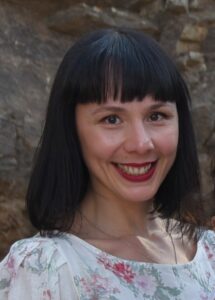
Dr. Yulia Yurii Antonyan is an Associate Professor at Yerevan State University's Department of Cultural Studies within the Faculty of History. She specializes in the anthropology of religion, post-Soviet transformations, and political economy in Armenia, with particular focus on religious coexistence, cultural practices, and elite structures. Current affiliation: Yerevan State University Academic rank: Associate Professor Department: Cultural Studies Research languages: English, Russian, French, Spanish Her research explores intersections between political power and religious practices across Soviet and post-Soviet eras. Key areas include shrine worship, iconography traditions, religious festivals, and the evolution of cultural elites. She analyzes how historical legacies shape contemporary Armenian religious landscapes and economic systems. Recent publications examine topics like oligarchic economies in Soviet Armenia, invented religious traditions, and sacred site marketplaces. Her work appears in journals such as Review of Faith and International Affairs , Journal of Religion in Europe , and Central Asian Survey .
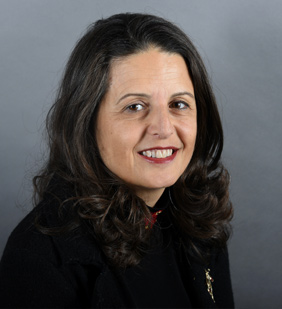
Leila Farsakh is an Associate Professor in the Department of Political Science at the University of Massachusetts Boston, with expertise in Middle East Politics, Comparative Politics, and the Arab-Israeli Conflict. Her research examines the political economy of the Israeli-Palestinian conflict, alternatives to partition, and international migration dynamics. Education : PhD, University of London MPhil, Cambridge University (UK) Research Trends : Her recent work focuses on decolonization narratives in Palestinian statehood debates, spatial justice in bi-national frameworks, and critiques of international aid mechanisms in conflict zones. The articles reflect interdisciplinary engagement with human rights, historical memory, and economic integration models. Scientific Awards : Peace and Justice Award (2001), Cambridge Peace Commission Professional Contributions : She serves as Senior Research Fellow at the Center for Development Studies, Birzeit University (since 2008), and has collaborated with the OECD on migration policies. Her publications span three decades in leading journals like Journal of Palestine Studies and Middle East Journal .
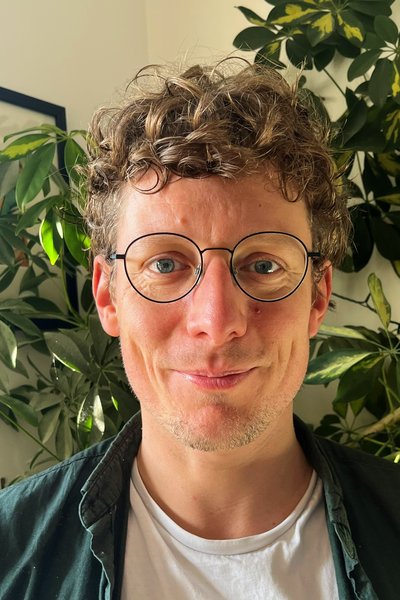
Dr. Matt Thompson is a Lecturer in Urban Planning/Urban Studies at The Bartlett School of Planning , University College London, since January 2024. His work bridges critical urban theory with practical policy analysis, focusing on alternatives to neoliberal urban governance. Education BA in Philosophy, Politics and Economics from University of Oxford MSc in Spatial Planning from University College London PhD from University of Manchester (2015) His research interests, detailed above, examine transformative urban policies through lenses like new municipalism , economic democracy , and post-growth planning . Publications since 2023 reflect engagement with topics including metabolic municipalism , decentralized economies , and conjunctural analysis of cities . Scientific Awards Leverhulme Early Career Fellowship (2018-2021) Mercator Fellowship at Friedrich Schiller University Jena (2023) Thompson teaches postgraduate modules on urban planning pillars , integrating sociology, politics, geography, and ecology. His work addresses key Sustainable Development Goals like No Poverty (SDG 1), Industry, Innovation and Infrastructure (SDG 9), and Sustainable Cities and Communities (SDG 11).
Dr. Femi Jegede serves as a Research Fellow at the University of Bayreuth's Africa Multiple Cluster of Excellence, where his fellowship project investigates African spatiality through Yoruba Ifa divination systems. Employing dialectics and ethnographic methodology, he examines interconnectedness between Nigerian Yoruba communities and African American populations across transnational spaces to redefine spatial concepts beyond Western geographical frameworks. His research centers on Indigenous Knowledge Systems with emphasis on African Traditional Religion and Traditional Medicine. Utilizing Afrocentric epistemology and phenomenology, he locates divine essence within natural ecosystems rather than abstract realms, positioning African religious practices as foundations for sustainability and holistic health. Key contributions include redefining shrine sovereignty, oath-taking jurisprudence, and Ifa's role in security development across the African diaspora. His publication trajectory (2010-2016) demonstrates evolving focus from foundational Ifa studies to spatial and identity applications. Early works analyze herbal cures and soteriology, while later research explores political ritualism, global African identity, and spatial interconnectedness—revealing consistent methodology centered on communivasity (apprenticeship-based knowledge transmission) and nature-based divinity. As part of the Africa Multiple Cluster, Dr. Jegede contributes to interdisciplinary dialogues on decolonizing spatial theory through African indigenous frameworks, though specific advising roles or grant details remain undisclosed in available materials.
Dr. Kristiina Kumpulainen is a Professor and Head of the Department of Language and Literacy Education in the Faculty of Education at the University of British Columbia. Previously, she served as Associate Dean, Academic and Faculty Development at Simon Fraser University and Associate Dean, Research at University of Helsinki, Finland. She has also worked for the Finnish National Agency for Education and held visiting professorships at the University of California, Santa Barbara, University of Warwick, and University of British Columbia. Dr. Kumpulainen received her PhD in education from the University of Exeter, UK. Her research scholarship is grounded in relational and cultural-historical inquiries into communication, learning and education, focusing on how social, historical, political, cultural and material contexts shape educational opportunities for diverse learners. She has extensively researched how digitalization transforms young people's communication and learning across various settings including formal education, museums, science centers, libraries, outdoors, and homes as well as in digital and immersive worlds. Her work spans several important areas including critical and digital literacies, multiliteracy and multimodality, place-based literacies, storytelling/narrative inquiry, identity, and imagination. She has actively engaged in interdisciplinary research with academic, industry and community partners to co-develop playful, imaginative and participatory pedagogies for early childhood, K-12, and teacher education. Her research has illuminated how knowledges, agency and identities are valued and negotiated across space and time, with particular attention to STEAM learning, multiliteracies, health literacies, and children's ecological literacies and climate change education. She has developed methods for visual, participatory, and multimodal research, and researching with children and teachers, increasing knowledge of democratic and ethical forms of inquiry. Dr. Kumpulainen's recent publications reflect a strong focus on the intersection of digital technologies, environmental education, and children's learning. She has pioneered work on children's ecological imagination using augmented storying techniques, exploring how digital mediation transforms children's relationships with the more-than-human world. Her research increasingly incorporates posthuman perspectives to examine child-environment relations, aesthetic experiences, and multispecies encounters, while maintaining a strong commitment to equity and social justice in educational contexts. She has also made significant contributions to maker education, particularly in school-based makerspaces, examining how these environments foster digital literacy, creativity, and collaborative problem-solving among young learners. Dr. Kumpulainen has received numerous prestigious awards including: Fellow of the Finnish Academy of Science and Letters (2019) Immersive Learning Pedagogy Award from the Immersive Learning Research Network (iLRN 2022) BJET Editors' Choice Award for her work on teacher interventions in collaborative learning Outstanding Publication Award from the European Association for Research on Learning and Instruction (EARLI) Shortlisted by UKLA for the 2021 Academic Book Award for 'Enhancing digital literacy and creativity. Makerspaces in the early years' Dr. Kumpulainen has supervised numerous graduate students and has been Principal Investigator or Co-PI on dozens of major research grants. Her current projects include 'Children's ecological imagination with augmented storying' (SSHRC Insight Grant, 2023-2025), 'Re-storying community: Arts-based digital storytelling for community inquiry' (SSHRC Canada New Frontiers in Research Fund, 2023-2025), and 'Understanding and assessing learning in makerspaces' (SSHRC Insight Development Grant, 2022-2024). She has received funding from diverse sources including SSHRC, Academy of Finland, Horizon 2020, EU HORIZON RISE program, and others. She is Co-Editor of Elsevier's journal Learning, Culture and Interaction and leads several research networks including the Nordic research network on digitalising childhoods (DigiChild). Her work bridges academic research with practical applications in educational settings, particularly through her development of methods for visual, participatory, and multimodal research with children and teachers, emphasizing democratic and ethical forms of inquiry.
Angeliki Paidakaki is an Assistant Professor at the Department of Geography, Harokopio University, focusing on spatial regulation, governance, and environmental risks. Her academic journey includes a PhD in Architecture from KU Leuven (2017), a Master's in Applied Geography and Spatial Management from Harokopio University (2011), a postgraduate diploma from University College London (2008), and a BA in Economics from National and Kapodistrian University of Athens (2006). Current Teaching: Undergraduate courses on Urban Geography, Spatial Planning, and Sustainable Cities; Postgraduate courses on Emergency Planning and Spatial Governance. Research Themes: Urban resilience, social innovation, disaster recovery, participatory planning, housing policy, and governance hybridity. Her recent publications examine transformative pedagogy in spatial planning, community-led housing initiatives (e.g., Community Land Trusts), and the interplay of governance and social movements in post-disaster contexts (New Orleans, Singapore). Her work bridges urban policy analysis, disaster risk reduction, and socially engaged architectural practice, emphasizing the political dimensions of resilience and housing equity.
Oliver Kalleinen serves as a University Lecturer in the Department of Art and Media at Aalto University's School of Arts, Design and Architecture. He collaborates extensively with Tellervo Kalleinen through Studio Kalleinen, creating internationally recognized participatory art projects that merge film, performance, game design, and social architecture. Their practice centers on developing frameworks that transform everyday experiences into collective expressions, fostering dialogue and understanding across diverse communities. Kalleinen's research explores how structured creative interactions can bridge social divides and create new forms of community engagement. His work consistently investigates time, memory, and social dynamics through innovative participatory frameworks. Projects like Complaints Choir (2005-2014) and Conversation Park demonstrate his commitment to developing methodologies where community members become active co-creators rather than passive observers. His recent artistic output reveals a sophisticated evolution of participatory practice, increasingly integrating digital and physical elements. From Collective Mindscape's 3D visualization of cancer patients' inner landscapes to The Most Valuable Clock in the World project documenting community values in Oulu, his work demonstrates a deep commitment to exploring how time, memory, and shared experiences shape collective identity. These projects often function as social experiments that reveal hidden connections within communities. Ars Fennica Award for innovative contributions to contemporary art AVEK Media Art Award recognizing excellence in media-based artistic practice Kalleinen's collaborative projects have received substantial funding from major Finnish cultural institutions including the Finnish Cultural Foundation, Kone Foundation, AVEK (Media Art Promotion Centre Finland), Oskar Öflund Foundation, and Arts Promotion Centre Finland. His work frequently involves partnerships with museums, universities, and community organizations, reflecting a strong network across artistic, academic, and social sectors. The Minna Tarkka Lectures (December 2024) exemplify his ongoing commitment to exploring art's role in democratic societies. Through Studio Kalleinen, Kalleinen maintains an active creative hub for developing participatory art projects worldwide. His practice functions as a laboratory for social interaction, creating 'Public Space Games' and other frameworks that transform how people relate to each other and their environments. Recent projects like Dinner for Twelve and PLAY HOUSE demonstrate his continued innovation in designing experiences that reveal the subtle dynamics of human connection while addressing contemporary social challenges.
Agustín Coca Pérez is a Professor and Coordinator of the Social Anthropology Area within the Department of Social Anthropology, Basic Psychology and Public Health at Pablo de Olavide University in Seville. He belongs to the Social Research and Participatory Action Group (GISAP) SEJ-218 and is a founding member of the Environmental Anthropology Network. His academic career spans over two decades at UPO, where he teaches across multiple programs including Environmental Sciences, Social Work, Social Education, Humanities, and Geography and History. His research interests focus on social and environmental anthropology, particularly examining participatory methodologies in protected natural areas, community tourism (with extensive fieldwork in Ecuador), local knowledge systems, and social movements in Andalusia. His work bridges theoretical anthropology with practical applications for sustainable development and community empowerment. Coca Pérez's publications reveal a consistent trajectory examining human-environment relationships, with recent work emphasizing networked environmental anthropologies and indigenous knowledge systems. His research demonstrates strong interdisciplinary connections between anthropology, political ecology, and sustainable development studies, with fieldwork conducted across Andalusia, Morocco, Sardinia, Catalonia, and extensively in Ecuador. 19th Blas Infante Memorial Research Award As Principal Investigator of the FEDER project on Andalusian cork oak forests and current member of the European EDGES project (2024-2027) on indigenous knowledges, Coca Pérez maintains active research collaborations across Europe and Latin America. His work with the University of Cuenca in Ecuador has produced significant insights into community tourism models. His research team within GISAP conducts fieldwork across multiple sites, focusing on the intersection of environmental conservation, local knowledge, and community development. Current projects emphasize entangling indigenous knowledges within academic frameworks through the European EDGES initiative.
Marcela Suárez is an Assistant Teaching Professor of Spatial Data Science in the Department of Geography at The Pennsylvania State University. She teaches cartography, GIS, and spatial data analysis in the John A. Dutton e-Education Institute's Online Geospatial Education Programs, contributing to the advancement of geospatial education. Her research focuses on the intersection of Geographic Information Science, Cartography, and Emergency Management. Using spatial analysis, geovisualization, machine learning, and data mining, she explores how user-generated content and volunteered geographic information can complement official data sources to improve decision-making during emergencies and analyze social-environmental dynamics at local scales. Education: Ph.D. in Geography (2020), University of California, Santa Barbara M.Sc. in Disaster Risk Management and Emergency Response (2011), University of Costa Rica B.Eng. in Cadastral Engineering and Geodesy (2005), Universidad Distrital Francisco Jose de Caldas, Colombia Professional Experience: Research Specialist, Center for Spatial Studies, University of California, Santa Barbara Consultant, United Nations Development Program for Adaptation to Climate Change in the Colombian Massif GIS Specialist, various governmental organizations in Colombia Her outreach work, such as the 2016 GeoClub initiative in Colombia, highlights her commitment to democratizing geographic knowledge and empowering youth to use geospatial tools for solving community challenges through web mapping and data analysis.
Anastasia Karandinou is an Associate Professor at the University of East London in the Department of Architecture & Visual Arts, School of Architecture Computing and Engineering. She is a practicing architect registered with ARB and TEE (Technical Chamber of Engineers, Greece), with extensive experience teaching at the University of East London, University of Portsmouth, and University of Edinburgh. Her research spans architectural design, urbanism, digital media, interactive design, architecture and neuroscience, with a particular focus on the ephemeral, sensuous, and material/immaterial aspects of architecture. Karandinou's work bridges theoretical exploration with practical application, particularly through community engagement projects that address social and environmental challenges. Her publications include the books 'No Matter' and 'Data, Architecture and the Experience of Space,' both published by Routledge - Taylor and Francis. She has organized significant international conferences including 'Data+Senses' (2016) and 'Repurposing Places for Social and Environmental Resilience' (2023), demonstrating her leadership in the field. Her recent research articles explore topics ranging from queer spatial practices in urban environments to neuroscience applications in architectural design, reflecting her interdisciplinary approach that connects architecture with social theory, digital technologies, and sensory experience. AHRC award for PhD research on 'No Matter; Theories and Practices of the Ephemeral in Architecture' (2007) Barry Wilson Memorial Award for PhD research (2007) UIA Velux awards 'Light of Tomorrow' 3rd International Prize (2006) Main curator of the Greek Pavilion at the Venice Biennale of Architecture (2008) UEL Civic Engagement Platinum Award Karandinou actively supervises students on real-world projects, including 'The Storm' interactive stage set design for the Literacy Pirates and the 'Shed Life' community engagement project. She serves as a reviewer for academic journals, research grant applications, and design awards, and has received multiple research grants including British Council Newton Researcher Links Workshop Grants and funding for UK-China collaborative housing research. She currently leads the research group 'Architecture, Art and Design' and the REF UoA13; Architecture, Built Environment and Planning at UEL.
Cruz Enrique Borges Hernandez is a Professor at the Faculty of Engineering, University of Deusto, specializing in computational approaches to energy systems and urban sustainability. His research integrates data science, agent-based modeling, and behavioral analysis to address critical challenges in smart grids, energy consumption patterns, and urban mobility. His primary research interests include: Smart grid optimization and electricity demand forecasting Urban mobility modeling and 15-minute city concepts Behavioral interventions for energy efficiency in buildings Cross-generational climate change perception studies Blockchain applications for peer-to-peer energy markets His recent publications demonstrate strong trends in applying machine learning to smart meter data analysis, developing agent-based simulations for urban systems, and examining socio-technical aspects of energy transitions. Key methodological contributions include cascading models for behavioral nudges and novel approaches to electricity consumption typology derivation. As an active researcher in EU-funded projects, he bridges technical energy modeling with social science perspectives, creating policy-relevant outputs that address both engineering challenges and human behavior aspects of sustainability transitions. His work emphasizes practical implementation through platforms like GreenSoul for building energy monitoring and GTPlat for transport planning simulations.
Maria Cristina Marchetti is a Full Professor at the Department of Political Science, Sapienza University of Rome, and has served as Department Director since 2021. She teaches Sociology of Political Phenomena and Lobbying and Interest Representation in the European Union , focusing on social and cultural change within complex societies. Research Interests European integration and institutional governance Intersection of cultural forms (e.g., fashion) and power dynamics Political processes in transnational contexts Her scholarly work spans publications on topics like the rule of law in European identity , postmodernism's impact on modernity , and symbolic power representation through fashion . She has coordinated the Erasmus+ K2 project Cultural Studies in Business , emphasizing interdisciplinary collaboration. Key Research Themes Depoliticization and anti-politics Time-space analysis in globalization Civic participation and digital democracy
Karol Murlak is a designer, researcher, and educator with a dual academic affiliation as Professor at SWPS University’s Faculty of Design in Warsaw and at New York’s Pratt Institute. He leads the Department of Material Design at SWPS and serves as Director of its Institute of Design, fostering interdisciplinary collaborations with global institutions like Politecnico di Milano and University of the Arts London. His work bridges design practice with scientific inquiry, focusing on materiality, multisensory interactions, and sustainable innovation. Doctoral Degree in Design, Academy of Fine Arts Warsaw Master’s in Interior Architecture, Academy of Fine Arts Warsaw Bachelor’s in Spatial Design, Falmouth College of Art (UK) His research centers on materiality in design, exploring how physical prototypes and human-material interactions shape education and practice. He pioneered wood expansion technology and co-developed a biodegradable hydrogel (funded by the U.S. National Science Foundation), aligning with trends in biomaterials and circular economy principles. Projects like ZAKOSY (openwork furniture) and SCOBY (plastic alternatives) reflect his commitment to ecological design. Scientific awards include: Młoda Polska Scholarship Design by… Competition As Director of the Institute of Design, he mentors students like Róża Rutkowska (SCOBY project) and collaborates with researchers such as Oskar Zięta (FIDU technology), Maciej Siuda (MYKOsystem), and Mariusz Wszołek (Legal Design). Grants include the European Commission’s MSCA Doctoral Networks funding for CoDesign4Transitions, a €2.68M+ project on democratic design for climate sustainability.
Anders Ohlsson is a Professor of Literary Studies at Lund University's Centre for Languages and Literature. He is affiliated with the Birgit Rausing Centre for Medical Humanities (BRCMH) and collaborates with Region Skåne on shared reading initiatives. Research focuses on literature's role in public spheres and health contexts PI of projects like "Reading Engagement and Shared Reading" and SHARP (Shared Reading After Pain Rehabilitation) Active in teacher training and supervision at Lund University His research explores literature's social and existential values using reading studies and ethnographic designs . Current work investigates how group-based shared reading practices impact reading engagement in educational and healthcare settings. Recent publications analyze shared reading interventions for health improvement, literature integration in Swedish language teaching, and literary value negotiation in Sweden's evolving book market. Collaborations span multiple disciplines including medicine and social sciences. Teaching activities include courses on Swedish and comparative literature in teacher education programs. Projects demonstrate strong alignment with UN Sustainable Development Goals for health and well-being (SDG3) and quality education (SDG4).