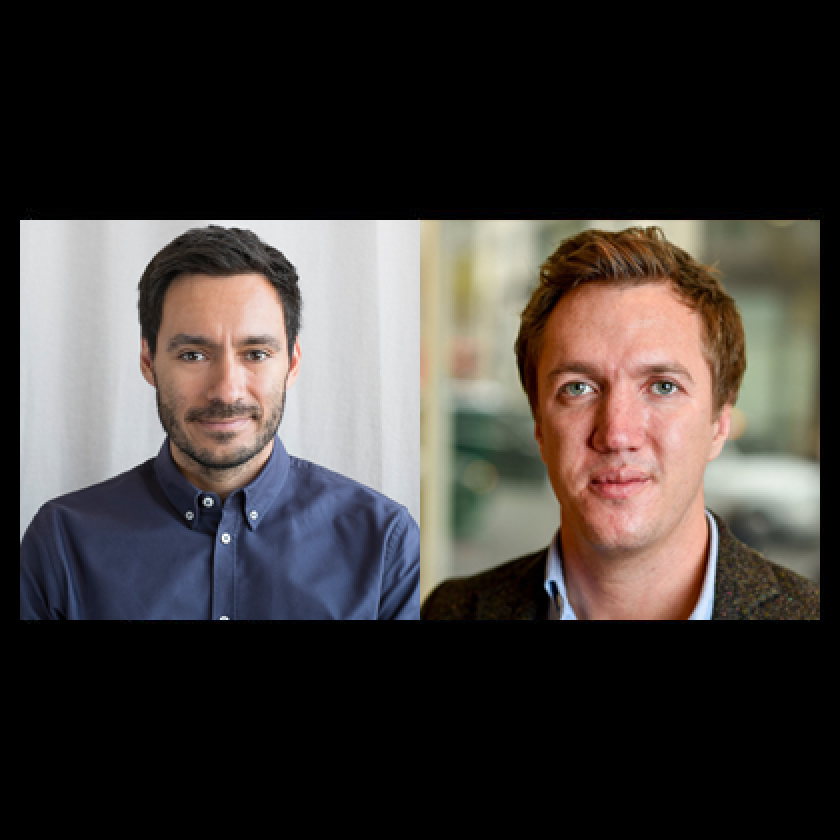
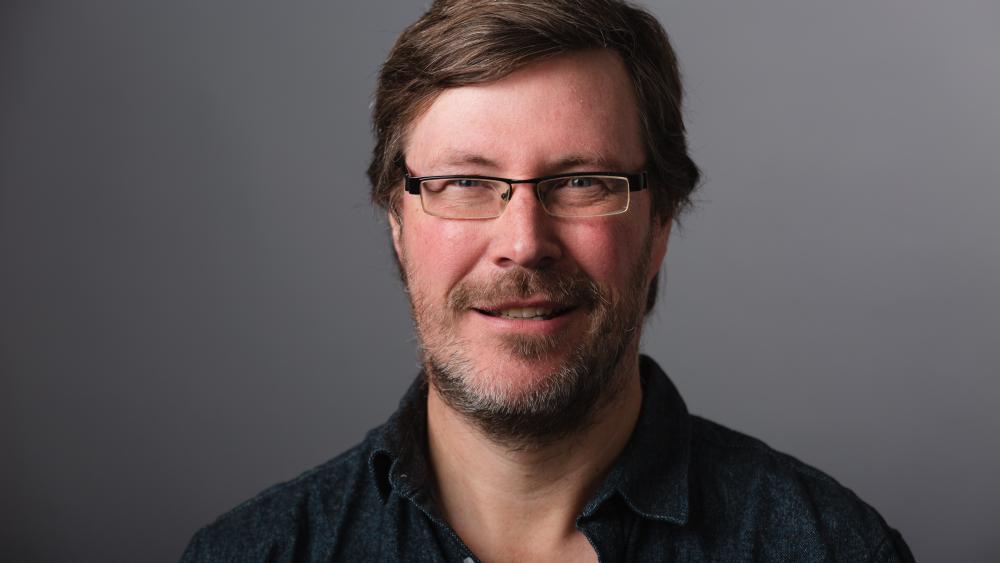
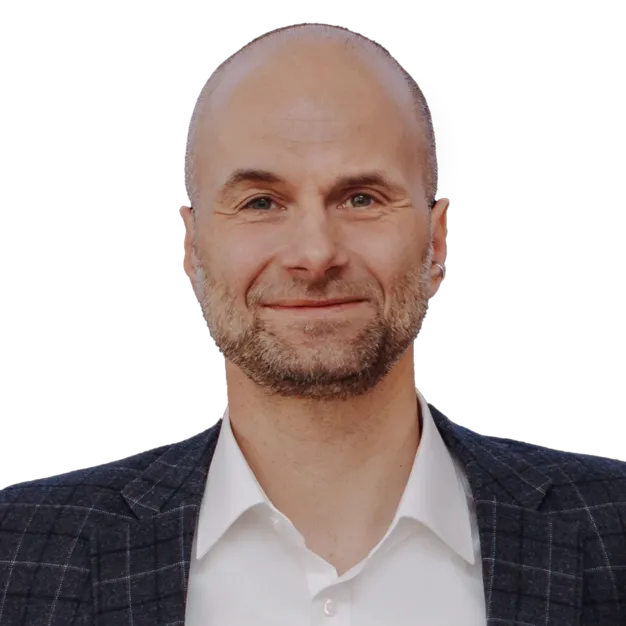
Geert Deconinck is a full professor at KU Leuven , leading the Electrical Energy Systems and Applications (ELECTA) research group within the Department of Electrical Engineering (ESAT). He also serves as scientific leader of the EnergyVille research center's algorithms domain, focusing on smart electrical networks and thermal systems. M.Sc. and Ph.D. from KU Leuven Head of ELECTA since 2012 (10 professors, 8 postdocs, 70+ PhDs) Over 8 million EUR research budget in last 5 years 44 completed PhDs and 10 current advisees IEEE Transactions editorial board member His research spans smart grid architectures , distributed control , and cyber-physical security , with recent focus on EV-grid integration , renewable energy democratization , and multi-carrier energy systems . Current projects include: Smart Charging - E-Mobility meets Renewable Energy Early Detection and Defense Systems for Smart Grids Open-source P2P energy sharing platforms Microgrid control strategies for PV-battery systems Awarded IET Fellow and IEEE Senior Member status, his work combines machine learning with power systems engineering through both theoretical modeling and experimental validation . He has contributed over 575 publications with 9800+ Google Scholar citations.
Song Mei is an Assistant Professor in the Department of Statistics and Department of Electrical Engineering and Computer Sciences at the University of California, Berkeley. She received her Ph.D. from Stanford University in 2020 under Andrea Montanari and maintains active research collaborations with institutions including Amazon (as a 2023 Amazon Research Award recipient) and OpenAI (where she is currently on leave). Her research spans the intersection of statistics, machine learning, information theory, and computer science, with particular emphasis on foundational theories for modern AI systems. Key interests include language models, diffusion models, quantum algorithms, and high-dimensional statistics, often leveraging insights from statistical physics literature. Analysis of her recent publications reveals a strong focus on theoretical underpinnings of generative AI, with significant contributions to understanding contrastive pre-training (CLIP), attention mechanisms in LLMs, and mathematical foundations of diffusion models. Her work demonstrates consistent interdisciplinary connections between statistical theory and practical AI development. Sloan Research Fellowship (2025) Noether Early Career Scholar Award (2025) Google Research Scholar Award (2024) Amazon Research Award (2024) She actively advises graduate students through MA programs and has secured significant research grants including Amazon Research Awards. Her work with AGI Labs at Amazon demonstrates applied impact of theoretical research. Current projects focus on mechanistic interpretability of large language models and mathematical frameworks for generative AI. Professor Mei leads research on the statistical principles behind frontier AI models, with particular focus on developing rigorous theoretical frameworks for understanding emergent behaviors in large-scale systems.
Mark E. Warren is a Professor of Political Science at the University of British Columbia (UBC), holding the Merilees Chair for the Study of Democracy. He joined UBC in 2004 and directs the SSHRC-funded Participedia project, which documents global democratic innovations. His research focuses on democratic theory, citizen participation, representation, and corruption. Warren previously taught at Georgetown University, Northwestern University, and Rice University. Education: B.A. from Lewis and Clark College, M.A. and Ph.D. from the University of Toronto. Key roles include founding the Centre for the Study of Democratic Institutions at UBC and co-founding the Center for Democracy and the Third Sector at Georgetown University. Research interests emphasize new forms of citizen engagement, democratic representation, and the interplay between civil society and governance. He has authored influential books like Democracy and Association (2001) and edited volumes such as Democracy and Trust (1999), recognized with prestigious awards. His work addresses corruption in democracies and systemic approaches to deliberative democracy. Awards include the Elaine and David Spitz Book Prize (2003) and ARNOVA’s Outstanding Book Award (2003). Participedia, his flagship project, serves as a global resource for participatory governance. Warren’s contributions bridge academic research and practical democratic innovation, influencing policies and institutions worldwide.
Ha-Joon Chang serves as Professor in the Department of Economics at SOAS University of London. His academic work spans development economics, industrial policy, and political economy, with significant contributions to understanding economic development processes in both developing and mature economies. Chang's research interests focus on development economics , industrial policy , and political economy , with particular emphasis on how institutions shape industrialization processes and economic development trajectories. His work critically examines mainstream economic theories while advancing alternative frameworks that emphasize productive transformation and social capabilities. Recent research has expanded into areas including digital industrialization in developing countries, commercial determinants of health, and the relationship between economic pluralism and democratic processes. Analysis of his recent publications reveals a consistent focus on production-centered development approaches, with growing attention to the challenges of digital transformation in developing economies. His work demonstrates strong interdisciplinary connections between economics, political science, and development studies, often challenging conventional wisdom about economic policy and development pathways. The 2021-2024 publications show increased engagement with contemporary issues like the commercial determinants of health and ideological biases in economic thinking. While specific scientific awards are not mentioned in the available information, Chang's extensive publication record in high-impact journals demonstrates significant scholarly recognition. His work appears in leading economics and development journals including Cambridge Journal of Economics, Development and Change, and The Lancet. Professor Chang maintains active research collaborations with scholars across multiple institutions, as evidenced by his co-authored publications spanning economics, public health, and development policy domains. His research outputs indicate engagement with both theoretical economic debates and practical policy applications, particularly regarding industrial policy design and implementation in diverse economic contexts.
Dr. hab. Piotr Łukomski is an Associate Professor at the Department of Political Theory, Institute of Political Science, University of Wrocław. His academic career focuses on the intersection of political theory, philosophy, and cultural analysis, with notable contributions to Hannah Arendt's philosophy, game theory applications in politics, and the role of imagination in political thought. Department: Political Theory Email: piotr.lukomski@uwr.edu.pl ORCID: 0000-0002-5307-616X Research Interests: His work spans conceptual metaphors in political theory, decision-making under hazardous conditions, cultural evolution of tyranny, and the aestheticization of politics. He examines how digital technologies (like VR) reshape political identity and how Arendtian frameworks apply to modern governance. Teaching: Coordinates social consulting labs and teaches decision-making processes in political contexts, with a focus on practical applications in hazardous conditions. Publications: Recent articles analyze VR-era political identity, Hannah Arendt's relevance to modern democracy, and the integration of problem-solving strategies in political thought.
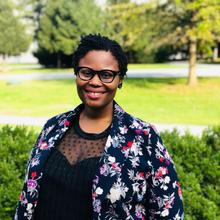
Maisha T. Winn serves as the Excellence in Learning Graduate School of Education Professor at Stanford University and is Faculty Director of the Stanford Accelerator for Learning's Equity in Learning Initiative. She leads the Futuring for Equity Lab as Principal Investigator and holds significant leadership positions including President-Elect of the American Educational Research Association and membership in the National Academy of Education. Dr. Winn's research examines how non-dominant youth and communities develop literate trajectories across historical and contemporary settings. As an ethnographer by training, she investigates how communities depicted as under-resourced create their own educational practices, processes, and institutions. Her scholarship bridges historical analysis with contemporary educational practice to build more just, collaborative, and equitable futures in education. Her work spans restorative justice in education, Black literacy studies, and transformative justice approaches, with particular attention to the school-to-prison pipeline, independent Black institutions, and futures-oriented educational frameworks. Dr. Winn analyzes how historical educational models can inform contemporary practices that center community knowledge and cultural identity. Andrew W. Mellon Fellow at CASBS (2022-23) American Educational Research Association Fellow Member of the National Academy of Education Dr. Winn advises doctoral students including Christina Hewko and Misbah Naseer, and leads research initiatives focused on educational equity. Her Futuring for Equity Lab develops frameworks for understanding how marginalized communities have historically created educational spaces that affirm their identities and knowledge systems, with direct implications for contemporary educational practice and policy. Her research team collaborates with community organizations and schools to translate scholarly insights into practical applications that promote educational justice, particularly in areas of school discipline reform and literacy education for marginalized youth.
Kornel Chang is Professor of History and Chair of the History Department at Rutgers University-Newark, specializing in U.S. immigration and foreign relations with a focus on U.S.-East Asian dynamics. His scholarship examines transnational borderlands, decolonization processes, and the intersections of race, labor, and empire, particularly in Korean and Pacific contexts. Recent work centers on U.S. occupation in Korea and enduring Cold War legacies on the peninsula. His educational background includes: Ph.D. from the University of Chicago Chang's research bridges U.S. immigration history, Asian American studies, and diplomatic history through a transnational lens. He investigates how U.S. interventions shaped decolonization in Korea, racial formations in border regions, and labor activism across the Pacific world. Current projects analyze the persistent Cold War framework in U.S.-North Korean relations and why peace remains elusive on the Korean Peninsula. Publication trends reveal consistent engagement with marginalized perspectives in borderland histories, evolving from early work on U.S.-Canada boundary formation to recent scholarship on Korea. His work consistently links race, gender, and labor to imperial power structures across the Americas and Asia, demonstrating methodological innovation in transnational historical analysis. His accolades include: Longlisted for the 2025 Cundill History Prize Named one of The New Yorker's Best Books of 2025 Association of Asian American Studies Book Prize winner (2014) Binkley-Stephenson Award winner (2021) ACLS Charles Ryscamp Fellowship recipient (2014-2015) Andrew W. Mellon Foundation Grant co-investigator ($225,000, 2020-2021) Chang has secured significant research funding including the Mellon Foundation grant for the Sawyer Seminar on urban migration dynamics, alongside prestigious fellowships from Harvard, Yale, and the American Academy of Arts and Sciences. While specific advisees aren't documented here, his departmental leadership and active research agenda indicate substantial graduate mentorship across history and American studies programs.
Jampel Dell'Angelo is an Associate Professor with ius promovendi in Water Governance and Politics at the Department of Environmental Policy Analysis, Institute for Environmental Studies (IVM), Vrije Universiteit Amsterdam. He holds concurrent roles as a Visiting Scholar at the University of California, Berkeley's Ecohydrology Lab, and an Environmental Governance Affiliate Scholar at SESYNC, Maryland. His research focuses on multilevel dimensions of water governance, climate adaptation in African irrigation systems, and transnational land investments' impacts. He leads the EU-funded NEWAVE project, coordinating 15 Early Stage Researchers across 10 institutions. Educated with a dual PhD in Environmental Science (Autonomous University of Barcelona) and International Cooperation (Sapienza University), he also holds advanced degrees from the LSE, Sapienza, Curtin, and the University of Siena. As Editor-in-Chief of World Development , he promotes interdisciplinary research on socio-environmental systems. His work contributes to UN SDGs related to clean water, sustainable cities, and responsible production. Research interests span water grabbing dynamics, socio-ecological resilience, and policy frameworks for equitable resource management. Recent projects address Mediterranean water scarcity solutions and the socio-political implications of global land rushes. He supervises PhD candidates exploring themes like water democracy, agrifood transitions, and environmental justice. Key contributions include pioneering analysis of 'water commons grabbing' and documenting the Global Water Grab Syndrome. His documentary work complements field research, such as Working Together: Research and Water Governance on Mount Kenya . Current projects emphasize innovative governance models and climate-resilient water management in transboundary contexts.
Devin Stauffer is a Professor and Associate Chair in the Department of Government at the University of Texas at Austin . Holding a Ph.D. from Boston College, he specializes in classical and early modern political philosophy, with a focus on Plato, Thomas Hobbes, and Leo Strauss. His career spans teaching roles at Kenyon College and St. John's College prior to joining UT Austin in 2004. Education: Ph.D., Boston College Professor Stauffer's research explores intersections of ancient and modern political thought, examining themes like justice, rhetoric, democracy, and the theological-political problem. His recent scholarly work continues to engage deeply with Strauss's interpretations of Hobbes, Locke, and classical texts. Key trends in his publications include: Interpretations of Strauss's correspondence and lectures Critical analyses of Hobbes's ethical and theological foundations Comparative studies of Socratic thinkers in classical texts Reconsideration of Locke's political conscience Debates on classical vs. modern approaches to natural right Scientific Awards : Two Teaching Excellence Awards at Kenyon College Three Teaching Awards at University of Texas Carl Friedrich von Siemens Foundation Fellowship (2013-14, Munich) He has taught courses including Machiavelli's Discourses , Socratic Political Philosophy , and Classical Quest for Justice . His visiting appointment at Harvard (2018) underscores his scholarly impact in political philosophy circles.
Tarik Abou-Chadi is a Professor in European Union and Comparative European Politics at the University of Oxford's Department of Politics and International Relations, and a Professorial Fellow at Nuffield College. He holds a PhD from Humboldt University Berlin (2015). His research focuses on elections, political parties, and the transformation of democratic representation in post-industrial societies. Key affiliations include the Government and Politics Network, Comparative Politics and Government, and leadership of the Swiss National Science Foundation-funded project on 'Social Status and the Transformation of Electoral Behavior in Western Europe'. He previously served as Assistant Professor at the University of Zurich before joining Oxford. His work appears in top journals like the American Political Science Review and World Politics. Awards include the Henrik Enderlein Prize (2022) and inclusion in Capital magazine's 'Top 40 under 40' (2022). He advises four doctoral students and actively contributes to media commentary on European political trends through outlets like The Economist. Research interests emphasize far-right dynamics, voter behavior, and party strategy in Western Europe. His recent analyses address gendered political preferences among youth, climate policy acceptance, and the electoral consequences of mainstream parties adopting radical-right policies.
Sandro Zanetti, Full Professor of General and Comparative Literature at the University of Zurich's Faculty of Arts and Humanities, specializes in avant-garde research, artistic production processes, and poetics of (im)probability. He studied German, History, and Philosophy at Basel, Freiburg, and Tübingen (1993-1999), earned his PhD in 2005 at Basel's SNSF project, and held positions including Junior Professor at Hildesheim (2008-2011) and DFG network head (2010-2014). Since 2011 at UZH, he progressed from Assistant to Full Professor (2022) and serves as Co-Dean of Studies since 2021. Current affiliations: Department of General and Comparative Literature (UZH), Center for Arts and Cultural Theory (ZKK), Literary Radio Zurich Former roles: ZGW Center (2010-2022), SNF project leader (2015-2019), Co-editor of History of the Present (2016-present) His research explores: Avant-garde genealogies and postwar literary modernity Time perception and aesthetic temporality Writing as cultural technique Interdisciplinary intersections with philosophy, media studies, and art Publications reveal trends in: 2022-2024: Dada historiography, AI-generated literature, Paul Celan's late works 2019-2021: Aesthetic theory, transactuality, Barthesian concepts 2014-2017: Improvisation networks, multilingualism, collaborative writing He co-founded interdisciplinary platforms and maintains editorial roles across 15 anthologies since 2004.
Dr. Catrin Lundström is an Assistant Professor of Ethnicity and Migration at the Department of Migration, Ethnicity and Society (REMESO) within the Department of Culture and Society (IKOS) at Linköping University's Faculty of Philosophy. Her research focuses on the intersection of migration, whiteness, and gender, examining how Swedish women experience transnational migration and return migration processes. Dr. Lundström received her PhD in Sociology from Uppsala University in 2007 and became an Associate Professor (Docent) in Sociology there in 2011. Her academic journey includes teaching and research positions at multiple Swedish institutions including Uppsala University, Stockholm University, Mälardalen University, Södertörn University, Umeå University, and Linköping University. She has also been a visiting researcher at the University of Arizona and the University of California. Dr. Lundström's research centers on whiteness as both a place-bound and transnational construction. She challenges conventional migration studies by focusing on privileged Swedish women migrants, developing the concept of 'white capital' to understand how whiteness functions as transferable cultural capital across national borders. Her work examines how racial privilege, gender, and class intersect in migration experiences, particularly among women who migrate for lifestyle, companionship, or professional reasons. Her recent publications demonstrate an expanding focus on the relationship between race, whiteness, and educational systems in Sweden, as well as critical examinations of contemporary political debates through the lens of critical race theory. Lundström's work increasingly addresses how colorblind discourse operates in Swedish society while simultaneously exploring the politics of national identity in a globalized world. Dr. Lundström has led significant research projects including: 'White Migrations: Gender, Whiteness and Privilege in Transnational Migration' (2014) 'Tre faser av hegemonisk vithet' (Three Phases of Hegemonic Whiteness) with Tobias Hübinette 'Att återintegrera svenskheten' (Reintegrating Swedishness) on returning Swedish migrant women, funded by the Swedish Research Council Her research has been supported by organizations including the Sweden-America Foundation and the Swedish Research Council. Dr. Lundström is actively involved in several academic networks: IMISCOE Standing Committee on Gender, Migration and Transnational Lives White Spaces Network at Leeds University Lifestyle Migration Hub, an international network of researchers studying lifestyle migration She regularly lectures within and outside academia, both in Sweden and internationally, and has received significant media attention for her research on school segregation, colorblind language, and gender equality in migration contexts.
Monica Bell is a tenured Professor of Law and Associate Professor of Sociology at Yale University, holding joint appointments across Yale Law School and the Department of Sociology. Her office is located at 127 Wall Street, New Haven, CT. As the first Black woman to serve as a junior faculty member and the second Black woman to receive tenure at Yale Law School, she is deeply committed to advancing diversity in academia. Education: B.A. in Political Science and Sociology, Furman University (Truman Scholar) M.Sc. in Equality Studies, University College Dublin (Mitchell Scholar) J.D., Yale Law School Ph.D. in Sociology and Social Policy, Harvard University Bell's research examines structural inequality through interdisciplinary lenses, focusing on policing, legal estrangement, housing segregation, welfare policy, and racial-spatial dynamics. She employs qualitative methodologies to analyze how marginalized communities experience legal institutions, with emphasis on urban poverty and systemic exclusion. Her conceptual framework of 'legal estrangement' redefines understandings of community-law enforcement relationships. Her publications consistently engage with themes of racial justice, institutional reform, and community agency. Recent work demonstrates a strong focus on reimagining policing systems, analyzing residential segregation patterns, and developing democratic approaches to poverty governance. Articles frequently intersect law, sociology, and urban studies while incorporating critical race theory. Awards and Honors: Jane Addams Article Award (American Sociological Association) Derrick A. Bell, Jr. Award (AALS) Yale Law Women Faculty Excellence Award Russell Sage Foundation Visiting Scholar Fellowship Truman Scholarship & Mitchell Scholarship Bell teaches Constitutional Law and Law & Sociology, exploring governmental power structures and sociological applications to legal analysis. She previously clerked for Judge Cameron McGowan Currie (U.S. District Court) and served as an Arthur Liman Fellow at Legal Aid Society of D.C., focusing on TANF policy. No current grants, labs, or student advisees are detailed in available materials.
Professor Phil Clark is a Professor of International Politics at SOAS University of London, specializing in conflict and post-conflict issues with a focus on transitional justice, peacebuilding, and reconciliation after mass atrocity in Rwanda, Uganda, the Democratic Republic of Congo, and Burundi. He holds a DPhil in Politics from the University of Oxford, where he studied as a Rhodes Scholar, and a Bachelor of International Studies from Flinders University. His research focuses on international, national, and community-based responses to mass violence in Central Africa, particularly examining the gacaca community courts in post-genocide Rwanda and the International Criminal Court (ICC). Professor Clark has advised multiple governments (Danish, Sudanese, Swedish, Ugandan, and UK), international organizations (ICC, International Criminal Tribunal for Rwanda), and NGOs (Human Rights Watch, Crisis Group) on conflict issues in Africa. Professor Clark's work spans several key areas including the History, Politics and Law of the African Great Lakes; Transitional Justice Theory and Practice; the Politics of Violence; Community-Based and Customary Law; Conflict Resolution and Reconciliation; the Politics of International Criminal Justice; Peacebuilding, Security and Post-Conflict Reconstruction; and Moral and Political Philosophy. His approach often combines theoretical analysis with practical fieldwork in post-conflict societies. His publications reveal a consistent focus on the tension between international legal frameworks and local justice mechanisms, particularly examining how post-genocide societies navigate complex reconciliation processes. Over time, his work has evolved from documenting specific cases (like the gacaca courts) to analyzing broader patterns of transitional justice and international criminal law across the African continent. Shortlisted for the Raphael Lemkin Award for best book on genocide and mass violence (for "Distant Justice: The Impact of the International Criminal Court on African Politics") Regular contributor to major media outlets including The New York Times, Foreign Affairs, Washington Post, The Guardian, and BBC Frequent media commentator on international news networks including BBC, France 24, Al Jazeera, CNN, and Deutsche Welle Professor Clark has supervised multiple PhD students working on topics related to conflict analysis, women's access to transitional justice, China-Africa relations, and conflict transformation. His current research includes "Intergenerational Justice in Eastern Africa" and "Reframing Justice after Atrocity," which examines justice interactions beyond the linear international-to-national transmission of norms and practices. He has led significant research projects, including serving as technical advisor and co-author of a 2007 UN Office of the High Commissioner for Human Rights project surveying popular perceptions of transitional justice and peacebuilding in northern Uganda. His ongoing work continues to shape academic and policy discussions about justice mechanisms in post-conflict societies.
Sebastian Pfotenhauer is a Carl von Linde Professor for Innovation Research at Technical University of Munich (TUM) and Deputy Head of the STS Department. He specializes in the societal dimensions of innovation, including governance of emerging technologies, regional innovation cultures, and responsible innovation practices. His work bridges academic research and policy, with leadership roles in major initiatives like the €50M Munich Cluster for the Future of Mobility (MCube) and the EU-funded SCALINGS project on co-creation in innovation. He holds a PhD in Physics from the University of Jena and postdoctoral training at MIT and Harvard. Research interests include innovation policy, science governance, and the interplay between technology and societal change. Notable projects include comparative studies of innovation cultures, governance frameworks for AI and neurotechnology, and global partnerships in science and innovation. He advises governments and international bodies like the OECD and the German Engineers’ Association (VDI). Publications span journals like Research Policy , Social Studies of Science , and Nature Biotechnology , addressing topics from regulatory sandboxes to neurotechnology ethics. Awards include the Leading Technology Policy Fellowship (MIT) and NSF grants for studying complex international partnerships.