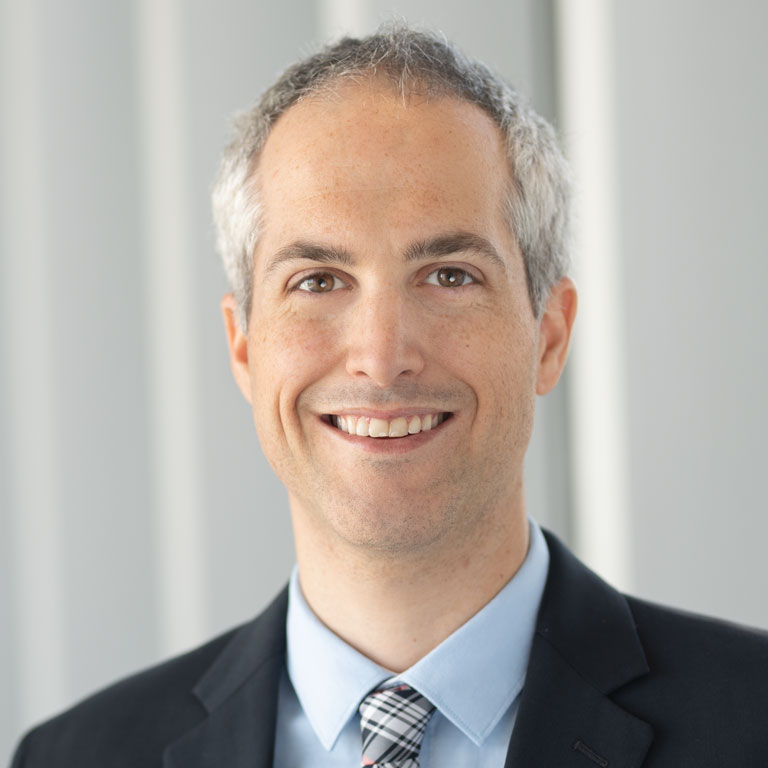
Martin Cousineau is an Associate Professor in the Department of Logistics and Operations Management at HEC Montréal, specializing in the intersection of Operations Research and Artificial Intelligence applied to logistics, transportation, and healthcare. He holds a PhD from McGill University, an M.Sc. from HEC Montréal, and a B.Eng. in Mechanical Engineering from École Polytechnique de Montréal. He co-leads the Sustainable Health axis at Obvia and is a member of CIRRELT. His research focuses on decision support systems, healthcare logistics, and optimization methods for causal inference. Notable contributions include studies on pandemic supply chain resilience, electric vehicle routing, and AI-driven healthcare solutions. Recipient of the 2024 Excellence in Teaching Award and the 2023 Best Paper Award in Transportation Science, Cousineau has supervised over 30 master's theses and projects. He teaches courses such as Warehousing Systems Design and Supply Chain Analytics .
Paulo Alencar is an Adjunct Professor at the University of Waterloo, located in DC 1315. His research spans Machine Learning, Software Engineering, and Health Informatics, with a focus on applying AI to healthcare, software development tools, and IoT systems. He leads work on conversational agents, model selection frameworks, and spatial-temporal data analysis. Key research interests include: Machine Learning applications in clinical assessment (e.g., depression detection via NLP) Context-aware software development tools using AI IoT-based health monitoring systems leveraging wearable devices Multi-agent systems and adaptive decision-making architectures Recent work emphasizes: LLM effectiveness in testing and clinical contexts Graph-based cluster evolution analysis for transportation and urban planning Agentic frameworks for recommender systems mHealth platforms for stress and public health surveillance He has developed the AKIP Process Automation Platform for process-aware web applications and contributed to metadata-driven testing methodologies for research software. His work bridges AI, software engineering, and healthcare innovation without listed formal advisees.
Dr. Miana Plesca is an Associate Professor in the Department of Economics & Finance at the Gordon S. Lang School of Business and Economics, University of Guelph. Her research focuses on Labour Economics, Program Evaluation, and the impacts of training programs, post-secondary education returns, and occupational mobility. She holds a B.A. in Computer Science (Technical University of Cluj, Romania), an M.A. in Economics (Georgetown University), and a Ph.D. (University of Western Ontario). Dr. Plesca’s work examines topics such as the productivity benefits of overeducation, gender wage gaps, and the effects of economic fluctuations on training decisions. Notably, her 2023 study with Fraser Summerfield on overeducation’s productivity impacts received international attention. She has also been recognized with the Kenneth J. Arrow Prize for Junior Economists (2011) for her paper on training decisions during economic fluctuations. Her research employs advanced methodologies, including big data analysis and dynamic panel models, to address labour market challenges. Collaborations include work with institutions like Ryerson University and Acadia University. Dr. Plesca advises graduate students, including former Ph.D. alumni Burc Kayahan, and contributes to interdisciplinary discussions on skills gaps and education policy.
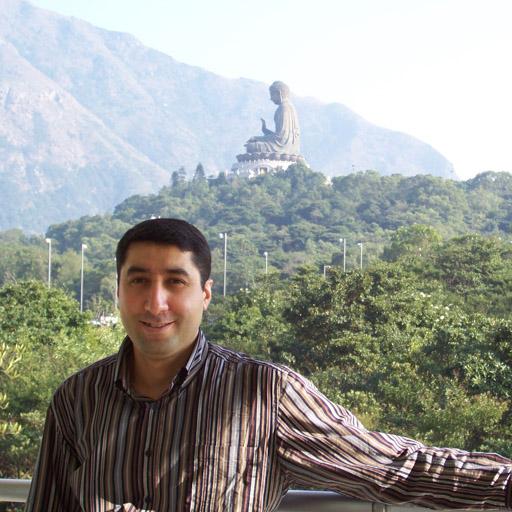
Dr. Tirupati Bolisetti is a Professor in the Department of Civil and Environmental Engineering at the University of Windsor's Faculty of Engineering. He holds a PhD from the University of Windsor, an MTech from the Indian Institute of Technology (IIT) Kanpur, and a BE from Andhra University, India. His research focuses on hydrology and climate change impact assessment, geothermal energy systems, evaporation from porous surfaces, and climate resiliency of Arctic water infrastructure. Key areas include hydrological modeling, geothermal energy applications, and sustainable urban drainage systems. Selected publications highlight contributions to borehole heat exchanger analysis, low-impact development practices, and climate change impacts on hydropower and hydrology. His work integrates advanced methodologies like Polynomial Chaos Expansion for uncertainty quantification and data assimilation techniques in hydrologic models. Professionally, he is affiliated with the Professional Engineers Ontario (PEO). His research trends emphasize adapting water infrastructure to climate change, advancing geothermal energy technologies, and optimizing urban flood management systems through interdisciplinary modeling approaches.
Dr. Betty Li is an Adjunct Professor in the Department of Systems and Computer Engineering at Carleton University and a researcher at the Human Health Therapeutics Research Center. She holds a Ph.D. in Biomedical Engineering from the University of Western Ontario (2018), with prior degrees from Western Ontario (Master of Engineering Science, 2013) and the University of Toronto (Bachelor of Applied Science in Nanoengineering, 2011). Her research focuses on developing microphysiological systems, such as organ-on-chip models, using stem cells, 3D bioprinting, and biomaterials to advance preclinical drug discovery. Key research areas include biomaterials, biomechanics, and microfluidic design. Her recent publications (2023–2025) emphasize 6G networks, non-terrestrial networks (NTN), and AI-driven solutions for wireless communication challenges. She explores topics like federated learning in NTN, hemispherical antenna arrays for HAPS, and energy-efficient satellite IoT systems. Her work bridges biomedical engineering and telecommunications, addressing challenges in both fields. No scientific awards are explicitly mentioned in the text. She advises no listed students but collaborates on projects involving robotic aerial base stations and spectral efficiency optimization. Her lab work integrates interdisciplinary approaches for in vitro tissue modeling and sustainable network architectures.
Afsoon Alidad Shamsabadi is a Lecturer at the Department of Systems and Computer Engineering, Faculty of Engineering and Design, Carleton University. His work focuses on wireless communication systems, algorithmic network optimization, and emerging 6G technologies. Research Interests span three primary domains: Wireless network architectures (HAPS, vHetNets, hybrid satellite-terrestrial systems) AI-driven resource management (generative AI, reinforcement learning applications) Equity-focused telecommunications (digital divide mitigation via satellite networks) Current research trends emphasize 6G network planning , low-latency communication , and energy-efficient protocols . No scientific awards or student lists are publicly available in this dataset.
Dr. Madeleine McPherson is an Associate Professor in the Department of Civil Engineering at the University of Victoria (UVic) and Principal Investigator of the Sustainable Energy Systems Integration & Transitions (SESIT) Group. She specializes in energy systems integration, decarbonization pathways, and multi-scale energy modeling. Her work focuses on coordinating infrastructure systems (transport, buildings, electricity, water) to achieve climate goals. Education: BASc in Engineering Science (University of Toronto, 2009) MEL in Clean Energy Engineering (UBC, 2010) PhD in Civil Engineering (University of Toronto, 2017) Research Interests: Variable renewable energy integration Energy systems modeling (CREST, SILVER) Electrification pathways for cities Decarbonization of Canada’s energy system through stakeholder engagement Her recent work explores 100% renewable city feasibility (e.g., Regina), grid flexibility requirements under high renewable penetration, and cross-sectoral decarbonization strategies. She collaborates with the Energy Modelling Hub to inform national policy dialogues. Advising & Grants: Actively recruiting graduate students/postdocs with backgrounds in engineering, computer science, or related fields. Funding available for MASc/PhD candidates. Her lab focuses on open-source modeling tools and capacity-building initiatives. Labs/Teams: SESIT Group (UVic) develops decision-support models for energy transitions, emphasizing participatory approaches with stakeholders and communities.
Prof. Jamal Bentahar is a Professor at the Concordia Institute for Information Systems Engineering (CIISE), part of Concordia University's Faculty of Engineering and Computer Science. His research focuses on intelligent agents, multi-agent systems, federated learning, reinforcement learning, cybersecurity, and their applications in healthcare, IoT, and autonomous systems. He leads research initiatives in AI-driven medical imaging, edge-cloud computing, and blockchain-empowered distributed systems. Key research areas include: Multi-Agent Systems: Formal verification of trust and commitments, group trust modeling, and distributed decision-making Federated Learning: On-demand client/model deployment, trust-aware optimization, and privacy-preserving frameworks Medical AI: Cardiac ultrasound analysis, CPR signal processing, and robotic telemedicine systems Edge/IoT Intelligence: UAV-enabled vehicular networks, energy-efficient LoRa gateways, and fog computing optimization His work bridges theoretical foundations (e.g., multi-valued model checking) with practical applications in healthcare robotics, smart city infrastructure, and autonomous vehicle safety. Recent publications highlight innovations in transformer-based reinforcement learning, spherical topic modeling, and explainable AI for cybersecurity. Prof. Bentahar's contributions include tools like MV-Checker for multi-valued verification and frameworks like CACTUS for cardiac ultrasound analysis. He actively publishes in top venues and serves as editor for special sections on federated learning and AI applications.
Dr. Bin Chang is an Associate Professor of Finance at the Faculty of Business and Information Technology, Ontario Tech University. She holds a PhD from the University of Toronto and has prior experience as a credit derivatives risk analyst at CIBC, an instructor at the University of Toronto, and a foreign exchange trader at the Bank of China. Her research focuses on corporate payout policy, corporate governance, cash policy, innovation, entrepreneurship, pension systems, and climate change. She has secured multiple SSHRC grants, including a 2021 Insight Development Grant as Principal Investigator. Her work bridges theoretical frameworks with practical applications in financial policy and supply chain resilience. Dr. Chang contributes to interdisciplinary initiatives within the faculty, emphasizing data-driven decision-making and sustainable business practices. Education: PhD in Finance, University of Toronto MA in Finance, Queen's University MA, LLB, and BA from Wuhan University, China Research Interests: Dr. Chang’s research explores corporate financial policies, governance structures, and the impact of external factors like climate change on financial decision-making. She employs computational methods to analyze supply chain resilience, risk management, and sustainable infrastructure planning (e.g., EV charging stations). Her work often addresses global challenges, such as balancing economic growth with environmental stewardship. Grants & Collaborations: As Principal Investigator, she led a 2021 SSHRC grant examining corporate governance’s role in cash policies. Co-investigations include studies on dividend policies and financial crisis impacts. Her collaborations emphasize cross-disciplinary approaches to solving real-world business and environmental challenges. Labs/Teams: While primarily affiliated with the Finance department, her research aligns with the faculty’s broader initiatives in business analytics and AI, particularly in optimizing supply chain and financial systems.
Julia Yan is an Assistant Professor in the Operations and Logistics Division at the UBC Sauder School of Business. She holds a BA from Princeton University and a PhD from MIT. Her research focuses on optimization methodologies applied to transportation systems, operations research, and logistics challenges. Key areas include pandemic planning, transit network design, and ridesharing dynamics. Professor Yan teaches courses on statistical applications in management and has published extensively in top journals like Management Science and Transportation Science. Education: PhD in Operations Research, Massachusetts Institute of Technology BA in Mathematics/Economics, Princeton University Research Interests: Dr. Yan specializes in applying advanced optimization techniques to real-world problems, particularly in transportation and logistics. Current research emphasizes: Dynamic pricing models for shared mobility systems Resilient scheduling under sudden resource scarcity Data-driven transit network design at scale Multi-modal transportation system integration Professional Contributions: Her work bridges theoretical optimization with practical applications, addressing challenges in urban mobility, emergency resource allocation, and professional services workforce planning. Courses taught include statistical methods for managerial decision-making.
Matheus Grasselli is a Professor of Financial Mathematics at the Department of Mathematics and Statistics, McMaster University, where he currently serves as Deputy Provost since July 2022. He is affiliated with the PhiMac research group and co-leads the Systemic Risk Analytics initiative at the Fields Institute. His previous roles include Deputy Director at the Fields Institute (2012–2016) and Director of the Centre for Financial Industries (2017–2020). Grasselli’s research spans Financial Mathematics, focusing on stochastic analysis, systemic risk, climate-economic modeling, and asset price bubbles. He has advised numerous graduate and undergraduate students, including PhD candidates and postdoctoral fellows, contributing to over 50 academic publications. His teaching includes advanced courses in financial mathematics, numerical methods, and real options, alongside contributions to the Integrated Sciences program. Grasselli holds a PhD in Information Geometry from King’s College London and has collaborated internationally on projects integrating economic theory with climate science. Education: PhD in Information Geometry, King’s College London. Leadership Roles: Deputy Provost (2022–present), Deputy Director (Fields Institute, 2012–2016), Director (Centre for Financial Industries, 2017–2020). Research Interests: Financial Mathematics, systemic risk, climate-economic models, asset price bubbles, and stochastic processes. His work bridges theoretical frameworks with practical applications in policy analysis and financial stability. Teaching: Courses include graduate programs like the McMaster Financial Mathematics (MFM) Master’s, numerical methods for finance, and undergraduate courses in calculus and linear algebra. He pioneered the design of the Integrated Sciences program. Collaborations: Active in interdisciplinary projects, including climate-economic modeling and systemic risk analysis. His research often employs agent-based computational economics and dynamical systems approaches.
Pierre Baptiste is a Full Professor in the Department of Mathematics and Industrial Engineering at Polytechnique Montréal's Faculty of Engineering. He holds a Diplôme d'Ingénieur from INSA Lyon, a Doctorate from University of Lyon 1, and a Habilitation à Diriger des Recherches (HdR) from INSA Lyon. His research spans logistics, optimization, scheduling, and production management with applications across multiple industries. He is affiliated with the Institute for Data Valorization (IVADO) and the Decision Analysis Study and Research Group (GERAD). His research interests focus on Logistics , Optimization and Optimal Control Theories , Scheduling , Production Management , and Supply Chain Management . A significant portion of his recent work centers on Demand-Driven Material Requirements Planning (DDMRP), flow shop scheduling, aircraft end-of-life management, and sustainability assessment of solar energy systems. His interdisciplinary approach combines operations research with practical industrial applications. Professor Baptiste has supervised 11 doctoral students and 25 master's students, with thesis topics ranging from DDMRP implementation to aircraft disassembly optimization and solar energy sustainability. His most recent publications (2022-2025) show a strong focus on DDMRP buffer management, flow shop scheduling with missing operations, and sustainability assessment of renewable energy systems. His research demonstrates a consistent evolution from theoretical scheduling problems toward practical supply chain applications and sustainability considerations. As a member of IVADO and GERAD, Professor Baptiste contributes to collaborative research initiatives that bridge academic theory with industrial practice. His work has significant implications for manufacturing efficiency, supply chain resilience, and sustainable resource management in both traditional industries and renewable energy sectors.
Antoine Legrain is an Associate Professor at Polytechnique Montréal in the Department of Mathematics and Industrial Engineering since 2019. His research focuses on real-time operations management , stochastic optimization , and dynamic problem-solving to enhance healthcare access and multimodal transportation systems. He is affiliated with multiple research centers: GERAD (Decision Analysis Study and Research Group) CIRRELT (Interuniversity Research Center on Enterprise Networks, Logistics, and Transport) HANALOG (Tier 1 Canada Research Chair in Healthcare Analytics and Logistics) Canada Excellence Research Chair in Data Science for Real-Time Decision Making IVADO (Institute for Data Valorization) His expertise spans operational research , logistics , mathematical modeling , algorithm development , and optimization , with applications in public transport, healthcare scheduling, and waste management. His recent work includes systematic reviews on data privacy in MaaS and algorithmic solutions for dial-a-ride problems. Antoine holds a Ph.D. in Mathematics , an M.Sc.A. in Applied Mathematics , and an Engineering Diploma from École Centrale Paris . He has supervised one Master's thesis and secured research grants from organizations like the Fonds de recherche du Québec and Bank of Canada .
Bruno Agard is a Full Professor in the Department of Mathematics and Industrial Engineering at Polytechnique Montréal , specializing in industrial engineering, data mining, and Industry 4.0 applications. He serves as Director of the Data Intelligence Laboratory (LID) and holds memberships in multiple research centers including the Poly-Industries 4.0 Laboratory, IVADO, CIRRELT, and CIRODD. His academic career spans over two decades with progressive roles from Assistant to Full Professor since 2014. Ph.D. in Industrial Engineering (2002), National Polytechnic Institute of Grenoble DEA in Industrial Engineering (1999), National School of Industrial Engineering, Grenoble Aggregation in Mechanical Engineering (1998), École Normale Supérieure de Cachan Professor Agard's research focuses on data mining applications for engineering challenges across manufacturing, logistics, transportation, and agriculture. Key areas include product family design, modular systems, delayed differentiation, and spatiotemporal data analysis. Recent publications highlight AI-driven energy consumption modeling for electric buses, sensor failure detection using variational autoencoders, and optimization of agri-food processes through data intelligence. His work demonstrates strong industry collaboration with partners like Air Liquide, Bridgestone, and La Milanaise across 221 publications. Current projects involve real-time data processing for mining equipment, predictive maintenance analytics, and smart card data analysis for urban mobility patterns. 13 Ph.D. students supervised 29 Master's students mentored Current courses: Facilities Planning (IND3303), Industrial Data Mining (IND6212) As Director of LID, he leads interdisciplinary research integrating machine learning with industrial systems, with special emphasis on sustainable development and operational efficiency. His methodological contributions include innovative approaches to product design, process optimization, and knowledge extraction from complex datasets.
Kai Huang is a Professor of Operations Management at the DeGroote School of Business , McMaster University . He specializes in optimization under uncertainty and data-driven optimization techniques with applications in business analytics , supply chain management , and humanitarian logistics . His work addresses challenges in electric/autonomous vehicles , food supply chain safety , and disaster response logistics . Teaches courses: Optimization Under Uncertainty , Supply Chain Management , Simulation for Business Analytics Research interests span stochastic optimization , AI integration , and sustainable supply chains Recent scholarly work includes: 2025: Four articles on reverse supply chains , green coordination , public-private collaborations , and robust inventory systems 2024: Six articles covering EV charging networks , AI-powered chatbots , and healthcare recovery modeling 2023: Eight publications on carbon reduction , VRP disruptions , and hematopoietic supply chains