Professor Richard Holton is a Fellow and Director of Studies in Philosophy at the University of Cambridge. His work spans moral philosophy, philosophy of mind, and epistemology, with a focus on agency, responsibility, and trust. His recent research examines mental effort, akrasia (weakness of will), and ethical decision-making in pandemic contexts. Publications highlight interdisciplinary connections between philosophy, psychology, and medical ethics. While his articles address causation, self-deception, and linguistic frameworks, no explicit scientific awards or student advisement records are documented in the provided materials.
David Nugent is a Professor in the Department of Anthropology at Emory University. He holds a PhD from Columbia University (1988) and specializes in sociocultural anthropology, political economics, and Latin American studies. His research focuses on state formation, race/ethnicity, agrarian societies, and the interplay between knowledge systems and power. Nugent’s fieldwork spans diverse regions including the Peruvian Andes, East Africa, the Canadian Arctic, and the U.S. Southwest. Key publications include The Encrypted State (2019), Modernity at the Edge of Empire (1997), and co-edited volumes such as State Theory and Andean Politics (2015). He has received the Choice Magazine ‘Outstanding Academic Title’ award for his collaborative work. Current projects explore vernacular sovereignties in Pacific-facing Latin America and underground democratic forms in Peru. Nugent’s research bridges historical and political anthropology, examining how states negotiate legitimacy through symbolic systems, fear, and displacement. His work critiques colonial and neocolonial knowledge frameworks while analyzing contemporary challenges like urban inequality and smart city governance. Education: PhD in Anthropology, Columbia University (1988) Awards: Choice Magazine ‘Outstanding Academic Title of 2004’ Projects: Co-editing ReOrienting Latin American History and authoring Sacropolitics: Group Sacrifice and the State of Redemption
Andre C. Willis serves as the Willard Prescott and Annie McClelland Smith Assistant Professor of Religious Studies at Brown University. His academic work bridges philosophy of religion, Enlightenment thought, and African American religious traditions. Willis has established himself as a significant scholar examining the intersections of hope, race, and democratic citizenship through both historical and contemporary lenses. Willis's research interests center on Enlightenment reflections on religion (particularly David Hume's work), African American religious thought, critical theory, and democratic citizenship as it relates to hope, recognition, and belonging. His scholarship develops a distinctive framework distinguishing between 'trivial hope' (market-driven, future-oriented aspirations) and 'deep hope' (a discipline of the present moment that confronts life's fundamental realities without delusion). This work connects Hume's philosophical contributions with African American religious traditions, particularly examining Martin Luther King Jr.'s theology of hope in contrast to more contemporary political approaches. His publications reveal consistent engagement with Hume's religious philosophy, race theory, and African American religious thought. Willis has authored the book Toward a Humean True Religion: Genuine Theism, Moderate Hope and Practical Morality (2015) and numerous articles exploring Hume's legacy regarding race, Obama's racial legacy, and dissident theo-politics. His recent work continues to develop his distinctive analysis of hope as a present-oriented discipline rather than future aspiration. At Brown, Willis teaches courses spanning Christianity and economic inequality, foundational texts in African American theology, David Hume and religion, religion and postmodernism, and Black and Brown religion in America. His teaching reflects his research interests, connecting philosophical inquiry with contemporary social and religious concerns.
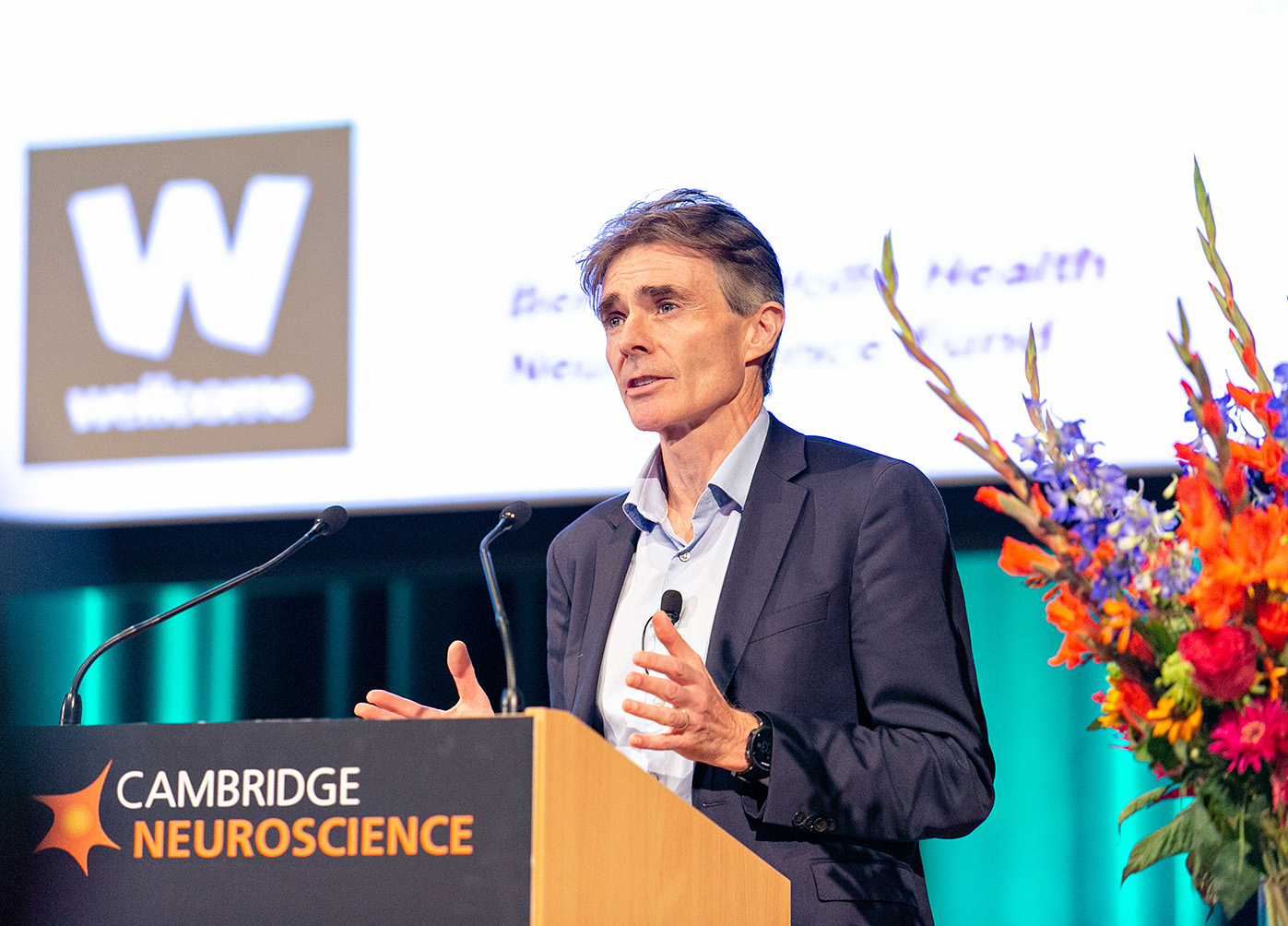
Professor Paul Fletcher is a Principal Investigator at the Institute of Metabolic Science, University of Cambridge, and holds the Bernard Wolfe Health Neuroscience Fund. He is affiliated with the Department of Psychiatry and collaborates with Professors Steve O’Rahilly, Sadaf Farooqi, Fiona Gribble, and Frank Reimann. His research bridges neuroscience and psychiatry to explore higher-level perceptual and learning processes shaping decision-making and behavior, particularly in relation to obesity and mental disorders. Academic Rank: Professor University: University of Cambridge School: Institute of Metabolic Science Department: Psychiatry Fletcher employs functional neuroimaging, behavioral studies, and pharmacological perturbations (e.g., dopamine agonists/antagonists) to investigate reward-related brain processes and their role in food choice, obesity, and psychiatric conditions like psychosis. His work emphasizes the integration of the brain with metabolic/endocrine signals and external environments. Key trends in his publications include predictive coding , delusions , neuroimaging , and virtual reality applications in mental health. Recent studies focus on anxiety , foraging behavior , schizophrenia , and health interventions . Scientific Awards Bernard Wolfe Health Neuroscience Fund Wellcome Trust Senior Clinical Fellow Fletcher’s research is funded by Wellcome and the Bernard Wolfe Fund, with collaborations spanning psychiatry, psychology, and clinical neuroscience. His work addresses mental health , obesity , and neurocognitive mechanisms of decision-making, supported by recent publications in top-tier journals.
Mona Ali serves as an Associate Professor in the Department of Economics at the State University of New York at New Paltz, where she maintains an active research program examining the political economy of global finance and macroeconomic policy frameworks. Her scholarly contributions bridge academic rigor with public policy relevance through publications in leading journals and major media outlets. Her academic credentials include: PhD in Economics (2012) from The New School for Social Research Cambridge Advanced Programme in Rethinking Development Economics, University of Cambridge (2008) Professor Ali's research centers on International Political Economy, Macroeconomics, and Macro-Finance, with particular emphasis on the geopolitical dimensions of the dollar system, transnational corporate power, and climate-finance intersections. She critically analyzes structural imbalances in global economic governance while exploring pathways toward post-capitalist futures, as evidenced by her recent book Radical Political Economics: Principles, Perspectives, and Post-capitalist Futures featured in the Financial Times. Her publication trajectory reveals consistent focus on power asymmetries within international monetary systems, evolving from early work on US balance of payments puzzles to contemporary analyses of dollar weaponization and climate realpolitik. The 2025 Noria Research piece on debt-sovereignty-energy linkages represents the current frontier of her scholarship, demonstrating increasing integration of ecological and geopolitical perspectives. Her scholarly recognition includes: Edith H Johnson Memorial Award for outstanding PhD dissertation in economics (The New School, 2012) Professor Ali teaches core courses including Macroeconomics and Money and Banking alongside specialized seminars such as Crisis Economics and Global Imbalances , while maintaining public engagement through Jacobin Magazine interviews and contributions to platforms like Phenomenal World and LSE blogs. Her office is located in JFT 318 at SUNY New Paltz, with contact available at alim@newpaltz.edu.
Martin Ingvar is a Senior Professor at Karolinska Institutet's Department of Clinical Neuroscience, affiliated with the Pain and Brain Imaging research group led by Karin Jensen. He holds a Medical Degree from Lund University (1984) and a Doctor of Medical Science degree (1982), specializing in experimental neurological research. His research focuses on knowledge processes in healthcare, integrating cognitive science, information theory, and medical informatics to develop clinical information systems that enhance patient care. He leads the Vinnova Demonstrator project (2023–2027) on multi-use health data and has held prominent roles such as Dean of Research at Karolinska Institutet (2010–2013) and Board Chair of Swelife (2013–2017). Ingvar’s academic career includes leadership positions like Deputy Head and Head of the Department of Clinical Neuroscience (2004–2010), and directorships of facilities like the Karolinska MR Center (1998–2022). His grants span topics like psychiatric prediction systems, chronic pain mechanisms, and healthcare data innovation. He has contributed to over 400 publications, emphasizing brain imaging, psychiatric disorders, and health informatics. Key contributions include pioneering work on the National MEG Center and advancing integrative medicine. His research bridges clinical neuroscience with societal health challenges, emphasizing data-driven solutions for healthcare systems.
Dr. Kamil Waldemar Lemanek is a Polish-American academic affiliated with Maria Curie-Skłodowska University as an Assistant Professor in the Department of Logic and Cognitive Science under the Faculty of Philosophy and Sociology. He also holds an adjunct position at the University of Warsaw Institute of Philosophy. His scholarly focus bridges philosophy of language , philosophy of mind , and ontology , with significant contributions to inferentialism, semantic theory, and pedagogical innovation. PhD in Philosophy (2023), University of Warsaw Research on natural language architecture, delusion frameworks, and educational technology Extensive editorial collaboration and grant acquisition His publications reveal a thematic interplay between linguistic finitism , semantic atomism , and social epistemology . Notably, he explores unconventional pedagogical tools like ancient astronaut theory for teaching informal logic. Though no specific scientific awards are listed, his national/international grants (e.g., NCN grant for research on language architecture) demonstrate institutional support. Teaching innovations include AI-assisted peer review simulations in academic writing instruction.
Eric Mandelbaum is a Professor of Philosophy at Baruch College, City University of New York (CUNY), where he holds the Ruth Printz O'Hara '52 Professorship. He also maintains an appointment at the CUNY Graduate Center Department of Philosophy. His scholarly work bridges philosophy and cognitive science, with a particular focus on the nature of belief, mental representation, and cognitive architecture. Professor Mandelbaum's primary research interests include Philosophy of Cognitive Science and Philosophy of Mind, with significant contributions to understanding belief systems. His work has developed the influential Spinozan model of belief fixation, which posits that merely contemplating a proposition entails believing it, with rejection requiring a separate, effortful process. He has also advanced a fragmented model of belief storage, challenging the traditional unified web of belief in favor of multiple, context-sensitive belief stores. His research extends to language of thought hypothesis, implicit bias, and the psychological immune system that governs belief change. Analysis of Mandelbaum's publication record reveals a consistent trajectory of integrating philosophical analysis with empirical findings from psychology and cognitive science. His recent work demonstrates an increasingly interdisciplinary approach, connecting belief science to mental health applications, language processing, and social cognition. A distinctive feature of his scholarship is the development of mechanistic explanations for seemingly incompatible aspects of belief, showing how belief can simultaneously be discerning, credulous, rational, and irrational. Ruth Printz O'Hara '52 Professorship While specific details about Professor Mandelbaum's advising activities are not explicitly documented in the available information, his extensive publication record featuring numerous collaborations suggests active mentorship and research leadership. His work appears to be supported by institutional resources at CUNY, and likely external research grants given the scope and interdisciplinary nature of his investigations into belief systems and cognitive architecture. His frequent co-authorship with researchers across multiple institutions indicates participation in collaborative research networks. Professor Mandelbaum's research is conducted through collaborative networks spanning philosophy, psychology, and cognitive science disciplines. His frequent co-authorship with scholars like Nicolas Porot, Jake Quilty-Dunn, and others suggests leadership in research teams focused on belief systems, language of thought, and implicit cognition. These collaborations demonstrate his commitment to interdisciplinary approaches that bridge philosophical analysis with empirical cognitive science.
Aprajita Mohanty, Ph.D., is an Associate Professor of Clinical Psychology at Stony Brook University's Department of Psychology. She holds a Ph.D. from the University of Illinois-Urbana Champaign (2007). Her research focuses on the interplay between emotion, perception, and cognitive control, particularly in anxiety and psychotic disorders. Using fMRI, ERP, and computational modeling, her lab investigates how the brain anticipates emotional stimuli and how these processes contribute to psychopathology. Research Themes: Emotion-cognition interactions in anxiety and psychosis Threat perception and decision-making Predictive processing and neural markers of psychotic disorders Role of contextual learning in threat detection Key Contributions: Elucidated how anticipatory brain activity enhances threat perception in anxiety Identified transdiagnostic neural markers of psychotic disorders (e.g., mismatch negativity) Explored olfactory perception and odor identification in clinical populations Grants & Collaborations: Collaborates with Dr. Roman Kotov (Psychiatry) on emotion-cognition interactions in psychosis. Actively reviews graduate student applications for the 2024-2025 academic year. Labs/Teams: Directs the Emotion, Perception, and Cognition Lab at Stony Brook, integrating cognitive, clinical, and neuroscience methodologies.
John J. Mearsheimer is the R. Wendell Harrison Distinguished Service Professor of Political Science at the University of Chicago, where he has taught since 1982. His expertise lies in international relations theory, security studies, U.S. foreign policy, and Middle East security. A leading realist theorist, he emphasizes great-power competition and security dynamics. Mearsheimer holds a PhD from Cornell University (1975) and has authored seminal works like The Tragedy of Great Power Politics (2001) and The Great Delusion (2018), which critique liberal internationalism. His work has won prestigious awards, including the Joseph Lepgold Book Prize and Edgar S. Furniss, Jr. Book Award. He has engaged in policy debates on Iraq, Gaza, Ukraine, and China, advocating for realism in U.S. foreign policy. His research critiques liberal internationalism’s limitations and explores the inevitability of great-power rivalry. Notable contributions include analysis of NATO expansion, China-U.S. tensions, and Ukraine-Russia conflict dynamics. Mearsheimer’s articles address strategic rationality, security competition, and the consequences of offshore balancing. His work remains influential in academic and policy circles.
Cristina Anna Colombo is a Full Professor of Psychiatry at Vita-Salute San Raffaele University’s School of Medicine. She holds leadership positions including Head of the Mood Disorders Unit at San Raffaele Hospital in Milan. Her career spans over three decades, with expertise in neurobiology, psychopharmacology, and chronotherapeutics. Colombo earned her medical degree from the University of Milan in 1985, completing residencies in Psychiatry and specializing in clinical neurosciences. Her research focuses on mood disorders, particularly bipolar disorder, schizophrenia, and the neurobiological mechanisms underlying depression. She pioneered studies on sleep deprivation therapy, light therapy, and genetic factors influencing treatment responses. Her work integrates neuroimaging (MRI, PET), pharmacogenetics, and chronobiology to understand mental health disorders. Colombo has authored over 125 peer-reviewed articles and book chapters, with notable contributions on serotonin transporter gene polymorphisms and lithium’s neuroprotective effects. She directs postgraduate courses in forensic psychopathology and security professions at her university. Her clinical and academic roles emphasize translational research, bridging neurobiological insights with clinical practice. Her awards and honors include board certifications in Psychiatry and Criminology (cum laude), and her leadership in international congresses highlights her global impact. Colombo’s work continues to advance treatment strategies for mood disorders, emphasizing personalized medicine and non-pharmacological interventions.
Matteo Mameli is Reader in Philosophy at the Department of Philosophy, King's College London, Faculty of Arts & Humanities. His work intersects philosophy, the sciences of human behavior (biology, psychology, anthropology, economics), and moral/political theory. Education: PhD in Philosophy, King's College London (2002) Master of Philosophy, King's College London (1999) Bachelor of Arts, University of Bologna (1997) Research focuses on philosophy of biology, psychology, medicine/psychiatry, applied ethics, and political philosophy. Key themes include human nature, moral judgment evolution, conspiracy theories, health-care ethics, and anti-representative democracy. Recent publications address conspiracy theories, delusions, human domestication, and migration's ethical dimensions. His 2024 book 'Why Human Nature Matters' synthesizes biology and politics. Scientific Activities: Peer-review for journals: History and Philosophy of the Life Sciences, Ethical Theory and Moral Practice Editorial board member, Topoi Member, Royal Institute of Philosophy Council
Professor Paul Fletcher serves as the Bernard Wolfe Professor of Health Neuroscience at the University of Cambridge Department of Psychiatry and Clinical Director of the Cambridge Neuroscience Interdisciplinary Research Centre. He holds concurrent appointments as a Wellcome Trust Investigator and Honorary Consultant Psychiatrist with the Cambridgeshire and Peterborough NHS Trust and Cambridge University Hospitals NHS Trust. His research centers on neurobiological mechanisms of psychosis , computational psychiatry , and appetite control in disordered eating . Fletcher pioneered influential theories linking prediction error signaling to psychotic symptoms, demonstrating how perturbations in frontal lobe responses explain hallucinations and delusions. His work integrates neuroimaging, psychopharmacology, and computational modeling to bridge clinical observations with neural mechanisms. Analysis of his recent publications reveals a dominant focus on prediction error computation in psychosis cortical structural changes in mental illness neurobiological correlates of eating disorders computational modeling of perceptual inference dopaminergic mechanisms in learning translational neuroscience approaches His work increasingly incorporates multimodal neuroimaging and real-world applications like the Hellblade: Senua's Sacrifice project. Key recognitions include: BAFTA Award for Games Beyond Entertainment (2017) James Bull Lectureship (2017) Election to Academy of Medical Sciences (2012) WFSP Research Award in Biological Psychiatry (2005) Fletcher maintains significant research funding through Wellcome Trust appointments spanning over two decades, including current status as a Wellcome Trust Investigator. His clinical neuroscience program bridges the Department of Psychiatry with NHS trusts, emphasizing translational pathways from basic mechanisms to clinical applications. The Fletcher Group operates within the Cambridge Neuroscience network, collaborating extensively across departments and healthcare systems.
Artem Kaznatcheev is an Assistant Professor at Utrecht University in the Department of Mathematics and Department of Information and Computing Sciences within the Science faculty. His research bridges theoretical computer science and evolutionary biology to analyze biological and social systems through an algorithmic lens. Current role since January 2023 Recruiting PhD students and postdocs Previously: James S. McDonnell postdoctoral fellow at University of Pennsylvania His work focuses on: Computational complexity of evolution Evolutionary game theory Algorithmic biology Mathematical modeling of cancer dynamics Cultural evolution of science Selected article trends show: Interdisciplinary integration of computer science and cancer biology Key themes: fitness landscapes, evolutionary games, treatment optimization 2021-2020 publications dominate Mathematical formalisms applied to biological and social phenomena Scientific contributions include: James S. McDonnell Foundation Independent Postdoctoral Fellowship 2019 Genetics paper on computational complexity as evolutionary constraint 2017 Nature Ecology & Evolution study on fibroblast-drug interactions in cancer Collaborative environments: Worked with Theory, Evolution and Games Group Previous affiliations: Oxford University, University of Pennsylvania, Moffitt Cancer Center, McGill University Developed teaching roles at Oriel College (Oxford)
Matthew M Nour is a psychiatrist (BM BCh MRCPsych) and neuroscientist (PhD) holding an NIHR Clinical Lectureship (equivalent to Assistant Professor) in the Department of Psychiatry at the University of Oxford. His research bridges cognitive science, computational neuroscience, and mental health, focusing on neural mechanisms underlying psychosis and schizophrenia through advanced neuroimaging and computational modeling techniques. His academic training includes: Medicine, Neuroscience, and Philosophy at the University of Oxford (2006–2012) PhD in Cognitive and Computational Neuroscience at University College London (2018–2022), supervised by Prof Ray Dolan (UCL) and Prof Zeb Kurth-Nelson (DeepMind) Dr. Nour investigates how the brain constructs 'cognitive maps' for environmental inference and outcome prediction, with specific emphasis on dopamine's role in decision-making/memory and schizophrenia pathophysiology. His work integrates functional MRI, multivariate neural decoding, and computational modeling to translate neuroscience findings into clinical psychiatry applications, particularly in psychotic disorders. His publication record shows consistent methodological evolution from dopamine-receptor neuroimaging (eLife 2019) to computational psychiatry approaches analyzing semantic trajectories in schizophrenia (PNAS 2023), reflecting a trajectory toward AI-driven mental health diagnostics. Key recognitions include: Wellcome Trust Clinical PhD Fellowship (2018) NIHR Clinical Lectureship in Psychiatry (2022) As a clinical academic, he secures competitive national research funding while maintaining active clinical psychiatry practice. His GitHub repositories demonstrate leadership in developing open computational tools for neuroscience research, though no formal advisees are publicly documented. Current projects focus on technological applications for understanding collective delusions ('technological folie à deux') and neural oscillation modeling. His work operates at the critical intersection of clinical psychiatry, cognitive neuroscience, and artificial intelligence, with growing emphasis on computational approaches to mental health diagnostics and treatment development.