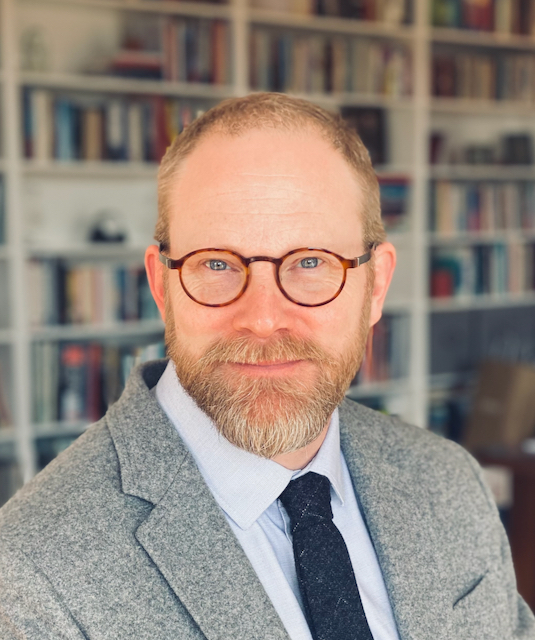
Wim VAN LENT is a Full Professor of Management at IÉSEG School of Management , France. He holds an HDR in Management from IAE Paris Sorbonne and a Ph.D. in Business Administration from ESSEC Business School. His academic career includes roles as Visiting Professor at Curtin University (Australia), Griffith University (Australia), and Researcher at the University of Paris I Panthéon-Sorbonne. He coordinates the 'Strategy and Sustainability' track and is a member of the LEM research group. His research focuses on Management Strategy , Business Ethics , Innovation and Entrepreneurship , and Historical Methodology . Notable areas include corporate archives' strategic use, temporal dynamics in organizations, and ethical repair mechanisms. His work often employs historical case studies, such as the Dutch East India Company (VOC) and colonial-era corporations, to analyze organizational adaptation and institutional contradictions. Van Lent's publications span top journals like Academy of Management Review , Small Business Economics , and Business Ethics Quarterly . His recent studies explore periodization practices in organizations, entrepreneurial time narratives, and moral repair frameworks. Teaching includes international strategy and corporate social responsibility at the MSc level. His research bridges historical analysis with contemporary management challenges, emphasizing how understanding past institutional dynamics informs modern organizational behavior and ethical decision-making.
Sandro Ambuehl is the UBS Foundation Assistant Professor of Behavioral Economics of Financial Markets at the Department of Economics, University of Zurich. He holds a PhD in Economics from Stanford University (2016) and previously served as Assistant Professor at the University of Toronto's Rotman School of Business. His research focuses on improving financial decision-making, ethical incentives in repugnant transactions (e.g., organ donation, clinical trials), and foundational decision theory. He employs experimental and theoretical methods, supported by grants like the Swiss National Science Foundation Starting Grant (2022) and the Alfred P. Sloan Foundation (2017). Education: PhD in Economics (Stanford University, 2016); previous roles include Assistant Professor at University of Toronto (Rotman School of Business and Department of Management, UTSC). Research Interests: Behavioral and experimental economics, financial decision-making interventions, ethical policies for repugnant transactions, and welfare economics. His work has been featured in outlets like the Wall Street Journal , Financial Times , and NPR . Articles highlight themes like paternalistic motivations, participation incentives in trials, and welfare state design. His 2021 American Economic Review paper on paternalism earned the Exeter Prize. Recent studies explore blind peer advice in finance and welfare state preferences through experiments. Awards include the Exeter Prize (2022), Alfred P. Sloan Grant (2017), and Swiss National Science Foundation support. Grants focus on behavioral welfare economics and policy interventions. Labs/Teams: Affiliated with the UBS Center for Economics in Society at UZH, contributing to interdisciplinary behavioral economics research.
Professor Christopher Carman is the Stevenson Professor of Citizenship at the University of Glasgow, holding a PhD from the University of Houston. He has served in leadership roles including Head of Subject (Politics & International Relations), Head of the School of Social and Political Sciences, and Deputy Head of the School. His research focuses on political representation, electoral processes, public opinion, and Scottish politics, with notable contributions to studies on the Scottish Parliament and rural-urban political divides. Carman has led the Scottish Election Study (SES) since 2011 and co-leads the NORFACE-funded RUDE project on European rural-urban dynamics. He also contributes to the Glasgow-Nankai Joint Graduate School and the Stevenson Trust, fostering citizenship education and democratic research. Education: PhD in Political Science, University of Houston (2000). Previous academic roles include professorships at the Universities of Strathclyde and Pittsburgh. Research Interests: Political representation alternatives (e.g., public petitions systems), electoral behavior, Scottish and UK politics, direct democracy, and comparative legislative politics. Recent work addresses rural-urban divides in Europe and political compromise in democratic systems. Key Projects: Scottish Election Study (SES), Rural and Urban Divide in Europe (RUDE), and studies on political scandals and multilevel governance. His publications span electoral studies, comparative politics, and political behavior, with a focus on institutional trust and democratic engagement. Grants and Funding: ESRC and NORFACE grants support his research. The Stevenson Trust supports his work on citizenship education and public lectures.
Archon Fung is the Winthrop Laflin McCormack Professor of Citizenship and Self-Government at the Harvard Kennedy School. His research focuses on policies and institutional designs that enhance democratic governance, particularly in areas of public participation, deliberation, and transparency. He co-directs the Transparency Policy Project and leads democratic governance programs at the Ash Center for Democratic Governance and Innovation. Fung has authored five books, including Full Disclosure: The Perils and Promise of Transparency and Empowered Participation: Reinventing Urban Democracy , and over fifty articles. He holds degrees from MIT: two S.B. degrees in philosophy and physics, and a Ph.D. in political science. Affiliations: Director of the Ash Center, Faculty Associate of the Ethics Center, Member of the Faculty Committee since 2009. Research Interests: Democratic innovation, participatory governance, transparency in public policy, and institutional design for equitable decision-making. His recent work explores democratic erosion, AI's impact on elections, and inclusive governance frameworks. Fung teaches courses on participation, ethics, and social innovation at the Harvard Kennedy School. He co-founded Participedia, a global platform documenting participatory governance practices. Sponsored projects include initiatives on institutional antiracism, transparent engagement, and sustainable governance reforms. His work emphasizes bridging theory and practice to strengthen democratic institutions globally.
Ming Yin is an Associate Professor in the Department of Computer Science at Purdue University. Her research bridges human-computer interaction, applied artificial intelligence, computational social science, and behavioral sciences. She focuses on leveraging human behavior data to design intelligent systems that balance machine efficiency with human understanding, trust, and engagement. Education : PhD in Computer Science (Harvard University, 2017), B.E. in Computer Software (Tsinghua University, 2011) Previous Roles : Postdoctoral researcher at Microsoft Research New York City (2017–2018) Teaching : Courses on AI, Human-AI Interaction, Data Mining, and Human-Centered Computing Research Interests center on social computing, crowdsourcing, human-AI interaction, and ethical AI. She employs experimental and computational methods to study how human behavior can improve AI systems' design, fairness, and user trust. Her work has significant implications for gig economy platforms, decision support systems, and algorithmic accountability. Scientific Contributions include over 15 recent articles in top venues like CHI, IJCAI, and ACL. These works explore topics such as LLM-driven trust calibration, adversarial social influence, and ethical AI design. Her research has been recognized with the NSF CAREER Award Siebel Scholar (Class of 2017) Multiple Best Paper and Honorable Mention Awards at CHI, CSCW, and HCOMP Teaching Expertise spans courses like Introduction to Artificial Intelligence (CS 471), Human-AI Interaction (CS 592-HAI), and Data Mining (CS 573). She emphasizes project-based learning and designing systems for real-world problems, such as "learning in a new era" in her 2025 HCI course.
Marc-Antoine Dilhac serves as Associate Professor in the Department of Philosophy at the University of Montreal's Faculty of Arts and Sciences, where he also directs governance and international collaboration initiatives. He holds leadership roles as Scientific Director of Algora Lab and leads the Ethics and Politics research axis at the Centre de recherche en éthique (CRÉ). His academic affiliations extend to the Centre d'études et de recherches internationales (CÉRIUM) and the Canada Research Chair in Public Ethics and Political Theory (2014-2019). Education: PhD in Philosophy and Political Science, University of Paris I: Panthéon-Sorbonne (2009) Master 2 in Philosophy and Political Science, University of Paris I: Panthéon-Sorbonne (2003) Agrégation in Philosophy, University of Paris I: Panthéon-Sorbonne (2002) Dilhac's research spans ethics, political philosophy, and AI governance, with particular focus on democratic tolerance, multiculturalism, and the ethical implications of artificial intelligence. His work bridges theoretical political philosophy with practical applications in AI policy development, sustainable finance, and democratic institutions. He has contributed significantly to UNESCO's Recommendation on the Ethics of Artificial Intelligence and leads initiatives examining AI's impact on French-speaking culture and democratic values. His recent publications reveal a clear trajectory from foundational work on tolerance and justice theory toward contemporary AI ethics challenges. The thematic evolution shows increasing engagement with practical governance frameworks, particularly in finance and education sectors, while maintaining strong philosophical grounding in democratic theory and institutional design. Key Awards and Recognition: Canada Research Chair in Public Ethics and Political Theory (2014-2019) Banting Postdoctoral Fellowship (2011) Contributor to UNESCO's Recommendation on AI Ethics (2021) Dilhac has supervised over 15 graduate students across philosophy, political science, and interdisciplinary AI ethics programs. His research is supported by multiple grants from FRQSC, FRQNT, SSHRC, and MITACS, totaling over $2 million CAD. Current projects include the Generative AI Ethics Framework for Educational Technology (2024-2025) and the Sustainable Finance AI Tools project examining ESG/DEI disclosure analysis. He co-founded and leads the CORDÉ research group on corruption and democracy, and directs Algora Lab's work on AI governance. His upcoming February 2025 panel at Université Laval will address AI and Francophone cultural perspectives ahead of the Paris AI Action Summit.
Mark E. Warren is a Professor of Political Science at the University of British Columbia (UBC), holding the Merilees Chair for the Study of Democracy. He joined UBC in 2004 and directs the SSHRC-funded Participedia project, which documents global democratic innovations. His research focuses on democratic theory, citizen participation, representation, and corruption. Warren previously taught at Georgetown University, Northwestern University, and Rice University. Education: B.A. from Lewis and Clark College, M.A. and Ph.D. from the University of Toronto. Key roles include founding the Centre for the Study of Democratic Institutions at UBC and co-founding the Center for Democracy and the Third Sector at Georgetown University. Research interests emphasize new forms of citizen engagement, democratic representation, and the interplay between civil society and governance. He has authored influential books like Democracy and Association (2001) and edited volumes such as Democracy and Trust (1999), recognized with prestigious awards. His work addresses corruption in democracies and systemic approaches to deliberative democracy. Awards include the Elaine and David Spitz Book Prize (2003) and ARNOVA’s Outstanding Book Award (2003). Participedia, his flagship project, serves as a global resource for participatory governance. Warren’s contributions bridge academic research and practical democratic innovation, influencing policies and institutions worldwide.
Prof. Dr. Peter Vorderer is a full professor of Media and Communication Studies at the University of Mannheim's Philosophical Faculty, leading the Institute for Media and Communication Studies. He holds a PhD from TU Berlin and has held professorships at institutions such as the University of Toronto, USC's Annenberg School, and the Free University of Amsterdam since 2010. His research focuses on media psychology, exploring media effects, entertainment media narratives, and the pervasive role of digital connectivity in everyday life. Education includes studies at Heidelberg and Mannheim Universities, with additional training at NYU and the University of Michigan. He has served as editor for Zeitschrift für Medienpsychologie and Media Psychology , and as President of the International Communication Association (2014-2015). His work bridges psychological and societal impacts of media, emphasizing entertainment's cognitive and emotional dimensions. Key research themes include media-induced resonance theory, mobile communication's psychological effects, and digital dependency. His 15 most recent articles (2014-2020) reveal a focus on media's role in well-being, social behavior, and cognitive processing. Awards include ICA Fellowship (2016). His lab contributes to understanding media's dual hedonic/eudaimonic functions and their societal implications.
Professor Kurt Iveson is a Professor of Urban Geography in the School of Geosciences at the University of Sydney. He is affiliated with the Sydney Environment Institute and Sydney Southeast Asia Centre. His research focuses on urban equity, public space governance, and the democratization of urban processes. Notable projects include studies on multicultural urban planning, pandemic-era mutual aid networks, and climate adaptation strategies. He has authored influential books such as Publics and the City (2007) and Everyday Equalities (2019). Iveson’s work often bridges theory and practice, addressing issues like affordable housing activism, graffiti policies, and the spatial implications of digital media. His recent research emphasizes community-led disaster resilience, people power strategies, and the geopolitics of urban infrastructure. Grants include studies on informal accommodation in Sydney and international comparisons of urban alliances. Media engagements include ABC discussions on outdoor advertising, vertical transport, and post-pandemic urban recovery. His work advocates for inclusive urban policies that balance equity, sustainability, and civic participation.
Prof. Dr. Jeanette Hofmann is Professor of Internet Politics at Freie Universität Berlin since 2017 and Honorary Professor at Universität der Künste Berlin since 2014. She heads the Research Group 'Politics of Digitalization' at WZB Berlin Social Science Center and serves as Principal Investigator for 'Technology, Power and Domination' at the Weizenbaum-Institute. Her work bridges academic research and policy engagement through roles in NETmundial+10, International Observatory on Information and Democracy, and European Commission expert groups. Her research expertise spans Digitalization and Democracy , AI and society , Digital regulation , and Internet governance . Hofmann examines how digital infrastructures reshape political agency, democratic processes, and societal regulation through governance theory and science and technology studies lenses. Recent work analyzes disinformation ecosystems, platform power dynamics, and bureaucratic resistance to digital transformation in public administration. Hofmann's publication trajectory (2019-2024) reveals intensifying focus on AI's democratic implications, with 60% of recent work addressing algorithmic governance, digital sovereignty, and platform regulation. Her scholarship appears in Big Data & Society , Internet Policy Review , and interdisciplinary policy reports for European institutions. Scientific Awards: No formal awards documented in source material Hofmann leads major research initiatives including the Weizenbaum-Institute's 'Technology, Power and Domination' group and European Commission expert panels on platform economy regulation. Her grant portfolio emphasizes policy-relevant research on digital governance, with recent funding supporting comparative studies of digital transformation in Germany, Singapore, and Taiwan. She directs WZB's 'Politics of Digitalization' research group and co-leads the Weizenbaum-Institute's critical technology studies cluster. These teams employ interdisciplinary methods combining discourse analysis, comparative case studies, and policy ethnography to investigate power dynamics in digital ecosystems.
Shannon Bell is a Professor in Political Science at York University, working as a performance philosopher who integrates digital video technology with political theory. Her research examines intersections of cyberpolitics, aesthetics, and power through projects like 'Shooting Theory', which visualizes philosophical concepts through film. She has authored books including 'Fast Feminism' and 'Reading, Writing and Rewriting the Prostitute Body'. Current SSHRC-funded projects explore bioart and robotic art extremes, with residencies at Symbiotica (UWA) and international exhibitions. She teaches courses on modern political thought, technopolitics, and aesthetics. Educational background includes a PhD in Political Science from York University. Professional leadership includes directing the Resource Centre for Public Sociology.
Professor Tavis Potts is a Personal Chair in Sustainable Development and Environmental Governance at the University of Aberdeen, affiliated with the Department of Geography and Environment within the School of Geosciences. He is actively engaged in research on just transitions, environmental justice, marine governance, and participatory planning. His research focuses on: Understanding just transitions and the social dimensions of climate and energy Marine resource governance and planning Participatory and community-based approaches to managing natural capital The political economy of environmental policy The blue economy and net zero transitions His recent publications highlight a strong trend toward policy-relevant research on just transitions, stakeholder engagement, and environmental governance. Articles and reports examine climate assemblies, community participation in net zero planning, nuclear decommissioning, and measuring equitable outcomes in transition processes. His work integrates social science perspectives with environmental policy, emphasizing democratic participation and equity. Key scientific contributions include commissioned reports for the Just Transition Commission and the Nuclear Decommissioning Authority, as well as peer-reviewed articles in journals such as Environmental Science & Policy and Marine Policy . He has led and contributed to projects funded by Interreg EU, NERC, British Council, and the World Bank. Professor Potts advises research students and leads the Just Transition Lab at Aberdeen. He holds external advisory roles with Aberdeen City Council’s Net Zero Delivery Unit and Aberdeenshire Council’s Climate Ready Aberdeenshire Board, demonstrating active engagement with policy and practice. He is affiliated with key research centers including the Centre for Marine and Coastal Zone Management and the Just Transition Lab, where he advances interdisciplinary work on sustainable futures and equitable environmental governance.
Dr. Julia Morley is an Associate Professor (Education) and MSc Programme Director in the Department of Accounting at the London School of Economics and Political Science (LSE). She specializes in social impact measurement, financial reporting regulation, and organizational decision-making. Her research explores biases in group decision-making and the emergence of norms in performance measurement, particularly in social sector organizations. She holds a PhD from LSE and previously worked in finance, media, and consulting before transitioning to academia. Education includes a degree in Economics from Pembroke College, Cambridge, an MSc in Philosophy of the Social Sciences from LSE, and a PhD in Accounting. Her work bridges sociology, social psychology, and philosophy, analyzing issues such as fair value accounting, social impact bonds, and regulatory outcomes in standard-setting bodies like the IASB. Dr. Morley has published extensively on topics including subgroup influence on boards, elite networks in social investment, and the ethical implications of social impact measurement. She has contributed to policy through roles like Commissioner on the Alternative Commission on Social Investment and governance positions with Capella House School and the Valence Mary Trust. Teaching spans undergraduate and postgraduate courses, including Accounting for Managerial Decision-Making and Corporate Responsibility and Sustainability. She leads MSc programs in Accounting and Finance, and Accounting, Organisations and Institutions.
Lucio Baccaro is Director at the Max Planck Institute for the Study of Societies (MPIfG) and was Full Professor of Macrosociology at the University of Geneva, where he also served as Deputy Dean for Research (2016–2020). He has held academic positions at MIT, Case Western Reserve University, and visiting roles at the University of Turin and the University of Vienna. His primary affiliations are with MPIfG and the University of Geneva, both central to his research in political economy and sociology. Education: PhD in Management and Political Science, Massachusetts Institute of Technology (MIT), 1999 Doctorate in Labor Law and Industrial Relations, University of Pavia, 1997 Master of Business Administration, Stoa' (IRI-MIT joint venture), 1991 Laurea in Philosophy, summa cum laude, University "La Sapienza", Rome, 1989 Lucio Baccaro’s research focuses on comparative political economy, labor relations, global worker rights, and deliberative governance . His work integrates economic sociology and political sociology to analyze institutional change, social dialogue, and the impact of globalization on labor and welfare systems. He has led major comparative studies on employment models, pension reforms, and international labor standards. His scholarship emphasizes the interplay between institutions, ideas, and power in shaping economic governance. His recent publications reveal a consistent focus on institutional change, deliberative processes, labor market reforms, and global justice . Themes include path dependence in international organizations, the transformation of collective bargaining, and the role of expertise in democratic governance. His interdisciplinary approach bridges sociology, political science, and economics, with strong methodological rigor in comparative and qualitative analysis. Scientific Awards and Honors: Honorary Professor, University of Duisburg-Essen (2023) Professeur honoraire, University of Geneva (2020) International Geneva Award (2011) Outstanding Young Scholar Award, IRRA (2003) Founder's Prize, SASE (2001) Maurice F. Strong Career Development Chair, MIT (2006–2009) Multiple fellowships from SSRC, Harvard, MIT, and CUNY Alfiere del Lavoro, awarded by the President of Italy (1984) Advising and Grants: While specific student advisees are not listed, Baccaro has supervised research and mentored scholars through his roles at MPIfG and the University of Geneva. He has secured substantial research funding, including grants from the Swiss National Science Foundation (SNF) and the Swiss Network for International Studies (SNIS), supporting projects on post-Fordist growth models, employment policy, and deliberative governance. His leadership in co-principal investigator roles highlights his collaborative research approach and institutional influence. Labs and Research Teams: As Director at MPIfG, Baccaro leads a major research institute focused on the study of societal and economic institutions. He has been instrumental in shaping research agendas on political economy and governance, fostering interdisciplinary collaboration and international scholarly exchange.
Jonathan Rose is a Professor in the Edward S. Rogers Sr. Department of Electrical and Computer Engineering at the University of Toronto . He received his PhD in Electrical Engineering from the University of Toronto in 1986 and held postdoctoral and research roles at Stanford University's Computer Systems Laboratory (1986-1989). His academic career spans decades, including a 1998-1999 sabbatical at Xilinx and leadership roles at Altera Toronto Technology Centre. He served as Department Chair of Electrical and Computer Engineering (2004-2009) and directed the Engineering Business Minor (2010-2017). Currently, he chairs the Engineering Entrepreneurship Hatchery Advisory Board and engages with organizations like Academics without Borders and Massey College. His research has historically focused on FPGA architecture , Computer-Aided Design (CAD) , Field-Programmable Systems , and Soft Processors . More recently, his work explores the Automation of Medicine , particularly in mental health. His contributions include co-founding the ACM FPGA Symposium and receiving numerous awards for teaching, research, and leadership. Scientific Awards : University of Toronto Engineering Alumni Hall of Distinction Award, 2017 Best Paper Award, ACM TRETS, 2016 University of Toronto President’s Teaching Award, 2016 Foreign Member of the American National Academy of Engineering, 2011 Fellow of the Royal Society of Canada, 2012 The 15 most recent articles reflect his interdisciplinary engagement, spanning Political Science , Public Policy , and Deliberative Democracy , with sub-fields such as Employability Support , Electoral Reform , and Local Governance . His career bridges engineering innovation and societal challenges, particularly in governance and policy.