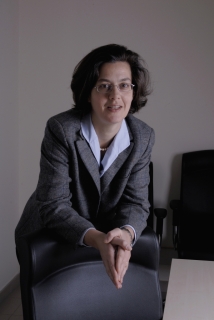
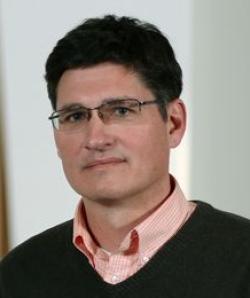
Désirée Brucks is a scientific collaborator at the Albrecht Daniel Thaer Institute of Agricultural and Horticultural Sciences within Humboldt University’s Faculty of Life Sciences. Her research focuses on animal behavior and cognition , specializing in prosociality , self-control , inequity aversion , and social learning across species like parrots, dogs, wolves, horses, and pigs. She employs comparative approaches to understand evolutionary and domestication influences on cognitive traits. Research Themes : Prosocial behavior in birds and mammals Delay of gratification in domesticated and wild species Impact of social context on decision-making Methodological critiques in cognitive testing Publications exhibit trends in animal cognition , with emphasis on social dynamics , reward processing , and experimental paradigms . Notably, she explores species-specific differences in cooperation and emotional responses to inequity.
Zimbidis Alexandros serves as Assistant Professor of Stochastic Analysis with applications to Insurance and Finance at the Department of Statistics, School of Information Sciences and Technology, Athens University of Economics and Business (AUEB). He concurrently acts as a consultant for pension funds in both private and public sectors. His academic credentials include: First-class Mathematics degree from University of Athens MSc with distinction in Actuarial Science from City University of London PhD in Actuarial Science from City University of London Dr. Zimbidis specializes in Actuarial Science and Stochastic Analysis applied to insurance and financial systems, with particular expertise in earthquake risk modeling, pension fund sustainability, and competitive insurance market dynamics. His research integrates advanced stochastic processes, control theory, and catastrophe modeling to address solvency requirements and risk assessment challenges. Recent publications (2022-2024) reveal a pronounced focus on fault-specific earthquake risk quantification using neural networks and epidemic-type models, alongside innovations in IFRS17 compliance and pension contribution optimization through H∞-control theory. His work consistently bridges theoretical stochastic analysis with practical regulatory and industry applications. Key recognitions include: Acknowledgment by The Institute of Actuaries of Japan for earthquake risk research Acknowledgment by Institute & Faculty of Actuaries of London for earthquake risk research Dedicated session at Casualty Actuarial Society (CAS) Annual Meetings for insurance pricing research With extensive industry experience as former director of a multinational insurance company and inaugural President of Greece's National Actuarial Authority, Dr. Zimbidis has developed numerous actuarial studies for corporate and social security pension systems. His six university textbooks and journal publications demonstrate significant contributions to actuarial methodology and risk modeling.
Nan Yang is a Professor at the University of Miami, holding the Leslie O. Barnes Professorship in the Management department of the Miami Herbert Business School. With expertise spanning operations research and supply chain management, Professor Yang has established herself as a leading researcher in dynamic pricing, inventory management, and supply risk mitigation strategies. Professor Yang's research focuses on critical areas including: Dynamic pricing and inventory management under demand and supply uncertainty Supply chain risk management with unreliable suppliers and random yields Pricing postponement strategies and their impact on supply chain coordination The effects of online reviews on consumer behavior and operational decisions Pharmaceutical supply chain dynamics and pricing mechanisms Her publication record demonstrates a consistent research trajectory in operations management, with recent work focusing on the complex interactions between pricing decisions, inventory management, and supply risk. Her 2024 paper on assemble-to-order systems with exogenous lead times represents a significant theoretical contribution to inventory theory. A notable pattern in her research is the application of sophisticated stochastic modeling techniques to address real-world supply chain challenges, particularly those involving uncertainty and correlation among risk factors. Professor Yang has published extensively in top-tier operations management journals including Operations Research, Manufacturing & Service Operations Management, and Production and Operations Management. Her collaborative research often involves complex mathematical modeling and game-theoretic approaches to analyze strategic interactions in supply chains. Professor Yang maintains an active research agenda with recent publications addressing emerging challenges in supply chain management under uncertainty. Her work provides valuable insights for businesses seeking to optimize their operational decisions in volatile market environments.
Lőrinc Márton is a Professor of Control Systems at the Sapientia Hungarian University of Transylvania, where he serves as deputy head of the Department of Electrical Engineering and leads the Networked and Autonomous Control Systems research group. He also acts as a PhD supervisor at the Doctoral School of Information Science and Technology, University of Pannonia. Research Interests: Control-oriented modeling of dynamic systems Fault diagnosis in interconnected networks Delay compensation in communication systems Population dynamics and migration modeling Robot swarm coordination Key Contributions: Developed control strategies for chemical reaction networks Created delay-robust algorithms for computer networks Formulated migration cost-based population stabilization methods Contact: martonl@ms.sapientia.ro | Office: 1C Calea Sighisoarei, Corunca, Mures 94305, RO
Anton Proskurnikov is an Associate Professor in the Department of Electronics and Telecommunications at Politecnico di Torino, Italy. His academic appointment spans the College of Computer, Film and Mechatronics Engineering and the College of Mechanical, Aerospace and Automotive Engineering. Based in office L.240, he maintains an active research program focused on control theory with applications to complex networked systems. Dr. Proskurnikov's research centers on complex networks, multi-agent systems, nonlinear control, and social network analysis, with significant contributions to understanding opinion dynamics and consensus mechanisms. His work bridges theoretical control engineering with practical applications in social dynamics, earning recognition through prestigious awards including the O. Hugo Schuck Best Paper Award (2023). His expertise spans control theory, optimization, and network analysis with implications for sustainable infrastructure and smart cities. His publication trajectory reveals a sophisticated evolution from foundational control theory toward increasingly complex applications in social dynamics and networked systems, with recent emphasis on bounded confidence models, higher-order interactions in social dynamics, and quantum optimization for complex system design. This interdisciplinary approach connects traditional control engineering with emerging challenges in social network analysis. Dr. Proskurnikov has received multiple significant awards: O. Hugo Schuck Best Paper Award (2023) from the American Automatic Control Council EPEPS Best Paper Award (2020) from EPEPS Conference Annual Reviews in Control Paper Prize (2020) from IFAC As an academic advisor, Dr. Proskurnikov currently supervises PhD student Jinze Wu in Electrical, Electronics, and Communications Engineering. His research is supported by the National Research PRIN project "Higher-order interactions in social dynamics with application to monetary networks" (2023-2025), for which he serves as Scientific Manager. He contributes to editorial boards of leading journals including IEEE TRANSACTIONS ON AUTOMATIC CONTROL and INTERNATIONAL JOURNAL OF CONTROL, reflecting his standing in the control theory community. Dr. Proskurnikov is an active member of the Automatica research group within the Department of Electronics and Telecommunications, focusing on systems, automation, and control. His collaborative work extends internationally to institutions including TU Delft, St. Petersburg National Research University, and the University of Groningen, demonstrating his strong international research presence and interdisciplinary approach to complex networked systems.
Dr. Miguel Ramirez Gonzalez is a Researcher at the Zurich University of Applied Sciences (ZHAW) , affiliated with the School of Engineering and the IEFE Electric Power Systems and Smart Grids department. His research focuses on modern power system challenges, including renewable integration, stability enhancement, and machine learning applications for grid security. Research Focus Dr. Gonzalez's work spans: Power System Dynamics : Inertia quantification, stability assessment, and oscillation damping. Renewable Integration : Grid-forming converters, HVDC links, and solar/wind integration. Computational Methods : Machine learning (CNNs, transfer learning) for security assessment and optimization. Real-time Simulation : Hardware emulation and co-simulation of transmission-distribution networks. Project Leadership He leads key initiatives: Deputy Project Leader for inertia measurement to support renewables (ongoing). Project Leader for expanding the CE-Nordic dynamic grid model using OPAL-RT (completed). Team member in Europe-North Africa interconnection studies (completed). Publication Trends His 15 most recent works (2020-2025) emphasize machine learning-driven solutions for power system stability, real-time simulation validation, and converter-based grid support. Dominant themes include CNN architectures for security assessment, spatio-temporal data analytics, and hardware-in-the-loop testing for low-inertia systems. Laboratory & Collaboration He contributes to the IEFE laboratory, specializing in dynamic hardware emulation and real-time grid simulation. Collaborations include work with international utilities and conferences like IEEE PowerTech and CIGRE.
Karin Allard is a Lecturer at the Department of Sociology and Work Science, University of Gothenburg. She teaches courses in work and organizational psychology, including group psychology, organizational psychology, leadership, and work-family dynamics. Trained as a psychologist at Umeå University PhD in Psychology (2007) from University of Gothenburg Her research focuses on leadership, organizational culture, gender, equality, work-family conflict, and cross-cultural studies. Current projects examine the role of ethical values in leadership across Sweden and India, including collaborations with Sweden India Gender Network (SIGN). Recent publications address intersectional equality, psychosocial work environments, HR change agency, and cross-cultural work dynamics. She collaborates with researchers from KTH, MS University of Baroda (India), and others on organizational ethics and gender in leadership. Her teaching involves introductory psychology courses, group psychology from a working life perspective, and leadership in Swedish contexts. Karin’s work emphasizes organizational flexibility, gender safety climates, and sustainable leadership practices.
Dr. Vernon Hoeppner serves as Professor in the Division of Respirology, Critical Care and Sleep Medicine at the University of Saskatchewan, where he pioneered North America's first Directly Observed Therapy (DOT) program for tuberculosis treatment. His career spans clinical practice, provincial TB program leadership, and research focused on health equity among Indigenous populations in Saskatchewan and the Canadian prairies, emphasizing that "therapy is only as good as relationships and trust with patients and communities." His research interests center on Tuberculosis epidemiology , Respiratory medicine , and Health disparities , with particular focus on Indigenous health outcomes, treatment adherence, and social determinants of disease. Hoeppner's work integrates clinical practice with public health strategy, examining TB transmission dynamics, cost-effectiveness of interventions, and genomic epidemiology of Mycobacterium tuberculosis strains. Analysis of his 2014-2025 publications reveals evolving research trajectories: early work concentrated on TB transmission in Indigenous communities and treatment protocols, while recent studies expanded into genomic epidemiology (2024), health economics of latent TB treatment (2020), and climate-disease interactions in pandemic modeling (2025). His scholarship consistently addresses health inequities through both quantitative epidemiological methods and qualitative patient-centered approaches.
Stephen C. Adolph is the Stuart Mudd Professor of Biology at Harvey Mudd College. He is affiliated with the Department of Biology and actively engages in teaching and research. His primary roles include directing undergraduate research and collaborating with institutions like Claremont McKenna College. Education: B.S., Stanford University (Biological Sciences) M.S., Stanford University (Biological Sciences) Ph.D., University of Washington (Zoology) Dr. Adolph’s research focuses on the physiological, evolutionary, and behavioral ecology of lizards. His lab investigates topics such as stochastic population dynamics in Xantusia lizards, optimal foraging in arboreal lizards, physiological ecology of lizard eggs, and thermal performance curves. Past projects include tuatara conservation, tarantula locomotion, and lizard thermal biology. The articles of Dr. Adolph span thermal biology, ecological modeling, evolutionary adaptation, and statistical methodology. His work often integrates mathematical approaches with empirical data, emphasizing interdisciplinary research in ecology and physiology. Dr. Adolph collaborates with researchers like Lars Schmitz (Claremont McKenna College) on lizard ecology. He has mentored undergraduate researchers such as Arman Khasru and Callie Dawson, with publications frequently involving student co-authors.
Theodore G. Liou, MD, is a Professor of Internal Medicine and Adjunct Associate Professor of Pediatrics at the University of Utah School of Medicine, serving as Director of the Adult Cystic Fibrosis Center at University of Utah Hospital. With over seventeen years of leadership, he directs an award-winning CF care team and maintains triple board certification in Internal Medicine, Pulmonary Disease, and Critical Care Medicine. His educational background includes: B.A. in Biochemistry from University of California - Berkeley M.D. from George Washington University Internal Medicine internship/residency at Presbyterian-University Hospital Pulmonary/Critical Care fellowship at University of Utah School of Medicine Dr. Liou's research spans cystic fibrosis , sepsis , ARDS , airway inflammation , pneumonia , airway ecology , and antibiotic discovery , yielding landmark publications in JAMA, NEJM, and The Lancet. His work has established foundational insights in CF lung disease and transplantation outcomes. Analysis of his 2017-2023 publications reveals consistent focus on CF therapeutics (mRNA therapy, CFTR modulators), predictive modeling of survival/lung function, and airway microbiome dynamics, alongside critical care applications in sepsis and environmental health impacts. This body of work demonstrates rigorous clinical translation with direct patient care implications. No individual scientific awards are specified in available records, though his CF team has received institutional recognition. Details regarding student advising and grant funding remain undisclosed in source materials. Dr. Liou leads the Adult CF Center as both clinical director and research innovator, integrating patient-centered care with cutting-edge clinical trials. His team's multidisciplinary approach addresses complex CF management while advancing therapeutic discovery through partnerships with industry leaders like Genentech and Merck.
Nhu-Ngoc Dao is an Assistant Professor in the Department of Computer Science and Engineering at Sejong University , South Korea. With a focus on Network Softwarization , Mobile Cloudification , and Communication Security , Dao’s research bridges theoretical and applied aspects of Internet of Things (IoT) and Intelligent Systems . Education: Ph.D., Chung-Ang University (2019) M.S., Chung-Ang University (2016) B.E., Posts and Telecommunications Institute of Technology, Vietnam (2008) Dao’s research spans multi-access edge computing , deep reinforcement learning , and radio access networks . Their recent work includes trajectory optimization for UAV systems, energy-efficient routing protocols for IoT, and optimal control models for cybersecurity in heterogeneous networks. While no explicit scientific awards are mentioned, Dao maintains active research labs at PSHHLab and their personal website nndao.github.io , focusing on cutting-edge developments in communication systems and IoT security.
Claudia Califano is an Associate Professor at the Department of Computer, Control and Management Engineering, University of Rome "La Sapienza". Her work focuses on nonlinear systems, time-delay systems, and digital control with applications in biomedical systems and multi-agent networks. She has held editorial roles at the IMA Mathematical Control and Information Journal and IFAC World Congress, and served as Vice Chair for Education in IFAC Technical Committee Nonlinear Systems. B.Sc. and Ph.D. in Systems Engineering from University of Rome "La Sapienza" Research Interests: Her research spans geometric control theory for nonlinear systems, dynamic feedback linearization, and time-delay systems. Recent work includes deep learning applications for non-invasive medical diagnostics and consensus protocols for multi-agent systems with communication delays. Scientific Contributions: Her publications emphasize geometric methods for nonlinear control, integrability conditions, and observer design. Key themes include accessibility-observability duality, canonical forms, and applications to diabetic gastroparesis modeling. Best Paper Presentation Award at ACC 2010 Finalist for Best Poster at IFAC'96 Senior Member of Control Systems Society Editorial board member for IEEE and IFAC Teaching Roles: • Teaching Coordinator of Master's Degree in Emergency Engineering (2001-2013) • Courses taught: Systems Theory, Fundamentals of Automatic Control, Digital Control (in English)
Karl Kunisch is University Professor at the Department of Mathematics and Scientific Computing, University of Graz , and simultaneously Scientific Director of the Radon Institute (RICAM) of the Austrian Academy of Sciences in Linz. A SIAM Fellow and recipient of the 2021 W.T. and Idalia Reid Prize, he leads the ERC Advanced Grant OCLOC and heads the research group “Optimization and Optimal Control”. Education: Dipl.-Ing. (1975), Dr. techn. (1978) and Habilitation (1980), Graz University of Technology Research Interests: His work centres on optimization and optimal control of partial differential equations , nonsmooth optimisation in function spaces , inverse problems and mathematical imaging , together with advanced numerical analysis . Current emphases are life-science applications , closed-loop control and machine-learning based feedback design. Publications Profile: With over 400 papers and two monographs, his recent output is dominated by high-impact studies on infinite-horizon optimal control , feedback stabilisation of semilinear parabolic and Navier–Stokes systems, risk-averse and data-driven control , and sparse control strategies . A clear trend is the fusion of rigorous PDE analysis with cutting-edge machine-learning techniques. Scientific Awards & Distinctions: W.T. and Idalia Reid Prize (2021) SIAM Fellow (2017) ERC Advanced Grant Horizon 2020 (2015) Alwin Walther Medaille (2008) ICM Invited Lecture, Hyderabad (2010) SIAM Outstanding Paper Prize (2006) Christian Doppler Laboratory Fellowship (1992) Fellowship of the Japanese Society for the Promotion of Science (1990) Max Kade Scholarship (1982/83) Fulbright Travel Grants (1979/80, 1985) Theodor-Körner-Fonds Research Award (1979) Pro Scienta Scholarship (1974–1977) Grants & Leadership: Principal Investigator, ERC Advanced Grant “ OCLOC – From Open to Closed Loop Control ” Scientific Director, Radon Institute (RICAM), Austrian Academy of Sciences Head of Research Group “Optimization and Optimal Control”, RICAM Co-Speaker, International Research Training Group IGDK Former member/consultant: MATHEON Scientific Advisory Board, Weierstrass Institute Scientific Advisory Board, Christian Doppler Forschungsgesellschaft Senate, DFG and INRIA evaluation boards Laboratory & Team: Prof. Kunisch currently leads the “Optimization and Optimal Control” group at RICAM, comprising post-docs, doctoral researchers and international visitors, focusing on interdisciplinary projects at the interface of PDE control, numerical optimisation and life sciences.
Mark Votruba is an Associate Professor in the Department of Economics at the Weatherhead School of Management, Case Western Reserve University, with secondary appointments in the Center for Healthcare Research and Policy (School of Medicine) and as a Faculty Associate at the Shubert Center for Child Studies. He also holds appointments as a Research Associate at Statistics Norway and Adjunct Associate Professor at the University of Stavanger, Norway. PhD in Economics (Princeton University, 2003) MA in Public Policy Studies (University of Chicago, 1995) BA in Mathematics (Centre College of Kentucky, 1992) His research bridges labor economics , health economics , and public finance , focusing on: Job loss impacts on workers, families, and communities Childhood exposures and lifelong outcomes Health insurance market search frictions Physician practice organization and care quality Low-quality care consequences in U.S. healthcare Votruba's research has appeared in journals such as American Economic Review , Review of Economic Studies , and Demography , with notable recognition including the 2012 Arrow Award for Best Paper in Health Economics and inclusion in the Encyclopedia of Health Economics . He has received multiple Weatherhead Undergraduate Teaching Award nominations and served as Academic Director for the MSM-Healthcare program since 2014.
Takahisa Harayama is a Professor at the School of Advanced Science and Engineering, Waseda University. His research focuses on mathematical physics , condensed matter physics , and nonlinear optical systems , particularly chaotic dynamics in semiconductor lasers and microcavities. Affiliation: Faculty of Science and Engineering, Waseda University Research Areas: Chaos theory, photonic integrated circuits, quantum dot optics, laser dynamics Harayama's work bridges theoretical physics and applied optics , with significant contributions to understanding single-mode lasing in chaotic cavities , random bit generation using optical chaos , and polarization switching in microcavities . His studies often combine Maxwell-Bloch equations , ray-wave correspondence , and experimental validation via semiconductor devices. The articles highlight trends in chaotic laser systems for secure communications, directional emission via dynamical tunneling , and high-speed physical random number generation . Key subfields include feedback delay control , mode interaction , attractor expansion , and applications to cryptography .