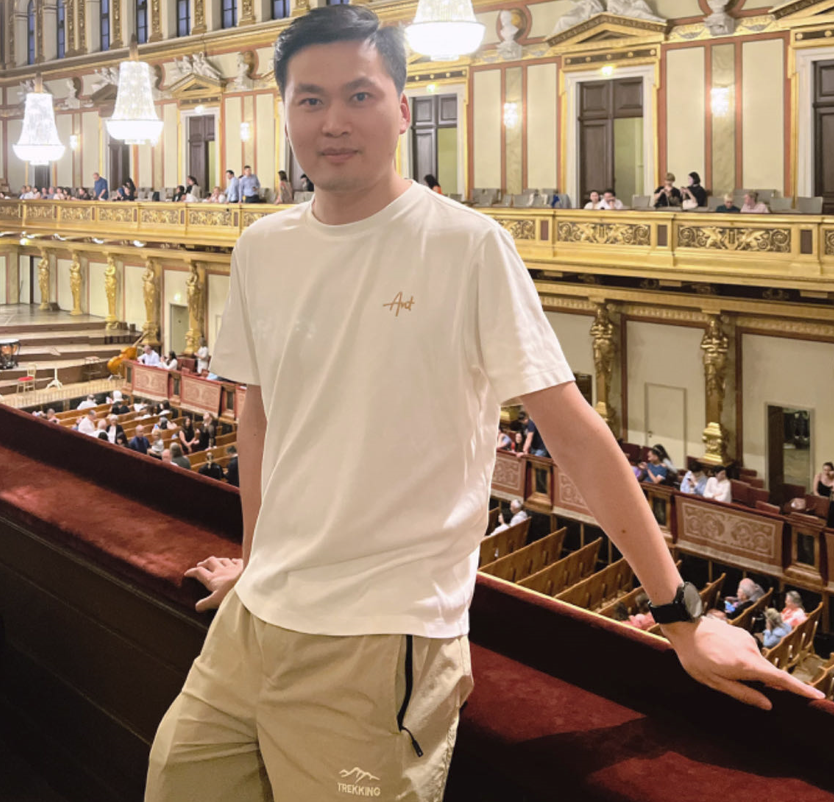
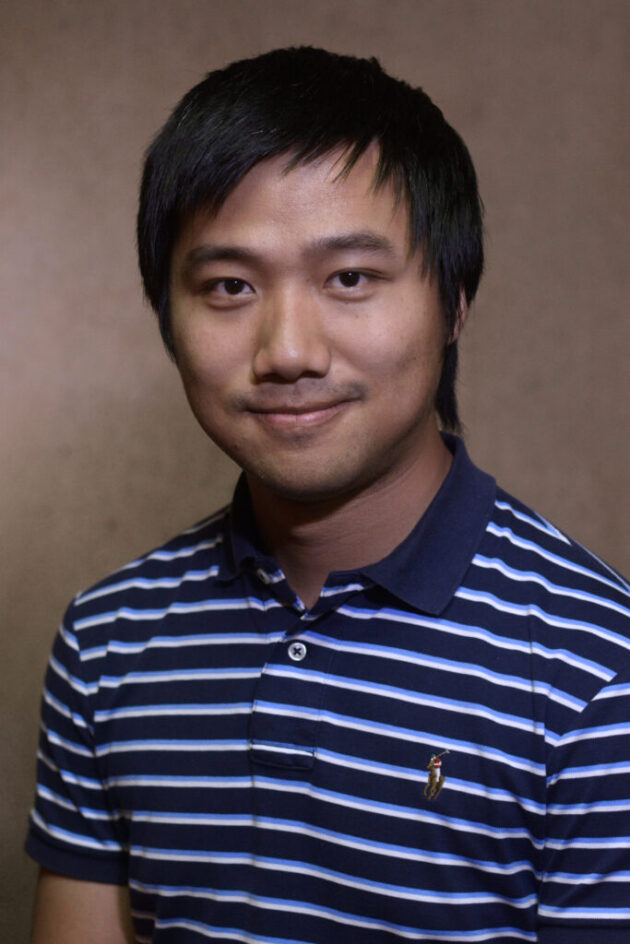
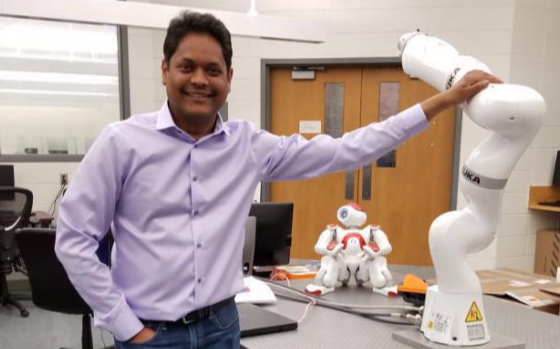
Hu Cao is a postdoctoral research associate at the Chair of Robotics, Artificial Intelligence and Real-Time Systems (Prof. Alois Knoll) at the Technical University of Munich (TUM) . Holding a Ph.D. from TUM, his research bridges autonomous driving , robotic grasping , medical image analysis , and dense prediction (classification, detection, segmentation). Education : Ph.D. from TUM Hu's work explores: Autonomous Driving : Perception under adverse conditions, multi-sensor fusion, and risk-based safety models Robotic Grasping : Vision-language integration for 6D pose estimation Medical Imaging : Transformer-based segmentation techniques (e.g., Swin-Unet) His recent publications include 15+ works at top venues like CVPR , ICCV , IEEE TPAMI , and IEEE TIV , with 6052+ Google Scholar citations . Notably, Swin-Unet ranks among the top 3 most cited ECCV papers in 5 years, and his work on event-based autonomous driving perception was featured in IEEE Xplore Innovation Spotlight . Editorial roles include: Associate Editor for Visual Intelligence and Frontiers in Neurorobotics Editorial Board member of Artificial Intelligence and Autonomous Systems (AIAS) Topic Editor for Frontiers in Robotics and AI and Frontiers in Neuroscience He has reviewed for 20+ top journals (e.g., Nature Computational Science , IEEE TRO ) and served on program committees for NeurIPS , CVPR , ICCV , and MICCAI .
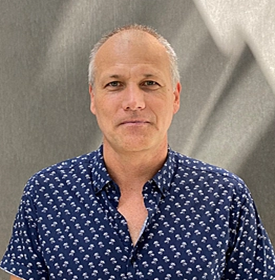
Professor Ingvars Birznieks is a Senior Research Fellow at the Department of Physiology, School of Medical Sciences, UNSW Medicine in Sydney, where he leads the Tactile Research Group at Neuroscience Research Australia (NeuRA). Previously, he held an academic position as Senior Lecturer (Physiology) at the School of Science and Health, Western Sydney University from 2011 to 2014. Dr. Birznieks is a sensory neurophysiologist specializing in sensory information encoding mechanisms, with research spanning tactile perception, neural coding, and bionic applications. His work integrates neuroscience, biomedical engineering, and clinical rehabilitation to understand how touch receptors encode information and how this knowledge can be applied to develop advanced prosthetics and rehabilitation technologies. His research program covers tactile receptors and sensorimotor control of the human hand, with applications in stroke rehabilitation, diabetic neuropathy, and bionic hand development. His recent publications reveal a strong focus on neural coding mechanisms in tactile perception, particularly the burst gap code for frequency perception, friction sensing mechanisms, and intensity coding. These studies consistently bridge fundamental neuroscience with practical applications in bionics and rehabilitation. His interdisciplinary approach connects neurophysiological findings with engineering solutions for artificial touch. Dr. Birznieks has secured significant grant funding, including ARC Discovery Projects and NHMRC Ideas Grants totaling over $2.5 million, supporting research on neural coding, sensorimotor control, stroke rehabilitation, and bionic technologies. His current major project 'The secret of tiny hand movements to feel and manipulate objects' (ARC DP230100048) investigates how humans use micro-movements to extract tactile information during object manipulation. He actively supervises students across neuroscience, biomedical engineering, and computer science disciplines, with recent publications featuring undergraduate and graduate students as first authors. His research group maintains collaborations with institutions in France and Sweden, providing international research opportunities for students. Dr. Birznieks' laboratory has developed unique non-invasive mechanical stimulation technology that allows precise control of neural communication at the single neuron level, enabling unprecedented investigation of how spiking activity influences perceptual experience.
Vito Cacucciolo is an Associate Professor at the Department of Mechanics, Mathematics & Management at Politecnico di Bari, Italy. His research focuses on soft robotics, applied mechanics, and electrohydrodynamic systems. University: Politecnico di Bari Department: Mechanics, Mathematics & Management Email: vito.cacucciolo@poliba.it His research interests include: Soft Robotics for wearable and autonomous systems Electrohydrodynamics and electrowetting for fluidic actuation Biodegradable and sustainable actuator materials Shielded stretchable sensors for force measurement Flexible fluidic actuators and fiber-based pumps Human-machine interfaces and adaptive manipulation Recent publications highlight advancements in electrohydrodynamic actuators, wireless miniaturized robots, and biodegradable materials. Key trends include wearable haptics, soft grippers, dielectric elastomer actuators, and fluidic control systems. Contact: vito.cacucciolo@poliba.it
Dr. Tirthankar Bandyopadhyay is a Principal Research Scientist at CSIRO Robotics, Data61 since 2024, leading the Robot-World Interaction research theme within the Cyber Physical Systems Program . His career spans roles including Team Leader of the Robotic Autonomy Team (2023-present), Subcomponent Lead for Physical Interaction in the Reimagine Farming initiative, and Cluster Leader for Inspection Robotics (2015-2022). PhD in Robotics (2010, National University of Singapore) B.Tech in Mechanical Engineering (2001, IIT Kanpur) Complexity Summer School Fellow (2015, Santa Fe Institute) His research focuses on robot motion planning and navigation in complex environments , with specialized interests in deformable mobile manipulation, magnetic climbing robots, and modular systems. He has pioneered solutions for autonomous navigation in cluttered spaces, including applications for agricultural robots, industrial inspections, and environmental monitoring. Analysis of his 2023-2025 publications reveals expertise in mobile manipulation (4/15), path planning (5/15), and environmental interaction (6/15). Key subfields include policy learning, modular robotics, and climbing mechanisms. His work bridges theoretical robotics with real-world deployments across diverse environments like Singapore Harbour, Peel Island, and O&G plants. Scientific recognition includes Scholarship to CSIRO Complex Systems Science Summer School (2015) He contributes to robotics leadership as General Secretary of the Australasian Association for Robotics and Automation (2020-present) Area Chair for Robotics Science and Systems (RSS) (2022-2023) Associate Editor for IEEE Robotics and Automation Letters (2019-2024) Current projects involve Magnetic climbing robots (Magneto platform) Deformable environment interaction (vegetation/soil) Confined space navigation (30-DoF legged robot) Autonomous kayaks for environmental monitoring
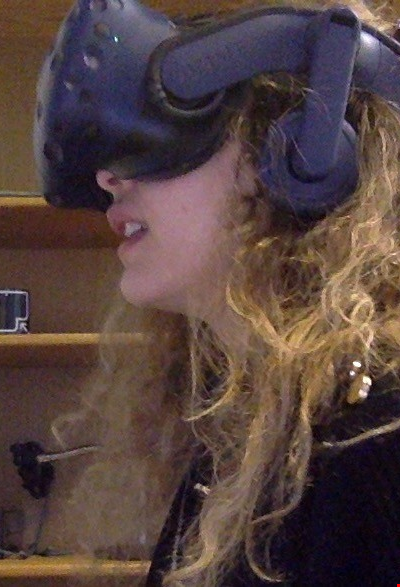
Nadine Aburumman is an Associate Dean for Equality, Diversity and Inclusion (EDI) and Lecturer in Computer Science at Brunel University London, within the College of Engineering, Design and Physical Sciences. She leads the Graphics and Extended Reality Team (GERT) and is a member of the Centre for AI: Social and Digital Innovation and the Interactive Multimedia System (IMS) research group. Her academic journey includes postdoctoral positions at University College London, the Computer Science Research Institute of Toulouse, and Friedrich-Alexander University Erlangen-Nürnberg. Dr. Aburumman holds a BSc and MSc in Computer Science, with her MSc specializing in computer graphics, vision and imaging, and a PhD in computer science focusing on digital human and shape simulation. She was awarded a PhD Erasmus Mundus Scholarship for her doctoral studies at Sapienza University of Rome. She also holds FHEA status (PgCAP in academic practice) and is a Professional Member of the British Computer Society (BCS). Her research spans real-time computer graphics , extended reality , and AI-powered immersive technologies . She investigates interactive character animation, physically based simulations, and the application of VR/AR/XR in interdisciplinary contexts including neuroscience, education, and social interaction. Her work bridges computer science with practical applications in healthcare, training, and human-computer interaction, with a particular focus on making technology accessible and inclusive. Dr. Aburumman's publication record shows increasing interdisciplinary work, with recent publications focusing on collaborative virtual environments, haptic feedback systems, and the integration of neuroscientific methods like fNIRS to study human responses in virtual environments, particularly with neurodiverse populations. Her work demonstrates a clear trajectory from foundational graphics research toward applied, socially relevant technology development. 2024: Runner-Up: Lecturer of the Year (Student Led Award-University Level) 2023: The Recognition of Excellence (RoE) Award 2022: Brunel Research Initiative And Enterprise Fund (BRIEF) Award 2016-2018: CIMI Post-doctoral Fellowships 2014: Best paper and best presentation awards at the 30th SCCG conference 2012: EU Erasmus Mundus PhD Scholarship Dr. Aburumman has supervised over 140 undergraduate students (including 50 Final Year Projects) and 16 successful MSc dissertations. Notable students include Mariama Kebbeh Suko who won the 2021 BCS prize for her AR project on African & Black History, and Brandon Michael whose work on VR language pedagogy was accepted for publication. She currently supervises PhD students Mingzhao Zhou (real-time visual and haptic feedback) and Rania Xanthidou (haptic feedback in VR learning environments). Her research is supported by multiple grants including Royal Society Partnership Grants, RCIF Grants, and projects with the RESPECT4Neurodevelopment initiative. As leader of the Graphics and Extended Reality Team (GERT), Dr. Aburumman fosters interdisciplinary collaboration across computer science, neuroscience, and education. Her team works on projects ranging from droplet-solid interaction simulations to VR systems for neurodiverse children, reflecting her commitment to applying graphics research to real-world challenges. She co-coordinated the AI Centre Thought Leadership series for 2023-2024 and is actively involved in outreach through programs like Code First Girls and Made In Brunel.
Professor Wolfgang Echelmeyer is a faculty member at Reutlingen University’s Faculty of Sustainability and Technology, specializing in Technical Logistics. His research focuses on logistics automation, human-robot interaction, and sustainable supply chain systems. Position: Professor Department: Technical Logistics Email: wolfgang.echelmeyer@reutlingen-university.de Research interests include robotic container unloading, lean logistics, and ergonomics in automated systems. Recent projects involve EU-funded initiatives like RobLog (EU# 270350) for cognitive robotics in freight handling. His work spans applications in city logistics, milk-run transportation systems, and decision support tools for automation investments. Key article trends explore robotics in logistics, sustainability in freight systems, and ergonomic resource planning. Publications from 2018–2024 emphasize innovative solutions for intermodal terminals, deformable cargo handling, and smart transportation networks. Administrative roles include Dean of Studies for the BSc in Sustainable Production and Business and Pro-Dean for Teaching at the Faculty of Sustainability and Technology. Collaborators include Marco Bonini, Tuan Nguyen, and Augusto Urru. Labs and teams: Active in projects like LogFabr (Logistics Fabrication) and partnerships with industry leaders such as Merck AG, Proctor & Gamble, and STIHL. His work addresses real-world challenges in logistics planning and automation deployment.
Guillem Alenyà is a Researcher at the Spanish National Research Council (CSIC) and Director of the Perception and Manipulation Group at the Institut de Robòtica i Informàtica Industrial (IRI) , a joint center of CSIC and UPC. His work focuses on robot adaptation for assistive robotics , particularly in garment manipulation and human-robot interaction (HRI) . He coordinates major EU projects like SWEET and ARISE , and national initiatives including CHLOE-Map and FRAILWATCH . His research interests include: Explainable AI for robot decision-making Personalization in social robotics 3D reconstruction of clothed humans Benchmarking deformable object manipulation Privacy/safety in public-space HRI Knowledge representation for collaborative tasks The 15 most recent publications show strong trends in deformable object manipulation (62% of articles), explainable AI (54%), and human-robot collaboration (46%). Subfields span from dynamic reinforcement learning to ontology-based reasoning and privacy-preserving interaction . Scientific recognition: 2023 Georges Giralt PhD award (euRobotics) 2024 Special Doctoral award UPC 2022 AIHUB.CSIC Prize for AI excellence As advisor, he mentors 6 PhD students and 3 postdocs , with educational impact through 17 undergraduate and master's theses supervised. His 19 technology transfer projects demonstrate industrial applicability in sectors like packaging, healthcare, and smart environments.
Prof. Dr. Thorsten Thormählen is a University Professor for Computer Graphics and Multimedia Programming in the Department of Mathematics and Computer Science at Philipps University Marburg, Germany, a position he has held since October 2012. Prior to this, he served as Substitute Professor for Interactive Graphics Systems at the University of Tübingen (2011-2012) and led the independent research group "Image-based 3D Scene Analysis" at the Max Planck Center for Visual Computing and Communication (2007-2012). His academic background includes a PhD (Dr.-Ing.) from the University of Hannover (2000-2005), where he also worked as a full-time scientific assistant, and a Diploma in Electrical Engineering from the University of Duisburg (1994-1999). Prof. Thormählen's research centers on Visual Computing , spanning Computer Graphics , Computer Vision , Video Processing , and Human-Computer Interaction . His work pioneers tools for 3D reconstruction (e.g., Multi-View Photometric Stereo), video manipulation (e.g., MovieReshape), and multimedia processing (e.g., GSN Composer), with groundbreaking contributions to accessibility through haptic and auditory interfaces for blind 3D modelers. His lab develops practical systems that bridge theoretical computer vision with real-world applications. Analysis of his 15 most recent publications reveals a consistent focus on photometric stereo techniques for 3D reconstruction, video processing innovations, and accessibility-driven interfaces. His work increasingly emphasizes inclusive design, particularly for visually impaired users, while maintaining technical rigor in camera calibration, surface modeling, and multi-sensor fusion. At the Max Planck Center, he established and led the "Image-based 3D Scene Analysis" research group, which advanced methods for reconstructing 3D environments from video sequences. His current work at Marburg continues this trajectory, integrating computer vision, graphics, and human-centered design to solve complex problems in digital content creation and accessibility.
Shuang Zhao is an Associate Professor of Computer Science at UC Irvine, co-directing the Interactive Graphics & Visualization Lab (iGravi). He holds a PhD from Cornell University (2014) and a postdoc at MIT. His research focuses on physics-based computer graphics, scientific computing, and inverse rendering, with applications in material science, biomedicine, and robotics. Zhao's NSF CAREER Award (2023) supports his work on Physics-Based Differentiable and Inverse Rendering, enabling automated 3D reconstruction and medical imaging advancements. Education: Ph.D., Computer Science, Cornell University (2014); Postdoc at MIT. Research areas: Inverse rendering, differentiable rendering, Monte Carlo methods, and light transport modeling. Notable projects include Meta's digital twin creation for the Metaverse, non-line-of-sight imaging, and medical imaging applications. His lab develops algorithms for efficient inverse solutions and collaborates with industry (Meta, Nvidia, Adobe). Teaching includes advanced graphics courses like CS 114 and ICS 162. Awards include ACM programming contest championships and Best Paper recognitions. Students supervised include Cheng Zhang (Facebook Fellow), Kai Yan, and Zahra Montazeri. Hobbies include photography and Japanese anime/video games.
Dr. Wesley Roozing is an Assistant Professor at the Robotics and Mechatronics (RaM) group and Robotics Centre of the University of Twente, Netherlands. He holds a PhD from the Italian Institute of Technology (2018) and was a visiting student at the Australian Centre for Field Robotics. His research focuses on compliant actuation, mechatronic co-design, energy-efficient systems, bio-inspired mechanisms, and control methodologies. He actively contributes to the robotics community through roles such as chair of the euRobotics Mechatronics Topic Group, associate editor for IROS and BioRob, and organizer of ICRA events. His work emphasizes high-performance robotics for applications like jumping, grasping, and athletic feats, with publications in top journals and conferences like IJRR, T-MECH, and ICRA. Education: PhD in Robotics, Italian Institute of Technology (2018) Visiting Student, Australian Centre for Field Robotics Research interests include advanced actuation systems, motor-gearing integration, and safety-critical control strategies. He leads national/international projects and teaches courses on energy-based modeling. His research bridges electric motor innovations with mechanical design to achieve dynamic robot capabilities. Notable awards include an honorable mention for the RA-L Best Paper Award (2021). His work contributes to UN Sustainable Development Goals related to Industry, Innovation, and Infrastructure (Goal 9) through advancements in energy-efficient robotics. Advising and Grants: Coordinates research projects, advises on robotics program development, and serves on examination boards. His grants fund collaborative efforts in mechatronics and robotics education. Labs/Teams: Part of the Robotics and Mechatronics group at University of Twente, contributing to the Robotics Centre’s interdisciplinary initiatives.
Todor Stoyanov is a Senior Lecturer in Computer Science and an affiliated faculty member of the WASP program at Örebro University. He serves as the subject manager in computer science and is part of the Centre for Applied Autonomous Sensor Systems (AASS). His research focuses on autonomy for mobile robots, particularly perception algorithms and motion synthesis for manipulation. He holds a PhD in Computer Science from Örebro University (2012), specializing in autonomous robot navigation. Education: PhD in Computer Science, Örebro University, 2012 (Thesis: Reliable Autonomous Navigation in Semi-Structured Environments Using the 3D Normal Distributions Transform) Research Interests: Dr. Stoyanov's work spans autonomous mobile robots, robot perception, motion planning, and manipulation. Key areas include behavior trees for control, deformable object tracking, and reinforcement learning for knowledge transfer. His research often integrates advanced algorithms with real-world robotics applications in logistics, manufacturing, and environmental monitoring. Research Projects: Ongoing: Labour market effects of AI in knowledge-intensive services Ongoing: Dynamic Agile Production Robots (DARKO) Ongoing: TeamRob - Teams of Robots Working for and with Humans Completed: Action and Intention Recognition in Human-Robot Interaction (AIR) Completed: Autonomous Wheeled Loaders for Material Handling (ALL-4-eHam) Labs/Groups: He leads the Autonomous Mobile Manipulation Lab, focusing on full-body mobile manipulation and human-robot collaboration.
Krishnanand Kaipa is an Associate Professor in the Department of Mechanical & Aerospace Engineering at Old Dominion University (ODU), affiliated with the Batten College of Engineering and Technology. He holds a Ph.D. in Aerospace Engineering from the Indian Institute of Science (2007) and has held roles such as J R D Tata Research Fellow (2007-2008). His research focuses on collaborative robotics, social robotics, swarm intelligence, and embodied cognition, with notable contributions to glowworm swarm optimization algorithms and human-robot collaboration systems. Kaipa leads the Collaborative Robotics and Adaptive Machines Laboratory, advancing applications in manufacturing, assistive robotics, and bio-inspired design. His work bridges robotics, AI, and biology, yielding over 30 peer-reviewed articles and a seminal book on Glowworm Swarm Optimization (Springer, 2017). Key projects include safe human-robot collaboration frameworks, perception-driven robotic bin-picking systems, and bio-inspired quadrupedal robots. Kaipa has received awards such as the ASME Best Paper Award (2013) and the Outstanding Book Chapter in Handbook of Swarm Intelligence (2010). Education and mentorship are central to his career: he advises Ph.D. students like Michael Wang and Siqin Dong, and integrates interdisciplinary teaching in robotics, computational methods, and assistive technologies. His lab explores cutting-edge topics like non-repetitive robotic drilling, underwater robotics, and surgical robotics, emphasizing real-world applications in manufacturing and healthcare. Publications span journals like Robotica , IEEE Transactions on Automation , and Swarm Intelligence , while his research is supported by grants addressing perception uncertainty, swarm algorithms, and collaborative robotics safety. Kaipa’s work has been featured in venues like ScienceNews, Popular Mechanics, and Vermont Public Television, highlighting his transdisciplinary impact.
Dr. Anna Metzger is a Lecturer in Psychology at Bournemouth University since 2021. She holds a BSc in Biology from Hanover, MSc in Cognitive Science from Osnabrück, and a Dr. rer. nat. in Psychology from Justus-Liebig University Giessen. Her research focuses on haptic and visual perception, particularly object shape/material property encoding through active touch and multisensory integration. She uses motion/eye-tracking, computational modeling, and virtual/augmented reality. Research Interests include: Exploration strategies in tactile perception Unsupervised learning of material properties Neural correlates of haptic perception Computational modeling of tactile saliency Her work has been recognized with a Best Paper Award (2018) from the Eurohaptics Society. Current grants explore haptic texture synthesis and 3D shape perception. She teaches courses on cognitive neuroscience, experimental design, and statistics at both undergraduate and postgraduate levels. Grants : Synthesising Haptic Textures through Unsupervised Learning (British Academy, 2024-) Perception of objects’ 3D shape (Royal Society, 2024-) She collaborates internationally and serves as Associate Editor for IEEE Transactions on Haptics and Eurohaptics Conference Proceedings .
Jan Huissoon is a Professor in the Mechanical and Mechatronics Engineering Department at the University of Waterloo, where he previously served as Chair (2013–2020) and founded Canada's first Mechatronics Engineering program. He holds a Ph.D. and Bachelor's in Engineering Science from Trinity College, Dublin. His research focuses on mechatronic design, sensor-based robotics, autonomous vehicles, and microfluidic control, with notable contributions to robotic welding and intelligent transportation systems. Education: 1983: Doctorate in Mechanical Engineering, Trinity College Dublin 1979: Bachelor of Engineering Science, Trinity College Dublin Research Interests: Autonomous vehicle navigation using neural networks Sensor-based control for high-speed robotic welding Microfluidic device development and fluid dynamics Assistive robotics and human motion modeling Intelligent sensing systems (ultrasonic/vision-based) Industrial Experience: Consultant for Paradigm Products Inc. (2005–2007) Expert witness for patent infringement cases (2005–2007) Contract work in mechatronic and machine design (2005–2007) Labs/Teams: While no specific lab names are listed, his work involves collaboration with interdisciplinary teams focusing on robotics, microfluidics, and autonomous systems. He has developed open-source hardware like the µPump for microfluidic applications. Grants/Advising: Currently not accepting graduate students but holds Sole-Supervisory Privilege Status (SSPS). His research has produced over 100 publications and multiple patents, including foundational work in robotic calibration and welding automation.
Dr. Krishna Manaswi Digumarti is a Lecturer in Robotics at the School of Electrical Engineering and Robotics, QUT, leading the QUT Centre for Robotics. He holds a PhD in Robotics and Autonomous Systems from the University of Bristol (2019), an M.Sc. in Robotics, Systems, and Controls from ETH Zurich (2014), and a B.Tech. in Mechanical Engineering from IIT Hyderabad (2012). His research focuses on soft robotics, including shape morphing, variable stiffness mechanisms, and bio-inspired designs with applications in healthcare, automation, and haptics. He has pioneered technologies such as electro-adhesive clutches, self-healing robotic materials, and sensory feedback systems for prosthetics. Dr. Digumarti's work has been featured on the BBC, Channel 4, and French media, and he has secured grants including the Advanced Queensland Industry Research Fellowship. He actively engages in STEM outreach, including workshops and collaborations with industry partners like Disney Research and EPFL.