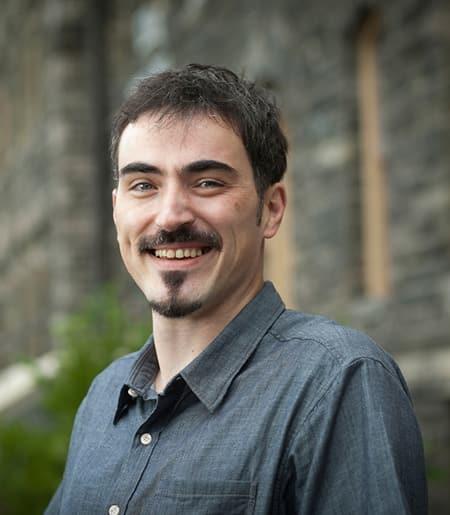
Miloje Despic is an Associate Professor in the Department of Linguistics at Cornell University , affiliated with the College of Arts and Sciences . His research spans theoretical syntax , morphology , and semantics , focusing on cross-linguistic variation and the syntax-morphology interface. Research Focus : Cross-linguistic variation in functional elements (e.g., articles), syntax-morphology interactions (e.g., hybrid agreement, clitic-affix distinction). Languages Studied : Slavic (Serbian, BCMS), Turkic, Algonquian (Cheyenne). Publication Trends : Recent work addresses reflexive possessive agreement in Mongolian, nominal ellipsis in Serbian, cyclic and multiple agreement in Cheyenne, markedness in Algonquian theme signs, and non-intersective adjectives. His research intersects syntactic theory , morphological anomalies , and semantic interpretation .
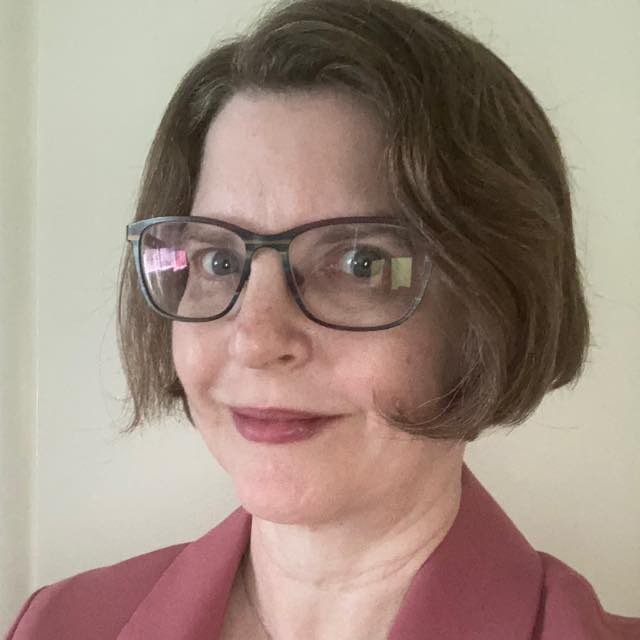
Elaine J. Francis is a Professor of English and Linguistics at Purdue University, where she also serves as the Associate Head of the Department of English. She holds affiliate appointments in the Department of Linguistics and the Department of Speech, Language, and Hearing Sciences. At Purdue, she directs the Experimental Linguistics Lab and teaches linguistics courses at both graduate and undergraduate levels. Francis completed her B.A. in Linguistics at the College of William and Mary in 1993, followed by her M.A. (1995) and Ph.D. (1999) in Linguistics at the University of Chicago under the direction of Salikoko Mufwene. Her dissertation examined variation among members of the same lexical category in English using Sadock's Autolexical Grammar framework. Prior to joining Purdue in 2003, she served as an Assistant Professor at the University of Hong Kong from 1999 to 2002, where she collaborated with Stephen Matthews on research concerning syntactic categories and relative clauses in Cantonese. Her research focuses on syntax and its interfaces with semantics, discourse information structure, and language processing in production and comprehension. Francis employs experimental methods to investigate syntactic, semantic, discourse-pragmatic, and cognitive factors underlying the grammar and usage of complex sentence structures. Her specific interests include word order alternations, filler-gap dependencies, resumptive pronouns, relative clauses, grammatical categories, and syntactic alternations. She has published extensively in top linguistics journals including Language and Cognition, Glossa Psycholinguistics, Linguistics, Lingua, Cognitive Linguistics, and the Journal of Psycholinguistic Research. Analyzing her recent publications reveals a consistent focus on experimental approaches to syntactic phenomena. Her work demonstrates a strong interest in gradient acceptability, syntactic priming, cross-linguistic comparison (particularly involving English and Cantonese), and the relationship between grammatical theory and language processing. Her 2022 book Gradient Acceptability and Linguistic Theory represents a major contribution that synthesizes experimental findings with theoretical linguistics frameworks. Francis plays an active role in the broader linguistics community. She regularly teaches short courses at the Linguistic Society of America Linguistic Institutes, serves on the LSA Ethics Committee, and is on the editorial board of Glossa Psycholinguistics. She has also edited several books and special journal issues, including Mismatch: Form-Function Incongruity and the Architecture of Grammar (2003) and Polymorphous Linguistics: Jim McCawley's Legacy (2005). As an educator and administrator, Francis has supervised numerous graduate students and currently serves as Associate Head of the Department of English at Purdue. Her Experimental Linguistics Lab provides research opportunities for students interested in the intersection of theoretical syntax and experimental methodology. While she recently announced she will not be accepting new graduate students for the 2025-2026 cycle, her established mentorship record demonstrates her commitment to training the next generation of linguists. The Experimental Linguistics Lab, which she directs, serves as a hub for research combining theoretical linguistics with experimental methods. Her collaborative work extends across disciplines, including collaborations with researchers in speech-language pathology, cognitive science, and computational linguistics, reflecting the interdisciplinary nature of modern linguistic research.
Kyle Johnson is a Professor and Curriculum Committee Chair in the Department of Linguistics at the University of Massachusetts at Amherst, located in Integrative Learning Center N440. He holds a BA in Psychology from the University of California-Irvine (1981) and a PhD in Linguistics from MIT (1985). His research focuses on formal syntactic theory, particularly the interaction between syntax and prosody/semantics, with attention to real-time sentence processing evidence. He has taught at multiple institutions including UC-Irvine, UCLA, University of Wisconsin-Madison, and McGill University before joining UMass. Current courses include LING 301 (Introduction to Syntax) and LING 601 (Transformational Grammar). His work emphasizes syntactic derivations, linearization, ellipsis phenomena (gapping, stripping), and the empirical adequacy of formal syntactic theories. Selected recent contributions include analyses of Principle B derivation, prosodic spell-out mechanisms, and theta-role theory. He maintains an active publication schedule with over three decades of work in top journals like Linguistic Inquiry and Nordlyd , addressing topics ranging from adjunct islands to multidominant movement theories. His research combines theoretical innovation with experimental plausibility, often challenging traditional assumptions in generative syntax. Teaching responsibilities include both undergraduate and graduate syntax courses, with supplementary materials like Transformational Grammar lecture notes and a comprehensive bib file for researchers. Office hours are scheduled via his online calendar with a preference for in-person meetings.
Professor Emma Moore is a leading sociolinguist at the School of English, University of Sheffield . Specializing in the social dimensions of language, her work integrates methodologies from anthropology and sociology to investigate how linguistic variation constructs identity and social affiliations. Research focus: Sociolinguistic style, dialect contact, youth language, identity negotiation, and community-based fieldwork Key projects: Adolescence and grammar (1999-), Isles of Scilly dialect (2008-), language and inequality (2014-), language perception software (2016-) Educational background : PhD in Sociolinguistics, University of Manchester Stanford University (USA) during PhD research Research trends across her 2021-2025 publications reveal interdisciplinary exploration of: Socio-syntactic variation Clinical linguistics (2025 MDS-UPDRS studies) Digital discourse post-pandemic Indexicality and cognitive representations Dialect contact in insular communities Educational policy implications Scientific recognition : British Academy Mid-Career Fellow (2019-2020) Elected Fellow, Royal Anthropological Institute (2014) AHRC/BA funded research projects (1999-2015) Research group leadership : Mentored 9 PhD students (2004-2024) and supervised 3 undergraduate SURE projects, including analyses of: Gender in rap performance Language style and workplace inequality Oral history digitization Professional contributions : Editorial Board: Language in Society (2015-), Gender and Language (2011-2017) External Examiner: Lancaster University MA in English Language (2013-2017) Collaborative software development for dialect perception testing
Zhiqiang Yu serves as an Associate Professor in the Department of Modern Languages and Comparative Literature at Baruch College's Weissman School of Arts and Sciences, City University of New York. With over two decades of teaching experience, he has established himself as a dedicated educator specializing in Chinese language, cinema, and civilization courses. Education: Ph.D. in Chinese, University of Washington M.A. in Asian Civilization, University of Iowa B.A. in Chinese Literature, Fudan University (Shanghai) Professor Yu's research focuses on innovative approaches to Chinese language pedagogy, with particular interest in applying economic principles and artificial intelligence to language teaching. His work bridges traditional linguistic scholarship with modern educational technology, examining how efficiency, resource allocation, and technological advancements can enhance language learning outcomes. His research spans Chinese linguistics, dialectology, cinema studies, and cultural elements in language teaching. His publication record reveals a consistent trajectory toward optimizing language instruction through systematic analysis. Recent work increasingly focuses on AI applications in language education and the economic framework of pedagogical efficiency. His scholarship demonstrates a progression from traditional linguistic analysis toward innovative teaching methodologies that incorporate modern technological and theoretical frameworks. Scientific Awards: Award of Excellent Academic Research Reviewer from Journal of International Chinese Education (2016) Graduate Teaching Fellowship from University of Washington (1993) Graduate Teaching Fellowship from University of Iowa (1989) Graduate Research Fellowship from University of Iowa (1988) Student Excellency Award from Fudan University (1984) Professor Yu has served extensively on departmental committees including as Department Assessment Coordinator and Secretary of the Asian and Asian-American Studies Committee. He has organized numerous academic events featuring prominent Chinese cultural figures and has contributed to developing Chinese language curriculum resources including online placement tests. His professional service extends to editorial work for CUNY publications and Chinese language training for the New York Police Academy. He maintains active involvement with multiple professional organizations including the American Name Society, American Oriental Society, American Society of Geolinguistics, Association for Asian Studies, and Chinese Language Teachers Association, frequently presenting at international conferences on Chinese language pedagogy.
Professor Vicky Chondrogianni holds the Personal Chair of Bilingualism and Language Development at the University of Edinburgh's School of Philosophy, Psychology and Language Sciences. She is affiliated faculty at CUNY Graduate Center's Department of Speech-Language-Hearing Sciences. Her research focuses on first/second language acquisition, child bilingualism, psycholinguistics, and developmental language disorders. She has held positions at Bangor University, Aalborg University, and the University of Reading before joining Edinburgh. Education: BA in Linguistics and Classics (University of Athens), MPhil in English and Applied Linguistics (University of Cambridge), PhD in Second Language Acquisition (University of Cambridge). Research interests include cross-linguistic aspects of acquisition in typically-developing and impaired children, production/comprehension relationships, and cognitive-language interactions. She currently supervises PhD students in topics like morphosyntax in bilingual children and employs eye-tracking methods. Grants/Projects: Includes studies on Gaelic-medium education, heritage children's eye-tracking data, and language disorders in multilingual settings. She has led over 20 projects since 2002, including work on Welsh-English bilingualism and L2 Greek acquisition. Labs/Teams: Active in Bilingualism Matters, a research center promoting bilingualism awareness. Serves as Editor for Linguistic Approaches to Bilingualism and holds roles in international associations like IASCL.
Dr. Burkhard Maess is a Research Professor and Group Leader at the Max Planck Institute for Human Cognitive and Brain Sciences, leading the Methods and Development Group Brain Networks. His research focuses on auditory and language processing, signal analysis, and dynamic modeling of neuronal networks. He holds a Diploma in Physics (University of Leipzig, 1987) and a PhD in Physics (University of Leipzig, 1990). His career includes postdoctoral positions at the Academy of Sciences of the GDR and the Free University of Berlin before joining the MPI in 1995. Since 2000, he has led research groups on MEG/EEG signal analysis and cortical network dynamics. His work integrates advanced neuroimaging techniques like MEG and EEG to study sensory processing, neural network dynamics, and the effects of aging on auditory attention. Key contributions include developing high-resolution BEM-FMM methods for source localization and analyzing cross-frequency coupling in neuroscience data. His group also explores spinal cord electrophysiology and the neural underpinnings of perceptual decision-making. Dr. Maess’ research spans cognitive neuroscience, biomedical engineering, and computational modeling, with a focus on bridging empirical findings with theoretical frameworks in neuroscience.
Yaşar Fatih AKBAŞ is an Associate Professor at Kafkas University, Faculty of Theology, Department of Basic Islamic Sciences. He specializes in Arabic Language and Rhetoric, focusing on grammatical structures, semantic analysis, and classical Arabic texts. Education: PhD in Fundamental Islamic Sciences, Atatürk University (2016-2020) Master's in Arabic Language and Rhetoric, Atatürk University (2014-2016) BA in Theology, Atatürk University (1997-2002) Research Interests: Arabic Grammar Rhetoric and Stylistics Semantics and Syntax Quranic Exegesis Historical Linguistics Scientific Contributions: He has published 11 articles, focusing on topics like particle analysis, syntactic flexibility, and stylistic features in classical Arabic texts. His work spans journals such as Şırnak University Theology Faculty Journal and Sakarya University Theology Faculty Journal. Awards: Aylıkla Ödüllendirme (2010) Academic Collaborations: He has co-authored works with Yakup Kızılkaya (2024) and advised Master's theses for Adem Ağbaba (2025) and Fırat Çeledir (2023).
James Essegbey is a Professor of African Languages and Linguistics in the Department of Languages, Literatures & Cultures at the University of Florida (Gainesville), affiliated with the Center for African Studies, Center for Latin American Studies, and African American Studies. His research focuses on language endangerment documentation, syntax-semantics interfaces, and West African languages like Ewe, Akan, and Nyangbo. He holds a PhD from Leiden University (1999) and has held postdoctoral fellowships in the Netherlands and Germany. Key research areas include: Documentation of endangered languages (e.g., Nyangbo, Tutrugbu) Syntax of Kwa languages and Atlantic creoles Cultural influences on linguistic structures (e.g., left-hand taboos in Ghana) Creole genesis and trans-Atlantic language contacts Award-winning scholar with over 20 years of grant-funded projects, including: NSF grants for CoLang and documentary linguistics training programs NSEP funding for African languages summer institutes Leadership in language revitalization initiatives Teaching includes courses on Akan language, African elements in the Americas, and methods of language documentation. Active in professional organizations like the African Studies Association and Society for Pidgin and Creole Languages.
Dmitriy Traytel is an Associate Professor at the University of Copenhagen's Department of Computer Science since August 2020, where he currently heads the Software, Data, People & Society (SDPS) section. Prior to this position, he worked as a senior researcher (Oberassistent) in the Information Security Group led by David Basin at ETH Zürich. He completed his PhD at TU München under Tobias Nipkow's supervision in 2015. His research focuses on formal methods, particularly logic, automata theory, runtime verification and monitoring, decision procedures, (co)induction and (co)recursion, and interactive theorem proving. Traytel develops formally verified tools for runtime monitoring including VeriMon, TimelyMon, and WhyMon, emphasizing correctness and efficiency in monitoring complex temporal properties. His recent publications (2021-2025) demonstrate a strong focus on first-order temporal logic monitoring, with particular attention to explainable verdicts, scalable parallel implementations, and formal verification of monitoring algorithms. The work spans theoretical foundations in logic and category theory while maintaining practical applications in runtime verification systems. Distinguished Paper Award at POPL 2025 for 'Barendregt Convenes with Knaster and Tarski' Best Student Paper Award at FSCD 2016 Distinguished Paper Award at ATVA 2018 Traytel has supervised numerous PhD, Master's, and Bachelor's students in areas spanning formal verification, runtime monitoring, and theorem proving. His research has been supported through collaborations with major institutions including ETH Zürich and TU München. He actively contributes to the academic community by serving on program committees for major conferences including ITP 2025 and RV 2025. He leads the Software, Data, People & Society section at the University of Copenhagen, focusing on developing formally verified tools for runtime verification that bridge theoretical computer science with practical applications in security and system monitoring.
Yasutada Sudo is a Professor of Linguistics at University College London (UCL), holding positions since 2024. Previously, he served as Associate Professor (2018–2024) and Lecturer in Semantics (2013–2018) at UCL. He earned his Ph.D. in Linguistics from MIT. His research focuses on formal semantics, pragmatics, and their intersections with cognitive psychology and computational models. Key areas include scalar implicatures, plural predication, anaphora resolution, and linguistic typology. His work spans multiple languages, including Japanese, Greek, and Italian. His research interests emphasize experimental semantics, cross-linguistic variation in quantificational structures, and the interaction between syntax and semantics. Recent work explores non-maximality effects, perspective sensitivity, and the cognitive underpinnings of pragmatic inferences. He has contributed to debates on Magri effects, blindess hypotheses, and the role of context in interpretation. Publications from 2025–2021 reveal a focus on scalar implicatures, plural inferences, and formal semantic frameworks. His 2025 articles address alternative-based analyses and experimental validation of pragmatic theories. Earlier work (2020–2014) covers gender in Greek, ordinal semantics, and perspective-shifting verbs like 'come' and 'go'. No scientific awards are explicitly listed, but his extensive publication record reflects scholarly impact. He leads UCL’s semantics research group, hosting seminars like PLIN0056, and contributes to academic discourse through peer-reviewed journals and conference presentations.
Georg Schiemer is a Professor at the Department of Philosophy, University of Vienna, and serves as head of the Institute Vienna Circle. He is also an External Fellow at the Munich Center for Mathematical Philosophy, LMU Munich. His research spans the history and philosophy of mathematics, early analytic philosophy, logic, and formal philosophy of science. Institute Vienna Circle (Head) Munich Center for Mathematical Philosophy (External Fellow) His work emphasizes structuralism, focusing on mathematical structures in historical contexts (e.g., Carnap, Hilbert) and their philosophical implications. Recent publications analyze axiomatics, model theory, and epistemic frameworks in foundational mathematics and science. Scientific awards include his appointment as an External Fellow at LMU Munich. He teaches courses such as Logic, Philosophy of Science Colloquiums, and interdisciplinary seminars at the intersection of philosophy, theology, and biology.
Richard K. Larson is a Distinguished Professor of Linguistics at Stony Brook University, specializing in syntax and semantics. He holds a Ph.D. from the University of Wisconsin-Madison (1983). His research focuses on syntactic structures, quantification, clausal complementation, and cross-linguistic phenomena in languages like Warlpiri, Japanese, Turkish, and Mandarin. He is recognized for pioneering the Grammar as Science Project , developing educational software Syntactica and Semantica , which earned him the 1998 EduCom Medal. Education: Ph.D. in Linguistics, University of Wisconsin-Madison, 1983 Research Interests: Larson’s work spans syntax-semantics interface, quantifier scope, NP adverbs, psych-verbs, and formal linguistic theory. He emphasizes scientific rigor in syntax, advocating for linguistics as an experimental science. Current projects include rethinking syntactic cartography and Ezafe constructions in Iranian languages. Awards: EduCom Medal (1998) MIT Graduate Council Teaching Award SUNY Chancellor’s Award for Excellence in Teaching Stony Brook Dean’s Award for Excellence in Graduate Teaching Advising & Grants: Larson has advised numerous graduate students and contributed to NSF-funded initiatives like the Accelerated College Education (ACE) program. His grants focus on computational linguistics tools and language education outreach. Key Contributions: Authored foundational textbooks including Grammar as Science (2010) and Knowledge of Meaning (1995). His work on AP-de adverbs in Mandarin and Ezafe construction has reshaped syntactic analysis. Active in promoting linguistics education at secondary/higher education levels through AP Linguistics initiatives.
Ruth Kramer is an Associate Professor in the Department of Linguistics at Georgetown University's College of Arts and Sciences. Her research lies at the intersection of syntax and morphology, with a focus on grammatical gender, number, agreement, and syncretism, primarily in Afroasiatic languages such as Amharic, Coptic, and Ancient Egyptian. Institution: Georgetown University School: College of Arts and Sciences Department: Department of Linguistics Rank: Associate Professor Email: rtk8@georgetown.edu Office: Poulton Hall 251 Status: On sabbatical in Fall 2023 Her research interests include theoretical syntax, morphological theory, the syntax-morphology interface, phi-features, clitic doubling, and the morphosyntactic behavior of gender and number. She specializes in Amharic and has made significant contributions to the understanding of gender assignment, plural formation, and agreement patterns in this language. She also conducts research on Ancient Egyptian and Coptic, particularly in word order, relative clauses, and plural morphology. Her publications reflect a strong trend in theoretical and cross-linguistic morphosyntax, especially within the framework of Distributed Morphology. Her work often bridges detailed empirical analysis of understudied languages with broad theoretical implications for syntactic and morphological theory. She has authored a major monograph, The Morphosyntax of Gender (Oxford University Press, 2015), and numerous articles in leading journals such as Natural Language and Linguistic Theory , Linguistic Inquiry , and Journal of Afroasiatic Languages and Linguistics . Ruth Kramer is actively engaged in research collaboration, having co-authored papers with scholars like Mark Baker, Matt Hewett, and Anbessa Teferra. She has presented her work at major conferences and workshops, including NELS, Diachronic Generative Syntax, and the Afranaph Project. She teaches courses in linguistics and has advised students, though specific student names are not listed in the provided texts. She is also involved in academic service, such as contributing chapters to authoritative handbooks like The Oxford Handbook of Determiners and The Cambridge Handbook of Distributed Morphology .
Dr. Christopher Lucas is a Senior Lecturer in Arabic Linguistics at SOAS University of London, affiliated with the School of Languages, Cultures and Linguistics. He holds a BA in Arabic from SOAS and an MPhil and PhD in Linguistics from the University of Cambridge. Prior to his current role, he served as a Research Associate at the University of Cambridge and a British Academy Postdoctoral Fellow at SOAS. His research focuses on linguistic variation and change, particularly in Arabic and Maltese, examining topics like negation, definiteness, and contact-induced grammatical change. He actively supervises PhD students in Arabic/Maltese linguistics and grammatical change. Key publications include works on negation typology, Maltese phonology, and historical linguistics. Dr. Lucas has authored/co-authored books such as *The History of Negation in the Languages of Europe and the Mediterranean* and edited volumes on contact-induced change. His work bridges theoretical linguistics with empirical analysis, contributing to understanding language evolution through contact and historical processes. He is reachable at cl39@soas.ac.uk and office 447, Russell Square campus. Current research includes LADO applications in Arabic and Maltese language dynamics.