Dr. Jan Dvorak is a Lecturer in French Linguistics at the Université Toulouse - Jean Jaurès , affiliated with the Cognition, Languages, Ergonomics (CLLE) laboratory. He teaches Introduction to French Syntax and Phonetics/Phonology to undergraduate students, while preparing candidates for the 18th-century French language test in modern literature certification. PhD in Linguistics (2021) from ENS de Lyon - Université de Lyon Supervised by Céline Guillot-Barbance and Olga Nádvorníková Research Focus His research operates within Löbner’s Concept Types and Determination Theory , investigating: Grammaticalization of Czech ten into definite articles Deictic semantics in spoken French demonstratives Contrastive referential strategies between Czech and French Pragmatic effects in emotional demonstrative uses Emergent grammatical structures in informal registers Publication Trends Recent work spans 2019–2024 with a focus on: Comparative analysis of Czech-French demonstrative systems Grammaticalization processes in Slavic and Romance languages Corpus-driven studies of spoken language Definiteness markers in superlative constructions Deixis and reference chain dynamics Scientific Recognition Recipient of Prix Gallica for best dissertation in language sciences (2022) Published in Discours , Travaux de Linguistique , Scolia , and conference proceedings Technical Expertise TXM textometric software proficiency Corpus annotation and analysis Functional linguistic theory application Cross-linguistic typology
Hélène Giraudo is a CNRS researcher affiliated with the Cognition, Languages, Language, Ergonomics (CLLE) at University of Toulouse Jean Jaurès. She works in the Languages and Language team, focusing on psycholinguistics and cognitive psychology. Research Interests: Her work bridges cognitive psychology and psycholinguistics, with emphasis on morphological processing, mental lexicon modeling, and language acquisition. Key areas include affix processing, written production in children, and bilingualism. Morphological decomposition in French Phonotactic constraints in L1 acquisition Word perception in expert vs. apprentice readers Article Trends: Recent publications explore morphological salience in French words, cross-linguistic priming effects, and L2 processing mechanisms. She frequently uses experimental methods like letter-search tasks and masked priming. Teaching: She teaches psycholinguistics and linguistics at University of Toulouse Jean Jaurès, integrating her research into courses on cognitive psychology and language sciences.
Özgür ÖZDAMAR is an Associate Professor at Bilkent University's Department of International Relations and a Visiting Scholar at Johns Hopkins University's School of Advanced International Studies (SAIS). His career spans institutions such as the University of Missouri, TOBB-ETÜ, and the Turkish Ministry of Foreign Affairs. Editor of All Azimuth: Journal of Foreign Policy and Peace Director of Research at the Center for Foreign Policy and Peace Studies His research focuses on foreign policy analysis , leadership studies , forecasting models , and international relations theories , particularly examining political Islam , role theory , and security dynamics . He has pioneered applications of operational code analysis to non-Western contexts, including Islamist movements. Key publication trends include: 15 articles from 2008-2018 analyzing Islamist leadership , Turkey's foreign policy transformations , game theory in IR , role theory , religious discrimination impacts , and Black Sea security challenges . His 2018 co-authored book addresses Middle Eastern politics through role theory. As editor and director, he contributes to All Azimuth journal and research center. His methodological innovations combine elite interviews , process tracing , and statistical modeling in foreign policy analysis.
Andrew Simpson is a Professor of Linguistics at the University of Southern California's College of Letters, Arts and Sciences. His research focuses on the comparative syntax of East Asian, Southeast Asian, and South Asian languages, including Chinese, Vietnamese, Korean, Japanese, Thai, Burmese, Hindi, and Bengali. He has published extensively on topics such as sluicing, grammaticalization, classifier systems, definiteness, and the intersection of language and national identity. Ph.D., Linguistics, University of London, School of Oriental and African Studies (SOAS), 1995 B.A., Modern Languages (French and German), Bristol University, UK, 1984 Simpson’s work explores cross-linguistic syntactic variation, with particular emphasis on functional categories, phase theory, and prosody-syntax interactions. His recent studies investigate specificity and focus in Lalo Yi, classifier systems in Vietnamese and Bangla, and word order patterns in Korean nominal phrases. His publications highlight theoretical advancements in minimalism and typological analysis. His 15 most recent articles (2015-2024) span syntactic theory, language typology, and sociolinguistic aspects of East/Southeast/South Asian languages. Key trends include phase-driven movement, definiteness encoding, and classifier-based nominal structures. USC College of Letters, Arts and Sciences General Education Teaching Award, 2017-2018 USC College of Letters, Arts and Sciences General Education Teaching Award, 2009-2010 Simpson has served on editorial boards, including as Joint General Editor of the Journal of East Asian Linguistics, and held academic roles at SOAS (University of London) and Frankfurt University prior to his current position at USC.
Dr. Tanja Collet-Najem serves as Associate Professor and Department Head in the Department of Languages, Literatures and Cultures at the University of Windsor's Faculty of Arts, Humanities and Social Sciences, where she has held academic positions since 2001 after joining from her postdoctoral work at the Université d’Ottawa. Her academic credentials include a BA in Translation Studies from the University of Antwerp's Institut supérieur de traducteurs et interprètes (ISTI/HIVT), an MA and PhD in Linguistics from the Université de Montréal, and a postdoctoral fellowship in French Applied Linguistics. Dr. Collet-Najem's research program centers on discourse analysis and text linguistics, with specialized focus on academic and political discourse, lexical semantics, and translation studies. Her work examines citation practices in scholarly writing and analyzes language attitudes within Flemish and Dutch-speaking immigrant communities in southwestern Ontario through historical documents like diaries, letters, and newspapers such as the Gazette van Detroit. She publishes in leading journals including Discourse & Society , Meta , and the Canadian Journal of Netherlandic Studies . Analysis of her 15 most recent publications reveals dual research trajectories: historical discourse analysis of World War I-era Flemish immigrant materials in North America, and semantic-terminological investigations of citation mechanisms in academic writing. These works consistently bridge linguistic theory with cultural history and sociopolitical contexts. Her scholarly contributions have earned recognition through the Vinay & Darbelnet Prize (2012) from the Canadian Association for Translation Studies and the SAHSS Outstanding Professor of Humanities Award (2023). Vinay & Darbelnet Prize (2012) SAHSS Outstanding Professor of Humanities Award (2023) Research funding has been secured from the Social Sciences and Humanities Research Council of Canada (SSHRC), the Taalunie (Dutch Language Union), and the University of Windsor's Centre for Teaching and Learning. Dr. Collet-Najem serves as editor-in-chief of the Canadian Journal of Netherlandic Studies and previously contributed to the editorial board of Meta: Journal des traducteurs . Her teaching excellence was recognized through a 2003 nomination for the University of Windsor Student’s Alliance Teacher of the Year Award.
Tania Ionin is a Professor at the University of Illinois at Urbana-Champaign, affiliated with the Department of Slavic Languages & Literatures, the Department of Linguistics, and the Department of Spanish and Portuguese. She serves as Head of Linguistics and leads the Second Language Acquisition and Bilingualism Lab. Her work spans multiple centers, including the Russian, East European and Eurasian Center, the Center for Latin American & Caribbean Studies, and the Lemann Center for Brazilian Studies. Ionin’s research focuses on experimental semantics, syntax/semantics interface, and second language acquisition. Her studies examine quantifier scope, determiner interpretation, genericity, and plural marking across languages like Russian, English, Spanish, and Brazilian Portuguese. She employs experimental methodologies to analyze cross-linguistic transfer, bilingual processing, and formal linguistic theory. Her recent publications (2024-2025) include investigations on multiple grammars, contrastive focus in bilinguals, and pedagogical applications for heritage Russian learners. Earlier work explores count/mass distinctions, plural NP interpretation, and genericity expression in multilingual contexts. Her research frequently bridges theoretical linguistics with empirical language acquisition studies. Ionin actively collaborates with scholars like Silvina Montrul, Tatiana Luchkina, and Ralitsa Slabakova. She contributes to handbooks and journals such as Linguistic Inquiry and Second Language Research , emphasizing methodological rigor and classroom applications. She leads the Second Language Acquisition and Bilingualism Lab, fostering interdisciplinary research on multilingualism and linguistic theory.
Evangelia Vlachou is a Lecturer of Linguistics in the Department of Mediterranean Studies at the University of the Aegean, specializing in Comparative Linguistics with emphasis on Southeastern Mediterranean languages. She has taught Linguistics courses at the University of the Aegean, University of Athens, and University of Paris-Sorbonne since 2008. Her educational qualifications include: First degree in French Language and Literature from Athens University (1998) Master's in Linguistics from University of Paris 7 (2000) PhD in Linguistics from Paris-Sorbonne and Utrecht Universities via co-tutelle arrangement (2007) Dr. Vlachou's research centers on theoretical and comparative analysis of language semantics, extending to syntax, pragmatics, and language acquisition. Her work specifically investigates (in)definites, free choice items, negation, quantifiers, modals, and verbal aspect. She developed a comprehensive theory of free choice items' distribution examining French, Greek, and English linguistic structures, emphasizing interactions between lexical semantic properties and contextual pragmatics. Her significant research contributions include: Scholarship from the Dutch National Organization for Scientific Research (NWO) during doctoral studies Rubicon grant from NWO for postdoctoral research at Stuttgart University Dr. Vlachou has led substantial research initiatives including external research for the Paris-Sorbonne project Dire et laisser inférer since 2010, research for the University of the Aegean's Multi-Islandism program in 2013, and scientific coordination of the I.S. Latsis Foundation-sponsored Yevanic dialect documentation project Before the flame goes out in 2014.
Marta Donazzan is a tenured Associate Professor at the University of Nantes, where she works in the Faculty of Foreign Languages and Cultures (FLCE). She is a researcher at LLING (Linguistic Laboratory of Nantes, UMR 6310), a joint research unit of the University of Nantes and CNRS. Since January 2022, she has served as Deputy Director of LLING, having previously served as interim Director from September to December 2021. Her academic affiliations include: University of Nantes, Faculty of Foreign Languages and Cultures LLING (Linguistic Laboratory of Nantes), UMR 6310 CNRS (Centre National de la Recherche Scientifique) IRL 2034 Worlds in Transition/Mundos em transição, CNRS-Universidade de São Paulo Dr. Donazzan specializes in formal linguistics with a focus on the interface between semantics, syntax, and pragmatics. Her research aims to connect specific language phenomena to general linguistic laws through comparative analysis. She is particularly interested in understanding the ontology of natural language and how languages express definiteness, countability, and reference in both nominal and verbal domains. Her studies employ both qualitative analysis of elicited data and quantitative analysis of language corpora. Her research spans multiple languages including Romance varieties, Mandarin Chinese, and Karitiana, examining language variation at both macro and micro levels. This comparative approach helps shed light on the relationship between functional categories and semantic interpretation across different linguistic systems. Dr. Donazzan has received research funding for several projects including: TAME-INTER: New approaches to the syntax and semantics of TAME across languages (2023-2025), funded by CNRS Nominal and verbal events in Romance causative constructions (2018-2021), funded by DFG Delimiting and identifying events (DelimitEvent) (2014-2018), funded by Fédération Typologie et Universaux du Langage Semantic variation. Event plurality in Chinese and Karitiana (2012), funded by CNPq, Brazil As an educator, Dr. Donazzan teaches general linguistics and English linguistics courses focusing on syntax and semantics. She serves as co-responsible for L2 English LLCeR and represents the English department on the FLCE's commission for transfer and validation of acquired knowledge. She also participates in doctoral thesis grant award juries through the ECLIS Doctoral School Council. Dr. Donazzan is actively involved in the academic community, serving as a member of the Scientific Council of the Faculty of Arts and Languages and participating in international collaborations, particularly with the University of São Paulo.
Ute Bohnacker is Professor of Linguistics at Uppsala University's Department of Linguistics and Philology and also holds the position of Reader in Scandinavian Languages. She has made significant contributions to the field of linguistics through her research on language acquisition, bilingualism, and narrative analysis, with particular focus on Germanic languages and multilingual child development in the Swedish context. Her research expertise spans first and second language acquisition, bilingualism, narrative structures, grammar, and discourse, with special interest in Germanic languages. Bohnacker's recent work has expanded into language assessment and impaired populations, examining both typical and atypical multilingual child language development. She has conducted morphosyntactic studies of Icelandic and Swedish child language, investigated word order and discourse pragmatics in adult second and third language learners, and contributed to theory-building in second language research regarding the influence of first and second languages on third language acquisition. Bohnacker's publication record from 2021-2025 reveals a consistent focus on bilingual language development across multiple language pairs (Turkish-Swedish, Arabic-Swedish, German-Swedish), with particular attention to narrative macrostructure, vocabulary development, and language assessment. Her work demonstrates a clear progression from theoretical linguistics to practical applications in educational and clinical settings, with increasing emphasis on developmental language disorders in bilingual contexts. She has been actively involved in the European network COST Action IS0804 on multilingualism and language impairment and has led the development of the Multilingual Assessment Instrument for Narratives (MAIN), now used worldwide. Currently, she leads the interdisciplinary BiLI-TAS project (funded by Vetenskapsrådet 2014-2019 and Riksbankens jubileumsfond 2020-) that maps language development in bilingual Turkish-, Arabic-, and German-speaking preschool children and early school-age children in Sweden. Bohnacker's research group examines language development in both heritage languages and Swedish, identifying typical developmental stages and warning signs for atypical development (language disorder). Her empirical results have direct relevance for theory-building in language acquisition research, language disorders, and speech therapy practice.
Mathilde Eveline Keizer is a Professor of English Linguistics: Variation and Cognition at the Department of English and American Studies, Faculty of Philological and Cultural Studies, University of Vienna. She serves as both Vice-Director of Studies for English and American Studies and Deputy Head of the Department of English and American Studies, demonstrating significant leadership within the institution. Professor Keizer's educational background includes: MA in English language and literature, Vrije Universiteit Amsterdam (1987) PhD in English Linguistics, Vrije Universiteit Amsterdam (1992) Her primary research focuses on the theoretical framework of Functional Discourse Grammar, with particular emphasis on the Noun Phrase in English and Dutch, possessive constructions, reference and predication, definiteness, English pronouns, apposition, information structure, linguistic categorization, and semi-fixed constructions. Professor Keizer leads the FunCog research group, which investigates the intersection of functional and cognitive approaches to language structure. Her work demonstrates how linguistic structures emerge from the interaction of cognitive processes and communicative needs, providing insights into the dynamic nature of language organization. Analysis of Professor Keizer's recent publications reveals a consistent focus on English syntax within the framework of Functional Discourse Grammar. Her work spans noun phrase structure, partitive constructions, prepositional phrases, and adverbial modification, demonstrating the versatility of FDG in addressing diverse syntactic phenomena. A notable trend is her increasing attention to cross-linguistic comparisons, particularly between English and Dutch, which enriches our understanding of language universals and specifics. Professor Keizer has made significant contributions to the field through her extensive publication record, including authored and edited books that have shaped contemporary understanding of functional-cognitive approaches to grammar. Her work has appeared in leading linguistics journals and handbooks, establishing her as a prominent voice in theoretical linguistics. As an educator, Professor Keizer teaches courses on Functional Discourse Grammar, Cognitive Grammar, Linguistic Categorization, Fuzzy grammar, Linguistic models and approaches, The English Noun Phrase, English adjectives, English idioms, and English syntax. She has supervised numerous graduate students through thesis seminars and advanced courses in linguistics, contributing significantly to the development of the next generation of linguists. Professor Keizer leads the FunCog research group, which brings together scholars interested in the intersection of functional and cognitive approaches to language. The group focuses on empirical investigations of linguistic structures through the lens of Functional Discourse Grammar, fostering interdisciplinary collaboration and innovative research methodologies that bridge theoretical linguistics with practical applications in language teaching and computational linguistics.
Clemens Steiner-Mayr is Professor of Semantics and Pragmatics at the University of Göttingen's Department of English Philology, where he has been teaching since 2017. His office is located in Käte-Hamburger-Weg 3 (Room 0.252), and he can be contacted via phone (+49 551 39-27576) or email. Office hours are by appointment. Education includes a Mag. phil. in General Linguistics and Russian from the University of Vienna (2005), a Ph.D. in Theoretical Linguistics from Harvard University (2010), and Habilitation from Humboldt-Universität zu Berlin (2017). Research focuses on formal semantics and pragmatics, with emphasis on quantifier interpretation, question embedding, intervention effects, and semantic-pragmatic interfaces. Key projects include PI roles in Semantic constraints on interrogative embedding (ZAS Berlin, 2016-present), Questions and entailment (ZAS Berlin, 2013-2016), and the Emmy Noether Group Interpretation of quantifiers (ZAS Berlin, 2010-2012). Publications primarily explore semantics of questions, negation, quantification, and context dependence. Recent work (2016-2024) demonstrates consistent focus on formal analysis of interrogatives, exception phrases, and intervention phenomena using trivalent logic and cross-linguistic data. No awards or student advisees are documented. Professional history includes a visiting position at the University of Potsdam (2012).
Prof. Dr. Malte Zimmermann is a Full Professor of Semantics and Theory of Grammar at the Department of Linguistics, University of Potsdam. He is also a faculty and board member of the African Linguistics School (ALS), which biannually convenes in West African countries to advance formal linguistics knowledge among African scholars. His editorial roles include Associate Editor for Natural Language and Linguistic Theory and former Associate Editor for Linguistics and Philosophy . His educational background includes: Ph.D. in General Linguistics, Universiteit van Amsterdam (2002) M.A. in German Language and Linguistics/English/Anglistic/Philosophy, Universität zu Köln (1998) Abitur, Gymnasium Athenaeum, Stade/Niedersachsen (1989) Zimmermann's research centers on the interface between linguistic form and meaning, with specialization in formal semantics and grammar theory. His work spans quantification, tense, question semantics, discourse particles, and information structure, with particular emphasis on semantically under-researched West African languages (Chadic, Kwa, Grassfield Bantu). His research combines theoretical analysis with experimental methods, notably through projects like 'ExQ' examining embedded question interpretation across European and Non-European languages. He has led field research in Ghana, Cameroon, and Nigeria, challenging assumptions about language universals through empirical investigation of linguistic diversity. His publication trajectory reveals consistent focus on cross-linguistic semantic variation, particularly in focus interpretation, quantifier scope, and information structure phenomena. Recent work demonstrates growing integration of experimental methodologies with traditional formal approaches, with frequent comparisons between German, English, and diverse African languages. His investigations into serial verb constructions have been especially influential, uncovering hidden syntactic variability beneath surface similarities across languages like Akan and Igbo. As a supervisor, Zimmermann has guided numerous doctoral students to completion, with recent graduates including Giuliano Armenante (2024), Eva Shipova (2024), and Mareike Philipp (2023). His research has been supported by substantial funding including: SFB1287 Limits of Variability in Language, 'Limits of variability in interpretation' (2017-2021) SPP 1727 XPRAG.de, 'Exhaustiveness in embedded questions across languages' (2017-2020) SPP 1727 XPRAG.de, 'Exhaustivity in it-clefts' (2014-2017) DFG-Network 'Questions in Discourse' (2012-2016) SFB632 Information Structure projects (2007-2015) He leads the Potsdam semantics group (including Peter Sutton, Giuliano Armenante, Jeanne Lecavelier, Anna Struck, and Carla Bombi) which conducts fieldwork in West Africa. Currently, he co-directs the SFB-project on the 'Limits of Variability in Interpretation,' examining scope ambiguities, reconstruction, and bare NP interpretation across German, English, Akan, Igbo, and Medumba. His collaborative work with Edgar Onea (Graz) and Tatjana Scheffler exemplifies his commitment to bridging theoretical linguistics with empirical fieldwork and experimental validation.
Dr. Krzysztof Migdalski is an Associate Professor at the Department of English and Comparative Linguistics within the Institute of English Studies at the University of Wrocław, Poland. He has been a faculty member at the University since 2008, following post-doctoral research at the University of Connecticut and research positions at Tilburg University in the Netherlands. His educational background includes a Ph.D. in Linguistics from Tilburg University (2006) with a dissertation on "The Syntax of Compound Tenses in Slavic," supervised by Prof. Henk van Riemsdijk and Dr. Hans Broekhuis. He earned his M.A. in English from the University of Wrocław (2000) with a thesis on "The Determiner Hypothesis in Polish." Dr. Migdalski specializes in theoretical linguistics with a focus on comparative generative syntax of Balkan, Germanic, and Slavic languages, as well as historical linguistics, particularly Old Church Slavonic. His research explores the intricate relationships between syntax, morphology, and historical development across Slavic languages. He has made significant contributions to understanding cliticization patterns, tense marking systems, and the evolution of syntactic structures in Slavic languages. His work bridges formal syntactic theory with historical linguistic analysis, offering insights into language change through generative frameworks. His extensive publication record reveals consistent research themes centered on the syntax of Slavic languages, particularly examining clitic placement rules, the evolution of tense systems, and comparative syntactic structures across Germanic and Slavic language families. His work demonstrates how morphosyntactic elements like clitics interact with tense marking and how these patterns evolve over time, providing crucial evidence for theories of language change and syntactic universals. Dr. Migdalski has received several prestigious grants and awards: Focus grant from the Foundation for Polish Science (2010-2013) for "Understanding Linguistic Categories: Temporality at the interfaces" Rubicon grant from the Netherlands Organization for Scientific Research (2006-2008) for post-doctoral research on "The diachrony and synchrony of the second position effect in Slavic" University of Toronto travel grant (2006) for FASL-15 conference AIO-appointment at Tilburg University (2001-2005) Quota Program at University of Tromsø (2000-2001) As an active researcher and academic, Dr. Migdalski serves as a peer reviewer for numerous prestigious linguistics journals including Journal of Comparative Germanic Linguistics, Journal of Linguistics, and Journal of Slavic Linguistics. He has been involved in collaborative research projects such as the "Nový encyclopedický slovník češtiny online" project at the University of Brno (2011-2015) and has participated in numerous summer schools for generative grammar across Europe. His extensive conference presentations demonstrate his active engagement with the international linguistics community, where he regularly presents on topics related to Slavic syntax and historical linguistic change.
Professor Jerzy Nawrocki is a distinguished academic at the Poznań University of Technology, where he serves in the Faculty of Computer Science and Telecommunications within the Institute of Computer Science. With a career spanning several decades since completing his doctoral dissertation in 1984 on 'Cost analysis of dynamic memory allocation in real-time systems,' he has established himself as a prominent researcher in software engineering. Professor Nawrocki's research primarily focuses on: Software Engineering methodologies and practices Requirements Engineering, particularly Non-functional Requirements Agile Software Development processes Use Case Analysis and specification Code Quality assessment and metrics Software Documentation quality models His recent work has examined task-specific code metrics, the application of Definition of Done in agile projects, and the maintenance of non-functional requirement templates. Professor Nawrocki has published extensively, with numerous articles in reputable journals such as IEEE Access, Journal of Systems and Software, and Information and Software Technology. Professor Nawrocki has supervised eight doctoral dissertations, mentoring researchers who have gone on to make their own contributions to the field of software engineering. His students include Sylwia Kopczyńska, Bartosz Alchimowicz, Jakub Jurkiewicz, and Mirosław Ochodek. His work demonstrates a consistent focus on empirical approaches to software engineering challenges, with many of his publications presenting empirical studies that validate or challenge existing practices in the field.
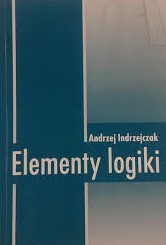
Professor Andrzej Indrzejczak is a distinguished academic at the University of Lodz, where he serves as Head of the Department of Logic and Methodology of Sciences within the Faculty of Philosophy and History. With a career spanning over three decades, he has established himself as a leading expert in proof theory, sequent calculus, and non-classical logics. His educational background includes a Master's degree in Cultural Studies (1989), a Master of Philosophy (1993), a PhD in Philosophy (1997) with dissertation on "Sequential and assumption formalizations of propositional modal logics," and habilitation in 2007 with thesis "Hybrid deductive systems in modal logics." He was awarded the title of Professor of Humanities in 2015. Professor Indrzejczak's research focuses on proof theory for non-classical logics, particularly practical applications of proof methods and their combinations (hybrid systems), natural proof search methods, and algorithms. His work encompasses sequent calculus methodology, cut elimination techniques extended to non-classical logics, and anti-realist approaches to the problem of meaning of logical constants. He also investigates applications of non-classical logics in formal analysis of traditional philosophical problems, argumentation theory, and methodology of social sciences. His publications reveal deep expertise in modal logics, free logics, and the theoretical foundations of logical systems. His extensive publication record shows a strong trend toward developing proof-theoretic approaches to definite descriptions and complex terms, with recent work focusing on bisequent calculi, cut elimination theorems, and formalization of multi-valued logics. His research bridges philosophical questions with rigorous logical formalization, particularly in the areas of hybrid logic, temporal reasoning, and logical ontology. The progression from modal logics to definite descriptions demonstrates his expanding research scope while maintaining technical rigor. Professor Indrzejczak has received significant research funding, including an ERC Advanced Grant for his "Coming to Terms: Proof Theory Extended to Definite Descriptions and other Terms" project (2022-2027), valued at 1.6 million EUR, along with multiple National Science Center grants totaling over 470,000 PLN. This ERC project represents a major advancement in extending proof theory to handle complex terms. He currently supervises doctoral students and has served as a promoter for at least one doctoral thesis. His research team includes several collaborators including Dr. Nils Kürbis, Dr. Przemysław Wałęga, and Dr. Michał Zawidzki. He has led multiple research projects including "80 years of research on natural deduction and sequent calculi" and "Sequent and tableau deductive systems for non-classical logics." Professor Indrzejczak actively contributes to the academic community as Editor-in-Chief of Bulletin of the Section of Logic and Chairman of the Editorial Board for Studia Logica. He has organized numerous conferences including the "Non-Classical Logics. Theory and Applications" series spanning over 15 years, demonstrating his leadership in the international logic community.