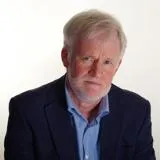
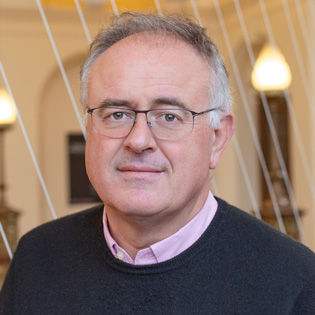
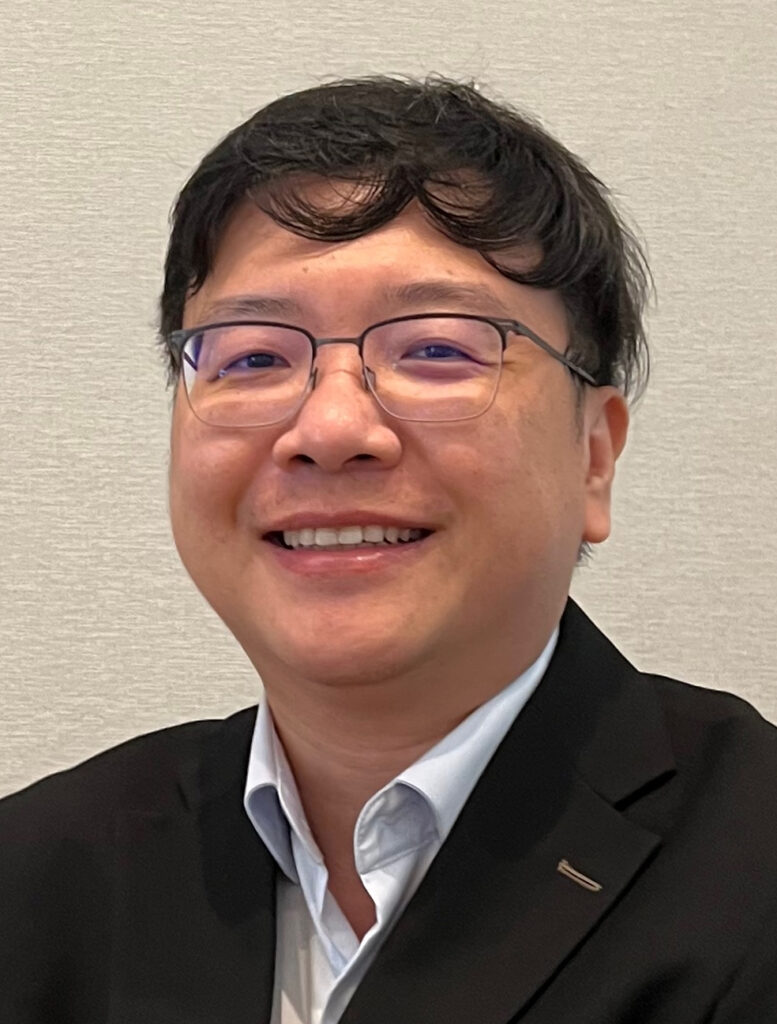
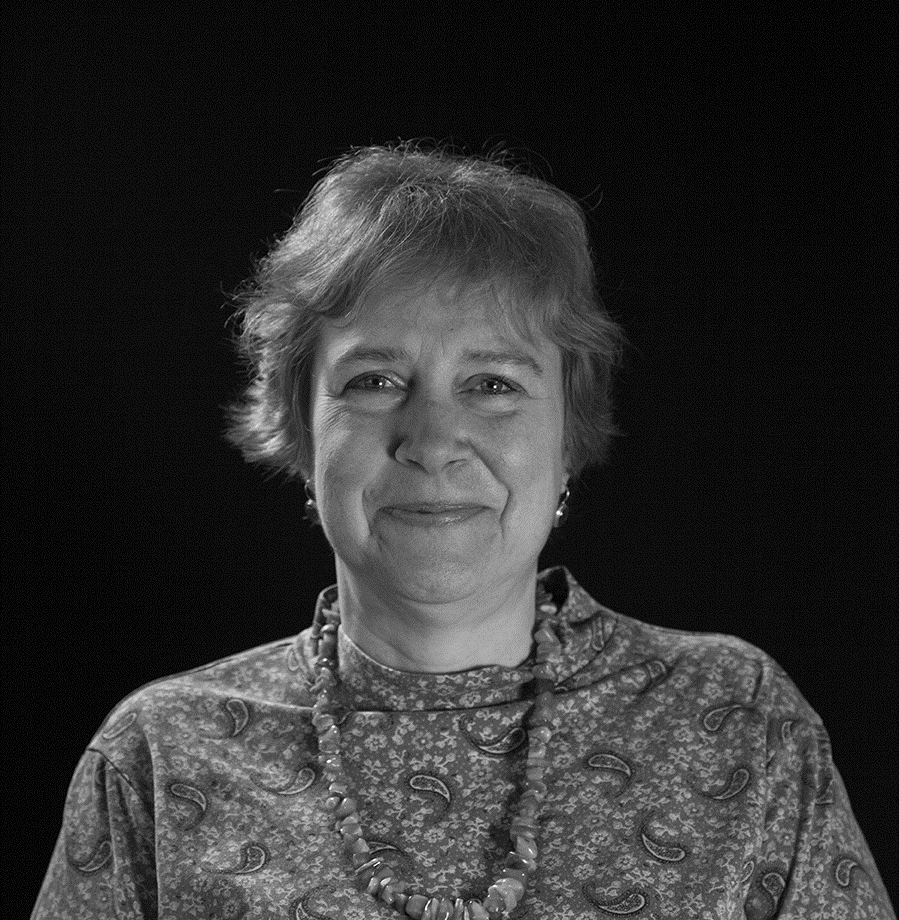
Dr Rod Thornton is a Senior Lecturer in Russian Defence and Security Studies at King’s College London, affiliated with the Defence Studies Department and School of Security Studies. He specializes in the Russian military's kinetic and sub-threshold warfare, with a focus on cyber capabilities, space warfare, and UK homeland resilience. His research includes recent British Academy-funded work on UK civil defense capacity during the pandemic, advocating for dedicated civil defense organizations. He has published extensively on Russian military tactics in Ukraine, AI-cyber integration, and space-based deterrence. Russian military cyber operations Space warfare dynamics UK resilience capacity gaps Scientific awards include a British Academy grant (2020). His students focus on asymmetric warfare, AI, cyber, and regional security issues. He teaches at the UK Defence Academy and has collaborated with institutions in Finland, South Korea, and the Freeman Air and Space Institute.
Professor Jonathan Boff (FRHistS) is a leading military historian in the Department of History at the University of Birmingham. His research explores the intersection of institutions, individuals, and warfare through comparative and cross-disciplinary approaches. He has a unique background combining academic expertise with two decades of private-sector experience, primarily in Asia. PhD in War Studies, King’s College London MA in History of Warfare, King’s College London BA in PPE, Merton College, Oxford University Boff’s research focuses on Economic Statecraft , the military history of the World Wars, British strategy (1880–1945), and the psychological dynamics of combat. He bridges historical analysis with modern policy challenges, particularly in financial and strategic contexts. Recent publications highlight his expertise in First World War financial policy, battlefield tactics, and institutional adaptation. His work is recognized for its empirical rigor and interdisciplinary methodology. AHRC Fellowship in Research Leadership (2020–23) Prize-winning books: Haig's Enemy (OUP, 2018) and Winning and Losing on the Western Front (CUP, 2012) Fellow of the Royal Historical Society He supervises PhD research on topics such as economic statecraft, World War-era military strategies, and comparative studies of morale. His grants include AHRC funding for his current project on financial warfare, culminating in a 2025 monograph by Oxford University Press.
Dr. ONG Ghim Ping Raymond is an Associate Professor and Deputy Head (Research) at the Department of Civil and Environmental Engineering, National University of Singapore (NUS). He concurrently serves as Director (Operations) at the Coastal Protection and Flood Resilience Institute (CFI) Singapore. His expertise spans sustainable pavements, multimodal transport infrastructure, and urban mobility systems. Dr. Ong holds a B.Eng (Civil) with First Class Honours and a PhD from NUS, followed by postdoctoral research at Purdue University. He has authored/co-authored over 85 peer-reviewed journal articles and 120 conference papers. His research focuses on circular economy applications in infrastructure, car-lite urban design, and mega-projects like Tuas Port and Changi Airport expansions. Dr. Ong actively engages in policy advisory roles, serving on international committees for ASCE, ASTM, and EASTS. He has received prestigious awards including the Alfred Noble Prize (ASCE) and Takeuchi Yoshio Award (OCDI). His teaching accolades include multiple NUS Faculty of Engineering commendations. He advises on critical infrastructure projects for agencies like Changi Airport Group and Defence Science and Technology Agency. Dr. Ong frequently contributes to public discourse on transport and urban planning via media interviews and policy consultations.
Dr. Marina Miron is a post-doctoral researcher at King’s College London’s Department of War Studies and Honorary Research Fellow at the Centre for Military Ethics. Her work focuses on military strategy, cybersecurity, and ethical education in conflict contexts. She holds a PhD from the University of New South Wales (Australian Defence Force Academy) and has taught at institutions like the NATO School and Colombian War College. Current projects include analyzing Russia/China’s information warfare strategies and developing country-specific military ethics programs for Colombia’s armed forces. She also advises on cyber defense, AI in military contexts, and drone technology impacts. Research interests span counterinsurgency, hybrid warfare, cyber operations, and ethical dilemmas in modern conflict. She co-leads a British Academy-funded project on Western countermeasures against information warfare and contributed to NATO’s counterterrorism training programs. Her work bridges technological advancements with ethical considerations, particularly in unmanned systems and medical ethics. Publications analyze Russian cyber capabilities, drone public perception, and historical conflict resolution cases like Peru. She frequently appears in media discussions on Ukraine and cybersecurity threats. Professional networks include King’s Cybersecurity Centre and Freeman Air & Space Institute.
Dr. Hillary Briffa is a Senior Lecturer in National Security Studies and Assistant Director of the Centre for Defence Studies at King’s College London. She holds a Ph.D. in War Studies from King’s College London, focusing on small states’ grand strategy. Her roles include teaching National Security Studies, Small States and International Security at MA level, and leading BA3 Dissertation training. Research interests span small states’ security, climate security, grand strategy, and First World War propaganda. She leads the Climate Change and International Order portfolio at the Centre for Grand Strategy and co-organizes the annual U.S.-U.K. World Order summer school. Grants include maritime security for small states (with Georgetown University Qatar), national energy transitions, and foresight with the Estonian Defence Forces. Briffa advises the UK government on strategic reviews, international organizations, and defense policy. Awards include the U.S. State Department’s Emerging Young Leaders Award (2016), Hans J. Morgenthau Fellowship (2020/21), and Fellow of the Higher Education Academy (2023). She serves on King’s Academic Board, EDI committees, and chairs the Circle-U Climate Knowledge Hub. Her work bridges academia and policy, emphasizing small states’ strategic agency in global challenges. Publications include analyses of Maltese neutrality, Indo-Pacific maritime security, and small states’ pandemic responses. She co-authored sections in volumes on war studies, climate policy, and international order. Briffa’s research and outreach aim to enhance small states’ resilience and influence in evolving security landscapes.
Professor Beatrice Heuser is a distinguished academic in the Department of Politics within the School of Social & Political Sciences at the University of Glasgow. Her career spans multiple prestigious institutions across Europe, including King's College London, University of Reading, and visiting professorships at Sciences Po Paris, Bundeswehr University Munich, and MGIMO. She maintains significant affiliations with major strategic research institutes including Chatham House, RUSI, IFRI, and IRSEM. Education: BA from Bedford College London, MA from LSE, DPhil from Oxford (St Antony's/St John's), Habilitation from University of Marburg Professional Experience: Former Director of Studies at German Bundeswehr's military history research office, NATO Headquarters consultant, and extensive teaching across European institutions Her research centers on strategic studies with particular focus on the cultural dimensions of warfare, nuclear strategy, and the historical evolution of strategic thought. Key research areas include strategic culture, military exercises as political instruments, laws of war development, and European defense policy. Her work bridges historical analysis with contemporary security challenges, examining how cultural narratives shape strategic decision-making from antiquity to the nuclear age. Professor Heuser's recent publications demonstrate consistent scholarly output across strategic theory, military history, and contemporary security issues. Her work shows particular emphasis on the conceptual foundations of strategic culture, historical analysis of warfare evolution, and practical applications to modern security challenges including nuclear deterrence and asymmetric warfare. The interdisciplinary nature of her research connects political theory, historical analysis, and security studies. She actively supervises graduate students in strategic theory, nuclear strategy, insurgency studies, and defense policy-making within NATO/EU contexts. Her teaching portfolio includes War and International Relations, Defense Policy, and Strategic Theory courses.
Dr Zeno Leoni is a Lecturer in the Defence Studies Department at King’s College London, based at the Joint Services and Staff College (JSCSC) of the Defence Academy of the UK. He is also an affiliate of the Lau China Institute, co-convening their policy brief series. His research focuses on US and Chinese grand strategies, US-China relations, AUKUS, and world order, with recent publications including a forthcoming book on the new Cold War. He leads a research group studying middle-power diplomacy in the Indo-Pacific and has advised Italian and UK government bodies on geopolitical trends. Teaching: Delivers courses on China for the Higher Command and Staff Course (HCSC) at the JSCSC, and lectures on International Security Studies, Airpower, and International Political Economy. Additionally teaches at Italy’s IASD defence institute. Key Research Areas: Specializes in US-China competition, AUKUS dynamics, and the evolving Indo-Pacific order. His work bridges academia and policy, with contributions to UK Parliament hearings on AUKUS and US defense policies. Leads research on middle powers’ strategies amid great power competition. Professional Activities: Executive Director of ITSS Verona, a non-profit focused on international security. Active in King’s research groups including Contemporary Marxism, Environmental Security, and Economic Conflict & Competition. Frequently contributes to media analyses for outlets like the Financial Times and BBC. Awards: While no specific prizes are listed, his extensive policy engagement and academic output reflect recognition in strategic studies circles. Collaborations include work with the EU, UAE, and other middle powers on geopolitical strategy.
Dr. Aditya Joshi is a Senior Lecturer in the School of Computer Science & Engineering at the University of New South Wales (UNSW). He specializes in Natural Language Processing (NLP), with a focus on sarcasm detection, dialectal NLP, and ethical AI applications in public health and cybersecurity. He joined UNSW in 2023 following industry roles at SEEK, Notiv, and Fractal Analytics, where he developed NLP systems for recommendation engines and meeting analytics. His research has garnered over 3,000 citations (h-index 26) and secured $3.1M in grants, including Defence Trailblazer and Google exploreCSR awards. Education: Joint PhD (2018) from IIT Bombay (India) and Monash University (Australia); MTech in CSE (2011) from IIT Bombay. Research Interests: Making NLP models robust for non-native English speakers and the LGBTI+ community, algorithmic enhancements to transformers, and applications in public health, cybersecurity, and societal issues. His work spans epidemic intelligence (collaborations with EPIWATCH and IFCYBER), cybersecurity tools like AuditNet, and inclusive AI initiatives such as queer-inclusive workshops funded by Google. He designed UNSW's new NLP course (COMP6713) and co-authored a Wiley textbook on NLP. Notable grants include the A$1.4M 'Comprehensive Defence Data Platform' (Lead CI) and A$92K Google exploreCSR grant for benchmarking dialectal sentiment. His awards include the Best PhD Thesis from IITB-Monash and Best Paper accolades at FAccT 2023 and MoMM 2020. He supervises projects on kernel-based attention reformulation, prompt-based sarcasm detection, and multilingual small-scale LLMs. His service roles include Executive Committee Member at ALTA and arXiv moderator for computational linguistics.
Professor Göran Roos is a distinguished Swedish academic, author, and businessman known for his contributions to innovation management, industrial policy, and strategy. He is a founder of modern intellectual capital science and currently holds a visiting professorship at the University of Adelaide. His global advisory work spans governments and organizations, with visiting roles in Australia, the UK, and Norway. Affiliations: University of Adelaide (Visiting Professor), SA Zero Partner. His research focuses on decarbonisation strategies, industry hubs, and green defence. He recently led a roundtable discussion on decarbonisation models in Europe and presented a public lecture titled "Accelerating Decarbonisation Through Industry Hubs: Lessons from Europe’s Experience" , emphasizing practical strategies for net-zero transitions. No specific scientific awards or grants are mentioned in the text. He advises on global sustainability initiatives but no student names or lab affiliations are provided.
Dr. Gavin Mount is a researcher at UNSW Canberra , specializing in non-traditional security studies , ethnic conflict , and the sociopolitical implications of emerging technologies . His work bridges theoretical analysis with practical applications in conflict transformation and defense studies. Research Focus: Global politics of ethnic conflict, hybrid peace/war frameworks, and socio-political impacts of drone technology. Teaching: Courses like Ethnic Conflict in World Politics and Law, Force and Legitimacy , with a focus on military education and strategic studies. Publications: Recent work includes contributions to Thinking Swarms (2025) and Hybridity on the Ground in Peacebuilding and Development (2018). Grants: Leads the Curricula Integration of Student Wellbeing Resources project under HERDSA. Key Themes across his research include the intersection of technology and conflict, evolving defense paradigms, and pedagogical innovations in security studies.
Leigh Spanner is an Assistant Professor in the Department of Political Science at Saint Mary’s University (Faculty of Arts). She holds a PhD from the University of Alberta and previously served as a postdoctoral fellow at Mount Saint Vincent University. Her research focuses on feminist-informed analyses of Canadian national security, military policies, and veteran life, emphasizing gender, global security, and the intersections of intimate life with state structures. Education: PhD in Political Science, University of Alberta (2019) MA in Political Science, Memorial University of Newfoundland (2013) BA (Hons) in Political Science and Public Administration, University of Ottawa (2008) Research Interests: Dr. Spanner explores how gender, inequality, and political economy shape military families, veteran transitions, and security policies. She examines the role of households and caregiving in sustaining global security frameworks, with a focus on Canadian Armed Forces and Veterans Affairs Canada policies. Grants & Collaborations: Her monograph on military families was funded by SSHRC. She collaborates with DND MINDS Collaborative Network and previously with the Defence Security Foresight Group. Recent work includes policy contracts with Veterans Affairs Canada. Labs/Networks: Active member of military culture research networks, including the DND MINDS Collaborative Network.
Dr. David Jordan is a Senior Lecturer in Defence Studies at King's College London, based at the Defence Academy of the UK. He serves as Co-Director of the Freeman Air and Space Institute and holds roles such as Academic Director (Air) for the Advanced Command & Staff Course. His research focuses on air and space power, military history, and strategic studies, with notable works including Understanding Modern Warfare . He has contributed to radio/TV commentary on air power and defence matters and is a Fellow of the Royal Aeronautical Society, Royal Historical Society, and Royal Society of Arts. Education: Doctorate in relevant field (not explicitly stated). Affiliations: RAF Centre for Air & Space Power Studies (RAFCASPS) Chief of the Air Staff’s Air Power Workshop His teaching includes modules on air power theory, the Falklands War, and Royal Air Force history. He supervises PhD students researching topics like space power theory, air power doctrine, and British military history since 1914. Recent research highlights include analyses of air power in the Falklands Conflict, RAF maritime operations, and space strategy. He has authored over 30 publications, including peer-reviewed articles on historical battles and contemporary military operations. Grants and projects involve collaboration with institutions like the Freeman Air and Space Institute, focusing on independent research into air and space power issues. His work often intersects with policy analysis, such as NATO operations and defense reviews.
Axel Dreher is Professor of International and Development Politics at Heidelberg University’s Alfred-Weber-Institute for Economics. He is a leading scholar in political economy and development economics, with extensive affiliations including the German National Academy of Sciences Leopoldina, CEPR, CESifo, KOF, AidData, and EUDN. He serves as Editor of the Review of International Organizations and Co-Director of the Center for European Studies (CefES) at the University of Milan-Bicocca. Ruprecht-Karls-University Heidelberg (2011–Present) Georg-August University Göttingen (2008–2011) ETH Zurich (2005–2008) University of Konstanz (2004–2005) University of Exeter (2003–2004) University of Mannheim (2000–2003) His research centers on political economy , economic development , foreign aid , and globalization . He investigates how political institutions, leadership incentives, and geopolitical interests shape development outcomes and international financial flows. His work often employs empirical and geospatial methods to analyze aid allocation, corruption, migration, and the rise of emerging donors like China. The 15 most recent publications reflect a strong focus on China’s overseas development finance , regional favoritism , and the political determinants of aid . Keywords span political economy, development economics, and international relations, with subfields including Chinese foreign aid, geospatial analysis, governance, institutional quality, and South-South cooperation. His recent book Banking on Beijing and award-winning paper Wedded to Prosperity exemplify his cutting-edge contributions to understanding the political economy of development. Scientific awards include: 2023 Best Paper Award, Political Economy of Aid Society (PEAS) 2023 Best New Dataset Award, International Political Economy Society International Geneva (IG) Award 2020 Excellence in Refereeing Award, World Bank Economic Review (2019) 2010 KfW Excellence Award for policy-relevant research Multiple DFG and Swiss research grants Dreher has advised over 30 PhD students on topics ranging from aid effectiveness to political violence and migration. He has received major research grants from the German Research Foundation (DFG), Swiss Network for International Studies (SNIS), European Commission, and VolkswagenStiftung. His leadership roles include organizing the annual Political Economy of International Organizations conference series and serving on editorial boards of top journals such as World Development and Defence and Peace Economics . He is actively involved in academic labs and research networks including the Courant Research Center on Poverty and Equity at Göttingen, AidData at William & Mary, and the Center for European Studies (CefES). His current work continues to explore the intersection of politics, development, and globalization, particularly through georeferenced data and natural experiments.
Henri van Soest is a Professor of Policy Analysis at the RAND School of Public Policy and a Senior Analyst at RAND Europe. He is based at RAND, a global policy research organization, where he leads studies on energy security, artificial intelligence governance, critical infrastructure protection, and European Union policy. His work supports key institutions including the European Union, UK government, and Dutch government. His research focuses on the intersection of technology and policy, particularly in energy systems and AI. Key areas include: AI governance and trustworthy AI tools Energy security and digitalisation of the power grid Critical undersea infrastructure protection Cybersecurity in energy systems Space technology regulation Societal resilience and national security The trend in his recent publications shows a growing emphasis on the dual-use nature of AI in critical infrastructure, balancing innovation with security and resilience. His work combines technical analysis with policy recommendations, often using modeling and expert elicitation. Much of his research addresses transatlantic and European policy challenges, especially in energy and security domains. Scientific contributions and policy impact are evident through frequent publications and expert submissions to governmental bodies. Notable outputs include evidence submissions to the UK Parliament and reports for the U.S. Department of Energy. While no formal awards are listed, his influence is reflected in high-level policy engagement. He has advised on grants and policy studies involving global teams, particularly in energy transition, AI infrastructure, and resilience planning. His prior experience includes energy policy research at the University of Oslo, cleantech analysis, and corporate governance in banking. He holds a Ph.D. from the University of Cambridge and a joint LL.M. from KU Leuven and the University of Zurich. Henri van Soest leads research within RAND Europe’s multidisciplinary teams focusing on science, technology, and security policy. His work often involves collaboration across international experts and institutions, particularly on EU and NATO-related security issues. He contributes to projects involving horizon scanning, Delphi studies, and quantitative modeling in policy contexts.
Stuart Croft is Vice-Chancellor & President of the University of Warwick and Professor of International Security in the Department of Politics and International Studies (PAIS). Since joining Warwick in 2007 he has served as Pro-Vice-Chancellor for Research (Arts & Social Sciences), Provost, and since February 2016 as the University’s chief executive, leading 5,500 staff across all disciplines. Education & Career: 18 years at the University of Birmingham, latterly Professor of International Relations and Head of the School of Social Sciences. Appointed Professor of International Security, University of Warwick, January 2007. Pro-Vice-Chancellor for Research (Arts & Social Sciences) 2011-2013. Provost 2013-2016. Vice-Chancellor & President from February 2016. Research Interests: Professor Croft’s scholarship lies at the intersection of security studies and political culture, using constructivist and narrative approaches to analyse how identities and discourses shape security policy. He has published extensively on the War on Terror, NATO transformation, European security governance, and the securitisation of Islam in Britain. His work combines large-scale funded empirical projects with theoretical innovation in International Relations. Publications & Grants Trend: Over the past two decades his output has clustered around three themes—cultural narratives of terrorism and counter-radicalisation, institutional governance of Euro-Atlantic security (NATO/EU), and arms-control regimes—moving from traditional strategic studies toward critical security approaches that foreground identity, discourse and governance. Scientific Awards & Fellowships: Academician, Academy of Social Sciences (2006) Fellow, Royal Society of Arts (2006) International Studies Association – International Security Section Book Award short-list 2007 Doctoral Supervision & Mentoring: He has successfully supervised 21 PhD students at Birmingham and Warwick, examined 25 UK PhDs as external examiner, and currently supervises 6 doctoral researchers. He has mentored 9 ESRC, EU and British Academy post-doctoral fellows. Editorial & Professional Leadership: Editor of the Palgrave ‘New Security Challenges’ book series since 2005; co-editor of Contemporary Security Policy 1989-2004; editorial board member of Critical Studies on Terrorism and Dynamics of Asymmetric Conflict . Chair (2009-2011) and President (2011-2013) of the British International Studies Association.