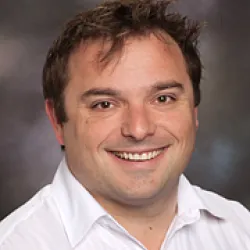
Andrew Neal is a Professor of International Security and Director of Postgraduate Research Programmes at the University of Edinburgh’s School of Social and Political Science. His research focuses on critical security studies, parliamentary security politics, and the evolution of security discourse. He leads the National Security and Defence Documents Dataset (1987–2024), analyzing global security priorities across 119 countries. Education: BA (Hons) in Politics from Lancaster University PhD in Politics from Keele University Research Interests: Security policy communication and transparency Non-traditional security threats Global North-South security dynamics Parliamentary roles in security governance Grants & Projects: Funded by the Scottish Council on Global Affairs, BA/Leverhulme, and FCDO Current projects include a history of security threats and green energy transition challenges Labs/Teams: Directs the National Security and Defence Documents Dataset project, a collaborative open-access resource.
David Betz is Professor of War in the Modern World within the Department of War Studies at King's College London. His academic profile centers on strategic analysis of contemporary warfare, civil-military relations, and defense reform with regional expertise in Eastern Europe and Asia-Pacific. With 57 research outputs and 344 citations, he maintains an active scholarly presence in military strategy and information-age conflict studies. His research spans military strategy, contemporary warfare paradigms, civil-military dynamics, and defense institutional reform, with particular emphasis on counter-insurgency, small wars, and the impact of information technology on modern conflict. The research fingerprint reveals deep engagement with 21st-century warfare concepts, information society dynamics, and strategic imperatives across multiple conflict domains including urbicide and asymmetric threats. Recent publications (2024-2025) demonstrate thematic continuity in examining fortification evolution, urban destruction in warfare, and strategic realities in active conflicts like Ukraine. These works collectively analyze how industrial limitations challenge Western military assumptions while exploring historical strategic aesthetics and emerging warfare patterns in the information age. No scientific awards were specified in the source material. Betz has supervised 22 research students and led five major externally funded projects including AHRC research on Rwandan genocide military strategies and interdisciplinary studies on borderlands, fortification history, and networked social movements. His professional activities include organizing the 'Reviewing UK Army COIN Doctrine' workshop and delivering keynotes at the UK Defence Academy and Ministry of Defence courses. He actively contributes to the KCL Insurgency Research Group and maintains collaborative networks through conference participation and strategic analysis workshops focused on asymmetric conflict and terrorism.
Prof. Chiara Manfletti is a Professor at the Technical University of Munich (TUM), leading the Chair of Space Propulsion and Mobility. She also serves as Director and COO of Neuraspace. Her academic journey includes a degree from Imperial College London (2001), a master's from the International Space University (2002), and a PhD from RWTH Aachen (2010). Previously, she worked at the German Aerospace Center, served as Programme Advisor to the European Space Agency Director General, and became the first President of Portugal's national space agency. Her research focuses on innovative propulsion systems, satellite autonomy, and AI-driven propulsion controls. She has received the National Defence Medal (2020) and Medal of Merit (2020) from Portugal. Research Interests: Democratization of space access via novel propulsion technologies Autonomous and sustainable satellite propulsion systems Data-driven propulsion control using AI and health monitoring Key Contributions: Her work bridges numerical/experimental expertise with space safety policy. Recent publications analyze water hammer phenomena in propulsion systems and propose frameworks for planetary protection in space activities. Awards: National Defence Medal 1st class (2020) Medal of Merit from Portuguese Ministry of Science (2020) Professional Roles: Combines academic leadership with industry roles, actively shaping space policy and innovation. No listed grants are detailed publicly in the provided text.
Alan Hunter is a Professor in Autonomous Systems at the University of Bath's Department of Mechanical Engineering. He serves as Deputy Head of Department for Workload and Wellbeing and is affiliated with the Water Innovation & Research Centre (WIRC) and the UKRI CDT in Accountable, Responsible and Transparent AI. His research focuses on underwater acoustics, signal processing, imaging, and machine intelligence, with applications in sonar-based remote sensing and marine robotics. Education: B.E. (Hons I) in Electrical and Electronic Engineering from the University of Canterbury (2001), PhD in Synthetic Aperture Sonar (SAS) from the same institution (2006). Career highlights include roles at the University of Bristol (2007-2010), TNO Netherlands (2010-2014), and NATO CMRE (2014). He has led projects on sub-sediment imaging, autonomous mine-hunting systems, and precision navigation algorithms. Research Interests: • Underwater Acoustics & Sonar Imaging • Autonomous Underwater Vehicles • Machine Learning for Acoustic Data Analysis • Non-Destructive Inspection via Ultrasound • Sustainable Coastal Protection (via UN SDG contributions) Active Projects (2023-2025+): - Noise Network Plus : Engineering a Quieter Future (EPSRC) - TESSMEX SR 4 : Naval Mine-Hunting Technology (Defence Lab) - Decision-Making with Ambiguities : Legal AI for Robotics (EPSRC) Professional Affiliations: • Senior Member, IEEE • Associate Editor, IEEE Journal of Oceanic Engineering • Collaborations with NATO, TNO, and UK Defence Orgs. Labs & Teams: • Robotics and Autonomous Systems Lab • Centre for Space, Atmospheric and Oceanic Science • WIRC @ Bath (Water Innovation Hub)
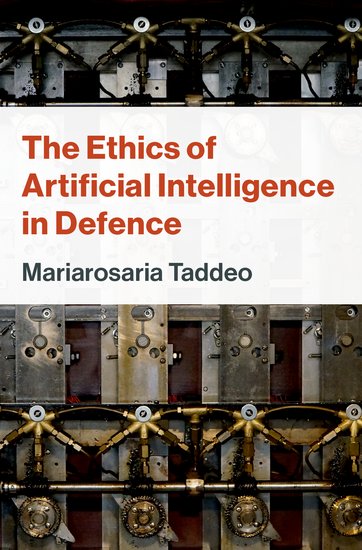
Mariarosaria Taddeo is Professor of Digital Ethics and Defence Technologies at the Oxford Internet Institute (University of Oxford) , where she also serves as DPhil Programme Director for Information, Communication and the Social Sciences. She is a Senior Research Fellow at the Alan Turing Institute and holds advisory roles at institutions including the Ministry of Defence (UK) Ethics Advisory Panel , the BRAID Programme , and the Leonardo Foundation . Education PhD (Doctor Europeus) in Philosophy from University of Padua Mariarosaria Taddeo’s research spans Digital Ethics, Philosophy of Technology, Cybersecurity Ethics, and AI Governance , with a focus on national defence applications. Her work addresses trust in AI , cyber conflict regulation , and ethical frameworks for autonomous weapons . She has published extensively in journals like Nature , Science , and Minds and Machines , including studies on data philanthropy , digital well-being , and quantum technology ethics . Scientific Awards 2010 Simon Award for Outstanding Research in Computing and Philosophy 2016 World Technology Award for Ethics 2018 InspiringFifty: Top 50 Italian women in technology ORBIT listings (2018, 2020) of top 100 women in AI Ethics 2020 Women’s Forum for Economy and Society: Outstanding Rising Talents ComputerWeekly Top 100 Influential Women in UK Technology (2020, 2023) Her projects include the UK MOD-funded AI Ethics Principles initiative, the NATO Cooperative Cyber Defence Centre of Excellence ethical guidance project, and contributions to the PETRAS IoT Research Hub . She advocates for ethical AI implementation in defence and digital governance, influencing EU policy through the CEPS Task Force on AI and Cybersecurity .
Dr David B Roberts is a Reader in International Security and Middle East Studies at King’s College London, leading the Arabic and English Master of Research (MRes) programme in the School of Security Studies. He holds adjunct faculty roles at Sciences Po’s Paris School of International Affairs (PSIA), and is a Non-Resident Fellow at the Arab Gulf States Institute and the Middle East Policy Council. His primary research focuses on Middle East security, foreign policy analysis, and military capability development in Gulf monarchies. He authored Security Politics in the Gulf Monarchies: Continuity Amid Change (Columbia UP, 2023) and uses Foucault’s dispositif concept to analyze military innovation. Dr Roberts has supervised PhD students including Sara Al Mahri and Ali Al-Maadeed. His work explores ontological security, US-Gulf relations, and the impact of Iranian activity on UK interests. He founded the Cambridge Elements in Middle East Politics book series and previously directed RUSI Qatar. His research group on Environmental Security bridges security studies and environmental issues. Recent publications analyze US retrenchment in the Gulf, UAE military development, and Qatar’s evolving foreign policies. He actively engages with policy debates through events like the 2024 discussion on Gulf monarchies’ security roles. Grants and collaborations include work with RAND Corporation and King’s College think-tanks.
Antonios Tzanakopoulos is the Professor of Public International Law at the University of Oxford and a Fellow at St Anne’s College . He has held visiting positions at the Universities of Paris II, Paris X, Angers, King’s College London, National and Kapodistrian University of Athens, Bern, Hebrew University of Jerusalem, IDC Herzliya, and China University of Political Science and Law. He previously taught at University College London and the University of Glasgow. DPhil (Oxford), LLM (NYU), LLM/LLB (Athens) Researcher for the Hellenic Ministry of Foreign Affairs and United Nations Graduate Teaching Assistant at Oxford’s Faculty of Law His research interests span public international law, state responsibility, treaty law, international human rights, law of the sea, and international investment law. He has served as counsel in cases before the International Court of Justice , EU courts, and ICSID tribunals, including Cyprus v Russia and Ukraine v Russia. His recent ICJ involvement includes Malaysia’s advisory opinions on the Occupied Palestinian Territory. His scholarly output is evident in 15 recent articles addressing treaty-custom interaction, maritime jurisdiction, self-defence doctrine, sanctions accountability, ICJ provisional measures, and state reactions to international coercion. He co-edits major handbooks on treaty law and domestic judicial engagement with international law. Secretary-General of the International Law Association Joint Secretary of the ILA’s British Branch Editorial Board of Oxford Reports on International Law
Professor Kenneth Ruud is a leading expert in theoretical and computational chemistry at UiT The Arctic University of Norway. He serves as Director General of the Norwegian Defence Research Establishment and leads the Hylleraas Centre for Quantum Molecular Sciences. His research focuses on relativistic quantum chemistry, developing advanced ab initio methods for molecular property calculations, and integrating QM/MM and continuum solvent models. Education: PhD from University of Oslo (1998, supervised by Trygve Helgaker) Postdoc: University of San Diego with Peter Taylor (1998-2000) His work spans relativistic effects in molecular properties, vibronic coupling, and X-ray spectroscopy. He contributes to software development through programs like Dalton, Dirac, ReSpect, and OpenRSP. Recent publications highlight applications in spin-vibronic dynamics, heavy metal L/M-edge XAS, and topological materials. Key scientific contributions include relativistic DFT for nuclear spin-rotation constants, polarizable embedding models for vibrational spectra, and quantum dynamics frameworks. Awards recognize his impact through the Dirac Medal (2008) and multiple academy memberships. Elected to Norwegian Academy of Science and Letters Fellow of American Association for the Advancement of Science (AAAS) Foreign member of Finnish Academy of Science and Letters He actively participates in open science initiatives and serves on boards including Norges Forskningsråd and CAROS center for subsea robotics. Current projects involve quantum molecular science in extreme environments and computational protocol development.
Nicole Jackson is an Associate Professor in the School for International Studies at Simon Fraser University (SFU), Vancouver. Her research focuses on foreign and security policy, particularly Russian foreign policy, post-Soviet Central Asia, securitization, and hybrid challenges. She holds a Ph.D. from the London School of Economics (LSE) in Government, an MSc in Comparative Government from LSE, and a BA (Hons) in Political Science from the University of Toronto's Trinity College. Her career includes prior roles as Assistant Professor at the University of Warwick (UK) and current research on NATO's approaches to nuclear and information warfare risks. She is the 2025 NATO Defence College Fellow, focusing on strengthening responses to disinformation and hybrid threats through multilateral cooperation. Her work spans empirical studies on Russian policy, Canadian foreign policy responses, and theoretical debates on securitization. Education: Ph.D., Government, London School of Economics MSc, Comparative Government, London School of Economics BA (Hons), Political Science, University of Toronto Research themes include Russian military actions in post-Soviet conflicts, securitization frameworks, and Canada/NATO strategies against hybrid warfare. She has published extensively on these topics, including her 2003 book Russian Foreign Policy and the CIS and recent articles on disinformation and deterrence. Her 2024 MINDS/NDC Fellowship in Rome aims to address NATO’s responses to manipulated information threats. Teaching includes courses on Russian foreign policy, global security governance, and special topics in governance and conflict. She supervises graduate students on Eurasian security and Canadian foreign policy, with alumni in government agencies like Global Affairs Canada and CSIS.
Shahid Raza is a Professor of Cybersecurity at the University of Glasgow's School of Computing Science. He previously led the RISE Cybersecurity Unit in Sweden, establishing it as a leading research group. His expertise spans IoT Security, PKI, AI-driven cybersecurity solutions, and hardware/data security. Raza holds a PhD and Docentship from Uppsala University, alongside a Bachelor's with a Gold Medal for academic excellence. Education: B.Sc. (Computer Science, 3.99/4.0 CGPA, Gold Medal), Licentiate, PhD, and Docentship in Cybersecurity from Sweden. He leads EU-funded projects like H2020 CONCORDIA and Horizon Europe CUSTODES, coordinating initiatives such as the Cyber Node and Cyber Range. Active in cybersecurity policy, he serves on the EU SCCG, ECSO, and EARTO Security & Defence Research working groups. Research Interests Public Key Infrastructure (PKI) for IoT AIAgent-Driven Cybersecurity Solutions IoT Certification Standards Hardware Security for Low-Power Devices Grants & Projects Coordinator: Horizon Europe CUSTODES Technical Leader: H2020 Arcadian-IoT Founder: RISE Cyber Range (Sweden's largest cybersecurity test facility) Awards & Memberships IEEE Senior Member Gold Medal for Academic Excellence (Bachelor's)
Professor James Scanlan is a Professor of Design within the Faculty of Engineering and Physical Sciences at the University of Southampton. He leads research in design, logistics, simulation, and optimization, focusing on aerospace systems and unmanned aerial vehicles (UAVs). His work is funded by BAE Systems, Airbus, Rolls-Royce, and the EPSRC. Previously, he held roles at BAe Systems and the University of the West of England, completing a PhD on aerospace design process modeling. He has launched a spin-off business commercializing design process research. Education: MSc in Aerospace Design (Salford University), PhD in Computer Modeling of Aerospace Design (University of the West of England). Research groups include the Computational Engineering and Design Group and the Centre for Defence and Security Research. External roles include membership in the US National Science Foundation and European Programme Committee for Value Driven Design. Teaching: Leads MSc courses in aerospace IGDS. Awards: 2008 Rolls-Royce R&T award for Creativity. Personal interests include squash, flying Piper Warrior aircraft, and BBC interviews on UAV civil applications.
Basil Germond is a Professor of International Security at Lancaster University's School of Global Affairs , where he co-directs the interdisciplinary research institute Security Lancaster . He also holds a Visiting Fellowship at the Royal Navy Strategic Studies Centre and is affiliated with the Centre for War and Diplomacy and the ESRC Centre for Corpus Approaches to Social Science (CASS) . Education: PhD in International Relations (Graduate Institute of International Studies, Geneva), MA in History and International Politics, BA in International Relations (interdisciplinary 4-year degree). Leadership: Co-Director of Security Lancaster, former Faculty Leadership Team member (2018-2022), and ESRC NWSSDTP Institutional Politics Pathway Lead. His research bridges International Relations , Maritime Security , Geopolitics , and Corpus Linguistics , focusing on the evolving concept of seapower , maritime strategy , and climate-maritime security interactions. He works on UK Defence , Black Sea dynamics , and the representation of the sea in policy and media. Recent publications analyze the Strait of Hormuz crisis, Black Sea ceasefire implications, and climate security intersections. His work appears in Marine Policy , The Geographical Journal , and Science of the Total Environment , reflecting his cross-disciplinary approach. Scientific awards include Senior Fellow of the Higher Education Academy (SFHEA) and Fellow of the Royal Geographical Society (FRGS). He has advised House of Commons , House of Lords , and EU Council , with research cited in IPCC Sixth Assessment Report . PhD Supervision: Completed projects on maritime strategy , EU security policy , and climate-maritime interactions . Currently supervises 4 students in maritime security and outer space security .
Associate Professor Richard Burns is a Senior Fellow at the Australian National University's National Centre for Epidemiology and Population Health, working within the Department of Health Economics, Wellbeing and Society. With a distinguished academic career spanning epidemiology and population health, he contributes significantly to global health research initiatives including the Global Burden of Disease Study. BMus (ANU) BA (CSU) PGDE (UC) MSc (Manchester) MBiostats (USyd) PhD (USQ) Professor Burns' research focuses primarily on mental health, wellbeing, and the global disease burden, with particular expertise in life expectancy, psychological wellbeing, and dementia. His work bridges epidemiological methods with practical applications for population health improvement. His research fingerprint shows strong concentration in mental health (100%), wellbeing (49%), global disease burden (47%), and life expectancy (25%). His recent publication record demonstrates remarkable productivity, with 112 research outputs including 18 publications in 2024 alone. These works span high-impact journals including The Lancet, The Lancet Neurology, and Genes, focusing on global health metrics, mental health services, cognitive function, and healthy aging across diverse populations. His research shows a clear trend toward interdisciplinary approaches combining epidemiology, neuroscience, and public health policy. Professor Burns has successfully secured multiple research projects, including the Internal Validation of Defence Wellbeing Measure (2023-2025), Mental Health Analysis and Modelling, and the Request for Quotation application: Defence Wellbeing Research Framework. He collaborates extensively with researchers across Australia and internationally. As a registered supervisor, Professor Burns mentors students in epidemiology and population health research. His laboratory work focuses on the PATH through Life Project and other longitudinal studies examining mental health trajectories across the lifespan. His team employs advanced statistical modeling and neuroimaging techniques to understand the complex interplay between biological, psychological, and social determinants of health.
Ullrich Ecker is a Professor in the School of Psychological Science at The University of Western Australia (UWA). He holds roles such as Associate Editor for the Journal of Applied Research in Memory and Cognition and Experimental Psychology , and serves on the ARC College of Experts (2023-2025). His academic background includes a PhD from Saarland University (Germany) and a Dipl.Psych. from the same institution. Ecker’s research focuses on misinformation, memory, and decision-making, with a particular emphasis on designing interventions to counter false information. Education: PhD, Saarland University, Germany (2007) Dipl.Psych., Saarland University, Germany (2003) Research Interests: Ecker’s work addresses the psychological mechanisms underlying misinformation, memory updating, and belief change. He explores how people process and retain false information, particularly in the context of social media and public health. Key areas include the effectiveness of debunking strategies, the cognitive underpinnings of belief persistence, and the design of interventions to enhance truth discernment. His research also intersects with societal challenges like climate change communication and public health misinformation. Awards and Recognition: Best Publication Award from the Institute for Information Literacy at Purdue University (2023) Australian Research Awards – Research Field Leader in Cognitive Science (2023) UWA Vice-Chancellor's Award for HDR Supervision (Special Commendation, 2023) School of Psychological Science Award for Research Impact and Innovation (2022) School of Psychological Science Mid-Career Research Award (2022) Grants and Projects: Ecker leads and collaborates on numerous grants, including an ARC Discovery Project (2024–2027) addressing emerging misinformation threats, and the NHMRC Special Initiative HEAL Grant (2022–2027) focusing on health and environmental change. He has also secured funding from the WA Defence Science Centre, DSTG, and the Worldwide Universities Network. Notable projects include developing AI-driven tools to combat disinformation and studying misinformation’s behavioral consequences. He actively supervises PhD students in misinformation research and is open to new candidates. Teaching and Engagement: Ecker teaches Cognitive Psychology and Psychological Research Communication Skills at UWA. He is involved in community engagement, including chairing events on memory and fact-finding. His industrial collaborations focus on designing communication strategies to counter misinformation in public health and defense sectors.
Dr Thomas Paul Colley holds dual roles as Senior Lecturer in Defence and International Affairs at the Royal Military Academy Sandhurst and Senior Visiting Research Fellow in the Department of War Studies at King’s College London. His work bridges academic research and strategic policy application across multiple domains. Research Expertise Propaganda and strategic communication in conflict Strategic narratives in international relations Military strategy communication dynamics Insurgency and counterinsurgency frameworks Climate change strategic communication Social media analysis for defense applications Disinformation impact assessment Scientific Contributions 2022 : News Wars (book, with Martin Moore) 2021 : Book chapter on diplomatic engagement 2020 : Multiple high-impact articles on disinformation and insurgency Awards & Recognition Recipient of King’s College London’s Rising Star Teaching Excellence Award Featured expert in major UK media (BBC, The Times, The Independent) Consulting for UK government agencies (Home Office, Cabinet Office, DSTL) Teaching & Supervision Co-convenor of MA War Studies flagship modules PhD supervision on UK combatant memory of Afghanistan Global defense engagement training for international officers