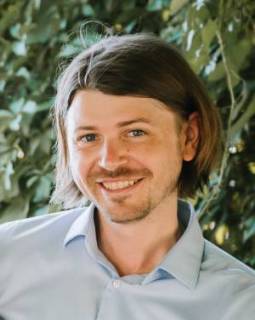
Max Wolff is a Professor in Materials Physics at Uppsala University , Sweden. His research applies neutron scattering to investigate structure-dynamics-property relationships in soft matter , magnetic materials , and hydrogen storage systems . He actively develops advanced neutron instrumentation and ion beam analysis techniques. Key Research Areas: Soft Matter, Magnetism, Hydrogen in Metals, Scattering Techniques Technical Expertise: Polarized Neutron Scattering, Grazing Incidence Methods, Quasielastic Neutron Scattering Publications (2025-2023) reveal focus on hydrogen diffusion in nanoscale metals, photochromic material engineering , and interfacial self-assembly of magnetic colloids. Notable work includes strain effects in vanadium hydrides and neutron instrument optimization. Collaborations span institutions like Ruhr-University Bochum and Institute Laue-Langevin. He has contributed to ion beam analysis tool development (SIGMA setup) and neutron optics innovations (SuperADAM reflectometer).
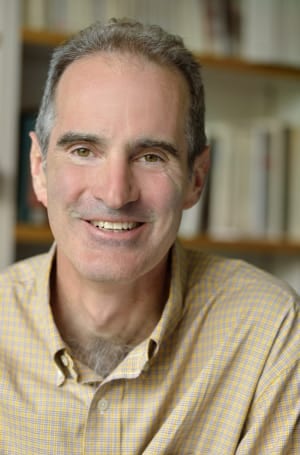
Nicholas Kotov serves as the Joseph B. and Florence V. Cejka Professor of Chemical Engineering at the University of Michigan with joint appointments in Biomedical Engineering, Materials Science & Engineering, and Macromolecular Science & Engineering within the College of Engineering. His research laboratories are housed at the North Campus Research Complex (NCRC) in Ann Arbor, where he directs cutting-edge work at the intersection of nanotechnology and biomedicine. His academic foundation includes: M.S. in Chemistry from Moscow State University (1987) Ph.D. in Chemistry from Moscow State University (1990) Professor Kotov's research program centers on nanostructured materials for biological and medical applications, with particular emphasis on chiral nanomaterials and self-organizing colloidal systems. His group pioneers biomimetic approaches to material design, drawing inspiration from natural hierarchical structures. Current investigations focus on chiral quantum magnets, aramid nanofiber composites, and graph-theoretical frameworks for nanomaterial design. Recent publications demonstrate strong integration of machine learning with experimental nanofabrication, yielding breakthroughs in energy storage, biosensing, and optical devices with applications ranging from SARS-CoV-2 antivirals to terahertz radiation detection. Scientific Recognition: No major awards explicitly documented in source materials He mentors graduate researchers including Ji Young Kim and Terry Shyu, with projects spanning nanomedicine, energy storage, and advanced manufacturing. His lab maintains active industry partnerships and international collaborations, notably in African materials science capacity building. Current funding supports development of chiral optical devices, biomimetic scaffolds for tissue regeneration, and next-generation battery technologies. The Kotov Lab operates specialized facilities at NCRC B26-102S and 108S for nanomaterial synthesis, cryogenic electron tomography, and chiroptical characterization. Research teams integrate chemical engineering, materials science, and biomedical principles to create functional nanosystems with precise structural control.
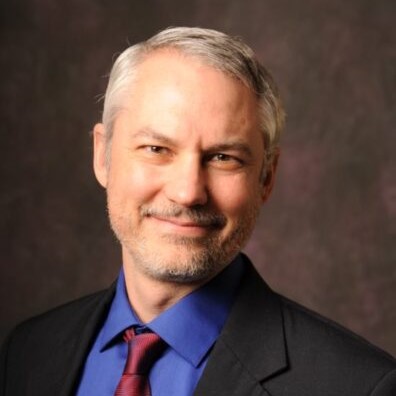
Chang Liu is an Assistant Professor at the Department of Economics, Stony Brook University. He specializes in advanced microscopy techniques and nanoscale material characterization, with a focus on plasmonics, 2D materials, and quantum phenomena. His research employs cutting-edge tools like scattering-type scanning near-field optical microscopy (s-SNOM) and terahertz spectroscopy to explore electronic and optical properties at the nanoscale. His work spans interdisciplinary areas including graphene heterostructures, Dirac materials, and phase transitions in correlated oxides. Liu’s contributions include developing novel imaging modalities (e.g., BOSON) and advancing understanding of polaritonic systems. He collaborates with synchrotron facilities like NSLS-II for ultra-high resolution studies. Notable research trends include exploring nanoscale structural phase separations, tunable phonon polaritons in van der Waals heterostructures, and nano-photocurrent dynamics in twisted bilayer systems. His technical innovations, such as machine learning for nano-optical data analysis and cryogenic s-SNOM setups, enhance experimental precision. Liu’s lab is part of the Stony Brook Center for Game Theory, though his direct research themes focus on materials physics. Current projects include roadmap development for 2D material photonics and exploring moiré ferroelectricity in twisted WSe₂ systems. No awards or grants are explicitly listed in the provided materials.
Jun Zhu is a Professor of Physics at the Pennsylvania State University, affiliated with the Eberly College of Science and the Department of Physics. His research focuses on exploring electronic properties of low-dimensional materials, particularly graphene and van der Waals heterostructures. He leads the Zhu Lab, which investigates quantum phenomena in 2D systems using advanced nanofabrication and low-temperature transport techniques. Education: B.S. in Physics from the University of Science and Technology of China (1996), Ph.D. in Physics from Columbia University (2003). Awards include the NSF CAREER Award (2008-2013) and Fellow of the American Physical Society (2020). Research interests include quantum Hall effects, topological edge states, valleytronics, and device engineering of layered materials. The lab employs van der Waals stacking, interface engineering, and magnetic field studies to uncover novel electronic phases. Recent work highlights include discoveries in high-temperature quantum valley Hall effects and fractional quantum Hall states in bilayer graphene. Advising: Supervised over 20 graduate students and postdocs, including Dr. Ke Huang (Stanford postdoc), Dr. Cequn Li (Cornell postdoc), and Dr. Hailong Fu (Zhejiang University faculty). Active in recruiting REU students and maintaining collaborations across institutions. Labs/Teams: Operates facilities in Davey Lab and Osmond Lab, with state-of-the-art instrumentation for nanoscale device fabrication and cryogenic measurements. Serves as Associate Editor of Nano Letters (2023-present).
Dr. Anulipt Chandan is a Lecturer in the School of Civil and Mechanical Engineering at Curtin University, located on the Curtin Perth campus. He holds a PhD in Sustainable Engineering, M.Tech in Electrical Engineering, and B.Tech in Electronics Engineering. His roles include contributing to the Faculty of Science and Engineering and serving in the Office of the Provost. Dr. Chandan's research focuses on interdisciplinary areas including blockchain technology, sustainability in energy systems, smart grid innovations, supply chain traceability, and materials science. His work bridges electrical engineering with emerging technologies, addressing challenges in renewable energy integration, failure analysis of materials, and achieving UN Sustainable Development Goals (SDGs) through blockchain applications. His publications span from materials science studies on alloy steels and nanocrystalline structures to blockchain frameworks for supply chain transparency and energy management systems. He has taught courses such as 'Renewable Energy Principles,' 'Sustainability and Renewable Energy,' and 'Ethics and Sustainability in Engineering.' Dr. Chandan’s research emphasizes practical solutions for global sustainability challenges, leveraging his expertise in both technical and socio-economic dimensions of innovation.
Christopher A. Sutton is an Assistant Professor in the Department of Chemistry and Biochemistry at the University of South Carolina, affiliated with the McCausland College of Arts and Sciences. His research focuses on computational materials discovery, integrating machine learning and first-principles methods to design and understand functional materials for energy applications. Education : B.S., University of Central Arkansas, 2004–2008 Ph.D., Georgia Institute of Technology, 2009–2014 Research Interests : Sutton’s work emphasizes machine learning-driven materials design, electronic structure calculations, and high-throughput screening for energy storage, optoelectronics, and catalytic systems. His lab explores domains such as perovskites, battery materials, and defect engineering. Grants & Funding : DOE/HFTO (Co-PI): $1,000,000 NSF EPSCoR RII Track 1: $20,000,000 DOD/DEPSCOR: $600,000 Awards : Alexander von Humboldt Postdoctoral Fellowship (2016–2018) 67th Lindau Nobel Laureate Meeting Attendee (Chemistry) Recipient of multiple fellowships and scholarships Labs & Teams : The Sutton Lab at USC specializes in machine learning for quantum mechanical property prediction and computational materials discovery. Collaborations include experimentalists and AI experts to bridge theory and application.
Prof. Dante Kennes is a University Professor at RWTH Aachen University, leading the Chair of Theoretical Physics of Condensed Matter. His research focuses on quantum materials, strongly correlated systems, and cavity quantum electrodynamics. Key areas include superconductivity in twisted bilayer systems, moiré heterostructures, and non-equilibrium phenomena in low-dimensional materials. He explores theoretical frameworks such as functional renormalization group methods and topological phase transitions. Recent work emphasizes cavity-coupled systems, light-induced superconductivity, and the interplay between electronic correlations and topological properties. His publications address topics like van Hove singularity heterogeneity in graphene, nematicity in kagome metals, and experimental signatures of moiré-engineered phases. Kennes' research bridges theoretical predictions with experimental observability through advanced modeling techniques. His contributions span advanced computational methods for many-body systems and proposals for novel quantum materials characterization. Despite his prolific output, no formal student advisees or awards are explicitly listed in the provided materials.
Robert Leheny is a **Professor and Henry A. Rowland Chair of Physics and Astronomy** at Johns Hopkins University, affiliated with the Krieger School of Arts & Sciences. He earned his PhD from the University of Chicago and focuses on experimental condensed matter physics, with emphasis on disordered and soft materials. His research explores how disorder and non-equilibrium conditions influence material properties, particularly in colloidal gels, liquid crystals, and glass-forming systems. His work integrates advanced techniques like X-ray photon correlation spectroscopy (XPCS) and rheology to study microscopic dynamics and macroscopic behavior. Key themes include structural memory in soft glasses, yielding transitions in amorphous materials, and topological defects in liquid crystals. Recent studies investigate interfacial remodeling by bacteria and nanostructure dynamics in responsive materials. Leheny has published extensively on rheological memory effects, colloidal gelation, and active nematic systems. His research bridges fundamental physics with engineering applications, such as designing tunable liquid crystal architectures. Despite no explicitly listed awards, his contributions are reflected in high-impact publications and leadership in experimental condensed matter physics.
Prof. Dr. Karsten Niehaus serves as Head of the Proteome and Metabolome Research Group at the Center for Biotechnology (CeBiTec) and Faculty of Biology, University of Bielefeld. His research focuses on proteomics and metabolomics applications in plant-microbe interactions, bacterial stress responses, and disease model systems. His laboratory employs advanced mass spectrometry imaging and cell phenotyping technologies to investigate molecular responses in crops like sugar beet and grapevines under abiotic stress conditions, as well as in cancer models where differentiation therapy impacts tumor malignancy. The group also explores microbial biotechnology through Xanthomonas campestris studies on xanthan production and stress adaptation. Selected publications highlight innovations in 3D microfluidics for biomarker detection and bioinformatics platforms like MetHoS for metabolomics data analysis. His work appears in journals covering Frontiers in Plant Science , Scientific Reports , and Journal of Experimental Botany . Contact: kniehaus@cebitec.uni-bielefeld.de | Office: UHG W7-117
John S. McCloy is a Full Professor and Director at Washington State University's School of Mechanical and Materials Engineering , with affiliate appointments in Chemistry. His career spans academia and national laboratories, including leadership roles at the Institute for Materials Research and prior research at Pacific Northwest National Laboratory. Ph.D. in Materials Science & Engineering (University of Arizona, 2008) M.S. in Materials Science & Engineering (University of Arizona, 2007) M.A. in Cultural Anthropology (University of Arizona, 2004) B.S. in Materials Science & Engineering (MIT, 1996) McCloy's research integrates nuclear materials , wide bandgap semiconductors , and advanced characterization techniques . His work on β-Ga2O3 explores optical anisotropy, defect engineering, and radiation effects. He also investigates glass and ceramic waste forms for radioactive iodine and technetium, combining materials informatics with positron annihilation spectroscopy . Current projects include dual-phase ceramics and ultra-wide bandgap devices . Recent publications analyze molten salt thermodynamics , chromium-doped oxide semiconductors , and archaeological glass alteration as analogs for nuclear waste durability. His lab develops in-situ characterization methods using X-ray nano-CT and laser-induced luminescence . Scientific Recognition : 2024 Washington State Academy of Sciences 2019 Fulbright Scholar 2018 Fellow of the American Ceramic Society 2016 Outstanding Teaching Award
Dr. Gábor Takács is a Professor at the Department of Theoretical Physics , Budapest University of Technology and Economics (BME), leading the BME 'Momentum' Statistical Field Theory Research Group . His work focuses on quantum field theory, integrable systems, and non-equilibrium dynamics in low-dimensional quantum systems. Research interests include: • Quantum Field Theory • Statistical Mechanics • Condensed Matter Physics • Integrability and its breaking • Boundary Effects in Quantum Systems His recent publications analyze confinement in spin chains, TTbar deformations, and quantum quenches in integrable models. He has been awarded the Lendület and Momentum grants for his research. Supervised students include prominent researchers like Balázs Pozsgay and Dávid Horváth, contributing to quantum field theory and condensed matter physics.
John W. Gillespie Jr. is the Donald C. Phillips Professor of Civil and Environmental Engineering at the University of Delaware, with joint appointments in Materials Science and Engineering and Mechanical Engineering. He leads four Centers of Excellence in composites research and directs the Center for Composite Materials. A global authority in composites, his work focuses on multifunctional materials, interphase science, and composites manufacturing. He has contributed over 800 publications and 19 patents, advising 56 Master’s and 38 Ph.D. students. Education: PhD, MS, BS in Mechanical/Aerospace Engineering from University of Delaware. Leadership: Served on National Research Council Board and National Materials Advisory Board. Research interests include processing-structure-property relationships, durability, and multi-scale modeling of composites. His work addresses real-world challenges in aerospace, defense, and microelectronics. Awards include the U.S. Army’s Paul A. Siple Memorial Award (1998), Jud Hall Composites Award (2000), and Fellowships from Society of Manufacturing Engineers (2013) and SAMPE (2015). Advising and grants: 38 doctoral graduates and over 60 industrial consortium partners. Active in editorial roles for Journal of Thermoplastic Composite Materials since 1993.
Sergey Samarin is a Senior Honorary Research Fellow at The University of Western Australia's School of Physics, Maths and Computing. His academic roles include teaching undergraduate courses on Solid State Physics and supervising postgraduate and honours students. He holds a Doctor Habil. Science from St. Petersburg State University, with thesis work on electron spectroscopy of surfaces. His research focuses on surface science, electron scattering dynamics, and quantum entanglement in electron pairs generated at solid surfaces. Key experimental techniques include spin-polarized two-electron spectroscopy and positron annihilation studies. Research interests span surface electronic structure, magnetic nanostructures, plasmon excitation, and spintronics. He has secured multiple ARC grants, including leadership roles in the ARC Centre of Excellence for Antimatter-Matter Studies ($7M). Notable achievements include first observations of radiative electron capture by surfaces (1992), plasmon-assisted inverse photoemission (1996), and spin-resolved (e,2e) experiments on ferromagnetic surfaces (1998). Current projects aim to explore electron entanglement via complete scattering experiments. Education: M.Sc. (1972), PhD (1976), Doctor Habil. (1995) - all from St. Petersburg State University Grants: Over $9M in ARC funding since 2001, including leadership roles in 6 major projects Supervision: Guided 17+ students through PhD, Master's, and undergraduate research projects Labs/Teams: CAMSP (Centre for Atomic, Molecular and Surface Physics) collaborator. Instrumentation expertise includes design of spin-polarized (e,2e) spectrometers and UHV systems. Languages: English, French, Russian (native).
Rajan Jagpal is a Researcher in the Department of Chemical Engineering at the University of Bath, affiliated with the Centre for Integrated Materials, Processes & Structures (IMPS), The Foundry Centre for Digital Manufacturing & Design, and the Centre for Sustainable Energy Systems (SES). He holds a PhD in Automated Composite Manufacturing (2022) supervised by Prof. Evangelou, Prof. Loukaides, and Dr. Butler. His research focuses on composite materials processing, hydrogen storage technologies, UAV photogrammetry applications, and sustainable manufacturing systems. Key research contributions include optimizing non-crimp fabric preforming via magnetic clamping and Bayesian algorithms, developing freeze-cast porous composites for hydrogen storage, and advancing UAV-based manufacturing quality control. He collaborates on projects like the High Speed Microtomography initiative (2022–present) investigating carbon fabric deformation mechanisms. His work addresses UN Sustainable Development Goals related to affordable clean energy and industry innovation. He actively engages in public outreach, contributing to school engagement activities from 2018–2019. Jagpal is currently accepting doctoral students for research aligned with his expertise in advanced manufacturing and materials science.
Dr. Scott Sayres is an Associate Professor at Arizona State University (ASU), affiliated with the School of Molecular Sciences and the Biodesign Center for Applied Structural Discovery. His research focuses on the interaction of light and matter, particularly using ultrashort laser pulses to study electron dynamics in chemical reactions. He earned a Ph.D. in Chemistry from Pennsylvania State University (2010) and a B.S. in Mathematics and Chemistry from Shippensburg University (2004). His work combines electron, ion, and photon detection methods to explore fundamental processes in clusters and molecules under strong-field excitation. Key research areas include ultrafast pump-probe spectroscopy, strong-field ionization, and the photodynamics of metal oxide clusters. His lab investigates phenomena like Coulomb explosion, Rydberg excitons, and proton transfer in formic acid clusters. The Sayres Lab hosts a research website at sayreslab.asu.edu . Teaching responsibilities include courses like Physical Chemistry I (CHM 345), Research Techniques (CHM 392/BCH 392), and Honors Thesis supervision. While no formal student advisees are listed, his research group actively explores experimental and theoretical aspects of cluster dynamics. Notable publications span 2010–2025, with recent work on copper oxide clusters, pseudocarbynes, and formic acid dynamics. His research bridges physics and chemistry, emphasizing ultrafast phenomena at the nanoscale.