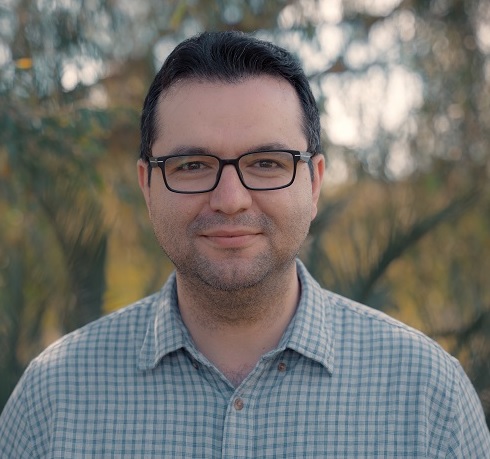
Andrea Mocci is a Lecturer at the Faculty of Informatics of the Università della Svizzera italiana (USI). His work focuses on software engineering methodologies, developer productivity, and IDE interaction analysis. He is affiliated with the Software Institute and actively contributes to academic events such as the IEEE International Workshop on Mining and Analyzing Interaction Histories (MAINT). His research explores empirical software engineering techniques, including developer behavior analysis, code documentation improvement, and the application of natural language processing to software artifacts. Key areas of investigation include: IDE interaction and navigation efficiency Code redundancy and quality metrics Video tutorial analysis for educational content Runtime systems and annotation APIs Defect prediction and software maintenance Publications from 2016-2020 highlight trends in developer-centric tools, holistic recommender systems, and visualization techniques for software evolution. His work often bridges theoretical formal methods with practical developer workflows, aiming to improve both software quality and developer productivity through empirical studies and tool development.
Leeor Kronik is a Chaired Full Professor at the Weizmann Institute of Science in Israel, where he serves as Director of the Tom and Mary Beck Center for Advanced and Intelligent Materials (since 2019). He has been a faculty member at the Weizmann Institute since 2012 and previously served as Chair of the Department of Materials and Interfaces from 2012 to 2021. Professor Kronik received his B.Sc. in Electrical Engineering, Summa Cum Laude, from Tel Aviv University in 1991 and his Ph.D. in Physical Electronics, with distinction, from the same institution in 1996. Following mandatory military service, he completed postdoctoral research as a Rothschild and Fulbright Fellow at the University of Minnesota (1999-2002). Dr. Kronik's research focuses on understanding the unique properties and behavior of materials and interfaces through first-principles quantum mechanical calculations. His work spans several key areas including halide perovskites , molecular crystals , 2D materials , and electronic structure theory . A significant portion of his research involves developing and applying density functional theory and many-body perturbation theory to predict and interpret novel experimental findings. His group has made notable contributions to optimally-tuned functionals , ensemble methods , and real-space calculations , with applications ranging from spintronic materials to biogenic structures. Analysis of Professor Kronik's recent publications reveals a strong focus on advanced materials with applications in electronics and energy. His work spans theoretical developments in computational methods, particularly in density functional theory, and their application to cutting-edge materials like halide perovskites and 2D systems. A notable trend is the integration of computational predictions with experimental validation across diverse material systems, from inorganic crystals to biological structures. His research demonstrates increasing interdisciplinary reach, connecting physics, chemistry, materials science, and biology. Professor Kronik has received numerous prestigious awards for his scientific contributions: 2021: Outstanding Scientist Award of the Israel Chemical Society 2021: Helen and Martin Kimmel award for innovative investigation 2018: Israel Vacuum Society Excellence Award for Research 2015: Inaugural UK-Israel Science Lectureship 2013: Fellow of the American Physical Society 2012: Member of the Young Israel Academy 2011: ERC Consolidator Grant 2010: Outstanding Young Scientist Award of the Israel Chemical Society 2006: Krill Prize of the Wolf Foundation Professor Kronik currently advises a research group of approximately 10 graduate students and post-doctoral researchers at the Weizmann Institute. His research has been supported by significant funding including an ERC Consolidator Grant. With over 250 peer-reviewed publications cited more than 28,000 times and an h-index of 86, his work has had substantial impact across multiple disciplines. He has presented more than 290 invited lectures worldwide, demonstrating the international recognition of his research. As Director of the Tom and Mary Beck Center for Advanced and Intelligent Materials, Professor Kronik leads a multidisciplinary team focused on developing and understanding novel materials with advanced functionalities. His research group works at the intersection of theoretical physics, materials science, and chemistry, employing computational approaches to address fundamental questions about material properties while maintaining strong connections to experimental work.
Luis M. Liz-Marzán is an Ikerbasque Professor and Scientific Director at CIC biomaGUNE in San Sebastián, Spain. He was previously a Full Professor at the University of Vigo and has held visiting positions at institutions such as Tohoku University, University of Michigan, and Max-Planck Institute of Colloids and Interfaces. Education: He studied Chemistry at the University of Santiago de Compostela (1983–1988) and earned his PhD in 1992 with a thesis on microemulsions and magnetic nanoparticles. Research Interests: His work focuses on nanoplasmonics , colloid science , and nanoparticle self-assembly . He has pioneered the use of colloidal methods for controlling nanoparticle shape, optical properties, and biomedical applications such as biosensing and early disease diagnostics . His publications span a broad range of topics including plasmonic tuning, nanowire growth, biofilm imaging, and surface-enhanced Raman scattering. The trend in his work shows a strong integration of synthesis, characterization, and application of nanomaterials, particularly gold and silver-based systems, with a growing emphasis on biomedical interfaces. Awards and Honors: Blaise Pascal Medal in Materials Science (2017) ERC Advanced Grants (2011 & 2018) Highly Cited Researcher (2014–2018) Fellow of EURASC, OSA, and RSC Grants and Collaborations: He has led major international projects, including two ERC Advanced Grants, and has collaborated with institutions across Europe, Asia, and the Americas. His group, the Bionanoplasmonics Laboratory , has reshaped CIC biomaGUNE into a globally recognized center.
Dr. Zihan Song is a Postdoctoral Researcher at the University of Oxford's Department of Engineering Science, collaborating with Prof. Paul Shearing. His research focuses on electrochemistry and materials science for energy storage, particularly high-energy anode materials and multiscale characterizations (e.g., X-ray imaging) in solid-state batteries. He holds a BEng in chemical engineering from Tianjin University (2015) and a PhD from the University of Chinese Academy of Sciences (2020), specializing in anode materials for lithium-ion batteries. From 2021 to 2023, he researched carbon nitride and carbonaceous materials for rechargeable batteries at the Max Planck Institute of Colloids and Interfaces under Prof. Markus Antonietti. His current projects include multiscale characterizations for solid-state batteries. He is affiliated with the ZERO Institute and contributes to the field of sustainable energy storage.
Mustafa Khokha, MD, is an Adjunct Professor in the Department of Pediatrics at Yale School of Medicine. His research focuses on understanding the molecular mechanisms underlying congenital malformations and critical illnesses in infants using genetic sequencing and Xenopus tropicalis as a model system. He directs the Pediatric Genomics Discovery Program (PGDP), which identifies genetic causes of undiagnosed diseases in children. Khokha’s work bridges clinical care and research, aiming to translate genetic discoveries into improved patient outcomes. Education: MD from Northwestern University Medical School (1995), BS from Northwestern University (1991), Residency in Pediatrics at St. Louis Children's Hospital (1995–98), Fellowship in Pediatric Critical Care at University of California, San Francisco (2002), and Fellowship in Molecular & Cell Biology at University of California, Berkeley (2006). His research integrates developmental biology and genetics to study embryonic patterning defects, particularly in congenital heart disease and facial malformations. Using high-throughput screens in Xenopus, he identifies genes responsible for birth defects and elucidates their functional roles. Key achievements include discovering the role of GALNT11 in laterality and cilia function, and linking CACNA1G to left-right patterning. His work on β-catenin nuclear transport and Wnt signaling has advanced understanding of developmental pathways. Awards: Mallinckrodt Scholar (2014), Mae Gailani Junior Faculty Teaching Award (2010), Harvey Colten Award (2009). Labs/Teams: Khokha Lab, part of the Program in Translational Biomedicine and the Yale Center for Genomic Health. Collaborations include the Pediatric Critical Care Transport Program and the Yale Medicine team.
Professor Gary Brudvig is the Benjamin Silliman Professor of Chemistry at Yale University, affiliated with the Faculty of Arts and Sciences. He holds secondary appointments in Molecular Biophysics and Biochemistry and directs the Energy Sciences Institute on Yale’s West Campus. His research focuses on understanding the molecular mechanisms of photosynthesis, particularly the water-splitting process in Photosystem II, and developing bio-inspired systems for solar fuel production. Brudvig’s work integrates biophysical studies, inorganic chemistry, and nanotechnology to advance energy science and sustainable catalytic systems. Education: Ph.D., California Institute of Technology (1982), B.S., University of Minnesota. Notable roles include Chair of the Chemistry Department and leadership in interdisciplinary energy research. Awards include the Searle Scholar Award (1983–1986), Camille & Henry Dreyfus Teacher-Scholar Award (1985–1990), and election to the American Academy of Arts and Sciences (1995). Research interests span Photosystem II structure-function relationships, manganese cluster catalysis, and artificial photosynthesis. Collaborations with Professors Batista, Crabtree, and Schmuttenmaer aim to create efficient solar fuel systems. His studies employ cryo-EM, X-ray crystallography, and computational modeling to elucidate catalytic mechanisms. Publications highlight structural insights into Photosystem II, design of water-oxidation catalysts, and electrochemical systems for ammonia/water oxidation. His work bridges fundamental biology, inorganic chemistry, and nanotechnology, advancing both basic science and applied energy solutions.
Dr. Amit Kaushik is an Assistant Professor at Northumbria University's Architecture and Built Environment Department. He holds a PhD in Sustainable Construction Design and Management from the University of Wolverhampton (2019), an MSc in Construction Economics and Management, and a Bachelor of Architecture (Hons). His academic journey includes professional architectural practice in India and teaching roles in the UK since 2013. He leads courses in Architecture, BIM, Sustainable Design, and supervises dissertations and PhD candidates. Education: PhD, Sustainable Construction Design and Management (University of Wolverhampton, 2015–2019) MSc, Construction Economics and Management Bachelor of Architecture (Hons) Research focuses on: Indoor Environmental Quality (IEQ) impacts on occupants BIM and AI-driven construction innovation Off-site construction and lean principles Thermal comfort and sustainability His articles emphasize trends in: Climate change mitigation in construction AI applications for defect prediction and waste reduction Thermal/air quality-productivity linkages Awards include a special mention for outstanding design thesis. He has secured research funding as principal investigator/participant and reviewed for journals like Building and Environment and Architecture Engineering and Design Management . Advising includes completed PhD supervision and active grant-seeking roles. He collaborates internationally, including a visiting scholar role at UC Berkeley, and contributes to UN SDGs related to sustainable cities and climate action.
Ivan Adriyanov Nikolov is an Assistant Professor at the Department of Architecture, Design and Media Technology within Aalborg University's Technical Faculty of IT and Design. He specializes in Computer Graphics, Computer Vision, and Augmented Reality, with a focus on 3D reconstruction techniques like Structure-from-Motion (SfM). His work bridges academic research and industrial applications, particularly in wind turbine blade inspection and educational technology. His educational background includes contributions to computer science education through innovative teaching methods. He has led projects like 'Drone Application for Pioneering Reporting in Wind Turbine Blade Inspection' (2017–2019) and 'Leading Edge Roughness - Wind Turbine Blades' (2015–2019), advancing drone-based inspection and 3D modeling for wind energy sectors. Research interests include synthetic data generation, environmental monitoring datasets (e.g., BrackishMOT, DigiWeather), and improving VR/AR user experiences. He has developed tools for dynamic lighting in pixel art games and multimodal guardian systems in VR. His datasets, such as Sewer Defect Point Clouds and Wind Turbine Blade SfM Reconstructions, are publicly available for academic use. He actively contributes to educational innovation, such as flipped classroom strategies to boost programming class engagement. His interdisciplinary approach spans computer graphics, AI-driven NPC interactions, and collaborative mixed-reality games for trust-building. Labs/Teams: Member of the Computer Graphics Group and Visual Analysis and Perception team at Aalborg University. Collaborates with industry partners on drone technology and environmental surveillance systems.
Professor Martin Schroder is a leading materials chemist currently serving as Vice President and Dean of the Faculty of Science and Engineering at the University of Manchester. He previously held executive and academic roles at the University of Nottingham (1995-2015) and the University of Edinburgh (1982-1995), culminating in his appointment as Professor of Chemistry at Manchester (2015-present). His career spans over four decades with significant contributions to porous metal-organic frameworks (MOFs) for energy and environmental applications. PhD in Chemistry from Imperial College London (1978) BSc in Chemistry from the University of Sheffield (1975) Professor Schroder's research focuses on materials chemistry , particularly metal-organic frameworks (MOFs) for gas separation and capture. His work addresses CO2 reduction , toxic gas removal , and proton conductivity through innovative framework design and functionalization. Recent publications highlight MOF applications for hydrogen storage , SO2 capture , and NO2 conversion . His 15 most recent publications (2016-2020) demonstrate sustained expertise in porous materials engineering , showing consistent focus on gas adsorption mechanisms , supramolecular interactions , and environmental remediation through MOF technology. Key trends include CO2 selectivity , dynamic framework behavior , and electrochemical sensor development . Awarded numerous honors including: Royal Society of Chemistry Nyholm Prize (2020) Tilden Lectureship & Medal (2001/02) Multiple RSC awards (2003, 2008) Honorary Doctorates (2005, 2017) Fellowships (FRSE, FRSC) He has organized major international conferences like the 1st International Conference on Metal-Organic Frameworks (2008) and led the Royal Society Discussion Meeting on 'The New Chemistry of the Elements' (2014). His work bridges fundamental inorganic chemistry with practical solutions for clean air technologies and carbon capture .
Baishakhi Mazumder is an Associate Professor in the Department of Materials Design and Innovation at the University at Buffalo. She specializes in materials science with a focus on advanced characterization techniques like atom probe tomography (APT) and machine learning-driven materials design. Her work spans semiconductor technologies, thin films, and quantum materials. Education: PhD in Physics and Materials Science, University of Rouen, France (2010) MS in Physics, University of Pune, India (2005) BS in Physics, University of Calcutta, India (2002) Research Interests: Dr. Mazumder explores atomic-scale dynamics in ultrawide bandgap semiconductors, machine learning for materials optimization, and structural-chemical evolution in thin films. Her group studies novel materials for energy applications, quantum devices, and advanced electronics. Techniques include APT, chemical vapor deposition (CVD), and computational modeling. Articles Trends: Recent work emphasizes data-driven approaches to superconductors, quantum materials, and thin film growth. Key themes include optimizing coercive fields in AlScN, enhancing NbN superconductivity, and unraveling phase transformations in AlGaO₃ films. Awards/Grants: No specific honors listed, but her CAREER award highlights sustained research impact. Labs/Teams: The Mazumder Group focuses on interdisciplinary materials innovation, combining experimental and computational methods.
Manish Motwani is an Assistant Professor at the School of Electrical Engineering and Computer Science, Oregon State University. His research focuses on automating software engineering practices to improve software quality, particularly in high-performance computing (HPC), REST APIs, and natural language-driven program repair. He leads the Advanced Software Engineering Research (ANSWER) lab, which is part of the Software Engineering and Human-Computer Interaction group. Education: Ph.D. in Computer Science (University of Massachusetts Amherst), Postdoctoral Fellow (Georgia Institute of Technology) Motwani's research bridges empirical analysis of software repositories with automated techniques for testing, debugging, and program repair. Key projects include: Automated Testing for HPC Applications OpenAPI Specification Generation via Static Analysis High-Quality Patch Validation Using Bug Reports JaRFLy Framework for Patch Evaluation Swami Tool for Natural Language Test Oracles RAFL and Blues Fault Localization Techniques His work addresses critical challenges such as patch overfitting, HPC bug detection, and semantic search for real-world defects. He has published in top venues like ICSE, TSE, and EMSE, and holds two U.S. patents for automated requirements and regulatory compliance tools. At Oregon State, Motwani actively mentors and seeks motivated PhD students interested in software testing, debugging, and program repair for HPC and AI/ML applications. He previously contributed to requirements engineering at Tata Research Development and Design Centre in India.
Professor Mark Hoffman is the Deputy Vice-Chancellor (Academic) and a Vice-President of the University of Newcastle, overseeing academic programs, student success, and institutional strategy. He previously served as Dean of Engineering at UNSW Sydney, elevating its global rankings and leading transformative initiatives. His academic background includes a PhD from the University of Sydney and a Master of Business and Technology from UNSW. He has extensive international experience in materials science, focusing on structural ceramics, composites, and biological materials. Hoffman's research spans over 250 publications and $11M in funding, with a focus on material durability and fracture mechanics. He has guided over 30 PhD students and holds fellowships from the Australian Academy of Technological Sciences and Engineering and Engineers Australia. His leadership includes roles on the Hong Kong Research Assessment Exercise and the German Science Foundation. He advocates for universities as catalysts for societal advancement through education and industry collaboration.
Johnpierre Paglione is a Professor of Physics and Director of the Maryland Quantum Materials Center (QMC) at the University of Maryland. His research focuses on quantum materials, particularly superconductivity, topological systems, and strongly correlated electron materials. Paglione leads the QMC, which houses advanced materials synthesis and measurement facilities, and organizes the annual Fundamentals of Quantum Materials Winter School. He holds a PhD from the University of Toronto and has received prestigious awards including the NSF CAREER Award and DOE Early Career Award. His work bridges materials synthesis and quantum phenomena exploration, with notable contributions to understanding spin-triplet superconductivity in UTe2 and high-field superconductivity. He teaches courses such as Physics 199M (The Manhattan Project) and advanced experimental physics modules. Research Interests: His experimental condensed matter studies integrate single-crystal synthesis with low-temperature transport, thermodynamic, and spectroscopic techniques. Key focuses include unconventional superconductors, topological materials, and charge density wave systems. Recent work explores magnetic field-induced superconductivity in UTe2 and nematic response in iron-based superconductors. Awards & Contributions: As a Gordon and Betty Moore Foundation Materials Synthesis Fellow and CIFAR Quantum Materials Fellow, Paglione drives interdisciplinary research. His lab’s discoveries, such as spin-triplet superconductivity in UTe2, highlight breakthroughs in quantum materials. Grants include a $1.55M Moore Foundation award supporting nanomolding techniques for nanowires. Labs & Collaborations: Directs the QMC, a hub for over 100 researchers. Collaborates widely in synthesizing novel materials and characterizing their quantum properties, emphasizing hands-on training through the Winter School. Teaches graduate and undergraduate experimental physics courses, fostering the next generation of materials scientists.
Dr. Sam Bakhtiari is a Research Fellow at Curtin University's Curtin Corrosion Centre, affiliated with the WASM: Minerals, Energy and Chemical Engineering School under the Faculty of Science and Engineering. His research focuses on materials science, metallurgy, and corrosion engineering, with particular emphasis on NiTi-based shape memory alloys, phase transformations, and corrosion mechanisms. He applies data science techniques, such as machine learning models, to study materials degradation and stress corrosion cracking. Dr. Bakhtiari's work bridges experimental and computational approaches, exploring topics like amorphization in nanocomposites, deformation-induced martensite stabilization, and additive manufacturing of metals. He collaborates on projects involving superalloys and metallic glasses, emphasizing their mechanical properties and structural integrity. His contributions span journals like Shape Memory and Superelasticity , Acta Materialia , and Journal of the Electrochemical Society . Key research trends in his publications include: Phase behavior and defect engineering in NiTi alloys. Predictive modeling of corrosion processes using XGBoost and electrochemical data. Design of functionally graded materials for tailored mechanical responses. No scientific awards are listed. His affiliations include the Curtin Corrosion Centre, and he maintains an ORCID profile (https://orcid.org/0000-0002-8808-8427). Experimental and computational datasets underpin his work, with a focus on materials innovation for engineering applications.
Jesse Davis is a Professor at the Department of Computer Science , KU Leuven , actively contributing to the Machine Learning group and the Sports Analytics Lab . He is part of the Faculty of Engineering Science and the Leuven.AI Institute . Ph.D. in Computer Sciences from University of Wisconsin-Madison (2007) M.S. in Computer Sciences from University of Wisconsin-Madison (2005) B.A. in Computer Science from Williams College (2002) His research focuses on machine learning, data mining, big data analytics, and sports analytics, with significant work in: Transfer learning and Markov logic networks Anomaly detection and semi-supervised learning Medical NLP and biomechanical data analysis Soccer performance metrics and tactical analysis His recent work explores spatio-temporal data analysis in sports and explainable AI for medical applications, with collaborations spanning finance, healthcare, and semiconductor manufacturing. Notable scientific awards include: Best Paper Award (Applied Data Science Track) at KDD 2019 Best Technical Paper Award at Intelligence Analysis Workshop He advises numerous PhD and Master's students in areas like: Football analytics Tree ensemble compression Medical question-answering systems Biomechanical load prediction His lab develops tools such as: GSSL for Markov network structure learning TODTLER for transfer learning Alchemy system for Markov logic networks