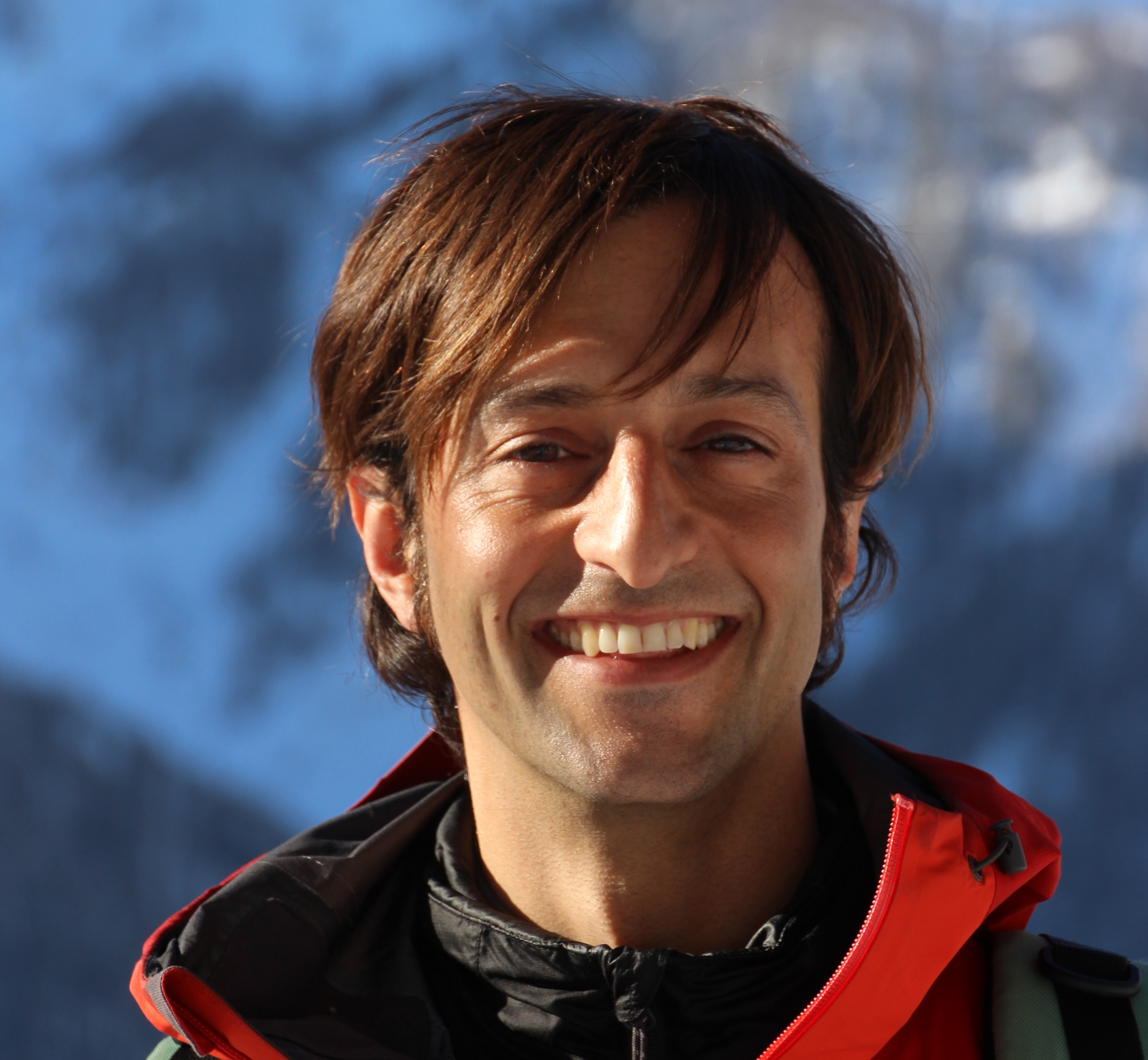
Nicola Colonna is a Tenure Track Scientist (mapped to Researcher) at Paul Scherrer Institute's Laboratory for Materials Simulations. Focuses on Koopmans spectral functionals and electronic structure theory. Research develops computational methods for predicting electronic properties of quantum materials, perovskites, and nanoporous systems using orbital-density-dependent functionals. Recent publications (2021-2024) demonstrate: 60% focus on Koopmans functional methodology development, 25% on perovskite electronic structures, and 15% on quantum material characterization. Common themes include spectral accuracy, high-throughput screening, and validation against experimental benchmarks. Software Development: Contributed to open-source koopmans package for spectral property prediction.
Abdul Syed is a Researcher at the Faculty of Engineering and Computing, Coventry University, specializing in advanced materials science for aerospace applications. He holds a PhD in Aerospace Engineering from The Open University, UK, earned in 2014 through research on bonded crack retarders for structural integrity enhancement. His career spans roles in residual stress analysis, material performance evaluation of additively manufactured alloys, and metal matrix composites. Education : MSc in Advanced Materials Science (Lulea University, Sweden; Saarland University, Germany, 2008) PhD in Aerospace Engineering (The Open University, UK, 2014) Research Interests focus on: Structural integrity and damage tolerance Residual stress measurement techniques Additive manufacturing of titanium/aluminum alloys Fatigue and fracture mechanics Material characterization under extreme conditions Metal matrix composites Publication Trends show a concentration on aerospace-grade alloys (Ti-6Al-4V, Al-Mg-Sc) and additive manufacturing processes (wire-arc DED, LPBF). Key analytical methods include neutron diffraction, tomography, and in situ mechanical testing to study defect tolerance, crack propagation, and residual stress evolution. Collaborations include partnerships with Dr. X. Zhang and industrial stakeholders in aerospace R&D. He actively supervises PhD students and contributes to advancing predictive models for fatigue life in AM components.
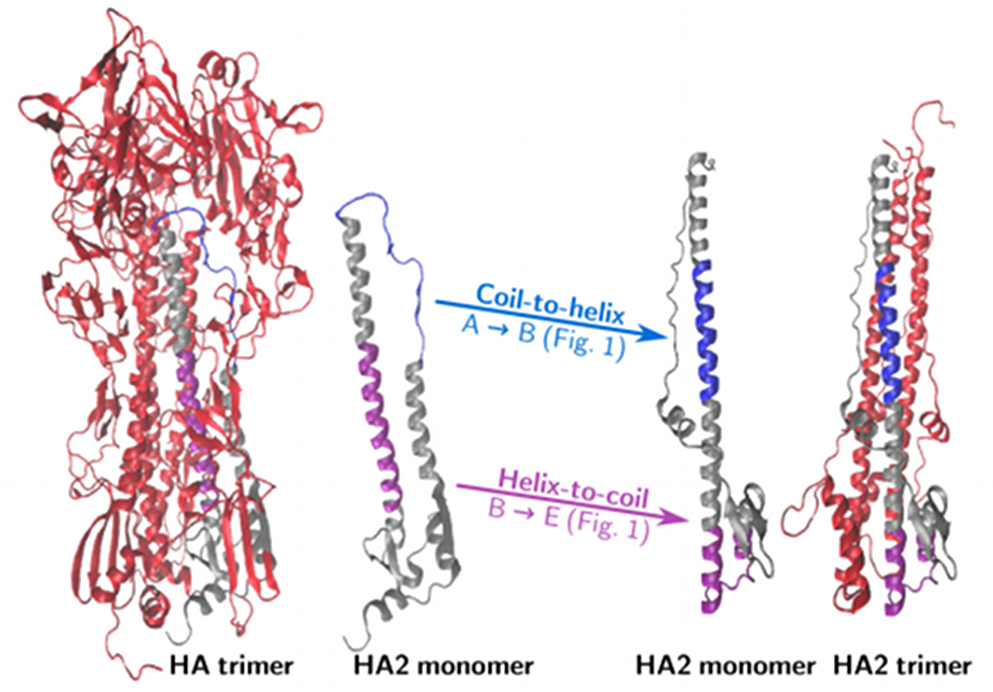
Prof. Dr. Ir. Erik van der Giessen is a Professor at the University of Groningen, leading the Micromechanics group within the Zernike Institute for Advanced Materials. His research spans multiple disciplines including mechanical engineering, materials science, biophysics, and computational modeling, with a focus on mechanical behavior at micro and nanoscales. Van der Giessen's research primarily focuses on three interconnected areas: biophysics (particularly nuclear pore complex and cellular mechanics), discrete dislocation plasticity, and polymer blends and nano-composites. His work in biophysics, conducted in collaboration with the Onck group, investigates fundamental cellular processes including transport through the nuclear pore complex, cytoskeleton structure-property relations, protein aggregation in neurodegenerative diseases, and viral fusion mechanisms. His discrete dislocation plasticity research provides size-dependent descriptions of plastic deformation at microscales, studying phenomena in thin films, micro/nano pillars, surface contact and friction, and fracture processes. His polymer research examines deformation mechanisms and fracture processes in polymer composites with micrometer or nanometer fillers. A common theme across all research areas is size dependence, with the principle that "smaller is harder" in mechanical behavior at reduced scales. The group employs computational techniques including molecular dynamics, dislocation dynamics, Monte Carlo methods, and finite element methods. Recent publications (2022-2025) show continued innovation in applying machine learning to materials science, investigating nuclear transport mechanisms in neurodegenerative diseases, and advancing fundamental understanding of size effects in mechanical properties. Van der Giessen has mentored numerous PhD students who have established successful academic careers, including L. Nicola (University of Padova), S.S. Shishvan (University of Tabriz), and H. Song (Johns Hopkins University). His research has been supported by various national and international collaborations, including significant work with Harvard University researchers on thin film mechanics. The Van der Giessen group maintains strong interdisciplinary connections, creating a research environment that bridges engineering, physics, and biology. Their computational approaches have provided physical understanding for size effects observed in experiments and have generated predictive models for various mechanical phenomena at micro and nanoscales.
Francesco Angione is a Research Fellow at the Department of Automatic Control and Computer Science (DAUIN) of Politecnico di Torino. He serves as an external teacher and collaborator for courses such as 'Computer architectures' and 'Architectures of processing systems' within the Computer Engineering program. His research focuses on system-level testing, automotive SoCs, FPGA-based testing solutions, and hardware-AI integration. He is affiliated with the CAD - Electronic CAD & Reliability Group at DAUIN. His work emphasizes optimizing test methodologies for automotive systems, leveraging advanced testing equipment (ATE), and developing efficient algorithms for burn-in stress and functional safety. Recent contributions include trustworthiness in hardware-AI integration, burn-in stress quantification, and FPGA-based accelerators for machine learning. Angione's publications span conferences like IEEE VLSI Test Symposium and International Symposium on Defect and Fault Tolerance, with a focus on VLSI, embedded systems, and reliability engineering. His doctoral thesis (2025) explores system-level test techniques for automotive SoCs under Professors Bernardi and Cantoro. He collaborates extensively with industry partners to bridge academic research with practical applications in automotive electronics and semiconductor testing. Key research themes include functional safety compliance, test cost reduction via novel algorithms, and integrating fault injection methods into real-time operating systems. His lab work involves designing flexible FPGA-based test equipment to address manufacturing challenges in digital systems.
Ullrich Martin is a Professor and Head of the Institute of Railway and Transport Engineering at the University of Stuttgart, Germany. His work spans railway systems, infrastructure modeling, and transport policy. Key areas include fault diagnosis, simulation-based optimization, and capacity evaluation. Contact: Pfaffenwaldring 7, 70569 Stuttgart, Germany Office Hours: By agreement Research Trends: Recent publications focus on GAN-based data augmentation for railway fault detection, high-speed maglev systems optimization, and early instability detection in ballast tracks. His team explores discrete element modeling, operational risk analysis, and machine learning applications for track condition monitoring. Infrastructure Innovation: He drives digitalization in railway planning through graph-based knowledge databases and automated compliance tools. Projects address dwell time forecasting, electromagnetic suspension design, and accessibility solutions like the Sinn²-App for visually impaired passengers. Operational Modeling: His work includes tabu search algorithms for dispatching, reinforcement learning for timetable calibration, and multi-scale simulation frameworks. He investigates interactions between track irregularities and vehicle dynamics, with a focus on safety and efficiency.
Lihui Wang is a Professor and Chair of Sustainable Manufacturing at KTH Royal Institute of Technology in Sweden. He leads the Centre of Excellence in Production Research (XPRES) and holds leadership roles in organizations like CIRP and NAMRI/SME. His research focuses on human-robot collaboration, digital twin technology, and Industry 5.0 . He has authored over 750 publications and received numerous awards, including the SME Gold Medal (2024). Education: PhD and MSc from Kobe University (Japan), 1993 and 1990 BSc from China, 1982 Research Interests: Prof. Wang’s work spans real-time monitoring, brain robotics, sustainable production systems , and cyber-physical systems . His recent efforts emphasize AI-driven smart manufacturing , including predictive maintenance and human-centric collaboration frameworks. His labs explore applications like mixed-reality assembly guidance and adaptive robotic systems . Awards & Recognition: 2024 SME Gold Medal 2020 '20 Most Influential Professors in Smart Manufacturing' Eight NRC Institute Awards (2002–2005) Fellowships: CAE, CIRP, ASME, SME, AET Grants & Labs: Leads projects like SMART (Predictive Maintenance for Pharma) and co-leads the Swedish Production Academy . His labs include the Human-Robot Collaboration Group and AI for Manufacturing Initiative .
Edisson Tello Camacho is a Visiting Professor at The Ohio State University's College of Food, Agricultural, and Environmental Sciences, affiliated with the Department of Food Science and Technology. His research focuses on flavor chemistry, sensory analysis, and the identification of key compounds in food systems such as coffee, hazelnuts, and plant-based products. He leads studies on aroma perception, bitterness modulation, and the application of advanced analytical techniques like LC/MS and metabolomics. Research Interests: Dr. Camacho's work spans food chemistry, marine natural products, and plant biochemistry. He investigates how compounds in foods influence sensory experiences and develops methods to predict taste attributes using mass spectrometry. Recent efforts include optimizing hybrid hazelnut flavor profiles and mitigating off-flavors in pea protein isolates. Publications Trends: His 2025-2022 articles highlight advancements in identifying aroma compounds in whole wheat bread, chili peppers, and condensed smoke, as well as bitterness prediction algorithms. Earlier work (2008-2020) explored marine bioactives from Caribbean corals and antifouling agents from marine organisms. Awards and Grants: No specific awards or grants are listed in the provided texts. His research is likely supported through institutional funding and collaborative projects. Labs and Facilities: He is affiliated with The Ohio State University's Food Research and Education Center (FREC), leveraging its advanced sensory analysis and analytical chemistry infrastructure for his studies.
Pietro A. Massignan is an Associate Professor in Theoretical Physics at the Universitat Politècnica de Catalunya (UPC) in Barcelona, with affiliations to ICFO - The Institute of Photonic Sciences. His research focuses on dilute quantum gases, particularly exploring many-body properties, synthetic gauge fields, topological order, and open quantum systems. He has organized numerous international conferences and schools, including the CAPS & CQA Winter School and the Barcelona Cold Atoms Meeting. In 2021, he received the prestigious ICREA Academia Award for his research on quantum gases. His work bridges theoretical insights with experimental advances in ultracold atomic systems. Key research interests include the interplay of disorder and interactions in quantum gases, few-body Efimov physics, and vortex dynamics in superfluids. He coordinates projects like IMAGIQ (2023), a 3-year national initiative investigating quantum matter. His contributions span theoretical frameworks for polarons, topological transport, and quantum walks in structured light. Award highlights include the ICREA Academia Award (2021) and collaborative grants with institutions such as the Kavli Institute for Theoretical Physics. Massignan has published extensively in journals like Phys. Rev. A , SciPost Phys. , and Nature Physics , focusing on superfluidity, quantum turbulence, and topological phases. His work often integrates interdisciplinary approaches, linking quantum optics, condensed matter theory, and mathematical physics. He has led initiatives like the Interacting Topological Matter program at KITP (2021) and co-organized satellite meetings for BEC conferences. Massignan’s research group actively collaborates with experimental teams worldwide, advancing theoretical predictions for ultracold atomic experiments.
Mirko Birbaumer is a Professor at the Lucerne School of Engineering and Architecture (HSLU), specializing in data science and machine learning applications. He holds a PhD in computer-assisted image analysis from ETH Zurich and has completed advanced executive education at MIT in Innovation and Strategy. PhD in Systems Biology (ETH Zurich, 2010) Executive Certificate in Innovation and Strategy (MIT, 2022) Advanced Executive Certificate in Innovation, Strategy, and Technology (MIT, 2024) His research integrates statistical data analysis , computer vision , and digital health , with applications spanning industrial quality control, medical imaging, and environmental monitoring. Recent work focuses on physics-informed neural networks, interpretable anomaly detection, and causal machine learning. His projects include AI-driven solutions for medical diagnostics, predictive maintenance in manufacturing, and environmental anomaly detection. He has supervised over 20 student theses on topics like deep learning for knee osteoarthritis detection, monocular depth estimation, and AI-assisted logo similarity analysis. He leads the Data Science profile in the Master of Science and Engineering program and teaches courses on deep learning, Bayesian machine learning, and computer vision. His methodological expertise includes agent-based modeling, statistical analysis, and explainable AI.
Matjaz Gams is a prominent researcher in the field of Artificial Intelligence and Ambient Intelligence. His work focuses on integrating AI into healthcare, wearable technologies, and smart environments. He has contributed significantly to activity recognition systems using sensor data, fall detection algorithms, and machine learning applications in medical diagnostics. Gams actively participates in international conferences such as IJCAI and UbiComp, often serving as an organizer and editorial board member. His research spans interdisciplinary domains including: AI ethics and responsible research practices Smart city frameworks and urban digital transformation Healthcare innovations like medical chatbots and heart sound analysis Wearable sensor systems for fall prediction and cognitive load monitoring Notable contributions include developing the Insieme platform for ambient intelligence applications and leading studies on cross-domain activity recognition challenges. Gams collaborates with multidisciplinary teams across academia and industry to advance real-world AI implementations.
Rui Chen is a Professor of Ophthalmology at University of California Irvine and a Visiting Professor in Molecular and Human Genetics at Baylor College of Medicine . His research bridges Human Cell Atlas methodologies with clinical genetics to decode the functional consequences of genomic variants in neural degenerative diseases, particularly retinal disorders. Education : BS (Tsinghua University, 1994), PhD (Baylor College of Medicine, 1999), Post-Doctoral Fellowship (BCM, 2002) Rui Chen's research interests span: Genetic variant discovery in Mendelian and complex visual diseases Single-cell omics for retinal development and disease modeling Therapeutic innovation via CRISPR, gene therapy, and neural regeneration His publications highlight interdisciplinary approaches combining next-generation sequencing , retinal organoids , and machine learning to address inherited and age-related retinal degenerations. The Chen Lab at Baylor College of Medicine leads efforts in Human Cell Atlas construction for the visual system, fostering collaborations with institutions globally.
Lyndon Emsley is a Professor at the École Polytechnique Fédérale de Lausanne (EPFL), affiliated with the School of Basic Sciences and the Department of Chemistry and Chemical Engineering. He leads the Laboratoire de résonance magnétique (LRM), focusing on advanced NMR methodologies and their applications in materials science, pharmaceuticals, and energy materials. His roles also span the SCGC and EDCH educational programs within EPFL, emphasizing interdisciplinary teaching in chemistry and chemical engineering. Research interests include NMR crystallography, solid-state chemistry, perovskite materials for solar cells, and structural characterization of amorphous drugs. He has supervised numerous PhD students in these areas. Key contributions involve developing high-resolution NMR techniques, such as dynamic nuclear polarization (DNP), and applying machine learning to chemical shift predictions. His work bridges fundamental material science with practical applications in drug design and renewable energy. Teaching responsibilities include courses on structural analysis, experimental physical chemistry, and advanced NMR techniques. Collaborations involve multi-scale structural analysis and supramolecular engineering for photovoltaic stability.
Pooja Rani is a Senior Researcher at the Software Evolution and Architecture Lab (SEAL), Department of Informatics, University of Zurich. She holds a PhD from the University of Bern (2022) and an M.E. in Software Systems from BITS Pilani (2017). With industry experience at Samsung, VMware, and People Interactive Ltd., she bridges theoretical and practical software engineering. Her research focuses on: Empirical Software Engineering, particularly developer practices in code comprehension and maintenance. Green Software Engineering, including energy anti-patterns and sustainability tooling. NLP and machine learning applications in software evolution, documentation quality, and polyglot environments. AI-driven approaches for debugging, testing, and optimization. Her publications emphasize energy efficiency in software systems, AI-assisted development tools, code comment analysis, and metamorphic testing. Recent work explores LLMs for sustainable coding, object-centric debugging, and autonomous system validation. She actively advises students, with ongoing supervision of 15+ BSc/MSc theses on topics like comment quality, energy anti-patterns, and polyglot development. She collaborates internationally with institutions including TU Delft, Inria, and the University of Victoria.
Ericmoore Jossou holds the John Clark Hardwick (1986) Professorship and is an Assistant Professor of Nuclear Science and Engineering and Electrical Engineering and Computer Science at MIT. His research focuses on advancing materials for next-generation nuclear reactors through integrated experimental, computational, and data-science approaches. Key areas include high-throughput machine learning for nuclear fuel design, in situ monitoring of materials under irradiation, and atomic-scale simulations of radiation effects. Leads efforts to develop accident-tolerant fuels and high-entropy alloys using novel synthesis and characterization techniques. Develops multimodal imaging tools for real-time material analysis, including 3D X-ray tomography and Bragg coherent diffraction. Explores machine learning applications in materials discovery, phase prediction, and high-speed video segmentation. His work addresses critical challenges in nuclear energy sustainability, such as improving fuel performance under extreme conditions and enhancing materials durability for advanced reactor systems. Recent contributions include studies on uranium-doped fuel microstructures, strain relaxation mechanisms, and thermal conductivity optimization of composite materials. Research outputs span computational modeling, experimental validation, and data-driven methodologies, with a focus on bridging atomic-scale mechanisms to macroscopic material behavior.
Asok Ray is a Distinguished Professor of Mechanical Engineering and Mathematics at The Pennsylvania State University, affiliated with the Eberly College of Science. His research focuses on interdisciplinary applications of machine learning, data-driven modeling, and symbolic dynamics to solve complex engineering challenges in areas such as fatigue damage detection, combustion instability prediction, and structural health monitoring. He has pioneered methods combining neural networks with traditional engineering principles to enhance the accuracy and efficiency of predictive systems. Key research interests include: Neural networks and deep learning for material science and mechanical systems Symbolic time series analysis for anomaly detection Data fusion and pattern classification in dynamical systems Thermoacoustic instability mitigation in combustion systems Bayesian optimization techniques for engineering design His work emphasizes real-time monitoring and decision-making in safety-critical systems, such as robotics and nuclear reactors. Notable contributions include frameworks for early-stage fatigue crack detection using ultrasonic sensors and digital twin technology for worker safety during robotic operations.