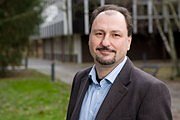
Bernhard J. Berger is a Lecturer in the Department of Computer Engineering at the Institute of Embedded Systems, Hamburg University of Technology (TUHH). His research focuses on software security, static code analysis, machine learning, optimization, and research data management. He has held significant roles such as Program Committee member for ICPC 2025 and MSR 2025, and has received awards including the Best Reviewer Award (ICPC 2023) and Best Engineering Paper Award (SCAM 2019). His work spans interdisciplinary applications including maritime systems security, GPU-accelerated AI, and evolutionary algorithms. Recent studies emphasize AI-driven security tools (e.g., ML-SAST) and domain-specific language approaches to optimization (EvoAl). He has contributed to over 30 peer-reviewed publications, with notable work in IEEE Transactions on Software Engineering and Science of Computer Programming. Berger collaborates closely with industry through DAAD review committees and serves on artifact evaluation boards for ISSTA and ARES conferences. Education: Doctoral Thesis (2022), Diploma in Computer Science (2007) Key Projects: ArchSec tool suite, Threat Modeling Frameworks, Bauhaus static analysis methodology Lab Affiliation: Embedded Systems Design Group His advisory roles include Deputy of TUHH's Election Verification Committee and Session Chair at IEEE Congress on Evolutionary Computation 2023. Current research trends integrate machine learning with static analysis for automated vulnerability detection, while also exploring explainable AI techniques for neural network optimization.
Prof. Dr.-Ing. Rüdiger Daub serves as Professor and Chair of Production Engineering and Energy Storage Systems at the Technical University of Munich (TUM), operating within the Department of Mechanical Engineering. His leadership encompasses research direction, academic supervision, and strategic development of battery production technologies at TUM's Garching campus (Boltzmannstr. 15), with active industry collaborations driving innovation in sustainable manufacturing. Daub's research program pioneers advanced production methodologies for lithium-ion and solid-state batteries, focusing on electrode manufacturing, electrolyte filling, and cell assembly processes. His work investigates critical parameter interdependencies affecting battery safety and performance, developing inline monitoring systems and digital twin technologies for real-time process optimization. Key contributions include moisture control in electrode production, electrochemo-mechanical characterization of solid-state systems, and robotics solutions for deformable object assembly, all integrated with machine learning for quality assurance in industrial settings. Analysis of his 2023-2025 publications reveals a dominant research trajectory toward solving production bottlenecks in next-generation energy storage. The work demonstrates increasing integration of computational modeling with empirical validation, particularly in solid-state battery manufacturing and high-voltage electrolyte systems. A notable trend is the cross-pollination of robotics, computer vision, and uncertainty quantification techniques to address complex assembly challenges and distribution shifts in quality monitoring, reflecting industry's urgent need for adaptable, data-driven production systems. Leading TUM's specialized laboratories for battery cell production, Daub's team maintains comprehensive facilities for electrode calendering, electrolyte filling, and cell assembly with integrated tracking and tracing capabilities. The research infrastructure supports collaborative projects with automotive OEMs and battery manufacturers to develop scalable production processes, emphasizing environmental sustainability through water-based electrode production and footprint optimization. Current initiatives focus on digital factory modeling and prelithiation technologies for next-generation battery systems.
Prof. Alexander Pretschner is a Professor of Software & Systems Engineering at the Technical University of Munich (TUM) and Founding Director of the Bavarian Research Institute for Digital Transformation (bidt). He also serves as Scientific Director of fortiss, a Bavarian research institute for software-intensive systems. His research focuses on software engineering, testing, information security, and ethical software development. Pretschner holds a PhD from TUM and has held academic positions at Karlsruhe Institute of Technology (KIT) and TU Kaiserslautern. He is a co-editor of several prestigious journals, including IEEE Transactions on Reliability and the Journal of Software Testing, Verification and Reliability. Education: PhD in Computer Science, Technical University of Munich MSc in Computer Science, University of Kansas (on Fulbright Scholarship) Diplom in Computer Science, RWTH Aachen University Research Interests: His work spans testing methodologies, secure software design, and ethical considerations in agile development. Notable contributions include frameworks for metamorphic testing, distributed data usage control, and accountability mechanisms for cyber-physical systems. Awards: IBM Faculty Award (2012, 2013) Google Focused Research Award (2011, 2012) EARTO Innovation Prize (2014) 2nd Platz Supervisory Award (2020) Advising & Grants: Pretschner has supervised numerous PhD and Master’s students, contributing to over 200 publications. He leads projects like EDAP (Ethical Deliberation in Agile Processes) and collaborates with industry partners on cybersecurity and AI ethics initiatives. Labs & Teams: His work is anchored in bidt, fortiss, and TUM’s Chair of Software & Systems Engineering, focusing on societal impacts of digitalization and trustworthy AI systems.
Chanchal K. Roy is Professor of Software Engineering/Computer Science at the University of Saskatchewan and Co-Director of the Software Research Lab. He leads an NSERC CREATE graduate program on Software Analytics Research and co-leads the Data Management group for an NSERC CFREF project on Food Security, with over 170 publications cited 6,000+ times. His research centers on software clone detection using the widely adopted NICAD system, software evolution, empirical studies, and AI-driven software analytics. Recent work integrates large language models for code generation, clone detection in the AI era, and developer interactions with tools like ChatGPT, emphasizing practical applications in maintenance and analytics. Analysis of his 15 most recent publications reveals a strong trend toward AI/ML integration in software engineering: 12 of 15 articles (2025) explore LLMs, quantum computing, or deep learning for tasks like bug localization, code snippet generation, and feature-toggle analysis. Key themes include empirical validation of AI tools, Stack Overflow data mining, and cross-domain frameworks for Society 5.0. His scientific awards include: Most Influential Paper Awards (SANER 2018, ICPC 2018) Outstanding Young Computer Science Researcher Award (CS-Can/Info-Can, 2018) New Researcher Award (University of Saskatchewan, 2019) New Scientist Research Award (College of Arts and Science, 2019) As lead of the NSERC CREATE program and CFREF data group, he mentors graduate students in software analytics while securing major grants. He actively serves on program committees for ASE, ICSE, and FSE, reviewing journals and organizing workshops on clone detection and empirical methods. His lab focuses on real-world applications in food security data management and software evolution. The Software Research Lab, co-directed by Roy, drives projects like NICAD and the NSERC CREATE initiative, emphasizing open-source contributions and industry collaboration. Current efforts include quantum-SE integration and AI-augmented maintenance tools under the CFREF food security mandate.
Prof. Dr. Aliaksandr Bandarenka is a Professor at the Technical University of Munich (TUM) in the TUM School of Natural Sciences , leading the Assistant Professorship of Physics of Energy Conversion and Storage . His research focuses on electrochemical surface science and energy materials development. Education: PhD in Chemistry from Belarusian State University (2005) Key Collaborations: Ruhr University Bochum, University of Twente, Technical University of Denmark Prof. Bandarenka's research explores: Design of electrocatalytic materials via bottom-up approaches Characterization of electrified interfaces Development of sustainable energy conversion/storage systems Surface structure-activity relationships in catalysis Recent article trends (2024) include: ORR electrocatalyst optimization using ZIF-8 templating Advanced impedance spectroscopy for battery/electrolyzer diagnostics Mesoporous oxide materials for energy applications Surface structure effects on double layer capacitance Scientific Recognition: Ernst Haage-Prize (2016) Hans-Jürgen Engell Award (2013) He teaches graduate courses on: Electrified interfaces Energy materials science Electrocatalysis fundamentals Hands-on experiments in battery technology
Prof. Dr. Oliver Paul is a Full Professor at the Department of Microsystems Engineering (IMTEK), University of Freiburg, since 1998. He previously held roles such as Dean of Studies (1999–2002), Director of IMTEK (2006–2008), and Dean of the Faculty of Engineering (2016–2018). His research focuses on Microsystems for biomedical applications, MEMS technology, sensor systems, and advanced fabrication techniques. Key projects include the Excellence Cluster BrainLinks-BrainTools (2012–2017) and the Institute for Brain-Machine Interfacing Technology (IMBIT, 2015–present). Paul’s education includes a Diploma in Physics (1986, ETH Zurich) and a PhD in Solid-State Physics (1990, ETH Zurich). He has supervised numerous PhD students and postdocs, contributing to topics like neural probes, energy harvesting, and sensor calibration. His teaching spans courses in MEMS, semiconductors, and quantum mechanics. He co-founded Sensirion (1998) and Atlas Neuroengineering (2012), and holds editorial roles in journals like Sensors and Actuators A and IOP Journal of Micromechanics and Microengineering. His research interests include multisensory system calibration, biohybrid microsystems, and MEMS-based tools for neuroscience. Notable contributions include silicon neural probes, advanced microneedles, and telemetric smart orthodontic brackets. He has led large collaborative projects involving academia and industry, emphasizing interdisciplinary innovation in microsystems and biomedical engineering.
Yasuhiko Arakawa is a Professor at the Research Center for Advanced Science and Technology and Director of the Institute for Nano Quantum Information Electronics at the University of Tokyo. He holds the Hans Fischer Senior Fellowship at the TUM Institute for Advanced Study (TUM-IAS) since 2008, hosted by Gerhard Abstreiter, with a focus on Nano Photonics. His academic journey includes B.S., M.S., and Ph.D. degrees in Electrical Engineering from the University of Tokyo (1975–1980). Dr. Arakawa’s research has revolutionized semiconductor quantum dot lasers, including their theoretical prediction and high-performance demonstration. His contributions also include advancements in single photon emitters at telecom wavelengths and high-temperature semiconductor devices. He has led national projects for METI and MEXT and organized major conferences like the 1998 IEEE Semiconductor Laser Conference and the 2005 International Quantum Electronics Conference. His work spans photonics, nanotechnology, and optoelectronics, with notable publications in Applied Physics Letters , Physical Review B , and IEEE Photonics Technology Letters . Awards include the Fujiwara Prize (2007), IEEE William Streifer Award (2004), and IBM Science Award. Arakawa’s affiliations include leadership roles in quantum information science and collaborations with institutions like TUM-IAS. His labs and research groups focus on nanophotonics, semiconductor nanostructures, and quantum device engineering, advancing fields from optical communications to quantum computing.
Rainald Loehner is a Distinguished Professor of Fluid Dynamics at George Mason University's Center for Computational Fluid Dynamics. Since 2003, he has led the Center for Computational Fluid Dynamics at George Mason University. He is currently a Hans Fischer Senior Fellow at the Technical University of Munich's Institute for Advanced Study (TUM-IAS) for 2023, hosted by Professors Kai-Uwe Bletzinger and Roland Wüchner in the 'Adjoint-Based System Identification of Large-Scale Structures' Focus Group. Loehner received his Diplom Ingenieur (Maschinenbau) degree from the Technical University of Braunschweig, and his PhD and a DSc in civil engineering from the University College of Swansea, Wales. After teaching at Swansea for a year, he worked at the Naval Research Laboratory in Washington, DC, followed by a research professorship at George Washington University. He joined George Mason University as an associate professor and was promoted to full professor in 1995 and distinguished professor in 2004. With over 35 years of experience, Professor Loehner's research spans the complete pipeline of numerical solvers and simulation tools. His expertise includes pre-processing, grid generation, numerical methods, field solvers, parallel computing, adaptive mesh refinement, fluid-structure interaction, shape optimization, system identification, and computational crowd dynamics. His current work focuses on developing advanced field solvers for compressible and incompressible flows, acoustics, electromagnetic wave propagation, heat and mass transfer, structural mechanics, and fluid-structure interaction. Key application areas include blast mitigation, ship hydrodynamics, blood flow, contaminant transport, and pedestrian safety. Loehner's recent research output (2020-2024) shows a strong trend toward digital twin technology and adjoint-based methods for structural analysis and optimization. His publications focus on high-fidelity digital twins for detecting structural weaknesses, risk assessment in engineering systems, and optimization of sensor placement. His work bridges computational mechanics with machine learning approaches, particularly in system identification and inverse problems, demonstrating how computational methods can solve complex real-world engineering challenges. 2020: Ranked #15119 in the Stanford List of Most Influential Scientists of the World; #8 in Aerospace and Aeronautics 2010: Distinguished International Career Award, Argentine Association of Computational Mechanics 2008: Fellow, International Association for Computational Mechanics 2006: Associate Fellow, AIAA 2005: Honorary Professor, University of Wales Swansea 2005: Advisory Professor, Shanghai Jiao Tong University 2004: Distinguished Professor of Fluid Dynamics, George Mason University 1999: Computational Mechanics Achievements Award, Japan Society of Mechanical Engineering 1993: Doctor of Science in Civil Engineering, University College of Swansea 1979-1983: Studienstiftung des Deutschen Volkes (Top 1% of German Students) Professor Loehner has mentored numerous students through his work at George Mason University and has supervised research in computational fluid dynamics, structural mechanics, and related fields. His research has been supported by various grants from government agencies and industry partners, enabling the development of advanced simulation tools applied in aerodynamics, hydrodynamics, shock-structure interaction, and medical applications. His codes and methods have been widely adopted in industry and academia for applications ranging from aircraft and ship design to medical simulations and urban pathogen transmission modeling. Loehner leads the Center for Computational Fluid Dynamics at George Mason University, which focuses on developing cutting-edge computational methods for fluid dynamics and related multiphysics problems. The center works on strategic application areas including blast mitigation, ship hydrodynamics, blood flow simulation, and pedestrian movement modeling. As a TUM-IAS Fellow, he collaborates with the Chair of Computational Modeling and Simulation at TUM on adjoint-based system identification of large-scale structures, bringing together expertise in computational mechanics and digital twin technology to address complex engineering challenges.
Lionel C. Briand is a Professor of Software Engineering with shared appointments at the University of Luxembourg's SnT Centre for Security, Reliability, and Trust and the School of Electrical Engineering and Computer Science at the University of Ottawa. He holds a Canada Research Chair (Tier 1) in Intelligent Software Dependability and Compliance and serves as Director of Lero, Ireland's national software research center. His academic leadership spans over 25 years of collaborative research with industry partners across automotive, aerospace, energy, financial, and legal domains. Professor Briand's research focuses on software verification and validation, trustworthy AI systems, model-driven engineering, and empirical software engineering methodologies. His work bridges theoretical foundations with industrial applications, particularly in cyber-physical systems where machine learning components interact with safety-critical control systems. He has pioneered techniques for testing AI-enabled systems, GDPR compliance automation, and mutation analysis for space systems. His publication portfolio demonstrates consistent innovation in software testing, with recent emphasis on large language models for test generation, automated compliance checking, and safety analysis of deep neural networks. Key trends include black-box testing methodologies, metamorphic testing for security, and search-based approaches for DNN validation. IEEE Fellow and ACM Fellow IEEE Computer Society Harlan Mills Award (2012) ACM SIGSOFT Outstanding Research Award (2022) IEEE Reliability Society Engineer-of-the-Year Award (2013) ERC Advanced Grant recipient (2016) Fellow of the Academy of Science, Royal Society of Canada (2023) ICSE 2011 Most Influential Paper Award As Director of Lero and holder of a Canada Research Chair, Professor Briand leads major research initiatives including an ERC Advanced Grant on cyber-physical system modeling and testing. His industrial collaborations generate substantial grant funding, particularly in automotive safety validation and regulatory compliance automation. He mentors numerous researchers through his dual appointments and serves on program committees for top software engineering conferences. Professor Briand directs research activities at the SnT Centre's SVV department, focusing on software verification and validation. His team develops practical tools like MASS for space system mutation analysis and COREQQA for compliance requirements understanding, with strong industry adoption in automotive and aerospace sectors.
Dr. Rico Friedrich is a computational materials scientist leading the "Autonomous Materials Thermodynamics - AutoMaT" research group, jointly operated by the Chair of Theoretical Chemistry at Technische Universität Dresden and the Helmholtz-Zentrum Dresden-Rossendorf (HZDR). His work focuses on data-driven computational design of advanced materials for information technology and energy applications through the DRESDEN-concept research alliance. His research spans several cutting-edge areas: Discovery and design of 2D non-van der Waals materials with novel electronic and magnetic properties Data-driven modeling of high-entropy ceramics based on entropy maximization principles Development of computational methods for accurate thermodynamic stability prediction, particularly the coordination corrected enthalpies (CCE) method Applications of artificial intelligence in materials design Dr. Friedrich's publication record shows a strong trend toward computational materials discovery, with significant contributions to understanding non-van der Waals 2D materials and high-entropy ceramics. His work bridges theoretical developments with practical applications, resulting in publications in high-impact journals including Nature, Nano Letters, and Advanced Electronic Materials. His key scientific contributions include: Development of the coordination corrected enthalpies (CCE) method for accurate formation enthalpy calculations Creation of the AFLOW-CCE module implemented in the AFLOW software ecosystem Discovery of novel 2D non-van der Waals materials with ultra-low exfoliation energies Formulation of the disordered enthalpy-entropy descriptor (DEED) for high-entropy ceramics Dr. Friedrich actively mentors the next generation of materials scientists, currently supervising PhD students and postdoctoral researchers in his AutoMaT lab. His research group collaborates extensively within the DRESDEN-concept research alliance, leveraging computational resources and expertise across multiple institutions to advance materials science and engineering.
Christoph T. Koch is a Professor of Physics at Humboldt-Universität zu Berlin, where he has held the W3 Chair since 2015. Previously, he held a similar position at Ulm University (2011–2015), supported by the Carl Zeiss Foundation. His research focuses on advanced electron microscopy techniques, including quantitative transmission electron microscopy (TEM), electron holography, and strain mapping. He leads the AG Strukturforschung/Elektronenmikroskopie group, advancing materials science through innovations in imaging and spectroscopy. Education: B.Sc./M.Sc. in Physics at Heidelberg University (1996–1998), followed by an exchange at Arizona State University (1997–1998). PhD in Physics from Arizona State University (2002, advisor: Prof. John C.H. Spence). Postdoctoral research at the Max Planck Institute for Metals Research, Stuttgart (2002–2011). Research interests include: Electron diffraction and phase retrieval Nanometer-scale strain and defect analysis Electron energy-loss spectroscopy (EELS) for plasmonics and bandgap mapping Development of FAIR data infrastructure for materials science Leadership: Managed the Department of Physics at Humboldt University (2020–2024). Collaborates widely, with key co-authors including P.A. van Aken, W. Sigle, and C. Felser. His work bridges experimental microscopy and computational modeling, addressing challenges in semiconductors, ceramics, and 2D materials. Notable contributions include pioneering methods for 3D reconstruction via electron ptychography, dynamic electron diffraction analysis, and strain mapping in advanced CMOS technologies. Current efforts emphasize real-time imaging and AI-driven data analysis in materials research.
Jens Palsberg is a Professor and former Department Chair of Computer Science at the University of California, Los Angeles (UCLA), where he currently serves as Director of the UCLA-Amazon Science Hub for Humanity and Artificial Intelligence and co-director of UCLA's quantum research center. He chairs ACM SIGPLAN and is a member of the ACM Council. His research spans programming languages, software engineering, quantum computing, compilers, embedded systems, and information security. Palsberg has authored over 80 technical papers, co-authored the book Object-Oriented Type Systems , and revised Appel's textbook on Modern Compiler Implementation in Java . His recent work shows a significant shift toward quantum computing, including compiler techniques and program analysis for quantum systems. Analysis of his recent publications reveals a clear transition from traditional programming language research to quantum computing, with nearly half of his 2022-2024 publications focusing on quantum topics while maintaining strong work in software engineering and programming languages. His quantum research particularly emphasizes compiler optimization, abstract interpretation, and circuit analysis. ACM SIGPLAN Distinguished Service Award (2012) UCLA teaching award for quantum computing courses (2023) National Science Foundation CAREER and ITR awards Purdue University Faculty Scholar award IBM Faculty Award Okawa Foundation research award Palsberg has served in numerous leadership roles including general chair of POPL, conference chair of LICS, and vice chair of ACM SIGBED. His research has been supported by DARPA, Intel, British Telecom, and the National Science Foundation. He was instrumental in establishing UCLA's Masters degree in quantum science and has mentored numerous students through his legendary proof sessions. He leads a research group of over 30 professors in UCLA's quantum research center and maintains active collaborations across academia and industry, particularly with Amazon through the UCLA-Amazon Science Hub.
Prof. Dr. Bettina V. Lotsch is Director of the Nanochemistry Department at the Max Planck Institute for Solid State Research (Stuttgart) and Honorary Professor at Ludwig-Maximilians-Universität München's Faculty for Chemistry and Pharmacy. She holds a prestigious Leibniz Prize (2025) and leads research in nanochemistry, materials science, and energy conversion technologies. Her multidisciplinary research focuses on developing multifunctional materials through solid-state and nanochemistry approaches, with emphasis on covalent organic frameworks, photonic nanostructures, and solid electrolytes for energy applications. Current projects explore solar batteries, electrocatalysis, and quantum materials. Prof. Lotsch has received numerous international honors including Baker Lectureship (Cornell), Materials Lectureship (Warwick), and EU-40 Materials Prize. She coordinates a large research team of >20 doctoral students and postdocs working on solid-state electrolytes, COF photocatalysis, and 2D material design. Education: PhD (summa cum laude) from LMU Munich, postdoctoral training at University of Toronto with G.A. Ozin, and visiting studies at University of Oxford. Research Leadership: Manages laboratories at both Max Planck Institute (Stuttgart) and LMU Munich (Chemistry Department) with specialized facilities for materials synthesis and characterization.
Li Wei is a distinguished academic affiliated with Tsinghua University, with a focus on interdisciplinary research spanning artificial intelligence, machine learning, and computer vision. His work often intersects with medical informatics, remote sensing, and signal processing, demonstrating a commitment to advancing technological solutions in healthcare, environmental monitoring, and engineering systems. Research interests include deep learning applications in clinical diagnostics, satellite data analysis for climate modeling, and optimization of energy storage systems. He has contributed to innovative solutions in areas such as UAV-enabled edge computing, privacy-preserving blockchain protocols, and thermal-based surveillance systems. His collaborative projects often involve multidisciplinary teams across institutions. Publications reflect a strong emphasis on practical applications, such as mobile health tools for tumor recognition, transformer-based super-resolution techniques for oceanography, and AI-driven risk classification models for respiratory diseases. While no specific awards or grants are listed, his prolific output across top-tier journals indicates sustained research impact. Professional activities include contributions to conferences like RecSys, MICCAI, and AAAI, and editorial roles are implied through his extensive publication record. Collaborations with industry partners (e.g., in energy systems and medical imaging) suggest engagement with real-world problem-solving.
Michael Ortiz is the Dotty and Dick Hayman Professor of Aeronautics and Mechanical Engineering at the California Institute of Technology (Caltech). He holds the Hans Fischer Senior Fellowship at the Technical University of Munich's Institute for Advanced Study (TUM-IAS) since 2010. His research focuses on developing the Advanced Cardiac Mechanics Emulator (ACME) to model human heart function in healthy and diseased states. He has a BS from the Polytechnic University of Madrid, and MS/PhD from UC Berkeley. Previously, he was at Brown University (1984–1995). Professor Ortiz leads Caltech’s DoE/PSAAP Center on High-Energy Density Dynamics of Materials. His honors include the IUTAM Rodney Hill Prize (2008), election to the American Academy of Arts & Sciences (2007), and Humboldt Research Award (2002). He has advised national labs like Lawrence Livermore and Sandia on predictive science and engineering review panels. His work spans computational mechanics, materials science, and multiscale modeling. Recent research emphasizes cardiac biomechanics, fracture mechanics, and quantum materials simulations. Over 100 highly cited papers showcase contributions to meshfree methods, variational fracture, and orbital-free DFT.