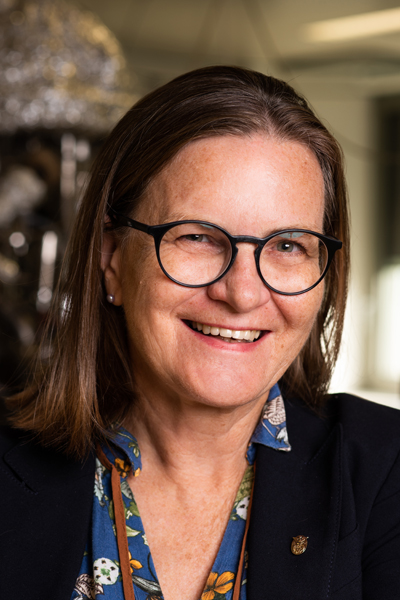
Kerstin Hummer is an Associate Professor in Computational Materials Physics at the University of Vienna's Faculty of Physics. She leads research on ab-initio modeling of materials using density functional theory (DFT) and advanced computational methods, with applications in photocatalysis, exciton dynamics, and bandgap engineering. Her group investigates low-dimensional materials like transition metal dichalcogenides and semiconductor alloys, focusing on electronic, optical, and vibrational properties. Recent work includes neural network potentials for simulating ion diffusion in telluride materials and spectroscopic analysis of copper-zeolite catalysts. Publications demonstrate consistent focus on improving DFT methods through hybrid functionals, with applications spanning ZnO semiconductors, III-V compounds, and organic molecular crystals. Her teaching includes courses on scientific computing and light-matter interaction. Awards include the L'ORÉAL 'For Women in Science' fellowship and AT&S Research Grant for innovations in materials modeling.
Tobias Dickbreder is a Researcher in the Department of Physical Chemistry, Faculty of Chemistry, specializing in atomic-scale surface characterization of minerals. His work integrates scanning probe microscopy, temperature programmed desorption, and computational modeling to investigate water-mineral interactions critical for atmospheric ice nucleation and weathering processes. His educational qualifications include: Bachelor of Science (B.Sc.) Master of Science (M.Sc.) Doctorate (Dr.) Dickbreder's research spans Physical Chemistry, Earth Sciences, and Materials Science with emphasis on mineral surface reactivity. Key focus areas include water adsorption/desorption thermodynamics on feldspar and calcite, ice nucleation mechanisms on atmospheric dust particles, and nanoscale surface reconstruction phenomena. His experimental approach combines ultrahigh vacuum techniques with environmental interfaces to simulate atmospheric conditions. Analysis of his publication record reveals consistent investigation of K-feldspar microcline (001) surfaces since 2021, evolving from fundamental surface characterization (2021-2023) to atmospheric implications (2024-2025). Recent work demonstrates how atomic-scale water organization governs ice nucleation efficiency, with direct relevance to climate modeling. His development of unDrift software addresses critical instrumentation challenges in nanoscale imaging. No scientific awards were documented in the provided information. While student advising and grant details remain unreported, Dickbreder's collaborative publications indicate active mentorship within his research team. His 2025 presentation activity demonstrates knowledge dissemination through international conferences focused on mineral-water interface science. He operates within Angelika Kühnle's research ecosystem, collaborating closely with Florian Schneider, Lea Klausfering, and Ralf Bechstein on feldspar surface projects. The team utilizes advanced scanning probe facilities to resolve atomic structures of mineral interfaces under controlled humidity conditions, with recent expansion into calcite surface studies.
Roman Hörbe serves as a Lecturer and Researcher at the Institute of Industrial Engineering and Management within the Faculty of Engineering at the University of Applied Sciences Wiener Neustadt (FHWN). His work focuses on integrating artificial intelligence into manufacturing processes and production systems. His primary research interests include AI applications in production planning and control, advanced quality inspection systems using machine learning, data analytics for small and medium enterprises, and circular economy principles in product design. His work bridges theoretical research with practical industrial applications through numerous collaborative projects with manufacturing companies. Roman's research demonstrates a strong trend toward practical AI implementation in manufacturing environments, with emphasis on Convolutional Neural Networks for quality inspection, data management systems for learning factories, and production planning optimization. His publications show increasing focus on real-world applications of machine learning in high-variability production environments. Roman actively participates in multiple funded research projects including IntelliProPS (2023-2026), DigiLean (2024-2025), ProcessIQ (2023-2024), and CircularPro (2022-2023), all focusing on AI integration in manufacturing processes. These projects are primarily funded through FFG's COIN construction FH for the economy program and Innovation Camps program. He contributes to research teams focused on DigiLean workshops with food industry companies, ProcessIQ for automated defect detection in special machine manufacturing, IntelliProPS for AI-enhanced production planning concepts, and CircularPro for developing continuing education on circular design principles for SMEs.
Gábor Princz is a Lecturer and Researcher at the Institute of Industrial Engineering and Management at the University of Applied Sciences Wiener Neustadt. He holds a B.Eng. (2018) and M.Eng. (2020) in Naval Architecture from Kiel University of Applied Sciences, and is currently pursuing a Dr.techn. at TU Vienna starting July 2024. His research focuses on industrial applications of advanced technologies including: Condition monitoring and predictive maintenance systems Machine learning for manufacturing optimization Industrial automation using computer vision AI-driven production planning and control Data analytics for SME manufacturing His recent publications demonstrate strong focus on applying convolutional neural networks and unsupervised learning techniques to solve industrial challenges like quality inspection, anomaly detection, and production line optimization, particularly for small-to-medium enterprises. Research Projects: IntelliProPS (2023-2026): Developing AI-enhanced planning systems for volatile production environments DigiProTrain (2023-2025): Creating Industry 4.0 training programs using learning factories Care about Care (2021-2023): Remote assistance technology for long-term care applications
Ulrich Bodenhofer serves as a full-time Professor for Artificial Intelligence at Upper Austria University of Applied Sciences (Hagenberg campus) since September 2020, while maintaining a part-time role as Chief Artificial Intelligence Officer at QUOMATIC.AI since June 2018. His institutional affiliations include Research Center Hagenberg AIST and multiple Centers of Excellence: Automotive/Mobility, Medical Technology/TIMed, Smart Production, Computed Tomography, and Digital Transformation within the Strength area of ICT - Information & Communication Technology. His academic credentials include a Habilitation (2003), Dr. techn. (1998), and Dipl.-Ing. (1996), all in Technical Mathematics from Johannes Kepler University Linz. His research focuses on applying fuzzy logic systems to practical problems across healthcare, industry, and finance. Key areas include: Machine Learning & Artificial Intelligence in Sales Analytics Healthcare and Bioinformatics applications Nondestructive Testing methodologies Financial Condition Monitoring systems His publication record shows consistent output since 1996 with 74 publications, demonstrating evolving expertise from foundational fuzzy logic research to current AI applications in medical imaging and industrial processes. Recent work emphasizes human-centered AI approaches, explainable systems, and practical implementations addressing real-world challenges in critical infrastructure and healthcare diagnostics. Bodenhofer actively leads and participates in significant research projects including HCAI (2022-2027), FLARE (2025-2027), and iReduce (2025-2026), securing funding from diverse sources including FWF - doc.funds.connect and KIRAS cooperative research programs. His collaborative approach spans multiple disciplines and institutions, reflecting the interdisciplinary nature of modern AI research. His professional activities include 54 scientific engagements through 2025, featuring numerous invited lectures on AI applications across finance, healthcare, and industrial contexts. He has supervised 9 academic works according to institutional records, mentoring the next generation of AI practitioners through hands-on research projects focused on practical implementation challenges.
Jürgen Fleig is a Professor of Electrochemistry at the Institute of Chemical Technologies and Analytics, Faculty of Chemistry, Technische Universität Wien (Vienna University of Technology) since 2005. He holds a Venia Legendi in Physical Chemistry from University of Ulm (2002) and earned his PhD in Chemistry (1995) and Diploma in Physics (1991) from University of Tübingen. His research focuses on solid state electrochemistry , including kinetics of electrochemical reactions on solid ion conductors, defect chemistry of oxides, mass/charge transport in ionic solids, and advanced methods in electroceramics. 2005–present: Professor, TU Wien 2002–2005: Privatdozent, University of Ulm 2003: Guest Professor, University of Rome His scientific awards include: C. F. Schönbein Gold Medal (2022) Wilhelm Jost Memorial Lectures (2017) Fellow of The Electrochemical Society (2016) Multiple Edward C. Henry Awards (2005, 2004, 2002) Tajima Prize (2004) Karl Winnacker Scholarship (2002) Corresponding Member, Austrian Academy of Sciences (2017) His research group specializes in designing novel experimental methods and theoretical approaches for solid state electrochemistry, with strong focus on energy-related materials like solid oxide cells, batteries, and electroceramics. Recent publications highlight advances in oxygen exchange kinetics, surface decoration techniques, and defect chemistry analysis using in situ methods. He has served as Head of Institute of Chemical Technologies and Analytics (2019–2024) and held leadership roles in curriculum development and academic societies.
Gerald Adam Zwettler is a researcher at the University of Applied Sciences Upper Austria (FH Hagenberg) with a focus on digital transformation in Information and Communication Technology (ICT). His work spans machine learning applications in non-destructive testing, human-robot interaction, and sensor data classification. Active in projects like FLARE (Human-Centered AI for NDT), MARIE (Mobile Robotic Assistance), and MOVE (Orthosis Modeling) Collaborates internationally on railway infrastructure analysis and medical imaging Research interests include deep learning , medical image processing , IoT sensor analysis , and AI-driven customization of orthopedic devices . Recent work explores edge computing for low-energy IoT systems and multimodal interaction frameworks for office robots. Publications emphasize applied AI in technical domains, with methodological contributions to presegmentation techniques , Levenshtein distance optimization , and human-centered robotics . Project roles include principal investigator in knowledge databases for industrial plastic manufacturing.
Jan Pruszak is a Professor and Chair at the Institute of Anatomy and Cell Biology , Paracelsus Medical University, Salzburg. His research focuses on stem cell biology , neuronal differentiation , and cell surface antigen profiling for biomedical applications. Current projects include neurovascular interactions in Sturge-Weber syndrome and quantitative biomarkers for dopaminergic neurons . He has published extensively on neural crest development , limbal epithelial progenitors , and proteotoxicity in neuroblastoma . His recent work trends emphasize stem cell-based models , surface marker screening , and regenerative approaches for neurodegenerative diseases. Dr. Pruszak actively organizes medical training workshops and participates in international conferences on neurosurgical techniques.
Christoph Heil is an Associate Professor in the Department of Theoretical and Computational Physics at Graz University of Technology (TU Graz), a position he has held since 2024. Previously, he served as an Assistant Professor at TU Graz from 2022 to 2024. His academic journey includes being a Project Leader and Senior Postdoc Researcher at TU Graz (2019-2022), a Schrödinger Fellow at both the University of Oxford (2016-2018) and TU Graz (2018-2019), and a Postdoc Researcher at TU Graz (2015-2016). He completed his PhD studies in Technical Physics at TU Graz from 2011 to 2015. Dr. Heil leads the Heil Group - Computational Material Design at TU Graz, which is part of the Institute of Theoretical and Computational Physics. His research group focuses on computational approaches to understand and design novel materials with specific properties, particularly in the field of superconductivity. Christoph Heil's primary research interests lie in computational materials science, with a strong focus on superconductivity and lattice dynamics. His work employs state-of-the-art computational methods to describe physical phenomena in materials completely from first principles. He investigates superconductivity, charge-density waves, and their competition in reduced dimensions, particularly in transition metal chalcogenides. His research also explores new superconducting carbon-based materials in the nano-regime, such as nanoribbons and nanosheets, and aims to understand the superconducting phase in high-pressure hydrides while predicting new highest-Tc materials. His approach combines theoretical physics with practical materials design, bridging fundamental understanding with potential applications. His recent publications demonstrate a strong focus on superconducting materials, particularly hydrides and transition metal compounds. There's a clear progression toward more sophisticated computational methods, including the development of the IsoME framework for high-precision Eliashberg calculations. His work spans from fundamental theoretical investigations to practical materials synthesis and characterization, showing a comprehensive approach to computational materials design. The research shows increasing attention to quantum anharmonic effects, which are crucial for understanding high-temperature superconductivity in hydrides. Dr. Heil has received notable recognition for his work, including: FWF Schrödinger Fellowship (2016-2019) supporting research at both the University of Oxford and TU Graz USPTO Patent 16/789143 for High Temperature Superconducting Structures He leads multiple significant research projects including DARPA SynQuaNon (2023-2028), an external research project on Computational Modelling of Superconducting Structures and Material Systems funded by Intellectual Ventures (2020-2026), and an FWF stand-alone project on Transition Metal Chalcogenides under Extreme Pressures (2019-2024). His group has successfully defended master's theses, indicating active student mentoring, and collaborates with researchers worldwide, as evidenced by numerous international co-authorships. The Heil Group operates as a dynamic research team focused on computational materials design, with current projects spanning superconducting nanophononic crystals (IVPH-NanoPhon2), computational modeling of superconducting materials, and transition metal chalcogenides under extreme pressures. The group has developed specialized computational tools like IsoME, a Julia-based framework for streamlining superconductivity calculations, demonstrating their commitment to advancing computational methodologies in materials science.
Dr. Maximilian Staudacher is a PostDoc researcher at the Chair of Structural and Functional Ceramics (ISFK) at Montanuniversität Leoben, Austria. He joined the university in 2014 for his BSc studies, completed his MSc in 2020, and earned his PhD in 2023. His research focuses on mechanical testing of ceramics, statistical treatment of ceramic strength data, additive manufacturing of ceramic components, and finite element analysis. BSc in Materials Science (Montanuniversität Leoben, 2017) MSc in Materials Science (Montanuniversität Leoben, 2020) PhD (Montanuniversität Leoben, 2023) Exchange Student, Colorado School of Mines (2019) His publications span mechanical testing methodologies (Ball-on-Ring, Ball-on-Three-Balls tests), additive manufacturing optimization, and computational modeling of ceramic materials. Key trends include improving structural integrity evaluation and addressing orientation-dependent properties in 3D-printed ceramics. Montanuniversität Leoben Performance Scholarships (2015-2020) Multiple 1st-place awards in European ceramic conferences (2021-2023) Nomination for 'Young Ceramists in the Spotlight' Best Paper Award (2021)
Umair Javed is a researcher in the Faculty of Physics specializing in nanostructured materials. Holding an MSc degree, he actively investigates atomic-scale defect engineering in two-dimensional materials like hexagonal boron nitride (hBN) and molybdenum disulfide (MoS 2 ), with applications in energy conversion and storage. His work employs advanced electron microscopy within integrated vacuum systems for material growth and analysis. Education: MSc (field and institution unspecified) Research focuses on: Defect dynamics in 2D materials Electrocatalysis for hydrogen evolution Electron beam-induced pore formation Environmental effects on nanomaterial properties His work bridges fundamental material science with sustainable energy applications through precise atomic-scale manipulation. Recent publications (2024-2025) demonstrate concentrated research on pore morphology control in hBN and MoS 2 , revealing how defect engineering enhances electrocatalytic activity for hydrogen production. Key themes include electron irradiation effects, vacuum environment influences, and basal-plane activation mechanisms, highlighting interdisciplinary innovation at the materials-energy nexus. Javed collaborates within an international research team that developed integrated vacuum instrumentation for 2D material manipulation, indicating active participation in cutting-edge nanomaterial characterization and synthesis methodologies.
Michael Kerber is affiliated with the Faculty of Physics , where he contributes to research in Basic Experimental Physics Training and University Didactics . His work spans Material Science and Physics , with a focus on plastic deformation , thermoelectrics , and crystal defects . Research Areas: Plastic Deformation in Metallic Glasses Thermoelectric Properties of Nanostructured Materials Crystal Defect Analysis via X-Ray Diffraction Anti-adhesion Microstructure Design Recent publications highlight his work on magnonic devices for data processing (2025), anti-bacterial surface engineering (2024), and high-pressure torsion in shape memory alloys (2023). His collaborations span institutions like University of Vienna , focusing on synchrotron radiation and nanomaterials .
Michele Reticcioli is a researcher in quantum and computational materials physics, currently affiliated with CNR L'Aquila, Italy, after previously serving at the University of Vienna until 2024. His work focuses on polarons, surface science, and machine learning applications in materials discovery. He leads research groups exploring electronic properties of materials using advanced computational methods like density functional theory (DFT) and has contributed to understanding polaron dynamics, surface reconstructions, and catalytic mechanisms on oxide surfaces. Teaching includes courses on computational quantum mechanics, data science for physicists, and surface science at the University of Vienna, emphasizing practical simulations using tools like VASP. He has supervised numerous students in topics like machine learning for polaron modeling, surface defect analysis, and computational materials physics. His research has been published in top journals such as Nature Communications , Science Advances , and Physical Review Letters , with a focus on interdisciplinary approaches combining theory and experiments. Key areas include polaron-driven surface phenomena, thermoelectric materials, and superconductivity in hydrides.
Petra Rudolf is Professor and Chair of Experimental Solid State Physics at the Zernike Institute for Advanced Materials within the Faculty of Science and Engineering at the University of Groningen. She currently serves as Dean of Graduate Studies (since 2020) and previously directed the Groningen Graduate School of Science (2014-2018). Her leadership extends to nine years of involvement with the Zernike Institute management, including five years as Board Chair. Her educational background includes a Laurea in Fisica (MSc in Physics) from Università degli Studi di Roma 'La Sapienza' (1987) and a Doctorat en Sciences (PhD in Physics) from Facultés Universitaires Notre-Dame de la Paix de Namur (1995). Rudolf's research focuses on materials science with particular emphasis on 2D materials, surface science methodologies, and complex molecular rotors and switches. Her work bridges fundamental physics with practical applications in nanotechnology and molecular electronics. With an h-index of 49 and over 8,820 total citations (Web of Science), her research has had significant impact in the field, including 17 articles with more than 100 citations each. Analysis of her publication record reveals a strong focus on 2D materials (particularly germanane), molecular electronics, and surface science. Her work demonstrates consistent innovation in creating and characterizing novel materials, with applications spanning nanoelectronics, memory devices, and molecular machines. The research shows progression from fundamental surface characterization to applied nanotechnology with practical device implementations. Elected foreign corresponding member of the Academy of Sciences of the Institute of Bologna (2020) President of the European Physical Society (2019-2021) Socio Benemerito of the Italian Physical Society (2018) Member of the German National Academy of Science and Engineering (2016) Officer in the Order of Orange Nassau (2013) Fellow of the American Physical Society (2010) DESCARTES Prize of the European Commission (2008) As an educator and mentor, Rudolf supervised 19 Bachelor's, 34 Master's, and 27 PhD theses, with notable representation of women in these traditionally male-dominated fields. During her tenure as Director of the Graduate School, seven programs were ranked first in the country by students, and applications increased by 28%. She has delivered over 100 invited talks worldwide and held visiting professorships at institutions including University of São Paulo, University of Santiago, and Università degli Studi di Cagliari. Her leadership extends to the Zernike Institute for Advanced Materials, which rose to 4th place worldwide and 1st in Europe for materials science research during her nine-year management involvement. The institute serves as her primary research base where she continues to advance the frontiers of solid state physics and materials science.
Ulrike Diebold is a Professor and Deputy Head at the Institute of Applied Physics, Vienna University of Technology (TU Wien), a position she has held since 2010. Previously, she served as Professor and Yahoo! Founder Chair of Science and Engineering at Tulane University from 2001 to 2009. Her educational background includes: PhD in Engineering Physics, TU Wien, 1990 Diebold's research focuses on experimental surface science, particularly atomic-scale properties of metal oxide surfaces and defect structure/reactivity relationships. She utilizes Scanning Probe Microscopy complemented by area-averaging spectroscopies and first-principles calculations to investigate these complex materials. Her scientific contributions have earned significant recognition: Wittgenstein Prize (2013), Austria's highest research award Arthur W. Adamson Award (2013) from the American Chemical Society Blaise Pascal Medal in Materials Science (2015) ERC Advanced Researcher Grant (2012) Elected Member of the Austrian Academy of Sciences (2014), German National Academy of Sciences Leopoldina (2015), and European Academy of Sciences (2014) Fellow of the American Physical Society (2004), AAAS (2007), and AVS (2005) With over 200 peer-reviewed publications exceeding 20,000 citations and 300+ invited talks, Diebold has secured major funding including an ERC Advanced Grant. Her work demonstrates exceptional leadership in experimental surface science methodology and international collaboration. She leads a prominent research group at TU Wien specializing in surface analysis techniques and chairs the surface science division of the German Physical Society, representing over 2,500 members in her field.