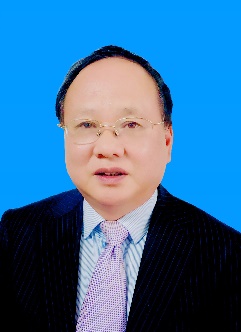
Tengxiang Huang is an Associate Professor at Xiamen University , affiliated with the College of Chemistry and Chemical Engineering . His research focuses on single-molecule chemical imaging , multi-modal imaging-spectroscopy integration , and nanoscale in-situ characterization . Education: BS (2007–2011), PhD (2011–2017) from Xiamen University Research Experience: Postdoc at Georgia State University (2018–2021), Assistant Research Fellow at IKKEM (2021–2022) His work bridges nanotechnology , materials science , and chemical imaging , with recent publications analyzing defects in 2D materials , photocatalytic dynamics , and TERS probe fabrication . He leads studies on in-situ characterization of nanoscale electrochemical and optical properties. His research group maintains a homepage at fangimaginglab.com , and he can be contacted at txhuang@xmu.edu.cn .
Zhu Weihong is a Professor and Doctoral Supervisor at the School of Chemistry and Molecular Engineering , East China University of Science and Technology. He was elected as an Academician of the Chinese Academy of Sciences (CAS) in 2023 and currently serves as Vice President of ECUST and Director of the Institute of Fine Chemicals . His research focuses on photosensitive chemical products engineering with functional chromophores, including fluorescent sensors, photochromism, and hole-transporting materials for solar cells. Bachelor (1992) - Nanjing Normal University Master (1995) - Nankai University PhD (1999) - ECUST Postdoctoral (2001-2003) - National Institute of Advanced Industrial Science and Technology (AIST), Japan His recent work explores stability enhancement mechanisms for organic dyes, enantiospecific transformation in metallacages, and innovative preparation methods for near-infrared fluorescent probes. His 380+ SCI papers span journals like Science, Nature, JACS, and Angew. Chem., with an H-index of 89 and 25,000+ citations . Scientific Awards : National Natural Science Award (Second Prize, 2019, First Finisher) Shanghai Science and Technology Progress Award (First Prize, 2020) Shanghai Natural Science Award (First Prize, 2017) NSFC Distinguished Young Scholar (2013) Cheung Kong Distinguished Professor (2015) Thousand Talents Program (2016) He holds 45 Chinese invention patents (38 authorized) and leads projects funded by National Key R&D Programs and the National Natural Science Foundation . His team develops Flash Nanoprecipitation Process (FNP) for nanoscale photosensitive dye preparation and explores chiral 3D recognition in anti-counterfeiting applications.
LUO Guangfu is an Associate Professor at the Department of Materials Science and Engineering, School of Engineering, Southern University of Science and Technology (SUSTech). Previously, he held academic positions at Washington University in St. Louis (2017-2018) and University of Wisconsin-Madison (2012-2017), and postdoctoral roles at the Institute for Molecular Science, Japan (2010-2012). His research focuses on first-principles calculations of functional materials, particularly defects and dynamic behaviors leading to device failure, and the development of accurate computational methods for transition state analysis. His Computational Materials Design (CMD) group collaborates extensively with experimental teams globally. Awards and honors include the Beijing Natural Science Award (2022), Shenzhen Peacock Plan Level B (2019), and Fellowships at the Institute for Molecular Science, Japan (2011). His key publications address epitaxial growth mechanisms, excited-state activation barriers, and Li dendrite suppression in batteries using nanosieve materials. Beijing Natural Science Award (2022) Shenzhen Peacock Plan Level B (2019) Seed Project Awards (2016, 2017) Institute for Molecular Science Fellowship (2011)
Professor Abolfazl Bayat is a full-time faculty member at the Institute of Fundamental and Frontier Sciences, University of Electronic Science and Technology of China (UESTC). He holds the position of Professor and serves as a Ph.D. supervisor for doctoral candidates. His academic journey includes a PhD in Physics from Sharif University of Technology (2008) followed by postdoctoral research at University College London and University of Ulm. He joined UESTC in 2017 under the prestigious 1000-Talent Youth Professorship and also secured the Sichuan Talent Fellowship in 2018. Education Bachelor of Engineering in Electrical Engineering, Sharif University of Technology Master of Science in Physics, Sharif University of Technology Doctor of Science in Physics, Sharif University of Technology Research Interests Bayat's research focuses on theoretical aspects of strongly correlated many-body systems and their applications in quantum technologies. His work leverages numerical simulations (e.g., Density Matrix Renormalization Group) and machine learning techniques (neural networks, Bayesian estimators). Key areas include: Many-Body Localization Non-Equilibrium Dynamics of Many-Body Systems Quantum Sensing Quantum Simulation Recent Article Trends His publications (2015-2018) emphasize quantum refrigeration, entanglement dynamics, and quantum phase transitions. Notable contributions involve machine-learning-assisted entanglement measurement and experimental protocols for spin arrays. Topics span quantum dots, impurity systems, and coherence in magnetic devices. Awards & Recognition China's 1000-Talent Youth Professorship (2017) Sichuan Talent Fellowship (2018) Advising & Labs Bayat supervises a research group called Physics of Quantum Information Technology , including students Rozha, Utkarsh Mishra, and Victor Montenegro. His team explores quantum technologies through theoretical and computational frameworks. No grant data is explicitly listed, but his work aligns with EPSRC-funded quantum technology initiatives. Labs & Teams His group operates within the Institute of Fundamental and Frontier Sciences, focusing on quantum information, many-body systems, and nanoelectronics applications.
Qingdong Jiang is a Tenure-track Fellow at Tsung-Dao Lee Institute and Tenure-track Associate Professor in the School of Physics and Astronomy at Shanghai Jiao Tong University. His research focuses on chiral quantum effects, cavity quantum matter, and topological phenomena in condensed matter systems. Key discoveries include quantum atmosphere diagnostics for symmetry detection, repulsive Casimir forces enabled by chiral materials, and vacuum fluctuation-induced chirality selection in chemical reactions. His work demonstrates how geometry influences quantum states in superfluids and superconductors. Recent publications explore flat band engineering in graphene, vacuum-mediated symmetry breaking, and geometric control of vortices in chiral quantum fluids. Jiang actively seeks postdoctoral researchers for collaborations bridging quantum theory and photonics.
Professor Hong-Liang ZHANG is affiliated with the Department of Chemistry at Xiamen University, where he leads the Inorganic Functional Materials Research Group established in 2017. His work bridges inorganic chemistry, materials physics, and electronics to develop green functional materials for energy and optoelectronic applications. BEng in Electronic Engineering, Shandong University (2003) MSc in Condensed Matter Physics, National University of Singapore (2008) PhD in Inorganic Chemistry, University of Oxford (2012) with Clarendon Fund Scholarship His research focuses on oxide semiconductors and electrocatalysts, particularly perovskite and spinel transition metal oxides. Key areas include: Electronic structure analysis using synchrotron radiation and theoretical calculations Interface regulation for optoelectronic and water-splitting applications Defect and doping engineering in wide-bandgap materials Atomic-level control of ferromagnetic insulating states Development of photoelectrochemical water splitting materials The 2020-2021 publications highlight trends in tuning electronic properties of Ga2O3, NiO, and LaCrO3 through doping and defects, alongside novel applications in memristors, solar cells, and electrocatalysis. Collaborations span institutions like Diamond Synchrotron (UK), Australian Synchrotron, and Shanghai Synchrotron. Scientific awards include the Clarendon Fund Scholarship (Oxford, 2008-2012). His group has secured funding for synchrotron access and advanced equipment like pulsed laser deposition systems.
Professor Zhang Jinlong is a leading researcher at the East China University of Science and Technology, where he serves as Director of the Shanghai Multi-Media Environmental Catalysis and Resource Engineering Technology Research Center since 2022. He was promoted to Professor in 2000 and appointed a Doctoral Supervisor in 2001, with administrative roles including Vice Dean of the School of Chemistry and Molecular Engineering (2006-2016) and Dean at Guizhou Normal University (2008-2011). His work focuses on photocatalytic materials for environmental remediation and energy conversion. Research Highlights Photocatalytic CO2 reduction and methane conversion Mesoporous and hierarchical material design Visible light-driven hydrogen production Environmental pollution control via advanced oxidation Article Trends Development of single-atom and bimetallic catalysts Engineering of frustrated Lewis pairs and heterojunctions Integration of SERS for reaction monitoring Over 600 publications in top-tier journals like Nature Communications and ACS Nano Scientific Recognition Foreign Member of the European Academy of Sciences (2019) Clarivate Highly Cited Scientist (2018-2023) Elsevier Most Cited Chinese Researcher (2014-2023) Multiple national awards including Shanghai Natural Science Award (2017) Leadership & Editorial Roles Chair of China Democratic League at ECUST Editor-in-Chief for journals including Scientific Reports and Applied Catalysis B: Environmental Over 60 Chinese invention patents (38 granted)
Dr. Asit Kumar Gain is a Research Associate Professor at the Department of Southern University of Science and Technology (SUSTech) in Shenzhen, China. He has held academic positions at UNSW Australia and City University of Hong Kong. Current Affiliation: Department of Mechanics and Aerospace Engineering, SUSTech Prior Appointments: UNSW Australia (2013-2021), City University of Hong Kong (2011-2013) Education: PhD in Materials Science, City University of Hong Kong (2011) Research Focus: Developing defect-free microlens arrays , bone-like pore-gradient scaffolds , environmentally friendly electronic packaging materials , and 3D-printed nanocomposites for biomedical applications. Scientific Awards: Three-time recipient of 'Outstanding Academic Performance Award' at City University of Hong Kong Publications: Over 30 peer-reviewed articles focusing on additive manufacturing, tribology, and material reliability in biomedical and microelectronic systems.
Shu Guo is an Assistant Researcher at the Department of Physics in the Faculty of Science at Southern University of Science and Technology . He holds a PhD in Physical Chemistry from the University of Chinese Academy of Sciences and has worked as a Postdoctoral Research Associate at Princeton University (2017–2021). His research focuses on quantum materials and nonlinear optical crystals , with a particular emphasis on crystal growth, structural analysis, and magnetic properties of low-dimensional materials. Educational Background PhD (2012–2017) : Technical Institute of Physics and Chemistry, University of Chinese Academy of Sciences BS (2008–2012) : School of Science, Wuhan University of Technology Research Trends Quantum spin liquids and triangular lattice systems Stability and structural analysis of perovskite materials Development of deep-ultraviolet nonlinear optical crystals Collaborations Princeton University (postdoctoral work) University of Chinese Academy of Sciences (PhD research)
Aung Ko Ko Kyaw is an Associate Professor at the Department of Electrical and Electronic Engineering , Southern University of Science and Technology (SUSTech), since August 2017. He earned his B.Eng. and Ph.D. in Electrical and Electronic Engineering from Nanyang Technological University, Singapore, in 2007 and 2012, respectively. Key Roles : Associate Editor (Frontiers in Electronic Materials), Topic Editor (Photonics) Research Focus : Organic/perovskite optoelectronics, flexible medical devices, and semiconductor doping His work spans organic solar cells , perovskite devices , and thermoelectric materials , with notable contributions to improving device efficiency and charge transport mechanisms . He has delivered over 30 invited/plenary/keynote talks globally. Scientific Awards & Recognitions : World’s Top 2% Scientists (Stanford University) Best Electronics and Electrical Engineering Scientists in China (Research.com) Green Talents Award (Germany’s BMBF) IAAM Medal and Distinguished Lectureship Award Kyaw has authored 130 journal papers (H-index: 43), 4 book chapters, and 18 patents, with frequent appearances in Nature Communications , Advanced Materials , and Nano Letters .
Dr. Li Xinggang is a Research Professor and Doctoral Supervisor at the Department of Materials Science and Engineering, Southern University of Science and Technology (SUSTech), Shenzhen, China. His academic career spans multiple institutions including China National Research Institute for Materials Science and Technology (formerly GRINM), and Leibniz-Institut für Werkstofforientierte Technologien (IWT) in Germany. Current: Research Professor (May 2023–present) Previous: Research Associate Professor (2020–2023), Research Assistant Professor (2018–2020) Education: Ph.D. in Process and Chemical Engineering, University of Bremen (2014) M.Eng. in Materials Science & Engineering, University of Science and Technology Beijing (2009) B.Eng. in Materials Science & Engineering, University of Science and Technology Beijing (2007) Research Interests: Dr. Li specializes in metal powder materials for additive manufacturing, with a focus on melt atomization (gas, centrifugal, plasma), metal additive manufacturing (3D printing), advanced powder metallurgy techniques, and multiphase flow simulation. His work bridges fundamental atomization physics with industrial applications in aerospace and nuclear engineering. Key technologies: Coupled pressure-gas atomization, satellite particle control Application areas: Superalloy production, low-activation nuclear reactor materials Simulation focus: Heat/mass transfer, droplet dynamics Publication Trends: His research portfolio (1 monograph, 3 book chapters, >80 papers) shows a progression from fundamental atomization modeling (2011–2017) to applied 3D printing studies (2019–2024), with consistent emphasis on process optimization and material characterization. Scientific Recognition: 2020 Shenzhen Overseas High-Level Talent (Peacock Plan Category C) 2017 Beijing Nova Program 2013 Best Poster Award (PARTECH) 2022 Outstanding Reviewer, China Science and Technology Journal Excellence Plan Advising and Grants: As a Doctoral Supervisor, he mentors graduate students like Liu Chang (2019 Outstanding Young Paper Award). He has secured >10 major grants including National Natural Science Foundation projects, Shenzhen Technical Research grants, and GF Science and Technology Bureau initiatives. Labs and Teams: Based in Room N425, North Building at SUSTech, he leads research in metal powder equipment development (e.g., China's first coupled pressure-gas atomization system) and collaborates with international institutions like IWT-Bremen. His team works on both academic research and corporate partnerships.
Dr. Guo Liang is an Associate Professor in the Department of Mechanical and Energy Engineering at the Southern University of Science and Technology (SUSTech) . His academic journey includes a B.S. in Mechanical Engineering from Tsinghua University (2009), a Ph.D. in Mechanical Engineering from Purdue University (2014), and postdoctoral research in Chemistry at University of California, Berkeley (2014-2017). He joined SUSTech as a full-time faculty in 2018. Research Interests include: Nanoscale Energy Conversion and Transfer Laser-Matter Interaction Femtosecond Time-Resolved Spectroscopy Laser Micro/Nanofabrication Publications span 50+ SCI-indexed papers in journals like Nature Physics , Science Advances , Advanced Materials , and Nano Letters . Key topics include ultrafast energy transfer , coherent phonon dynamics , and laser-based manufacturing . Honors & Awards : 2025 Second Prize in SUSTech Graduate Teaching Achievement Award 2024 Excellent Communist Party Member at SUSTech 2023 First Prize in SUSTech Young Teachers Teaching Competition 2019 Shenzhen Industrial Development and Innovation Talent Award Multiple SUSTech/Residential College Advisor Awards 2018 Shenzhen Overseas High-Caliber Personnel Ross Fellowship at Purdue University (2009-2010) Grants include: 2 National Natural Science Foundation of China projects, 2 Guangdong Outstanding Youth Projects, 2 Shenzhen Basic Research grants, and participation in national-level initiatives like the Transformative Technologies Key Special Project . Laboratory houses a femtosecond spectroscopy system , laser processing equipment , and material synthesis facilities (glovebox, tube furnace, etc.).