Paul-Eric DOSSOU is a Researcher at ICAM’s Grand Paris Sud campus, specializing in Societal and Technological Transitions of Companies. His work focuses on Industry 5.0, decision-aided systems, logistics optimization, and digital twin applications. He leads projects like Plateforme Life, Urban Logistics, and Healthcare 4.0, aiming to enhance SME efficiency through sustainable digital transformation. Expertise includes AI-driven supply chain management, cybersecurity for legacy systems, and robotic solutions for archaeology. He collaborates with industry partners to bridge theoretical research and practical applications, emphasizing human-centric automation and environmental sustainability. Contact: paul-eric.dossou@icam.fr | Mobile: +33 6 17 81 33 43 Research contributions span over 30 peer-reviewed articles since 2003, addressing topics from energy audits in the nautical industry to multi-agent systems in supply chain optimization.
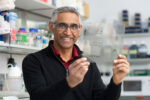
Ramanujan Hegde serves as a Professor and Group Leader at the MRC Laboratory of Molecular Biology (LMB), University of Cambridge, where he directs research on membrane protein biosynthesis and cellular quality control mechanisms. His work examines how membrane proteins are accurately targeted to organelles, inserted into lipid bilayers, folded, and assembled into functional complexes, with emphasis on the cellular pathways that eliminate defective proteins to prevent disease. Professor Hegde's research program focuses on fundamental questions in cell biology: How do cells ensure precise membrane protein localization? What molecular machinery governs protein insertion and folding? How do quality control systems detect and degrade misfolded proteins? His investigations reveal that biosynthetic failures are common, triggering degradation pathways linked to diseases like neurodegeneration. Key research areas include: Intramembrane chaperone mechanisms for multipass membrane proteins Orphan subunit recognition during complex assembly Ribosome-associated mRNA degradation in autoregulation Proteasome assembly quality control ER membrane protein complex functions Molecular basis of protein aggregation diseases His 2017-2023 publications in Cell, Nature, and Science demonstrate consistent innovation in protein quality control, with landmark discoveries including UBE2O's role in orphan subunit degradation, the EMC as a transmembrane domain insertase, and TTC5-mediated tubulin autoregulation. These works bridge basic cell biology with disease mechanisms through rigorous biochemical and structural approaches. Professor Hegde mentors a research team of 11 scientists: Christine Desroches Altamirano Zhong Yan Gan Dino Janssen Ryan Judy Jennifer Miao Elizabeth Miller Tim Stevens Julia Toplak Huping Wang Haoxi Wu Eszter Zavodszky His laboratory operates within the MRC LMB's world-class infrastructure, utilizing advanced techniques in biochemistry, structural biology, and cell imaging. Supported by Medical Research Council funding, the group maintains strong collaborations across Cambridge and internationally to dissect protein biogenesis pathways with implications for therapeutic development in protein-misfolding disorders.
Professor Ali Yapar is a faculty member at Istanbul Technical University in the Electronics and Communication Engineering department. His research focuses on Electromagnetics , Microwave Engineering , and Antenna Technologies , with a particular emphasis on inverse scattering problems and microwave imaging for biomedical applications. He has supervised numerous graduate students and led projects related to breast cancer treatment and rough surface imaging. PhD in Electronics and Communication Engineering from Istanbul Technical University (1997) MSc in Electronics and Communication Engineering (1995) His recent publications analyze advanced techniques for microwave hyperthermia systems, reverse time migration methods, and Newton-based solutions for electromagnetic inverse scattering. Key projects include TUBITAK-funded initiatives on microwave tomography and brain stroke imaging. He serves as a project investigator and executive for electromagnetic research programs. Research areas span Electromagnetic Wave Propagation , Green's Function Applications , and Dielectric Material Analysis . Collaborations include IEEE members and international researchers in computational electromagnetics.
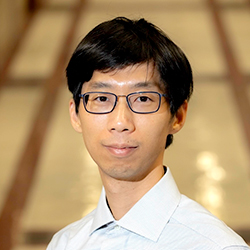
Guo Ping is an Associate Professor of Mechanical Engineering at Northwestern University, leading the Advanced Intelligent Manufacturing Laboratory (AIM). His research focuses on precision manufacturing, intelligent metrology via deep learning, and advanced manufacturing applications. He holds a Ph.D. from Northwestern University and a B.S. in Automotive Engineering from Tsinghua University. Education: Ph.D. in Mechanical Engineering, Northwestern University, Evanston, IL B.S. in Automotive Engineering, Tsinghua University, Beijing, China Research Interests: Dr. Guo’s work emphasizes innovations in precision engineering, including ductile-regime machining, smart metrology systems, and robotics-driven manufacturing. Key areas include structural coloration, additive manufacturing, and human-robot collaboration in industrial settings. His lab explores cutting-edge techniques like ultrasonic vibration machining and machine learning for defect detection and process optimization. Publications Trends: Recent work spans AI-driven quality control (e.g., photometric stereo networks), robotic swarm patterning, and wearable fatigue monitoring systems. His research bridges machine learning, robotics, and traditional manufacturing to address scalability and precision challenges. Awards: F.W. Taylor Medal (CIRP, 2023) ASME Kornel F. Ehman Manufacturing Medal (2021) SME Outstanding Young Manufacturing Engineer Award (2020) Professional Service: Associate Editor of the Journal of Manufacturing Processes (2017–present). Active in organizing conferences and reviewing for top journals. Labs & Teams: Directs the AIM Lab, which integrates robotics, AI, and advanced materials to solve problems in precision fabrication and smart manufacturing. Current projects include structural coloration for anti-counterfeiting and fatigue prediction in industrial workers.
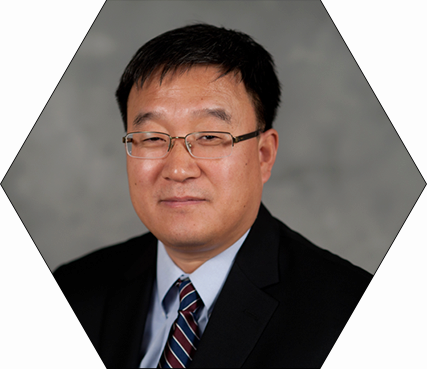
Jianjun (Jan) Shi is the Carolyn J. Stewart Chair and Professor at the H. Milton Stewart School of Industrial and Systems Engineering (ISyE) and holds a joint appointment with the George W. Woodruff School of Mechanical Engineering at Georgia Institute of Technology. He previously served as the G. Lawton and Louise G. Johnson Chair Professor of Engineering at the University of Michigan. His research focuses on system informatics and control for manufacturing and service systems, with notable contributions to quality improvement, cyber-physical systems, and data-driven methodologies. B.S. & M.S. in Electrical Engineering, Beijing Institute of Technology (1984–1987) Ph.D. in Mechanical Engineering, University of Michigan (1992) Dr. Shi’s research interests include process modeling, control systems, and quality engineering. He pioneered methodologies for in-process quality improvement and developed advanced frameworks for high-dimensional data analysis in manufacturing. His work integrates statistical methods, machine learning, and system informatics to enhance operational efficiency and product quality. He has published over 150 peer-reviewed papers and secured $19 million+ in research grants from NSF, DOE, and industry partners. His lab, the System Informatics and Control Group, collaborates with automotive, aerospace, and pharmaceutical sectors. Shi leads initiatives such as the Quality Science Center at the Chinese Academy of Sciences and serves on editorial boards of journals like IIE Transactions and ASME Transactions . Recipient of the IIE Albert G. Holzman Distinguished Educator Award (2011) Fellow of INFORMS, ASME, and IIE Academician of the International Academy for Quality Shi advises 26 Ph.D. graduates, many of whom hold faculty positions or leadership roles in industry. His research group’s innovations have been implemented in global manufacturing systems, yielding significant economic impacts. Current work includes 4D printing, cyber-physical system resilience, and federated learning for industrial data.
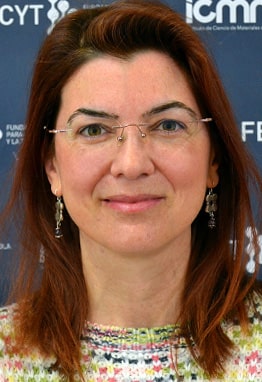
Elsa Prada Nuñez is a Senior Researcher at the Institute of Materials Science of Madrid (ICMM) under the Spanish National Research Council (CSIC) . She leads the Quantum Dynamics of Materials (QUDYMA) group and currently serves as Head of the Theory Department. Her academic career spans multiple institutions, including the Universidad Autónoma de Madrid (UAM), Karlsruhe University, and Lancaster University, with a focus on condensed matter theory and quantum materials. PhD in Physics from UAM (2006) Tenured Scientist at ICMM-CSIC (2020-2025) Senior Researcher at ICMM-CSIC (2025-present) Her research explores quantum phenomena in low-dimensional materials and nanostructures, particularly topological insulators, Majorana zero modes in hybrid nanowires, graphene and 2D crystals, disorder effects, magnetotransport, spintronics, quantum pumping, straintronics, and exciton dynamics. She has directed over 20 students across PhD, Master's, and undergraduate levels, including notable projects on full-shell hybrid nanowires and twisted bilayer graphene. Recent publications highlight advancements in Josephson junctions, Majorana detection, and topological superconductivity in full-shell nanowires. Awards include the Young Female Scientist 2021 from the Royal Academy of Sciences of Spain and Mastercard, and the 2022 Certamen Universitario 'Arquímedes' First Award as a tutor. She has secured significant grants from the Spanish government and European collaborations for projects on quantum materials and topological superconductivity. Principal Investigator for €139,150 Spanish government grant (PID2021-125343NB-I00) Lead on €5,000 ICMM-CSIC grant (2020-2021) Participant in €3.48M EU AndQC project (2019-2023)
Xiaodong Yan is an Assistant Professor in the Department of Materials Science and Engineering and an affiliated faculty member in the Department of Electrical and Computer Engineering at the University of Arizona . His research bridges materials science, nanoelectronics, and quantum computing, with a focus on developing novel quantum materials and devices for next-generation computing systems. Education : BS in Physics (Peking University, China), MS in Electrical Engineering (University of Notre Dame), PhD in Electrical and Computer Engineering (University of Southern California). Postdoctoral Training : Materials Science and Engineering, Northwestern University (2021-2023). Dr. Yan’s research explores the synthesis and physics of emerging quantum materials, particularly 2D materials and van der Waals heterostructures , to create advanced devices for neuromorphic computing , quantum sensing , and low-power electronics . His work spans nanofabrication, device characterization, and algorithm integration. His recent publications in Nature and Nature Electronics highlight breakthroughs in Moiré synaptic transistors with room-temperature neuromorphic functionality and reconfigurable heterojunction transistors for machine learning hardware. These studies emphasize 2D material integration , reconfigurable electronics , and bio-mimicking systems . Scientific Awards : MHI Ph.D. Scholar, Ming Hsieh Department of ECE at USC. Dr. Yan leads the Yan Research Group , which focuses on material and device solutions for neuromorphic computing and quantum sensing . The group actively recruits graduate and undergraduate researchers.
Houtan Jebelli is an Assistant Professor in Civil and Environmental Engineering at the University of Illinois. His research focuses on construction robotics, human-robot collaboration, and wearable sensing technologies for worker health and safety monitoring. He directs research on exoskeleton applications, fall risk detection, and AI-enabled monitoring systems for construction environments. Research interests include: Human-robot collaboration in construction sites Physiological monitoring using wearable sensors Exoskeleton technology and ergonomic assessment AI-enabled safety management systems Robotic inspection and defect detection Jebelli's recent work demonstrates strong interest in bridging robotics with occupational health, particularly studying cognitive and physiological impacts of wearable robotics. His publications frequently address real-time monitoring systems and human factors in construction technology adoption.
Professor Rodrigo Freitas holds the TDK Professorship in Materials Science and Engineering at MIT. His research focuses on computational materials design, bridging atomistic simulations with mesoscale microstructural analysis. He leads the Freitas Research Group, specializing in machine learning-driven modeling of materials kinetics and solidification processes. Education: B.S. and M.S. in Physics, University of Campinas, Brazil M.S. and Ph.D. in Materials Science & Engineering, UC Berkeley Research Interests: Professor Freitas investigates microstructural evolution in metals and alloys using advanced computational methods. Key areas include solidification mechanisms, interstitial atom behavior in superalloys, and machine learning applications for materials discovery. His work emphasizes bridging atomistic and mesoscale phenomena to guide industrial applications like semiconductor manufacturing and battery design. Publications Trend: Recent work emphasizes machine learning potentials for alloy modeling, short-range order analysis in high-entropy alloys, and kinetic modeling of complex chemical systems. Themes include alloy phase stability, defect dynamics, and data-driven materials discovery. Labs/Teams: Leads the Freitas Research Group at MIT, which develops novel computational tools for materials engineering.
Ethan A. Scott is a Research Assistant Professor in the Department of Mechanical and Aerospace Engineering at the University of Virginia. He holds a B.S. (2015) and Ph.D. (2021) in Mechanical and Aerospace Engineering from UVA, followed by a postdoctoral research associate position at Sandia National Laboratories. His research focuses on experimental techniques for analyzing heat and energy transfer in extreme material conditions, including micro- and nanoscale phenomena. He serves as Deputy Director of the EXSiTE Lab led by Professor Patrick Hopkins. Education: B.S., Mechanical Engineering, University of Virginia (2015) Ph.D., Mechanical and Aerospace Engineering, University of Virginia (2021) Postdoctoral Research Associate, Sandia National Laboratories (2021–2023) Research Interests: Ethan explores advanced thermal transport phenomena using electro- and optothermal methods. Key areas include micro/nanoscale heat transfer, microfabrication, and infrared thermal detection. His work addresses challenges in material size extremes (e.g., nanoscale thin films) and environmental extremes (e.g., high-energy ion irradiation effects). Publications: His recent work emphasizes thermal conductivity manipulation through ion irradiation, optothermal sensor development, and novel material characterization. Themes include defect engineering in crystalline systems and optimizing thin-film thermometry for high sensitivity. Awards: Editor’s Pick, Applied Physics Letters (2021) Nuclear Regulatory Commission Fellowship (2017) Labs & Teams: Deputy Director of the EXSiTE Lab, focusing on experimental studies of thermal and mechanical properties of materials under extreme conditions.
Thorsten Schumm - Academic Overview Thorsten Schumm is an Associate Professor at Vienna University of Technology (TU Wien), leading the Quantum Metrology research group within the Atomic Institute. He is a key member of the Erwin Schrödinger Center for Quantum Science & Technology (ESQ) and the Vienna Center for Quantum Science and Technology (VCQ). His research focuses on developing novel quantum measurement techniques, particularly nuclear clocks using thorium-229 isotopes and matter-wave interferometry with collective many-body states. Key Affiliations & Roles Associate Professor, TU Wien (since 201X) ERC Synergy Grant recipient (2019) for the 'Thorium Nuclear Clock' project Principal Investigator for EU-funded MoSaiQC network (2019) and AQUclock project (2022) Research Interests His work bridges quantum metrology with nuclear physics , precision spectroscopy , and many-body quantum systems . He pioneers the development of nuclear clocks—next-generation timekeeping devices using nuclear transitions instead of electronic transitions for unprecedented accuracy. Recent breakthroughs include direct measurement of the thorium-229 isomer energy and advances in laser-driven nuclear excitation techniques. Notable Achievements 2019 ERC Synergy Grant: Enabled global collaboration toward the world's most precise atomic clock 2022 AQUclock project: TU Wien collaboration with Austrian authorities to build state-of-the-art atomic infrastructure 2019: First experimental determination of thorium-229 isomer energy published in Nature Academic Leadership He has mentored 5 PhD students and hosted 5 postdoctoral researchers. His group actively participates in the Vienna Graduate Program on Complex Quantum Systems (COQUS), training the next generation of quantum scientists.
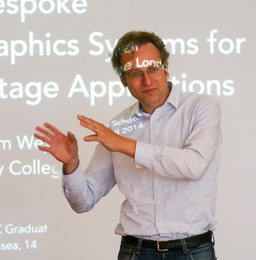
Tim Weyrich is Professor of Visual Computing (part-time) at University College London and Professor of Digital Reality at Friedrich-Alexander University Erlangen-Nürnberg. He leads the Digital Reality Lab and has affiliations with the Virtual Environments and Computer Graphics group at UCL, Eurographics, and the EPSRC Doctoral Training Centre (SEAHA). Previously, he held a Postdoctoral Teaching Fellowship at Princeton University. Research Interests: Content creation and computational photography Appearance modeling and fabrication Point-based graphics and cultural heritage analysis Digital humanities and 3D printing Article Trends: Recent work focuses on neural radiance fields (FruitNeRF++), 3D Gaussian splatting, mmWave radar inverse rendering, and texture anomaly detection. Applications span autonomous systems, cultural heritage, and medical imaging. Scientific Awards: Best Paper Honourable Mention (BMVC 2022) Best Student Paper Award (EG Workshop on GCH 2014) Honorable Mention (Eurographics 2011) Best Student Paper Honourable Mention (BMVC 2018) ACM SIGCHI Best Paper Honourable Mention (CHI 2013)
Dr. Huadong Mo is a Senior Lecturer at the School of Systems and Computing, University of New South Wales (UNSW) Canberra, Australia. He holds a B.E. degree in automation from the University of Science and Technology of China (2012) and a Ph.D. in systems engineering and engineering management from the City University of Hong Kong (2016). Prior to his current position, he was a research associate at ETH Zurich's Reliability and Risk Engineering Lab (2016-2019) and a Lecturer at UNSW Canberra (2019-2021). Dr. Mo's educational background includes a strong foundation in systems engineering with international experience across China, Switzerland, and Australia. His career trajectory demonstrates a progression from academic research to faculty positions with increasing responsibilities in teaching and research leadership. His research focuses on enhancing the resilience, performance, and security of complex systems using learning-based algorithms, primarily in power and energy systems, cyber-physical systems, and manufacturing systems. He applies data analytics to understand system evolution under uncertainties, with particular emphasis on prognostics and health management, sustainable transportation, robust operation of power systems under extreme events, and reinforcement learning-based asset management. His work bridges theoretical advances with practical applications in critical infrastructure. Analysis of Dr. Mo's recent publications reveals a strong focus on energy systems, particularly in the integration of machine learning with power grid management, battery storage systems, and resilience against cyber threats. His research shows a clear trajectory toward increasingly complex system integration, with growing emphasis on multi-vector energy communities, cross-domain prediction, and uncertainty-aware energy management. The interdisciplinary nature of his work spans electrical engineering, computer science, and operations research. 2024 IEEE SMC Early Career Award 2023 Visiting Research Fellowship (Jean d'Alembert Pour Fellowship) Gold Medal in 2024 China International College Student Innovation Competition (as supervisor) Arc PGC Supervisor Award (2021) IEEE SMC Outstanding Chapter Award (2021) Alumni Achievement Award from City University of Hong Kong (2019) Dr. Mo actively supervises numerous HDR students working on cutting-edge research topics including battery health monitoring, quantum control, reinforcement learning for power systems, and explainable AI for energy management. He leads multiple significant research grants totaling over 3 million AUD, including projects funded by ARC, Energy Innovation Fund, and international collaborations with institutions like ETH Zurich, Cambridge, and Tsinghua University. His research group maintains strong international connections, facilitating student exchanges and collaborative research. As Postgraduate Course Coordinator of Systems Engineering and Chair of IEEE SMC ACT Chapter, Dr. Mo plays a significant role in academic leadership and professional community building. His research team collaborates with industry partners on practical implementations of their theoretical work, particularly in the energy sector.
Dr. Anna Baldycheva is a Senior Lecturer in Electronic Engineering at the University of Exeter, within the College of Engineering, Mathematics and Physical Sciences. She leads the interdisciplinary STEMM Laboratory, focusing on applied R&D in smart materials, photonics, AI, and IoT. With prior research experience at MIT, Trinity College Dublin, and Tyndall National Institute, she has established herself as an internationally recognized innovator and entrepreneur in emerging technologies. PhD in Electronic and Electrical Engineering, Trinity College Dublin (2008–2012) BSc (Hons) in Physics, St. Petersburg State University (2003–2008) Postgraduate Certificate in Academic Practice, University of Exeter (2016–2017) Postgraduate Certificate in Technology Management, Smurfit Business School (2009–2010) Her research spans Nano-Engineering, Opto-Electronics, Photonics, AI, and IoT , with a strong emphasis on real-world applications. She pioneers work in fluid opto-electronics , graphene nanocoatings , and AI-driven emotion recognition and early cancer detection . Her lab develops smart composite materials for flexible electronics, e-textiles, and structural applications, integrating machine learning into healthcare, education, and communications systems. The recent publications highlight a strong trend toward applied interdisciplinary innovation , combining materials science with AI and photonics for healthcare diagnostics, energy-efficient computing, and educational technology. Her work frequently bridges fundamental physics with commercialization potential, as seen in spin-out technologies like GSurf and the Electronic-Nose for lung cancer detection. Fellow, Royal Microscopical Society (RMS) Fellow, Higher Education Academy (FHEA) Expert, Future and Emerging Technologies, European Commission Featured in Forbes and Forbes Tech Council Editor-in-Chief, InSTEMM Journal Associate Editor, Nature Scientific Reports and Discover Nano Trustee, Royal Microscopical Society Founder, STEMM Global Scientific Society Founder, It’s Her! Women in STEMM Initiative Dr. Baldycheva actively supervises PhD students and has secured industrial collaborations with organizations such as Qinetiq and Lumentum. She leads multiple outreach initiatives, including STEMM Junior for underprivileged children, and serves on the committee for the Jocelyn Bell Brunel PhD Scholarship. She has raised significant research funding through national and international grants, though specific grant names are not listed. She leads the STEMM Laboratory , a multidisciplinary research group with divisions in Smart Composite Materials, Machine Learning & AI, and Opto-Electronics & Photonics. The lab emphasizes industry collaboration and technology transfer, having produced a university spin-out (GSurf) and multiple media-highlighted innovations.
Nikolaus Rajewsky is a leading Professor at the Max Delbrück Center for Molecular Medicine (MDC) and Charité – Universitätsmedizin Berlin , where he founded and directs the Berlin Institute for Medical Systems Biology (BIMSB) . His lab integrates experimental (biochemistry, molecular biology) and computational (bioinformatics, physics) approaches to study RNA regulation in gene expression , with applications to developmental biology, regeneration, neurodegenerative diseases, and cancer . Using model systems like C. elegans , planaria, and human brain organoids, his team pioneers cutting-edge methods such as MirDeep , DistMap , and FLAM-seq for RNA analysis. His research focuses on single-cell transcriptomics , spatial RNA sequencing , and circular RNA (circRNA) regulation , revealing novel roles for circRNAs like CDR1as in neuropsychiatric disorders. Recent work includes 3D tumor microenvironment mapping and computational modeling of RNA metabolism in diseases. Scientific Awards : Gottfried Wilhelm Leibniz Prize (2012) EMBO Membership (2010) Honorary PhD, Sapienza University of Rome (2014) Berlin Science Award (2009) His team's recent articles highlight breakthroughs in 3D spatial transcriptomics , circRNA degradation mechanisms , and mitochondrial disease modeling using human brain organoids. The lab actively collaborates with clinical partners across Charité and European institutions, driving the LifeTime initiative for cell-based interceptive medicine.