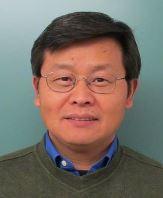
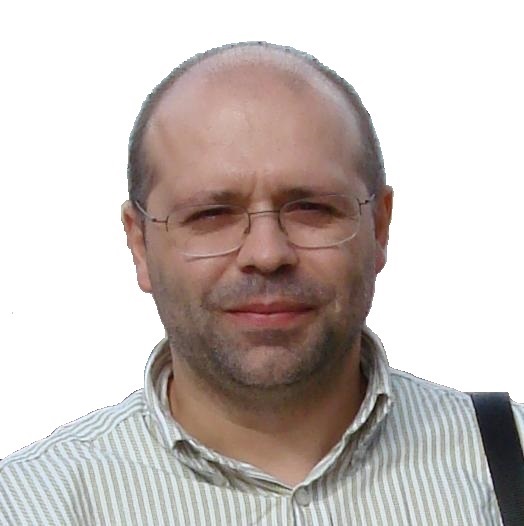
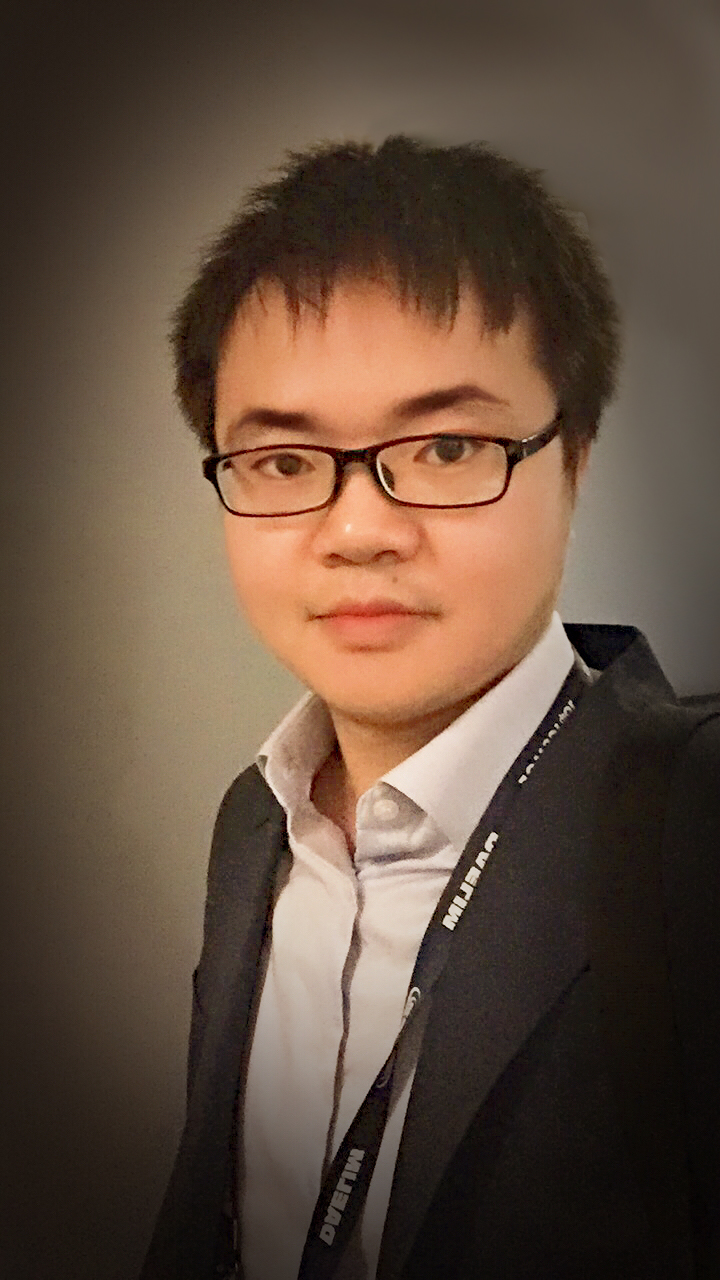
Dr. Anas Abdelrazeq serves as Chief Engineer at the Chair of Intelligence in Quality Sensing , RWTH Aachen University. His work focuses on AI integration in manufacturing, machine vision technologies, and quality management innovation. Current research spans generative AI , reinforcement learning , and data quality optimization Key projects include AI-driven product development and MetaVision industrial metaverse studies Recent publications address: Smart measurement strategies through machine learning Generative AI for non-destructive testing Curiosity-driven AI for job shop scheduling Machine vision applications in SMEs He contributes to the Cluster of Excellence Internet of Production and leads initiatives in 3D metrology and AI in Manufacturing as part of RWTH AI Week. The chair actively engages in developing digital process platforms for future construction sites and industrial applications.
Dr. Roméo Courbis is a University Researcher at the Department of Geosciences and Geography, Institute of Seismology, University of Helsinki. His work focuses on advanced seismic methodologies including ambient noise tomography, distributed acoustic sensing (DAS), and passive seismic monitoring techniques. Previously, he served as a Post-Doctoral Researcher at Université Grenoble-Alpes (2017–2018) and as a geophysicist/research engineer at Sisprobe Inc (2018–2023). Education : Master of Science in Computer Science (Université de Franche-Comté, 2007), Master of Science in Geophysics (Université Grenoble-Alpes, 2017), Doctor of Philosophy in Computer Science (Université de Franche-Comté, 2011) Courbis specializes in Seismology and Geophysics , with technical expertise in Ambient Noise Tomography , DAS Data Processing , Seismic Imaging , and Instrumentation . His recent publications emphasize applications of passive seismic monitoring for subsurface fluid dynamics, structural defect detection, and geological hazard assessment. He manages the FLEX-EPOS mobile Finnish Seismic Instrument Pool , a collaborative infrastructure for seismic data acquisition. Key trends in his research include: Integration of DAS with traditional seismic methods Development of ambient noise-based imaging algorithms Time-lapse monitoring of subsurface processes Applications in geohazard detection and civil engineering Courbis has contributed to 17 total research outputs since 2008 and currently leads a project funded by K.H. Renlunds Stiftelse (2025–2028) titled Toward integration of seismic interferometry .
Xinsheng Sean Ling is Professor of Physics at Brown University's College of Arts and Sciences, where he has been a faculty member since 1996. A Fellow of the American Physical Society since 2005, he maintains active research in multiple areas of experimental condensed matter physics and has held visiting positions at Delft University of Technology, Wuhan University, and Soochow University in China. Dr. Ling's educational background includes a BS from Wuhan University (1984), MS from the Chinese Academy of Sciences (1987), and PhD from the University of Connecticut (1992). He completed postdoctoral research at Yale University (1992-1994) and the NEC Research Institute (1994-1996). His research spans three primary areas: colloidal physics, vortex physics in superconductors, and nanopore DNA sequencing. His work in colloid physics focuses on 2D colloidal systems, studying defects, glass transitions, and phase behavior in both spherical and rod-shaped particles. In vortex physics , he has made significant contributions to understanding the peak effect and Bragg glass phase transitions in type-II superconductors. His nanopore research explores DNA sequencing technologies with a focus on kinetic proofreading mechanisms to improve sequencing accuracy. His recent publications (2019-2022) demonstrate continued activity across these fields, with particular emphasis on 2D colloidal systems and their phase transitions, Kondo physics in superconducting materials, and nanopore fabrication techniques. His work shows a consistent pattern of combining experimental approaches with theoretical frameworks to address fundamental questions in condensed matter physics. Scientific Recognition: Fellow, American Physical Society (2005) Guggenheim Fellow (2002) Alfred P. Sloan Fellow (1998) Research Corporation Innovation Award (1998) China Thousand-Talent Plan Visiting Professor (2015-2017) Fulbright U.S. Scholar to Argentina (2025) Dr. Ling has successfully secured significant research funding, including an active NSF-DMR grant (2022-2025) on thermally activated dynamics in 2D colloidal systems. His collaborative network includes prominent physicists such as Nobel Laureate J. Michael Kosterlitz and Robert Pelcovits, reflecting his standing in the condensed matter physics community. He has also contributed to educational efforts at Brown through teaching undergraduate physics courses including Basic Physics, Foundations of Mechanics, and Introduction to Relativity, Waves and Quantum Physics.
Andrey Danilov is a Senior Researcher in Quantum Device Physics at Chalmers University of Technology in Gothenburg, Sweden. His research focuses on quantum physics, superconducting circuits, and quantum computing components, with particular emphasis on understanding and mitigating decoherence mechanisms in quantum devices. Dr. Danilov's research spans quantum physics, materials science, and electrical engineering. He specializes in investigating two-level systems and their impact on quantum coherence in superconducting circuits, developing advanced microwave measurement techniques, and exploring novel materials for quantum applications. His work bridges fundamental quantum physics with practical engineering solutions for quantum computing and sensing technologies. Notably, he has made significant contributions to understanding surface spins on aluminum oxide as a source of flux noise in quantum circuits and has developed innovative approaches to suppress quantum decoherence through techniques like immersion cooling. His publication record demonstrates a consistent focus on quantum device physics, with recent work examining quantum bath suppression, two-level system defects, and spin echo phenomena in superconducting circuits. His research shows a clear trajectory toward improving coherence times and measurement fidelity in quantum computing hardware, addressing some of the most significant challenges in the field. Dr. Danilov has led and participated in multiple research projects, including the 'High Frequency Topological Insulator devices for Metrology (HiTIMe)' project (2018-2022) funded by the European Commission and the 'Microwave amplifiers with quantum-limited performance' project (2017-2020) funded by the Swedish Research Council. These projects have resulted in numerous high-impact publications in journals such as Nature Communications, Physical Review Letters, and Science Advances. He maintains an active research group focused on quantum device physics, collaborating extensively with researchers across Europe and beyond. His laboratory likely includes advanced cryogenic measurement setups for characterizing quantum devices at millikelvin temperatures, microwave measurement systems, and nanofabrication capabilities for creating novel quantum circuit designs.
Fernando Cerdeira Perez serves as an Assistant Professor at the School of Industrial Engineering, University of Vigo, Spain, based at the Vigo campus within the Department of Mechanical Engineering, Thermal and Fluid Machines and Engines. He is an active member of the ChETE (Chemical, Thermal and Environmental Engineering) research group. His educational background includes: Doctorate from the University of Vigo (2008) with thesis: Development of new non-destructive analysis techniques based on infrared thermography for their application in the detection of lack of adhesion of tiles on building facades , supervised by Dr. Manuel Eusebio Vázquez Alfaya. His research focuses on applying infrared thermography for structural integrity assessment in construction, specifically targeting non-destructive evaluation of building facades. This work bridges thermal engineering principles with practical civil infrastructure applications, emphasizing defect detection through advanced thermal imaging methodologies. As part of the ChETE research group, his activities contribute to broader initiatives in thermal systems optimization and environmental engineering solutions within industrial contexts.
Mário Marques Freire is a Full Professor at the University of Beira Interior, where he serves as President of the Faculty of Engineering and Professor in the Department of Computer Science. He is also a Senior Researcher at Instituto de Telecomunicações, leading the Secure and Intelligent Networked Software Systems Lab. His academic qualifications include a Dr. habil. in Computer Science (2007) and Ph.D. in Electrical Engineering (2000) from the University of Beira Interior, complemented by an M.Sc. in Systems and Automation and B.Sc. in Electrical Engineering from the University of Coimbra. Freire's research spans Computer Systems and Networks, with specific expertise in Cloud Systems, Computer Networking, Security & Privacy, and AI applications. His work focuses on infrastructure virtualization, encrypted traffic classification, DDoS attack detection, and malware analysis. Recent publications demonstrate strong emphasis on cloud security, AI-enhanced defect prediction, and IoT security frameworks. He has received several scientific awards including multiple Conference Best Paper Awards and an ACM Certificate of Appreciation for his long-term contributions. Freire has supervised over 35 graduate students (10 PhD graduates) and led numerous research projects such as 'Towards the assurance of SECURity by dESIGN of the Internet of Things' (FCT/COMPETE/FEDER) and 'Cloud Computing Competence Center'. At the University of Beira Interior, Freire has held significant administrative roles including Vice-Rector (2020-2021), Director of Computer Science Services (2009-2013), and multiple terms as President of the Faculty of Engineering. He leads the Network Applications and Services research group at Instituto de Telecomunicações, focusing on secure networked systems.
Daylon James is an Assistant Professor in Stem Cell Biology at Weill Cornell Medicine , where he serves as Director of the Reproductive Endocrinology Laboratory and Manager of the Tri-Institutional Stem Cell Derivation Laboratory . His research program focuses on regenerative medicine and cell-based therapies for infertility , leveraging expertise in stem cell biology and xenograft models. PhD: The Rockefeller University Postdoctoral Training: Weill Cornell Medical College Research interests include: Stem cell differentiation for vascular and ovarian tissue regeneration Modified RNA delivery systems for fertility preservation Xenograft models in reproductive endocrinology Lipid metabolism in pluripotent stem cells Angiogenic and paracrine mechanisms for graft survival His publications reveal a focus on ovarian reserve disorders , anti-Müllerian hormone (AMH) applications , and endothelial cell engineering , with recent work exploring JAK inhibition for chemotherapy protection and cytoskeletal regulation in oocyte maturation. Labs and teams: Reproductive Endocrinology Laboratory Tri-Institutional Stem Cell Derivation Laboratory
Dr. Yuliya Volodymyrivna Tanasyuk is an Associate Professor at the Department of Computer Systems and Networks, Chernivtsi National University named after Yu. Fedkovych . She holds a Candidate of Physical and Mathematical Sciences degree (2003) and has been an active researcher and educator in computer science and physics domains. Academic Rank: Associate Professor Email: y.tanasyuk@chnu.edu.ua Her research spans multiple disciplines: Cryptography Cellular Automata Internet of Things (IoT) Software Engineering Network Technologies Project Management Notable trends in her publications include: Applications of cellular automata in cryptographic hash functions (2017–2021) Advancements in CdTe semiconductor materials (2003–2007) Interdisciplinary work bridging physics and computer science Scientific recognition includes: Multiple Cisco certifications (CCNA Security, DevNet Associate) 2023 UGEN Uni-Biz Bridge award for teaching flexibility British Council Academic Teaching Excellence (2016) International conference presentations at E-MRS and ISCP As an academic advisor, she has supervised numerous student research projects including: TensorFlow-based pattern recognition Traffic sign tracking systems Blockchain interaction frameworks University event planning software Smart parking detection systems Her work often intersects hardware-software integration and security protocols, with educational contributions through methodological guides in C++ programming and network technologies.
Professor Georgina Cosma is a Professor of AI and Data Science in the Department of Computer Science at Loughborough University, serving as Programme Director for the MSc in Data Science programme while teaching Natural Language Processing and Data Analytics & Visualisation courses. She earned her PhD in Computer Science (Intelligent Information Retrieval) from the University of Warwick in 2008, developing novel approaches for detecting similarities in natural language text and source-code files. Her research spans Artificial Intelligence, Data Science, and Natural Language Processing with specialization in Neural Information Retrieval, Ethical AI, and Continual Lifelong Learning. She develops responsible AI solutions for healthcare predictive modeling and personalized predictions, engineering defect detection systems, and digital library search engines, emphasizing explainable AI and temporal information modeling for multi-modal data including biomedical and sensor inputs. Dr Cosma leads a research team of PhD students and associates on funded healthcare AI projects, actively seeking academic and industry collaborations. She welcomes PhD candidates interested in neural information retrieval and AI applications, providing supervision for thesis development and research direction.
Dr. Andrei Sarua is a Senior Lecturer at the School of Physics, University of Bristol, specializing in advanced materials and device physics. His research integrates nanotechnology, spectroscopy, and semiconductor engineering for applications in sensing and thermal management systems. Research Focus Dr. Sarua's interdisciplinary work spans: Development of bio/chemical sensors using nitride FET structures and electro-optical characterization Nano-optics and plasmonics for spectroscopic applications Micro-Raman spectroscopy for thermal analysis in high-power semiconductor devices (HFETs/LEDs) 3D thermal modeling of transistor packaging and novel material interfaces Defect/strain characterization in III-V nitride semiconductors via Raman/PL spectroscopy His research demonstrates strong emphasis on materials innovation, with recent publications exploring nanoscale stress control, satellite-based chemical detection, and CubeSat imaging systems. Awards and Honors Great Western Research Fellow (Competitively awarded, 2007-2010) Leadership and Funding Principal Investigator for: EPSRC Raman Spectrometer Upgrade project (2020-2022) H2020 NanoMedTwin consortium on biomedical nanotechnology (2018-2021) Coordinates the Materials & Devices research group and serves as EPSRC grant reviewer.
Weibing Gong is an Assistant Professor of Geological Engineering in the Department of Geosciences and Geological and Petroleum Engineering at Missouri University of Science and Technology (Missouri S&T), affiliated with the Center for Intelligent Infrastructure in Rolla, Missouri. His educational background includes: Ph.D. in Geosystems Engineering, University of California, Berkeley (2023) M.S. in Geotechnical Engineering, Tongji University (2018) B.S. in Civil Engineering, Central South University (2015) Dr. Gong's research centers on natural hazard mitigation , with emphasis on climate change impacts , seismic resilience , and AI-driven infrastructure monitoring . His work integrates remote sensing and machine learning to enhance geological engineering solutions, particularly for landslide prediction and pavement systems, while exploring emerging applications in carbon capture technologies. Analysis of his 2023-2025 publications reveals a pronounced shift toward physics-informed AI for geotechnical challenges, featuring recurrent themes in regional landslide modeling (especially in Puerto Rico and Greece), dynamic pavement response under traffic loads, and unsaturated soil mechanics . This interdisciplinary approach bridges computational science, civil engineering, and environmental systems through advanced numerical frameworks. Dr. Gong actively contributes to Missouri S&T's Center for Intelligent Infrastructure, focusing on developing next-generation methodologies for infrastructure resilience against natural hazards through computational innovation and field-based validation.
Dr. Winncy Y Du is a Professor in the Department of Mechanical Engineering at San José State University (SJSU) and directs the Robotics, Sensors, and Machine Intelligence Laboratory . She previously served as an assistant professor at Georgia Southern University and held a visiting professorship at MIT (2014-2015). PhD in Mechanical Engineering, Georgia Institute of Technology (1999) MS in Mechanical Engineering, West Virginia University (1994) MS in Electrical Engineering, Georgia Institute of Technology (1999) BS in Mechanical Engineering, Jilin University (1983) Her research focuses on sensors , robotics , and mechatronics applied to biomedical systems, automation, and control. Key projects include stroke rehabilitation robotics , pipeline leak detection , and spacecraft testbed control . Her publications span sensor technologies, medical robotics, and industrial automation. Notable scientific awards include: Fellow, American Society of Mechanical Engineers (ASME) (2010) ASME Diversity & Outreach Award (2004) Newman Brothers Award for Faculty Excellence (2014) She has led over 23 research grants and 20 industry-sponsored projects, including collaborations with NASA, Boston Scientific, and KWJ Engineering, Inc.
Dr. Michael Barson is a Research Fellow in the School of Physics and Astronomy at Monash University. His research focuses on leveraging solid-state defects, particularly the nitrogen-vacancy (NV) center in diamond, for quantum technologies including nanoscale quantum microscopy, metrology, and quantum information processing. His work lies at the intersection of several advanced fields: High-resolution optical microscopy Spin physics (EPR, NMR, MRI) Nanotechnology Condensed matter physics Atomic and quantum optics He has led multiple research projects funded by the Australian Army and the Office of National Intelligence (ONI), including the development of quantum vector magnetometers and optical magnetometer prototypes, demonstrating strong applied research impact. His recent publications explore the fine structure and temperature dependence of NV centers, nanomechanical sensing with diamond spins, and defect pairs in diamond. These works reflect a consistent focus on fundamental quantum properties with applications in sensing and metrology. While no formal scientific awards are listed, his research has been cited over 149 times in Scopus for key articles, referenced in patents, and picked up by news outlets and blogs, indicating recognition in both scientific and broader communities. Dr. Barson is actively involved in research leadership and supervision, serving as a Primary Chief Investigator on multiple projects. He has not been described as advising formal students, but his role involves guiding research teams and likely mentoring junior researchers. He leads projects involving quantum magnetometry and microscopy, contributing to the advancement of quantum sensing technologies at Monash University and in collaboration with national defense and intelligence agencies.
Dr. Philip Bingham serves as Division Director for the Electrification and Energy Infrastructures Division at Oak Ridge National Laboratory (ORNL), where he leads initiatives to enhance the nation’s electric grid, storage systems, and renewable energy integration. With over two decades of experience at ORNL, he has pioneered computational sensing technologies combining image/signal processing and machine learning for industrial inspection and national security applications. Education: PhD and MS in Electrical and Computer Engineering from Georgia Institute of Technology; BS in Electrical and Computer Engineering from University of Tennessee, Knoxville Key Projects: High-resolution neutron radiography using coded-source imaging, multi-lab air cargo security threat detection, data science for defense nuclear nonproliferation Expertise: Electromagnetic sensing, X-ray/neutron radiography, multi-scale imaging sensors, and analytics His research in CAD-driven deep learning for X-ray CT reconstruction (e.g., Simurgh framework, PickerXL model) and neutron transmission simulations has produced over 15 patents. Recent publications focus on artifact reduction in industrial CT, neutron imaging of shale formations, and explainable AI for security applications. Scientific Awards: Battelle Distinguished Inventor Award National Federal Laboratory Consortium Award for Technology Transfer Exceptional Service Award (2024) from U.S. Government for nuclear nonproliferation analytics
Marcel Wenneker is an active Researcher at Wageningen University & Research, affiliated with the OT Team Fruit-Bomen. His research centers on sustainable fruit production, with expertise in plant pathology, spray technology optimization, and postharvest management. He leads multiple national projects including LWV22227 (fruit rot control) and LWV20320 (sustainable fruit cultivation systems), while co-supervising PhD candidates like M. van Driel studying pear scab biology. Wenneker's research investigates: Disease dynamics of pathogens like Stemphylium vesicarium (brown spot) and Venturia pyrina (pear scab) Epidemiology of bacterial/fungal diseases in pome fruits and stone fruits Spray application technologies for drift reduction using PWM and precision systems Postharvest pathology and storage disorder management Molecular detection methods for pathogens including Neonectria ditissima His recent publications demonstrate strong focus on disease epidemiology (40%), spray technology innovation (30%), and sustainable orchard management (30%), with particular emphasis on integrated approaches combining biological, chemical, and technological solutions. Wenneker actively disseminates findings through workshops and industry collaborations, with notable media coverage on fruit tree canker management and pear disease control. He coordinates field trials evaluating spray systems (e.g., KWH Mistral, Dominiak Streamliner) and leads research on buffer strip harmonization for pesticide emission reduction.