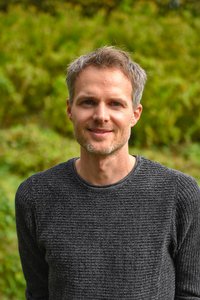
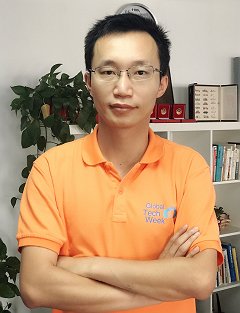
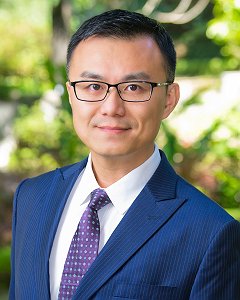
Martin Presselt is a researcher at the Leibniz Institute of Photonic Technology (IPHT) , focusing on Photonics and Quantum Detection . He leads the working group on Organic Thin Films and Interfaces, exploring applications in energy transfer, sensing, and material stability. Research Themes : Interfacial engineering, electrochemical sensors, solar cell longevity, and supramolecular design. Notable Collaborations : Sarah Jasmin Finkelmeyer, Benjamin Dietzek-Ivanšić, Ksenija Glusac, Sylvestre Bonnet. His recent work includes defect-free anisotropic membranes via plasticizers (Journal of Colloid and Interface Science, 2025), optical property tuning through intermolecular interactions (Chemistry-A European Journal, 2025), and calcium-sensitive TTA upconversion systems (Journal of Physical Chemistry Letters, 2024). He investigates graphene nanoribbon electrochemistry (JACS, 2024) and amphiphilic additives for solar cells (ACS Applied Electronic Materials, 2024). He contributes to cross-disciplinary perspectives on weak interactions (PCCP, 2023) and develops bifacial dye membranes for photocatalysis (Advanced Materials, 2023). His studies combine experimental and computational approaches, addressing challenges in material longevity and functional design. Contact : martin.presselt@leibniz-ipht.de
Prof. Dr. Karsten Niehaus serves as Head of the Proteome and Metabolome Research Group at the Center for Biotechnology (CeBiTec) and Faculty of Biology, University of Bielefeld. His research focuses on proteomics and metabolomics applications in plant-microbe interactions, bacterial stress responses, and disease model systems. His laboratory employs advanced mass spectrometry imaging and cell phenotyping technologies to investigate molecular responses in crops like sugar beet and grapevines under abiotic stress conditions, as well as in cancer models where differentiation therapy impacts tumor malignancy. The group also explores microbial biotechnology through Xanthomonas campestris studies on xanthan production and stress adaptation. Selected publications highlight innovations in 3D microfluidics for biomarker detection and bioinformatics platforms like MetHoS for metabolomics data analysis. His work appears in journals covering Frontiers in Plant Science , Scientific Reports , and Journal of Experimental Botany . Contact: kniehaus@cebitec.uni-bielefeld.de | Office: UHG W7-117
Professor Javier Villalba-Diez serves at the Faculty of Business of Heilbronn University of Applied Sciences, Germany, where he integrates artificial intelligence with lean management principles in industrial and business contexts. His international collaborations include a cooperative doctoral program with Technical University of Madrid and Erasmus exchanges with Universidad Politécnica de Madrid. Dr. Villalba-Diez earned dual engineering degrees: Mechanical Engineering from Technische Universität München and Industrial Engineering from Universidad Politécnica de Madrid (2003). His PhD in Engineering, Economics and Organizational Innovation (2016) from Universidad Politécnica de Madrid received the institution's best doctoral thesis award. His research spans Artificial Intelligence (particularly Deep Learning applications), Hoshin Kanri strategic planning, Business Intelligence , and Lean Manufacturing . He pioneers sensor-based methodologies for organizational design, using EEG and industrial IoT to analyze problem-solving patterns and network resilience. His work bridges theoretical models with practical implementations across German, American, Japanese, and Spanish manufacturing facilities. Recent publications demonstrate a clear trajectory toward Industry 4.0 integration , with 60% of his 2019-2020 work focusing on deep learning applications in quality control, sensor networks, and cyber-physical systems. The journal Sensors (MDPI) serves as his primary publication venue, reflecting his emphasis on data-driven industrial analytics. His recognition includes: Prize for best doctoral thesis by Universidad Politécnica de Madrid (2016) As Guest Editor for Sensors and reviewer for journals like Sustainability and Journal of Manufacturing Systems , he shapes discourse in industrial AI. His doctoral supervision with Madrid focuses on AI-driven strategic organizational design, while industry collaborations with manufacturing facilities worldwide translate research into operational frameworks. He maintains active roles in curriculum development for Industry 4.0 education through the PROFH4 digital initiative. Dr. Villalba-Diez operates within international research networks, leveraging his multilingual capabilities (German, English, Spanish) to facilitate transnational projects. His work with Neo4j for Hoshin Kanri visualization exemplifies his approach to making complex organizational networks actionable for industry leaders.
Klaus Püschel is a Professor at the Institute of Forensic Medicine, University Medical Center Hamburg-Eppendorf (UKE). His research focuses on Forensic Pediatrics Skeletal Regeneration in Orthopedics Postmortem Analysis of Trauma Osteoporotic Bone Pathology Medico-Legal Death Classification Research Trends: His publications emphasize forensic case studies, particularly in pediatric deaths from traffic accidents, drowning, and historical exhumations. He investigates cement leakage in spinal procedures and allograft integration in revision surgeries. Key Publications: Recent works include analyses of 3-year-old drowning cases , 60-year exhumation studies , and osteoporotic vertebral augmentation complications .
Emelie Engström is a software engineering researcher at Lund University, specializing in empirical studies at the intersection of academia and industry. Her work focuses on regression testing, machine learning applications in software quality, DevOps practices, and aligning requirements engineering with autonomous systems validation. University: Lund University Research Areas: Software Engineering, Machine Learning, DevOps, Autonomous Systems Her recent research examines ML-driven bug report classification, sustainable DevOps for cyber-physical systems, and optimizing anomaly detection through industrial case studies. She has developed taxonomies like SERP-test to improve communication between academic researchers and software practitioners. Key article trends show strong emphasis on: 2025: ML techniques for bug classification 2024: Ericsson case studies on automated bug assignment 2023: Anomaly detection in DevOps 2021: Autonomous driving system testing As a prolific collaborator, she works with researchers across Sweden including Per Runeson, Markus Borg, and Kai Petersen on projects ranging from cognitive load analysis in large-scale development to regression test scoping in software product lines.
Prof. Konstantin Kotliar is a Professor at Aachen University of Applied Sciences, specializing in Biomedical Engineering and Medical Statistics. He teaches courses in Mathematics, Advanced Medical Statistics, and Space Physiology. His research focuses on retinal vessel analysis to study microvascular dysfunction in diseases such as Fabry disease, diabetes, and Alzheimer’s. Kotliar’s work bridges ophthalmology, neuroscience, and cardiovascular science, with a particular interest in developing non-invasive diagnostic tools for early disease detection. His studies often involve collaborations with global health initiatives and clinical trials, such as the EndoAfrica-NWU Study. He has contributed to understanding neurovascular coupling mechanisms and their implications for neurological disorders. Research interests include retinal vessel dynamics, cardiovascular risk stratification, and the application of statistical methods in medical diagnostics. Kotliar’s methodologies span from biomechanical modeling to machine learning-driven image analysis, emphasizing translational research with clinical relevance. His work has implications for improving therapies and preventive measures in chronic diseases.
Simon A. Joosse is a Research Professor and Principal Investigator leading the Research Group in the Institute of Tumor Biology at the Center for Experimental Medicine, University Medical Center Hamburg-Eppendorf (UKE) under the University of Hamburg's Faculty of Medicine. His work focuses on liquid biopsy technologies, circulating tumor cells (CTCs), and genomic profiling in cancer diagnostics and therapy monitoring. He is actively involved in the European Liquid Biopsy Society (ELBS), advancing precision oncology through biomarker discovery and clinical applications. Dr. Joosse's research emphasizes the development of non-invasive tools for early cancer detection, treatment resistance analysis, and molecular characterization of metastatic progression. His studies span multiple cancer types, including ovarian, breast, prostate, and head-and-neck cancers, with a particular emphasis on epigenetic modifications (e.g., BRCA1 promoter methylation) and genomic instability. Key contributions include identifying CTC-based biomarkers and optimizing nanopore sequencing for clinical use. His publications highlight advancements in CTC capture technologies, ctDNA analysis, and immune profiling in metastatic disease. Collaborations involve interdisciplinary teams in oncology, immunology, and clinical translation. Dr. Joosse's work bridges basic science and clinical practice, aiming to improve patient outcomes through personalized medicine.
Philip Nakashima is an Associate Professor in the Department of Materials Science & Engineering within the Faculty of Engineering at Monash University. He is an active researcher with a PhD in Physics from the University of Western Australia (2002) and has over 25 years of experience in advanced transmission electron microscopy (TEM) and quantitative convergent-beam electron diffraction (QCBED). He is currently accepting PhD students and is involved in cutting-edge research in materials characterization and quantum information technology. His research focuses on the development and application of advanced electron microscopy techniques to study the structure, bonding, and properties of materials such as metals, alloys, ceramics, and nanostructures. Key areas include quantitative CBED, electron crystallography, digital image restoration, noise quantification, and multi-parameter optimization. He has made seminal contributions to understanding chemical bonding in aluminum and has extensive experience in high-performance computing for materials analysis. His most recent publications demonstrate a strong trend toward integrating machine learning with materials design, particularly for magnesium alloys, while maintaining core expertise in electron diffraction and microscopy. He continues to publish in high-impact journals such as Science , Physical Review Letters , and Acta Materialia . Philip Nakashima has received several prestigious awards for his research excellence: John Sanders Medal (2012) : Awarded by the Australian Microscopy and Microanalysis Society for excellence in electron microscopy techniques. Barry Inglis Medal (2011) : Awarded by Australia’s National Measurement Institute for outstanding achievement in measurement research. The Cowley-Moodie Award (2006) : Recognizing research excellence in electron microscopy in the physical sciences. He has been a visiting researcher at the ARC Future Fellowship (2012–2016) and is currently an Associate Investigator in the Quantum Information Technology project (2023–2027). He teaches advanced crystallography to undergraduate and postgraduate students and has been invited to lecture at international schools on electron and quantum crystallography. His research involves collaboration with leading scientists in Australia and internationally, and he leads work on advanced microscopy for materials engineering applications.
Prof. Dr. Tobias Windisch is a Professor at the University of Applied Sciences Kempten, where he serves as head of the Institute for Machine Vision within the Faculty of Mechanical Engineering. He leads the Optical 3D Measurement and Computer Vision Laboratory (3D visionlab) and oversees research activities focused on machine learning applications for industrial automation. Dr. Windisch received his PhD in mathematics from OvGU Magdeburg under the supervision of Thomas Kahle, and holds an Honors Master's degree in mathematics from TU Munich within the elite TopMath program. Prior to his academic career, he worked on machine learning projects for Robert Bosch GmbH and Daimler TSS GmbH (now Mercedes-Benz Tech Innovation). His research spans machine learning, computer vision, and optical sensing with a strong focus on industrial applications. Windisch's work primarily explores how reinforcement learning can be combined with optical sensing to develop intelligent control strategies for manufacturing processes. His team develops mechanical processes built around machine learning models to further automate industrial applications using data from optical sensors. The research has practical applications in automotive production, quality control, and precision manufacturing. Analysis of his recent publications reveals a strong trend toward practical implementations of machine learning in industrial settings, with particular emphasis on reinforcement learning for process optimization, drift detection in high-dimensional data, and causal structure learning for manufacturing analytics. His work bridges theoretical machine learning with real-world industrial challenges. As a dedicated educator and research leader, Windisch maintains high standards for academic integrity and excellence. He believes in creating an environment where students can focus deeply, think boldly, and innovate through meaningful research. Dr. Windisch leads a dynamic research group with numerous Master's and Bachelor's students working on cutting-edge projects including reinforcement learning for active alignment, drift detection in sensory data, latent drift detection with Autoencoders, and representation learning for industrial processes. His laboratory, the 3D visionlab, serves as the physical hub for this research. The Institute for Machine Vision under his leadership develops practical tools and frameworks such as relign, lineflow, and driftbench that are openly available on GitHub, demonstrating his commitment to reproducible research and practical applications.
Thorsten A. Kern is Professor and Director of the Institute of Mechatronics in Mechanical Engineering at Hamburg University of Technology (TUHH). He joined TUHH in January 2019 after serving as R&D manager for interior components at Continental, leading a team of 300 engineers worldwide. From January 2023 to January 2025, he served as Dean of the Faculty of Mechanical Engineering, and is elected to serve as Vice President for Teaching and Learning from October 2025 to October 2028. Since 2022, he has been Vice President of the EuroHaptics Society. Dipl.-Ing. (2002), Darmstadt University of Technology Dr.-Ing. (2006), Darmstadt University of Technology Prof. Kern's research focuses on electromagnetic sensors and actuators, particularly their system integration in high-dynamic applications. His work spans human-machine interfaces, haptic devices, and the intersection of technology with arts. He has a strong interest in medical applications including robotic rehabilitation systems, wearable exoskeletons, and telemanipulation systems. His research also extends to maritime applications, including ship energy systems and ocean monitoring technologies. Prof. Kern's recent publications reveal a strong focus on haptic interfaces, rehabilitation robotics, and maritime energy systems. His work combines theoretical modeling with practical implementation, often involving interdisciplinary teams. There's a clear trajectory toward tele-rehabilitation systems with haptic feedback, maritime power systems optimization, and novel sensor development. His research demonstrates consistent integration of mechanical, electrical, and control engineering principles to solve complex real-world problems. Over 30 patent families with >120 patent applications worldwide Main editor of "Engineering Haptic Devices" (3rd edition) Vice President of EuroHaptics Society (since 2022) Prof. Kern shows a strong passion for entrepreneurship and mentors young people through the Impossible Founders network. He actively supports students in IP-oriented exploitation of research findings, leveraging his extensive patent experience. His research is supported by various projects in haptics, mechatronics, and rehabilitation engineering, with collaborations spanning academia and industry. Prof. Kern leads the Institute of Mechatronics in Mechanical Engineering (M-4) at TUHH, which houses specialized laboratories including the Haptics Lab, PHiLsLab (Power Hardware-in-the-Loop Laboratory), and Optics Lab (Goniometer Laboratory for Measuring Light Fields). His research team includes multiple research assistants and doctoral students working on electrical measuring systems, autonomous multi-sensor drifters, SMART Sensor Particles, and human-machine collaboration projects.
Susanne Gerber is a Professor at iDNA and Adjunct Director at the Institute of Molecular Biology (IMB), Johannes Gutenberg University Mainz (JGU), affiliated with the Faculty of Biology's Bioinformatics department. Her academic journey includes an Assistant Professorship in Bioinformatics at JGU (2015-2020) and postdoctoral research at Università della Svizzera italiana. Her educational background comprises a PhD in Biophysics from Humboldt University of Berlin (2011), an M.Sc. in Bioinformatics from Free University of Berlin and Konrad Zuse Institute (2007), and a B.Sc. in Bioinformatics from Free University of Berlin and Max Planck Institute (2004). Dr. Gerber's research spans Bioinformatics, Computational Genomics, Systems Biology, Molecular Evolution, and Neuroinformatics , focusing on developing computational frameworks for genomic analysis, neurodegenerative disease modeling, and microbiome interactions. Her work integrates machine learning with multi-omics data to address complex biological questions in molecular evolution and neural systems. Analysis of her 15 most recent publications (2024-2025) reveals a strong emphasis on nanopore sequencing applications for RNA modification detection, deep learning frameworks for genomic data enhancement, and neurobehavioral modeling using AI-driven approaches. Key thematic clusters include epitranscriptomics, chromatin dynamics, and computational psychiatry with ethical AI considerations. Her methodological innovations include tools like COMET for network analysis, CCUT for chromatin data enhancement, and ModiDeC for RNA modification classification, demonstrating translational impact across genomics and neuroscience. Dr. Gerber leads research groups at IMB and iDNA focusing on computational genomics, advising students in bioinformatics and securing grants for AI-driven genomic analysis. Her labs develop open-source tools for nanopore data processing and neuroimaging analysis, fostering collaboration between computational and experimental biologists.
Chao Peng is a Principal Research Scientist at ByteDance where he leads the Software Engineering Lab, focusing on AI agents for software engineering. He holds a part-time position as a Postgraduate Student Mentor at Fudan University's School of Computer Science. His research bridges industry and academia, with significant contributions to software testing, program repair, and LLM applications in software development. Education: PhD in Informatics, 2021, University of Edinburgh, UK MSc in High Performance Computing and Data Science, 2017, University of Edinburgh, UK BEng in Computer Science and Technology, 2016, Xuzhou University of Technology, China Dr. Peng's research interests center on the intersection of artificial intelligence and software engineering. He explores how large language models can transform traditional software development practices, particularly in code generation, testing, and bug fixing. His work on LLM4Code has led to innovative frameworks like CodeVisionary for evaluating code generation capabilities and Trae Agent for software engineering tasks with test-time scaling. He investigates the synergy between machine learning techniques and compiler optimizations to enhance software reliability and developer productivity. His recent publications reveal a strong focus on practical evaluation frameworks for LLMs in real-world software engineering contexts. Rather than theoretical benchmarks, his work emphasizes real-world applicability, as seen in RepoMasterEval which evaluates code completion in actual repository settings. He examines multi-faceted challenges including code generation, bug reproduction, issue resolution, and repository-level question answering, consistently addressing the gap between laboratory evaluations and practical development environments. Scientific Awards: Distinguished Reviewer for FSE'25 Invited to program committees for FSE'26, SANER 2026, ASE 2025, and others School of Informatics Scholarship (fully-funded PhD) Multiple national scholarships during undergraduate studies Honours Spot Bonus at ByteDance Dr. Peng actively mentors postgraduate students at Fudan University while leading research initiatives at ByteDance that foster university collaborations. His laboratory work translates academic research into practical tools for software development, with several frameworks deployed in industrial settings. He serves on multiple conference program committees, contributing to the advancement of software engineering research through rigorous peer review and community building. His Software Engineering Lab at ByteDance operates at the forefront of AI-assisted development, exploring how agent-based systems can automate complex software engineering tasks. The team's work on frameworks like AEGIS for bug reproduction and DialogAgent for code question answering demonstrates their commitment to solving practical challenges faced by developers in real-world settings.
Hoa Khanh Dam is Professor and Deputy Head of School (Research) & Head of Postgraduate Studies in the School of Computing and Information Technology at the University of Wollongong, Australia. He serves as Co-Director of the Decision System Lab where he leads research at the intersection of Software Engineering and Artificial Intelligence. His research focuses on developing AI-driven solutions for software quality, cybersecurity, and productivity enhancement. Key interest areas include: AI/IoT autonomous and cyber resilient systems Software Analytics and Mining Software Repositories Large Language Models for software engineering tasks Defect prediction and vulnerability analysis Agile project management optimization Analysis of Dam's 12 publications from 2018-2025 reveals consistent application of machine learning to software engineering challenges. His work shows progressive evolution from traditional ML techniques toward LLM-based frameworks, with major contributions in defect prediction (DeepJIT), vulnerability analysis, microservice recommendation, and agile effort estimation. The research demonstrates strong industry relevance through practical implementations in code review, component prediction, and security systems. Dam co-leads the Decision System Lab at UOW, which develops intelligent decision support systems using AI and data analytics. The lab's work bridges theoretical AI advancements with real-world software engineering applications, particularly in cybersecurity and autonomous systems development.
Zhenyu Chen is a Full Professor and Director of the iSE Laboratory at Nanjing University, specializing in AI-driven software testing methodologies. His research bridges artificial intelligence and software engineering with dual focus areas: leveraging AI to enhance testing processes ( AI for Testing ) and validating AI/ML systems ( Testing for AI ). His research interests center on deep learning framework testing , crowdsourced testing optimization , and Large Language Model applications in verification . Recent work demonstrates innovative approaches to metamorphic testing of neural networks, LLM-based test report analysis, and security hardening of code models against backdoors. Key contributions include the development of mooctest.com and frameworks like DevMuT for mutation testing of deep learning APIs. His publication trajectory reveals evolving focus from crowdsourced testing (2018-2020) to deep learning system validation (2021-2023) and current emphasis on LLM-powered testing solutions. Major venues include ASE, ICSE, and ISSTA where he serves regularly on program committees.
Jacky Wai Keung is an Associate Professor in the Department of Computer Science at City University of Hong Kong with extensive industry connections across the Asia Pacific region. He leads the Artificial Intelligence and Software Engineering Research Group (AiSE) and serves as Chairman of IEEE Computer Society Hong Kong Chapter and Vice-President of Hong Kong STEM Education Alliance. Prof. Keung received his B.Sc.(Hons) in Computer Science from the University of Sydney and Ph.D. in Software Engineering from the University of New South Wales, Australia, before working as a Research Scientist at NICTA (now DATA61, CSIRO) in Sydney. His research spans software engineering, data science, AI, FinTech, machine learning, blockchain systems, and large language models for code generation and analysis. His recent work focuses on applying large language models to software engineering challenges, with publications examining code translation, anomaly detection, and autonomous driving system testing. The research shows a strong trend toward practical applications of AI in software development processes, particularly in FinTech and autonomous systems domains. Among his numerous accolades, Prof. Keung has been named in Stanford's top 2% most highly cited scientists for both 2022 and 2023, received the President's Teaching Excellence Award in 2020, and earned multiple IEEE best paper awards. His editorial service includes roles as Area Editor for Journal of Systems and Software since 2017 and Associate Editor for Information and Software Technology since 2020. Prof. Keung has successfully secured over HK$20 million in research funding through GRF, ITF, and TDG grants, including major projects like 'Smart Intelligent Process Automation for the Mortgage Lending Industry' (HK$2.62 million) and 'Software Data Analytics and Blockchain Technological Advancements' (HK$6 million). His industry collaborations have significantly enhanced student opportunities, with CS student starting salaries increasing by over 15% year-on-year for the past three years. He currently leads multiple research initiatives including RealisticCodeBench for evaluating LLMs in code generation and FedLAD for federated log anomaly detection, with several active projects focused on AI-enhanced InsurTech systems and deep probabilistic reasoning using deep learning.