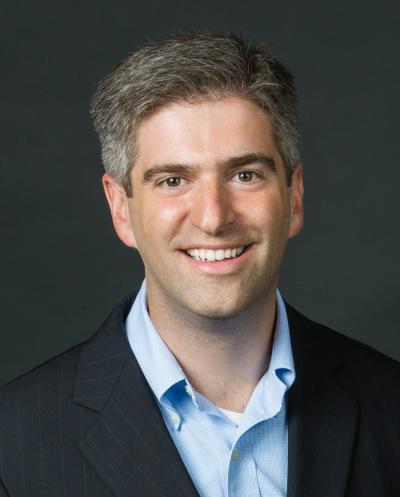
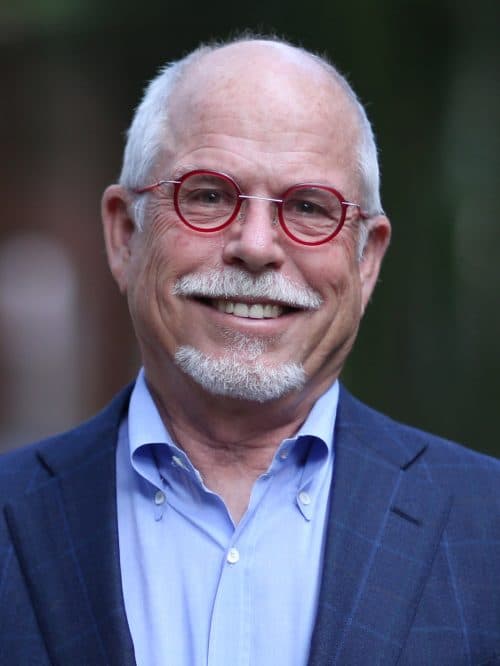
Benjamin J. Keys is a Research Associate at the University of Pennsylvania's Wharton School within the Public Economics program. His work focuses on public economics, environmental economics, and financial risk management with particular emphasis on housing markets and climate change impacts. University of Pennsylvania - The Wharton School Public Economics Department His research explores: Climate risk capitalization in housing markets Mortgage insurance moral hazard Consumer credit card payment behaviors Emergency credit systems Regional economic redistribution through mortgages Email: benkeys@wharton.upenn.edu Scientific awards include: Fellowships on Consumer Financial Management
Christoph Frei is a Professor and Chair of the Department of Mathematical and Statistical Sciences at the University of Alberta. He holds a PhD in mathematical finance from ETH Zurich and previously worked as a researcher at École Polytechnique in Paris. His research focuses on quantitative finance, risk management, and mathematical economics, with applications to algorithmic trading, credit risk, and digital currencies. Education: PhD in Mathematical Finance, ETH Zurich Postdoctoral Researcher, École Polytechnique (Paris) Bachelor/Master in Mathematics, ETH Zurich His work bridges academia and industry through collaborations with institutions like ATB Financial, Canadian Western Bank, and the Federal Reserve System. Key research interests include over-the-counter markets, financial regulation, and machine learning applications in risk prediction. Frei has received notable recognition, including the Best Paper in Asset Pricing Award (2019). Current industry partnerships include AI-driven customer risk prediction projects with ATB Financial and credit risk analysis with Canadian Western Bank. He actively contributes to professional organizations like PRMIA Edmonton and advises on financial technology innovation. Research grants come from NSERC, SSHRC, and Mitacs. His consulting roles have spanned risk modeling at UBS and Credit Suisse, emphasizing practical applications of theoretical frameworks.
Frédéric Vrins is a Professor at the Louvain School of Management (LSM) , UCLouvain , affiliated with the Louvain Institute of Data Analysis and Modeling in economics and statistics (LIDAM) and Louvain Finance (LFIN). His work bridges theoretical and applied finance, with a focus on risk modeling, portfolio optimization, and machine learning applications. His research interests include: Quantitative Finance: Derivatives pricing, stochastic processes, and model calibration. Risk Management: Credit concentration risk, recovery rates, and wrong-way risk in financial markets. Portfolio Optimization: Mean-variance strategies, diversification metrics, and robustness under parameter uncertainty. Machine Learning in Finance: Applications to recovery rate prediction and option pricing frameworks. Recent publications highlight trends in: Credit risk modeling for Collateralized Loan Obligations (CLOs) and consumer credit. Machine learning integration in derivatives pricing and portfolio construction. Stochastic methods for Brownian bridges, CDS spreads, and recovery rates. Empirical studies on Loan-to-Value policies and business cycle impacts. Affiliations and locations: Louvain School of Management (LSM) - Building B, Chaussée de Binche 151, 7000 Mons Louvain Finance (LFIN) - Traverse d'Esope 1, 1348 Louvain-la-Neuve Louvain School of Management (LSM) - BATA Building, Chaussée de Binche 151, 7000 Mons
David Saunders is an Associate Professor in the Department of Statistics and Actuarial Science at the University of Waterloo, affiliated with the David R. Cheriton School of Computer Science. His research focuses on quantitative risk management, mathematical finance, and stochastic optimization with applications to credit risk, portfolio optimization, and derivatives pricing. Professor Saunders has held academic positions at the University of Pittsburgh and Cyprus International Institute of Management, and has consulted for institutions like RiskMetrics, TD Bank, and Central Bank of Cyprus. Education: PhD studies at the University of Toronto with industry collaboration at Algorithmics Inc., followed by roles at Cyprus International Institute of Management and University of Cyprus's HERMES Center. His work bridges theoretical stochastic analysis and practical financial risk management challenges. Research interests prominently feature credit risk management, optimal stopping problems, and analytical techniques in finance. Recent work addresses inverse default boundary problems, wrong-way risk in derivatives, and efficient algorithms for portfolio optimization under complex return distributions. Collaborations with financial institutions drive applied research in capital allocation, operational risk modeling, and regulatory compliance. Advising and grants include directing the Professional Science Master's in Mathematical Finance at Pitt, supervising student-industry projects on credit risk and CDO pricing, and securing funding for computational finance initiatives. Active in RiskLab Cyprus and HERMES European Center, his research extends to equity risk management and market risk frameworks.
Stefano Caselli is a Full Professor of Banking and Finance at Bocconi University and holds the Algebris Chair in Long-Term Investment and Absolute Return. He serves as the Dean of the SDA Bocconi School of Management and previously served as Vice Rector for International Affairs at Bocconi University (2012–2022). He has been a member of the SDA Bocconi School of Management board since 2006. His academic career includes teaching roles in the MSc in Finance, MSc in International Management, and CEMS programs, focusing on courses such as Investment Banking, International Finance, and Private Equity & Venture Capital. His research explores the interplay between financial systems and industrial sectors, emphasizing banking regulation, corporate finance, private equity, and venture capital. Education: MSc in Business Administration from the University of Genoa and a Ph.D. in Financial Markets and Institutions from the University of Siena. Research Interests: Caselli’s work spans financial stability, banking structure, corporate finance, and the role of venture capital in innovation. He has published extensively in journals like Journal of Financial Intermediation and Journal of Financial Stability , and authored textbooks such as Corporate and Investment Banking: A Hands-On Approach and Private Equity and Venture Capital in Europe . Labs and Initiatives: Co-founded the “Equita Research Lab in Capital Markets” (2013) and the “Algorand Fintech Lab” (2021) at Bocconi’s Baffi-Carefin Research Center. These labs focus on financial market dynamics and fintech innovations.
Jeffrey NG is The Hong Kong Jockey Club Professor in Accounting and Associate Director of the HKU Jockey Club Enterprise Sustainability Global Research Institute at The University of Hong Kong's Department of Accounting and Law. He holds a PhD from The Wharton School (University of Pennsylvania) and undergraduate degrees from Nanyang Technological University and University of Central England, all earned with First Class Honors. His research focuses on interdisciplinary accounting topics including: Accounting standards/regulations Corporate disclosure and governance Banking and financial institutions Financial reporting in capital markets Credit information systems Taxation impacts on corporate behavior He has published extensively in premier journals exploring how regulatory frameworks and market mechanisms influence financial decision-making. Professor NG's recent publications (2022-2024) demonstrate strong focus on: Disclosure effectiveness in sustainability and supply chains Credit market innovations and regulatory impacts Information asymmetry in capital markets Corporate tax strategies and reporting His work consistently examines real-world applications of accounting principles in global financial systems. Awards recognizing his contributions include: Research Excellence awards from Hong Kong Polytechnic University (2017-2020) Teaching Excellence honors from Singapore Management University (2014-2016) Best Paper Award at Review of Accounting Studies Conference (2013) Multiple doctoral and undergraduate fellowships He serves as Associate Editor for European Accounting Review and Editorial Board member of The Accounting Review, while contributing to Hong Kong's Research Grants Council.
Giulio Trigilia is an Assistant Professor of Finance at the Simon School of Business, University of Rochester. He holds a PhD in Economics from the University of Warwick, alongside earlier degrees from the University of Bologna and Collegio Carlo Alberto. His research focuses on financial economics, information economics, contracts and securities design, and the history of finance with a 19th-century emphasis. Trigilia is a member of the Finance Theory Group (FTG) and teaches courses on corporate restructuring, investments, and agency theory. Education: BSc & MA in Political Science (University of Bologna), MSc Economics (Collegio Carlo Alberto), PhD Economics (University of Warwick) Research Interests: Financial Contract Design, Moral Hazard, Political Uncertainty, Debt Maturity Effects, and Historical Financial Markets Labs/Teams: Finance Theory Group (FTG) His recent work explores topics like voluntary corporate disclosure impacts, Brexit’s influence on exchange rates, and the dynamics of short-term debt overhang. He frequently examines how information asymmetries shape financial instruments and corporate policies. Trigilia’s research bridges theoretical models with historical market analysis, such as his study of 19th-century London Stock Exchange momentum effects. Notable contributions include resolving theoretical debates on pledgeability’s role in firm value and demonstrating how lender competition affects creditor rights’ real-world impact. His articles often propose novel mechanisms to address financing constraints and moral hazard challenges in corporate settings.
Nick Petersen is an Associate Professor of Sociology & Criminology at the University of Miami's College of Arts and Sciences, with a secondary appointment at the Miller School of Medicine. His research centers on racial-ethnic disparities in criminal justice systems, spanning pretrial detention, prosecutorial charging, and sentencing outcomes. Focus on capital and non-capital cases across individual and neighborhood levels Examines collateral consequences of criminal justice contact Investigates progressive prosecutor impacts on incarceration and crime trends Recent studies analyze spatial-racial disparities in California death sentencing , bi-partisan support for bail reforms , and trauma's effects on neural networks . Collaborative work with scholars like Stacie St. Louis and Ojmarrh Mitchell employs advanced statistical methods such as propensity-score regression and difference-in-differences models. His research reveals systemic patterns of racial bias in drug charging trajectories and geographic variations in death penalty applications . Secondary work in neuroscience explores functional mediation of traumatic responses despite preserved structural integrity in the default mode network.
Christopher M. James is the William H. Dial/SunTrust Eminent Scholar in Finance and Economics at the University of Florida's Warrington College of Business. He also serves as a senior advisor to Cornerstone Research. Previously, he taught at the University of Michigan and the University of Oregon. His academic roles include editorships at top journals like Journal of Finance and Journal of Financial Economics . Education: Ph.D. in Economics (Industrial Organization & Finance), University of Michigan, 1978 MBA in Finance, University of Michigan, 1977 BA, Michigan State University, 1973 Research Focus: Professor James specializes in financial intermediaries' role in corporate capital acquisition and mortgage-backed securities valuation. His work explores banking, corporate finance, and applied econometrics, with notable contributions to loan pricing, debt restructuring, and disclosure requirements. Recent themes include interest rate risk exposure and institutional synergies in loan funds. Professional Service: Associate Editor, Journal of Financial Markets (2017–present) Editor, Journal of Financial Services Research (2014–present) Editor, Journal of Managerial and Decision Economics (2014–present) Advising & Grants: Advised PhD students Jing Lu and Mustafa Emin (2021–2022). His research has been supported by grants related to banking crises, mortgage markets, and corporate finance dynamics. Labs/Teams: Active in interdisciplinary teams at the Warrington College of Business focusing on financial stability, corporate governance, and quantitative finance methodologies.
Michael Roberts is the William H. Lawrence Professor and Professor of Finance at the Wharton School of the University of Pennsylvania. He serves as a Research Associate at the National Bureau of Economic Research and is affiliated with the Institute for Law and Economics and the Wharton Financial Institutions Center. His academic career spans teaching roles at UC Berkeley, Duke University, and Wharton, with a focus on corporate finance, banking, investments, and financial education. Education: B.A. in Economics, University of California, San Diego M.S. in Statistics, University of California, Berkeley Ph.D. in Economics, University of California, Berkeley Roberts's research bridges corporate finance, banking, and investments, with recent emphasis on AI and machine learning in financial decision-making. His work on financial contracts, capital structure, and payout policies has significantly advanced empirical finance. He has authored influential studies on debt covenants, credit supply effects, and financial literacy. His publications demonstrate expertise in empirical corporate finance , debt structuring , financial econometrics , and financial education . Key topics include collateralized loan obligations , interest rate impacts on contracts , and capital structure persistence . These works reflect his commitment to integrating rigorous methodology with practical financial challenges. Scientific Recognition: Jensen Prize (2016) Marshall E. Blume Prize (2015) Brattle Prize nominations (2008, 2005) Multiple teaching awards at Wharton and Duke Geewax, Terker, and Co. Prize (2010, 2006) As an educator, Roberts has taught undergraduates, MBAs, PhDs, and executives for over 25 years. He founded the Wharton Financial Analytics initiative and the Financial Proficiency Initiative (FPI), which provides financial education to high school students. His courses include Corporate Finance , Data Science for Finance , and Empirical Methods in Corporate Finance .
Peter Ritchken is a Professor of Banking & Finance at the Weatherhead School of Management, Case Western Reserve University, where he holds the Mario J. Gabelli Distinguished Professorship in Finance. He joined the faculty in 1981 after completing his PhD at Case Western Reserve University and has established himself as a leading scholar in finance, particularly in derivatives, risk management, and fixed income markets. His research interests span several key areas in finance: Fixed Income and Term Structure Models Risk Management in Financial Markets Contingent Claims Valuation Real Options Risk Management in Supply Chains Credit Risk Management Capital Structure Ritchken's scholarly work focuses on understanding price determination in capital markets, risk management strategies for firms across various dimensions (market risk, interest rate risk, credit risk, and operational risk), and the rationale for derivative usage. His research employs sophisticated mathematical finance techniques to address practical financial problems, with applications in banking regulation and supply chain management. He has developed influential models for pricing interest rate claims, implementing stochastic volatility option models, and solving real option problems. His publications appear in top finance journals including the Review of Financial Studies, Management Science, Journal of Finance, and Mathematical Finance. His recent work has increasingly focused on the intersection of operations management and finance, particularly examining how supply chain dynamics interact with financial decision-making. Ritchken has received significant recognition for his contributions: 2014 University Research Award, Weatherhead School of Management Weatherhead Excellence in Teaching Award, 2011 As an educator, Ritchken has made substantial contributions to finance education. He is the founder and director of the Weatherhead School of Management Master of Science in Management-Finance (MSM-Finance) program. He teaches across multiple programs including the MBA, executive MBA, MSM-Finance, and PhD of Finance and Operations Research. His courses cover Risk Management, Derivatives, Fixed Income, Mortgage and Credit Markets, Mathematical Finance, Investment Management, Real Options, and Quantitative Finance. He has also conducted executive education programs worldwide, including in the United States, Europe, Asia, and Australia. Ritchken serves as a research scholar for the Research Department at the Federal Reserve Bank in Cleveland and acts as Faculty Advisor for GARP (Global Association of Risk Professionals). He has consulted with large investment banks and brokerage firms, bridging academic research with practical industry applications.
Robert Hills is an Assistant Professor of Accounting at the Smeal College of Business, Pennsylvania State University. His research focuses on corporate taxation, financial reporting quality, and debt contracting. He holds a PhD in Business Administration from Duke University (2019) and dual degrees in Accountancy and Business Administration from Brigham Young University (2014). Education: PhD in Business Administration (Accounting), Duke University, 2019 MS in Accountancy (PhD Prep Emphasis), Brigham Young University, 2014 BS in Accounting (Economics Minor), Brigham Young University, 2014 Research Interests: Dr. Hills examines how tax policies, financial reporting practices, and debt agreements influence corporate behavior. His work bridges accounting standards, regulatory oversight, and real-world business decisions. Key themes include tax avoidance strategies, debt covenant design, and the implications of financial disclosures. Publications Trends: His recent work analyzes IRS monitoring effects on corporate misconduct, the impact of FASB codification on GAAP complexity, and the role of EBITDA in debt agreements. These studies highlight intersections between accounting standards and practical business challenges. Teaching: Teaches Intermediate Financial Accounting and Principles of Taxation courses. Labs/Teams: Collaborates with scholars like Scott Dyreng and Matthew Kubic on projects involving tax avoidance, financial covenant analysis, and multinational corporate strategies.
François Koulischer is an Assistant Professor in Sustainable Finance at the University of Luxembourg's Department of Finance (Faculty of Law, Economics and Finance). He is also an affiliated researcher with the MFI and MECSD Chair in Sustainable Finance. His research focuses on sustainable finance mechanisms, monetary policy impacts, and housing market dynamics. Key areas include ESG disclosure regulation, tax policies affecting housing affordability, and the distributional effects of low interest rates on household debt. His work bridges theoretical financial economics with policy-relevant analysis, particularly in central bank liquidity operations and crisis responses. Notable contributions include studies on quantitative easing mechanisms in the Eurozone and the visible hand of policy during the 2020 pandemic. He has been recognized with the American Real Estate Society's Manuscript Prize for his work on tax subsidies and housing markets. Publications span high-impact journals such as the Journal of Financial Economics and Journal of Financial Stability , with a focus on banking systems, collateral frameworks, and crisis management. His research often integrates empirical evidence from Luxembourg and broader European contexts, emphasizing policy implications for financial stability and equitable growth.
Christophe Hurlin is a Professor at the University of Orleans specializing in finance, risk management, and econometrics. His research spans systemic risk measurement, credit scoring models, machine learning applications in finance, and computational reproducibility in financial research. With over 30 scholarly publications, he has established himself as a significant contributor to financial econometrics and risk management literature. His primary research interests focus on systemic risk measurement methodologies, credit scoring models incorporating machine learning techniques, and the reproducibility of financial research findings. Hurlin's work often bridges theoretical econometric frameworks with practical financial applications, particularly in banking regulation and risk modeling. He has developed innovative tools such as the Risk Map for validating risk models and has contributed significantly to understanding systemic risk through comprehensive surveys and comparative analyses of risk measures. Hurlin's publication record shows a clear evolution from traditional risk measurement techniques toward integrating machine learning approaches in finance, with recent work focusing on the fairness of credit scoring models, Bayesian approaches to default probability calibration, and the intersection of machine learning with regulatory capital requirements. His research demonstrates consistent engagement with both theoretical underpinnings and practical applications in financial risk management. Hurlin has collaborated extensively with researchers across Europe, particularly with colleagues from HEC Paris (notably Christophe Pérignon), creating a substantial body of work on systemic risk, credit scoring, and computational reproducibility. His most cited works include 'Where the Risks Lie: A Survey on Systemic Risk' and 'Nonstandard Errors,' reflecting his influence in both risk management and methodological research. His research has practical implications for banking regulation, financial stability monitoring, and the implementation of machine learning in credit assessment systems. Through his work on computational reproducibility, Hurlin has also contributed to improving research standards in financial economics, advocating for greater transparency and verification in published findings.
Dr. Robert Schwebach serves as an Associate Professor of Finance within the Department of Finance and Real Estate at Colorado State University's College of Business, where he has held a faculty position since 1996. His academic career includes prior appointments at the University of Wyoming and industry experience as an actuarial consultant with Towers Perrin and Hewitt Associates. His educational background includes: Ph.D. in Finance, University of Nebraska–Lincoln (1992) M.A., University of South Dakota B.S., University of South Dakota Dr. Schwebach's research centers on corporate social responsibility , portfolio risk dynamics influenced by investment time horizons, supply chain effects of private equity acquisitions , and strategic flexibility in revolving credit facilities . His scholarly work, published in journals like the Journal of Risk and Insurance and Strategic Management Journal , bridges theoretical finance with practical market applications through rigorous event study methodologies. Analysis of his publication record reveals sustained focus on syndicated loan markets during financial crises, corporate social responsibility disclosures, and international investment strategies. His research consistently examines market reactions to financial announcements across banking, corporate finance, and fixed income domains with particular attention to crisis-period dynamics. No scientific awards or fellowships were documented in the available materials. In teaching, Dr. Schwebach instructs corporate finance and investments across undergraduate, MBA, Executive MBA, and Financial Risk Management master's programs. He has developed online courses through Continuing Education and taught internationally at Foreign Trade University in Hanoi. While his teaching portfolio is extensive, the documentation does not specify formal student advising relationships or research grant funding.