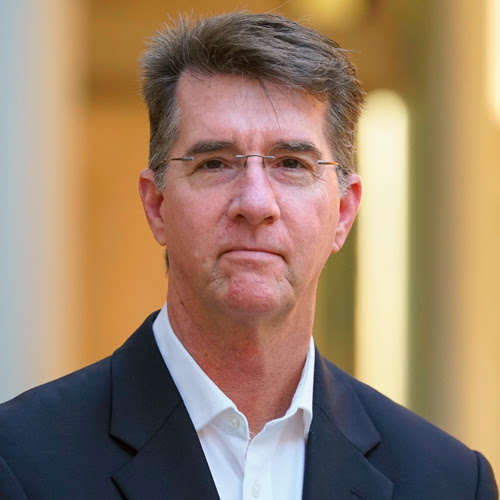
Professor John W. O'Neill is a Professor of Hospitality Management at Pennsylvania State University's School of Hospitality Management. He serves as Director of the Hospitality Real Estate Strategy Group, focusing on real estate, asset management, and strategic management in the hotel industry. His research bridges financial analysis with operational strategies in hospitality. Education : B.S. in Hotel Administration from Cornell University M.S. in Real Estate from New York University Ph.D. in Business Administration from University of Rhode Island O'Neill's research explores hotel financial performance, debt servicing, brand affiliation, work-family dynamics, and market disruption from platforms like Airbnb. His work combines empirical analysis with strategic frameworks to address industry challenges. Leadership and Research Groups : Director, Hospitality Real Estate Strategy Group Active researcher in hotel valuation and operational risk
Danilo Bzdok is an Associate Professor in the Department of Biomedical Engineering at McGill University’s Faculty of Medicine and a Canada CIFAR AI Chair at Mila – Quebec Artificial Intelligence Institute. He holds dual expertise in systems neuroscience and machine learning, with two doctoral degrees: one in neuroscience from Forschungszentrum Jülich (Germany) and another in computer science (machine learning statistics) from INRIA–Saclay and Neurospin (France). His research bridges computational neuroscience and AI, focusing on understanding human intelligence through neuroimaging and biomedical data. Education: PhDs in Neuroscience (Jülich) and Computer Science (INRIA/Neurospin). Postdoctoral training at Harvard Medical School. Current affiliations include McGill University and Mila. Research interests span computational biology, deep learning, LLMs, and their applications in neuroimaging, precision medicine, and neurodegenerative diseases. Over 150+ peer-reviewed publications, with recent work on LLMs in autism diagnostics, brain network modeling, and social neuroscience. Key Awards: Canada CIFAR AI Chair. Lab focuses on interdisciplinary projects like AI4Science, neuroimaging analysis, and AI ethics. Supervises a dynamic team of PhD/Master’s students and postdocs. Collaborations include clinical institutions and industry partners through Mila’s Applied Research programs.
Craig R. M. McKenzie serves as Professor of Management and Psychology at UC San Diego's Rady School of Management, holding the Jerome Katzin Chair in Corporate Governance. His interdisciplinary work bridges business school research with psychological science, focusing on how environmental structures shape human judgment and decision processes. McKenzie earned his Ph.D. in Psychology from the University of Chicago (1994). His foundational research challenges conventional interpretations of cognitive biases by demonstrating how seemingly irrational choices often reflect reasonable Bayesian inferences given real-world constraints. Key contributions include reinterpreting the representativeness heuristic through environmental statistics and reframing framing effects as rational responses to contextual cues. His publication trajectory reveals evolving emphases from basic judgment mechanisms (2006-2015) toward moral decision architecture (2016-2023), with consistent exploration of probability sensitivity, default effects, and framing phenomena. Recent work increasingly examines moral dilemmas through computational modeling while maintaining experimental rigor in behavioral testing. Scientific recognition includes: National Science Foundation research awards Operations Research Society of America honors Society for Judgment and Decision Making distinctions McKenzie's grant activity centers on NSF-funded investigations of decision architecture, with collaborative projects spanning moral psychology, risk communication, and choice engineering. His theoretical frameworks directly inform behavioral interventions in healthcare, finance, and public policy domains through the Rady School's applied research initiatives. As a core faculty member in UC San Diego's Decision Science hub, he contributes to cross-departmental research networks examining cognitive foundations of economic behavior within the university's neuroscience and social science ecosystems.
Maria Correia is a faculty member in the Department of Accounting at the London School of Economics and Political Science, where she teaches AC416 Topics in Financial Reporting and maintains office hours by appointment. Her research focuses on credit markets, default prediction, business groups, and corporate governance, with publications in leading accounting and finance journals. Her research examines: Credit risk assessment methodologies and bankruptcy prediction models Corporate governance structures within business groups Impact of accounting standards on corporate investment decisions Regulatory effects on disclosure credibility in emerging financial platforms Dr. Correia's recent publications demonstrate a consistent focus on financial distress prediction, corporate governance mechanisms, and regulatory impacts in accounting. Her work combines empirical finance with accounting theory to address practical challenges in credit markets and corporate reporting. She has received numerous honors including: 2022 Excellence in Refereeing Award (Journal of Accounting Research) 2020 Best Referee Award (Review of Accounting Studies) LSE Excellence in Education Awards (2018, 2019) Best Paper Award at Review of Accounting Studies Conference (2011) Multiple doctoral fellowships at Stanford Graduate School of Business Her research has been supported by grants from London Business School (RAMD Awards 2009-2013, 2013-2015) and the Portuguese Foundation for Science and Technology (2013). She serves on editorial boards of Accounting Review, Journal of Business Finance & Accounting, and Review of Accounting Studies, while acting as Associate Editor for Accounting and Business Research and European Accounting Review.
Marielle De Jong is an Associate Professor at Grenoble Ecole de Management, serving as the Academic Director of the USA DBA program. Her expertise spans portfolio management, fixed income, and sustainable investing, with a focus on bond portfolio construction and liquidity scoring. MSc in Econometrics from Erasmus University of Rotterdam MSc in Operational Research from Cambridge University PhD in Finance from the University of Aix-Marseille Defended HDR in 2022 Her research integrates quantitative finance with sustainability, addressing topics like ESG investing, derivatives in asset management, and risk modeling. She has extensive industry experience in investment management, notably with HSBC Sinopia and Amundi, where she led fixed-income quant research teams. Marielle's publications highlight trends in bond risk assessment, CDS applications, and green finance. She is Editor-in-Chief of the Journal of Asset Management, emphasizing rigorous quantitative methodologies and sustainable investment frameworks.
Professor Stavros A. Zenios is a Professor of Operations Management and Finance at the University of Cyprus on sabbatical leave, affiliated with Durham University (stavros.zenios@durham.ac.uk). He serves as a Member of the National Academy of Sciences, Letters, and Arts of Cyprus, and a Non-resident Fellow of Bruegel in Brussels. His academic leadership roles include Rector of the University of Cyprus (two terms), first Dean of the School of Economics and Management, and President of UNICA-Universities of the European Capitals. He has held governmental advisory roles, including Vice-Chairman of the Cyprus Council of Economic Advisors and Board Member of the Central Bank of Cyprus. Zenios’ research focuses on risk management, financial engineering, and sovereign debt sustainability, particularly integrating climate change impacts and political risk. His work spans 130+ peer-reviewed articles and three influential books, including Practical Financial Optimization and Performance of Financial Institutions . He received the EURO Excellence in Practice Award and INFORMS Computing Prize, alongside two Marie Sklodowska-Curie Fellowships. His consulting engagements include the World Bank, European Stability Mechanism, Union Bank of Switzerland, and governments like Finland’s Ministry of Finance. Recent research emphasizes green bonds, GDP-linked debt instruments, and the climate-sovereign debt nexus. He advocates for financial education spillover effects and robust optimization frameworks under ambiguity.
Frédéric Vrins is a Professor at the Louvain School of Management (LSM) , UCLouvain , affiliated with the Louvain Institute of Data Analysis and Modeling in economics and statistics (LIDAM) and Louvain Finance (LFIN). His work bridges theoretical and applied finance, with a focus on risk modeling, portfolio optimization, and machine learning applications. His research interests include: Quantitative Finance: Derivatives pricing, stochastic processes, and model calibration. Risk Management: Credit concentration risk, recovery rates, and wrong-way risk in financial markets. Portfolio Optimization: Mean-variance strategies, diversification metrics, and robustness under parameter uncertainty. Machine Learning in Finance: Applications to recovery rate prediction and option pricing frameworks. Recent publications highlight trends in: Credit risk modeling for Collateralized Loan Obligations (CLOs) and consumer credit. Machine learning integration in derivatives pricing and portfolio construction. Stochastic methods for Brownian bridges, CDS spreads, and recovery rates. Empirical studies on Loan-to-Value policies and business cycle impacts. Affiliations and locations: Louvain School of Management (LSM) - Building B, Chaussée de Binche 151, 7000 Mons Louvain Finance (LFIN) - Traverse d'Esope 1, 1348 Louvain-la-Neuve Louvain School of Management (LSM) - BATA Building, Chaussée de Binche 151, 7000 Mons
Professor Rodrigo Olivares-Caminal is a leading academic in Banking and Finance Law at Queen Mary University of London's Centre for Commercial Law Studies (CCLS). He holds an LLB from Buenos Aires, an LLM from Warwick, and a PhD from London. His roles include Editor-in-Chief of the Business Law Review and advisory roles at UNCTAD, World Bank/IFC, and international law firms. His expertise focuses on international finance, insolvency law, cross-border litigation, and sovereign debt restructuring. Education: LLB (Buenos Aires) LLM (University of Warwick) PhD (London) Research Interests: Specializes in sovereign debt crises, cross-border insolvency frameworks, and legal aspects of financial crises. His work bridges law, economics, and public policy, addressing systemic risk, creditor equality, and the design of sustainable debt management frameworks. He advocates for improved transparency in sovereign lending and equitable restructuring mechanisms. Professional Contributions: Authored/edited 7 books and over 100 peer-reviewed articles/chapters. Key works include *Debt Restructuring* (OUP), *Expedited Corporate Debt Restructuring in the EU*, and *Legal Aspects of Sovereign Debt Restructuring*. Serves on editorial boards of major law journals and advises international institutions on financial regulation and crisis containment. Grants & Awards: No specific awards mentioned, but recognized internationally for contributions to insolvency law and sovereign debt policy. Has received honors from Saudi Arabia’s Bankruptcy Commission and participation in high-level policy dialogues (e.g., UNCTAD, IMF). Teaching & Mentorship: Leads postgraduate courses on Corporate Finance Law, Sovereign Debt Restructuring, and Bank Resolution. Teaches globally at institutions in Spain, Italy, Greece, France, China, and Argentina. Active in professional training programs across Africa, Asia, Middle East, and Europe. Labs/Teams: Core member of Queen Mary’s Insolvency & Governance Research Group. Collaborates with global networks like the International Insolvency Institute and the European Banking Authority. Leads interdisciplinary projects on sovereign debt frameworks and cross-border financial stability.
David Saunders is an Associate Professor in the Department of Statistics and Actuarial Science at the University of Waterloo, affiliated with the David R. Cheriton School of Computer Science. His research focuses on quantitative risk management, mathematical finance, and stochastic optimization with applications to credit risk, portfolio optimization, and derivatives pricing. Professor Saunders has held academic positions at the University of Pittsburgh and Cyprus International Institute of Management, and has consulted for institutions like RiskMetrics, TD Bank, and Central Bank of Cyprus. Education: PhD studies at the University of Toronto with industry collaboration at Algorithmics Inc., followed by roles at Cyprus International Institute of Management and University of Cyprus's HERMES Center. His work bridges theoretical stochastic analysis and practical financial risk management challenges. Research interests prominently feature credit risk management, optimal stopping problems, and analytical techniques in finance. Recent work addresses inverse default boundary problems, wrong-way risk in derivatives, and efficient algorithms for portfolio optimization under complex return distributions. Collaborations with financial institutions drive applied research in capital allocation, operational risk modeling, and regulatory compliance. Advising and grants include directing the Professional Science Master's in Mathematical Finance at Pitt, supervising student-industry projects on credit risk and CDO pricing, and securing funding for computational finance initiatives. Active in RiskLab Cyprus and HERMES European Center, his research extends to equity risk management and market risk frameworks.
Stefano Caselli is a Full Professor of Banking and Finance at Bocconi University and holds the Algebris Chair in Long-Term Investment and Absolute Return. He serves as the Dean of the SDA Bocconi School of Management and previously served as Vice Rector for International Affairs at Bocconi University (2012–2022). He has been a member of the SDA Bocconi School of Management board since 2006. His academic career includes teaching roles in the MSc in Finance, MSc in International Management, and CEMS programs, focusing on courses such as Investment Banking, International Finance, and Private Equity & Venture Capital. His research explores the interplay between financial systems and industrial sectors, emphasizing banking regulation, corporate finance, private equity, and venture capital. Education: MSc in Business Administration from the University of Genoa and a Ph.D. in Financial Markets and Institutions from the University of Siena. Research Interests: Caselli’s work spans financial stability, banking structure, corporate finance, and the role of venture capital in innovation. He has published extensively in journals like Journal of Financial Intermediation and Journal of Financial Stability , and authored textbooks such as Corporate and Investment Banking: A Hands-On Approach and Private Equity and Venture Capital in Europe . Labs and Initiatives: Co-founded the “Equita Research Lab in Capital Markets” (2013) and the “Algorand Fintech Lab” (2021) at Bocconi’s Baffi-Carefin Research Center. These labs focus on financial market dynamics and fintech innovations.
Prof. Philip Joos is a Full Professor of Accounting at Tilburg University's Tilburg School of Economics and Management (TiSEM) and academic director of the Tilburg Institute for Private Debt since 2020. He is affiliated with the TIAS Finance LAB and previously served as vice dean education (2013-2018), academic dean of TIAS School for Business & Society (2010-2013), and Research Coordinator of CentER's Accounting Research Group until 2010. Prior to Tilburg, he held professorships at the University of Rochester's Simon School of Business. His academic credentials include a Business Economics degree from Ghent University, Master of Science in Finance from Vlerick School of Management, and Master in Statistics/PhD in Accounting from Stanford University. Doctoral work focused on earnings prediction, equity valuation in biotech/pharmaceuticals, and real options modeling using R&D metrics. Research centers on empirical financial accounting with sustained expertise in corporate governance, CSR, capital markets, and ESG reporting. Key contributions examine default risk in IPOs, IFRS adoption effects across Europe, and sustainable investment frameworks. Current projects analyze economic impacts of ESG disclosures, bridging accounting theory with finance and business strategy. Recent publications reveal evolving focus from traditional financial reporting (e.g., stock option disclosures, IFRS impacts) toward sustainability-driven topics like ESG performance during crises and pharmaceutical R&D valuation. Work consistently intersects capital markets, corporate strategy, and regulatory frameworks across Accounting, Finance, and Business journals. Scientific recognition includes: TIAS Best Teacher Award (December 2009) TIAS Best Teacher Award (June 2018) He teaches PhD-level courses in TiSEM's Research Master program, MSc financial accounting theory, and executive programs at TIAS. Leadership roles encompass directing academic programs and shaping global accounting education through the European Accounting Association (EAA), where he served as President (2017-2019) and founded initiatives supporting young scholars. Core affiliations include the TIAS Finance LAB and Tilburg Institute for Private Debt, which he established to study non-bank lending markets. His EAA presidency and chairmanship of the Education Committee since 2019 demonstrate active influence in accounting education innovation and international scholarly networks.
Dr. Leung Chan is a Lecturer in the School of Mathematics and Statistics at the Faculty of Science, University of New South Wales (UNSW). He is an active member of the School's Finance and Risk Analysis Research Group, which develops innovative methods for financial modelling, derivative pricing and risk analysis. Dr. Chan's research spans several interconnected areas within quantitative finance: Financial Mathematics Pricing and hedging of financial derivatives Stochastic implied volatility models Default risk modelling Modelling of credit migrations Valuation of credit derivatives Asset price dynamics Quantitative Risk His publication record demonstrates a strong focus on regime-switching models in financial mathematics. Over the past decade, Dr. Chan has published extensively on option pricing with regime switching, volatility modeling, and risk analysis. His work often combines sophisticated mathematical techniques with practical financial applications, particularly in derivative pricing and risk management. The consistent theme across his research is the application of advanced stochastic processes to model financial markets with changing regimes. Dr. Chan maintains active research collaborations with scholars including Song-Ping Zhu, Robert J. Elliott, and Tak Kuen Siu. His recent work continues to advance analytical methods for pricing complex financial derivatives under regime-switching frameworks. He is associated with the Quantitative Risk Solutions Lab at UNSW, which serves as a platform for applying theoretical research to practical financial risk management challenges.
Scott Nelson is an Associate Professor of Finance at the University of Chicago Booth School of Business. His research bridges consumer credit markets, regulatory frameworks, and behavioral economics, with a focus on how information asymmetries and algorithmic decision-making shape market outcomes. He has contributed to understanding the impacts of the 2009 CARD Act, eviction protections in housing markets, and fairness in credit scoring systems. PhD in Economics, Massachusetts Institute of Technology BA (summa cum laude) in Economics and Mathematics, Yale College Nelson's work employs diverse data sources, including credit reports, court filings, and tax records, combined with structural models to analyze consumer and firm behavior. Key themes include regulatory efficiency, validity disparities in predictive models, and the welfare implications of policy interventions. His articles reveal trends in algorithmic regulation (2025), eviction dynamics (2025), credit scoring disparities (2024), and public finance impacts on Chinese real estate (2023). These publications highlight interdisciplinary methodologies integrating economics, law, and data science. Scientific awards include the AQR Top Finance Graduate Award (2018) and National Science Foundation Graduate Research Fellowship. He has held postdoctoral roles at the Consumer Financial Protection Bureau/Princeton University and visiting research positions at the Federal Reserve Bank of Boston.
Eric Leeper is the Paul Goodloe McIntire Professor in Economics at the University of Virginia (since 2018) and Director of the Virginia Center for Economic Policy. He is also a Research Associate at the National Bureau of Economic Research and serves on advisory councils for the Federal Reserve Bank of Atlanta and Bundesbank. Previously, he held the Rudy Professorship at Indiana University and worked in the Federal Reserve System. Ph.D. in Economics (University of Minnesota, 1989) B.S. in Economics (George Mason University, 1980) His research focuses on macroeconomic policy modeling, emphasizing monetary-fiscal interactions, the fiscal theory of the price level, sovereign risk, and fiscal limit analysis. Recent work examines government spending impacts, fiscal imbalances resolution, and heterogeneous-consumer environments in fiscal inertia. Key publication themes include fiscal theory of the price level, inflation dynamics, sovereign debt risk, policy regime shifts, and monetary-fiscal coordination challenges. Articles frequently address historical policy frameworks (e.g., Great Depression) and modern crises like the post-COVID inflationary period. Appointments required for office hours. Contact: Monroe Hall, Room 252, University of Virginia; 434-924-3933.
Jeffrey R. Brown is the Josef and Margot Lakonishok Professor of Business and Dean of the Gies College of Business at the University of Illinois at Urbana-Champaign. He also serves as Director of the National Bureau of Economic Research (NBER) Retirement Research Center and previously led the Center for Business and Public Policy. His expertise spans macroeconomics, finance, and political economy, with a focus on retirement security, public insurance markets, and policy design. Education: Brown holds a PhD in Economics from MIT (1999), an M.P.P. from Harvard (1995), and B.A. degrees in Economics and Political Science from Miami University (1990). He has held roles at the White House Council of Economic Advisers, the Social Security Advisory Board, and as a consultant to federal agencies and financial firms. Research Interests: His work examines the intersection of public and private insurance markets, particularly retirement-related topics like annuities, pensions, Social Security, and long-term care. He explores behavioral economics barriers to optimal retirement planning and the impact of tax policies on savings behavior. Publications: Brown’s recent work analyzes trends in retirement income strategies, political connections and firm value, and the effects of policy interventions on consumer decisions. His articles appear in leading journals such as the Review of Economics and Statistics and Journal of Financial Economics . Awards: He has received prestigious honors including the Paul A. Samuelson Award and Lumina Award. His leadership roles include trustee positions at TIAA and advisory roles at the Brookings Institution’s Tax Policy Center. Administration & Governance: As Dean, Brown oversees strategic initiatives and academic programs. He also chairs the TIAA Audit Committee and contributes to policy discussions through roles at the Center for Audit Quality and UI Singapore Research LLC.