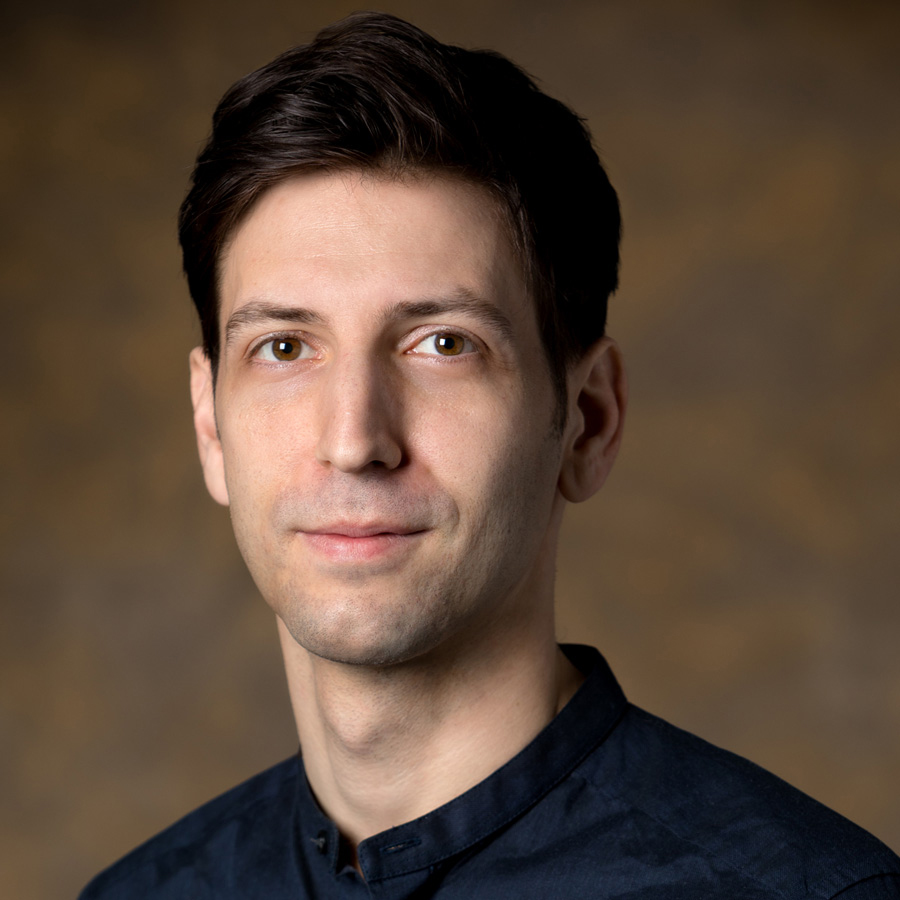
Furkan Kıraç is an Assistant Professor in the Computer Science Department at Özyeğin University, specializing in Computer Vision and Machine Learning . He previously served as a Part-Time Instructor at the same university (2012-2013) and as a Research Assistant at Boğaziçi University (2009-2013). Education: PhD in Computer Engineering, Boğaziçi University (2013) MS in Systems and Control Engineering, Boğaziçi University (2002) BS in Mechanical Engineering, Boğaziçi University (2000) His research focuses on real-time hand pose estimation , deep learning , and computer vision applications in industrial automation. Recent publications highlight his work on pedestrian tracking, spatio-temporal mapping, and image processing pipelines for test oracle automation. Notable achievements include founding two computer vision companies ( Proksima and Fortibase ) and receiving awards at SIU conferences (2004, 2005, 2012). He has contributed to projects funded by TÜBİTAK and the Scientific and Technical Research Council of Turkey. Scientific Awards: 3rd place in best demo award (SIU 2012) Best application paper award (SIU 2012) 3rd degree in Turkish National Science Competition (1994, 1995) Gold/Silver/Bronze medals in National Computer Science Olympiads
Zachary Lipton is an Assistant Professor at Carnegie Mellon University (CMU) jointly appointed in the Tepper School of Business and the Machine Learning Department. He holds courtesy affiliations with the Heinz School of Public Policy and Societal Computing. His research bridges core ML methods, healthcare applications, natural language processing, and critical analysis of AI's societal impacts. Tepper School of Business Machine Learning Department Heinz School of Public Policy (courtesy) Societal Computing (courtesy) Dr. Lipton leads the Approximately Correct Machine Intelligence (ACMI) Lab, focusing on robust ML systems, causal representation learning, and ethical AI development for clinical medicine. He co-founded Abridge, a healthcare AI company, and authored the interactive textbook Dive into Deep Learning . His work emphasizes clear scientific communication through expository efforts like literature reviews and the Approximately Correct blog. Recent publications highlight ACMI Lab's contributions to synthetic data quality, causal fairness analysis, diffusion model hallucinations, and medical LLM adaptation. Key research themes include distribution shift, human-AI alignment, and empirical evaluation of AI's societal impacts. Contact: zlipton@cmu.edu
Prof. Dr. Thomas Altmann is a Professor of Molecular Plant Genetics at Martin Luther University Halle-Wittenberg and Head of the Department of Molecular Genetics at the Leibniz Institute of Plant Genetics and Crop Plant Research (IPK), Gatersleben, Germany. His research integrates molecular genetics, genomics, and high-throughput phenotyping to study plant growth, heterosis, and stress responses in crops like barley, maize, and canola. He leads the development of advanced phenotyping platforms (e.g., IPK PhenoSphere) for simulating dynamic environments. His research focuses on Plant Molecular Genetics , Heterosis , and Abiotic Stress Adaptation . Key areas include epigenetic regulation of growth, QTL mapping under fluctuating light/nutrient conditions, and multi-omics approaches for hybrid performance prediction. His work leverages deep learning for automated image analysis of roots, shoots, and spikes under controlled and field-like conditions. Recent publications emphasize high-throughput phenotyping , epigenetic mechanisms in hybrid vigor, and dynamic QTL analysis . Articles consistently feature advanced computational methods (deep learning, multi-omics integration) applied to crop improvement, with a strong trend toward resolving genotype-environment interactions. He advises PhD and Master’s students on topics spanning molecular biology, phenomics, and bioinformatics. His group collaborates internationally on projects involving drought tolerance, nutrient use efficiency, and genomic selection.
Dr. Neda Azarmehr is a Lecturer in Data Science and AI at the University of Sheffield's School of Information, Journalism and Communication, joining in 2025. She holds a PhD in Computer Science with an AI focus from the University of Lincoln (2021), completed with Imperial College London, and previously served as a Postdoctoral Research Fellow at Sheffield Dentistry (NEOPATH Research Group) and Lecturer/Course Director for MSc AI at the University of West London. Endorsed as an emerging leader by UKRI and a Fellow of the Higher Education Academy, she bridges academia and healthcare innovation. Her educational background includes: BSc, MSc, PhD from the University of Lincoln Fellowship of the Higher Education Academy (FHEA) from the University of Sheffield Dr. Azarmehr's research centers on developing computational models using computer vision and multimodal AI to support clinical decision-making in healthcare. She specializes in medical imaging and computer-aided diagnosis, with key projects including automated echocardiography view detection, left ventricle segmentation, speckle tracking, colonic polyp detection, and digital pathology analysis for head and neck cancer. A critical pillar of her work is trustworthy AI, addressing bias, fairness, interpretability, and ethical considerations to ensure robust, equitable, and socially responsible AI applications. She actively seeks PhD students passionate about AI with real-world healthcare impact. Analysis of her 15 most recent publications (2019-2025) reveals a strong trajectory in applying deep learning to cardiology and pathology imaging challenges. Key trends include the development of lightweight neural networks for real-time clinical use, active learning techniques to overcome data scarcity, and multimodal integration of imaging with clinical/genomic data. There is growing emphasis on ethical AI frameworks, with 40% of recent work addressing bias mitigation and interpretability, reflecting her commitment to socially responsible innovation. Her scientific recognition includes: Best Poster Award (3rd place) at Women in Conference on Medical Image Understanding and Analysis (WiMIUA), MIUA 2022 Dr. Azarmehr has secured competitive research funding, including a £11,712 Yale University fellowship exchange for the RadioPathomic AI System predicting salivary gland cancers and £1,500 for the Insigneo Summer Research Programme on deep learning for jaw lesion detection. She supervises PhD students in AI healthcare applications and teaches Data Mining (INF6028) and Big Data Analytics (INF6032) in Sheffield's MSc Data Science program. Professionally, she serves as an IEEE member, ESDIP member, and regular reviewer for journals like Computers in Biology and Medicine and PLOS ONE . Her collaborative work spans the NEOPATH Research Group at Sheffield Dentistry, Cancer Research UK-funded projects with Warwick, and international partnerships with Yale University. Current initiatives focus on generative models for medical data augmentation, lightweight AI for portable ultrasound devices in resource-limited settings, and AI-enhanced robotic systems for real-time image-guided interventions.
Tuğrul TAŞCI serves as an Assistant Professor in the Department of Information Systems Engineering at Sakarya University's Faculty of Computer and Information Sciences, where he has maintained continuous academic service since 2001. His career progression includes Research Assistant positions across multiple university units before advancing to his current faculty role in 2016. His academic credentials include: Doctorate in Computer and Information Engineering (2014) from Sakarya University Institute of Science, thesis: Real-Time Motion Tracking with Particle Filtering Based on Data Fusing Master's degree in Computer and Information Engineering (2004) with thesis: Design of an Integrated Web-Based Distance Education System Bachelor's degree in Computer Engineering (2001) with thesis: Course Scheduling with Genetic Algorithms Dr. TAŞCI's research centers on Artificial Intelligence applications, particularly Natural Language Processing for Arabic text and Computer Vision . His work integrates particle filtering , data fusion , and optimization algorithms (e.g., Artificial Bee Colony, Firefly) to solve problems in text summarization, motion tracking, and image processing. Recent publications demonstrate expansion into deep learning for industrial defect detection and time series analysis. Analysis of his 2019-2024 publications reveals three dominant research trajectories: (1) Arabic NLP with focus on extractive summarization using PageRank and word embeddings, (2) Computer vision systems for motion tracking and text detection leveraging particle filters and curvature features, and (3) Hybrid optimization techniques applied to diverse domains from emergency management to customer churn prediction. Current academic advising activities and research grant details are not publicly documented in available sources. Similarly, no institutional laboratories or research teams are explicitly associated with his profile in the provided materials.
Sandra Virbukaite is a Lecturer at Vilnius University's Department of Lecturers. She is currently pursuing doctoral studies (2020–2024) at Vilnius University Institute of Data Science and Digital Technologies, focusing on deep learning methods for identifying pathological changes in fundus images under Dr. Jolita Bernatavičienė. Master’s degree in Applied Statistics (Vilnius Gediminas Technical University, 2011) Bachelor’s degree in Engineering Informatics (Vilnius Gediminas Technical University, 2009) Recent certificates from Oxford University's Machine Learning Summer Schools (2023–2024) and DeepLearn 2021 Summer Her research centers on medical imaging and artificial intelligence applications for eye disease detection, particularly glaucoma through optic disc and cup segmentation . Analysis of her 15 most recent publications (2020–2024) shows focus areas in convolutional neural networks , image preprocessing , and segmentation accuracy in fundus imaging. Presenter at 8 major conferences including DAMSS (2021–2022), WSCG (2022), and AI Technologies in Medicine (2023–2024) Contributor to 5 peer-reviewed publications in IEEE Access and Nonlinear Analysis: Modelling and Control She teaches Database Query Languages at Vilnius University since 2020, demonstrating both pedagogical and research expertise in applied statistics and deep learning domains.
Peter Peer is a Full Professor at the University of Ljubljana's Faculty of Computer and Information Science, where he leads the Computer Vision Laboratory. He serves as Executive Editor for ICT Express , Area Editor for IEEE Access and IET Biometrics , and coordinates dual-degree programs with Kyungpook National University. His administrative roles include membership in the Faculty Board of Directors (2018-present) and Senate (2021-present), and he previously served as Vice-Dean for Economic Affairs (2018-2022). His research spans computer vision and biometrics , with specialization in privacy-enhancing technologies, deep learning applications, and multimodal recognition systems. Key focus areas include: Face/sclera/ear biometric recognition and segmentation Deepfake detection and media forensics Generative models for data privacy Efficient model optimization techniques Publication analysis shows strong emphasis on biometric security (65% of recent works), privacy-preserving AI (25%), and generative modeling (10%), with applications spanning surveillance, forensics, and human-computer interaction. Awards highlight leadership in international biometric competitions and recognition for high-impact publications. Significant scientific honors include: NIST FATE evaluation winner (2025) Top 3 placements in ACM/IEEE biometric competitions (2023-2024) IEEE Transactions top-downloaded articles (2022-2024) European Association for Biometrics awards (2021-2024) He mentors 10+ PhD students working on biometric recognition, privacy preservation, and deep learning applications. Research is supported by national grants including DeepFake DAD (2023-2026) and MIXBAI (2023-2026), focusing on explainable AI and deepfake detection. Leads the Computer Vision Laboratory with international collaborations across Europe and Asia.
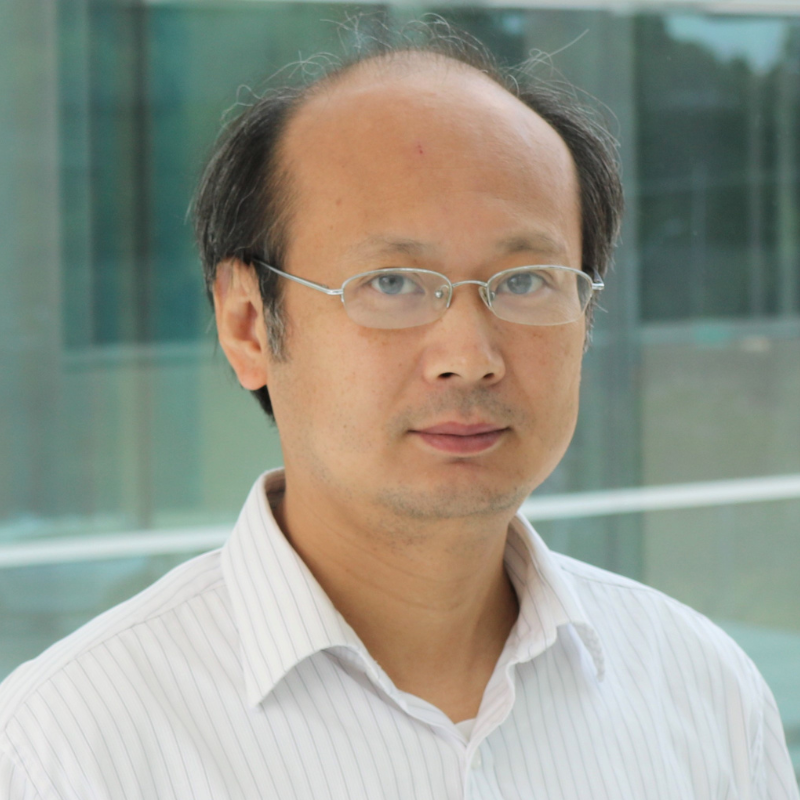
Professor Jun Liu is a Professor of Artificial Intelligence and Director of the Artificial Intelligence Research Centre (AIRC) at the School of Computing, Ulster University. With over 270 publications and more than £18 million in research funding, he is a leading figure in artificial intelligence, particularly in trust and explainable AI systems and logic-based reasoning methods. Dr. Liu received his BSc and MSc degrees in Applied Mathematics, and PhD degree in Information Engineering from Southwest Jiaotong University, Chengdu, China, in 1993, 1996, and 1999, respectively. Prior to joining Ulster University, he held postdoctoral positions at The University of Manchester, UK (Feb. 2002 - Dec. 2004) and the Belgian Nuclear Research Centre (SCK*CEN) (Mar. 2000 - Feb. 2002). Professor Liu's research focuses on trust and explainable data-knowledge integrated AI decision models with applications in safety and risk analysis, policy decision making, security/disaster management, and healthcare; and logic and automated reasoning methods for intelligent systems, including resolution-based automated reasoning and lattice-valued logics for handling incomparability, inconsistency, and imprecision. His work spans theoretical foundations to practical applications in smart homes, healthcare, and industrial settings. His recent publications demonstrate a strong trend toward developing more trustworthy and explainable AI systems, with particular emphasis on belief rule-based approaches for handling uncertainty in decision-making. The research spans multiple domains including smart home activity recognition, medical imaging, food quality analysis, and environmental monitoring, showing the versatility and applicability of his methodologies. Ulster University best computer science paper award for 2016 IEEE Senior Member including IEEESMC and IEEECI Fellow of the UK Higher Education Academy Associate Editor of IEEE Transaction on Fuzzy Systems Current Chair of IEEE CIS Emergent Technologies Technical Committee As Director of the Artificial Intelligence Research Centre, Professor Liu has secured significant research funding as principal investigator and co-investigator. His current projects include "The use of Agentic AI in judicial decision-making" funded by EPSRC and "Adaptive Modeling Method for Deep Belief Rule Base" for smart home applications. He serves on editorial boards of multiple high-impact journals and organizes international conferences including the 23rd UK Workshop on Computational Intelligence. The Artificial Intelligence Research Centre under Professor Liu's leadership focuses on developing cutting-edge AI methodologies with practical applications. The center collaborates extensively with industry partners including BT through the BTIIC Phase 2 initiative and PwC through their Advanced Engineering and Research Centre, ensuring research has real-world impact across multiple sectors.
Dr. Derek Greene is an Assistant Professor at the School of Computer Science, University College Dublin, and a Funded Investigator at the Insight Centre for Data Analytics and the VistaMilk Research Centre. His research spans machine learning, natural language processing, and network analysis, with a focus on interdisciplinary applications in cultural analytics, smart agriculture, and political science. Dr. Greene has published over 60 research papers at international conferences and journals. His work includes developing methods for natural language processing , network analysis , and deep learning applied to diverse domains such as literary text mining, dairy industry monitoring, and political communication analysis. He leads projects integrating machine learning into cultural analytics, enhancing agricultural practices, and modeling policy agendas. The articles in his Google Scholar profile highlight a trend toward explainable AI , synthetic data generation , and network-based modeling . Key sub-fields include counterfactual explanations , transformer-based frameworks , temporal analysis of historical texts , and interdisciplinary knowledge transfer . His work bridges machine learning with applications in cultural studies , agriculture , and political science . Dr. Greene collaborates with institutions like the Insight Centre for Data Analytics and the VistaMilk Research Centre , integrating academic research with industry and policy needs. His funded investigator roles reflect ongoing support for applied research in data analytics and agricultural technology.
Dr. Kouros Nouri-Mahdavi is an accomplished ophthalmologist and clinical researcher at the UCLA Stein Eye Institute , specializing in cataract and glaucoma surgery . With over 20 years of clinical experience, he focuses on advanced surgical techniques including femto laser-assisted cataract surgery and minimally invasive glaucoma procedures. Education : MD from Isfahan University of Medical Sciences, MS in Clinical Research from UCLA Training : Residency at UCSD, Fellowships in France and Yale Eye Center His research interests center around glaucoma progression detection , with particular emphasis on: Optical Coherence Tomography (OCT) imaging Artificial intelligence applications in diagnostics Visual field analysis and functional testing Macular structure-function relationships Blood pressure interactions in glaucoma Scientific contributions include: R01-EY027929 grant on advanced glaucoma progression NIH K23 award for OCT optimization research Pioneering deep learning models for glaucoma detection (DDLSNet, RimNet) International recognition through editorial roles and innovation awards
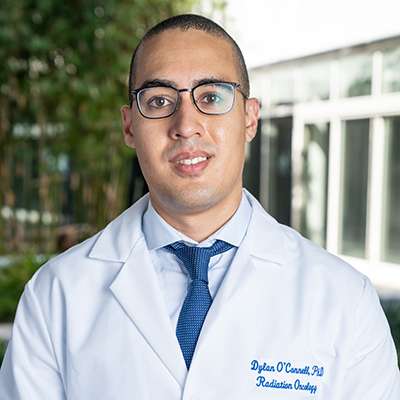
Dylan O'Connell, PhD, is an Assistant Professor in the Department of Radiation Oncology at the University of California, Los Angeles. He joined the faculty in 2020 after completing his medical physics residency at UCLA. Dr. O'Connell holds a Ph.D. in Biomedical Physics (UCLA, 2018) and a B.S. in Physics (Tufts University, 2013). His research focuses on advancing radiotherapy through innovations in medical physics: Respiratory motion modeling for 4D/5DCT reconstruction Motion-compensated cone-beam CT imaging Online adaptive therapy protocols Safety frameworks for clinical software development AI applications in treatment planning and workflow automation Dr. O'Connell's publications demonstrate extensive work in motion management technologies (5DCT), lung ventilation mapping, adaptive radiotherapy for prostate/head-neck cancers, and clinical software validation. His recent studies emphasize translating technical innovations into clinical practice, with 15+ first-author papers on 5DCT implementation, AI-driven workflow tools, and quantitative imaging biomarkers.
Jie Cai is an Assistant Professor at the Department of Technology and Innovation, University of Southern Denmark, specializing in structural engineering, maritime operations, and data science. His research bridges computational methods with marine and pipeline mechanics. Key research areas include structural stability, residual strength analysis, lateral buckling, and data-driven maritime systems Recent work focuses on medical image segmentation (2025) and burst strength prediction for corroded pipelines (2025) Active in digital twin development for vessel operations and engine monitoring He has contributed to journals like Computers and Electrical Engineering , Ocean Engineering , and Journal of Marine Science and Application , with expertise in finite element analysis and anomaly detection. Jie Cai serves as a peer reviewer for journals including the Journal of Offshore Mechanics and Arctic Engineering and Energies , and teaches courses in data science, programming, and IoT applications at the master's and bachelor's levels.
Natalia Sergeevna Belova is an active Associate Professor at the Department of Software Engineering within the Faculty of Computer Science at the National Research University Higher School of Economics (HSE University). She has been with HSE since 2012, accumulating 13 years of scientific and teaching experience. Her academic journey began with engineering education and progressed through postgraduate studies to earning her Candidate of Technical Sciences degree. Her educational background includes: 2010: Candidate of Technical Sciences from Moscow State University of Instrument Engineering and Computer Science, specializing in Mathematical and Software Support for Computing Machines 2009: Postgraduate studies at the same institution 2005: Engineering degree from Moscow State Academy of Instrument Engineering and Computer Science Belova's research interests span automatic text analysis, information search, IT project management, embedded databases, and project-based learning in engineering education. Her work demonstrates a strong focus on practical applications of computer science, particularly in face recognition, pattern recognition, and educational methodologies for software engineering. She has made significant contributions to the fields of embedded database systems and computer vision. Her publication record shows a clear evolution from foundational work on embedded databases (2009) to advanced research in computer vision and deep learning (2015-2025). The most recent publications focus on artificial intelligence applications in transport design and affect recognition in video, demonstrating her ability to adapt to emerging technologies while maintaining expertise in her core areas. Among her notable achievements: Gratitude from HSE University leadership (2023, 2025) Multiple publication bonuses for high-impact research Recognition as Best Teacher (2016-2017) Membership in the High Professional Potential Group (HSE personnel reserve) Belova has supervised numerous bachelor's theses, guiding students through projects ranging from mobile applications to complex software systems. She has also secured significant research funding, including a Presidential Grant for young doctors of science (2017-2018) for developing pattern recognition methods. Her teaching portfolio includes courses on Group Dynamics and Communication in Software Engineering Professional Practice and Software Engineering Economics, reflecting her dual expertise in technical and soft skills development for future software engineers.
Tingliang Zhuang, Ph.D. is an Associate Professor in the Department of Radiation Oncology at UT Southwestern Medical Center , where he contributes to both research and teaching. His academic journey began with a bachelor's degree in Electrical Engineering from Nanjing University , followed by a Ph.D. in Medical Physics at the University of Wisconsin-Madison . Education: B.S. in Electrical Engineering, Nanjing University Ph.D. in Medical Physics, University of Wisconsin-Madison Dr. Zhuang’s research interests span adaptive radiotherapy, cone-beam CT (CBCT) image reconstruction, image-guided radiation therapy (IGRT), treatment planning, and dosimetry. A significant focus of his work involves leveraging artificial intelligence to enhance therapeutic precision. His research has led to over 30 publications in journals like Medical Physics and International Journal of Radiation Oncology Biology Physics , addressing topics such as dose calculation algorithms, stereotactic body radiation therapy (SBRT), and adaptive treatment strategies for lung, spine, and prostate cancers. The 15 most recent articles in his publication record emphasize advancements in adaptive radiotherapy, CBCT-guided dose optimization, and AI-driven outcome prediction. These works often compare traditional methods (e.g., pencil beam vs. Monte Carlo simulations) and explore dosimetric impacts of tumor localization, organ motion, and delivery accuracy. In teaching , Dr. Zhuang has co-lectured medical physics residents at UT Southwestern, covering imaging in medicine and clinical rotation courses. His collaborations with institutions like Varian Medical Systems and UT Southwestern Medical Center highlight his translational approach to medical physics.
Lino António Antunes Fernandes Costa is an Associate Professor (with tenure) at the Department of Production and Systems, School of Engineering, University of Minho, Portugal. He conducts his research activities at the ALGORITMI R&D Centre as a member of the Systems Engineering and Operational Research (SEOR) research group. His academic credentials include a PhD in Production and Systems Engineering, an MSc in Informatics, and a DEng in Informatics and Systems Engineering. These qualifications form the foundation for his interdisciplinary research bridging engineering, computer science, and mathematical optimization. Dr. Costa's research focuses on multi-objective optimization, nonlinear optimization, evolutionary algorithms, and applied statistics. His work demonstrates significant application to real-world industrial problems, particularly in manufacturing optimization, agricultural technology (with emphasis on olive cultivation), emergency response systems, and quality control. His methodological approaches often combine traditional optimization techniques with modern machine learning and artificial intelligence methods. His publication record shows a clear evolution toward Industry 4.0 applications, with recent work emphasizing the integration of optimization techniques with smart manufacturing systems, agricultural technology, and emergency management. His research demonstrates strong interdisciplinary connections between operations research, computer science, and domain-specific applications in manufacturing and agriculture. h-index: 17 Total Publications: 126 Total Citations: 1,193 Q1/Q2 Journal Publications: 40 Dr. Costa serves as a regular reviewer for prestigious journals including IEEE Transactions on Evolutionary Computation, Evolutionary Computation, IEEE Intelligent Systems, and European Journal of Operational Research. He has contributed to over 40 international scientific events as a program committee member, including major conferences such as ACM GECCO, IEEE CEC, and EMO. His professional activities extend to project-based learning initiatives in industrial engineering education, demonstrating his commitment to both research and teaching excellence. His laboratory work centers around the ALGORITMI Centre's SEOR research group, where he collaborates on developing optimization frameworks for distributed manufacturing systems, agricultural technology applications, and emergency resource management. Current projects include applying multi-objective optimization to olive cultivation challenges and developing intelligent systems for firefighting resource allocation.