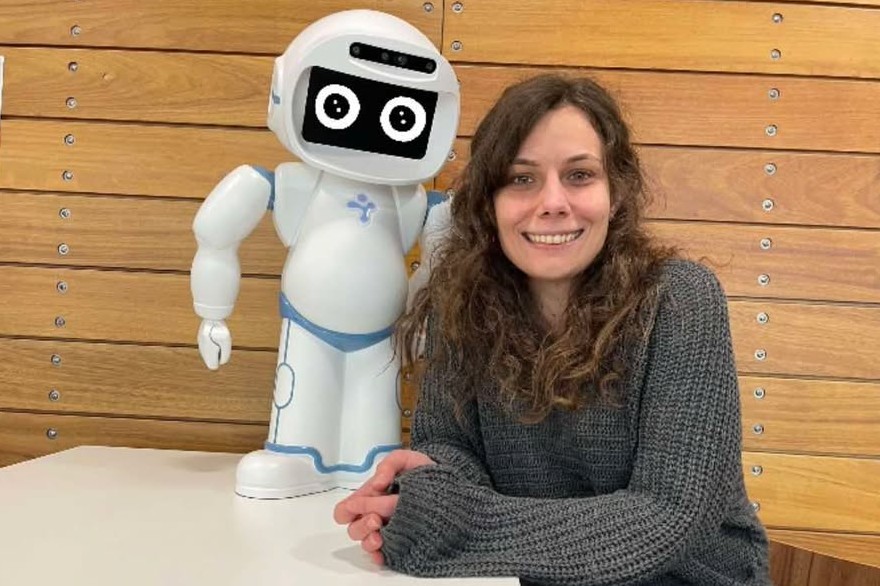
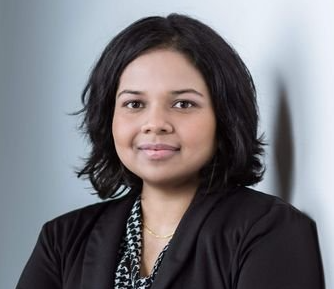
Fethiye Irmak Dogan is a Postdoctoral Research Associate at the University of Cambridge's Department of Computer Science and Technology, working in the Affective Intelligence and Robotics Laboratory. She holds a Ph.D. in Computer Science from KTH Royal Institute of Technology (2023), an M.Sc. and B.Sc. in Computer Engineering from Middle East Technical University (METU). Her research focuses on human-robot interaction, continual learning, and socially appropriate robot behaviors leveraging explainability. She has conducted robotics research at KTH's Division of Robotics, Perception and Learning and collaborated internationally, including a visiting scholar stint at Georgia Institute of Technology. Education highlights include: B.Sc., Computer Engineering, METU (2015) M.Sc., Computer Engineering, METU (2018), with research at Kovan Robotics Lab Ph.D., Computer Science, KTH (2023), with visiting research at Georgia Tech Research interests emphasize deploying autonomous robots in human environments, resolving ambiguous user instructions through explainability, and enabling socially intelligent robot behaviors. Recent work explores continual learning for context adaptation, multimodal frameworks for human-robot collaboration, and vision-language models for wellbeing assessment in children. Key projects include BT-ACTION (modular instruction understanding), GRACE (LLM-driven socially appropriate actions), and STREAK (continual learning for household tasks). Her contributions span robotics, AI ethics, and human-centered design, with a focus on real-world applications in healthcare and education.
Fiona E. Murray is the Associate Dean of Innovation at MIT Sloan School of Management and the William Porter (1967) Professor of Entrepreneurship. She serves as Faculty Director of MIT’s Office of Innovation and the MIT Legatum Center for Development and Entrepreneurship. Her roles include leadership in the MIT Regional Entrepreneurship Acceleration Program, focusing on global innovation ecosystems. Educated at the University of Oxford (BA/MA in Chemistry) and Harvard University (AM/PhD in Applied Sciences), her career bridges academia and policy. Her research explores the transformation of scientific investment into deep-tech ventures, addressing dual-use technologies, inclusive innovation, and gender equity in entrepreneurship. She has pioneered frameworks for evaluating innovation ecosystems and mitigating bias in funding. Notable awards include the Commander of the British Empire (CBE) and Dame Commander honors, recognizing her contributions to innovation and entrepreneurship. Key roles: NATO Innovation Fund Vice Chair, European Innovation Council member, and advisory roles to UK and European governments. Educational contributions: Courses on corporate innovation, executive education programs, and a joint MIT School of Engineering course training scientists as Chief Technology Officers. Murray advocates for inclusive innovation ecosystems, emphasizing diversity in addressing global challenges like climate change, health, and defense. Her work spans publications in Nature , Science , and the Proceedings of the National Academy of Sciences , alongside policy briefs and case studies.
Ming-Hsuan Yang is a Professor in the Department of Computer Science & Engineering at the University of California, Merced , where he also serves as the Graduate Chair for the Electrical Engineering and Computer Science (EECS) graduate group. His research spans computer vision , machine learning , and pattern recognition , with a focus on image and video restoration, object tracking, and 3D scene understanding. Ph.D., University of Illinois at Urbana-Champaign (2000) M.S., University of Texas at Austin (1994) M.S., University of Southern California (1992) B.S., National Tsing-Hua University, Taiwan (1991) His research interests include computer vision (object tracking, image deblurring, saliency detection), machine learning (transfer learning, sparse representation), and 3D reconstruction (Gaussian splatting, scene generation). He has pioneered methods in diffusion models , transformer architectures , and multi-modal vision-language systems . Recent publication trends show leadership in 3D mesh generation (ICCV 2025), video diffusion (CVPR 2025), and image restoration (PAMI 2025), with interdisciplinary applications in medical imaging (TMI 2024) and human motion analysis (WACV 2025). Scientific awards include Nvidia Fellowships and EECS Rising Stars recognitions for advisees, with Meta , Google DeepMind , and Adobe alumni placements. He has advised 18 PhD students and 13 MS students since 2009, with notable fellowships including Chancellor's Graduate Fellowship and GSOP Fellowship . His Visual Tracking and Learning Lab produces high-impact work in object tracking , image enhancement , and semantic segmentation , supported by NSF grants and industry collaborations . Lab alumni now lead R&D at top tech companies like Stability AI and Meta .
Mikko Kurimo is a Full Professor at Aalto University's Department of Information and Communications Engineering, School of Electrical Engineering. He earned his M.Sc., Lic.Tech., and D.Sc.(Tech.) from Helsinki University of Technology (1992, 1994, 1997) and pioneered neural networks for automatic speech recognition (ASR) in his PhD thesis. After research roles at IDIAP (Swiss AI center) and visiting positions at University of Colorado, Edinburgh, SRI, ICSI, and Nitech, he leads Aalto's ASR group since 2000. His work focuses on unsupervised subword modeling for morphologically complex languages (Finnish, Estonian, Turkish, Arabic) and large speech foundation models. PhD in Neural ASR (Helsinki University of Technology, 1997) Research Scientist at IDIAP (Switzerland) Visiting Fellow at University of Colorado, Edinburgh, SRI, ICSI, Nitech Head of Aalto ASR Group (2000-present) His research spans deep learning for ASR, spoken language modeling , and low-resource language solutions . Recent work explores continued pre-training of self-supervised models, multimodal emotion recognition, and pronunciation assessment using LLMs. He led the winning team in the 2017 Multi-Genre Broadcast challenge and secured competitive funding in Tekes Challenge Finland and EC's H2020-ICT-2017. Key article trends include: Advancements in children's speech recognition and dysarthric speech processing Integration of generative AI for language learning feedback Specialization in low-resource Uralic languages (Finnish, Northern Sámi) Development of robust ASR systems for complex phonetic environments Scientific Awards ACM Multimedia 2023 Computational Paralinguistics Challenge Prize First place in MGB3 2017 Arabic ASR Challenge ISCA Best Student Paper Award (2011) Professeur Invité at Université de Saint-Etienne (2005-2006) Royal Society International Short Visit Fellowship (2004) Professor Kurimo leads the Speech Recognition Group at Aalto, collaborating with COIN (Centre of Excellence in Computational Inference) and AIRC (Adaptive Informatics Research Centre). His projects like CaptainA mobile app demonstrate practical applications of ASR in language education. He has supervised numerous publications with co-authors in domains spanning bandwidth extension, stuttering detection, and speech sound disorder assessment.
Lifeng Zhou is an Assistant Professor in the Department of Electrical and Computer Engineering at Drexel University, where he leads the Zhou Lab focused on advancing robustness and reliability in multi-robot systems through integration of foundation models. His research addresses real-world challenges in environmental monitoring, disaster response, and urban mobility. Education PhD, Electrical and Computer Engineering, Virginia Tech, 2020 MS, Control Science and Engineering, Shanghai Jiao Tong University, 2016 BS, Automation, Huazhong University of Science and Technology, 2013 Research Focus Dr. Zhou's work integrates robotics, algorithms, game theory and machine learning to develop secure and scalable autonomous systems. Primary research thrusts include: Resilient multi-robot coordination in adversarial environments Large language model integration for robotic decision-making Game-theoretic resource allocation strategies Risk-aware planning for autonomous vehicles Publication Trends Recent work (2024-2025) demonstrates strong focus on large language model applications in multi-robot systems, with 12/15 articles exploring LLM integration for flocking, scene segmentation, and decision-making. Additional emphasis includes adversarial robustness in target tracking (5 articles) and autonomous driving applications (4 articles). Awards and Recognition Best Paper Award, WACV 2025 LLVM-AD Workshop Professional Service Associate Editor, ICRA Conference Editorial Board Laboratory Focus The Zhou Lab develops foundational algorithms for secure and scalable multi-robot systems, with current projects spanning environmental monitoring drones, disaster response coordination, and autonomous vehicle perception systems.
Pascal BOUVRY is a full Professor of parallel computing and optimization techniques at the University of Luxembourg's Department of Computer Science , within the Faculty of Science, Technology and Medicine (FSTM) . He currently serves as the Dean of the FSTM and leads the Parallel Computing and Optimisation group . Additionally, he oversees the University's High Performance Computing (HPC) infrastructure. His research focuses on parallel computing, optimization algorithms, distributed systems, and their applications in bioinformatics and distributed environments. Prof. BOUVRY holds a Ph.D. in Computer Science from the University of Grenoble (France) and has extensive industry experience, including roles as CEO/CTO of tech firms and leadership in telecom and financial services sectors. He has pioneered initiatives like the Master in High-Performance Computing and Technopreneurship programs at the University of Luxembourg. His research interests span GPU programming paradigms , federated learning , distributed optimization , and trustworthy AI . Recent work includes advancements in HPC education frameworks, federated learning frameworks (e.g., FedPref), and quantum circuit optimization. He contributes to editorial boards of journals like IEEE Transactions on Sustainable Computing and IEEE Cloud Computing Magazine. Prof. BOUVRY has held international leadership roles, including as Honorary Chair of conferences and active participation in technical committees. His educational efforts emphasize bridging academic research with industrial applications, particularly in HPC and AI.
Stefanie Jegelka is an Associate Professor (currently on leave) at the Massachusetts Institute of Technology's Department of Electrical Engineering and Computer Science, and a Humboldt Professor at Technical University of Munich. At MIT, she is a member of CSAIL (Computer Science and Artificial Intelligence Laboratory), IDSS (Institute for Data, Systems, and Society), the Center for Statistics and Machine Learning, and is affiliated with the Operations Research Center. Her educational background includes a PhD from ETH Zurich and the Max Planck Institute for Intelligent Systems, followed by postdoctoral research at UC Berkeley's AMPlab and computer vision group. Her research program focuses on algorithmic machine learning, with particular emphasis on exploiting mathematical structure for discrete and combinatorial machine learning problems, robustness in learning systems, and developing methods for scaling machine learning algorithms to large datasets. She has made significant theoretical contributions to submodular optimization and its applications in machine learning. Jegelka's publication record demonstrates a consistent focus on the intersection of discrete mathematics and machine learning. Her work spans theoretical foundations of optimization with discrete structures, applications in computer vision, and practical algorithms for submodular function optimization. Her research has evolved from foundational work on submodular functions to broader applications in deep learning and robust machine learning systems, showing increasing impact through numerous workshop best paper awards and high-impact conference publications. NSF CAREER Award Google Research Award German Pattern Recognition Award (Mustererkennngspreis) ICML Best Paper Award Sloan Research Fellowship DARPA Young Faculty Award NSF BIGDATA Award ONR MURI NSF AI Institute for Optimization Professor Jegelka has advised several successful students including Keyulu (recipient of MIT's George M. Sprowls Ph.D. Thesis Award), Derek (NSF Fellowship recipient), Ching-Yao (IBM Fellowship recipient), and Nisha (now Assistant Professor at Georgia Tech). Her research has been generously supported by multiple NSF grants, DARPA awards, and industry funding from Google, Two Sigma, and Adobe. She has also organized multiple workshops and tutorials on discrete optimization and submodularity in machine learning. At MIT, Jegelka is affiliated with the Center for Statistics and Machine Learning and collaborates with researchers across CSAIL. Her work bridges theoretical computer science, optimization, and practical machine learning applications, with recent focus on high-dimensional learning dynamics and in-context learning as evidenced by her group's multiple papers at leading conferences like ICLR.
Dr. Hima Lakkaraju is an Assistant Professor at Harvard University with joint appointments in the School of Engineering and Applied Sciences and Business School , focusing on the algorithmic foundations and societal implications of trustworthy AI. She also serves as a Senior Staff Research Scientist (part-time) at Google. Her research spans machine learning, optimization, human-subject studies, and AI policy , with applications in healthcare, law, and business. Education : PhD in Computer Science, Stanford University Prior Roles : Microsoft Research, IBM Research, Adobe, Fiddler AI Dr. Lakkaraju's work emphasizes safe, fair, and interpretable AI , addressing critical questions about human-AI collaboration, model robustness, and regulatory compliance. She leads the AI4LIFE research group and co-founded the Trustworthy ML Initiative to democratize access to responsible AI research. Her research is supported by NSF, Sloan Foundation, Schmidt Sciences, Google, OpenAI, Amazon, JP Morgan, Adobe, Bayer, Harvard Data Science Initiative, and D^3 Institute . Recent publications (2025) explore reward hacking in LLMs, unified attribution frameworks, memory systems in AI agents, and science-based AI policy . Earlier works (2024) focus on medical safety benchmarks, CLIP interpretation, and generalization complexity . Her work has been featured in major media outlets including New York Times, TIME, MIT Tech Review, and Fortune . Scientific Awards : Alfred P. Sloan Fellow (2025), NSF CAREER Award (2023), MIT Tech Review 35 Innovators (2019), Google Anita Borg Fellowship (2015) Grants & Funding : NSF, Google, Amazon, JP Morgan, Adobe, Schmidt Sciences Dr. Lakkaraju advises a diverse team of postdocs, PhD, and master's students working on foundational and applied aspects of trustworthy machine learning. She teaches courses like Introduction to Data Science and Explainable AI at Harvard and Stanford.
Esa Ollila serves as Associate Professor in the Department of Signal Processing and Acoustics at Aalto University, Finland, and holds an adjunct professorship in Statistics at the University of Oulu. His academic appointments include Academy of Finland Research Fellow (2010-2015) and prior senior research/lecturing roles at both institutions. His educational background features: M.Sc. in Mathematics, University of Oulu (1998) Ph.D. in Statistics (with honors), University of Jyväskylä (2002) D.Sc.(Tech) in Signal Processing (with honors), Aalto University (2010) Professor Ollila's research centers on statistical signal processing and robust statistical methodologies , with significant contributions to array processing, high-dimensional data analysis, and covariance matrix estimation. His work bridges theoretical statistics with practical applications in radar systems, wireless communications, and big data analytics, emphasizing robustness against outliers and computational efficiency in modern data-intensive environments. Current focus areas include compressed sensing, sparse approximation, and blind source separation techniques. Analysis of his 15 most recent publications (2024-2025) reveals three dominant trends: (1) robust covariance learning for massive random access systems, (2) integrated sensing and communications (ISAC) for 6G networks using advanced beamforming, and (3) geometric approaches to elliptical distributions in statistical inference. His work increasingly incorporates deep learning (GANs, graph neural networks) while maintaining strong foundations in classical signal processing theory. Key recognitions include: Academy of Finland Postdoctoral Fellowship (2004-2007) Academy of Finland Research Fellowship (2010-2015) His research has been supported through prestigious Academy of Finland grants totaling over a decade of continuous funding. Professor Ollila currently leads an active research group at Aalto University, supervising doctoral candidates and collaborating internationally with institutions including Princeton University (where he served as Visiting Post-doctoral Research Associate during 2010-2011). He maintains strong ties with the University of Oulu through his adjunct professorship and has contributed to EURASIP's Special Area Team on Theoretical and Methodological Trends in Signal Processing. The Esa Ollila Research Group focuses on cutting-edge challenges in statistical signal processing, with current projects spanning robust DOA estimation under non-Gaussian noise, covariance matrix learning for massive MIMO systems, and machine learning-enhanced radar-communication integration. The group actively develops open-source tools like the fitHeavyTail R package for heavy-tailed distribution modeling and maintains collaborations with industry partners in wireless communications.
Eduard Arzt is a Distinguished Visiting Professor in the Department of Material Science and Engineering at the University of California, San Diego. He is internationally recognized for his pioneering work in materials science, with a focus on functional microstructures, bioinspired adhesives, and sustainable materials solutions. His current research explores innovative applications in biomedical engineering and space technology. His research interests center on the micropatterning of elastomeric surfaces to control mechanical interactions sustainably. Key areas include gecko-inspired adhesives for biomedical use and novel microstructures for space applications such as satellite debris retrieval. He also promotes biodiscovery as a strategy for developing materials for extreme environments. His interdisciplinary approach bridges materials physics, biology, and engineering. The trends in his recent work emphasize sustainability, bioinspiration, and the application of advanced materials in both medical and extraterrestrial contexts. His research integrates principles from nanotechnology, soft matter physics, and robotics to create next-generation functional materials. Notable scientific honors include: 2023 William D. Nix Award (TMS) Elected member of the Leopoldina German Academy of Sciences Elected member of the Austrian Academy of Sciences Elected member of the US National Academy of Engineering Prof. Arzt has held leadership roles in major research institutions and actively mentors researchers through his labs and collaborative networks. He is Editor-in-Chief of Progress in Materials Science and co-founded a deep-tech robotics startup, reflecting his commitment to translating scientific innovation into real-world applications. He has secured significant research funding through national and international grants, though specific grants are not detailed here. His research is conducted in collaboration with interdisciplinary teams and leverages advanced fabrication and characterization facilities. He fosters strong international partnerships, particularly between European and American research institutions, and promotes sustainable innovation through bioinspired design principles.
Tim Schweisfurth is a Full Professor in Organizational Design and Collaboration Engineering at the School of Management Sciences and Technology, Hamburg University of Technology (TUHH), Germany. He previously served as an Associate Professor in High-Tech Business at the University of Twente and in Technology and Innovation Management at the University of Southern Denmark. He received his PhD from TUHH and his venia legendi from the Technical University of Munich (TUM). His research focuses on innovation and entrepreneurship, with key themes including digital and technology-driven innovation, idea generation and evaluation, and distributed and collaborative innovation. His work has been published in leading journals such as Research Policy , Strategic Management Journal , Organization Science , and Creativity and Innovation Management . His recent publications reflect a strong trend in understanding how organizational structures, digital platforms, and user involvement influence innovation outcomes. Topics include internal crowdfunding, idea evaluation biases, user innovation, and Industry 4.0 adoption in SMEs, indicating a deep engagement with both theoretical and applied aspects of innovation management. Editor-in-Chief, Creativity and Innovation Management Advisory Editor, Research Policy He has collaborated with major companies such as Siemens, Osram, Audi, Panasonic, and EWE in both research and consulting. He has advised on innovation strategies and digital transformation, contributing to real-world applications of his research. His work has not explicitly mentioned grants, but his extensive industry collaborations suggest strong project funding and engagement. He leads the research group on Organizational Design and Collaboration Engineering at TUHH, which investigates collaborative innovation, digital platforms, and employee-driven innovation. The team engages in both empirical and theoretical research, often using large datasets and field experiments to understand innovation dynamics in organizations.
Antonios Angelakis is an Assistant Professor at the Department of Political Science, University of Crete. His academic background includes a Ph.D. in Technology and Innovation Policies from the University of Crete, an M.A. in Public Administration and Public Policy from the University of York (UK), and a B.A. in Political Science from the University of Crete. He previously held positions as a post-doctoral Research Associate at Nottingham Business School (UK) and as a Research Associate at the Small Enterprises’ Institute of the Hellenic Confederation of Professionals, Craftsmen and Merchants (IME GSEVEE) from 2013 to 2024. His research focuses on: Technology and innovation policy frameworks Digital transformation in business and governance Innovation management and technology transfer mechanisms Industrial policies and economic development strategies Historical and political economy perspectives on technological change He has contributed to numerous EU-funded and national projects on innovation policy and digital transformation. Angelakis' recent publications predominantly analyze SMEs, innovation ecosystems, and green transition, reflecting a consistent focus on how businesses adapt to economic crises, digitalization challenges, and sustainability imperatives. His work frequently employs empirical case studies and policy evaluations across European contexts. He maintains active roles in policy advisory bodies, including membership in the Attica Region Research and Innovation Council (since 2017) and the European Commission's high-level expert group 'Fit for Future Platform'. His teaching portfolio covers technology policy, innovation management, and digital transformation at institutions including the Technical University of Crete and Hellenic Mediterranean University.
Alaa Alameldeen is an Associate Professor in the School of Computing Science at Simon Fraser University (SFU), part of the Faculty of Applied Sciences. Previously, he worked as a Research Scientist at Intel Labs (2006–2020) and held an Adjunct Faculty position at Portland State University (2008–2018). He earned a PhD in Computer Sciences from the University of Wisconsin-Madison (2006), and earlier degrees from Alexandria University, Egypt. His research focuses on computer architecture, including memory systems (processing-in-memory, cache/memory compression, security), energy-efficient architectures, and hardware-software co-design for machine learning. He advises PhD and MSc students in these areas and teaches advanced computing science courses. Key contributions include innovations in memory hierarchies, cache compression techniques, and mitigating hardware vulnerabilities. His work has been published in top conferences (e.g., ISCA, MICRO, HPCA) and patented in areas like near-memory processing and error correction. Alameldeen currently leads a research group exploring secure and high-performance memory architectures. He has supervised multiple graduate students, with many progressing to roles at leading tech companies and academic institutions.
David M. Higdon is a Professor and Department Head of the Department of Statistics at Virginia Tech within the College of Science. He specializes in Bayesian statistical modeling of environmental and physical systems, focusing on integrating physical observations with computer simulations for prediction and inference. Previously, he spent 14 years at Los Alamos National Laboratory as a scientist and group leader in the Statistical Sciences Group. Education: Ph.D. in Statistics, University of Washington, 1994 M.A. in Mathematics, University of California San Diego, 1989 B.A. in Mathematics, University of California San Diego, 1987 Research Interests: Higdon’s work spans space-time modeling , inverse problems in hydrology and imaging , statistical modeling in ecology and environmental science , and multiscale models . He develops methods for parallel processing in posterior exploration , statistical computing , and Monte Carlo simulations . His research addresses critical challenges in uncertainty quantification (UQ), including climate modeling, nuclear density functional theory, and geophysical imaging. Publications Trends: His recent articles emphasize Bayesian methodologies applied to complex systems, such as climate forecasting, materials science, and cosmology. A recurring theme is the development of emulators and surrogate models to handle computationally intensive simulations. Awards: Fellow of the American Statistical Association Advising & Grants: While no specific advisees are listed, Higdon has contributed to interdisciplinary collaborations in UQ and statistical modeling. His work has been supported by grants from agencies such as the National Science Foundation and Department of Energy. Labs/Teams: He leads the Statistics Department’s efforts in UQ and computational statistics, fostering collaborations across engineering, environmental science, and physics.
Dr. Todd D. Murphey is a Professor of Mechanical Engineering at Northwestern University's Robert R. McCormick School of Engineering and Applied Science. He serves as Director of Transformative Research and Director of the Master of Science in Robotics Program at Northwestern, leading initiatives in computational dynamics, control systems, and robotics. His work bridges engineering, neuroscience, and biomedical applications, with a focus on developing systems that interact effectively with humans and their environments. Dr. Murphey received his Ph.D. in Control and Dynamical Systems from the California Institute of Technology in 2002, with a thesis titled "Control of Multiple Model Systems." Prior to that, he earned a B.S. in Mathematics, summa cum laude, from the University of Arizona in 1997. Dr. Murphey's research centers on computational methods in dynamics and control, with applications spanning neuroscience, health science, robotics, and automation. His work in the Interactive & Emergent Autonomy Lab focuses on computational models of embedded control, biomechanical simulation, dynamic exploration, and hybrid control. The group develops mathematical approaches that lead to orders of magnitude improvement in computational efficiency for real-time implementation. Key application areas include assistive exoskeleton control, stabilization of energy networks, bio-inspired active sensing, entertainment robots, robotic exploration, and software-enabled stroke rehabilitation. Analysis of Dr. Murphey's recent publications reveals a strong emphasis on human-swarm interaction, algorithmic matter, and control of cyber-physical systems in uncertain environments. His work increasingly integrates information theory with physical systems, exploring how both autonomous and biological systems interact with environments to learn and improve behaviors. Recent trends show growing applications in rehabilitation technology, with particular focus on human-machine interaction in biomedical devices and embodied intelligence. Dr. Murphey has received numerous honors and awards for his contributions to robotics and engineering: Named Director of Transformative Research at Northwestern University (2025) Appointed IEEE Robotics and Automation Society Vice President of Publication Activities (2022) Co-recipient of Best Paper Award for IEEE Transactions on Robotics (2020) Appointed to Air Force Scientific Advisory Board (2019) Recipient of ABB Best Student Paper Award for CPL-SLAM research (2019) Cole-Higgins Award from Northwestern Engineering (2015) Dr. Murphey has supervised numerous graduate students including Taosha Fan, Giorgos Mamakoukas, and Ian Abraham, with research spanning robotic exploration using electrosense and mechanical contact, human-in-the-loop control, and shared control for rehabilitation devices. His lab has secured significant funding from the National Science Foundation, DARPA, and industry partners including Siemens and Ekso Bionics, supporting research in algorithmic matter, emergent behavior, and human-swarm collaboration. The Interactive & Emergent Autonomy Lab, led by Dr. Murphey, investigates how both autonomous systems and biological systems interact with their environments to learn and improve behaviors. Current projects include active learning and data-driven control, active perception in human-swarm collaboration, algorithmic matter and emergent computation, control for nonlinear and hybrid systems, cyber physical systems in uncertain environments, harmonious navigation in human crowds, information maximizing clinical diagnostics, reactive learning in underwater exploration, robot-assisted rehabilitation, and software-enabled biomedical devices. The lab collaborates with researchers across Northwestern and institutions including Georgia Tech, MIT, and industry partners.