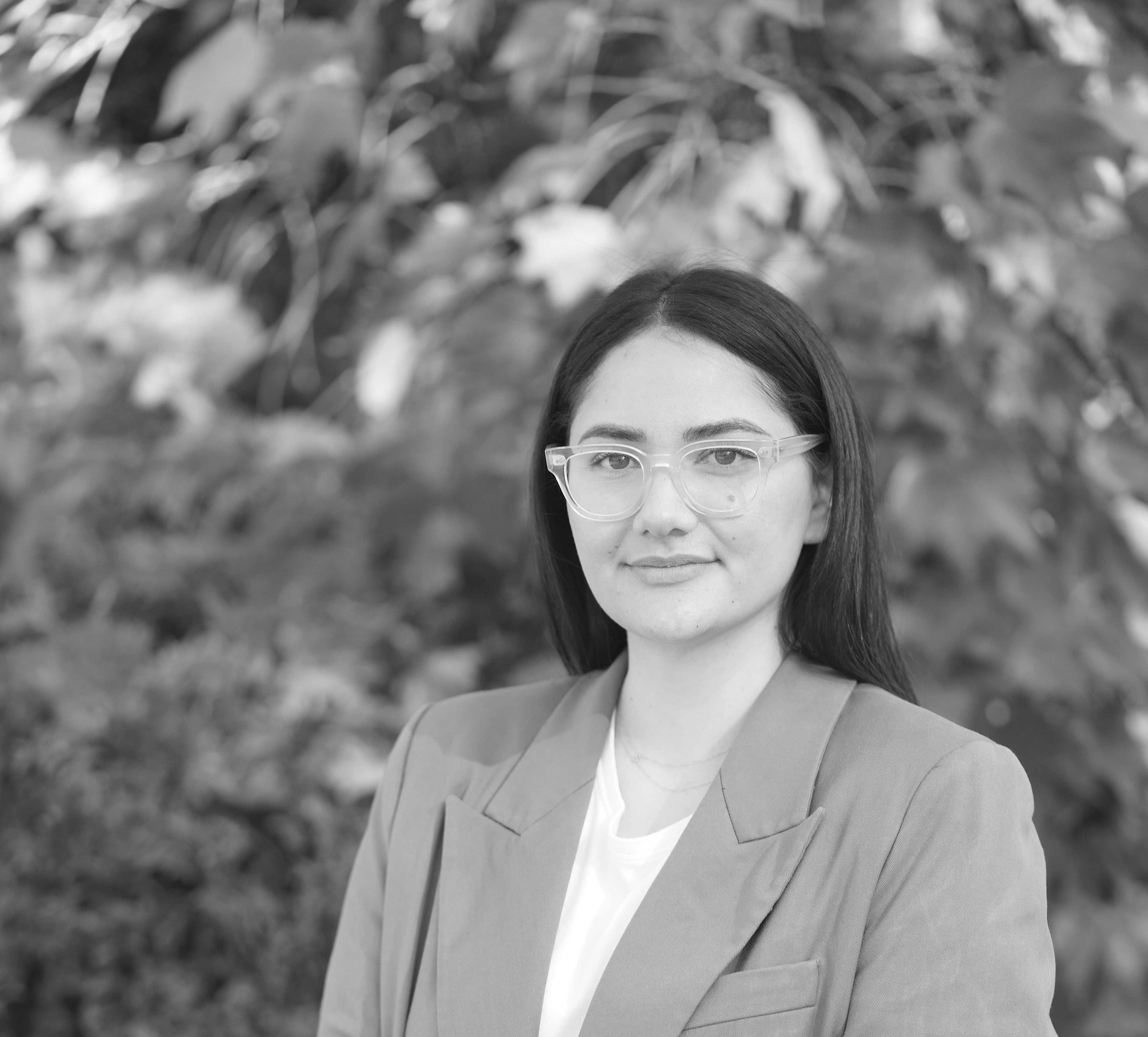
Michelle Jasper serves as Associate Professor of Innovation and Commercialisation at ANU's College of Systems and Society. Her research advances venture capital decision-making through hybrid intelligence systems combining human expertise with AI. She founded ANU's First Nations Innovation Hub and established dedicated seed funding for collaborations between First Nations innovators and researchers. Leadership roles include Co-Chair of the Australia India Youth Dialogue, Interim Chair of Canberra Innovation Network Advisory Committee, and former Non-Executive Director of Cicada Innovations (Australia's largest deep tech incubator). Her work bridges innovation ecosystems, indigenous knowledge systems, and strategic investment frameworks.
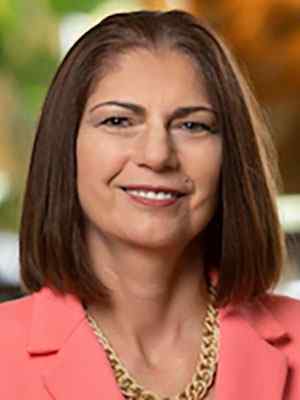
Chandana Unnithan is an Associate Professor at Torrens University Australia (Health and Education) and serves as CIO/CTO/Chief Scientific Officer at Lifeguard Digital Health since 2019. She holds a PhD in Digital Health & Informatics from Victoria University, alongside two Master’s degrees in Information Systems and MBA from RMIT University. Her research focuses on Digital Health, Public Health Informatics, Blockchain, AI, IoT, Geo-spatial technologies, and Deep Learning. She has published over 30 works since 2003, with notable contributions to blockchain applications in healthcare, AI-driven public health surveillance, and global health policy. She is accepting PhD students and has an h-index of 6 with 158 citations. Education: PhD in Digital Health & Informatics, Victoria University Master in Information Systems, RMIT University MBA, RMIT University Research Interests: Chandana’s work bridges technology and health, emphasizing privacy-preserving approaches, blockchain for health data integrity, and AI applications in pandemic response. Her studies often explore global health challenges through interdisciplinary lenses, such as leveraging space technology for healthcare innovation. Recent Research Trends: Her publications from 2018–2023 highlight a focus on digital health interventions, blockchain’s role in trust and provenance, AI-driven surveillance systems, and cross-border health policy analysis. Collaborations span Australia, Canada, and India, addressing issues like opioid crisis management and sustainable urban health systems. Awards: No specific awards listed, but her citation count reflects impactful contributions to health informatics and technology. Advising & Grants: Actively mentoring PhD students, with research outputs supported by institutional and cross-sectoral collaborations. External roles at Lifeguard Digital Health align with applied health tech solutions.
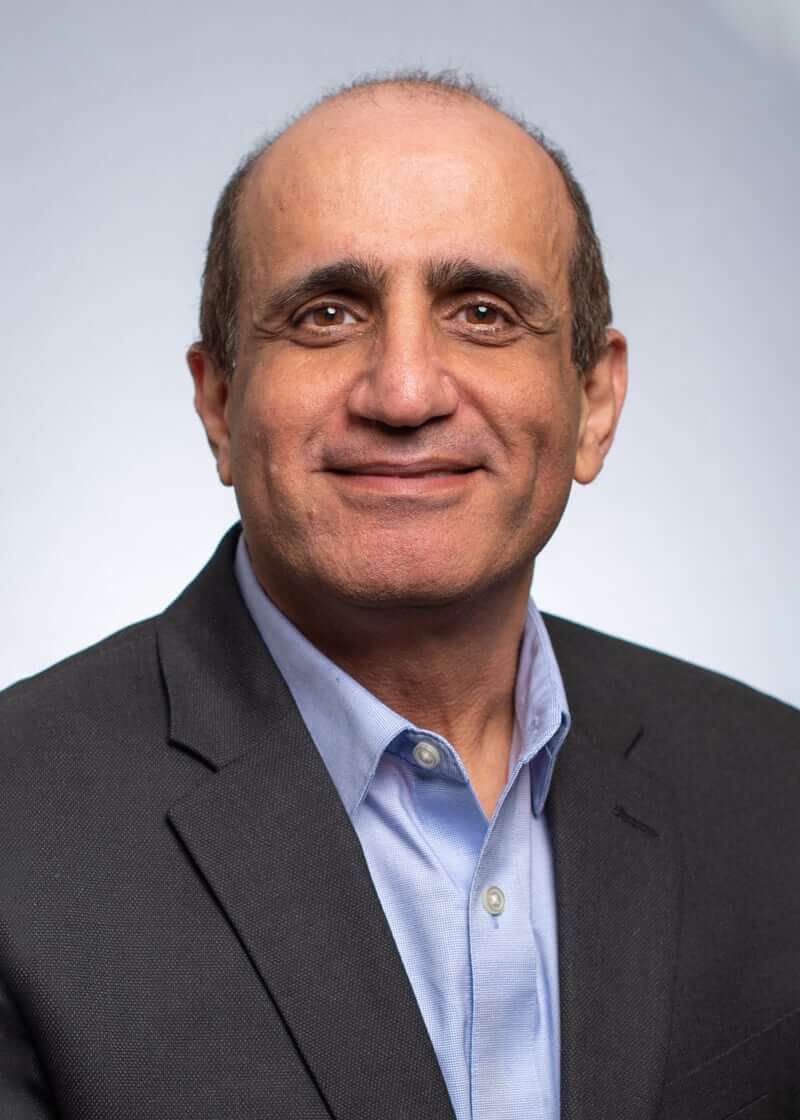
HINDAWI Mohammed is a Researcher-Lecturer at CESI (France) specializing in Computer Science with a focus on Data Mining, Big Data, and Machine Learning. He holds a PhD in Computer Science from INSA Lyon (2013) and teaches at the engineering level. His current research emphasizes Dimensionality Reduction in semi-supervised learning and frugal/embedded AI applications. Education: PhD in Computer Science (2013), INSA Lyon MSc in Knowledge and Decision (2008), INSA Lyon BSc in Software Engineering (2005), Aleppo University Research interests include semi-supervised learning, feature selection, ensemble methods, and clustering techniques. He leads the Engineering and Numerical Tools research team and contributes to the Advanced Automation: AI and Data Science group. His work addresses practical applications like patient monitoring via machine learning and battery state estimation. Publications span over 15 peer-reviewed articles in journals like Knowledge and Information Systems (KAIS) and conferences such as IEEE MMSP and ACM CIKM. He supervises PhD students like Trésor Yao Koffi and collaborates on projects involving embedded systems and healthcare tech.
Akihiko Torii is an Assistant Professor (Research Associate) at the Okutomi & Tanaka Lab in Tokyo Institute of Technology. He holds a PhD from Chiba University and completed a postdoctoral fellowship at the Center for Machine Perception (CMP) at Czech Technical University in Prague. His research focuses on computer vision, with expertise in 3D reconstruction, place recognition, localization, and structure from motion. He has contributed to influential datasets like the 24/7 Tokyo, Pittsburgh (Pitts250k), SF Revisited, and InLoc datasets, advancing visual localization and feature matching techniques. **Education and Background:** PhD in Computer Science, Chiba University Postdoctoral Researcher, Czech Technical University (2014–2018) **Research Interests:** His work spans Computer Vision , including 3D Reconstruction , Place Recognition , Feature Matching , and Multi-View Stereo . He emphasizes practical applications such as indoor/outdoor localization under changing conditions. **Awards and Recognition:** 2017: CVPR Outstanding Reviewers Award 2016: IEEE Japan Chapter Young Author Award 2015: Tokyo Tech Young Investigator Award Multiple Best Paper Awards (2013–2014) **Key Projects:** Developed algorithms like Multi-View Inverse Rendering and NetVLAD , and contributed to benchmarking frameworks for visual localization accuracy. His work bridges theoretical advancements and real-world applications in robotics and autonomous systems.
Bernie Tiddeman is a Professor in the Department of Computer Science at Aberystwyth University. His research focuses on computer vision, machine learning, and their applications in fisheries technology, anomaly detection, and data analysis. He has led projects funded by DEFRA, the European Maritime and Fisheries Fund, and the Welsh Government, addressing challenges in environmental monitoring, automated data capture, and heritage preservation. His work contributes to UN Sustainable Development Goals related to sustainable fisheries and responsible consumption. Key research interests include deep learning for object detection (e.g., crabs and lobsters), reinforcement learning in non-stationary environments, and neural architecture search. He collaborates with researchers like Dr. Seb Gregory Dal Toe and Muhammad Iftikhar on fisheries data automation and computer vision systems. Notable projects include the Automated Video-Based Capture of Crustacean Fisheries Data and the Improved Shellfish Data Collection Project. His recent publications (2023-2025) highlight advancements in anomaly detection, crustacean identification, and low-power hardware solutions. Tiddeman has supervised over a dozen PhD candidates and actively participates in educational initiatives like the Wales Collaborative for Learning Design.
Sue Abdinnour is the Omer Distinguished Professor in Business and Director of the Business Operations and Analytics Lab at Wichita State University. Her work bridges business analytics, supply chain agility, entrepreneurship, and information systems. She investigates topics such as technology adoption in education, social media sentiment analysis, and regional entrepreneurship dynamics. Her research interests focus on leveraging data-driven approaches to enhance business operations, including studies on ERP systems, entrepreneurial ecosystems in Wichita, and the impact of social media on economic and public health outcomes. Recent work explores tablet efficacy in education and the influence of political sentiment on financial markets. Dr. Abdinnour’s publications highlight trends in tech adoption, supply chain optimization, and qualitative studies on ethnic entrepreneurship in urban contexts. While no specific awards are listed, her roles reflect significant academic and leadership contributions. Grants and patents sections are mentioned but lack detailed data in the provided text. She oversees the Business Operations and Analytics Lab, fostering interdisciplinary research and collaboration between academia and industry. Her work emphasizes practical applications in both regional economic development and global business strategies.
Leon Jololian is a Professor and Chair in the Department of Computer Science at the University of Alabama at Birmingham (UAB). He also serves as Undergraduate & Graduate Program Director. His research focuses on component-based software architecture, mobile and cloud computing, internet of things (IoT), and machine learning applications in healthcare and biomedical engineering. He holds a B.S. in Electrical Engineering from Manhattan College, M.S. degrees in Electrical Engineering (Georgia Tech) and Computer Science (Polytechnic University), and a Ph.D. in Computer Science from New Jersey Institute of Technology. His recent work includes developing frameworks for automated machine learning environments, predicting protein-ligand interactions using deep learning, and investigating convergence engineering across disciplines. He has contributed to healthcare system modeling, crowd trajectory prediction, and educational frameworks for machine learning courses. His publications span both foundational computer science topics and interdisciplinary applications in medicine and engineering. Dr. Jololian teaches advanced undergraduate and graduate courses in software engineering and machine learning. His research integrates computational methods with real-world challenges in healthcare, cybersecurity, and biomedical systems. Office hours are by appointment in Gorrie Hall 5251.
Colin N. Brooks serves as a Senior Research Scientist at the Michigan Tech Research Institute (MTRI) and an Adjunct Lecturer in Biological Sciences at Michigan Technological University. His work integrates remote sensing technologies with environmental and infrastructure monitoring, specializing in Great Lakes ecosystem studies and transportation asset management. Education: PhD in Biology Master of Environmental Management (MEM) in Resource Ecology Dr. Brooks' research centers on aquatic and landscape ecology, with emphasis on invasive species mapping (particularly submerged aquatic vegetation like Eurasian watermilfoil) using Unmanned Aerial Systems. He develops automated analysis methods for transportation infrastructure assessment including road/bridge condition evaluation through multispectral sensing and LiDAR, and creates decision support systems for environmental management workflows. His 15 most recent publications (2023-2025) reveal dominant trends in UAS-based infrastructure inspection (pavements, bridges, airfields) and environmental monitoring (copper tailings impacts, invasive species). Key methodological advances include machine learning integration for automated crack detection, 3D coastal mapping, and multitemporal analysis frameworks for ecosystem management. Scientific Awards: No awards were listed in the provided information. Advising and Grants: Student advising activities and specific grant funding details were not documented in the source materials. Labs and Teams: Dr. Brooks is actively engaged with the Great Lakes Research Center (GLRC), leading interdisciplinary projects that bridge remote sensing technology with practical solutions for environmental conservation and transportation infrastructure challenges.
Dr. Rabab Al Zaidi is a Lecturer in Computer Networking at the University of Salford's School of Science, Engineering & Environment. With 17+ years in academia and industry, she holds a PhD from the University of Essex and prior roles at Essex, Anglia Ruskin, and Central Lancashire. Her research focuses on network security, AI security, blockchain, and IoT, particularly in 6G and vehicular networks. She teaches IoT, routing, and cloud computing, and supervises PhD students. Education: PhD in Electronic System Engineering, University of Essex (2014–2018) MSc in Software Engineering, University of Technology (2006–2008) Research Interests: Network Security, AI Security IoT and 6G Networks Blockchain & Emerging Tech Cloud Computing & Mobile Sensor Networks Publications: Recent work addresses FinTech cybersecurity frameworks, maritime security via AI-optimized cryptography, and latency modeling in blockchain-IoT systems. The Metaverse security paper proposes GAN-based intrusion detection. Advising & Grants: Actively supervises PhD students but no specific grants mentioned. Part of the Informatics Research Centre.
Sercan Ozcan is a Professor of Innovation and Technology Management and Associate Head of Research and Innovation at the University of Portsmouth’s School of Strategy, Marketing and Innovation (Faculty of Business & Law). He holds an adjunct role at Bahçeşehir University, Turkey, and is part of the university-wide Artificial Intelligence & Practical Applications (AIPA) research cluster. His expertise spans innovation management, data science, and technology foresight. Education: PhD in Innovation Management (Aberystwyth University, UK), prior roles include Assistant Professor at Bahçeşehir University. He has secured over £600,000 in collaborative research funding and published over 40 peer-reviewed articles. Research focuses on analyzing large-scale data (patents, social media, publications) for innovation intelligence. Key areas include blockchain, AI, nanotechnology, and technology roadmapping. He develops frameworks for technology adoption, innovation readiness, and policy analysis using machine learning and NLP techniques. Notable contributions include the Product Innovation Readiness Level Framework, Blockchain governance models, and studies on InsurTech innovation in low-tech environments. His work bridges data science and management practices to address real-world challenges in innovation systems. Awards: Best Paper Award (Portsmouth, 2018), Brad Hosler Award (PICMET, 2015), Doctoral Researcher Award (ABTA, 2014). Current projects include AI Leadership Skills Bootcamp (Portsmouth City Council), InsurTech innovation analysis, and Ukraine-focused inclusive innovation systems. He advises on technology policy, product design, and collaborative innovation ecosystems.
Chaoru Lu is an Associate Professor of smart mobility at the Department of Civil Engineering and Energy Technology, Oslo Metropolitan University. His expertise spans intelligent transport systems, transport electrification, autonomous vehicles, and traffic flow theory. He holds a Ph.D. from Iowa State University (2017), an M.S. from Texas A&M University-Kingsville (2014), and a B.S. from Hunan University of Science and Technology (2011). Research focuses on optimizing transport systems through interdisciplinary approaches, including electric vehicle safety analysis, autonomous vehicle coordination, and sustainable infrastructure planning. He leads projects like the Net-Zero Future initiative to reduce the built environment’s carbon footprint. His work integrates AI, machine learning, and data-driven modeling to address modern transport challenges. Publications span over 39 peer-reviewed articles, covering topics like electric bus fleet management, autonomous vehicle tracking algorithms, and pandemic impacts on mobility. He collaborates with institutions globally, contributing to both academic and applied transport solutions. Research Groups: Transport, Infrastructure, and Urban development (TransFrUrban) Grants/Projects: Ongoing leadership in the Net-Zero Future project.
Christoforos Kachris is an Assistant Professor at the Department of Electrical and Electronics Engineering, University of West Attica since 2023. Previously, he co-founded and led InAccel, a startup pioneering FPGA deployment in the cloud, securing €500k in funding and winning awards like the Venture Impact Award (2021) and DeepBlue Cup (2019). He led EU projects such as VINEYARD (€6.3M, 2016–2018), the first to deploy FPGAs in cloud data centers. His research spans reconfigurable computing, hardware accelerators, cloud computing, and optical interconnects, with over 90 publications and 2,700+ citations. Education: Ph.D. (2007, Delft University of Technology), M.Sc. (2003, Technical University of Crete), and Diploma (2001, Technical University of Crete). His Ph.D. focused on FPGA-based network processing, with internship at Xilinx Research Labs, resulting in a US patent on configurable transactional memories. Research interests include machine learning on embedded systems, FPGAs, edge AI, reconfigurable computing, and optical interconnects. He has advised numerous students, many now in tech roles at Cisco, IBM, Ericsson, and startups. Notable contributions include a highly cited survey on optical interconnects in data centers and leadership in projects like VINEYARD and CloudAccel (Principal Investigator). Awards include Venture Impact Award and recognition in international hardware competitions.
Mª ANGELES LOPEZ CABARCOS serves as Professor in the Department of Business Organization and Marketing at the Faculty of Business Administration and Management, University of Santiago de Compostela. She holds dual affiliations with the Institute of Agricultural Biodiversity and Rural Development (IBADER) and leads the CVSO (Sustainable Value Creation in Organizations) research group, while previously contributing to Quantitative Methods and Management of Agri-food Enterprises research. Her academic foundation includes a 1999 PhD from the University of Santiago de Compostela, supervised by Dr. José Antonio Redondo López, with doctoral research titled El valor de la empresa implicaciones, condicionantes y consecuencias de la determinación de un valor ajustado con especial consideración de los títulos gallegos cotizados . Professor López Cabarcos' research program critically examines the governance-sustainability nexus through multiple lenses. Her work investigates how ESG factors operationalize Sustainable Development Goals, the psychological mechanisms linking leadership styles to employee well-being, and the financial implications of environmental strategies in food systems. She pioneers methodological innovation through deep learning applications for cryptocurrency prediction and configurational analysis of rural entrepreneurship, while maintaining strong empirical focus on gender dynamics in corporate governance and metaverse applications in agricultural value chains. Her scholarship consistently bridges theoretical rigor with practical business implications across diverse sectors. Analysis of her 15 most recent publications (2023-2025) reveals three dominant research trajectories: (1) ESG integration as strategic imperative across NASDAQ firms and food industries, (2) digital transformation impacts ranging from metaverse business applications to DeFi market dynamics, and (3) human-centered organizational studies examining new work models and leadership behaviors. These threads converge in her growing focus on sustainability governance, particularly the interplay between environmental performance, financial outcomes, and stakeholder values in agri-food systems. No scientific awards are documented in the available sources. While specific advising relationships remain undocumented, her extensive publication record and leadership of the CVSO research group indicate active mentorship of junior scholars. Her research program demonstrates sustained engagement with contemporary business challenges, particularly the integration of sustainability imperatives into core financial and operational decision-making processes. Her institutional footprint spans the IBADER institute's agricultural biodiversity initiatives and the CVSO group's value-creation frameworks, positioning her at the intersection of business administration, environmental management, and rural development. These affiliations enable her distinctive research approach connecting corporate governance mechanisms with sustainability outcomes in food systems and rural economies.
Dr. Yi-Chang James Tsai is a Professor and CISE Group Leader at Georgia Institute of Technology's School of Civil and Environmental Engineering. He specializes in smart cities infrastructure, transportation systems engineering, and pavement preservation using advanced sensing technologies. His work has significantly impacted Georgia’s pavement management systems, including the development of a GIS-based pavement preservation system for GDOT. He holds the prestigious Chinese Chang Jiang Scholar title (2009) and received an innovation award for GIS-enabled ship recognition (2007). His research integrates emerging technologies like 3D laser, LiDAR, and AI to enhance infrastructure resiliency, roadway safety, and asset management. Key projects include predictive safety modeling, autonomous vehicle integration, and sustainability of transportation networks. Dr. Tsai leads the Smart City Infrastructure (SCI) Lab, focusing on infrastructure condition assessment, deterioration analysis, and optimization strategies. Education: Doctorate in Civil Engineering (prior to Georgia Tech faculty role) Grants: Multiple GDOT-funded projects on pavement preservation, HFST implementation, and sensor-based safety systems Dr. Tsai’s work emphasizes data-driven decision-making, cost-effective maintenance, and innovation in transportation infrastructure. His lab has pioneered technologies for automated sign detection, pavement crack analysis, and real-time safety scoring. Key Achievements: Developed GDOT’s pavement preservation system managing 18,000 miles of highways Advanced AI-based crack detection and 3D imaging techniques Leader in roadway safety audits and curve sign optimization The Smart City Infrastructure Lab collaborates with industry partners to address challenges in infrastructure sustainability, resiliency, and smart mobility solutions for aging populations and energy efficiency.
Lakshmi R Raju is a Research Professor and Director of ECE Student Engagement and Well-Being at the Georgia Institute of Technology's School of Electrical and Computer Engineering. She holds a B.S., M.S., and Ph.D. in Electrical and Computer Engineering from Georgia Tech. Her research focuses on metamaterials, nonlinear optics, photonics, and educational leadership. Dr. Raju pioneered work in inverse design of metamaterials using deep learning, with applications in optical systems and molecular sensing. She also leads initiatives to enhance student belonging and peer leadership in engineering education. Key contributions include developing AI-driven meta-optic systems and optimizing plasmonic structures for harmonic generation. Education : B.S., M.S., Ph.D. in Electrical and Computer Engineering (Georgia Tech) Awards : NSF Graduate Research Fellowship Her academic work bridges cutting-edge photonics research with student well-being initiatives, fostering inclusive environments through innovative pedagogy and peer leadership programs. She has published extensively on metamaterial design, nonlinear optics, and educational strategies since 2014.