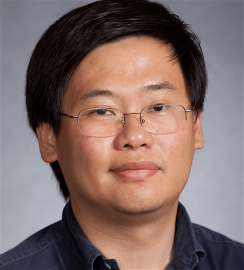
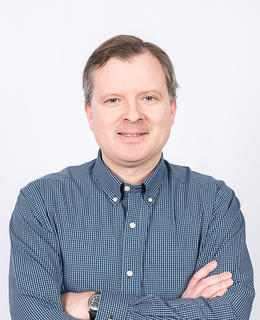
Nirwan Ansari is a Distinguished Professor in the Department of Electrical and Computer Engineering at New Jersey Institute of Technology (NJIT). His research focuses on cutting-edge advancements in 6G networks , wireless charging , machine learning , and Internet of Things (IoT) . He has contributed extensively to AI-driven network optimization and sustainable energy solutions for next-generation communication systems. Ph.D., Electrical Engineering, Purdue University (1988) M.S., Electrical Engineering, University of Michigan-Ann Arbor (1983) B.S., Electrical Engineering, NJIT (1982) His recent work explores AI-native network slicing , UAV-assisted edge computing , and holographic communication . Publications highlight synergies between terrestrial and non-terrestrial networks , digital twin integration, and energy-efficient IoT systems . He serves as an Honorary Chair and contributes to major conferences like IEEE INFOCOM and IWCMC.
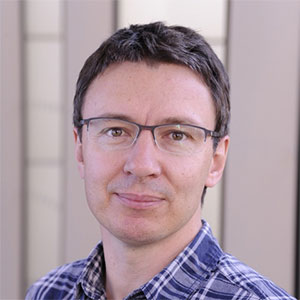
Professor Wei Shi is a faculty member at the School of Computer Science, Carleton University. His research focuses on distributed computing, cloud networks, algorithm design for sensor/actuator systems, big data analytics, and data privacy. Notable projects include federated learning optimizations, blockchain-enabled edge intelligence for IoT/vehicle networks, and AI-driven cybersecurity solutions. His work addresses challenges in dynamic resource allocation, anomaly detection, and privacy-preserving techniques. Research Interests: Distributed Computing: Optimizing federated learning and client selection algorithms for wireless networks. Blockchain & Edge Intelligence: Developing decentralized systems for IoT and vehicular networks using AI large models. Security & Privacy: Innovating methods to detect AI-generated content, combat cyber-physical attacks, and protect user data privacy. Publications: Recent works emphasize federated learning applications, blockchain integration with edge computing, and cybersecurity for vehicular/IoT ecosystems. Key themes include energy-efficient algorithms, dynamic resource allocation, and intrusion detection in constrained environments. Email: wei.shi@carleton.ca
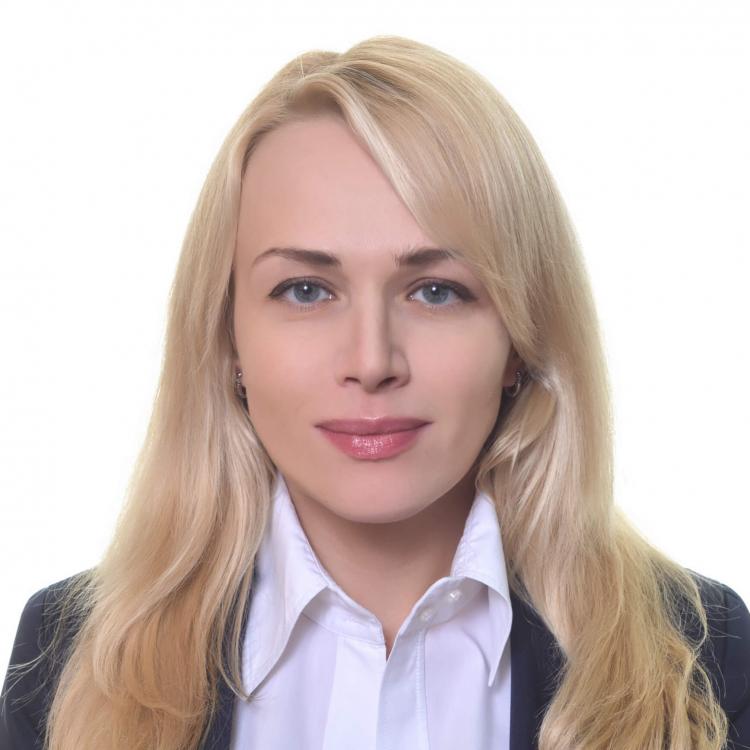
Flora Parrott is a Research Fellow in the Department of Geography at Royal Holloway, University of London, working on the ERC-funded project THINK DEEP: Novel Creative Approaches to the Underground. As a practice-based researcher, she investigates subterranean spaces through sculpture, textiles, and collaborative projects, exploring themes of darkness, sensory experience, and geologic time. Her research examines how underground environments inform our understanding of surface structures and behaviors, focusing on concepts of the unknown, shelter, and deep time. Projects include artistic explorations of cave systems, interdisciplinary collaborations with geologists, and investigations into material practices that bridge art and geography. Dr. Parrott holds a BA in Fine Art Printmaking from Glasgow School of Art (2004), MA from the Royal College of Art (2009), and completed her PhD at Royal Holloway (2023). Awards include Art Council England Grants, Leverhulme Residency, Henry Moore Institute Award, and TECHNE Scholarship. She maintains an active art practice and exhibits internationally. Her educational background includes Foundation Studies at Michaelis School of Fine Art, University of Cape Town. She teaches at the Royal College of Art and University for the Creative Arts, and serves as Trustee for Open School East.
Dr. Tao (Kevin) Huang is a researcher at James Cook University's College of Science and Engineering, with expertise spanning autonomous driving, wireless communication systems, and medical imaging applications. His work integrates machine learning, sensor fusion, and multimodal data analysis to address complex challenges in vehicular networks, environmental monitoring, and healthcare technology. Research Interests: Dr. Huang's research focuses on Autonomous driving perception systems IoT-enabled vehicular networks AI for medical diagnostics and environmental sensing Signal processing and privacy-preserving communication protocols Recent Publications: His 2025 work emphasizes advancements in V2X cooperative perception, radar-LiDAR-camera fusion, and diffusion models for medical imaging. Key trends include cross-modal robustness, real-time processing for autonomous systems, and AI applications in sustainability.
Athanasios Vionis is an Associate Professor in Byzantine Archaeology and Art at the University of Cyprus (UCY), where he has served since 2009. He previously held roles including Director of the Archaeology Research Unit (2020–2024) and was a postdoctoral researcher at the Catholic University of Leuven (2007–2008). His academic journey includes a PhD in Medieval and Post-Medieval Aegean Archaeology from Leiden University (2005) and a BA in Ancient History and Archaeology from Durham University (1997). Current Position: Associate Professor, Department of History and Archaeology, UCY Previous Roles: Lecturer (2009–2013), Assistant Professor (2013–2018) Research focuses on landscape archaeology, spatial analysis of built and sacred landscapes, and the application of digital technologies (e.g., GIS). He studies Byzantine, Medieval, and Ottoman ceramics, as well as daily life and nutrition through material remains. His work includes the monograph A Crusader, Ottoman and Early Modern Aegean Archaeology (2012) and co-edited volumes on topics like sacred landscapes and glaze technology. He leads the ArtLandS Lab (Artefact and Landscape Studies Laboratory), established at UCY in 2010, which conducts field research in Cyprus and Greece. Key projects include the Settled and Sacred Landscapes of Cyprus (2014–present), funded by the EU and Cyprus Research Foundation. He coordinates international initiatives like the Unlocking Sacred Landscapes network (2014–present) and has collaborated with institutions such as the Cyprus Institute and Trinity College Dublin. His awards include UNESCO prizes for cultural documentaries and Marie Curie fellowships. Teaching spans undergraduate and postgraduate programs, including “Land and Underwater Field Archaeology” and “Medieval Archaeology.”
Giorgos Mountrakis is a Professor in the Department of Environmental Resources Engineering at SUNY College of Environmental Science and Forestry (ESF). His research focuses on environmental monitoring using remote sensing, environmental modeling through geographic methods, and decision support systems for ecological and urban challenges. He holds a Dipl. Eng. from the National Technical University of Athens (1998), an M.S. (2000), and Ph.D. (2004) from the University of Maine. His work integrates advanced technologies like satellite imagery, LiDAR, and machine learning to address land cover dynamics, climate impacts, and wildlife conservation. Current advisees include Atef Amriche (PhD candidate in Geospatial Information Science), Babak Haji Seyed asadollah (PhD in Environmental Resources Engineering), Ahmadreza Safaeinia (PhD in Environmental Resources Engineering), and Zhixin Wang (PhD in Geospatial Information Science). Key research themes include: land use/cover classification using deep neural networks, climate change impacts on forests and rangelands, and optimizing spatial-temporal models for large-scale environmental analysis. His projects span global datasets (e.g., Landsat, MODIS) and regional case studies in the US, Mongolia, and Algeria. Publications emphasize methodological advancements in remote sensing, such as fusion of multisensor data, accuracy assessment frameworks, and applications in biodiversity conservation. His work bridges technical innovation with practical environmental decision-making, addressing issues like urban growth prediction and wildlife-vehicle collision mitigation.
Professor Inga Prokopenko is a faculty member at the University of Surrey's School of Biosciences (Faculty of Health and Medical Sciences), specializing in e-One Health and leading the Statistical Multi-Omics group. Her research focuses on genetic epidemiology, multi-omics approaches, and the comorbidity between metabolic disorders like type 2 diabetes and conditions such as cardiovascular disease, cancer, and mental health disorders. She leads studies on genetic determinants of blood glucose regulation, obesity-related risks, and shared pathophysiological pathways between diseases. Key research areas include: Genetic links between type 2 diabetes and cancers (breast, pancreatic, etc.) Mechanisms of GLP-1 receptor signaling in diabetes treatment Causal relationships between depression and diabetes using Mendelian randomization Role of abdominal obesity in cancer susceptibility She supervises PhD/MSc students in biosciences and medicine programs and develops computational tools like comorbidPRS for polygenic risk score analysis. Her work integrates large-scale genomic data from cohorts like the UK Biobank and EPIC studies to uncover shared genetic mechanisms across diseases. Recent work highlights include: Systematic reviews on flavan-3-ols and cardiovascular health Meta-analyses of trans-ethnic diabetes GWAS data Epigenetic studies linking blood metabolites to cancer risk Her research bridges statistical genetics with clinical applications, emphasizing precision medicine strategies for complex diseases.
Song-Ying Li is a Professor in the Department of Mathematics at the University of California, Irvine (UCI), affiliated with the School of Physical Sciences. Her research focuses on Analysis and Partial Differential Equations, with particular emphasis on complex geometry, harmonic maps, and Bergman metrics. She is also associated with the Rowland Hall facility, where her office hours are held weekly. Her work addresses fundamental problems in several complex variables, including boundary behavior of harmonic functions, geometric PDEs, and rigidity theorems. Notable contributions include studies on Bergman metrics with constant holomorphic curvatures, solutions to the Kerzman problem, and applications of the Calabi extension theorem. She has published extensively on topics such as CR geometry, eigenvalue estimates for the Kohn Laplacian, and composition operators in complex analysis. Her research trends reflect deep engagement with geometric analysis, operator theory, and the interplay between complex geometry and partial differential equations. While no specific awards are listed, her prolific publication record underscores her scholarly impact. Advising and grants information is not detailed in the provided text, but her lab/teams' focus aligns with UCI's Department of Mathematics research priorities in analysis and geometry.
Dr. Christopher Gilliam is an Assistant Professor in Applied Signal Processing at the University of Birmingham's Department of Electronic, Electrical and Systems Engineering. He holds an MEng (1st Class Hons) in Electrical & Electronic Engineering (2008) and a Ph.D. in Signal Processing (2013), both from Imperial College London. Prior to joining Birmingham in 2022, he was a Postdoctoral Fellow at The Chinese University of Hong Kong (2013–2017) and a Research Fellow at RMIT University, Australia (2017–2022). Research Interests: Sensor signal processing, radar imaging, sampling theory, motion estimation, quantum navigation, and medical imaging. Labs: Microwave Integrated Systems Laboratory (MISL). Committees: Member of IEEE Signal Processing Society and APSIPA Technical Committees. His work focuses on advancing signal processing techniques for radar systems, navigation, and medical imaging. Recent research highlights include drone-based SAR imaging, motion correction in MRI, and fusion of classical/quantum sensors for inertial navigation. He is actively supervising PhD students and contributes to projects sponsored by DSTG. Publications span radar SLAM, probabilistic navigation algorithms, and deep learning-driven medical imaging solutions. His research bridges theoretical signal processing with practical applications in autonomous systems and healthcare.
Melvin Leok is a Professor of Mathematics at the University of California, San Diego (UCSD). He directs the Computational Geometric Mechanics group, affiliated with the Center for Computational Mathematics and the Computational Science, Mathematics, and Engineering (CSME) Program. His research focuses on computational geometric mechanics, combining differential geometry and numerical analysis to develop stable and robust methods for modeling and controlling engineering systems. Leok holds a Ph.D. in Control and Dynamical Systems from Caltech (2004). Before joining UCSD in 2009, he was an assistant professor at Purdue University and a visiting researcher at Caltech and the University of Michigan. He has received prestigious awards, including the Simons Fellowship, DoD Newton Award, and NSF CAREER Award. His research interests include numerical differential equations, geometric control theory, and computational methods for interconnected systems. He has authored over 100 publications and serves on editorial boards for journals like Journal of Nonlinear Science . Leok teaches advanced courses such as optimization on manifolds and numerical analysis, emphasizing geometric principles. Key achievements include co-authoring the monograph Global Formulations of Lagrangian and Hamiltonian Dynamics on Manifolds , developing variational integrators for mechanical systems, and leading projects in geometric uncertainty propagation and structure-preserving algorithms for plasma physics. He actively collaborates on NSF-funded initiatives like the TILOS AI Research Institute. Leok advises doctoral students, including Brian Tran, who won the Chancellor's Dissertation Medal. He also mentors postdoctoral researchers through the Alexander von Humboldt Foundation's Feodor Lynen Program.
Professor Damian Smedley is a Professor of Computational Genomics at Queen Mary University of London, affiliated with the William Harvey Research Institute's Clinical Pharmacology and Precision Medicine department. His research focuses on integrating clinical and model organism phenotype data to elucidate human disease mechanisms, particularly through initiatives like the International Mouse Phenotyping Consortium (IMPC) and the MorPhic project. He leads the development of the Exomiser software, a critical tool for prioritizing genetic variants in rare disease diagnostics, widely used in global projects such as the UK's 100,000 Genomes Project and NHS Genomic Medicine Service. His work bridges computational biology, genetics, and clinical translation, with collaborations spanning academia and industry. Key research areas include genotype-phenotype associations, precision medicine, and federated machine learning applied to multiomics data. Funded by NIH, MRC, Horizon Europe, and Barts Charity, his team collaborates with institutions like the Berlin Institute of Health and the University of Colorado. Notable contributions include advancing diagnostic pipelines for rare diseases and understanding the role of missense variants in genetic disorders. His group's work has been featured in high-impact studies, such as identifying novel disease genes through cross-species phenotype comparisons and optimizing variant prioritization algorithms. External collaborations include Prof. Peter Robinson (Berlin) and Dr. Chris Mungall (Lawrence Berkeley Lab), reflecting his global impact in computational genomics.
Dr. Natalia Efremova is a Senior Lecturer in Digital Economy at Queen Mary University of London (QMUL), School of Business and Management. She joined QMUL in November 2021 and is a member of the Centre for Globalisation Research (CGR) and a fellow of the Digital Environment Research Institute (DERI). Her research focuses on applying machine learning and deep neural networks to address sustainability challenges such as climate change, sustainable agriculture, and environmental monitoring. She holds a Ph.D. in Computer Science (Neural Networks for Computer Vision) from Kyoto University and an MBA from the University of Oxford, where she also worked as a Teradata Research Fellow at the Said Business School. Education: Ph.D. in Computer Science, Kyoto University, Japan (2012) MBA, University of Oxford, Said Business School (2021) Previous Roles: Associate Professor, Plekhanov University of Economics, Russia (2012–2016) Teradata Research Fellow, University of Oxford (2016–2021) Research Interests: Dr. Efremova’s work emphasizes developing transparent ML models for sustainable land-use and climate-related applications, as well as ethical AI frameworks for sustainable development goals. Her projects involve satellite data analysis (e.g., Sentinel imagery) for precision agriculture, soil moisture estimation, and crop monitoring. Teaching & Supervision: She teaches courses in Business Analytics (e.g., Group Projects in Business Analytics) and supervises PhD students in AI applications for sustainability. She is currently co-director of the MSc in Environmental Analytics program (2023). Key Themes in Publications: Her articles focus on AI-driven solutions for environmental challenges, including crop mapping, soil carbon estimation, and regenerative grazing monitoring. Methodologies include deep learning (e.g., Transformers, GANs) and remote sensing data fusion. Affiliations: Member of CGR and fellow of DERI, contributing to interdisciplinary research on globalization and environmental AI.
Professor Ferrante Neri is a faculty member at the University of Surrey, holding the positions of Professor of Machine Learning and Artificial Intelligence and Associate Dean (International) for the Faculty of Engineering and Physical Sciences (FEPS). He is affiliated with the Nature Inspired Computing and Engineering Research Group, Surrey Institute for People-Centred AI (PAI), and the Computer Science Research Centre within the School of Computer Science and Electronic Engineering. His research focuses on optimization, explainable AI, and machine learning, with contributions to memetic computing and differential evolution. Since 2010, he has chaired the IEEE Task Force on Memetic Computing. He advises PhD students in topics like dynamic multi-objective optimization and AI-driven applications. His teaching expertise includes mathematical foundations for computer science. He has supervised students such as Aisha E S E Saeid and Pengjin Wu. Notable research areas include evolutionary algorithms, neural architecture search, and applications in robotics and environmental monitoring. Labs and teams include the Nature Inspired Computing group, which explores AI-driven solutions for complex problems. His work bridges theoretical advancements and practical applications in fields like autonomous systems and deep learning.
Kyle O'Keefe is a Professor in the Department of Geomatics Engineering at the University of Calgary's Schulich School of Engineering. He holds dual B.Sc. degrees in Geomatics Engineering (University of Calgary, 2000) and Honours Physics (University of British Columbia, 1997), and a Ph.D. in Geomatics Engineering (University of Calgary, 2004). He is a Professional Engineer (P.Eng.) registered with the Association of Professional Engineers and Geoscientists of Alberta since 2005. His research focuses on positioning and navigation technologies, including Global Navigation Satellite Systems (GNSS) advancements Ultra-wideband (UWB) ranging for vehicle/pedestrian navigation Indoor positioning using wireless signals Wearable sensor integration for biomechanics and navigation GNSS spoofing detection and cybersecurity Notable projects include: Development of UWB-augmented GNSS for RTK surveying (2007–present) Wearable sensor systems for rowing/kayaking motion analysis (2017–present) CanX-2 nanosatellite GPS receiver operations (2008) Igliniit project with Inuit hunters for Arctic environmental monitoring (2006–2009) Multi-constellation GNSS evaluation across 20+ years He has received prestigious awards including the Michael Richey Medal (2011) and multiple Best Paper Awards at IPIN and ION conferences. His teaching includes courses like Advanced GNSS Theory and Wireless Location. Active in professional organizations, he co-edits special journal issues and advises industry on emerging navigation technologies.
Prof. Gregorio Iglesias is a Professor of Marine Renewable Energy at University College Cork (UCC) and Honorary Professor of Coastal Engineering at the University of Plymouth. His expertise lies in Marine Renewable Energy and Coastal Engineering, with a focus on wave and tidal energy systems, offshore wind integration, and coastal protection strategies. He has secured over €12M in research funding as Principal Investigator and authored/edited key texts such as Wave and Tidal Energy (Wiley) and Ocean Energy and Coastal Protection (Springer). Education: BEng (Civil Engineering, 1992), MEng (Civil Engineering, 1993), PhD (Engineering, 2001). Research Interests: Advanced modeling of wave energy converters, floating offshore wind turbines, coastal erosion mitigation, and climate change impacts on marine energy resources. His work bridges theoretical advancements and practical applications, including coasts like the Port of Gijón (Spain) and the Shannon Estuary. Recent publications highlight climate-driven renewable energy transitions, multi-hazard coastal resilience frameworks, and techno-economic assessments of offshore systems. He chairs the IEC Standards panel for wave energy device testing and serves as Subject Editor for Energy (Elsevier) . Professional Activities: Lead of Marine Renewable Energy research at MaREI (Ireland), former Head of the COAST Engineering Group at Plymouth (2012–2018), and member of PIANC’s Universities Consortium. His work has generated 5,459 citations with an h-index of 41. Teaching: Delivers modules on Ocean Energy (NE4003/NE6005) and Hydraulics (CE3007).