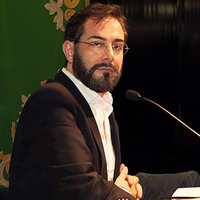
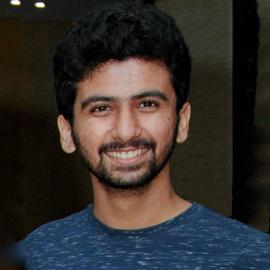
Bryan Strange is a Professor at the Department of Photonic Technology and Bioengineering, Universidad Politécnica de Madrid (UPM), and a member of the Center for Biomedical Technology (CTB) since 2011. His research focuses on neuroscience, particularly in memory mechanisms, neurodegenerative diseases, and neuroimaging techniques. Neuroscience Clinical Neurology Cognitive Neuroscience Neuroimaging Neurodegenerative Diseases Medical Imaging His work explores hippocampal-amygdala interactions in emotional memory, deep brain stimulation (DBS) for psychiatric disorders, and neuroimaging biomarkers for Alzheimer's disease and aging. Recent studies address superagers' resistance to age-related brain changes, genetic factors in hippocampal atrophy, and advanced MEG/CT/MRI methodologies. Analysis of his 15 most recent publications reveals trends in neuroimaging (MRI, MEG, CT), DBS applications, and computational psychiatry, with subfields spanning dementia risk prediction, emotional memory modulation, and cortical connectivity modeling. His contact email is bryan.strange@upm.es . He has not received explicit awards or honors in the provided data and has no listed advisees.
Pablo Calvo Báscones serves as an Assistant Professor at Comillas Pontifical University's Faculty of Economics and Business (ICADE) within the Department of Quantitative Methods, teaching data science and analytics courses since 2022 after 9 years of cumulative university service. His academic credentials include: PhD in Industrial Engineering (Comillas Pontifical University, 2022) Master's Degree in Industrial Engineering (Comillas Pontifical University) Electromechanical Engineering degree (Comillas Pontifical University) Research focuses on Economics of Longevity and Data-driven Industrial Diagnostics , integrating digital twin ecosystems with machine learning for anomaly detection. His methodology bridges industrial prognosis (2020-2023) and socioeconomic frameworks like the Senior Economy Tracker (2024), demonstrating evolution from component-level diagnostics to macroeconomic policy tools. Recent publications reveal interdisciplinary expansion into energy resource assessment and demographic transition metrics while maintaining core expertise in behavioral pattern recognition for industrial systems. Scientific recognition includes: Distinción Honorífica a la mejor Tesis Doctoral en Ingeniería (2024) for "Inclusive methodologies for anomaly detection and prognosis of industrial systems" Secured research funding from EU Horizon 2020 programs and private sector partners including Airbus and Leiden University Medical Centre. Supervises Final Degree Projects while teaching Data Analysis and Visualization courses. Maintains active industry collaboration through the Smart Management for Sustainability research group and international engagement as Visiting Professor at TU Delft (December 2023).
Sandra María Gómez Canaval is an Associate Professor at the Universidad Politécnica de Madrid , affiliated with the Department of Computer Systems . Her research focuses on: Artificial Intelligence and Machine Learning Bio-Inspired Computational Models Distributed and High-Performance Computing Generative Models and Network Security Data Mining and Time Series Forecasting Her recent work explores machine learning applications for: Network traffic prediction Harmful algal bloom forecasting Energy-efficient deep neural networks Automated guided vehicle control Cryptomining attack detection Her publications highlight expertise in Generative Adversarial Networks (GANs), cloud-based security, and Industry 4.0 systems. She actively contributes to: Data augmentation techniques Parallel computing architectures Network digital twin development
Dr. Gonzalo Rubio Calzado is a Associate Professor at the Department of Applied Mathematics to Aerospace Engineering , part of the Universidad Politécnica de Madrid (UPM) . He is affiliated with the Research Group: Numerical Methods and Applications to Aerospace Technology and the Center for Research in Computational Simulation (CCS) at UPM. Bachelor's in Aeronautic Engineering (UPM, 2009) Master's in Aerospace Engineering (UPM, 2011) PhD in Aerospace Engineering (UPM, 2015) His research spans fluid dynamics, high-order numerical methods, and machine learning applications in CFD, with over 50 publications and an h-index of 15 (last 5 years). He focuses on: Discontinuous Galerkin (DG) methods Error estimation and hp-adaptation Turbulence modeling and LES Machine learning for flow simulations Multiphase flow analysis Industrial applications (aeronautics, energy systems) Recent publications emphasize machine learning integration with high-order DG solvers, turbulence modeling, and optimization techniques. His work includes collaborations with companies like REPSOL and AIRBUS, as well as national and European projects (SIMOPAIR, DeepCFD, HERFUSE, ROSAS). Scientific awards include the Extraordinary PhD Award (2015). He is the lead developer of the open-source HORSES3D high-order CFD project and contributes to energy measurement patents for building efficiency.
Carlos I is a Professor at the University of Granada, where he conducts research in astrophysics as part of the university's Astrophysics group. His work centers on galaxy evolution, cosmic voids, and the chemical properties of star-forming regions, leveraging data from major astronomical surveys. Research interests include: Morphology and environmental effects on void galaxies Calibration of abundance ratios in H II regions Dynamical analysis of large-scale cosmic structures Impact of galactic bars on chemical gradients His recent publications (2020-2024) demonstrate consistent focus on observational astrophysics, with trends in: Galaxy classification in under-dense environments (2024) Ionization diagnostics in star-forming regions (2022-2023) Empirical methods for chemical abundance studies (2021-2022) He maintains active research without mentioned awards or student advisorship.
María Soledad Escudero Hernanz is a Full Professor in the Electronics Department at the University of Alcalá's School of Engineering. With extensive experience in both teaching and research, she has been actively contributing to the university community since at least 2005. Her research focuses on several cutting-edge areas within robotics and electronics, with particular emphasis on service robotics and transportation safety applications. Professor Escudero Hernanz is an active member of the 'Robótica de Servicios y Tecnologías para la Seguridad Vial - Service Robotics and e-Safety' research group, where she contributes to multiple research lines including autonomous driving systems, intelligent control for robotics, driver monitoring technologies, and mobile robot navigation. Her scholarly output shows a consistent pattern of research focused on practical applications of robotics and computer vision technologies. The analysis of her publications reveals a strong emphasis on transportation safety systems, with numerous projects related to driver monitoring, distraction detection, and advanced driver assistance systems. She has also made significant contributions to assistive robotics and multi-robot navigation systems. Professor Escudero Hernanz has been involved in numerous research projects funded by various entities including: Spanish Ministry of Economic Affairs and Digital Transformation Community of Madrid University of Alcalá Spanish Foundation for Science and Technology (FECYT) Her work demonstrates a strong commitment to both fundamental research and practical applications, particularly in the areas of transportation safety and assistive technologies. As an educator, she teaches Circuit Electronics and Digital Electronics across multiple engineering programs, contributing to the development of future engineers in various specializations. Her collaborative approach is evident through her long-standing research partnerships with colleagues at the University of Alcalá, particularly with Rafael Barea Navarro, María Elena López Guillén, and Luis Miguel Bergasa Pascual, with whom she has worked on multiple projects spanning more than a decade.
Luis Fernandez Sanz is a Professor in the Department of Computer Science at the University of Alcala (Spain). His primary affiliation is with the 'Information Technologies for Training and Knowledge' research group, where he investigates e-learning systems, software quality, cybersecurity, and digital accessibility. Research Focus: Professor Sanz's work spans: Development of adaptive e-learning platforms and accessibility standards Software quality measurement and testing methodologies Cybersecurity in cloud computing and data science applications Integration of gamification in educational technology EU digital competence frameworks and industry skill alignment Project Leadership: He has secured significant EU funding for projects including: DEDALUS (data literacy courses for universities) Be@CyberPro (cybersecurity career awareness game) e-Skills Match (ICT professional standards) Multiple contracts with UNINFO and European Commission bodies Teaching: He instructs courses in Software Quality/Testing, Project Management, and ICT applications across undergraduate and graduate computer engineering programs. Scholarly Output: His publications demonstrate consistent focus on emerging technologies, with recent work analyzing AI security threats, blockchain applications in banking, sustainable IoT systems, and accessibility engineering. Research often incorporates empirical validation and industry collaboration.
Dr. Jose Ramón Trujillo Martinez is a Hired Professor Doctor at the Department of Spanish Philology, Faculty of Philosophy and Letters, Autonomous University of Madrid. He is also a member of the Doctoral Program in Hispanic Studies, Language, Literature, History and Thought, and participates in two research clusters: Literary Genres in Contemporary Hispanic Literature and Spanish Language and Speech. His academic career focuses on Spanish Literature, with particular expertise in Medieval Spanish Literature, Arthurian literature, translation studies, and digital humanities. Dr. Trujillo's research explores the transmission and adaptation of literary traditions across cultures and historical periods, with special attention to the Iberian Peninsula context. His scholarly work reveals a consistent focus on the intersection of literature, translation, and cultural identity, spanning from analyses of medieval didactic poetry to contemporary studies of narrative strategies in postcolonial contexts. Dr. Trujillo's publication record demonstrates significant scholarly output with notable works including 'Tristán y el amor salvaje' (2019), 'El caballero en la floresta' (2018), and 'Ética caballeresca y cortesía en las traducciones artúricas' (2017). His research spans both historical and contemporary literary concerns, offering valuable perspectives on the evolution of literary traditions and their ongoing relevance. Chivalric ethics and courtesy in Arthurian translations (2017) Translation issues in Cervantes' work (2011-2012) Medieval Spanish didactic and hagiographic poetry (2016) Contemporary narrative strategies for historical memory recovery (2014) Perceptions of second language learning in Spanish university settings (2013) Dr. Trujillo actively contributes to academic discourse through his participation in research clusters and doctoral programs, mentoring the next generation of scholars in Hispanic literary studies while maintaining an active research agenda that bridges historical and contemporary literary concerns. His work demonstrates both historical depth and contemporary relevance in his research approach, with particular attention to the materiality of texts and processes of textual transmission.
Javier Morales Socuellamos is an Associate Professor at the Miguel Hernández University of Elche , affiliated with the Department of Statistics, Mathematics and Informatics . As a member of the Joint Research Unit in Advanced Statistical Methods in Health Sciences (UMH-FISABIO) , he contributes to interdisciplinary research bridging statistics with health sciences. Contact: +34 96 665 8961 | j.morales@umh.es Location: Edificio Torretamarit, Avda. Universidad s/n, 03202 Elche (Alicante) His teaching focuses on statistical modeling and analysis, delivering courses such as Statistical Models , Simulations of Processes and Systems , and Statistics in Experimental and Clinical Research across multiple degree programs. He has coordinated courses in Biotechnology, Business Statistics, Computer Engineering, Data Science, Public Safety, Advanced Accounting, and Translational Neuropsychopharmacology since at least 2023. As part of the Center of Operations Research (CIO) at UMH, he engages in advanced statistical methodology development. His educational contributions extend to continuing education programs in Machine Learning and Deep Learning applications with Python.
Marc Freixes Guerreiro is a Researcher at La Salle School of Engineering, Department of Engineering, part of La Salle - Universitat Ramon Llull in Barcelona, Spain. His work focuses on interdisciplinary research at the intersection of acoustics, human-environment interaction, and biomedical engineering. He actively participates in multiple research projects investigating soundscape perception, vocal tract modeling, and human comfort in built environments. His research interests span a diverse range of fields including Acoustics , Soundscape , Vocal Tract Modeling , Urban Environment , Sensor Networks , and Citizen Science . His work combines computational modeling with practical applications in both urban settings and biomedical contexts. He has particular expertise in analyzing vocal phenomena, from animal vocalizations for welfare monitoring to human phonation mechanics for speech synthesis and clinical applications. Analysis of his recent publications reveals a strong interdisciplinary trend, connecting engineering principles with applications in healthcare, urban planning, and cultural heritage. His work demonstrates expertise in both theoretical modeling (such as finite element analysis of vocal folds) and practical implementation (like sensor networks for environmental monitoring). The research spans from fundamental acoustics to applied projects addressing real-world challenges in animal welfare, medical diagnostics, and urban comfort. Marc Freixes Guerreiro leads and participates in multiple significant research projects including the BeNeXT project for Turner syndrome diagnostics, DISTRESIA for stress biomarker identification in educational contexts, Sons dels Monestirs for sacred space acoustics in Catalan monasteries, and Inhabiting Gaudí for comfort assessment in Gaudí's architectural masterpieces. His collaborative work demonstrates strong connections across engineering, medical, and humanities disciplines. His laboratory work focuses on the Human-Environment Research group within the Department of Engineering, where he develops and applies acoustic measurement techniques, computational models, and sensor network solutions. His research teams typically include interdisciplinary collaborators from engineering, medical, and humanities backgrounds, reflecting the cross-cutting nature of his research interests.
Akash Vani is a PhD Researcher at the Max Planck Institute for Astrophysics (MPA) in Garching, Germany, affiliated with the Ludwig Maximilian University (LMU) Munich through the International Max Planck Research School (IMPRS). His research bridges observational astrophysics and computational modeling. Education: MSc in Physics (2022), Heidelberg University BSc in Physics (2019), Savitribai Phule Pune University Research Interests: Akash investigates galaxy evolution from z=0 to z=10 using semi-analytical models (L-Galaxies) and observational data (Gaia, JWST). He also explores stellar populations, white dwarfs, and quantum computing applications in astronomy. Key Projects: His work includes Debugging Galaxy Evolution Models , constructing the Fifth Catalogue of Nearby Stars (CNS5) , and Deep Learning for Galaxy Morphology Classification . He contributed to photometric calibration of the UVIT telescope and studies on quantum key distribution protocols. Scientific Awards: Summer Fellow, IISER Kolkata (2019) Publications: He has published in leading journals like Monthly Notices of the Royal Astronomical Society (MNRAS) and Astronomy & Astrophysics (A&A), focusing on galaxy scaling relations, white dwarf identification, and Milky Way modeling. His work highlights discrepancies in quenching processes in simulations and improvements in stellar census completeness. Labs & Teams: Akash collaborates with the Astronomisches Rechen-Institut (ZAH, Heidelberg), Ludwig Maximilian University, and international teams leveraging Gaia data and quantum computing resources.
Almudena Nevado Llopis serves as a Professor at Jaume I University's Faculty of Communication and Social Sciences, teaching core courses in the Translation and Intercultural Communication degree program including Translation B-A (English-Spanish) I, Interpretation Techniques B-A (English-Spanish), Intercultural Mediation, and Public Service Interpreting. She extends her expertise to the Nursing degree through Health Communication and Education courses and contributes to the Master's in Health Sciences Research with Qualitative Research Designs instruction, demonstrating significant interdisciplinary engagement across communication, health, and social sciences domains. Her academic foundation includes a Licentiate in Translation and Interpretation and a PhD in Translation, Society and Communication, both completed at Jaume I University where she earned the prestigious Extraordinary Doctorate Award for her dissertation. These credentials establish her deep institutional roots and scholarly recognition within Spain's academic framework. Dr. Nevado Llopis's research program centers on intercultural communication and mediation with specialized focus on public service interpreting, particularly in healthcare settings. Her scholarly work systematically examines language brokering dynamics, ethical challenges in gender-based violence contexts, interpreter training methodologies, and the transformative impact of digitalization and pandemics on remote interpreting services. She investigates how cultural and linguistic barriers affect healthcare access for immigrant populations in Spain, advocating for professionalized interpreting services and intercultural competence development through rigorous empirical analysis and policy-relevant recommendations. Analysis of her recent publications (2022-2024) reveals three dominant trajectories: (1) healthcare interpreting systems across Spain, Italy and Romania through comparative studies of provider and user perspectives; (2) innovative training approaches for medical interpreters emphasizing ethical decision-making and crisis management; and (3) the pandemic-driven acceleration of remote interpreting services and its implications for quality assurance. Her work increasingly addresses mental healthcare accessibility through multilingual resources and intercultural competence building in educational institutions. Her scientific recognition includes the Extraordinary Doctorate Award. Significant research contributions include coordination of the ReACTME project (2019-2022) which developed medical interpreting training resources and databases, and participation in multiple Erasmus+ initiatives advancing intercultural education and healthcare communication across European borders. Dr. Nevado Llopis has successfully led international research collaborations including the ReACTME consortium and Erasmus+ projects, securing funding for cross-border studies on medical interpreting. Her research stays at King's College London's Clinical Communication Unit (2016) and Babeș-Bolyai University (2018) demonstrate active global engagement. Current work focuses on mapping mental healthcare resources through the MentalHealth4All project and analyzing leadership in international education contexts, with strong emphasis on practical implementation and policy impact. Embedded within Jaume I University's Translation and Intercultural Communication program, her research operates through dynamic project-based collaborations rather than a dedicated laboratory. She maintains strategic partnerships with European institutions including King's College London and Babeș-Bolyai University, contributing to transnational networks focused on healthcare interpreting standards, intercultural communication training, and multilingual resource development for vulnerable populations.
Nelson Alirio Cruz Gutierrez serves as a Visiting Professor in the Department of Statistics and Operations Research within the School of Mathematics and Computer Science at the University of the Balearic Islands. He maintains an active teaching role across multiple degree programs and is affiliated with the Data Modelling and Statistical Learning (MoDAE) R+D+I research group. His research focuses span critical areas in modern quantitative analysis: Advanced statistical methodologies for medical research Operations research optimization techniques Machine learning applications in data modeling Stochastic process theory and implementation Experimental design for nutrigenomics Computational statistics for biological systems Professor Cruz Gutierrez teaches 12 distinct courses across 7 academic programs for the 2024-2026 period, including core statistics for Mathematics, Medicine, and Pharmacy degrees, specialized medical statistics, and advanced topics like Stochastic Processes. His instructional portfolio demonstrates deep integration of statistical theory with biomedical and engineering applications. As an active member of the MoDAE research group, he contributes to collaborative projects at the intersection of statistical theory and real-world data challenges, particularly in healthcare and biological sciences. His office is located in room 245 (second floor) of the Anselm Turmeda building, with contact available via university phone extension 2961.
Dr. Manuel Ángel Aguilar Torres is a Professor in the Department of Engineering at the University of Almería, Spain, where he leads the research group 'Integrated Territory Management and Spatial Information Technologies.' With an h-index of 29 (Scopus) and 26 (Web of Science), he has established himself as a leading researcher in remote sensing applications for agricultural and forest monitoring. His research primarily focuses on plastic greenhouse mapping using satellite imagery , LiDAR technology for forest inventory , and precision agriculture applications . He specializes in object-based image analysis, spectral indices development, and the integration of multi-source geospatial data for environmental monitoring, with particular emphasis on Mediterranean ecosystems. His work has resulted in 98 journal articles, 16 book chapters, and numerous conference presentations. Dr. Aguilar Torres has served as Principal Investigator for multiple research projects, including 'Mapeado de invernaderos e identificación de cultivos hortícolas protegidos mediante análisis de imagen basada en objetos y series temporales de imágenes de satélite' (RTI2018-095403-B-I00) and 'Identificación basada en objetos de cultivos hortícolas bajo invernadero a partir de estéreo imágenes del satélite Worldview-3 y series temporales de Landsat 8' (AGL2014-56017-R). His recent publications (2022-2025) demonstrate continued productivity in remote sensing methodology development, particularly in greenhouse mapping, forest inventory using UAV and LiDAR technologies, and spectral analysis. Notable scientific contributions include: Development of novel methods for plastic greenhouse detection using multi-temporal satellite imagery Benchmarking studies of spectral indices for agricultural monitoring Advanced techniques for individual tree segmentation in Mediterranean forests Integration of UAV and terrestrial LiDAR data for forest inventory As a supervisor, Dr. Aguilar Torres has guided numerous PhD students through the completion of their theses, with former students including Rafael Jiménez Lao, Abderrahim Nemmaoui, and María del Mar Saldaña Díaz. His research group maintains active collaborations with international institutions, providing students with opportunities for cross-border research experiences. The laboratory facilities support advanced geospatial analysis, with capabilities for processing satellite imagery from platforms like Sentinel-2, WorldView-3, and Deimos-2, as well as UAV and LiDAR data processing for environmental monitoring applications.
Zabit Hameed is an Assistant Professor at the University of Deusto's Faculty of Engineering, where he teaches undergraduate courses across three departments: Biomedical Engineering, Computer Engineering, and Data Science & Artificial Intelligence. He serves as researcher and project manager for the eVida research group, focusing on AI-driven healthcare solutions. His research specializes in applying deep learning and artificial intelligence to medical diagnostics, with particular expertise in breast cancer detection. This focus originated from his 2023 doctoral dissertation titled 'Deep Learning for Breast Cancer Diagnosis' completed at the same institution. Professor Hameed's work bridges computer science and clinical medicine, developing innovative diagnostic tools through machine learning techniques. The eVida research group under his management explores computational approaches to enhance disease detection accuracy and healthcare outcomes.