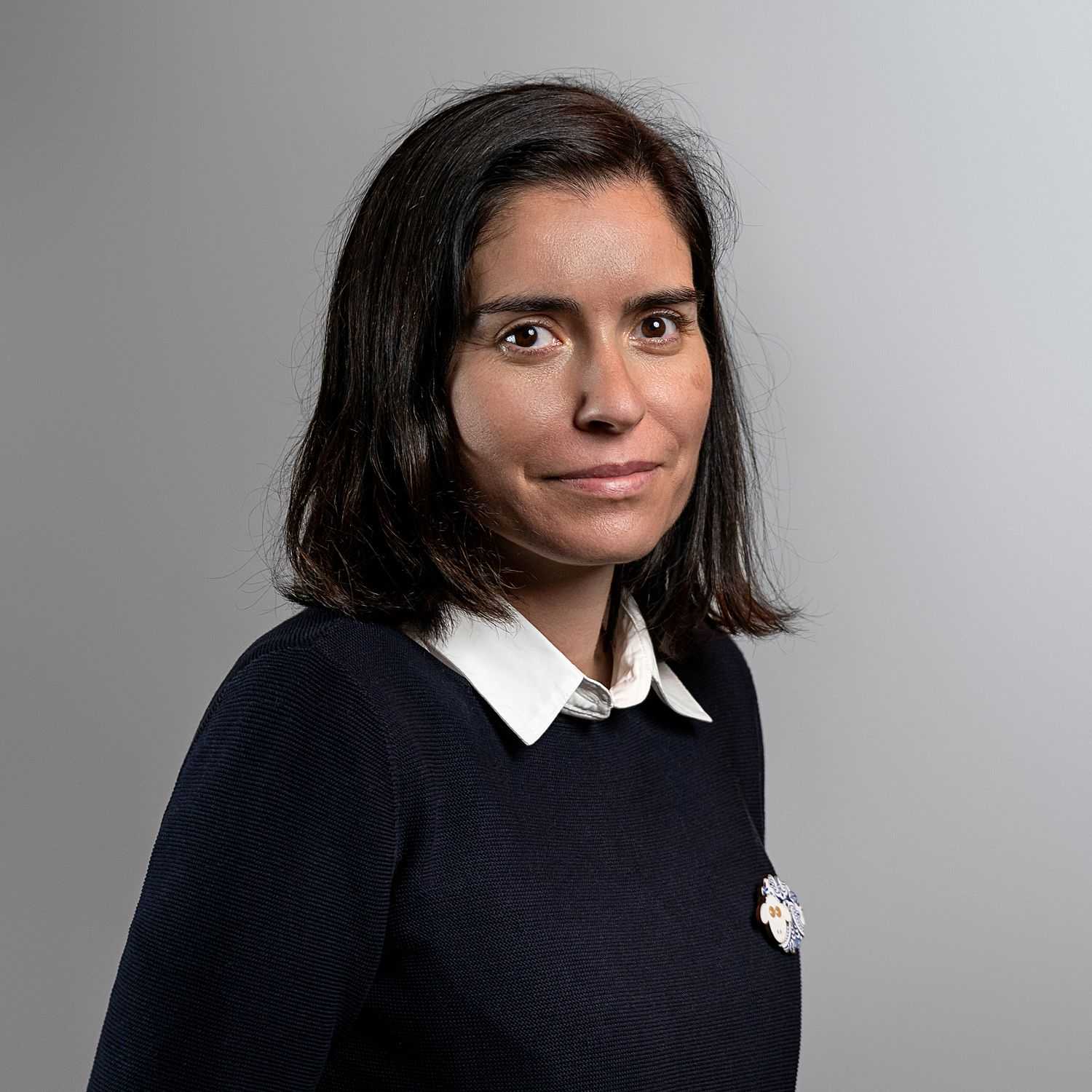
Dora Blanco Heras is a Full Professor in the Department of Electronics and Computer Engineering at the University of Santiago de Compostela. She holds a BS in Physics (1993) and a PhD cum laude from her current university. Research Focus: High Performance Computing, Computer Vision, Remote Sensing Projects: Rapid Digital Monitoring of River Ecosystems, High Performance and Cloud Computing for Demanding Applications Her work emphasizes GPU-accelerated algorithms for multispectral/hyperspectral image processing, anomaly detection, and human-computer interfaces for sustainability indices. She has contributed to technical committees like GRSS Earth Science Informatics and organized summer schools on geospatial AI.
Dr. José Carlos Cabaleiro Domínguez is a Full Professor in the Department of Electronics and Computing at the University of Santiago de Compostela's Faculty of Computing, Spain. He has been a member of CiTIUS (Centro singular de investigación en tecnoloxías da información e comunicación) since 2010 and was promoted to Full Professor in 2022 after serving as an Associate Professor since 1994. His academic journey began with a BS and PhD in Physics from the University of Santiago de Compostela in 1989 and 1994 respectively, with initial teaching experience at the University of A Coruña from 1990-1994. His research focuses on high performance computing, particularly in parallel systems architecture, development of parallel algorithms for irregular problems with sparse matrices, performance prediction and improvement of parallel applications, memory hierarchy optimization, and applications for grid and cloud computing. He has developed significant expertise in 3D point cloud processing from remote sensors like LiDAR, with applications in urban infrastructure analysis, powerline detection, and route planning. Analysis of his recent publications reveals a strong emphasis on optimizing resource allocation for big data frameworks, developing deep learning applications for point cloud classification, and creating efficient algorithms for powerline detection in LiDAR surveys. His work bridges theoretical computer science with practical applications in geospatial analysis and infrastructure monitoring. His research has been published in top-tier journals including IEEE Transactions, ISPRS Journal of Photogrammetry and Remote Sensing, and Future Generation Computer Systems, reflecting his significant contributions to the field of high performance computing and its applications. Dr. Cabaleiro actively collaborates with researchers across multiple institutions, as evidenced by his extensive publication record with co-authors from various universities and research centers. His work demonstrates a consistent trajectory of advancing parallel computing techniques while applying them to increasingly complex real-world problems involving large-scale geospatial data.
Eva Cernadas García is an Associate Professor at the Escola Técnica Superior de Enxeñaría of the University of Santiago de Compostela (USC), where she conducts research at the intersection of machine learning, computer vision, and practical applications in medicine, food technology, and marine resource management. Her academic position is firmly established within the Computer Science department, where she has developed significant expertise in image segmentation, texture analysis, and shape recognition. Dr. Cernadas' research interests span multiple domains of artificial intelligence with a strong emphasis on practical implementations. She specializes in developing computer vision algorithms for medical diagnostics, including software tools like CystAnalyser for polycystic kidney disease detection, STERapp for stereological analysis, and PDApp for dental eruption prediction. Her work extends to food technology applications such as MarblingPredictor for ham quality assessment and Govocitos for fish fecundity estimation. Notably, she integrates gender perspective into her technical work, having been awarded by USC in 2021 for introducing gender perspective in machine learning teaching. Analysis of her recent publications reveals a strong focus on applying machine learning techniques to solve real-world problems across diverse fields. Her work demonstrates consistent innovation in developing efficient algorithms for classification and regression tasks, with increasing attention to gender issues in STEM education. The publications show progression from fundamental algorithm development to practical implementations in medical diagnostics, mental health assessment, and sustainable resource management. Awarded by the University of Santiago de Compostela for the introduction of the gender perspective in machine learning teaching in 2021 Dr. Cernadas actively promotes gender equality in STEM through various initiatives including designing workshops for primary education in the program 'Unha enxeñeira ou cientifica en cada cole', early childhood education programs, and promoting the 'INFORMATIZATE' video contest for non-university students. Her research includes significant grant-funded projects related to service robots, intelligent control scenarios, and development of new technologies for studying reproductive ecology in fishery. She collaborates extensively with researchers across multiple disciplines, particularly with Manuel Fernández-Delgado, with whom she has co-authored numerous publications. Her laboratory work focuses on developing practical software tools that bridge the gap between theoretical machine learning algorithms and real-world applications. The CITIUS research center at USC appears to be her primary research base, where she contributes to projects involving image analysis, pattern recognition, and development of user-friendly interfaces for domain experts in medicine and biology.
Manuel Fernández Delgado is an Associate Professor at the University of Santiago de Compostela (manuel.fernandez.delgado@usc.es). His research spans Machine Learning , Pattern Recognition , and Computer Vision with applications in medical diagnostics, agricultural monitoring, and gender-inclusive education. PhD in Computer Science (1999) Developed software tools: Govocitos , CystAnalyser , STERapp Research highlights: Medical Imaging : Breast cancer and oral leukoplakia analysis via image segmentation/classification Agricultural AI : Nutrient deficiency detection in wheat, marbling analysis in ham Gender Equality : Pioneering computational thinking education with gender perspectives Robotics : Fault diagnosis systems for antenna arrays Key methodologies include Extreme Learning Machines, Support Vector Machines, and Deep Learning. He collaborates with teams in TELGalicia and TecAnDaLi networks.
Tomás Fernández Pena is a Full Professor at the University of Santiago de Compostela (USC) and Senior Researcher at the Research Center in Intelligent Technologies (CiTIUS) . With a career spanning over three decades, he has held academic positions since 1990 and contributed extensively to High Performance Computing (HPC), Big Data, and emerging quantum computing fields. Ph.D. in Physics from USC (1994) Senior Member of IEEE Associate Editor for IEEE Transactions on Computers and IEEE Access Research Contributions : His work focuses on parallel systems architecture, cloud computing middleware, and quantum simulation optimization. He has pioneered methods for NUMA systems, LiDAR data processing, and Big Data applications in bioinformatics/cheminformatics. His recent articles show increasing emphasis on quantum computing frameworks and distributed quantum processing. Scientific Recognition : Holds four Spanish Ministry of Education six-year research excellence periods (sexenios de investigación) and has served as Principal Investigator in 3 public projects and co-investigator in 31 EU/Xunta de Galicia funded initiatives. Supervised 7 Ph.D. theses and published 43+ international journal papers. International Collaborations : Maintains academic connections through funded research stays at Loughborough University, University of Tennessee, and University of Illinois Urbana-Champaign. Active in IEEE and participates in global conferences like Euro-Par and CHEP.
Manuel Mucientes Molina is a Full Professor at the Research Center on Intelligent Technologies (CiTIUS) within the University of Santiago de Compostela . His research focuses on Artificial Intelligence , particularly in Computer Vision and Machine Learning , with applications in object detection, process mining, and healthcare diagnostics. Research Areas : Machine learning, Computer vision, Process mining, Deep learning, AI for healthcare. Projects : Protonterap-IA (2025), AZOR (2024), RAI4P (2021), eXplica-IA (2018), DronePlan (2014), SoftLearn (2012). Publications highlight advancements in few-shot object detection, small object tracking, and AI-driven conformance checking. Notable collaborations include work on X-ray vision systems and medical mask detection in operating rooms. Awards : Best Student Paper Nomination (2015), Runner-up best industry-oriented paper award (2008). Teaching includes courses on Statistical Learning, Deep Learning, and Automata Theory at the M.Sc. and B.Sc. levels.
Natalia Seoane Iglesias serves as an Associate Professor in the Department of Applied Physics at the University of Santiago de Compostela's College of Physics. Her research integrates semiconductor device physics with high-performance computing to address challenges in next-generation electronics and energy conversion systems. B.Sc. in Physics, University of Santiago de Compostela (Spain) Ph.D. in Physics, University of Santiago de Compostela (2007) Postdoctoral research: University of Glasgow (2007-09), University of Edinburgh (2011), Swansea University (2013-15) Her research focuses on semiconductor device simulation , nanoscale variability analysis , and laser power conversion systems . She develops advanced computational tools combining 3D finite-element modeling with machine learning techniques to optimize device performance. Current projects target ultra-high efficiency (>80%) SiC-based laser converters for space applications and statistical variability studies in sub-10nm transistor architectures. Her publication portfolio reveals strong trends in machine learning-enhanced TCAD and high-concentration photovoltaics . Recent work demonstrates how vertical epitaxial heterostructures with SiC/GaN materials can overcome traditional efficiency barriers in wireless power transfer systems, while her nanoscale variability studies provide critical insights for future CMOS scaling. Key scientific contributions include: Development of MLFoMpy for semiconductor data post-processing Novel Pelgrom-based predictive models for device variability Breakthrough laser power converter architectures exceeding 80% efficiency Comprehensive studies of metal grain effects in nanosheet FETs She leads the rePowerSiC project (2024-2028) developing space-qualified laser power systems and contributes to multiple EU-funded initiatives in high-performance computing. Her team employs advanced simulation frameworks including VENDES and Silvaco Atlas for device characterization, with applications ranging from satellite power systems to refinery monitoring drones.
Juan Carlos Vidal Aguiar serves as an Associate Professor in the Department of Electronics and Computer Science at the University of Santiago de Compostela, Spain. With extensive experience in academic research and teaching, he has established himself as a prominent figure in process mining and business intelligence applications. His work bridges theoretical computer science with practical implementations across healthcare and educational domains. Dr. Vidal Aguiar earned his Bachelor Engineering degree in Computer Science from the University of La Coruña in 2000, followed by several years working as a senior IT consultant. He completed his PhD at the University of Santiago de Compostela in 2010, where he has remained as faculty since. His academic journey reflects a trajectory from foundational computer science toward specialized applications in process analytics. His research interests focus on knowledge discovery, semantic annotation, semantic modeling of workflows and services, and the application of artificial intelligence for business intelligence . Recent work demonstrates significant evolution toward healthcare applications, particularly in cardiac rehabilitation and glucose monitoring, while maintaining strong foundations in process mining techniques. His publications reveal a clear progression from theoretical workflow modeling to practical AI-driven business process solutions with real-world impact. Analysis of his publication trends shows increasing specialization in predictive process monitoring with deep learning approaches, particularly evident in his 2023-2025 work. His research spans both theoretical contributions in kernel methods and biclustering algorithms, and practical implementations like the VERONA Python library for benchmarking. The interdisciplinary nature of his work is particularly notable in healthcare applications where process mining techniques are adapted for medical contexts. Dr. Vidal Aguiar leads multiple significant research initiatives including Predictive monitoring and causality for cardiac rehabilitation, Responsible AI for Process Mining 2.0, GAMification techniques for entrepreneurial teacher development, and Soft computing for gamification analytics in cardiac rehabilitation . These projects demonstrate his ability to secure research funding across diverse domains while maintaining a cohesive research vision centered on process analytics. His research ecosystem includes collaborations with numerous colleagues including Manuel Lama, Pedro Gamallo-Fernandez, and Marcos Matabuena across various projects. The SoftLearn platform represents one of his notable contributions to educational technology, applying soft computing techniques to process mining in e-learning contexts. His work consistently bridges academic research with practical implementations that address real organizational challenges.
Silvia Garcia Mendez is a Part-Time Lecturer at the University of Vigo , affiliated with the College of Telecommunication Engineering and Department of Telematics Engineering . She collaborates with the Research Center for Telecommunication Technologies and the TC1 Information Technologies Group . Research Interests : Silvia specializes in Natural Language Processing , Machine Learning , and Human-Computer Interaction , with applications in healthcare , finance , and social network trust systems . Her work focuses on explainable AI and stream-based data analysis . Publication Trends : Her research spans NLP , ML , and AI ethics , with recent emphasis on mental health detection , predictive maintenance , and disinformation analysis . Articles cover both theoretical advancements and real-world implementations. Labs & Teams : Actively involved with the TC1 Information Technologies Group and Research Center for Telecommunication Technologies , driving interdisciplinary projects in telematics engineering and AI applications .
Javier Martinez Torres is a Full-Time Professor in the Department of Applied Mathematics I at the School of Industrial Engineering , University of Vigo. His work bridges machine learning, applied mathematics, and functional data analysis across diverse domains. Education : PhD from University of Vigo (2011) with thesis on slate plate classification using computer vision and machine learning. Research Interests focus on: Machine learning applications in industrial engineering and healthcare Multi-criteria decision-making for sustainable urban planning Functional data analysis for environmental monitoring AI-driven optimization of thermal and mechanical systems Recent publications highlight his interdisciplinary approach, combining machine learning with operations research for pedestrian modeling, grey MCDM in urban development, and LSTM networks for solar energy systems. His work spans public health (SARS-CoV-2 pooling strategies) and digital humanities (AI for document heritage management). He collaborates with the Center for Research in Technologies, Energy, and Industrial Processes at the Vigo campus.
Maria Belen Altuna Lizaso serves as an Associate Professor in the Department of Philosophy of Values and Social Anthropology within the Faculty of Education, Philosophy and Anthropology at the University of the Basque Country, specializing in Moral Philosophy and Ethics under the Arts and Humanities domain. Education: Doctorate from the University of the Basque Country (2001) with thesis "La tradición \"euskaldum fededun\" misiones y moral integrista 1789-1839" supervised by Dr. Mikel Azurmendi Intxausti Research Focus: Her scholarship centers on Moral Philosophy with emphasis on Ethics, Social Anthropology, and Philosophy of Values. Her foundational doctoral work examined Basque cultural traditions and integrist morality (1789-1839), revealing deep engagement with historical ethical frameworks and cultural identity. Current research explores practices, learning, and values through the lens of Basque sociocultural contexts. Research Affiliations: Active member of AKTIBA-IT Prácticas, Aprendizaje y Valores (Practices, Learning and Values) Former member of ETICOP-IT Ethics in Communities of Practice Academic Service: No documented advisees or grant funding in available records; primary contributions manifest through research group participation and departmental scholarship in moral-philosophical discourse.
Mario Muñoz Organero serves as a Full Professor in the Telematics Engineering Department at University Carlos III of Madrid, concurrently directing the University Master's Degree in Connected Industry. His academic profile centers on leveraging computational intelligence to address complex challenges across healthcare, urban systems, and educational frameworks through rigorous interdisciplinary collaboration. His research spans Artificial Intelligence, Machine Learning, and Smart Environments with significant applications in Healthcare Informatics (pancreatic cancer registries, diabetes management), Transportation Systems (traffic flow optimization, commuter stress analysis), and Educational Technology (generative AI for learning, micro-credentials). He pioneers context-integrated neural network architectures for sensor data interpretation in real-world environments, emphasizing practical deployment in smart cities and clinical settings. Analysis of his 2023-2025 publications reveals a distinctive interdisciplinary trajectory where machine learning methodologies bridge traditionally separate domains. Recurrent and graph neural networks form the technical backbone for projects ranging from pandemic-influenced traffic modeling to blockchain-enabled agricultural trading in Colombia, while explainable AI frameworks increasingly inform educational applications. This cross-pollination of techniques demonstrates exceptional adaptability in addressing domain-specific constraints across medical, transportation, and pedagogical contexts.
Pascual Campoy Cervera is a Full Professor at the Universidad Politécnica de Madrid (UPM) and holds visiting professor positions at Delft University of Technology, Tongji University, and Queensland University of Technology. His work focuses on Control Systems , Machine Learning , and Computer Vision for Unmanned Aerial Vehicles (UAVs) . As Principal Investigator of the Computer Vision and Aerial Robotics group at UPM's Center for Automation and Robotics (CAR), he has led over 40 R&D projects with European, national, and industrial funding. Current affiliations: UPM, TU Delft, CAR-UPM Research themes: UAV autonomy, swarm robotics, embedded vision systems His research integrates cutting-edge technologies in image processing, control theory, and artificial intelligence to enhance UAV capabilities in unstructured environments. Recent projects include: Autonomous firefighting systems High-speed drone racing frameworks Swarm-based solar farm inspection Thrust vectoring for heavy UAVs Notable scientific awards include multiple international prizes at UAV competitions (IMAV12–17). His team has developed the Aerostack and Aerostack2 frameworks for aerial robotics, which address execution control, mission planning, and sensor fusion challenges.
Antonio Jorge Pertusa Ibáñez serves as a full Professor in the Department of Languages and Computer Systems at the University of Alicante's Higher Polytechnic School. He directs the University Research Institute in Computer Science (IUII), managing approximately 135 PhD researchers, and is an active member of the Pattern Recognition and Artificial Intelligence Group (GRFIA). Additionally, he holds a position on the executive committee of the Spanish Association for Pattern Recognition and Image Analysis (AERFAI), the national chapter of the International Association for Pattern Recognition (IAPR). His academic background includes a PhD in Computer Science (2010), a Computer Engineering degree (2001), and a Technical Engineering in Computer Systems (2002), all obtained at the University of Alicante. Research focuses on advancing machine learning and deep learning methodologies for applications in music information retrieval, medical data analysis, and remote sensing, resulting in over 50 publications in high-impact journals and international conferences. Professor Pertusa has secured significant research funding through 11 competitive projects (three as Principal Investigator) and four non-competitive contracts (two as Principal Investigator) with public and private entities since 2010. He has supervised three doctoral theses addressing deep learning applications in computer vision, medical data, and music information retrieval tasks. His academic service includes organizing the Iberian Conference of Pattern Recognition and Image Analysis (IbPRIA) 2023, serving on the Program Committee for the ISMIR conference for 15 consecutive years, and acting as a reviewer for leading journals including IEEE Transactions on Image Processing and Nature Scientific Reports. He has also contributed as guest editor for Pattern Recognition Letters, Pattern Analysis and Applications, and Remote Sensing.
José García Rodríguez is a full professor at the University of Alicante, affiliated with the Higher Polytechnic School and the Department of Informatics and Computing Technology. He earned a BS in Computer Engineering (1994) and PhD in Artificial Vision (2009) from the same institution. Current roles: Director of the PhD Program in Computer Science Vice Dean of International Relations Editor-in-Chief of the International Journal of Computer Vision and Image Processing Associate Editor of Expert Systems Journal Senior member of IEEE, INNS, and Eucog networks His research spans computer vision, deep learning, robotics, and ambient intelligence, with applications in improving autonomy for individuals with acquired brain damage. He has led 20+ regional/national/international projects, including three consecutive national projects funded by Spain's Ministry of Economy and Competitiveness (DPI2013-40534-R, TIN2016-76515-R, PID2019-104818RB-I00). International collaborations include research stays at the University of Westminster, Queen Mary University of London, and Griffith University (Australia). He has organized special sessions at WCCI conferences (2010–2018) and special issues in JCR journals like Neural Processing Letters and Complexity. Professional memberships include European networks Eucog, HIPEAC, ELLIS, and COST Action IC1307.