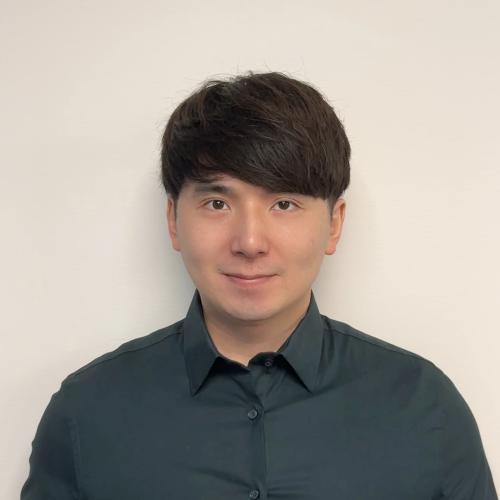
Shweta Yadav is an Assistant Professor in the Department of Computer Science at the University of Illinois Chicago (UIC). Prior to this, she was a Bridge to the Faculty (B2F) fellow at UIC and a postdoctoral research fellow at the U.S. National Library of Medicine, NIH. She holds a Ph.D. in Computer Science from the Indian Institute of Technology Patna, India. Education: Ph.D. in Computer Science, Indian Institute of Technology Patna, India Research Interests Her research focuses on the intersection of Natural Language Processing (NLP), Healthcare Informatics, Biomedical Text Mining, and Computational Social Science. She develops machine learning algorithms to advance AI applications in healthcare, particularly in medical document summarization , disease progression modeling , and health outcome prediction using electronic health records and social media data. Her work emphasizes interdisciplinary collaboration to address real-world healthcare challenges. Recent Publications Her recent publications highlight advancements in Multimodal Mental Health Analysis , Perspective-aware Healthcare Summarization , and Biomedical Relation Extraction . She employs techniques like Transformer models , Contrastive Learning , and Attention Frameworks to tackle low-resource settings and extract insights from complex data sources.
Erik Quaeghebeur is an Assistant Professor at Eindhoven University of Technology's School of Mathematics and Computer Science, focusing on uncertainty modeling in artificial intelligence. His work spans probabilistic circuits, imprecise probability theory, and wind energy applications. PhD in Applied Mathematics (Ghent University, 2002-2009) Master's in Applied Mathematics (Université catholique de Louvain, 2001-2002) Master's in Physics Engineering (Ghent University, 1998-2001) Research interests include probabilistic modeling under uncertainty, with applications in AI and wind energy systems. His recent work explores tensor factorizations, equivariant graph neural networks, and scalable probabilistic circuits. Scientific contributions include 60 research outputs and 2 datasets . Awards encompass the ERCIM Alain Bensoussan Fellowship (2013), BOF Postdoc (2010), and B.A.E.F. Francqui Fellowship (2009). He serves on committees for the Society for Imprecise Probability and acts as editorial board member for related conferences. Foundations of Artificial Intelligence course (since 2020) Uncertainty Representations and Reasoning course (since 2021)
Tianming Liu serves as a Distinguished Research Professor in the School of Computing at the University of Georgia, with courtesy faculty appointments in the Department of Epidemiology and Biostatistics at the College of Public Health and the Institute of Bioinformatics. His academic career at UGA spans from Assistant Professor (2008-2013) to Associate Professor (2013-2015) to full Professor (2015-present), culminating in his recognition as a Distinguished Research Professor in 2017. He also serves as Graduate Program Faculty in the School of Computing. Education: Ph.D. in Computer Engineering, Shanghai Jiaotong University, China (2002) Master of Science in Computer Science, Northwestern Polytechnical University, China (1999) Bachelor of Arts in Computer Science, Northwestern Polytechnical University, China (1998) Dr. Liu's research focuses on the intersection of computer science and neuroscience, with particular expertise in biomedical image analysis, computational neuroscience, and biomedical informatics. His work centers on cortical architecture imaging and discovery, developing advanced computational methods for analyzing brain structure and function. His research spans multiple disciplines including neurosciences, cognitive sciences, biomedical engineering, and clinical sciences, with applications in understanding Alzheimer's disease progression, brain connectomics, and neural architecture. Analysis of Dr. Liu's recent publications reveals a strong trajectory in applying deep learning techniques to neuroimaging data. His work increasingly focuses on developing sophisticated neural network architectures specifically designed for brain connectome analysis, with particular attention to spatiotemporal dynamics and hierarchical organization of brain networks. Recent publications demonstrate his leadership in applying neural architecture search methods to optimize brain network analysis pipelines, with applications spanning from Alzheimer's disease research to fundamental neuroscience questions about cortical folding patterns. Scientific Recognition: Distinguished Research Professor at the University of Georgia (2017) Dr. Liu has secured substantial research funding through multiple competitive grants from NIH and NSF, demonstrating the significance and impact of his work. His most notable projects include the NIH R01 grant "Developing an Individualized Deep Connectome Framework for ADRD Analysis," the NIH R01 grant "Mapping Trajectories of Alzheimer's Progression via Personalized Brain Anchor-nodes," and the NSF CRCNS grant "Exploring the Mechanism of 3-Hinge Gyral Formation and its Role in Brain Networks." These projects highlight his leadership in applying computational methods to address critical challenges in neuroscience and medicine, particularly in the domain of Alzheimer's Disease and Related Dementias (ADRD). Dr. Liu collaborates extensively across disciplines, working with researchers at institutions including University of Virginia, Emory University, UNC Chapel Hill, and UT Arlington. His work has contributed to the development of BiomedGPT, an open-source visual-language foundation model for biomedical applications, demonstrating his commitment to creating accessible tools for the broader research community.
Christian Desrosiers is a Research Professor at the Department of Software Engineering and IT, École de technologie supérieure (ÉTS), with a Ph.D. from Polytechnique Montréal. His research focuses on data mining, machine learning, and computer vision, particularly in medical imaging and optical network analysis. Research Units: Zebra Research Chair in Computer Vision for Industrial Applications, LIVE – Interventional Imaging Laboratory, LIVIA – Imaging, Vision and Artificial Intelligence Laboratory Research Axes: Intelligent and autonomous systems, Health technologies His expertise spans medical image analysis, domain adaptation, and computer vision. Recent publications highlight advancements in 3D point cloud learning, MRI harmonization, domain generalization, and real-time segmentation networks. Scientific awards include the prestigious Zebra Research Chair. He has co-supervised over 30 graduate students in topics ranging from optical network diagnostics to brain imaging and machine learning applications.
Patrick Desrosiers serves as an Adjunct Professor in the Department of Physics, Physical Engineering and Optics within Université Laval's Faculty of Science and Engineering, while conducting neuroscience research at the CERVO Brain Research Center. He co-directs Dynamica, a multidisciplinary complex systems research group, and participates in UNIQUE (neuroscience-AI integration) and CIMMUL (mathematical modeling applications). His academic training spans physics and mathematics at Université Laval, the University of Melbourne, and CEA-Saclay. Dr. Desrosiers' research centers on mathematical and computational neuroscience , with signature contributions in dimensionality reduction and network resilience analysis . His work bridges biological and artificial neural networks , zebrafish brain mapping , and neurovascular coupling using advanced techniques from spectral graph theory , random matrix theory , and dynamical systems . Current investigations focus on neural decoding under chronic stress and structural-functional relationships in brain networks. Analysis of his 2023-2025 publications reveals three dominant trajectories: (1) Low-dimensional representations for predicting cognitive decline and neural dynamics, (2) Network reconstruction methodologies applied to neuroscience and biodiversity, and (3) Development of computational tools like NeuroTorch for neural data analysis. His work consistently integrates mathematical rigor with biological relevance across species and scales. His recognition includes: Professeur étoile prize for exceptional teaching (Faculty of Science and Engineering, Université Laval, 2018) As Dynamica co-director, he mentors a research team comprising Antoine Légaré, Arthur Légaré, Benjamin Claveau, Jordan Charest, Marziyeh Pourmousavi, Pierre-Luc Larouche, Vincent Savard, Vincent Thibeault, and Zahra Yazdani. His collaborative framework connects physics, mathematics, and neuroscience to address fundamental questions in neural network organization, with funding evident through sustained publication output and lab operations. Dynamica Lab ( https://dynamicalab.github.io/ ) serves as the operational hub for his interdisciplinary research, maintaining active collaboration with CERVO Brain Research Center and international institutions.
Roberto Giorgi is an Associate Professor of Computer Engineering at the Department of Information Engineering, University of Siena, Italy. He has held this position since October 1, 2006, following his tenure as an Assistant Professor since March 15, 1999. His educational background includes a Ph.D. in Computer Engineering from the University of Pisa (1999) with a thesis on coherence protocols for shared-memory multiprocessors, and an Electronic Engineering degree (1995) with a thesis on trace-driven performance evaluation of multiprocessors. Giorgi's primary research focuses on Computer Architecture , particularly on multiprocessor/multicore issues including processor design, coherence protocols, programmability, and energy efficiency. His work spans both theoretical and practical aspects of computer architecture, with emphasis on real-world implementations and educational tools. He has coordinated significant EU-funded projects including AXIOM (2014-2018) on Smart Cyber-Physical Systems and TERAFLUX (2009-2014) on Many-Cores. His recent publications (2022-2025) demonstrate a strong progression toward practical applications of computer architecture research, with particular emphasis on RISC-V architecture, FPGA-based acceleration, dataflow computing models (especially DF-Threads), and graph processing. Many of his papers address educational tools for computer architecture education, real-time object detection on embedded platforms, and novel execution paradigms for edge computing and HPC. IEEE Senior Member ACM Lifetime Member Coordinator of EU-funded AXIOM project (2014-2018) on Smart Cyber-Physical Systems Coordinator of EU-funded TERAFLUX project (2009-2014) on Many-Cores Giorgi has been actively involved in securing research funding and building collaborations, particularly in high-performance computer architecture research with emphasis on scalable architectures and embedded systems. He leads the Computer Architecture Lab (ROOM 223) at the University of Siena, which was established in 2007, and has been instrumental in developing practical implementations of architectural concepts including the AXIOM platform for cyber-physical systems.
Dr. Bo Li serves as an Associate Professor at the University of Southern Mississippi, where he teaches core computer science courses including Artificial Intelligence, Computer Graphics, and Database Management Systems. His academic foundation spans institutions across three countries, reflecting a globally oriented research perspective in visual computing and machine learning. His educational background includes: PhD in Computer Science from Nanyang Technological University (2012) MS in Computer Science from Texas State University (2015) MS in Computer Science from Xi'an Jiaotong University (2005) BS in Computer Science from Xi'an Jiaotong University (2005) Dr. Li's research centers on 3D shape retrieval systems, where he pioneers methods for sketch-based and image-based 3D model search. His work bridges computer vision, graphics, and machine learning through innovative approaches to 3D scene analysis, semantic modeling, and cross-modal translation. Recent investigations extend into social media analysis and speech emotion recognition, demonstrating methodological versatility within artificial intelligence. Analysis of his 15 most recent publications reveals a sustained focus on 3D shape retrieval benchmarking through SHREC competitions, evolving from traditional descriptor methods to deep learning frameworks. Key trends include multimodal query processing, large-scale dataset handling, and applications in real-world image denoising. His research consistently addresses challenges in partial/non-rigid model matching and semantic scene understanding. Dr. Li has not been documented with scientific awards in the provided information. Regarding academic mentorship and funding, no details about student supervision, research grants, or sponsored projects are available in the source material. Similarly, information about laboratory facilities, research teams, or collaborative groups is not provided in the current documentation.
François Goulette is a Professor and Deputy Director of the Computer Science and Systems Engineering Unit (U2IS) at ENSTA Paris, part of Institut Polytechnique de Paris. His research focuses on 3D point cloud processing, LiDAR perception, and autonomous systems within the Robotics Center (CAOR). His primary research interests lie in 3D point cloud processing , LiDAR perception , and autonomous systems . His work spans fundamental algorithm development to practical applications in autonomous driving, cultural heritage digitization, and robotics. He has made significant contributions to domain generalization of LiDAR perception, semantic segmentation of 3D point clouds, and point cloud registration techniques. The analysis of his recent publications reveals a strong focus on domain generalization for LiDAR perception systems, with multiple papers addressing challenges in 3D semantic segmentation across different environments. His work combines multi-scale architectures , unsupervised learning , and dataset creation to advance the state-of-the-art in autonomous systems perception. The research spans both theoretical algorithm development and practical applications in urban environments. François Goulette leads research activities within the Robotics Center (CAOR) at ENSTA Paris. His team develops advanced techniques for 3D environment understanding, with applications in autonomous vehicles, cultural heritage preservation, and industrial robotics. The research combines computer vision, machine learning, and robotics to solve challenging problems in 3D perception and scene understanding.
Dong Li is an Associate Professor at the University of California, Merced , where he directs the Parallel Architecture, System, and Algorithm Lab (PASA) and co-directs the High Performance Computing Systems and Architecture Group . He co-founded Yotta Labs Inc. and previously held research roles at Oak Ridge National Laboratory (2011-2014) and a PhD from Virginia Tech. Research Interests: Dong's work focuses on High performance computing (HPC) Memory heterogeneity and non-volatile memory Systems for machine learning and AI Fault tolerance in large-scale systems His innovations include heterogeneous memory optimization for recommendation models and GNNs, CXL memory integration, and persistent memory debugging tools. Recent Publications highlight advancements in CXL-based inter-node communication Memory tiering for laminography reconstruction ML-guided memory optimization for DLRM and GNN Fault tolerance benchmarks and error analysis Awards & Recognition: NSF CAREER Award (2016) Oracle Research Award (2022) ASPLOS Distinguished Artifact Award (2021) Virginia Tech Early Career Alumni Award (2023) Advising & Funding: Dong has mentored 22 students (8 PhD, 6 Master’s, 8 undergraduates) and secured grants from NSF, NVIDIA, Meta, and national labs (Argonne, Lawrence Berkeley, Lawrence Livermore). Collaborations include Microsoft (DeepSpeed, Intel PMDK), AMD, SK Hynix, and Intel/MICRON hardware donations.
Bogdan Iancu is a University Lecturer in the Department of Information Technology at the Faculty of Science and Engineering, Åbo Akademi University. He holds a PhD and Docent qualification in Computer Science, with extensive expertise in artificial intelligence and computer vision applications, particularly in the maritime domain. His academic career spans numerous research projects and publications that bridge theoretical AI concepts with practical industry applications. Dr. Iancu's research focuses on AI applications in maritime technology, with special emphasis on object detection systems, security challenges in AI models, and sustainable technological solutions. He has developed benchmark datasets like ABOships and ABOships-PLUS that have become valuable resources for researchers in maritime computer vision. His work addresses critical challenges including adversarial attacks on object detection systems, as evidenced by his 2025 publication on TOG Adversarial Attacks in YOLO Models. The analysis of his recent publications reveals a clear progression from foundational dataset creation to advanced security analysis and neurosymbolic approaches that combine neural networks with symbolic reasoning. His research shows increasing sophistication in addressing real-world challenges in maritime AI systems, with particular attention to robustness, security, and practical implementation. Dr. Iancu actively participates in numerous research projects including EDISS (Engineering of Data-intensive Intelligent Software Systems), SMARTER (Sea4Value Smart Terminals), and DECATRIP (Decarbonizing Transport Corridors). These projects involve collaboration with industry partners across Finland and Europe, focusing on applying AI to solve real-world challenges in maritime transport, digitalization, and sustainability. He has contributed to the academic community through teaching courses in Artificial Intelligence, Data Science, and Graph Algorithms, and through active participation in the Finnish Artificial Intelligence Society. His work aligns with UN Sustainable Development Goals, particularly those related to industry innovation, infrastructure, and climate action through projects like DECATRIP that focus on decarbonizing transport corridors.
Sathyanarayanan N. Aakur is an Assistant Professor in the Department of Computer Science and Software Engineering at Auburn University's College of Engineering. Previously, he was an Assistant Professor in the Department of Computer Science at Oklahoma State University. He is an IEEE Senior Member and has received the prestigious NSF CAREER award for his research on multi-modal event understanding. Dr. Aakur received his PhD from the University of South Florida, where he worked with Dr. Sudeep Sarkar in the Computer Vision and Pattern Recognition Group. He also holds a Master's degree in Management Information Systems from the Muma College of Business at the University of South Florida and an undergraduate degree in Electronics and Communication Engineering from Velammal Engineering College, Anna University, India. His research focuses on the intersection of computer vision, natural language processing, and psychology, with the goal of building intelligent agents that understand the visual world beyond simple recognition or captioning. His work encompasses self-supervised predictive learning for video event segmentation, commonsense reasoning to ground perception and prior knowledge, and generative modeling for building knowledge systems. Much of his group's current work focuses on analyzing, modeling, and synthesizing complex video scenes, with applications in agriculture and animal diagnostics. His recent publications demonstrate a strong focus on open-world visual understanding, neurosymbolic reasoning, and multimodal learning. His work spans from fundamental computer vision problems like egocentric action recognition and scene graph generation to applied research in agricultural technology and biomedical informatics. He has successfully published at top-tier conferences including CVPR, ICCV, ECCV, and WACV, as well as in high-impact journals like IEEE TPAMI. NSF CAREER Award (2022) IEEE Senior Member (2024) Dr. Aakur serves as Area Chair for major conferences including CVPR, WACV, ICML, and NeurIPS, and as Associate Editor for Pattern Recognition journal. He has successfully mentored numerous students who have published at top venues in computer vision and machine learning. His research group has received funding from sources including the NSF and USDA for projects related to multimodal time series classification and stress detection in precision agriculture. The lab maintains active collaborations with institutions including the University of South Florida and Florida State University.
Dr. Wai Kiong Oswald Chong is an Associate Professor at Arizona State University's School of Sustainable Engineering and the Built Environment, with a dual affiliation as Senior Global Futures Scientist at the Global Futures Scientists and Scholars program. He holds a PhD in Civil Engineering from the University of Texas-Austin, MSc and BSc in Building from the National University of Singapore, and focuses on integrating artificial intelligence with sustainable engineering systems. PhD (2005): Civil Engineering, University of Texas-Austin MSc (1999) & BSc (1997): National University of Singapore His research bridges lunar construction with Earth-bound sustainable systems, covering topics like: Space habitat modularization Resource circularity systems AI-enhanced building codes Climate-resilient infrastructure Advanced energy modeling Construction supply chain optimization Publications demonstrate consistent focus on: Semiconductor facility HVAC optimization Building energy consumption anomalies Life cycle assessment frameworks Construction risk management Deconstruction and material reuse AI-driven system modeling Current research projects include: Lunar MVI (Moon Village Initiative) Semiconductor fab design optimization Human-AI knowledge interfaces Thermal insulation systems for extreme environments Smart grid energy modeling
Charith Mendis is an Assistant Professor in the Siebel School of Computing and Data Science at the University of Illinois at Urbana-Champaign, with joint appointments in the Department of Computer Science, Electrical and Computer Engineering, and the Coordinated Science Lab. His research focuses on the intersection of compilers, program optimization, and machine learning systems. Dr. Mendis received his educational background from prestigious institutions: Ph.D. in Computer Science from Massachusetts Institute of Technology (2020) S.M. in Computer Science from Massachusetts Institute of Technology (2015) B.Sc. in Electronics and Telecommunication Engineering from University of Moratuwa (2013) His primary research interests center around compiler technology and machine learning systems. Mendis leads the ADAPT lab at UIUC, where his team works on creating high-performance ML optimization techniques and automated compiler construction using machine learning and formal methods. His work bridges the gap between traditional compiler design and modern machine learning approaches, with applications in tensor compilers, graph neural networks, and sparse computation. He has developed novel frameworks for optimizing deep learning workloads, verification of compiler transformations, and performance modeling for emerging hardware architectures. Mendis has established himself as a leading researcher in compiler optimization for machine learning systems, with a particular focus on tensor compilers, graph neural networks, and performance modeling. His recent publications demonstrate increasing sophistication in combining formal methods with machine learning techniques to solve challenging problems in compiler optimization and verification, with multiple papers accepted at top-tier conferences including OOPSLA, PLDI, POPL, and SIGMOD. His notable scientific achievements include: Google ML and Systems Junior Faculty Award (2025) DARPA Young Faculty Award (2024) NSF CAREER Award (2024) Distinguished Paper Award at POPL (2025) William A. Martin Thesis Award for Outstanding SM thesis, MIT (2015) Multiple teaching excellence awards at UIUC (2021-2023) Dr. Mendis actively mentors students through the ADAPT lab, offering research opportunities for undergraduates, master's students, and PhD candidates interested in compiler technology and machine learning systems. His research is supported by significant funding from the ACE center (part of JUMP 2.0), National Science Foundation (NSF), DARPA, IIDAI, and industry partners including Google, Intel, Amazon, and Qualcomm. He teaches advanced courses in compiler construction and machine learning for compilers. He leads the ADAPT lab at UIUC, which focuses on developing advanced compiler technologies for modern machine learning workloads. The lab maintains active collaborations with industry partners and has established itself as a leading research group in compiler optimization for AI systems. Current projects include tensor compilers, graph neural network optimization, and automated verification of deep learning systems.
Yikun Ban is a tenure-track Associate Professor in the School of Computer Science and Engineering at Beihang University, where he is a member of the State Key Laboratory of Software Development Environment. He earned his PhD in Computer Science from the University of Illinois Urbana-Champaign (2023), MS in Computer Science from Peking University (2019), and BS in Software Engineering from Wuhan University (2016). PhD: University of Illinois Urbana-Champaign (2023) MS: Peking University (2019) BS: Wuhan University (2016) His research focuses on principled algorithms for reinforcement learning with human feedback, neural contextual bandits, and exploration-exploitation problems. He develops frameworks combining deep learning with bandit theory for applications in recommendation systems, disinformation detection, and dynamic graph learning. Recent publications address: Robust neural contextual bandits (NeurIPS 2024) Graph neural bandits (KDD 2023) Meta-learning for bandit scheduling (NeurIPS 2023) Clustering in contextual bandits (WWW 2021, AAAI 2021) Honors include the NeurIPS Scholar Award and recognition as ICML Outstanding Reviewer . His open-source LOCB repository provides Python implementations for contextual multi-armed bandit algorithms with local clustering, supporting applications in recommendation systems and online learning.
Prof. Dr.-Ing. Richard Membarth is a Research Professor for System-on-a-Chip and AI at the Edge Computing at Technische Hochschule Ingolstadt (THI). He is affiliated with the Hardware-Software Co-Design group and holds a secondary position at the German Research Center for Artificial Intelligence (DFKI) Saarbrücken. Co-creator of DSL frameworks like AnyDSL and Hipacc Key contributor to MetaDL (AI metaprogramming) and PRIME (predictive rendering) His research bridges GPU computing , domain-specific languages , and compiler technology , with recent work on Vulkan SPIR-V compilation and device-driven SpMV algorithms . Notable awards include the HiPEAC Paper Award (2018) and multiple Best Paper Awards for his compiler frameworks.