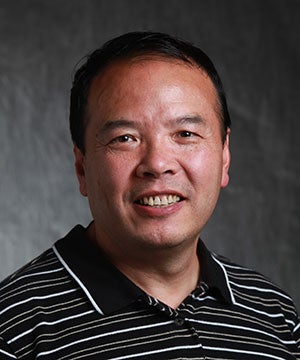
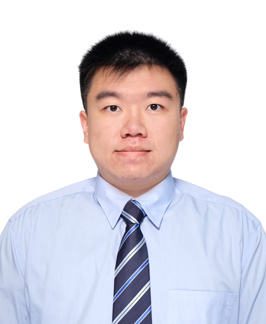
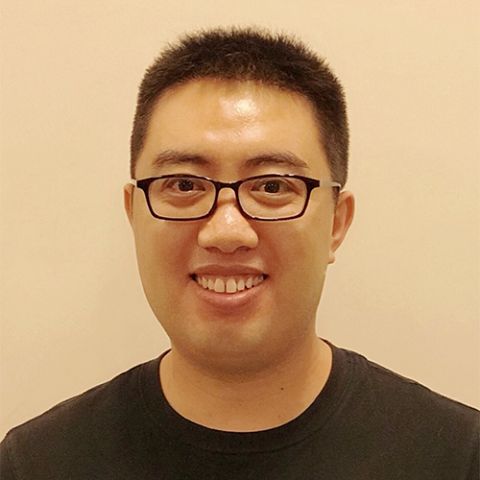
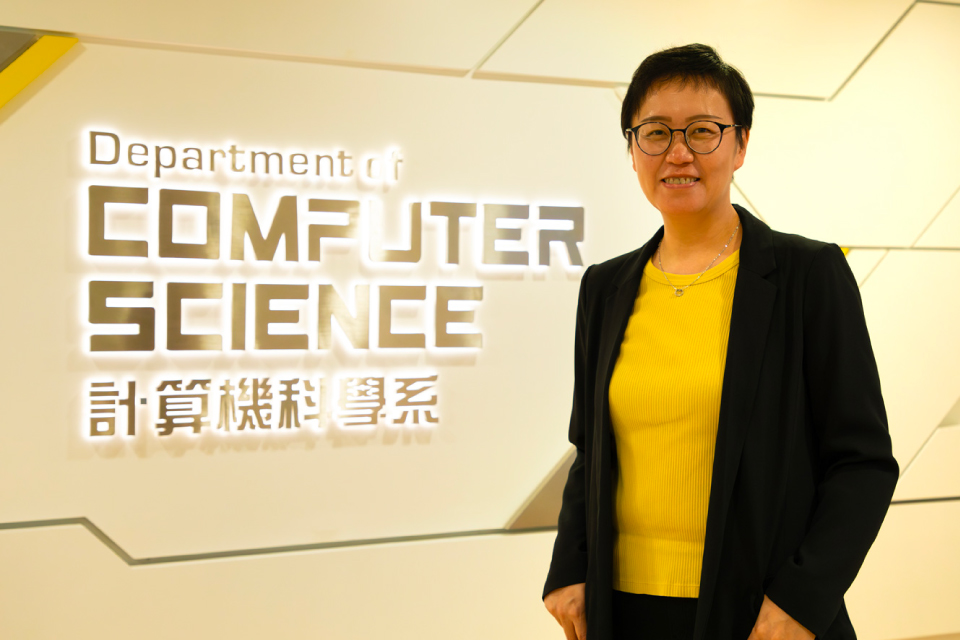
Muhammad Waqas is a researcher affiliated with COMSATS University Islamabad , where he holds a position in the Department of Meteorology under the School of Applied Sciences and Humanities . His academic collaborations span institutions like Bahria University, National University of Technology, and University of Bahrain, indicating a multidisciplinary approach. Research interests include Mechanisms for integrating fuzzy logic and machine learning in health monitoring Application of deep learning to medical imaging and clinical diagnostics Development of smart sensors for wearable technology in biomechanics Analysis of social media data for public health surveillance and sentiment analysis Investigation of digital citizenship and ICT leadership in educational contexts Trends in his 15 most recent publications (2025-2024) reveal a focus on medical diagnostics (e.g., monkeypox, breast cancer), smart infrastructure (e.g., sensor placement, structural health monitoring), and social media analytics for health and behavioral insights. These works leverage machine learning , fuzzy systems , and multi-objective optimization .
Andrea Maurino is a Full Professor at the University of Milano-Bicocca and leads the Insid&s LAB. His research focuses on data quality, knowledge graphs, machine learning, and their applications in healthcare, finance, urban planning, and organizational analysis. He explores cutting-edge techniques like Large Language Models (LLMs) for decision support systems and semantic annotation of tabular data. Key research interests include improving data quality frameworks for large RDF datasets, developing enterprise knowledge graphs for organizational insights, and applying AI to social media analysis and hate speech detection. His work bridges theoretical advancements with real-world applications such as smart city mobility prediction and nutritional strategies for healthy aging. Notable contributions include scalable tools like ABSTAT-HD for knowledge graph profiling and the 3d-clost mobility prediction model. Maurino’s interdisciplinary approach integrates data science with fields like psychology (ICD-11 decision support) and environmental science (ESG activity detection in financial texts). His lab collaborates on projects like Food NET, combining nutrition science with social network analysis. While no formal awards are listed here, his prolific publication record reflects sustained innovation in data-driven methodologies.
Qiang Ji is a Professor in the Department of Electrical, Computer, and Systems Engineering at Rensselaer Polytechnic Institute (RPI), directing the Intelligent Systems Laboratory (ISL). He holds IEEE and IAPR Fellowships. Dr. Ji's research focuses on AI, computer vision, Bayesian methods, and robotics, with contributions to causal discovery, 3D reconstruction, and Tibetan multi-dialect speech recognition. He previously served as an NSF program director managing machine learning and computer vision initiatives. His academic journey includes positions at the University of Nevada, Reno, and visiting roles at institutions like Carnegie Mellon's Robotics Institute. Education: PhD in Electrical Engineering from the University of Washington. Research interests span machine learning, probabilistic graphical models, and human-computer interaction. Notable contributions include Bayesian adversarial learning, knowledge-augmented deep learning, and physics-aware human motion prediction. His work bridges theoretical advancements with applied systems like gaze estimation and facial action unit detection. Awards: IEEE Fellow (202?), IAPR Fellow (202?). Professional roles include conference committee chairs and editorial board memberships. Key research themes include uncertainty quantification, causal inference, and cross-domain learning challenges.
Pierre-Emmanuel Gaillardon is a Professor in the Department of Electrical & Computer Engineering and Adjunct Professor in the School of Computing at the University of Utah. He holds a joint appointment since July 2024, having previously served as Assistant Professor (2016–2019) and Adjunct Assistant Professor in Computing (2016–2019). His research focuses on FPGA design, VLSI systems, nanoelectronics, and hardware security. He leads projects in emerging devices like TIGFETs, compute-in-memory architectures, and radiation-hardened FPGA fabrics. Teaching includes courses on Digital VLSI Design, Embedded Systems Design, and thesis supervision. He has secured grants from NSF, DARPA, and industry partners totaling over $10M, addressing topics like FPGA redaction, neuromorphic systems, and environmental sensors. Notable awards include the NSF CAREER Award (2018) and IEEE Senior Member elevation (2016). He actively serves on IEEE committees for nanoelectronics and EDA tools, contributing to standards like OpenFPGA.
Richard Charles Wilson is a Professor of Pattern Analysis in the Department of Computer Science at the University of York, where he leads the Artificial Intelligence research group and serves on the Departmental Research Committee. His work bridges theoretical and applied aspects of machine learning and computer vision, with a focus on structural pattern recognition using graphs and networks. Research Interests: His research spans Pattern Analysis , Machine Learning , Computer Vision , and Graph-based Pattern Recognition . He applies these to diverse domains including bioinformatics, navigation systems, and neural network design. His recent work explores deep learning without backpropagation, GNSS interference detection, and AI in drug discovery. The most recent publications reflect a strong trend in applying AI to real-world challenges in healthcare and signal integrity, combining deep learning with novel architectures and semi-supervised techniques. His work often appears in high-impact journals such as IEEE/ACM Transactions on Computational Biology and Bioinformatics and The Journal of Navigation. Scientific Awards: IAPR Fellow Award (2010) Wilson actively contributes to academic service, including PhD examination, editorial board membership for Pattern Recognition , and research evaluation for institutions like the Czech Academy of Sciences. He has led and contributed to multiple funded research projects, including those supported by EPSRC and The Royal Society. His leadership in the UKRI AI Centre for Doctoral Training in Safe AI Systems highlights his role in training the next generation of AI researchers. He is involved in significant research projects such as the Graphical Modeling of Brain project funded by The Royal Society and the UKRI AI Centre for Doctoral Training in Safe AI Systems (SAINTS) , where he serves as a co-investigator. These projects emphasize safe, interpretable, and biologically inspired AI systems.
Ka Ho Chow is an Assistant Professor in the Department of Computer Science at the University of Hong Kong, part of the School of Computing and Data Science. He holds a PhD from Georgia Institute of Technology and was previously a research scientist at IBM Research. His research focuses on the intersection of machine learning, cybersecurity, and scalable systems, emphasizing trustworthy AI and defense against security/privacy threats in federated learning, large language models, and visual recognition systems. Key achievements include IBM PhD Fellowship (2022) and Croucher Scholarship (2021). Education: PhD in Computer Science from Georgia Tech (2020), advised by Prof. Ling Liu. His work spans algorithmic optimization, infrastructure resilience, and adversarial machine learning. Current research explores attack-resilient solutions for centralized/federated learning and AI system vulnerabilities. Recent articles highlight innovations in federated learning security, gradient inversion attacks, backdoor detection, and privacy-preserving techniques. He has openings for PhD students interested in AI security and trustworthy systems. His lab collaborates on projects involving blockchain fraud detection (ZipZap), facial recognition privacy (Personalized Masks), and graph neural network robustness. Awards: IBM PhD Fellowship (2022), Croucher Scholarship (2021). Active in guiding PhD candidates and advising on microservices cloud migration (Atlas/SCAD systems). Research outputs include over 30 peer-reviewed papers spanning cybersecurity, AI ethics, and distributed learning frameworks.
Fenglong Ma is an Associate Professor at Pennsylvania State University, affiliated with the Institute for Computational and Data Sciences and the Center for Socially Responsible Artificial Intelligence. His research focuses on data mining, healthcare informatics, machine learning, natural language processing, and multimodal learning. He holds a Ph.D. from the University at Buffalo (2019) and degrees from Dalian University of Technology. His work addresses challenges in federated learning, medical AI, adversarial robustness, and multimodal systems. Key contributions include innovations in quantization for large language models, federated knowledge injection, and medical vision-language benchmarking. Recent publications explore topics like collaborative fairness in federated learning, robust medical vision-language models, and adversarial attack mitigation. His research bridges theory and practical applications in healthcare, cybersecurity, and personalized recommendation systems. He leads the PSU Data Science Lab and collaborates on projects involving AI ethics, multimodal data integration, and scalable medical foundation models.
Professor Li Chen is a full Professor and Associate Head (Research) in the Department of Computer Science at Hong Kong Baptist University (HKBU), with an affiliate appointment at the Academy of Wellness and Human Development. She leads the Positive Intelligence Lab , focusing on intelligent technologies for human well-being. Her research spans conversational AI, explainable AI, recommender systems, and human-computer interaction. Education: PhD in Computer Science, Swiss Federal Institute of Technology in Lausanne (EPFL), Switzerland (Nominee for Best PhD Thesis Award) Master in Computer Software and Theory, Peking University, China Bachelor in Computer Science, Peking University, China Her research interests revolve around personalized conversational and explainable AI, with applications in entertainment, education, e-commerce, and mental well-being. She has published over 150 papers in top venues including ACM TOIS, IJHCS, CHI, SIGIR, AAAI, RecSys, and UMAP . Her work has been recognized with awards such as the RecSys Best Student Paper Award (2024), CHI Honourable Mention (2022), and multiple best paper awards at UMAP and UMUAI. The most recent publications reflect a strong trend toward fair, explainable, and user-centric recommender systems , with increasing integration of large language models , mental health applications , and conversational agents . Her research emphasizes user feedback, negative sampling techniques, and evaluation frameworks grounded in real user behavior. Scientific Awards & Recognition: President’s Award for Outstanding Performance in Teaching (Individual), HKBU (2024/25) President’s Award for Outstanding Performance in Research Supervision (2022/23) World’s Top 2% Most-Cited Scientists, Stanford University (2021–2024) ACM Senior Member (2015) RecSys’24 Best Student Paper Award CHI’22 Honourable Mention Award UMAP’20 Best Student Paper Award UMUAI 2018 Best Paper Award THE Awards Asia 2021 Excellence and Innovation in the Arts (Co-I) Professor Chen is actively involved in mentoring PhD and Master’s students such as Wanling Cai and Yuhan Zhao, who have co-authored award-winning papers. She has secured research funding through grants like the HKBU IRCMS Project. Her editorial leadership includes serving as Co-Editor-in-Chief of ACM Transactions on Recommender Systems (TORS) , Associate Editor for ACM TiiS , and Editorial Board Member for UMUAI . She has chaired major conferences including ACM RecSys’23 (General Co-Chair), RecSys’20 (Program Co-Chair), and UMAP’18 (Program Co-Chair). She leads the Positive Intelligence Lab , which conducts interdisciplinary research on AI for well-being. The lab has developed datasets like the Intent Annotation of Recommendation Dialogue (IARD) and focuses on user-centric AI design, mental health chatbots, and personalized recommendation interfaces.
Tushar Sharma is an Assistant Professor at the Faculty of Computer Science, Dalhousie University, Canada. His research focuses on software code quality , refactoring , sustainable AI , and machine learning for software engineering (ML4SE) . He holds a PhD in Software Engineering from Athens University of Economics and Business (2019) and an MS in Computer Science from IIT-Madras (India). Current affiliations: Dalhousie University, SMART Lab, IEEE Senior Member Past experience: Siemens Research (2019-2021), Siemens Corporate Technology (2008-2015) Research interests span code quality assessment, technical debt management, and sustainable AI. He founded Designite , a widely used software design quality assessment tool, and contributed to the book Refactoring for Software Design Smells . Recent work examines energy-efficient language models for code, reproducibility issues in configuration scripts, and human-guided code smell detection. Publication trends reveal expertise in code smell detection, refactoring techniques, and green AI. His articles address topics like commit message generation, model quantization, and empirical studies on code quality. Collaborative efforts include tools like DesigniteJava 2.0 and frameworks for attention mechanisms in code language models. Scientific recognition: Dean's Research Excellence Award (2025), Best Artifact Award (SCAM 2023) Grants: Mitacs Accelerate grants ($225K, $15K, $30K), NSERC Discovery Grant ($154M CFREF climate action project), DRA computing resources ($51K) He actively contributes to academic service as PC Co-chair (ICSE 2024), editorial board member (JSS), and organizer of workshops on technical debt. His media coverage highlights environmental impacts of AI and software quality challenges.
Ashish Khisti is an Associate Professor at the University of Toronto's Department of Electrical and Computer Engineering (ECE), where he directs the Signals, Multimedia and Algorithms Laboratory (SMA Lab). He holds the Canada Research Chair (Tier II) and maintains affiliations with the Vector Institute for Artificial Intelligence. His research bridges communication systems, information-theoretic security, and machine learning, with a focus on real-time streaming and privacy-preserving algorithms. Research Trends: Recent publications emphasize streaming codes for latency-sensitive networks , machine learning-driven compression , and privacy mechanisms in federated learning . Scientific Recognition: Canada Research Chair (Tier II), 2012 and 2017 renewal Cisco Research Center Award, 2017 Ontario Early Researcher Award, 2012 Best Paper at NeurIPS 2021 Deep Generative Models Workshop Academic Contributions: Supervised PhD students Ahmed Badr, Farrokh Etezadi, and Si-Hyeon Lee. Served as Associate Editor for IEEE Transactions on Communications (2012-2015) and IEEE Transactions on Information Theory (2015-2018). Labs & Collaborations: Leads the Signals, Multimedia and Algorithms Laboratory, collaborating with institutions like KAUST, Texas A&M University (Qatar), and the Vector Institute. Organized workshops at BIRS and IEEE conferences.
Enda Hayes serves as Professor of Air Quality & Carbon Management and Director of Research and Enterprise at the School of Architecture and Environment, University of the West of England (UWE Bristol). With over a decade of professional experience in environmental science, he specializes in atmospheric emissions management including odour, bioaerosols, traditional air pollutants, and greenhouse gases. His work spans technical modeling, policy development, and community engagement across multiple international projects. Dr. Hayes holds a PhD, MSc, and BSc (Hons), along with professional memberships MIEnvSc and MIAQM. His educational foundation has enabled extensive collaboration with governmental bodies including Defra, Devolved Administrations, South African government, Irish EPA, European Environment Agency, and European Commission. His research focuses on Air Quality Management, carbon management, emission inventories, dispersion modeling, bioaerosols, water-energy-food nexus, Water Security, and ammonia emissions. Recent work demonstrates interdisciplinary approaches combining environmental science with social dimensions of pollution management. He has particular expertise in urban air quality, agricultural emissions, and health impacts of traffic-related pollution. Analysis of Dr. Hayes' 136 publications reveals evolving research trajectories from technical emission modeling toward integrated socio-technical approaches. His recent work (2023-2025) shows strong emphasis on citizen science applications, health impacts (especially on children), advanced air quality forecasting techniques, and the psychological dimensions of climate decision-making. A consistent theme across his publications is bridging technical environmental solutions with social equity considerations. Dr. Hayes leads significant research initiatives including the Horizon 2020 ClariCity Project as Technical Director, the AmmoniaN2K Project with University College Dublin and Irish EPA, multiple NERC-funded bioaerosol studies, and European Commission support on Ambient Air Quality Directive review. His projects consistently integrate scientific rigor with practical policy applications and community engagement.
Dr. Wei Song is a Professor and the Coordinator of Software Engineering at the Faculty of Computer Science, University of New Brunswick (UNB) in Fredericton, New Brunswick, Canada. She has been with UNB since 2009, after completing her postdoctoral studies at UC Berkeley, and has established herself as a leading researcher in mobile networking and wireless communications. Her office is located in room ID419 and she can be reached at wsong@unb.ca. Education Ph.D. in Electrical and Computer Engineering, University of Waterloo (2003-2007) Postdoctoral Fellow, Department of Electrical Engineering and Computer Sciences, University of California, Berkeley (2008-2009) Research Focus Dr. Song's research spans multiple cutting-edge areas in mobile and wireless networking, with a strong emphasis on integrating artificial intelligence and machine learning techniques. Her work addresses fundamental problems in mobile social networks, Internet of Things, vehicular networks, and mobile cloud computing. She explores how cooperative intelligence and distributed AI can enhance network performance while addressing practical constraints such as energy efficiency and user incentives. Her recent work particularly focuses on intelligent edge computing, mobile crowdsensing with deep reinforcement learning, and social-aware data dissemination through device-to-device communications. She investigates how to turn decentralized mobile "crowds" into coherent working groups and how social connections can be leveraged to improve data dissemination efficiency. Publication Trends Dr. Song's recent publications (2016-2023) demonstrate a clear evolution from traditional wireless networking to AI-driven approaches. While her earlier work focused on fundamental problems in device-to-device communications and resource allocation, her recent publications increasingly incorporate deep reinforcement learning, graph neural networks, and other AI techniques to solve complex optimization problems in mobile crowdsensing and edge computing. This shift reflects broader trends in the field toward intelligent, adaptive networking solutions. Scientific Recognition Best Paper Award from IEEE ICC (2018) UNB Merit Award (2014) Best Student Paper Award from IEEE CCNC (2013) Top 10% Award from IEEE MMSP (2009) NSERC postdoctoral fellowship (2008) Best Paper Award from IEEE WCNC (2007) Professional Service and Mentoring Dr. Song serves as Senior Member of IEEE and has held significant leadership roles, including Chair of the Joint Computer and Communications Chapter of IEEE New Brunswick Section (2014-2020). She has chaired symposia at major conferences including IEEE VTC Fall 2023, 2017, and 2016. As a supervisor, she mentors graduate students in areas including intelligent edge computing and deep learning for networking, and is currently recruiting students for Winter 2024 and Fall 2025.
Dr. Marc Ph. Stoecklin is a Principal Research Staff Member and head of the Security Research Department at IBM Research Europe in Zurich, Switzerland. He co-leads IBM's global research strategy on Quantum Safe Cryptography and Migration, focusing on cryptographic artifact identification and migration implementation. Previously, he directed Threat Management research, applying AI and automation to threat detection, investigation, and response. Education: PhD in Computer, Communication and Information Sciences, École Polytechnique Fédérale de Lausanne (EPFL), Switzerland His research spans quantum safe cryptography, threat management, AI security, threat detection, identity management, cyber deception, big data analytics, and security visualization. He pioneered AI-powered security operations, contributing to Watson for Cyber Security and QRadar Advisor with Watson, and analyzes AI/quantum computing misuse in cyber attacks. His 2016-2020 publications emphasize advanced threat detection, malware analysis, and AI security, featuring evasive malware deactivation, threat intelligence computing, and neural network watermarking. These works bridge research and product development, directly influencing IBM security offerings. Dr. Stoecklin led IBM's Cognitive Cyber Security Intelligence group (2014-2019) and the Security Research Department since 2019. As tech lead for IBM's COVID-19 task force (2020-2022), he developed IBM Digital Health Pass, deployed in New York's Excelsior Pass with over 1 million passes issued in two months. He heads the Security Research Department at IBM Research Europe in Zurich and has been integral to the Global Security Analysis Lab (GSAL) and Cognitive Cyber Security Intelligence (CCSI) group at IBM T.J. Watson Research Center.
Ida Scheel is an Associate Professor in Statistics and Data Science at the University of Oslo , Department of Mathematics. She specializes in Bayesian hierarchical modeling, recommendation systems, and stochastic processes on networks. Her research interests include: Bayesian statistics and model diagnostics Data science applications in environmental and health domains Network-based machine learning Uncertainty quantification in predictive modeling Recent publication trends show a focus on Bayesian model validation, machine learning for product adoption prediction, and real-estate analytics. She contributes to interdisciplinary projects like BigInsight and CELS . Scientific awards : Sverdrup Prize for Young Researchers (2011) Advising : Supervised 8 PhD students (main/co-supervisor) in areas spanning Bayesian causal effects, neural network survival analysis, and model conflict detection. Key grants include participation in the Data Science@UiO and Integreat projects. Labs/teams : Active member of the Center for Computational Inference in Evolutionary Life Science (CELS) and the BigInsight center.
Marcel Worring is a Full Professor of Multimedia Analytics at the Informatics Institute, University of Amsterdam, holding this position since 2020. He serves as Director of the Innovation Center for Artificial Intelligence (Amsterdam location), Board Member of Ellis Unit Amsterdam, and Advisory Board Member for the Centre of Expertise Applied Artificial Intelligence at Amsterdam University of Applied Sciences. Director, Innovation Center for Artificial Intelligence (2019-present) Scientific Co-director, AI4Forensics Lab (2023-present) Scientific Co-director, PoliceLab AI (2018-present) Former Director, Informatics Institute (2016-2019) Worring's research focuses on Multimedia Analytics, developing AI techniques that bridge human and machine intelligence through visual interfaces. His work spans forensic intelligence, cultural heritage analysis, urban livability, and social media. He leads the MultiX research group which develops multimodal (hyper)graph learning frameworks for applications in health, law enforcement, and the cultural industry. His publication portfolio demonstrates consistent leadership in multimedia systems, with the 2016 IEEE Transactions paper on Multimedia Pivot Tables representing foundational work in visual analytics for image collections. Recent research trends show increasing focus on multimodal deep learning, hypergraph applications, and forensic multimedia analysis. IEEE Transactions on Multimedia Prize Paper Award (2012) Best paper award ACM CIVR (2010) Best demo award ACM Multimedia (2005) Best entry ACM Multimedia Grand Challenge (2014) Worring has supervised over 30 PhD students to completion, including recent graduates working on fraud analytics, medical imaging, and cultural industry applications. His research is supported through major grants including NWO KIC's AI4Intelligence project (2023-2028) and the NFI-funded AI4Forensics Lab. He has served as Principal Investigator for projects totaling over 35 FTE positions across forensic, medical, and cultural domains. Worring co-founded the Innovation Center for Artificial Intelligence and established key industry partnerships including the Police Lab AI with Utrecht University and the AI for Medical Imaging Lab with Inception Institute of Artificial Intelligence. His group's work on visual analytics for forensic intelligence has been implemented by Dutch law enforcement agencies.