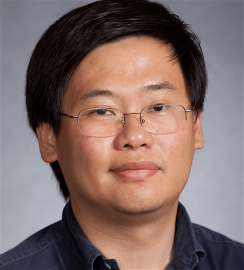
Dr. Tao (Kevin) Huang is a researcher at James Cook University's College of Science and Engineering, with expertise spanning autonomous driving, wireless communication systems, and medical imaging applications. His work integrates machine learning, sensor fusion, and multimodal data analysis to address complex challenges in vehicular networks, environmental monitoring, and healthcare technology. Research Interests: Dr. Huang's research focuses on Autonomous driving perception systems IoT-enabled vehicular networks AI for medical diagnostics and environmental sensing Signal processing and privacy-preserving communication protocols Recent Publications: His 2025 work emphasizes advancements in V2X cooperative perception, radar-LiDAR-camera fusion, and diffusion models for medical imaging. Key trends include cross-modal robustness, real-time processing for autonomous systems, and AI applications in sustainability.
Daniel McKenzie is an Assistant Professor in the Department of Applied Mathematics and Statistics at the Colorado School of Mines. His research focuses on derivative-free optimization, implicit neural networks, and geometric methods in data science. He holds a B.Sc.(hons) and M.Sc. in Mathematics from the University of Cape Town (2010, 2014) and a PhD in Mathematics from the University of Georgia (2019). B.Sc.(hons): Mathematics and Applied Mathematics, University of Cape Town, 2010 M.Sc.: Mathematics, University of Cape Town, 2014 PhD: Mathematics, University of Georgia, 2019 His research explores the intersection of optimization theory and machine learning, with applications in spatial data modeling, geometric data analysis, and high-dimensional clustering. Recent work emphasizes curvature-aware algorithms, comparison-based optimization, and implicit network architectures like LatticeVision. His methods address challenges in non-stationary spatial data and convex game equilibria prediction. Key contributions include Fermat distance metrics for clustering, Jacobian-Free Backpropagation (JFB) for implicit networks, and zeroth-order algorithms for black-box optimization. While no scientific awards are listed, his publications reflect a strong focus on advancing optimization techniques for modern data science problems. No specific grants or advising roles are detailed in the provided text. His work bridges computational mathematics and applied AI, with potential applications in robotics, spatial statistics, and algorithmic game theory.
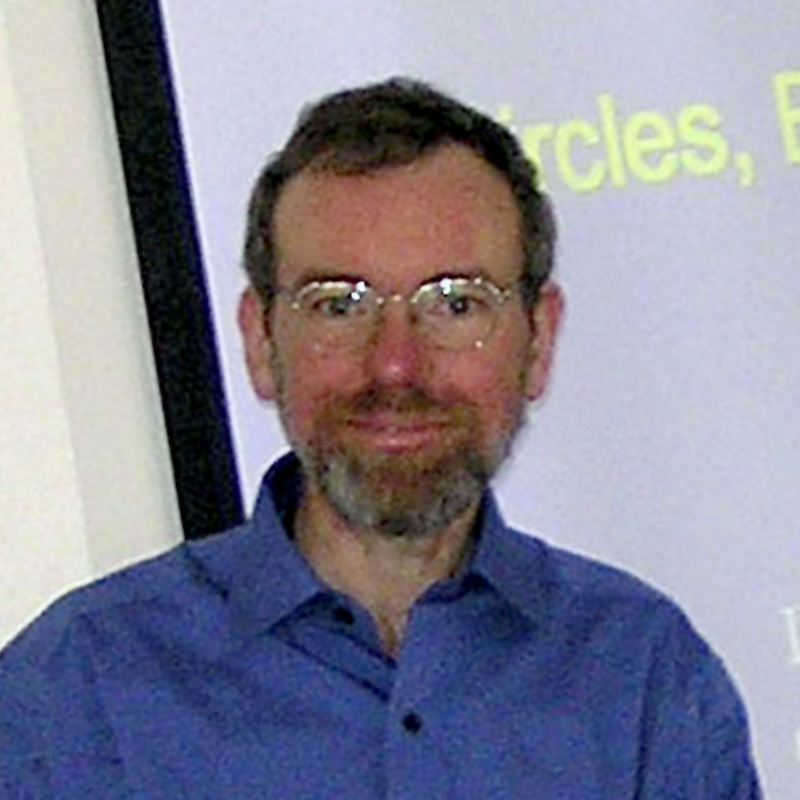
Kevin Kelly is a Professor of Philosophy at Carnegie Mellon University and the Director of the Center for Formal Epistemology. His work bridges formal epistemology, computational learning theory, and philosophy of science, with a focus on Ockham's razor, belief revision, and the topology of inquiry. Key Research Areas: Ockham's Razor, Epistemology, Formal Learning Theory, Modal Epistemic Logic, and Interdisciplinary Applications of Topology. Grants: John Templeton Foundation grant for research on truth-finding efficiency and scientific simplicity. Scientific Awards: John Templeton Foundation grant (2018–2021) Kelly's publications emphasize connections between probabilistic reasoning and qualitative belief, solutions to the lottery paradox, and computational models of knowledge acquisition. His recent work explores lighting design, human-centric ergonomics, and machine learning epistemology, reflecting a deep interdisciplinary engagement with technology and science.
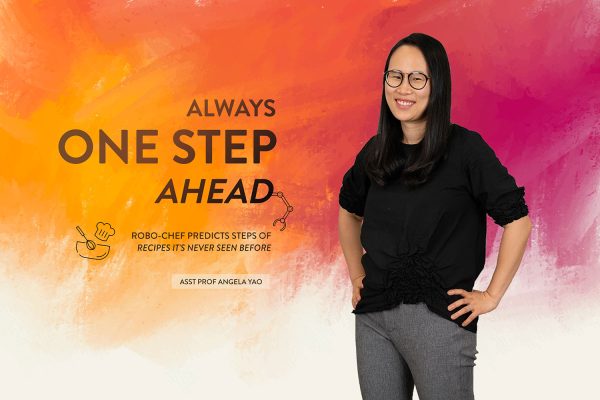
Angela Yao is a Dean's Chair Associate Professor and Assistant Dean of Research at the National University of Singapore's School of Computing, Department of Computer Science. She leads the Computer Vision and Machine Learning Group and specializes in visual perception of people, focusing on both high-level semantics of human actions and lower-level physical modeling. Her research interests span Computer Vision , Machine Learning , and Artificial Intelligence , with specific expertise in human action recognition, 3D human modeling, video understanding, and small data AI. Dr. Yao's work bridges theoretical advances with practical applications, particularly in activity anticipation and human-computer interaction. Dr. Yao's publication trends reveal a strong focus on zero-shot learning for activity anticipation, 3D human modeling, and techniques for working with limited training data. Her research has evolved from foundational work in 3D pose estimation to more recent innovations in diffusion models and cross-modal learning, demonstrating consistent contributions to advancing computer vision capabilities. NRF Fellowship for Artificial Intelligence (2019) German Pattern Recognition (DAGM) Award (2018) Dr. Yao has successfully mentored PhD students including Fadime Sener and secured significant research funding including the NRF Fellowship. Her research group focuses on developing AI systems capable of understanding and anticipating human activities with applications in robotics and human-computer interaction. She teaches CS4243 Computer Vision and Pattern Recognition and leads the Computer Vision and Machine Learning Group at NUS Computing.
Dr. Christopher Gilliam is an Assistant Professor in Applied Signal Processing at the University of Birmingham's Department of Electronic, Electrical and Systems Engineering. He holds an MEng (1st Class Hons) in Electrical & Electronic Engineering (2008) and a Ph.D. in Signal Processing (2013), both from Imperial College London. Prior to joining Birmingham in 2022, he was a Postdoctoral Fellow at The Chinese University of Hong Kong (2013–2017) and a Research Fellow at RMIT University, Australia (2017–2022). Research Interests: Sensor signal processing, radar imaging, sampling theory, motion estimation, quantum navigation, and medical imaging. Labs: Microwave Integrated Systems Laboratory (MISL). Committees: Member of IEEE Signal Processing Society and APSIPA Technical Committees. His work focuses on advancing signal processing techniques for radar systems, navigation, and medical imaging. Recent research highlights include drone-based SAR imaging, motion correction in MRI, and fusion of classical/quantum sensors for inertial navigation. He is actively supervising PhD students and contributes to projects sponsored by DSTG. Publications span radar SLAM, probabilistic navigation algorithms, and deep learning-driven medical imaging solutions. His research bridges theoretical signal processing with practical applications in autonomous systems and healthcare.
Melvin Leok is a Professor of Mathematics at the University of California, San Diego (UCSD). He directs the Computational Geometric Mechanics group, affiliated with the Center for Computational Mathematics and the Computational Science, Mathematics, and Engineering (CSME) Program. His research focuses on computational geometric mechanics, combining differential geometry and numerical analysis to develop stable and robust methods for modeling and controlling engineering systems. Leok holds a Ph.D. in Control and Dynamical Systems from Caltech (2004). Before joining UCSD in 2009, he was an assistant professor at Purdue University and a visiting researcher at Caltech and the University of Michigan. He has received prestigious awards, including the Simons Fellowship, DoD Newton Award, and NSF CAREER Award. His research interests include numerical differential equations, geometric control theory, and computational methods for interconnected systems. He has authored over 100 publications and serves on editorial boards for journals like Journal of Nonlinear Science . Leok teaches advanced courses such as optimization on manifolds and numerical analysis, emphasizing geometric principles. Key achievements include co-authoring the monograph Global Formulations of Lagrangian and Hamiltonian Dynamics on Manifolds , developing variational integrators for mechanical systems, and leading projects in geometric uncertainty propagation and structure-preserving algorithms for plasma physics. He actively collaborates on NSF-funded initiatives like the TILOS AI Research Institute. Leok advises doctoral students, including Brian Tran, who won the Chancellor's Dissertation Medal. He also mentors postdoctoral researchers through the Alexander von Humboldt Foundation's Feodor Lynen Program.
Prof. Plamen Angelov holds a Chair in Intelligent Systems and is Director of Research at Lancaster University's School of Computing and Communications. He leads the Lancaster Intelligent, Robotic, and Autonomous Systems (LIRA) Centre, uniting 70+ faculty across 15 departments. With a PhD (1993) and DSc (2015), he is a Fellow of IEEE, IET, ELLIS, and AAIA. His research focuses on explainable AI, evolving systems, and computational intelligence, with 400+ publications (h-index 65) in top venues like TPAMI and IEEE Transactions. Notable achievements include the Dennis Gabor Award (2020) and ranking in Stanford's Top 0.2% AI researchers (2024). He leads projects funded by UK Research Councils, ESA, DSTL, and industry. As Editor-in-Chief of Springer's Evolving Systems , he drives standards in explainable AI through IEEE's P2976 Working Group. His work spans autonomous systems, cybersecurity, and biomedical applications through initiatives like AI4EO and H-UNIQUE.
Dr Steve Maddock is a Senior Lecturer in Computer Graphics and Acting Head of the Visual Computing research group at the University of Sheffield's School of Computer Science. He holds a Class I Degree in Computer Science (University of Sheffield), a PGCE in Mathematics (11-18), and a PhD in computer graphics modeling and animation, all from the University of Sheffield. With over 30 years of experience in computer graphics software development, he has contributed to the computer games industry through a six-month secondment at Gremlin/Infogrames. His research focuses on facial modeling and animation, augmented/virtual/mixed reality applications, and sketch-based interfaces. Key areas include 3D computer graphics, real-time rendering, and human-robot collaboration systems. Maddock has led and co-led several grants, including projects on game software engineering, rail network surveillance, and heritage visualization using immersive technologies. He is a member of INSIGNEO, Sheffield Robotics, and the Cultural Industries Research Network. Publications highlight contributions to facial analysis for medical diagnostics, style transfer techniques for games, and safety zone visualization in robotics. His work integrates interdisciplinary approaches, combining computer science with fields like biology and robotics. Maddock's Visual Computing research group explores cutting-edge solutions in graphics, virtual environments, and computational tools for real-world applications.
Professor Ferrante Neri is a faculty member at the University of Surrey, holding the positions of Professor of Machine Learning and Artificial Intelligence and Associate Dean (International) for the Faculty of Engineering and Physical Sciences (FEPS). He is affiliated with the Nature Inspired Computing and Engineering Research Group, Surrey Institute for People-Centred AI (PAI), and the Computer Science Research Centre within the School of Computer Science and Electronic Engineering. His research focuses on optimization, explainable AI, and machine learning, with contributions to memetic computing and differential evolution. Since 2010, he has chaired the IEEE Task Force on Memetic Computing. He advises PhD students in topics like dynamic multi-objective optimization and AI-driven applications. His teaching expertise includes mathematical foundations for computer science. He has supervised students such as Aisha E S E Saeid and Pengjin Wu. Notable research areas include evolutionary algorithms, neural architecture search, and applications in robotics and environmental monitoring. Labs and teams include the Nature Inspired Computing group, which explores AI-driven solutions for complex problems. His work bridges theoretical advancements and practical applications in fields like autonomous systems and deep learning.
Mikkel Lønborg Friis is a Clinical Associate Professor at Aalborg University, affiliated with the Department of Clinical Medicine under The Faculty of Medicine. He also serves as a senior consultant ( Ledende overlæge ) at Aalborg University Hospital, where he leads simulation-based training initiatives at NordSim – Centre for Skills Training and Simulation. His dual academic and clinical roles position him at the intersection of advanced surgical practice and innovative medical education. Clinical Associate Professor, Aalborg University Ledende overlæge (Chief Physician), Aalborg University Hospital Member, NordSim – Centre for Skills Training and Simulation His research interests focus on enhancing surgical and diagnostic competencies through technology-driven education. Key areas include simulation-based training, artificial intelligence in fetal and surgical ultrasound, robotic surgery assessment using deep learning, and curriculum development for cross-specialty ultrasound education. He actively contributes to improving clinical outcomes in pilonidal sinus disease and advancing AI integration in medical imaging. The recent publications highlight a strong trend toward interdisciplinary innovation, particularly in blending AI, simulation, and medical education. His work spans clinical surgery, educational methodology, and computational analysis of surgical performance. A significant portion of his research involves designing and evaluating training protocols, developing datasets for skill assessment, and exploring ethical and practical implications of AI in clinical settings. Mikkel Friis has not been publicly recognized with scientific awards in the provided text, but his leadership in simulation and curriculum design suggests significant institutional impact. He is involved in mentoring and advising through collaborative research projects, particularly in simulation and ultrasound education. While formal students are not listed, his role in study protocols and dataset creation implies supervision of junior researchers and medical trainees. He participates in funded or institutionally supported research activities related to medical education innovation and surgical technology. His involvement in press and media coverage further underscores his role as a thought leader in clinical simulation careers. Friis is deeply embedded in NordSim – Centre for Skills Training and Simulation, where he contributes to developing and implementing simulation-based assessment tools, particularly for abdominal ultrasound and surgical skills. His team collaborates across departments and institutions, focusing on creating standardized, scalable training models that integrate emerging technologies like AI and virtual reality.
Dr Lounis Chermak is a Lecturer in Computer Vision and Autonomous Systems at the Centre for Electronic Warfare, Information and Cyber, part of Cranfield Defence and Security at Cranfield University, UK. He leads the Joint Autonomy Lab and is actively involved in research and education in autonomous systems with applications in defence and space. Research Interests: His work focuses on situational awareness in autonomous platforms, with core expertise in computer vision, sensor fusion, artificial intelligence, robotics, and navigation. He investigates perception, decision-making, and mobility across aerial, ground, maritime, and space systems, developing robust solutions for challenging environments including low visibility and extreme illumination. The recent publications reflect a strong trend in autonomous navigation, particularly for space and defence applications, using advanced computer vision techniques such as thermal stereo odometry, HDR imaging, stixel-based scene understanding, and lightweight 3D descriptors. Research also extends to cybersecurity of autonomous systems, including impersonation attack detection and optical countermeasures. Scientific Awards: No scientific awards mentioned in the provided text. Advising and Grants: Dr Chermak leads research activities supported by postdoctoral researchers, PhD, and MSc students. His work is funded and applied in collaboration with major clients including aerospace organizations (ESA, UK Space Agency, Thales Alenia Space), defence agencies (MoD, DSTL, BAE Systems, MBDA), and technology companies (Samsung, Astroscale). He supervises research students in robotics and autonomous systems across civilian and defence domains. Labs and Teams: He leads the Joint Autonomy Laboratory, a 200 m² indoor facility equipped with drone netting, motion capture systems, virtual reality test benches, UAV and ground robot fleets, electric vehicles, and multiple sensors for vision, ranging, and motion. This lab supports both educational and cutting-edge research in autonomous systems.
Norwegian University of Science And TechnologyNorway
Daniel Groos is a Researcher at the Department of Computer Science, NTNU, specializing in the development of machine learning models for medical and sports-related motion analysis. His work focuses on applying deep learning techniques to video-based movement analysis for early detection of cerebral palsy in infants and performance analysis in elite sports. Education: PhD in Medical Technology (NTNU, 2018-2022), MSc in Computer Science with specialization in AI (NTNU, 2013-2018). Research interests include interdisciplinary collaborations with St. Olavs Hospital and Norwegian Open AI Lab. Key topics are deep learning applications in healthcare, computer vision for movement analysis, and sports biomechanics. Publications emphasize automated clinical analysis, video-based diagnostics, and human pose estimation. Notable projects include a deep learning method for cerebral palsy prediction and motion tracking systems for elite ski jumpers. Collaborations with institutions like the Centre for Elite Sports Research and Olympiatoppen highlight his work in sports performance analysis. No formal scientific awards listed but active in academic outreach with lectures at European conferences on childhood disability and movement analysis.
Krister Wolff is an Associate Professor of Adaptive Systems at the Department of Mechanics and Maritime Sciences (M2) at Chalmers University of Technology. He also serves part-time as Vice Head of Department for Education. His research focuses on applying artificial intelligence, machine learning, and bio-inspired methods to robotics, autonomous systems, and self-driving vehicles. He teaches in the international Master's program in Complex Adaptive Systems. His work includes projects such as AI-supported vehicle suspension design, propeller optimization using genetic algorithms, and developing interactive robots for social distancing in healthcare settings. He has contributed to over 39 publications and 9 research projects, collaborating with organizations like VINNOVA and the Swedish Transport Administration. Notable projects include ISOLDE for hospital robots and Tactical Decision-Making in Autonomous Driving funded by the Wallenberg Foundation. Key areas of expertise include reinforcement learning for autonomous vehicles, evolutionary algorithms in design optimization, and driver behavior modeling in critical scenarios. His research bridges theory and practical applications, emphasizing collaboration between academia and industry.
Prof. Dr. Renato Negra is a faculty member at RWTH Aachen University, serving as the Chair of High Frequency Electronics within the Faculty of Electrical Engineering and Information Technology. His research is centered on advanced electronic systems with a focus on reconfigurable and low-power architectures for real-time applications. Research Interests: His work spans high frequency electronics, neuromorphic computing, embedded systems, and cyber-physical systems. He develops FPGA-based and edge-computing solutions for computer vision, robotics, and smart infrastructure, particularly in elderly monitoring and autonomous navigation. His research integrates deep learning with hardware optimization for energy efficiency and real-time performance. The recent publications highlight a strong trend toward event-based vision , neuromorphic sensors , and low-power embedded AI , applied in domains such as smart cities, healthcare, and robotics. There is a consistent emphasis on real-time processing, reconfigurable systems, and the deployment of neural networks on constrained hardware platforms. Scientific Awards: No awards or honors were mentioned in the provided text. Advising and Grants: While no specific students or advising roles are listed, the volume and depth of publications suggest active supervision or collaboration within research projects. Although no grants are explicitly named, involvement in EU-level initiatives (e.g., FitOptiVis ECSEL Project) and national R&D programs (e.g., BIO-PERCEPTION) can be inferred from the research topics and publication contexts. Labs and Teams: Prof. Negra leads the research activities in High Frequency Electronics at RWTH Aachen. While not directly linked to the Computer Vision and Robotics Lab (CVR-Lab) mentioned in the text, his work aligns closely with neuromorphic and CPS research themes, suggesting potential interdisciplinary collaboration.
Dorsa Sadigh is an Associate Professor of Computer Science and Electrical Engineering at Stanford University, and a Senior Fellow at the Stanford Institute for Human-Centered AI. Her work focuses on advancing robotics , particularly in areas such as human-robot collaboration , reinforcement learning , and vision-language models . She explores how robots can learn from human demonstrations, adapt to dynamic environments, and safely interact with humans in caregiving and assistive tasks. Her research interests span autonomous systems , improving robot generalization , and foundation models for robotics . Key projects include developing policies for dexterous manipulation, proactive human-robot teamwork, and scalable data collection methods. She emphasizes ethical considerations in robotics, including perceived safety and human trust. Recent work highlights include the ProVox framework for personalized collaboration, HoMeR for mobile manipulation, and Octo —an open-source generalist robot policy. Her contributions bridge theoretical advances in AI with real-world robotic applications, leveraging large language models and vision-language integration. Dr. Sadigh’s research is funded by grants from NSF, DARPA, and industry partnerships. She collaborates with interdisciplinary teams to address challenges in assistive robotics, autonomous driving, and socially intelligent AI systems.