Molly Maleckar is a Research Professor at the Computational Physiology Department of Simula Research Laboratory , Oslo, Norway. Her work bridges computational modeling, cardiac electrophysiology, and biomedical applications, with a focus on arrhythmia mechanisms, fibrosis modeling, and machine learning integration in cardiac risk prediction. Research Interests include: Computational Cardiology Ion Channel Dynamics Machine Learning in Medicine Excitable Tissue Modeling Cardiac Fibrosis Analysis Biomedical Simulation Scientific Contributions span 15+ publications (2018-2024) addressing atrial fibrillation, calcium handling, and AI-driven ECG analysis. Key collaborative projects involve patient-specific ventricular modeling and educational initiatives like the Simula Summer School in Computational Physiology .
Magnus Nord is an Associate Professor in the Department of Physics, Faculty of Natural Sciences at Norwegian University of Science and Technology (NTNU). His research focuses on advanced electron microscopy techniques and computational tools for materials characterization. Research Interests : Scanning Transmission Electron Microscopy (4D-STEM), Open Source Scientific Software Development (Python), Big Data Processing, Magnetic/Electric Field Imaging, Structural Characterization using Higher Order Laue Zones. Publications span cutting-edge applications in functional materials, nanomagnets, and perovskite thin films, with emphasis on machine learning and precession-enhanced imaging. Key keywords include Materials Science , Electron Microscopy , and Computational Imaging . Software Development : Lead developer of Atomap and pyxem , contributing to HyperSpy and merlin_interface for electron microscopy data analysis. Current Research Funding : InCoMa (Research Council of Norway) IMPRESS (Horizon EU Program)
Dilip K. Prasad is a Professor at the Department of Informatics, UiT The Arctic University of Norway. His work bridges Artificial Intelligence and Medical Imaging , with a focus on Interpretable AI , Scalable AI , and Life Science Applications . He has contributed to Maritime Technology and Biomedical Engineering . Ph.D. and B.Tech from Nanyang Technological University and IIT Dhanbad Senior Research Fellow at NTU (2015-2019), Research Fellow at NUS (2012-2015) Industry experience at IBM, Infosys, Mediatek, Philips His research explores Image Processing , Machine Learning , and AI Applications in Biomedicine . Recent work includes Dense Video Captioning , 3D Mitochondrial Modeling , and Physics-Guided Loss Functions . Articles span Neurocomputing , Optics Express , and top AI conferences like CVPR and NeurIPS . Prasad has received the Rolls-Royce Inventor Award (2016) and Best Paper Award (IJCIE 2017) . He has reviewed for 50+ journals and 30+ conferences, serving as Area Chair for NeurIPS 2022-23 and Organizer Chair for ICCV Workshop 2023 .
Krishna Agarwal is a Professor in Ultrasound, Microwaves and Optics at the Department of Physics and Technology, UiT The Arctic University of Norway. His research spans multiple interdisciplinary fields including optical nanoscopy, quantitative phase imaging, and computational imaging techniques. He is an active member of the Ultrasound, Microwaves and Optics research group, with specialized focus on Optical Nanoscopy, and participates in research projects including VirtualStain and NanoAI. Professor Agarwal's research interests center on advanced imaging techniques, particularly in optical nanoscopy and quantitative phase imaging. His work bridges physics, computer science, and biology, developing novel computational methods for microscopy enhancement. His research focuses on applying deep learning to improve imaging resolution, developing frameworks for quantitative phase reconstruction, and creating new methodologies for 3D imaging of biological specimens. His work has significant applications in biomedical imaging, cellular analysis, and diagnostic technologies. Recent publications demonstrate a strong trend toward integrating artificial intelligence with traditional optical techniques, with increasing emphasis on computational approaches to solve longstanding challenges in microscopy. His research shows consistent progression from theoretical optical methods toward practical applications in biological imaging and medical diagnostics, with numerous publications in high-impact optics and imaging journals. Professor Agarwal teaches Optisk nanoskopi (Course FYS-3029) at UiT, contributing to advanced optics education. His research group appears to collaborate extensively with international researchers across multiple institutions, suggesting active grant funding and collaborative research efforts. Based at Teknologibygget Tromsø 3.058, Professor Agarwal leads research in the Optical Nanoscopy group, focusing on developing next-generation imaging technologies that combine optical physics with computational methods. His team appears to work at the intersection of physics, computer science, and biology, developing tools that push the boundaries of what's possible in cellular and sub-cellular imaging.
Harald Alfred Stenmark is a Professor at the University of Oslo's Faculty of Medicine, affiliated with the Institute of Clinical Medicine and the Centre for Cancer Cell Reprogramming (CanCell). His research focuses on cellular membrane dynamics, autophagy mechanisms, and ESCRT machinery, with applications to cancer biology and biomedical science. Stenmark leads studies on organelle interactions, including endosome-ER contact sites, migrasome formation, and autophagosome biogenesis. His work integrates biochemistry, cell biology, and molecular genetics, addressing fundamental questions in membrane trafficking and disease mechanisms. Notable contributions include elucidating roles of phosphoinositides in cellular processes and discovering novel pathways in lysosomal repair and cancer cell invasiveness. Stenmark collaborates extensively with international teams, as evidenced by his co-authored publications in top journals like Nature Cell Biology and Cell Research . Research interests span: autophagy regulation, cancer cell reprogramming, membrane contact site biology, and the role of phosphoinositides in cellular signaling. His lab's findings have implications for understanding cancer metastasis, neurodegenerative diseases, and immune cell function. Stenmark is a key member of the CanCell research center, focusing on how cancer cells adapt their metabolism and signaling pathways. His work bridges basic science and translational research, with potential applications in developing therapeutic strategies targeting cellular reprogramming mechanisms.
Eric Bartley Jul is a Professor in the Department of Informatics at the University of Oslo, specializing in Programming Technology within the Faculty of Mathematics and Natural Sciences. His research spans multiple domains of computer science with a focus on practical applications in medical imaging, distributed systems, and mobile computing. Professor Jul's research interests encompass a broad spectrum of computer science disciplines. His expertise lies particularly in Object-Oriented Programming, Distributed Computing, and Design Patterns, with expanding work in Cloud Computing and Security. His recent publications demonstrate a significant shift toward applying computer vision and deep learning techniques to medical diagnostics and healthcare applications, particularly in microcirculation analysis and reproductive medicine. This interdisciplinary approach bridges traditional computer science with cutting-edge medical research. His recent publication record shows a strong trend toward medical applications of computer vision and mobile sensor technologies. The 2024 papers reveal sophisticated applications of AI in reproductive medicine (sperm detection) and transportation monitoring (flight detection), while the 2022 publications establish his foundational work in medical imaging systems like CapillaryNet for blood flow analysis. This trajectory demonstrates a consistent focus on applying programming technology to solve complex real-world problems, particularly at the intersection of computing and healthcare. Professor Jul leads research within the Programming Technology group at the University of Oslo and is involved in several significant projects including A Modern Approach to Teaching Classes at the University Level in Theoretical Computer Science , Leveraging Energy-Aware Programming (LEAP) , and Reliable models of computation for concurrent and distributed problems . His work demonstrates strong collaborative efforts with researchers across multiple institutions, particularly with Paulo Ferreira and other colleagues at the University of Oslo.
Anne C. Elster is a Professor in the Department of Computer Science at the Norwegian University of Science and Technology (NTNU), within the Faculty of Information Technology and Electrical Engineering. She is the founder and director of the HPC-Lab, a leading research group in heterogeneous and parallel computing. She also maintains a long-standing affiliation with the Oden Institute at the University of Texas at Austin as a Senior Visiting Scientist until Summer 2025. Research Interests: Her work spans high-performance computing (HPC), GPU computing, parallel algorithms, auto-tuning, performance optimization, and machine learning applications in scientific computing. She leads research in heterogeneous architectures and has contributed significantly to compiler and runtime systems for GPUs and accelerators. Publications Trends: Her recent publications (2021–2024) focus on GPU acceleration, auto-tuning frameworks (e.g., BAT, LS-CAT), performance modeling (Roofline), machine learning integration in HPC, and applications in geophysical and scientific computing. There is a strong emphasis on empirical evaluation, benchmarking, and practical optimization techniques. Scientific Awards and Recognition: IEEE Senior Member (2000) IEEE Computer Society Distinguished Contributor Charter member, NTNU's Board (2021) Distinguished Speaker, IEEE Computer Society (2019–2022) Advising and Grants: She has advised over 100 master’s students and several PhD students. She has led major funded projects including the RCN SFI Centre for Geophysical Forecasting, EU H2020 CloudLightning and TICOH, and NFR FRINATEK on Computational Microscopy. She has served on numerous international program committees and evaluation boards. Labs and Teams: She leads the HPC-Lab at NTNU, which includes postdocs, PhDs, and master’s students, and collaborates with international researchers. The lab is a hub for innovation in GPU computing, auto-tuning, and HPC applications.
Frank Melandsø is a Professor at the Department of Physics and Technology, UiT The Arctic University of Norway. His research focuses on ultrasound, microwaves, and optics, particularly in nondestructive testing and acoustic imaging technologies. Key research interests include: Development of advanced ultrasound and acoustic microscopy techniques Finite element modeling for wave propagation and transducer design Image processing algorithms for noise reduction and defect visualization Applications in materials science, marine biology, and biomedical imaging Recent publications highlight trends in deep learning applications, tilt compensation methods, and 3D imaging of complex materials. His collaborative work spans institutions and disciplines, with extensive contributions to sensors, imaging systems, and computational analysis. Professor Melandsø is actively involved in the Ultrasound, Microwaves and Optics research group and the VirtualStain project, based at Teknologibygget Tromsø 2.053.
Kajsa Møllersen is an Associate Professor at the Department of Computer Science, UiT The Arctic University of Norway. Her research focuses on statistical approaches to image analysis and machine learning in medical and biological contexts. Research Interests: Histopathological image analysis, divergence functions, multi-instance learning, melanoma detection, breast cancer diagnostics Teaching Roles: PhD course leader in Statistical Models, Master's lecturer in Biostatistics, Medical Statistics, and research methodology Recent publications highlight trends in applying machine learning to histopathology, omics data integration, and educational innovations in statistical pedagogy. She actively contributes to research on data sharing ethics and gender diversity in STEM fields. Key Collaborations: Computational Pathology Group, Systems Epidemiology, Realfagsdidaktikk i høyere utdanning Outreach: Public data ethics discussions, teaching methodology research, and medical informatics dissemination
Professor Balpreet Singh Ahluwalia is a distinguished academic at UiT The Arctic University of Norway, where he serves in the Department of Physics and Technology. His expertise lies at the intersection of advanced optical technologies and biomedical applications, with a focus on developing cutting-edge microscopy techniques for life science research. As a principal investigator of multiple high-impact research projects, including ERC-funded initiatives, he leads a dynamic research group focused on optical nanoscopy and bio-imaging. Dr. Ahluwalia's research spans several critical areas in modern optical science: Development of super-resolution optical nanoscopy techniques Quantitative phase imaging for live-cell analysis Integrated photonic circuits for biomedical applications Optical trapping and manipulation of biological specimens Raman spectroscopy for molecular fingerprinting His work has established UiT as a leading center for optical nanoscopy in Northern Europe, with particular emphasis on applications in marine biology, liver physiology, and pathogen detection. The research group has pioneered several novel approaches to high-speed, label-free imaging that overcome traditional limitations in resolution and speed. Analysis of Dr. Ahluwalia's recent publication record reveals a strong trajectory toward computational and AI-enhanced microscopy, with increasing focus on real-time imaging of dynamic cellular processes. His work bridges fundamental optical engineering with practical biomedical applications, particularly in the areas of nanoparticle-cell interactions, bacterial identification, and tissue imaging of marine organisms. Dr. Ahluwalia has received significant recognition through competitive research funding: ERC Starting Grant (16 M NOK) for high-speed chip-based nanoscopy ERC Proof-of-Concept grant (1.5 M NOK) for affordable photonic-chip based optical nanoscopy UiT Strategic Funding (13 M NOK) for Centre for Advanced Nanoscopy Multiple international collaborations including EU MSCA projects As an educator, Dr. Ahluwalia teaches FYS-8029 Optical Nanoscopy and mentors PhD students through multiple funded projects. His laboratory, part of the Ultrasound, Microwaves and Optics research group, maintains state-of-the-art facilities for optical nanoscopy, including custom-built super-resolution microscopes and integrated photonic platforms. The research environment fosters interdisciplinary collaboration between physicists, biologists, and computer scientists working toward next-generation imaging solutions.
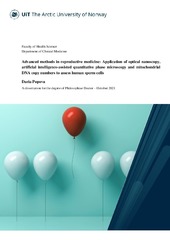
Daria Popova is a researcher at the University of Tromsø – The Arctic University of Norway , specializing in reproductive medicine and advanced imaging techniques. Her work focuses on improving sperm cell evaluation for assisted reproductive technologies (ART) through optical nanoscopy, machine learning, and mitochondrial DNA analysis. Key research areas: Reproductive health, quantitative phase microscopy, AI-assisted diagnostics Recent projects: Systematic reviews of mitochondrial DNA in semen abnormalities, development of deep learning models for sperm classification Popova's publications highlight interdisciplinary approaches combining biomedical science with computational analysis to address declining fertility rates. She has collaborated with researchers in Norway and internationally on studies exploring oxidative stress effects and super-resolution imaging of sperm cells.
Rafi Ahmad is a Professor and Group Leader of the strategic research group B3 (Bioinformatics, Biodiscovery & Biorefinery) at the University of Inland Norway. He holds a BPharm from Jamia Hamdard (India), MSc in Bioinformatics from the University of Exeter (UK), and a PhD in Bioinformatics and Computational Chemistry from the Arctic University of Tromsø (Norway). His research focuses on antimicrobial resistance (AMR), rapid diagnostic technologies, and bioinformatics-driven solutions to global health challenges. He leads major projects like OH-AMR-Diag and UTI-Diag, funded by the Research Council of Norway (RCN) and international partners. Key affiliations include visiting professorships at the University of Southampton and the Arctic University of Tromsø. Education: BPharm (2000), MSc Bioinformatics (2001), PhD (2008). Postdoctoral work at the Norwegian Structural Biology Centre (2008-2011). Industrial roles at AstraZeneca and Medivir AB (2011-2015). Current roles include leadership in RCN projects (AMR-RADAR, ABR-Diag) and the NORSE network for One Health resistome surveillance. His team includes 30+ researchers across postdocs, PhDs, and technicians. Research interests span AMR mechanisms, rapid diagnostics, metagenomics, and machine learning applications. He supervises over 20 students and collaborates internationally on drug discovery and diagnostic innovation. Recent media coverage highlights his work on reducing antibiotic overuse through rapid testing (NRK news, Hamar Arbeiderblad). Grants include NOK 55M for ongoing projects. Labs focus on nanopore sequencing, SERS nanowire chips, and Voyager bioinformatics tools for pathogen detection. He is part of the RCN’s COST Action Management Committee (2020) and partners with Harvard and Indian institutions on AMR-Educate initiatives.
Rafi Ahmad is a Professor at UiT The Arctic University of Norway specializing in Clinical Bioinformatics, based in Tromsø. He leads translational research within the Clinical Bioinformatics Research Group, focusing on accelerating infectious disease diagnostics through novel sequencing technologies to transform clinical decision-making for sepsis and urinary tract infections. His research centers on antimicrobial resistance (AMR) profiling and rapid pathogen detection using culture-independent methods. Key innovations include nanopore sequencing workflows that reduce diagnostic turnaround times from days to 4-9 hours, enabling real-time treatment adjustments. He investigates microbiome dynamics in inflammatory conditions like ulcerative colitis and develops machine learning-enhanced biosensors (e.g., SERS nanowire chips) for strain-level bacterial identification. His work bridges clinical microbiology, bioinformatics, and One Health frameworks to address AMR globally. Analysis of his 2022-2025 publications reveals a consistent trajectory toward point-of-care diagnostic implementation , with emphasis on urine, blood, and tissue samples. Methodologies prioritize speed ( As an active member of the Clinical Bioinformatics Research Group (MH øst L9.105B), he collaborates internationally on projects like AMR-Educate, focusing on technology transfer from research to clinical practice. His lab specializes in optimizing sequencing protocols for real-world use, including sample preparation enhancements that bypass culture steps.
Azeem Ahmad is a Researcher at the Department of Physics and Technology , UiT The Arctic University of Norway. His work focuses on advanced imaging techniques in ultrasound, microwaves, and optics , particularly in the areas of quantitative phase microscopy , acoustic microscopy , and photonic chip engineering . Key research areas: Quantitative phase imaging, acoustic wave modeling, biomedical diagnostics, interferometry, machine learning integration, and photonic device optimization Collaborative projects: Developments in label-free histology, super-resolution microscopy, and noise reduction algorithms Recent publications: 2025 studies on subsurface damage detection in ceramics and acoustic transducer modeling His work bridges optical engineering , biomedical applications , and computational imaging , with affiliations to the Ultrasound, Microwaves and Optics and Optical Nanoscopy research groups.
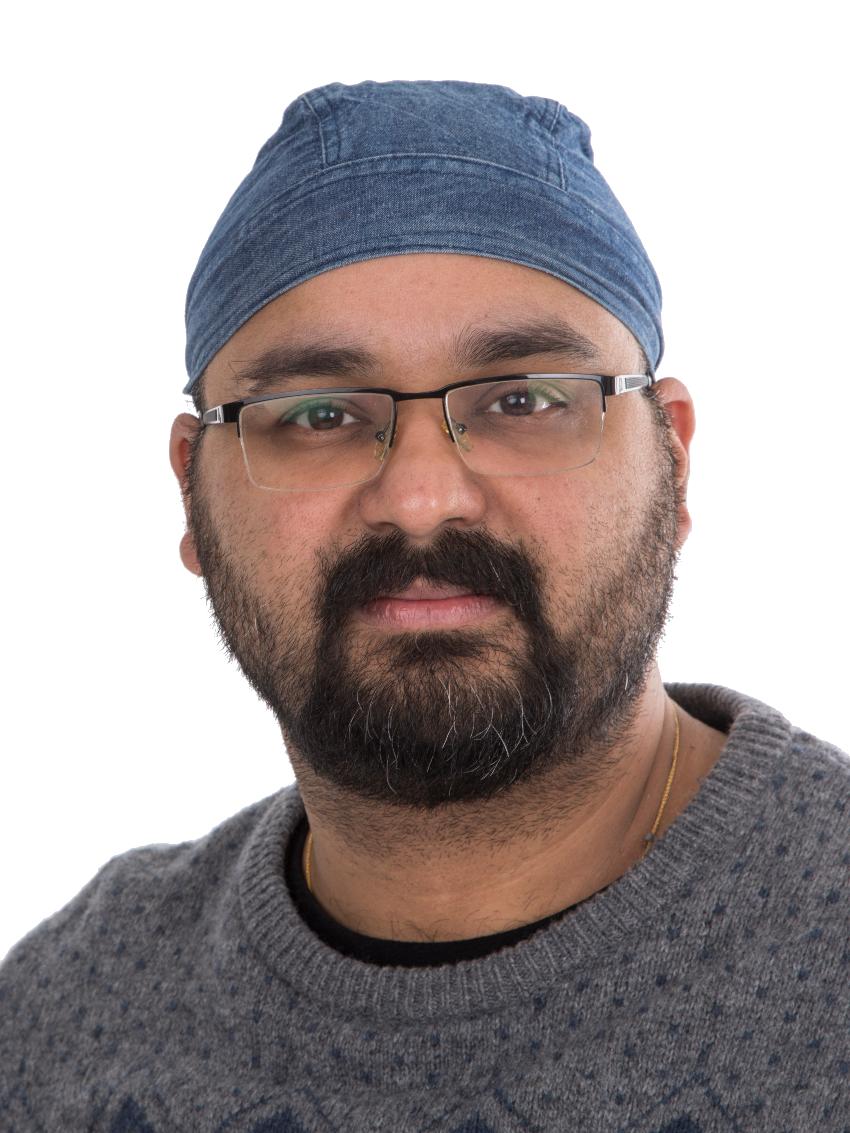
Samir Malakar is a postdoctoral researcher at the Department of Informatics , UiT The Arctic University of Norway, specializing in Deep Learning and Image Processing . He is affiliated with the Computational Analytics and Intelligence (CAI) research group and the NanoAI project. Email: s.malakar@uit.no Location: Realfagbygget A233, Tromso Research Interests include deepfake detection , rotation-invariant feature extraction , memory-efficient image representation , and AI applications in live-cell imaging . His work combines Deep Learning , Computer Vision , and Mathematical Modeling to solve challenges in media authentication and biomedical imaging. Recent Publications focus on deepfake video detection , compact image representation , and AI-driven cellular analysis . He actively engages in interdisciplinary discussions on AI ethics and scientific discovery . Projects : Member of Computational Analytics and Intelligence (CAI) group Contributor to NanoAI project