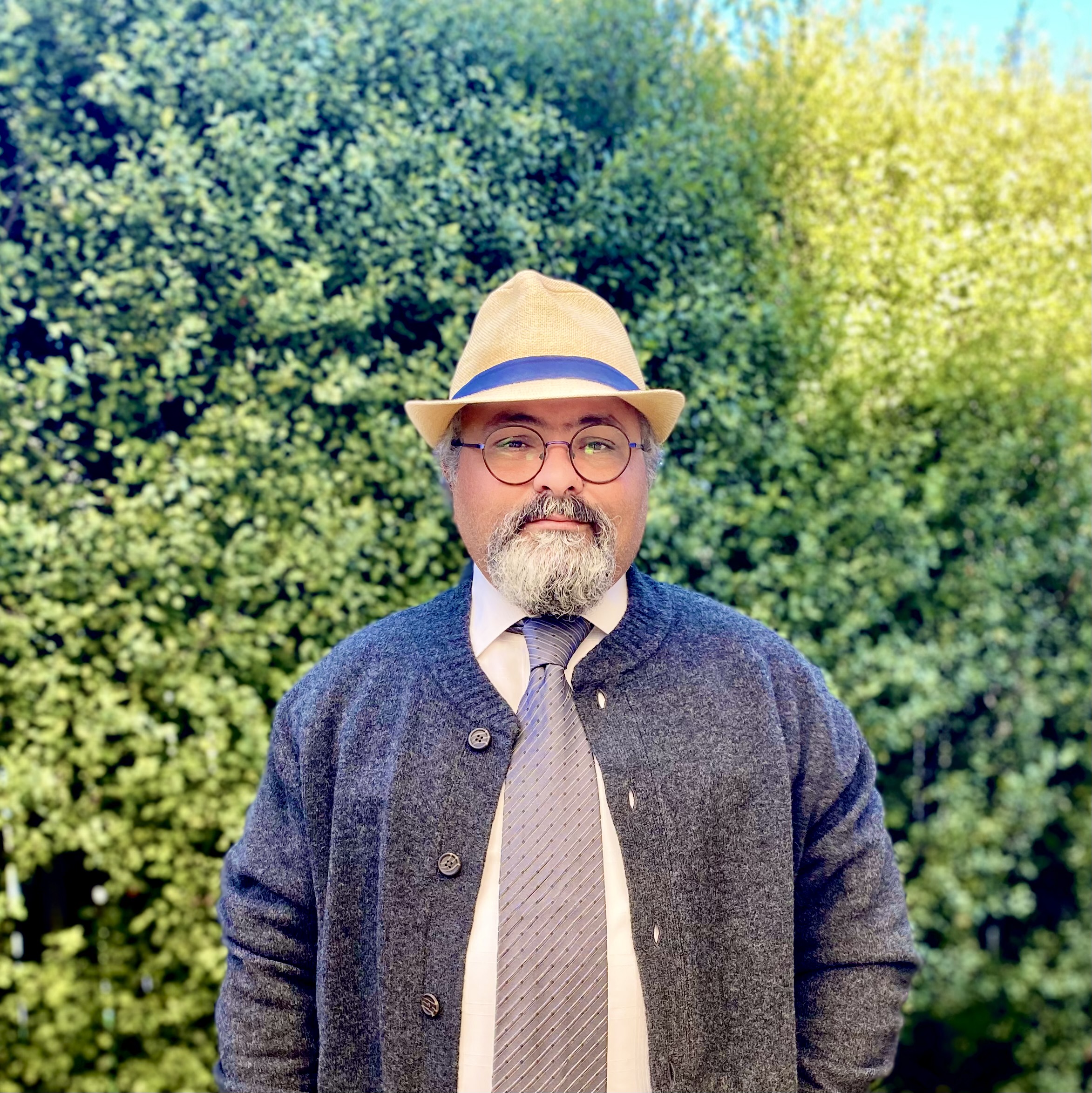
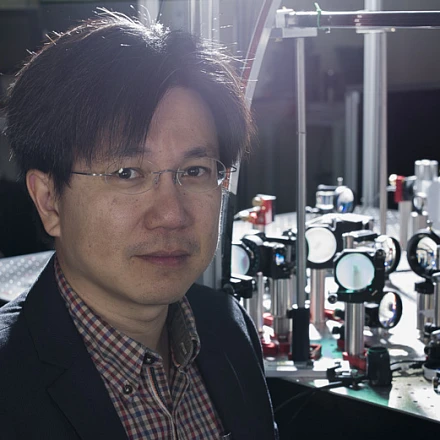
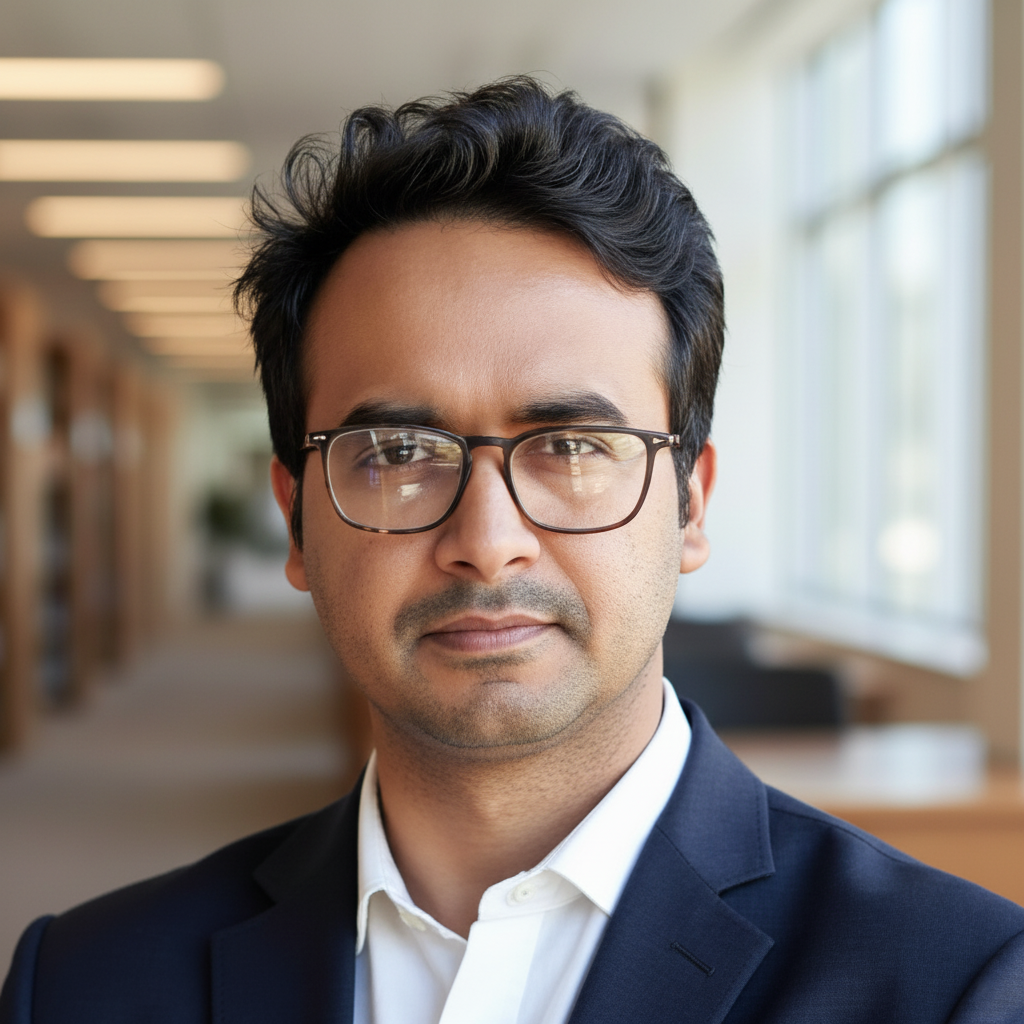
Mo Hossny is a Senior Lecturer at the University of New South Wales (UNSW) Canberra within the School of Systems & Computing . His academic journey includes a BSc in Computer Science from Cairo University, an MSc in Computer Science through collaboration with the IBM Centre of Advance Studies (CAS) , and a PhD from Deakin University’s Institute for Intelligent Systems and Research Innovation (IISRI) , where he developed an algebraic framework for multimodal image fusion. Education BSc in Computer Science, Cairo University MSc in Computer Science, IBM CAS PhD, Deakin University Dr. Hossny’s research spans interdisciplinary domains at the intersection of biomechanics , machine learning , and autonomous systems . Key areas include marker-less motion capture, ocular biomechanics in virtual reality, image fusion techniques, and real-time intent prediction for vulnerable road users. His work has been applied to fields ranging from autonomous vehicle safety to dermatology and agricultural robotics . Recent publications highlight his expertise in 3D point cloud processing (e.g., VoxelScape dataset), UAV navigation ( Sky Shepherd ), and deep learning for ocular fatigue analysis in VR environments. His technical contributions include novel frameworks for LiDAR inpainting , DDPG control refinement , and spatio-temporal pedestrian prediction .
Dr. Ashfaqur Rahman is a Principal Research Scientist and Group Leader of the 'Statistical Machine Learning' group at Data61, CSIRO. With a PhD from Monash University (2008) and a BCS from BUET (2001), he leads cross-industry data-driven projects and collaborates with Australian universities. His research spans machine learning, explainable AI, and environmental monitoring. PhD, Monash University (2008) BSc, Bangladesh University of Engineering and Technology (2001) His work focuses on foundational and applied machine learning, including CNN optimization, activity recognition, and sensor metadata inference. Recent publications highlight explainable models, time series forecasting, and climate/environmental applications. He has served as associate editor for Information Processing in Agriculture and organized conferences like DICTA (2013, 2018). As a Senior Member of IEEE (2012–present), he contributes to professional communities. Scientific Awards : Senior Member, IEEE (2012–present) Proceedings Chair, DICTA 2018 Program Committee Chair, GreenCloud 2015 Program Committee Chair, MLSDA 2014–2018 Dr. Rahman acts as an adjunct Senior Lecturer at Charles Sturt University (2014–present) and supervises PhD students across Australian institutions. His team integrates machine learning, robotics, and environmental science to solve real-world problems.
Dr. Saimunur Rahman is a Research Scientist at CSIRO Robotics, specializing in fundamental AI research with a focus on representation learning, 3D vision, and robotics. His work bridges theoretical innovation and practical applications in computer vision. Education: PhD in Representation Learning (University of Wollongong & CSIRO Data61), MSc in Computer Vision (Multimedia University) His research explores self-supervised learning, higher-order feature aggregation, and fine-grained visual categorization. Publications span top-tier venues like CVPR and ECCV, emphasizing LiDAR perception and robust image classification techniques. Recent work includes foundational advancements in point cloud learning and spatial representation for robotics. Earlier contributions addressed challenges in low-quality video action recognition and deep learning for medical diagnostics. Scientific Awards: CSIRO Early Career Research Fellowship Data61 PhD Scholarship University of Wollongong Postgraduate Award Centre of AI High Performing Student Award ICME Outstanding Reviewer (2020)
Associate Professor Hui Tian serves as the Discipline Head of Computer Science in the School of Information and Communication Technology at Griffith University, Australia. She holds a PhD in Computer Science from Japan Advanced Institute of Science and Technology and maintains an active research profile with over 80 publications and leadership in multiple international research projects. Her work spans networking, security, and data analysis domains. PhD in Computer Science, Japan Advanced Institute of Science and Technology Professor Tian's research focuses on Network Routing and Tomography, Privacy-preserving Computing, and Knowledge Discovery. Her work addresses critical challenges in data privacy protection, cybersecurity, and wireless communications and networking. She actively explores applications in medical image analysis, IoT security, and distributed energy systems, with a strong emphasis on developing practical solutions for real-world security and privacy challenges. Her recent publications reveal a strong trend toward privacy-preserving technologies, particularly in healthcare applications and wireless networks. There's significant focus on UAV-enhanced mobile edge computing, structural analysis of complex networks, and addressing security challenges like DoS attacks in multi-agent systems. Her work demonstrates interdisciplinary approaches combining machine learning, network theory, and security principles to solve contemporary computing challenges. Best Paper Award (2021) Outstanding Teacher Award from Beijing Jiaotong University (2012) Outstanding Junior Researcher (2005) Professor Tian actively supervises multiple doctoral students across diverse research areas including network security, energy management systems, and point-of-interest recommendation systems. She has secured significant research funding from various sources including the Department of Education, APNIC Foundation, and industry partners like Redx Technology Australia. Her current projects focus on privacy-preserving authentication, adversarial machine learning in wireless networks, and AI-powered solutions for sustainable agriculture in Vietnam. As a senior member of IEEE and active participant in professional activities, Professor Tian serves as associate editor for several SCI-indexed journals and frequently contributes to international conference program committees. Her leadership extends to directing academic programs including the Bachelor of Advanced Computer Science (Honours) and the Graduate Certificate in Data Science at Griffith University.
Assoc Prof Kaile Su is an Associate Professor at the School of Information and Communication Technology, Griffith University, with expertise in artificial intelligence, multi-agent systems, and deep learning. They hold an ORCID identifier (0000-0001-6741-9699) and have been affiliated with Griffith University since 2004. PhD in Computer Science from Nanjing University (1995) Postdoctoral work at Changsha Institute of Technology Their research spans combinatorial optimization, temporal logic verification, speech enhancement, and medical imaging applications. Recent work focuses on edge AI, federated learning, and neural network regularization techniques. Key funded projects include ARC Discovery Grants (DP150101618, DP120102489) and an ARC Future Fellowship (FT0991785). Awards include the NSFC Award for Distinguished Young Scholar (2007). Supervised 9 doctoral students at Griffith University Contributions to multi-agent coordination, CT reconstruction, and dialogue systems Active in software verification and sparse graph optimization
Mariusz Bajger is a Lecturer at Flinders University's College of Science and Engineering since 1999, with research contributions to medical image analysis and pattern recognition. He holds a PhD in Mathematics from the University of Queensland (1996) and an MSc in Applied Mathematics from Jagiellonian University (1988). Qualifications PhD Mathematics, University of Queensland, 1996 MSc Applied Mathematics, Jagiellonian University, 1988 His research focuses on applying mathematical and computational methods to medical imaging challenges, particularly breast cancer detection in mammograms, whole-body CT segmentation, and digital pathology. He has developed deep learning algorithms for prostate cancer Gleason grading, feature selection techniques for mammography, and CycleGAN-based MRI-to-CT translation frameworks. Recent publications highlight his work in network science applications for healthcare systems and generative adversarial networks in spine imaging. Key collaborators include D. Ben-Tovim, M. Roberts, and G. Hinton. Scientific Awards Commission on Excellence and Innovation in Health Grant (2023) Channel 7 Children Research Foundation Grant (2022) Freemason’s Centre for Male Health Grant (2021-2022) 3rd prize in M. Kuczma's competition (2004) He has supervised 6 research students including Ratna Saha (PhD in segmentation methods) and Shelda Sajeev (PhD in texture descriptors for mammography). Active grants span 2006-2023, focusing on breast cancer, male health, and surgical innovation.
Dr. Liang Wang is a Senior Research Fellow at the University of Newcastle's School of Environmental and Life Sciences. His work focuses on developing cutting-edge environmental assessment technologies for hydrocarbon contaminants, combining analytical sciences, chemometric methods, and computational modeling. Developed irCARE™ and probeCARE™ software for FTIR and ISE array analysis Led multiple CRC-funded projects totaling over $5.6M Expert in portable GC-MS and FTIR field applications Research Interests: Specializes in environmental analytical methods, with particular emphasis on: Rapid in-field contaminant assessment Artificial Intelligence for spectral data Mathematical modeling of environmental interactions Development of trademarked analytical products Publication Trends: Recent work demonstrates expertise in: FTIR-based contaminant analysis Portable sensor network integration Machine learning for environmental prediction Soil health assessment technologies Heavy metal and hydrocarbon remediation Smartphone-enabled field diagnostics Scientific Recognition: Recipient of two prestigious industry awards for analytical science innovation from PerkinElmer and Agilent Technologies. Holds multiple international patents including WO2021/035273 and US10761052B2.
Dr. Sreenivasulu Chadalavada is a Conjoint Senior Lecturer at the Global Centre for Environmental Remediation (GCER) within the College of Engineering, Science and Environment at the University of Newcastle, where he has been employed since 2016. He serves as Program Coordinator for two major research programs funded by the Department of Defence and BHP at CRC CARE, which is headquartered at the University of Newcastle. His work focuses on demonstrating cost-effective remediation solutions for contaminated sites across Australia. Dr. Chadalavada completed his Ph.D. research at the Centre for Environmental Risk Assessment and Remediation (CERAR) at the University of South Australia. His doctoral research focused on simulation-optimization modeling approaches to identify unknown groundwater pollution sources, which led to the development of a novel software tool in hydrogeological modeling. Prior to joining the University of Newcastle, he worked as an Adjunct Research Fellow/Senior Hydrogeologist at the University of South Australia and as a Research Associate at the Indian Institute of Technology Kanpur. Dr. Chadalavada's research career over the past decade has centered on cutting-edge groundwater modeling and hydrogeology, with a focus on efficient characterization of potentially contaminated sites. His expertise spans mathematical modeling of groundwater flow and contaminant transport in contaminated aquifers, vapour intrusion modeling, and simulation-optimization methods. He has developed specialized knowledge in applying genetic algorithms to environmental remediation problems and has extended his research to include climate change impacts on groundwater systems. His current and future research focuses on developing mathematical models to simulate various hydrogeological processes and vapour migration pathways. Analysis of Dr. Chadalavada's recent publications reveals a strong interdisciplinary approach combining environmental engineering, hydrogeology, and computational methods. His work spans traditional hydrogeological modeling, climate change impacts on water resources, and increasingly incorporates artificial intelligence and machine learning techniques for environmental prediction and monitoring. There is a clear progression toward more sophisticated computational approaches in his recent work, with applications ranging from water quality index prediction to construction damage detection following natural disasters. Dr. Chadalavada has secured significant research funding through CRC CARE, including a $758,318 project on electrokinetic remediation of hydrocarbon-contaminated soils, a $533,848 project on natural attenuation of vapors, and a $481,835 project on co-disposal of contaminated soils with mine waste. His research has resulted in numerous high-impact publications in environmental science and engineering journals. As an academic supervisor, Dr. Chadalavada has co-supervised multiple PhD students working on diverse environmental remediation topics including vapour intrusion modeling, climate change impacts on groundwater, and electrokinetic remediation techniques. His teaching responsibilities include courses in Hydrogeology and environmental remediation. Dr. Chadalavada works within the Global Centre for Environmental Remediation, a specialized research center focused on developing practical solutions for contaminated site management. His role as Program Coordinator for the Department of Defence and BHP research programs places him at the forefront of translating research into practical applications for major industrial and government stakeholders.
Dr. Jesse Everett is a Researcher in the Quantum Science & Technology Department at the Australian National University, where he is a member of the Quantum optics group. His research focuses on quantum memory systems and quantum optics phenomena using cold atomic ensembles. Dr. Everett's research interests center on quantum memory development, particularly exploring stationary light phenomena, gradient echo memory techniques, and the integration of machine learning with quantum optical systems. His work bridges fundamental quantum physics with practical applications for quantum information processing. Specific areas of investigation include optical nanofiber-based dipole traps, Raman memory with spatio-temporal reversal, and time-reversed quantum memory systems without cavities. His research has evolved to increasingly incorporate machine learning techniques for optimizing quantum optical systems. Analysis of Dr. Everett's publication record from 2013-2022 reveals a strong focus on quantum memory systems using atomic media. His work demonstrates progression from fundamental studies of stationary light phenomena to more applied research incorporating machine learning optimization techniques. The publications span multiple high-impact journals including Physical Review A, Nature Communications, and Optics Express, indicating recognition within the quantum optics community. As a member of the Quantum optics group at ANU, Dr. Everett contributes to one of Australia's leading quantum research teams. His work complements the broader research efforts of the group, which includes quantum communication, quantum metrology, and nonlinear optics research under the leadership of Professors Lam and Buchler.
Ashik Mostafa Alvi is a Part-Time Lecturer in Information Technology at the First Year College , Victoria University (Melbourne, Australia). With a PhD in Information Technology and affiliations spanning research, teaching, and industry, Alvi specializes in deep learning applications for EEG data analysis , particularly in detecting Alzheimer’s disease and mild cognitive impairment . His work bridges medical imaging , computer vision , and big data analytics . PhD in Information Technology from Victoria University Part-Time Lecturer since 2023 Former Academic Sessional (2020-2023) Researcher in Maribyrnong Smart City Project (2019-2020) His research focuses on neurological disorder detection using EEG data, with recent publications on LSTM-based frameworks , residual networks , and adaptive image processing . Alvi also contributes to urban mobility analysis, particularly in Bangladesh. Key skills include Python, MATLAB, Laravel, and IEEE publication standards. Externally, he serves as a reviewer for journals like IEEE Transactions on Big Data and participates in cricket associations.
Raktim Kumar Mondol is a PhD candidate and Tutor at the University of New South Wales (UNSW), Faculty of Engineering, School of Computer Science and Engineering. He specializes in computer vision, bioinformatics, multimodal analysis, and deep learning with a focus on medical applications. Education: PhD in Computer Science and Engineering (ongoing) at UNSW MEng in Engineering with High Distinction from RMIT University, Australia (2019) B.Sc. in Electrical and Electronic Engineering with High Distinction from BRAC University (2013) Research Interests: His research primarily focuses on histopathological image analysis, clinical prognosis prediction, and enhancing clinical understanding through interpretable computational models. He works at the intersection of computer vision, deep learning, and healthcare applications, with particular emphasis on making AI models transparent and useful for healthcare professionals. His work spans multimodal risk prediction, survival analysis in oncology, and the integration of diverse data types to improve patient outcome forecasting. Research Trends: Analysis of his publications reveals a strong trajectory in applying deep learning to medical image analysis, particularly in oncology. His work increasingly emphasizes model interpretability and clinical utility, moving from basic computer vision applications toward integrated multimodal approaches that combine imaging data with clinical metrics for more accurate prognosis prediction. Awards and Recognition: Research Training Program (RTP) Scholarship for Doctoral Research Studies (2021) Masters by Research with High Distinction (2019) RMIT Research Stipend Scholarship (2017) RMIT Research International Tuition Fee Scholarship (2017) Vice Chancellor Award from BRAC University (2013) Multiple Dean Awards from BRAC University (2010-2011) Teaching and Mentoring: Mr. Mondol serves as a tutor for several advanced computer science courses at UNSW including COMP9444 (Neural Networks and Deep Learning), COMP9517 (Computer Vision), and COMP9414 (Artificial Intelligence). His teaching directly complements his research interests, allowing him to integrate current research findings into the classroom.
Dr Jo Plested is an Associate Lecturer at UNSW Canberra with over 10 years of research experience in deep learning, specializing in transfer learning for small specialized datasets. She has made significant contributions to both academia and defense applications through her research, teaching, and leadership as Head of the Deep Learning Group at UNSW Canberra. Her research interests span multiple interdisciplinary domains including: Transfer learning for small specialized datasets Bushfire spread prediction modeling with the UNSW Bushfire Research Group Visual swarming algorithms for robotics applications Physical implementation of neural networks using novel materials Quantum computing applications where deep learning helps predict and overcome environmental noise Military AI ethics examining implications of targeting systems Dr Plested has secured over $900,000 in research funding as chief investigator for 5 external grants. Her publication record includes 2 journal articles, 19 conference papers, and 2 preprints. Analysis of her recent publications reveals a strong focus on practical applications of deep learning across diverse domains, with particular emphasis on defense-related applications, environmental modeling, and ethical considerations in AI deployment. She has supervised over 20 students working on Honours, Masters, and Chief of Defence Force projects, with more than 20 of these student projects published in high-ranking international conferences and journals. Dr Plested created the honours-level Deep Learning course at UNSW Canberra and previously developed and delivered deep learning content for courses at the Australian National University for up to 250 students. She is also part of a team that developed a data science and AI short course specifically for Defence applications. Currently recruiting PhD students with interests in deep learning, Dr Plested offers scholarships of $35,000 AUD, seeking candidates with backgrounds in deep learning or strong mathematical foundations.
Dr. Thuy Frakking is a Senior Lecturer at the Child Health Research Centre, Faculty of Health, Medicine and Behavioural Sciences, The University of Queensland. Her research focuses on pediatric speech-language pathology, swallowing disorders, and healthcare service optimization for children with chronic conditions. Bachelor (Honours) of Speech Pathology, The University of Queensland Doctor of Philosophy in Paediatrics, The University of Queensland Her work applies advanced methodologies like cervical auscultation for aspiration detection, automated swallow sound analysis using AI, and evaluates care coordination models for chronic pediatric conditions. Publications span Dysphagia , JAMA , and Clinical Otolaryngology , covering clinical trials and health outcomes research. Current research projects include external validation of aspiration detection classifiers and standardization of swallowing sound analysis for neonatal care. She supervises PhD candidates investigating community-based aspiration diagnostics and respiratory muscle strength in children.
Dr. Junying Chen is an Associate Professor at the School of Software Engineering, South China University of Technology (SCUT), Guangzhou, China. She leads the Intelligent Medical Image Processing Laboratory under the Ministry of Education's Key Laboratory of Big Data and Intelligent Robot, serves as a Core Member of SCUT's intelligent software and robots research team, and holds leadership roles in the Faculty Congress of SCUT's School of Software Engineering. Educations: B.E. in Electronic and Information Engineering from Zhejiang University (2007), Ph.D. in Electrical and Electronic Engineering from the University of Hong Kong (2013). Research Interests: Dr. Chen specializes in pattern recognition , deep learning , and medical ultrasound imaging , with a focus on multi-source feature fusion, intelligent image processing, and high-performance computing. Her work bridges theoretical advancements in lightweight neural networks and vision transformers with practical applications in healthcare. Scientific Awards & Memberships: She has received accolades including the China Computer Federation's Technological Invention Second Prize and Guangdong Computer Academy's Excellent Papers Second Prize. She is a Distinguished Member of China Computer Federation, Senior Member of IEEE and multiple Chinese academic societies, and holds affiliations with ACM, AAAI, MICCAI, and ACL. Grants & Leadership: As Principal Investigator (PI), she has secured funding from the National Natural Science Foundation of China, Guangdong Natural Science Foundation, and other institutions. She also serves as Science and Technology Consulting Expert for Guangdong Province and contributes to national key research projects. Applications & Impact: Her research has been deployed via WeChat applets for over two years and adopted in hospitals across Guangdong and Jiangxi provinces. Her CVPR 2021 paper, cited 270 times, was featured in the Chinese Society of Image and Graphics' 'Quick Review' column.
Julian McAuley is a Professor in the Department of Computer Science at the University of California, San Diego (UCSD). His research bridges machine learning, natural language processing, and computer music, with a focus on generative models, recommender systems, and multimodal learning. He leads a lab that has produced influential datasets and frameworks for recommendation tasks. Primary Affiliation: UCSD, Department of Computer Science Research Themes: Generative AI, Recommender Systems, Music-Cognition Interfaces, Multimodal Learning McAuley's work explores the intersection of large language models (LLMs) with sequential recommendation, causal inference, and creative applications in music generation. His lab develops novel architectures like CoMMIT (multimodal instruction tuning) and SAND (LLM agent deliberation), while also advancing ethical AI through normative alignment techniques. Recent publications highlight trends in code-augmented reasoning , symbolic music processing , and contextual preference optimization . Notable applications include video-guided music synthesis, Explainable Chain-of-Thought systems, and tools for scalable self-updating models. He advises PhD students in areas spanning large language models , vision-language systems , and healthcare-driven AI . Collaborations span institutions like MIT-IBM Watson AI Lab, CMU, and companies including Google Deepmind, Meta, and Nvidia.